Trailer: The Obama’s First Date in “Southside With You”
Posted on June 10, 2016 at 8:00 am
When Barack Obama took a summer job at a Chicago law firm after his first year of law school, a recent Harvard Law School graduate named Michelle Robinson was assigned to be his supervisor. He asked her to come with him to a community meeting and she agreed, insisting that it was not a date. But by the end of the day, they saw Spike Lee’s “Do the Right Thing” and shared ice cream — and a kiss. “Southside With You” is the story of that date, opening in August.
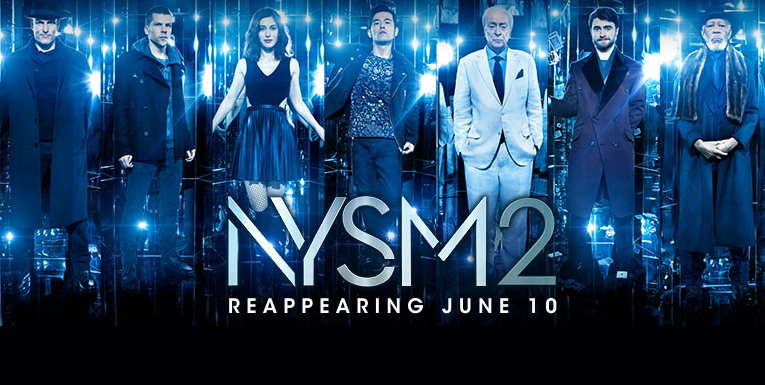
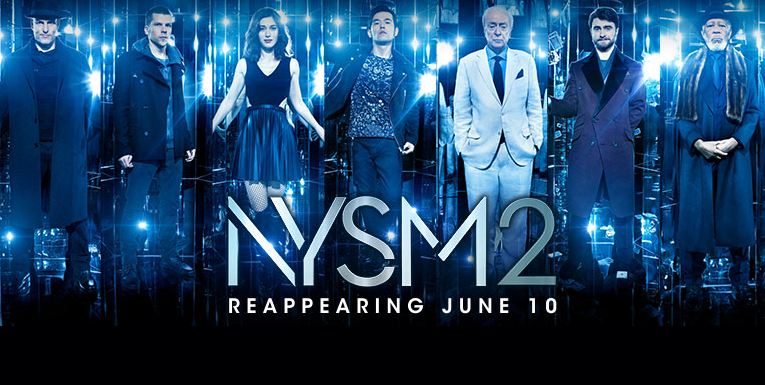
The first “Now You See Me” was a deliciously entertaining heist film with “the Four Horsemen,” a team of magicians, engaged in a diabolically clever combination of misdirection and triple-cons for the purpose of revenge, Robin Hood reparations, and showmanship. We know what that means for part 2 — the Empire strikes back, and it is a popcorn pleasure. The Horsemen stole from billionaire Arthur Tressler (Michael Caine) and framed the magician turned debunker Thaddeus Bradley (Morgan Freeman) so he ended up in prison.
At the end of the last film, the surprise twist revealed FBI agent Dylan Rhodes (Mark Ruffalo) as the brains behind the operation. As this one opens, the FBI, with Deputy Director Natalie Austin (Sanaa Lathan) in charge, does not know and thinks Rhodes is still looking for three of the Horsemen. They believe Jack Wilder, played by Dave Franco, was killed. They’re wrong about both. Rhodes is working with the Horsemen, including Wilder. But there is a new member of the group: Lula (Lizzy Caplan, replacing Isla Fisher). And they immediately run into a snag involving someone who knows a bit about magic in the movies: Daniel Radcliffe as Walter Mabry, a mysterious, mega-wealthy guy who wants the Horsemen to steal something for him. It’s the usual MacGuffin — some sort of computer thing that would give him access to everything/control of everything blah blah, and it’s locked away in a place with the kind of crazy security reserved for heist movies. All the world’s biggest, richest baddies are after it, and so the Horsemen have to find a way to get in there before one of them gets it.
The first movie had sensational performance showpieces. This one is more “Mission: Impossible” (the television series, not the Tom Cruise movies) until the final scene. But it keeps the sly twists coming, using all the magicians’ favorite ruses, from misdirection to an almost-balletic slight of hand. Just like “The Avengers,” it is a lot of fun to see each of the Horsemen use their skills — mentalist Merritt McKinney (Woody Harrelson), lock wizard Wilder, card master Daniel Atlas (Jesse Eisenberg). We learned in the first film that McKinney’s brother stole all his money and disappeared; it turns out he was an identical twin brother, and he shows up, played by Harrelson with hair that looks like that awful perm Mike Brady had in the last season of “The Brady Bunch.”
It has all the twists and reveals and surprises we were hoping for, including one saucy switch that is not about magic, just social conventions that have not caught up to reality, some very old school means of communication, and a touch of movie magic in giving us a glimpse of one character’s past with some CGI that looks a little more realistic than the “work” that has ruined so many Hollywood faces. Director Jon M. Chu (the “Step Up” movies) has a superb sense of space and movement, giving the story exuberance and flair. It’s a fitting encore and I hope we will see them all again in part 3.
Parents should know that this film includes some strong language, and some action-style peril and violence.
Family discussion: Would you want to be selected by The Eye? Which magic trick would you like to be able to master?
If you like this, try: the original film and “The Sting”
They are legends of 20th century American letters, so renowned a single name suffices: Fitzgerald, Hemingway, Rawlings, Lardner, Wolfe. But there is another name — Maxwell Perkins — who was essential to their work and often advisor and support system for their personal lives as well. A. Scott Berg’s brilliant 1978 biography of Perkins has inspired a film that focuses on the most important relationship of Perkins’ professional life — his work on the first two books by Thomas Wolfe.
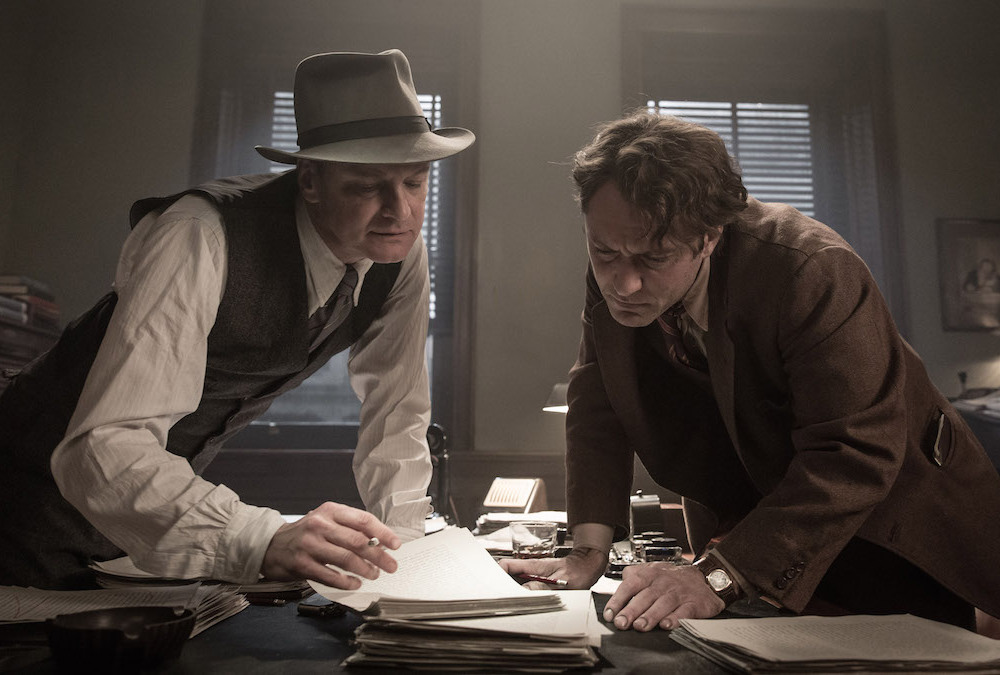
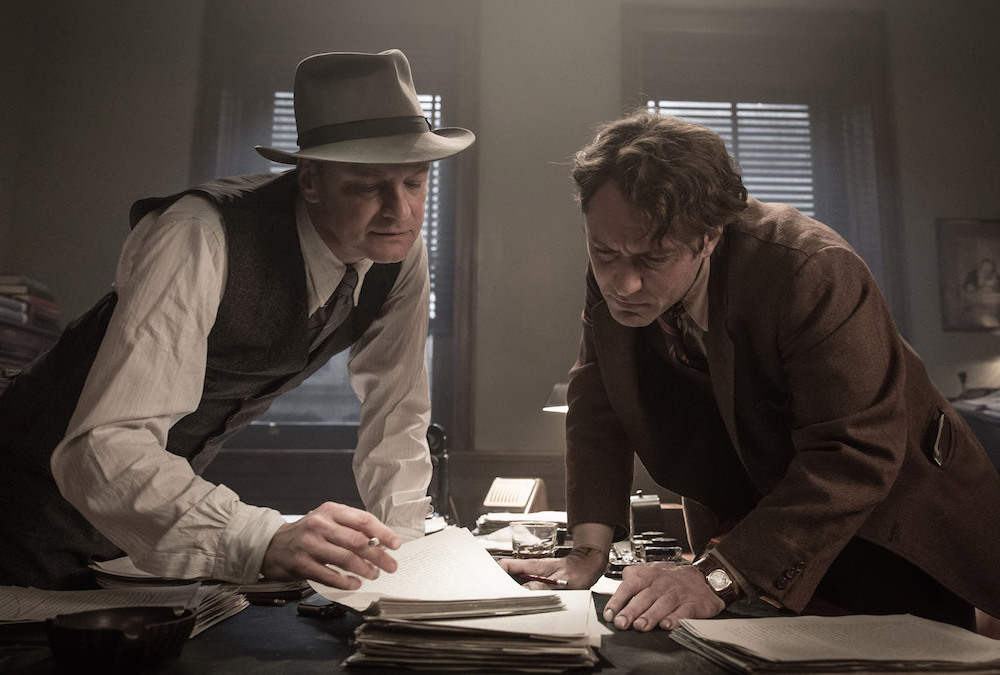
Intriguingly, all of the major male roles are taken by British and Australian actors playing Americans, and unsurprisingly they are all superb, never missing an final r or an elongated vowel — or worse — showing off. Colin Firth plays Perkins, a mild-mannered man who loved his family but was most alive as a appreciator of literature — he knew it when he received it as a manuscript and he knew how to trim away the underbrush to make it better. His great skill was seeing the story the writer wanted to tell and doing whatever was necessary to get it into the hands of readers.
After Hemingway’s spare, masculine prose and Fitzgerald’s elegant sentences and impeccable structure, Perkins receives a submission from Wolfe that is vital, poetic, and a veritable avalanche of words. “Please tell me it’s double-spaced,” he says, looking at the pile of paper. “That’s a long paragraph,” Perkins daughter remarks, reading over his shoulder. “It started four pages ago,” her father replies.
Like Michelangelo seeing the statue inside the block of marble, Wolfe sees a novel that preserves Wolfe’s torrential style but prunes away the excess. He reassures Wolfe that he will only “shape it a bit, cut off the top branches.” Wolfe knows it needs pruning. “You don’t know how I struggled to cut the gorgon down.”
And Wolfe (Jude Law), who tells Perkins that not just his books but most of all literature is about the search for a father, responds to Perkins’ utter engagement in service to his story. The relationship between a writer and a great editor is one of the most intimate and fulfilling, something between a gifted psychoanalyst, an inspiring teacher, and a fairy godparent — or, just a parent. Perkins, the father of five daughters (charmingly portrayed), found a spiritual son in the troubled genius, and, as Berg’s book argues, was a genius himself in the way he was able to cull out of him timeless classics.
This sympathetic portrayal acknowledges the devastation that can be wrought by geniuses. We see Wolfe’s troubled relationship and careless dismissal of his supporter and mentor, the set designer Aline Bernstein (Nicole Kidman), who is anguished not because she left her husband and children for the much-younger Wolfe, but because once she was successful at getting him launched, he did not need her anymore. We the devastation that can be felt by them as well, as Fitzgerald (Guy Pearce) struggles to write and to care for his wife, Zelda, who is near-catatonic. But the hero of the story is the man waiting patiently backstage, ready to supply a discreet loan or a helpful suggestion: Don’t name the book Trimalchio in West Egg — how about The Great Gatsby? The quiet dignity and integrity of Firth’s performance is a tribute to all whose art is a life of service.
Parents should know that this film includes drinking and drunkenness, smoking, abusive behavior, some sexual references, mental illness, and a sad death.
Family discussion: What did Perkins see in Wolfe that the other publishers did not? Do you agree with Wolfe’s statement that literature is about the search for fathers? How was that reflected in his relationship with Perkins?
Disney’s Zootopia is smart and funny, one of my favorite films of the year, and this week it’s out on DVD/Blu-Ray, with terrific bonuses that include an alternate opening, never-before-seen characters and deleted scenes, and a sneak peek at some of the hidden Easter Eggs that make reference to Disney Animation’s most beloved films and characters.
Interview: Aisha Harris on Slate’s Black Film Canon — The 50 Greatest Films Made By Black Directors
Posted on June 7, 2016 at 3:56 pm
Aisha Harris and Dan Kois got ideas from a range of filmmakers, critics, and historians to prepare Slate’s list of the “50 Greatest Films by Black Directors,” a response to the many “canonical” lists that overlook these films. In an interview, she talked about why it was important to research and publish this list, which they called “The Black Film Canon,” and what she learned. I asked why they limited the list to films by black directors. “The idea came from Dan Kois through the idea of #Oscarsowhite controversy and how big a deal that was earlier this year. And part of the running narrative about the reason why that there were hardly any black people nominated this year is because they often don’t get to tell their own stories. They haven’t made it to the point where they can direct a big budget film. And so we wanted to make sure that this was a list that focused specifically on black people being able to tell their own stories and the opportunities that they’ve had to do that. Obviously there are plenty of really great films not on the list that are about black characters; ‘Cabin in the Sky,’ ‘Stormy Weather,’ ‘The Wiz,’ but we were specifically interested in those who were able to get behind the camera and I think there is something really powerful to be said about black people being able to tell their own story. One of the movies is ‘Malcolm X.’ That was originally supposed to be directed by Norman Jewison who obviously directed some great films about race, including ‘In The Heat of the Night’ and ‘A Soldier’s Story,’ but we all know that movie would have been vastly different and maybe not as powerful as Spike Lee’s version of ‘Malcolm X.’ So I think there is something to be said for being able to tell your own story and that’s what we wanted to get across with this list.”
It was great to see titles on the list that some people might consider not serious or prestigious enough for “canon” status, reflecting the same broad range that has what was once dismissed as a genre film, “Vertigo,” on the top of the once-a-decade Sight and Sound ranking. “For us that was another goal. What we wanted with this list was to broaden the scope of what canon means. It doesn’t have to mean high art’ it doesn’t have to mean that every single piece of that film is perfect or that it has a big budget or it is a Hollywood studio film. We wanted to make sure that our list represented films that are culturally significant but maybe aren’t considered ‘great’ by the usual people who make these canons. A lot of people, including me, forget that ‘House Party’ premiered at Sundance in 1990 and that helped redefine what an indie film could look like. It was at the forefront. It was what indie films could look like in the 90s. We also wanted this also to be an accessible list. A lot of these movies are challenging and I am all for challenging films — we should all be challenged by films. But there is room on the list for films that don’t necessarily have to be so heavy. I think we should celebrate the movies that aren’t heavy as well as the ones that are.”
Some of the films reflect the internalized bigotry — and commercial pressures to reinforce stereotypes — of their era. “that is the sort of thing you always have to consider with older movies, especially when you’re talking about black films and black representation on films. I mean ‘The Blood of Jesus,’ the Spencer Williams film, if you are a modern viewer it’s not the easiest film to watch. The acting was theatrical and it has a very old-school mentality about the power of religion and this very antiquated notion of the sinner and redemption. But at the same time you can’t ignore the fact that it’s a very culturally significant film, it’s an historically significant film and it exists. Spencer Williams, if people know him at all, he’s known for being one half of Amos and Andy which obviously has been heavily criticized and does not hold up today by modern standards. So it is important to remember that he was also a filmmaker and a talented one at that at a time when there were barely any black filmmakers. I think is something that is worth looking at and he’s worth being acknowledged as a filmmaker and not just as this character who now is just shorthand for Uncle Tom.”
They also made a point of including black women directors like Kasi Lemmons (“Eve’s Bayou”) and Ava Duvernay (“Middle of Nowhere” and “Selma”). “As polarizing as Spike Lee can be, I think most people acknowledge that he is a force to be reckoned with whether you are talking just about black films or a film in general but when it comes to women it is just a whole different ballgame. A lot of the women on the list have only one or two feature films under their belt and they have been in the game for 20, 30 years. Leslie Harris made ‘Just Another Girl on the IRT,’ and I think that remains to this day her only feature film. And Kasi Lemmons has not made that many movies, Gina Prince-Bythewood did ‘Love and Basketball,’ and then she did ‘Beyond The Lights‘ 14 years later, so they aren’t getting the same opportunities. I mean it’s hard for black males it’s even harder for black women and Ava Duvernay is hopefully turning the tide on that and she’s obviously very vocal and very active about promoting other women and other women of color in filmmaking and I think it’s great that we have someone like her that’s hopefully leading the charge along with the sudden attention to Hollywood being so white and so male.”
Harris was not familiar with all of the films on the list and hopes it will bring them to a wider audience as well. “I just think it gets at the emotional core of slavery and also the politics that happens within slavery that I think a lot of films do not do.
Another movie that I was unfamiliar with was ‘Medicine for Melancholy.’ That’s the 2008 film by Barry Jenkins and it stars Wyatt Cenac and it’s this very beautiful black and white film. I think some people made the comparison to ‘Before Sunrise.’ It takes place in one day. Two people have a one night stand but there is also so much more going on, there are some questions about gentrification and about romance and I was really happy to see that movie and discover it. That’s one of the things I appreciated about the list and I am glad that we did was that we did not just rely on myself and Dan. We didn’t want this to be just a list. We wanted to get as many perspectives as possible and as many informed perspectives as possible and that opened up a whole other realm and I think that made the list all the better to have those suggestions thrown after us.”