Remembering Elizabeth Taylor

Remembering Elizabeth Taylor

Posted on March 27, 2011 at 12:00 pm

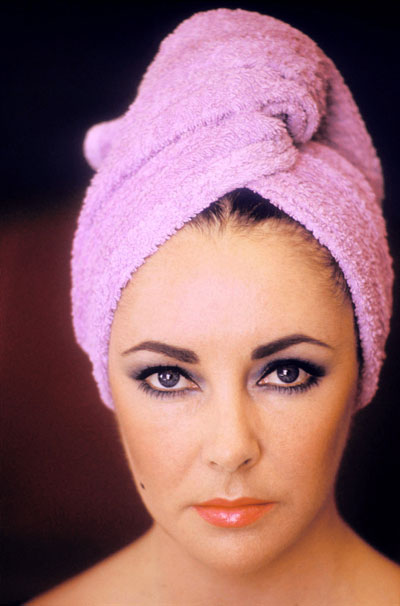
I have loved the tributes to the incomparable Elizabeth Taylor this week and wanted to share some of the best. My friend Margo Howard has a priceless recollection of having Elizabeth Taylor as her babysitter. Dan Zak in the Washington Post asked movie critics and people who knew Miss Taylor to contribute their favorite memories and performances, and I was honored to be included. Adam Bernstein’s obituary in the Washington Post captured her beautifully. He described her as ” a voluptuous violet-eyed actress who lived a life of luster and anguish and spent more than six decades as one of the world’s most visible women for her two Academy Awards, eight marriages, ravaging illnesses and work in AIDS philanthropy.”

By her mid-20s, she had been a screen goddess, teenage bride, mother, divorcee and widow. She endured near-death traumas, and many declared her a symbol of survival — with which she agreed. “I’ve been through it all, baby,” she once said. “I’m Mother Courage.” News about her love affairs, jewelry collection, weight fluctuations and socializing in rich and royal circles were followed by millions of people. More than for any film role, she became famous for being famous, setting a media template for later generations of entertainers, models and all variety of semi-somebodies. She was the “archetypal star goddess,” biographer Diana Maddox once wrote.
Slate’s brilliant movie critic, Dana Stevens, wrote a perceptive appreciation of Miss Taylor as personality, actress, star, and woman: “She was at her best playing characters who inhabited their own bodies with a confident, careless pleasure…Even in her lowest moments onscreen and off, Elizabeth Taylor was always bursting to excess with life.” She also includes a link to Roger Ebert’s marvelous 1969 interview with Miss Taylor and Richard Burton. Ebert’s poignant Elizabeth Taylor tribute in the Wall Street Journal

Turner Classic Movies will have an all-day tribute on April 10. They’re all worth watching but be sure to set your DVR for the ones I’ve put in bold.

6 a.m. – Lassie Come Home (1943), with Roddy McDowall and Edmund Gwenn; directed by Fred M. Wilcox.

7:30 a.m. – National Velvet (1944), with Mickey Rooney, Anne Revere and Angela Lansbury; directed by Clarence Brown.

10 a.m. – Conspirator (1952), with Robert Taylor and Robert Flemyng; directed by Victor Saville.

11:30 a.m. – Father of the Bride (1950), with Spencer Tracy, Billie Burke, Joan Bennett and Don Taylor; directed by Vincente Minnelli.

1:15 a.m. – Father’s Little Dividend (1951), with Spencer Tracy, Billie Burke, Joan Bennett and Don Taylor; directed by Vincente Minnelli.

2:45 p.m. – Raintree County (1957), with Montgomery Clift, Eva Marie Saint, Lee Marvin, Rod Taylor and Agnes Moorehead; directed by Edward Dmytryk.

6 p.m. – Cat on a Hot Tin Roof (1958), with Paul Newman and Burl Ives; directed by Richard Brooks.

8 p.m. – Butterfield 8 (1960), with Laurence Harvey and Eddie Fisher; directed by Daniel Mann.

10 p.m. – Who’s Afraid of Virginia Woolf? (1966), with Richard Burton, George Segal and Sandy Dennis; directed by Mike Nichols.

12:30 a.m. – Giant (1956), with James Dean and Rock Hudson; directed by George Stevens.

4 a.m. – Ivanhoe (1952), with Robert Taylor and Joan Fontaine; directed by Richard Thorpe.

Related Tags:


Actors
Triangle: Remembering the Fire

Triangle: Remembering the Fire

Posted on March 26, 2011 at 10:41 pm

One hundred years ago this week, 146 people were killed in the Triangle Shirtwaist Factory fire, a tragedy compounded because it was the result of preventable neglect and safety violations. An excellent new documentary, Triangle: Remembering the Fire, is showing this month on HBO. The film includes interviews with family members of those who were injured or killed in what was the deadliest industrial tragedy in New York history as well as the descendants of the factory owners, who were there with their children the day of the fire but were able to escape. Some members of their extended family were also working there and were killed. Most of the people who died were immigrant women who were trapped when the fire started, in some cases because the doors were locked to keep them inside. Many were killed not by the fire but by leaping out of the windows in a desperate attempt to escape after the flimsy fire escape collapsed. Six of the victims were not identified until February of this year, 100 years later.

The film documents not just the terrible events of March 25, 1911 but also the reform efforts they inspired. The company’s managers failed to make even the most rudimentary efforts at safety for the workers. While those injured and the families of those killed were not entitled to any benefits, the managers were reimbursed by insurance and were not responsible for any fines or compensation for the losses. This led to the first recognition that the industrial era required the involvement of organized labor and government to ensure that basic protections were in place, a crucial turning point in the history of public policy and politics. The film was inspired when a previous film from the same producers about the garment industry began with a short mention of the Triangle factory fire and ended with a similar recent story about a fire at a factory in Bangladesh. Its lessons are as important today as they were a century ago.

For more information, see: The lesson guide for teachers and students on the HBO website, American Experience: Triangle Fire, Triangle: The Fire That Changed America, and The Triangle Fire: A Brief History with Documents

Related Tags:


Documentary Television
Sucker Punch

Sucker Punch

Posted on March 24, 2011 at 10:13 pm

Girls in thigh-hi stockings and tiny spangled miniskirts take on steam-powered corpses, WWI bi-planes, samurai robots, and an angry dragon, along with a series of odiously predatory men in the latest film from Zack Snyder. His versions of “300” and “Watchmen” overwhelmed the storylines with striking, provocative visuals. Here, he solves that problem by pretty much not having any storyline at all. He literally and metaphorically cuts to the chase. It’s not so much punch, a bit more sucker.

Baby Doll is a young girl in blond pigtails, framed for her sister’s murder and thrown into a nightmarish mental hospital by her abusive step-father. Emily Browning plays her with just two facial expressions, which I came to think of as “Mom said I can’t go to the mall until I finish my math homework” and “I really want to go to the mall.” The step-father pays a corrupt orderly (Oscar Isaac, in the film’s best performance) to have Baby Doll lobotomized so that she cannot tell anyone what he has done, and that he tried to molest her after her mother died. She enters a dingy lounge area called “the theater,” where a sympathetic therapist (Carla Gugino, sounding like Natasha from “Rocky and Bullwinkle”) is encouraging the patients (all young and very hot women) to re-enact their stories.

The rest of the movie is best summarized by the song memorably performed by En Vogue: “Free your mind and the rest will follow.” Baby Doll then either sees or imagines the hospital as a brothel, run by the evil Blue (Isaac again, in sharkskin suit and gigolo-style mustache), where the girls are forced to dance for the customers. Baby Doll has the ability to mesmerize men with her dances, which somehow turn into deliriously deranged gamer-style battle sequences as she and the other girls must, in classic computer game tradition, obtain a map, fire, a knife, a key, and make some unknown sacrifice to achieve freedom.

They could have had fun with this, but instead everyone acts as though it is deadly serious, and so it just drags. The other girls, played by Jena Malone, Abbie Cornish, Vanessa Hudgens, and Jamie Chung, are supposed to be tough but vulnerable, but they look absurd, racing around on heels in skimpy costumes as they fight with swords and guns, as though they believe they are exemplifying female empowerment and solidarity instead of parodying it. It is sad to see these talented actresses feel that they have no other opportunity for career advancement than to appear in this dispiriting dreck. A movie about finding freedom from that prison would be something worth seeing.

(more…)

Related Tags:


Animation Fantasy Horror Science-Fiction Thriller
Jane Eyre

Jane Eyre

Posted on March 24, 2011 at 10:03 pm

Why do film-makers keep coming back to Jane Eyre? Charlotte Bronte’s story has elements of horror, mystery, revenge, romance, and morality, but it is an internal narrative, Jane’s own clear-eyed but personal view of her story (“Reader, I married him.”) And yet, it is such a perennial favorite that this is at least the ninth (at least and so far) English-language cinematic visit to the wild moors and the wilder hearts of Jane Eyre. And that is not counting the many, many variations and spin-offs, including a book and movie that tell the same story from the perspective of another character.

Jane Eyre is an orphan, raised under the cruelest circumstances by her aunt (Sally Hawkins). Her spirit and integrity are such an affront to the aunt that she is sent away to a charity school called Lowood, where the girls are treated with contempt. She makes one true, loving friend, a girl named Helen, who ties of consumption in Jane’s arms. When she finishes at Lowood, Jane (Mia Wasikowska of “The Kids are All Right” and “In Treatment” in a performance that beautifully conveys both Jane’s emotional vulnerability and her strength of character) takes a job as a governess at a home called Thornfield. She is warmly welcomed by the housekeeper, Mrs. Fairfax (Dame Judi Dench) and her charge, a little French girl, but it is some time before she meets her new employer, Mr. Rochester (Michael Fassbender, in a less broody, more desperately unhappy performance). When she first sees him, she is walking in the woods and his horse rears up and throws him. She must help him to the house and they walk slowly, him leaning on her heavily. The emotional upheaval and unexpected intimacy of this encounter are followed by mysterious disturbances in the house, by an anguished longing, an almost unimaginable romantic ecstasy, and then by betrayal, loss, a new start, unexpected independence, and then acknowledgment of a connection too strong to resist.

And it is that relationship, all smolder and repressed passion, that answers the question. The Eyre/Rochester romance has inspired happy sighs for 160 years and in these days, when so little is repressed that no one makes time for smolder, it still delivers.

Director Cary Fukunaga (“Sin Nombre”) wisely used natural light and no make-up to give this version a rough, natural, intimate feel. Jane’s hair is a smooth loop over each ear with an intricate knot in the back, showing capability and determination. And perhaps some imagination as well. The way that the setting and events seem to embody the emotion the main characters cannot express, which is what makes an internally narrated story so compellingly cinematic.

(more…)

Related Tags:


Based on a book Date movie Drama Remake Romance
Diary of a Wimpy Kid 2: Rodrick Rules

Diary of a Wimpy Kid 2: Rodrick Rules

Posted on March 24, 2011 at 9:55 pm

This is the second movie based on the wildly popular series of Diary of a Wimpy Kid books by Jeff Kinney. Last year, in Diary of a Wimpy Kid, we saw Greg Heffley (Zachary Gordon) begin the agonizing experience of middle school. This movie opens with Greg and his best friend Rowley (Robert Capron) starting their second year in middle school, convinced that everything is going to be different. They have learned from their experiences and torments of their first year, and now begin their second year all grown up and sophisticated.

http://www.youtube.com/watch?v=ZbqqYuG1TCM

It doesn’t take them long to discover that an entirely new catalog of horrors is awaiting them. They’re all here: the embarrassment in front of the pretty new girl in class, the embarrassment in the school cafeteria, the embarrassment at the hands of bullies after school at the skating rink, the embarrassment caused by that suspiciously located stain on your pants, the embarrassment from the over protective mother, the embarrassment from the intercepted note in class, the embarrassment from mistakenly walking into the wrong restroom…it’s hard to think of a single childhood humiliation that has been omitted from this comprehensive inventory. Many of these situations are divided by age group. Greg is hounded by his three-year-old brother who just wants to play with the bigger boys, while Greg in turn hounds his older brother Rodrick (Devon Bostick) because Greg is curious about what goes on at “high school parties.” All of the kids in turn had situations with their parents, and a different set of issues with grandparents living at a home for seniors.

Halfway through this movie, Rodrick hisses to Greg, “You’re my brother, but you’ll never be my friend.” And yet, there is progress. Gradually, Greg forms alliances with family members. He and his brother protect each other. He and his mother reach understandings and enter into pacts. This is not just a repeat of the first year of middle school after all.

Kinney does a good job of remembering and portraying these childhood traumas. School children will laugh and groan in recognition of these misfortunes and will take heart from the fact that Greg somehow
manages to survive them all. Adults may cringe at some long dormant feelings, re-awakened by this movie, and feel more sympathy for the burdens of their school aged children.
(more…)

Related Tags:


Based on a book Comedy Family Issues School Stories About Kids Tweens
THE MOVIE MOM® is a registered trademark of Nell Minow. Use of the mark without express consent from Nell Minow constitutes trademark infringement and unfair competition in violation of federal and state laws. All material © Nell Minow 1995-2026, all rights reserved, and no use or republication is permitted without explicit permission. This site hosts Nell Minow’s Movie Mom® archive, with material that originally appeared on Yahoo! Movies, Beliefnet, and other sources. Much of her new material can be found at Rogerebert.com, Huffington Post, and WheretoWatch. Her books include The Movie Mom’s Guide to Family Movies and 101 Must-See Movie Moments, and she can be heard each week on radio stations across the country.

Website Designed by Max LaZebnik