I Am

I Am

Posted on March 24, 2011 at 9:52 pm

B-
Lowest Recommended Age: Middle School
MPAA Rating: Not Rated
Profanity: None
Alcohol/ Drugs: References to substance abuse
Violence/ Scariness: Some disturbing images of injuries and historical tragedies, consideration of suicide
Diversity Issues: A theme of the movie
Date Released to Theaters: March 25, 2011
Date Released to DVD: January 2, 2012
Amazon.com ASIN: B005U0ZP46

Tom Shadyac had it all — if “all” means fame, fortune, and professional success.  He directed some of the biggest box-office hits of the 1990’s and early 2000’s, including Jim Carrey’s “Ace Ventura,” “Liar, Liar,” and “Bruce Almighty,” and Robin Williams’ “Patch Adams.”  Careful viewers might have been able to discern a spiritual theme, or at least a spiritual yearning in some of those films.  But what made them successful was wild, outrageous comedy.

Shadyac made a lot of money and bought a lot of things. He realized that contrary to the messages we receive all of the time, the money and the things did not make him any happier. And then a literal hit on the head made him think very hard about what really matters. For probably less than the cost of one craft services table or a star’s limo to the set, Shadyac went on the road with a crew of four in search of some mind-bending conversations about how we can do better.

Shadyac had a serious bicycle accident, followed by months of unremitting, excruciating pain so devastating that he decided to commit suicide. That moment of relinquishing any sense of control was somehow liberating and clarifying. He had to decide what he wanted to say before he died. This film became first that statement and then a reason to stay alive.

It’s less clear, though, that it is a reason to go to the theater. Shadyac, energized by the thrill of engaging on big questions with great minds, has created an earnest if often incoherent patchwork on the subject of life’s purpose and meaning and how we can make things better. There’s a reason we usually address those issues through faith and parable (parables including all forms of story-telling). It is very hard to address them directly without sounding vague, pretentious, or a little weird.

At its best, this is a movie that asks some provocative questions about the assumptions we fail to question and the consequences of our current trajectory and lets us hear from fascinating, passionate people. It is an exploration of what Judaism calls “tikkun olam,” the obligation of each of us to assist in healing the world. At its worst, it feels like a trippy all-night dorm debate, unformed and uninformed, that concludes the Beatles got it right: Love is all you need. Some viewers may conclude that the entire thing is just a function of post-traumatic brain injury.

Shadyac speaks to experts in hard and soft science and specialists in history, religion, and philosophy. While his posture is often grasshopper to their Master Po, he has not quite managed to free himself of worldly pride. He asks them whether they have seen his films. He is both dismayed and energized by all of the “no’s,” almost taking it as reassurance he is on the right path if he has found people who are so unconnected to what sustained him and trapped him before. But he is very happy to find one of them is a fan of “Ace Ventura.”

At times it feels like a 1970’s journey through what we used to call self-actualization or the human potential movement as Shadyac experiments with emotion-detecting yogurt, considers that “reality isn’t an it,” and “science is a story.” He ponders a “participating universe” and learns about generosity in deer. Ha also rhapsodizes about the purity of indigenous people without mentioning that, like economically developed cultures, some of them are very violent. But it is fun to get a glimpse of some cutting edge research that suggests that our hearts may be, after all, wise than our brains, and that anger makes us dumber. And it is thought-provoking to consider the benefits of a less individualistic and competitive society and the concept of “a participatory universe where everything we do is changing it” for better or worse.

I assumed when I first heard about this film that the title was a reference to the name of God. But we find out at the end that it is taken from the answer G.K. Chesterton gave when asked what was wrong with the world. Will this awkward movie inspires anyone to consider that answer and become a little more generous and kind? Or is that more likely to come from another big budget Shadyac comedy? For the answer, see “Sullivan’s Travels.”

(more…)

Related Tags:


Documentary DVD/Blu-Ray Pick of the Week Spiritual films
Interview: Phil Hall of ‘What if They Lived?’

Interview: Phil Hall of ‘What if They Lived?’

Posted on March 24, 2011 at 8:00 am

We miss the performers who left us too soon almost as though we knew them.

In a new book, Phil Hall and Rory Leighton Aronsky ask What If They Lived?, with essays about stars and almost-stars from the silent era to the present, with biographical details, career assessments, and fascinating glimpses of projects they might have completed if they had lived longer. Hall was kind enough to answer my questions.

Q: How did this book come about?

Phil Hall: I always wondered what would have become of the great stars that died too young. If you see James Dean in “Giant” or Marilyn Monroe in “The Misfits,” it is difficult not to rue that there would be no further performances from its iconic stars – but if fate was kinder, could they have topped what they already created? The idea for the book percolated for years, but my attempts to get a publisher interested in the project were in vain. For whatever reason, many publishers did not think this was a good idea. Fortunately, BearManor Media, the publisher of my last book – The History of Independent Cinema – was convinced that this had potential. Rory Leighton Aronsky joined me as the co-author on the project, and here we are!

Q: Do you have a favorite of the stars that you wrote about?

Phil Hall: The biggest surprise for me was Jayne Mansfield. Many people have dismissed her as a second-rate Marilyn Monroe imitator that audiences rejected. In fact, she was an extremely talented comic actress and her films were popular. Unfortunately, her studio, 20th Century Fox, found it more profitable to loan her out to cheapo production companies for crummy movies rather than build star vehicles around her. That wrecked her film career. But she could have worked steadily without being a movie star. In the mid-1960s, she sold out New York’s Copacabana at a time when nightclubs were considered passe. I also found a clip of Mansfield appearing as a “mystery guest” on the TV show “What’s My Line.” She received the most thunderous audience response imaginable when she came on stage – and this was two years before her death in a 1967 automobile accident.

Q: Some of the performers you wrote about died as big stars, but some died before they achieved all they were capable of. Which of the stars you wrote about do you think would have surprised audiences the most by showing more than anyone knew they were capable of?

Phil Hall: By the time of his death, Robert Walker was on the cusp of showing a depth of versatility that was not present in many of his films. Walker spent most of the 1940s playing a light leading man or a stolid military type. In his last two films, “Strangers on a Train” and “My Son John,” he showed that he was capable of handling dark, complex dramatic roles. This would have opened a new avenue of career possibilities, and he think that could have enjoyed a long and successful career.

Q: You write about stars like James Dean and Marilyn Monroe who continue to be modern-day icons and others like Judy Tyler and Evelyn Preer who are hardly remembered. Why do some stars remain so present in our culture and others do not?

Phil Hall: A lot of it depends on their output. Judy Tyler had a solid career in television and theater, but she only made two films – and only one, “Jailhouse Rock,” is remembered today. The bulk of Evelyn Preer’s cinematic output came in the all-black “race films” produced by Oscar Micheaux, but most of these films are considered lost. A great deal of public recognition also rests on the role of film critics and scholars in defining the popular cinema culture. For example, Larry Semon was a very popular star of comedy films in the 1920s, but very few contemporary critics or scholars are willing to champion in his cause. And, in some cases, we remember the stars because of off-screen tragedies rather than on-screen triumphs: Roscoe Arbuckle, Thelma Todd and Sharon Tate are the most prominent examples. But the beauty of cinema is the ability to preserve a performance forever, with the hope that future generations will come to re-evaluate a star’s personality and talent. I would say that there is a greater popular appreciation of Dorothy Dandridge and Jayne Mansfield today, due in large part to critics, scholars and fan revisiting their performances and recognizing their value to the film culture.

Q: Is there one uncompleted project you wrote about that you most wish could have been made?

Phil Hall: Laird Cregar was supposed to do a Broadway version of Shakespeare’s “Henry VIII,” but he died before the production could take shape. I cannot imagine a better actor to play the monarch, and he could have easily made it into a signature role that could have been taken to the film or television screen.

Q: Your profiles of each of the stars are insightful and evocative. How did you do your research?

Phil Hall: By reading too many books, magazines and websites, and by having conversations with experts who knew more about the subject than I could. For example, online film critic John J. Puccio is also an expert on classical music, and he provided invaluable opinions regarding Mario Lanza’s future potential, while rock music writer Ricky Flake helped me speculate on the future that Elvis Presley never had.

Q: Why do you think Judy Garland would have focused on concerts rather than movies if she had lived?

Phil Hall: I think there would be a combination of factors. First, there was a lack of quality roles for women of Garland’s age and personality. Second, Garland had a reputation for being (for lack of a better word) difficult, and many producers were not eager to take that risk. Third, there was the same problem that kept Montgomery Clift away from films: getting insurance for the star. Garland’s health problems were front-page news for years, and her presence in a film would have jacked up the budget in order to cover her insurance.

Q: Some of the people you wrote about had their careers limited by racism, sexism, or homophobia. Did that influence your ideas about what would have been possible for them if they had lived until more tolerant times?

Phil Hall: It did, because the contemporary concept of tolerance was a fairly recent development. We cannot create an alternative universe for the past where these talented people could have flourished without the restrictions that limited their careers. At the same time, we have to take into consideration another discriminatory concept: ageism. Hollywood is an industry that in constantly on the search for young new faces – good parts for people in their forties or older are difficult to come by, especially for women. What roles would exist for a 50-year-old Marilyn Monroe? It would be like that lyric from Stephen Sondheim’s “Follies”: “First you’re another sloe-eyed vamp. Then someone’s mother, then you’re camp.”


Related Tags:


Actors Books Interview Writers
Interview: Tom McCarthy and Alex Shaffer of ‘Win Win’

Interview: Tom McCarthy and Alex Shaffer of ‘Win Win’

Posted on March 23, 2011 at 8:00 am

Copyright Searchlight 2011

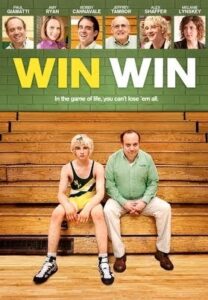
Tom McCarthy has appeared as an actor in movies like “Duplicity” and “Baby Mama” but he is now better known for his writing and directing the acclaimed films “The Station Agent,” the Oscar-winning “Spotlight,” and “The Visitor.”  His film “Win Win,” stars newcomer Alex Shaffer as a teenage wrestling champ who ends up staying with a lawyer/coach played by Paul Giamatti when his grandfather, who is in the early stages of dementia, is placed by Giamatti’s character into a nursing home.  I spoke to both of them about wrestling, writing, what it feels like to be good at both, and doing whatever it takes.

I don’t know much about wrestling so I was surprised by how fast you moved.

TM: Especially the lighter weights.  They are really exciting. The lighter weights it’s just wicked to watch.  That match that I went to at your school – even the refs couldn’t keep up.

AS: Over 130 or 140 it’s more about strength.

One of the key moments in the film has Paul Giamatti’s character asking your character, Kyle, what it feels like to be that good at something.  Kyle says it feels like being in control.  Is that how it feels?

AS: For Kyle, for me it just feels good to be that good.  It’s a very comforting feeling.

TM: That would have been a good answer for Kyle, too.

What makes you feel that good?

TM: I like being immersed in work.  I like it when I’m in a sweet spot in the work.  When I’m writing I have a ritual or a regimen and I get really lost in it, get out of my own head and follow an idea, or a story, or a character.  I really like being in that space.

What was the beginning of the idea of this movie for you?

TM: I have this mental folder that I drop things into and when they feel like they’re of the same world I start to put together the movie.  It certainly was the wrestling at the beginning.  I called Joe , my co-writer, and said, “Have you ever seen a movie about high school wrestling?”  We started to joke about our own bad experiences and then talked about the good ones, the world in general, how unique a world it was, looking back on it 20 years later.

And the other idea was about where we are in society, the title, “Win Win,” like “Oh, you can have a mortgage and pay nothing and a car and put no money down” and we all believed it for a while.  Oh, that’s great, why wouldn’t you do that!  It will cost nothing!  The other idea that aligned with that thought was that we are polarized in society.  The bad bankers did bad things – but those people are our neighbors.  We ride the train, the bus with them.  They’re not bad people; they just made some bad choices.

So wrestling with that part of our human condition – we all have that aptitude, to so surprisingly and sometimes shockingly bad things in certain scenarios.  Mike is confronted with that and that I felt very interested in.  It’s not enough to say, “I have a family, I have a good job, I’m a good person.”  That is not an excuse or a guarantee.  That I found interesting.

Alex, you went from doing something that you knew very well and were very good at to something that was completely new to you, and you were surrounded by some of the most experienced and talented actors in movies.  What was that like for you?

AS: I wasn’t nervous because it was something I didn’t care about that much.  Sorry, Tom!  Halfways, no more like one-third of the way through, I began to think, “I really want to do good.  I like this guy, I don’t want to ruin the movie for him.”

TM: I think that’s a good way to go into it!  I think that’s a problem for a lot of actors who go into an audition wanting it so badly, they sabotage themselves because they’re so anxious.  I think when I stopped caring about acting quite so much, when I got more involved in writing and directing, either I’m right for it or not, I started getting more jobs.

How did you like being a blonde for the filming?

AS: I was a blonde before the filming.

TM: He came to us like that!

AS: It wasn’t my idea for the movie.  Our team before we wrestled Phillipsburg, not every year but when the team’s good, we want to psych them out, so that year the whole team bleached our hair blonde.

I thought it was very funny that Amy Ryan’s character Jackie called you Eminem.

TM: We got a studio note about that: “Emeneim, isn’t he a little bit past now?”  I don’t think Jackie’s cutting edge!   And besides, now he won the Grammy!

AS: He’s amazing!  He will never be gone!
(more…)

Related Tags:


Actors Directors Interview Writers

Yogi Bear

Posted on March 22, 2011 at 7:38 pm

Yogi Bear (voice of Dan Aykroyd) is genuinely perplexed by the suggestion that he might want to forage for food and catch fish with his paws. “Isn’t that kind of unsanitary?”

He may live in the woods, but for Yogi, star of the 1960’s series of cartoons from Hanna-Barbera, that does not mean his life has to be bereft of civilization. He has a best friend named Boo Boo with a natty bow tie (voice of Justin Timberlake!). His cave is equipped with a soda machine. He is never seen without his hat, collar, and tie. And he is a well-known aficionado of fine dining. His preferred cuisine is the contents of picnic baskets brought by visitors to Jellystone Park, the campground and nature preserve that is his home. He loves picnic baskets so much, he’s given them an extra syllable, to hold onto the word just a little longer. He calls them “pick-a-nic baskets,” and they are to him what the grail was to Galahad, the whale was to Ahab, and the Road Runner is to Wile E. Coyote.

But to the frustrated Ranger Smith (the always-likable Tom Cavanagh), Yogi’s antics make it impossible for him to have the nice, peaceful, orderly park he dreams of. “There’s no better place on earth,” he sighs, “except without him.” And Smith can’t figure out how to talk to the pretty nature nerd who has arrived to make a documentary about the talking bear in Jellystone Park (the always-adorable Anna Faris as Rachel).

Soon, though, Smith has a bigger problem. The Mayor (slimy Andrew Daly) and his aide (elfin Nathan Corddry) want rescue the city’s budget by privatizing the park and selling off the logging rights. Ranger Smith has just one week to get enough money from increased admissions to the park to save the day.

Yogi Bear began as one segment of the 1958 animated series “Huckleberry Hound.” He quickly eclipsed the other characters, who are all but forgotten (I don’t see “Pixie, Trixie, and Mr. Jinks: The Movie” coming to a multiplex any time soon), and soon became a headliner with his own series. Yogi’s adventures were filled with the same silly slapstick, but he had a special quality that endeared him to kids. They identified with his place midway between the animal world of the forest and Smith’s ultra-civilized world of a uniformed, rule-enforcing (but always-forgiving) grown-up.

Yogi often brags that he is “smarter than the average bear,” but he often outsmarts himself, allowing kids to feel that they are a step ahead of him. As often in comedy, especially for kids, a lot of the humor in cartoons comes from ineptitude and foolishness. Children, who are constantly surrounded by things they do not understand love to see characters who are even more confounded by the world around them. In this film, Yogi may be smart enough to design a flying contraption. But his efforts to persuade Ranger Smith that it is not intended for stealing picnic baskets fails when the Ranger points out that printed across its stern is “Baskitnabber 2000.”

Moments like these are classic Yogi, but it is still an uneven transition to a live-action feature film from the very simplified story-line and animation of a seven-minute hand-drawn cartoon. The running time, computer graphics, and 3D effects overwhelm the slightness of the material, especially when it departs from the core relationship of Yogi and Ranger Smith. The story drags in the middle, when the junior ranger (T.J. Miller), chafing because Ranger Smith won’t let him do anything but sort maps, agrees to sabotage the efforts to keep the park going in exchange for a promotion. Smith’s inept efforts to romance the pretty film-maker are weak and it hardly helps when Yogi offers his advice to Smith about, ahem, marking his territory.

These are what I call “lunchbox movies.” We’ve had a string of big-budget multiplex fodder featuring whatever character was on some studio executive’s second grade lunchbox (Garfield, Alvin and the Chipmunks, Inspector Gadget). They toss in some potty humor for the little kids and some boombox oldies to amuse the parents (Sir Mix-a-Lot will be cashing yet another royalty check). But Yogi and his pic-a-nic basket — and the kids and parents looking for a holiday treat — deserve better.

Related Tags:


3D Based on a television show Comedy Fantasy For the Whole Family Talking animals

The Tourist

Posted on March 22, 2011 at 3:05 pm

Behind this forgettable trifle are some very talented people, all punching below their weight when they’re not just calling it in. The screenplay is by Julian Fellowes (“Gosford Park”), Christopher McQuarrie (“The Usual Suspects”), and director Florian Henckel von Donnersmarck (“The Lives of Others”), based on the 2005 French film, “Anthony Zimmer.” Two of the biggest stars on the planet, Angelina Jolie and Johnny Depp do their best to put some sizzle in this would-be romantic thriller, but they are both poorly used and have no chemistry whatsoever. Venice is pretty, though.

Jolie is the veddy proper Elise Clifton-Ward, whose role in this film is somewhere between femme fatale (drawing the poor schlub who happens across her path into a world of intrigue and peril) and Girl from Ipanema — she spends a lot of time walking slowly while those she passes say, “Ahhhhhhh.”

Elise receives a note from Alexander Pearce, the man she loves and has not seen for two years, asking her to find a man on the train who resembles him to use as a decoy and distract the various Interpol teams that are trying to track him down. Enter the shlub, a math teacher from Wisconsin so (apparently) incapable of dishonesty that his very name is Frank. And yet, we see him tell a lie very early on. It’s a small one, perhaps understandable, but still….

Elise invites him to spend the night in her lavish hotel suite (on the sofa) and kisses him on the balcony, thus drawing the fire, and the attention, of Interpol and of someone even more bent on tracking Pearce down, the man he stole from. It’s a nice set-up, but the execution depends on three things that never happen: a witty script, a spark between the leading characters, and an understanding of tone. The script sags. Jolie and Depp are both poorly cast (she may be more of a serene and elegant mother earth in her real life these days but on screen she only comes alive when she is aggressive and a little wicked and Depp can do just about anything but act like an ordinary guy). And von Donnersmarck has no sense of humor or lightness to make the sillier aspects of the story endearing instead of annoying. This is yet another example of an American remake of a French film that just misses the fun, the romance, and the point.

Related Tags:


Action/Adventure Romance Thriller
THE MOVIE MOM® is a registered trademark of Nell Minow. Use of the mark without express consent from Nell Minow constitutes trademark infringement and unfair competition in violation of federal and state laws. All material © Nell Minow 1995-2026, all rights reserved, and no use or republication is permitted without explicit permission. This site hosts Nell Minow’s Movie Mom® archive, with material that originally appeared on Yahoo! Movies, Beliefnet, and other sources. Much of her new material can be found at Rogerebert.com, Huffington Post, and WheretoWatch. Her books include The Movie Mom’s Guide to Family Movies and 101 Must-See Movie Moments, and she can be heard each week on radio stations across the country.

Website Designed by Max LaZebnik