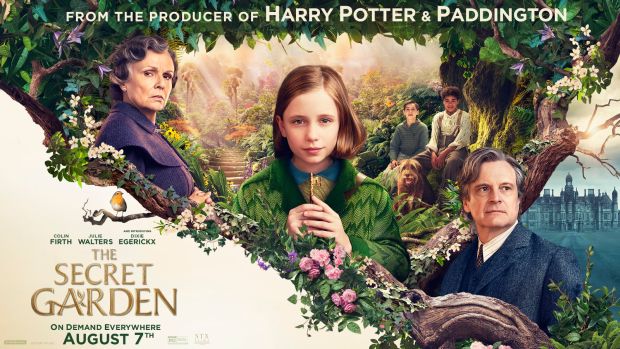
The Secret Garden

The Secret Garden

Posted on August 6, 2020 at 5:37 pm

B +
Lowest Recommended Age: Kindergarten - 3rd Grade
MPAA Rating: Rated PG for thematic elements and some mild peril
Profanity: None
Alcohol/ Drugs: None
Violence/ Scariness: Sad offscreen deaths of parents, illness, depression, fire
Diversity Issues: None
Date Released to Theaters: August 8, 2020

Copyright STX 2020
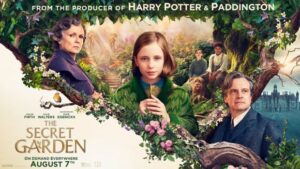
Most of the time I was beguiled by the gorgeously designed latest version of “The Secret Garden,” Frances Hodgson Burnett’s classic 1911 story of the orphan girl named Mary Lennox sent to live with her uncle in a vast castle-like home on the moors. She discovers a locked, hidden garden — and some family secrets. But there were moments when I was as cross as Mary herself, the book version that is.

What I loved most about the book when I first read it as a child and then when I read it aloud to my own children was that Mary is that rare heroine in a classic children’s book who is unapologetically imperious, outspoken, and, until the secret garden works its magic, selfish. Anne Shirley, Pollyanna, Alice, Caddie Woodlawn, and Burnett’s unfailingly saint-like Sara Crewe, Mary Lennox had a sour disposition and yet, she was the heroine of the story. This fifth movie version begins with Mary comforting her doll. The book’s Mary would never do anything so empathetic.

So, it took me a while to let go of my version of Mary and warm to the softer version from screenwriter Jack Thorne (“Wonder”), enjoying the movie within its own conception of the story. As in the book, Mary (Dixie Egerickx) is raised in colonial-era India (here set in 1947), then sent to live with the uncle she does not remember ever having met (Colin Firth as Archibald Craven), in an enormous house called Misselthwaite Manor, on the windy, misty moors of Yorkshire.

She discovers a secret garden and two boys, one who seems to be a part of the moors, and a relative who is as removed from the natural world — even other humans — as it is possible to be. She discovers some important understanding about herself, in part through evidence that helps her reframe her past.

Sumptuously imagined and lovingly presented, this is a fine family film, and a good reminder that even being stuck at home can be an adventure.

Parents should know that this film features three children mourning lost parents and a grief-stricken father/uncle. A character has severe depression, which her daughter interprets as not caring about her. There is some mild peril and a fire.

Family discussion: Grief is expressed in many different ways in this film. What are some of them? What did Mary and Colin learn from the letters that made a difference to them? What would be in your secret garden?

If you like this, try: the book and the earlier versions of the story, especially the 1987 version directed by Agnieszka Holland.
Related Tags:


Based on a play Family Issues movie review Movies -- format Movies -- Reviews Remake Stories About Kids
Even Infants Have a Range of Perceptions When They Watch Screens

Even Infants Have a Range of Perceptions When They Watch Screens

Posted on August 5, 2020 at 8:00 am

We have just begun to explore the complexities and wide range of differences in the way individuals watch and respond to what we see on screens. A new study about babies shows that these differences are present at birth. While these study results are illuminating, it does not change my firm position of no screen time before age three and no more than an hour a day and no theatrical screens before age five.

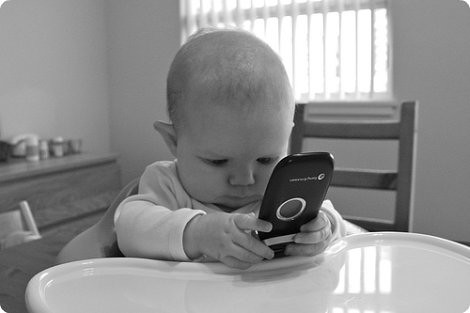
Children’s own temperament could be driving the amount of TV they watch – according to new research from the University of East Anglia and Birkbeck, University of London.

Copyright 2009 Carolien Dekeersmaeker

New findings published today show that the brain responses of 10-month-old babies could predict whether they would enjoy watching fast-paced TV shows six months later.

The research team says that the findings are important for the ongoing debate around early TV exposure.

Lead researcher Dr Teodora Gliga, from UEA’s School of Psychology, said: “The sensory environment surrounding babies and young children is really complex and cluttered, but the ability to pay attention to something is one of the first developmental milestones in babies.

“Even before they can ask questions, children vary greatly in how driven they are to explore their surroundings and engage with new sights or sounds.

“We wanted to find out why babies appear to be so different in the way that they seek out new visual sensory stimulation – such as being attracted to shiny objects, bright colours or moving images on TV.

“There have been various theories to explain these differences, with some suggesting that infants who are less sensitive will seek less stimulation, others suggesting that some infants are simply faster at processing information – an ability which could drive them to seek out new stimulation more frequently.

“In this study we bring support for a third theory by showing that a preference for novelty makes some infants seek more varied stimulation.”

Using a brain imaging method known as electroencephalography (EEG), the research team studied brain activity in 48 10-month old babies while they watched a 40-second clip from the Disney movie Fantasia on repeat.

They studied how the children’s brain waves responded to random interruptions to the movie – in the form of a black and white chequerboard suddenly flashing on screen.

Dr Gliga said: “As the babies watched the repeated video clip, EEG responses told us that they learned its content. We expected that, as the video became less novel and therefore engaged their attention less, they would start noticing the checkerboard.

“But some of the babies started responding to the checkerboard earlier on while still learning about the video – suggesting that these children had had enough of the old information.

“Conversely, others remained engaged with the video even when there was not much to learn from it,” she added.

Parents and carers were also asked to fill in a questionnaire about their babies’ sensory behaviours – including whether they enjoyed watching fast-paced brightly-coloured TV shows. This was followed up with a second similar questionnaire six months later.

Dr Gliga said: “It was very interesting to find that brain responses at 10 months, indicating how quickly infants switched their attention from the repeated video to the checkerboard, predicted whether they would enjoy watching fast-paced TV shows six months later.

“These findings are important for the ongoing debate on early TV exposure since they suggest that children’s temperament may drive differences in TV exposure.

“It is unlikely that our findings are explained by early TV exposure since parents reported that only a small proportion of 10-month-olds were watching TV shows,” she added.

Elena Serena Piccardi, from Birkbeck, University of London, said: “The next part of our research will aim to understand exactly what drives these individual differences in attention to novelty, including the role that early environments may have.

“Exploration and discovery are essential for children’s learning and cognitive development. Yet, different children may benefit from different environments for their learning. As such, this research will help us understand how individualized environments may nurture children’s learning, promote their cognitive development and, ultimately, support achievement of their full potential.

The research was led by UEA in collaboration with Birkbeck, University of London and Cambridge University. It was funded by the Medical Research Council.

‘Individual differences in infant visual sensory seeking’ is published in the journal Infancy on August 5, 2020.


Related Tags:


Not specified Parenting Preschoolers Understanding Media and Pop Culture

American Bar Association: Documentaries about Crimes That Change Lives

Posted on August 3, 2020 at 8:32 pm

The American Bar Association’s magazine has an article about “documentaries that swayed criminal cases.” Documentaries can be a very effective form of journalism, advocacy, or both. One example in the article is Joe Berlinger’s Paradise Lost Trilogy, three films over a period of fifteen years about three teenage boys accused of the May 1993 murders and sexual mutilation of three prepubescent boys. Because the accused boys listened to heavy metal music and had been in trouble for various petty offenses, the prosecution alleged that they killed the young boys as a part of a Satanic ritual. The filmmakers originally assumed that the boys were guilty. One of them confessed. But as they talked to the families of the murdered boys and reviewed the evidence, they concluded that they were not guilty. The documentaries, the attention brought to the case by celebrities including some rock musicians, and the review of DNA evidence that showed no connection between the boys and the murder, led to their being released from prison, though not a full exoneration.

The article also discusses Surviving R. Kelly, which gave women who had been sexually abused by the singer the opportunity to tell their stories. “Days after the premiere, Georgia and Illinois opened criminal investigations and encouraged more victims to come forward. By the next month, Kelly had lost his record deal and been charged by the Cook County state’s attorney in Chicago with sex abuse. In July 2019, he got hit with federal sex abuse charges as well. At press time, he sits in a Chicago jail awaiting trial.” He had managed to avoid responsibility in an earlier trial. The evidence in the documentary provided a path to holding him accountable.

Other documentaries mentioned include The Central Park Five, Making a Murderer, The Staircase, and documentary podcasts In the Dark and Serial.

The “documentary” footage taken by amateur observers has had an enormous impact recently, in tragedies like the death of George Floyd and in angry disputes over racist comments and wearing masks. Footage like that will certainly have an increasing impact on criminal and civil cases.

Related Tags:


Courtroom Crime Documentary
Common Sense Media: Tweens, Teens, Tech and Mental Health: A Generation Coming of Age in Crisis

Common Sense Media: Tweens, Teens, Tech and Mental Health: A Generation Coming of Age in Crisis

Posted on July 29, 2020 at 4:21 pm

A new report from Common Sense Media examines the impact of the pandemic on the already-increasing levels of anxiety and depression among tweens and teens.

When the coronavirus pandemic upended our lives, it introduced new social distancing requirements, public health challenges, and social unrest. Almost overnight, school, social activities, and work were all pushed online. It’s too early to know the lasting effects of this radical shift in behavior. Instead, this report seeks to understand how best to reach adolescents who are disproportionately affected and most vulnerable, support them in digital spaces, and improve their mental health outcomes.

The in-depth literature review, combined with essays from leading experts, synthesizes what’s known about associations between digital technology use and adolescent mental health—and outlines what stakeholders can do to help.

Geoffrey Canada: The Digital Divide is a Bigger Problem Than Lacking Access
Jacqueline Dougé: Meeting Teens Where They Are
Sonia Livingstone: Parenting for a Digital Future
Jennifer Siebel Newsom: We Must Design Tech and Media Platforms with Kids in Mind
Lina Acosta Sandaal: The Burdens of the Latinx Family
Tiera Chanté Tanksley: Finding Peace During the Protests: Digital Wellness Tools for Black Girl Activists
Andrew Yang: Our Kids are Walking Around with Slot Machines in Their Pockets

Related Tags:


Parenting Understanding Media and Pop Culture
Radioactive

Radioactive

Posted on July 23, 2020 at 5:58 pm

B
Lowest Recommended Age: Middle School
MPAA Rating: Rated PG-13 for thematic elements, disturbing images, brief nudity and a scene of sensuality
Profanity: Mild language and sexual references
Alcohol/ Drugs: Social drinking
Violence/ Scariness: WWI battle scenes,
Date Released to Theaters: July 24, 2020
Copyright 2020 Amazon Studios

Biopics, even the most sincere, even about the most fascinating real-life characters, even made by directors who are willing to break with the traditional structure, still two things are true. First, the only thing that really matters is the lead performance. Second, there is really no way to get around the basic structure that all lives follow and all biopics follow except those like “Jobs” that focus one or just a few incidents. We see crucial early experiences that either reveal the subject’s special talent or some life-forming experience or both. We see struggle. We see people who foolishly do not believe our subject can succeed. We see our subject succeed.There’s usually a setback or special mid-point challenge. And then we see how it ends.

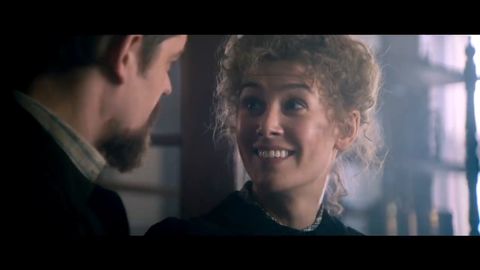
Marie Curie certainly had a fascinating life and Rosamund Pike gives her considerable best. She is never less than mesmerizing. I particularly enjoyed watching her in the first half of the movie, as we see her struggling to be taken seriously as a scientist when she knows she is better than the men who look down at her because she is a woman, because she is Polish, and because she is not shy about letting them know she is better than they are. It’s almost a proto-“Big Bang Theory,” the way that the same determination, single-mindedness, unstoppable curiosity, and relentless quest for truth that makes her a scientist is what makes it difficult for her to get along with anyone well enough to get her the resources she needs to do her experiments.

And that is when she meets Pierre Curie. He tells her he has read her work and it is brilliant. She tells him she has read his and it is very good. He offers her a space in his lab. Her insight and his ideas about how to prove her theories like two covalent bonds or a double helix. A lot happens very fast as the brilliance of her discoveries is evident when she just 32 when her paper on radium was published. But the movie stops for a dinner party so that Marie can explain her research to a non-scientist friend, and to us.

It then hurtles along, trying to cram in every crisis faced by Marie, from continued gender discrimination to being accused of adultery after Pierre’s death, when her letters to her married lover were made public by his wife. Most interesting, and worth an entire movie of its own, is her service during WWI, when she developed portable X-ray machines that saved thousands of lives and prevented needless surgery. Like the man for whom the most important scientific award in the world is named, Alfred Nobel, Marie Curie’s great achievement was responsible for incalculable benefits (we see an early cancer patient treated with radiation) and unthinkable tragedy (we see a Hiroshima resident looking up to see the Enola Gay, and the ravages of Chernobyl. This makes things a bit muddled, but Pike’s stirring performance makes us believe we get a sense of Marie Curie’s fierce intelligence and even may make us wonder about what discoveries we can make.

Parents should know that this film includes WWI battle scenes and characters who have been wounded, characters who are ill and dying and references to deaths of family members, brief rear nudity, non-explicit sexual situation, and references to adultery.

Family discussion: What do we learn from Marie’s reaction to the death of her mother? Why does this film include glimpses of events long after Marie’s death? What can we do to make sure that what we learn about and invent is used to benefit humankind and not for wars and violence?

If you like this, try: the glow-in-the-dark graphic novel the film is based on and another film about scientists and inventors, The Current War.

Related Tags:


Based on a true story Biography movie review Movies -- format Movies -- Reviews VOD and Streaming
THE MOVIE MOM® is a registered trademark of Nell Minow. Use of the mark without express consent from Nell Minow constitutes trademark infringement and unfair competition in violation of federal and state laws. All material © Nell Minow 1995-2026, all rights reserved, and no use or republication is permitted without explicit permission. This site hosts Nell Minow’s Movie Mom® archive, with material that originally appeared on Yahoo! Movies, Beliefnet, and other sources. Much of her new material can be found at Rogerebert.com, Huffington Post, and WheretoWatch. Her books include The Movie Mom’s Guide to Family Movies and 101 Must-See Movie Moments, and she can be heard each week on radio stations across the country.

Website Designed by Max LaZebnik