They were “the heir and the spare.” Bertie’s brother was the Prince of Wales, destined to be king. Bertie was the Duke of York.
Their father died and the Prince of Wales became King Edward VIII. But he fell in love with an American divorcee and he could not marry her and keep the crown. He became the first British king in history to abdicate the throne. He made the announcement over the radio, telling his subjects that he could not serve “as I would have wished” without the support of “the woman I love.”
And that is how Bertie, his younger brother, who had hoped to live a relatively quiet life, became King George VI in 1936. He knew that the United Kingdom needed to hear his voice, to reassure them that despite the abdication and the threat of war, they had a leader they could depend on. But King George had a bad stuttering problem and none of the experts of his time had been able to help. His work with an unconventional speech therapist is the subject of the acclaimed new film, “The King’s Speech.”
Here is audio of the real speech portrayed in the film, delivered on the radio in 1939.
And here King George VI says goodbye at the airport to his daughter, the current Queen Elizabeth, just a week before his death in 1952.
Stop right now. I mean it, stop reading. If you have not already seen “Inception,” there is nothing I can tell you that would not diminish your experience of this film. The less you know going in, the better you will appreciate the unfolding, doubling-back, and overall mind-bending stories within stories in one of the year’s best films. So, go see it and then come back and read what I have to say and share your thoughts about what you think it is all about.
Christopher Nolan (“The Dark Knight,” “Memento”) has written and directed that rarest of movie pleasures, a fantasy action movie for people who like to think. It’s kind of, sort of, “The Matrix” crossed with “The Sting,” “Fantastic Voyage,” and “Eternal Sunshine of the Spotless Mind.” On crack. It’s the kind of movie people will argue about all the way home, go see again, and argue about some more. Nolan understands that the power of movies is that they allow the audience to plug into a kind of Jungian collective dream and he takes that idea to the meta-level, and then metas it a couple more times.
Dom Cobb (Leonardo DiCaprio) is part of a renegade team that has taken corporate espionage to the next level. They do not steal secrets from the offices and memos of corporate executives. They steal secrets from their minds. Cobb has taken techniques developed by his professor father (Michael Caine) and come up with a way to enter into the subconscious of these people by literally entering and manipulating their dreams. This, of course, has led to the development of a whole new industry of counter-dream espionage through bolstering the subject’s psychological defenses. Within a dream, as with other abstract concepts, they are made explicit and concrete as armed assassins. Being shot by them affects the physical reality of the avatar-like representation of the person entering the subject’s dream. It can hurtle them out of the dream entirely. Or, it can push them into an endless mental limbo.
Audiences may feel (enjoyably) as though they have toppled into an endless mental limbo as the characters’ journey takes them into dreams within dreams, each with its own setting, time (moments in one dream level equal weeks in a deeper one), and properties. Sometimes those properties seep across dream boundaries, with vertiginous shifts in physical properties. In one extraordinary sequence, characters in an otherwise-standard-looking hotel become weightless and fights take place as though they are all under water.
The team knows how to extract thoughts from dreams, even the subjects’ most guarded secrets, made material within the minds’ fortresses and vaults. “Create something secure and the mind automatically fills it with something it wants to protect,” explains a character.
A new client insists that they must do something far more difficult — implant an idea, and do it so quietly that the subject will believe he thought it up himself. All of this is in the context of a slyly chosen, well-worn set-up, the last big heist. Dom wants out. He wants to go home. He wants to see the faces of his children. And this is his last chance.
The visual razzle-dazzle is breathtaking, especially as new member of the team Ariadne (“Juno’s” Ellen Page) is introduced to the world of dream architecture. But what makes the film so enthralling is its own fully-realized intellectual architecture, the rules and consequences of its world view that seem so complete they extend far beyond the borders of the story. This is a film that will reward repeated viewings. It will be the subject of late-night dorm discussions, application essays, and possibly some scholarly exegesis because of the way it poses provocative concepts of identity, responsibility, and consciousness. “Reality is not going to be enough for her, now,” Dom says as Ariadne explores an architect’s ultimate fantasy of creation. Yes, and that’s why we have movies. After all, dreams and reality feed each other. As Humphrey Bogart said in “The Maltese Falcon” and Shakespeare said long before that, they’re “the stuff that dreams are made of.”
And the Washington Area Film Critic Awards go to…
Best Film?: “The Social Network”
Best Director: David Fincher, “The Social Network”
Best Actor: Colin Firth, “The King’s Speech”
Best Actress: Jennifer Lawrence, “Winter’s Bone”
Best Supporting Actor: Christian Bale, “The Fighter”
Best Supporting Actress: Melissa Leo, “The Fighter”
Best Adapted Screenplay: “The Social Network”
Best Original Screenplay: “Inception”
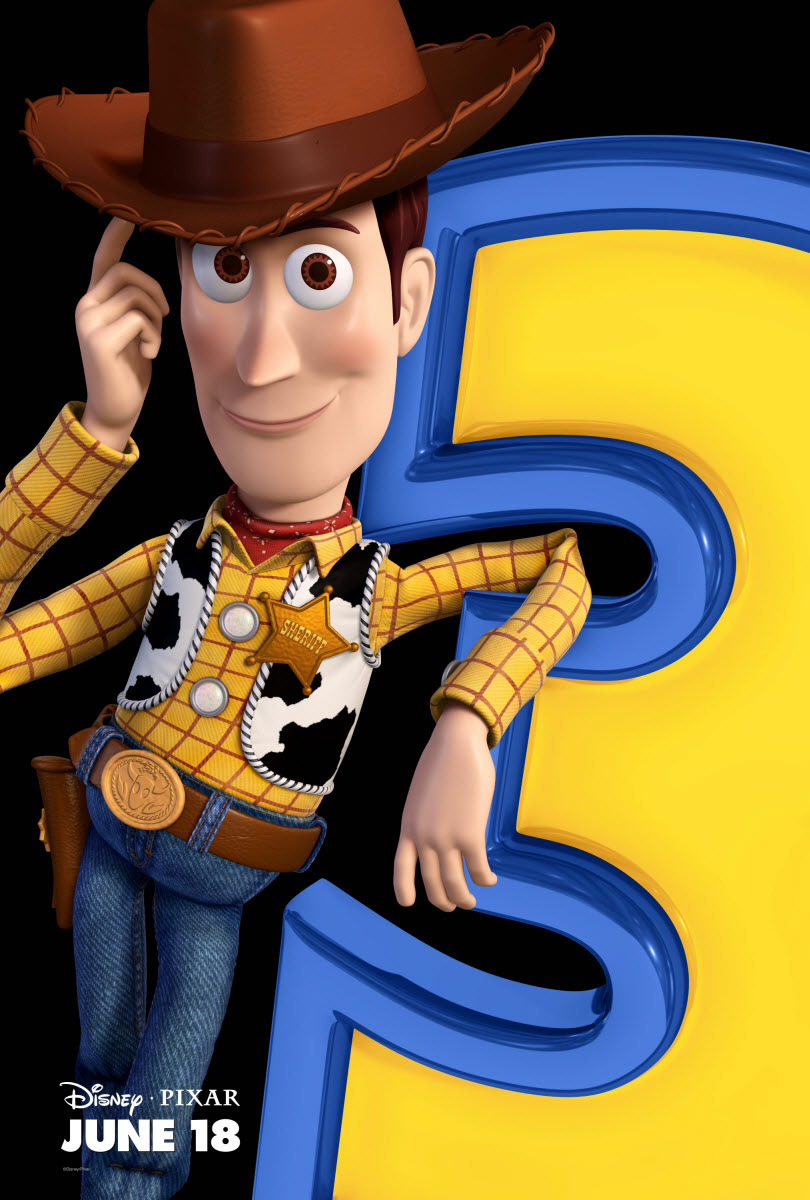
Best Animated Feature: “Toy Story 3“
Best Documentary: “Exit Through the Gift Shop”
Best Foreign Language Film: “Biutiful”
Best Art Direction: “Inception”
Best Cinematography: “Inception”
Best Score: “Inception”
Best Acting Ensemble: “The Town”
Many thanks to my dear friends Brandon Fibbs, Dustin Putman, Patrick Jennings, and our fearless leader Tim Gordon for making this a pleasure.
None (15-second segment removed from the original film in the 1960's for racist imagery)
Date Released to Theaters:
1940
Date Released to DVD:
December 7, 2010
Amazon.com ASIN:
B0040QTNSK
Disney’s glorious “Fantasia” and its sequel, “Fantasia 2000” are out for a limited time in a spectacular 4-DVD blu-ray package.
Considered a failure on its original release, “Fantasia’s” eight-part combination of images and music is now indisputably a classic. Musicologist Deems Taylor explains that there are three kinds of music: music that paints a picture, music that tells a story, and “absolute music,” or music for music’s sake, and then shows us all three. Highlights include Mickey Mouse as The Sorcerer’s Apprentice, whose plan to save himself from a little work by enchanting a broom to carry the buckets of water gets out of control, the Nutcracker Suite’s forest moving from fall into winter (with the adorable mushroom doing the Chinese Dance), Beethoven’s Pastoral Symphony, with characters from Greek mythology celebrating at a festival and seeking shelter from a storm, and the Dance of the Hours, with ostrich and hippo ballerinas dancing with gallant (if overburdened) crocodiles.
It concludes with the scary Night on Bald Mountain followed by the dawn’s Ave Maria. The movie is perfect for blu-ray — it’s as though we can finally see the colors the way the artists could only dream of. The flying Pegasus family soars through the sky, the thistles kick like Cossacks to the Russian dance, the dinosaurs lumber to the Rite of Spring. This is one of the greatest movies in cinematic history, groundbreaking and timeless.
And there’s more. Disney planned another musical segment designed by famous surrealist artist Salvador Dali, who came out to the Disney studio for eight months to work on it. But it was canceled due to financial setbacks at the company at the time, and Disney always regretted that it was not completed. It has become a legend, much speculated about and sought after. This splendid set includes Destino, with Roy Disney at long last completing Dali’s original vision, 58 years after he began it.
Roy Disney also supervised “Fantasia 2000,” the sequel, which includes a charming Al Hirschfeld-inspired Manhattan saga set to George Gershwin’s “Rhapsody in Blue” and a wildly funny flamingo/yo-yo mix-up (more like a pile-up) to the music of Saint-Seans.
Fantasia/Fantasia 2000 is a genuine family treasure, guaranteed to inspire and entertain all ages. Grab it while you can.
The Washington Area Film Critics are proud to announce the nominees for our 2010 awards. Stay tuned — the winners will be announced Monday morning on the Punch Drunk Critics podcast. Best Film:
Black Swan
Inception
127 Hours
The Social Network
Toy Story 3 Best Director:
Daren Aronofsky (Black Swan)
Danny Boyle (127 Hours)
Joel and Ethan Coen (True Grit)
David Fincher (The Social Network)
Christopher Nolan (Inception) Best Actor:
Jeff Bridges (True Grit)
Robert Duvall (Get Low)
Jesse Eisenberg (The Social Network)
Colin Firth (The King’s Speech)
James Franco (127 Hours) Best Actress:
Annette Bening (The Kids Are All Right)
Anne Hathaway (Love & Other Drugs)
Nicole Kidman (Rabbit Hole)
Jennifer Lawrence (Winter’s Bone)
Natalie Portman (Black Swan) Best Supporting Actor:
Christian Bale (The Fighter)
Andrew Garfield (The Social Network)
John Hawkes (Winter’s Bone)
Sam Rockwell (Conviction)
Geoffrey Rush (The King’s Speech) Best Supporting Actress:
Amy Adams (The Fighter)
Helena Bonham Carter (The King’s Speech)
Melissa Leo (The Fighter)
Hailee Steinfeld (True Grit)
Jacki Weaver (Animal Kingdom) Best Acting Ensemble:
The Fighter
Inception
The Kids Are All Right
The Social Network
The Town Best Adapted Screenplay:
Danny Boyle and Simon Beaufoy (127 Hours)
Aaron Sorkin (The Social Network)
Michael Arndt (Toy Story 3)
Joel and Ethan Coen (True Grit)
Debra Granik and Anne Rossellini (Winter’s Bone) Best Original Screenplay:
Mike Leigh (Another Year)
Mark Heyman, Andres Heinz and John McLaughlin (Black Swan)
Christopher Nolan (Inception)
Stuart Blumberg and Lisa Cholodenko (The Kids Are All Right)
David Seidler (The King’s Speech) Best Animated Feature:
Despicable Me
How to Train Your Dragon
Megamind
Tangled
Toy Story 3 Best Documentary:
Exit Through the Gift Shop
Inside Job
Restrepo
The Tillman Story
Waiting for ‘Superman’ Best Foreign Language Film:
Biutiful
The Girl with the Dragon Tattoo
I Am Love
Mother
White Material Best Art Direction:
Alice in Wonderland
Black Swan
Harry Potter and the Deathly Hallows Part 1
Inception
True Grit Best Cinematography:
Black Swan
Inception
127 Hours
The Social Network
True Grit Best Score:
Black Swan
Inception
127 Hours
The Social Network
True Grit



 is a genuine family treasure, guaranteed to inspire and entertain all ages. Grab it while you can.