
Eat, Pray, Love

Posted on November 23, 2010 at 2:30 pm

Here’s a word I never thought I would use about Ryan Murphy: safe. The guy behind the twisted pleasures of the television series “Nip/Tuck” and “Glee” has made sensationally entertaining comedy-dramas about ambition, competition, beauty, and self-expression. He has specialized in creating larger-than-life but still very relatable characters and making us care about them. He has taken big risks and made them work. And now, as co-writer and director of a big-budget movie based on an international best-seller and Oprah-certified sensation, he has decided to play it safe. Instead of a story of anguish and struggle and triumph through pain and work, he has made “Eat Pray Love” into an upbeat tale of self-actualization. This is a movie about a self-obsessed woman who seems to learn that the wisdom of the ancients is that she should be even more self-obsessed. Murphy has taken what was messy and heartfelt and made it neat and cute. And dull. And long.

A movie called “Eat Pray Love” about a woman’s spiritual journey of healing through Italy, India, and Bali should get us started on that journey by the time the opening credits have ended. Instead, we get a half hour of unnecessary and distracting backstory that makes our heroine so self-absorbed and annoying that only the unstoppable appeal of Julia Roberts keeps us from reaching for the remote and then remembering this isn’t the Lifetime Movie Channel.

Roberts plays Elizabeth Gilbert, a writer (in the movie, a playwright, in real life, a journalist), and a woman who has so little sense of who she is and what she wants that she loses herself in relationships and then panics and leaps into another passionate romance. She thinks that makes her feel more alive but in reality it makes her feel — less of everything. She leaves her husband (Billy Crudup) even though he wants to stay married. And then she leaves the boyfriend she found as her marriage was ending (James Franco). And then, finally, she leaves the country.

She begins in Italy, where she studies the language and has raptures over the food. Then she goes to India, for a spiritual retreat at an ashram. And then she goes to Bali, where a shaman once told her that she would have two marriages, one long and one short, that she would lose all of her money, and that she should come back to help him learn English and learn from him about his secrets.

But all of this relies on our being on her side and we have lost some of our enthusiasm for her journey during that first half hour. It would have made much more sense to start with the trip and then give us brief illuminating flashbacks as necessary, as the book did. Instead, incidents that are intended to make us sympathetic backfire, making her come across as selfish, superficial, and disloyal. The flashbacks we do get only muddle things more. We’re asked to believe that her new relationships are healthier than the old ones, but none of them are especially credible or appealing.

Even Roberts’ dazzling smile can’t prevent Gilbert from coming across as an insensitive American dilettante, expecting everything to happen when and where she wants it. When the shaman tells her she must hand copy his books, the woman who is supposed to thoroughly understand meditation practice does not realize that the experience of putting in that work is what he wants her to do; she thinks it is fine to run off to the local photocopier. She also thinks it is fine to abandon her commitment to meet with him every day for a two-week frolic. The entire notion of discipline and mindfulness and responsibility never seems to come through to her. Events from the book occur but without any sense of the meaning or context. One of the incidents is unforgivably distorted to make what was in real life a learning experience for Gilbert about the limits of understanding and control into yet another American-saves-the-day story.

And it lurches from safe to soporific with over-used and predictable music choices. How did the man who created a mash-up for “Glee” of “Smile” songs from Charlie Chaplin and Lily Allen think that the moment our heroine starts to feel comfortable on her own should be underscored with the all-but-inevitable “Thank You (Falettinme Be Mice Elf Agin)” from Sly and the Family Stone? And “Heart of Gold,” really? Really? Kool and the Gang and “Celebration?” This is greeting card commercial stuff. And then something that makes no sense at all. You’re in Italy, you want to play some opera, I get it. But why a German opera? You’re in Italy!

Elizabeth (the character) accuses one of the characters of speaking in bumper stickers but that is pretty much what this whole movie is, completely undermining the notion of the real work involved in what she is attempting. The emphasis on forgiving oneself instead of repairing the damage is cringe-inducing. The book allowed Gilbert (the author) to come to grips with failure and ambiguity, but the movie resorts to easy answers and convenient resolutions. At the risk of sounding like a bumper sticker myself, convenient resolutions on screen are inconvenient and unsatisfying for the audience because they don’t ring true.

Related Tags:


Based on a book Based on a true story Date movie Drama Romance

The Expendables

Posted on November 23, 2010 at 12:00 pm

Five minutes into this movie, which means five minutes into its first action sequence, one of its stars explains to his colleagues he is about to fire off a warning shot. He then blows a guy’s torso into what another character will later refer to as “red sauce and jello.” And then we have a lot of shooting and a lot of stuff blowing up and hand-to-hand combat, and thousand yard stares and boy, do we have a lot of red sauce and jello.

“The Expendables,” is a mash-up of action stars and action movies. It would take less time to explain who is not in this movie (Stephen Seagal and Jean Claude Van Damme, who both declined) than who is: Sylvester Stallone (who co-wrote and directed), his “Rocky IV” nemesis, Dolph Lundgren, WWE superstar Stone Cold Steve Austin, Ultimate Fighting Champion Randy Couture, martial arts master Jet Li, former NFL player Terry Crews, “Iron Man 2’s” Mickey Rourke, and “Transporter’s” Jason Statham — plus brief appearances by Bruce Willis and Arnold Schwarzenegger. Here is the plot: there are some bad guys. The good guys go after them. It doesn’t go so well at first. Bros before hos. Chases and explosions. Very big guns (the muscle kind and the weapon kind) and very big knives. Airplanes, trucks, motorcycles, and various other symbols of manliness. And a lot of red sauce and jello. It’s Tarantino without the irony.

The chases and explosions and shoot-outs are well-filmed, as are the big fight scenes, especially a brutal battle in a tunnel and the opening sequence where Somali pirates suddenly find the thin red beams of automatic weapons touching many parts of their bodies. But the most satisfying moments come from seeing these guys do what they do best, one on one. Couture takes on Austin. The very compact Li takes on the giant Lundgren. “Bring it, Happy Feet,” the big man tells Li. Statham takes on a bully. And then his pals.

Stallone as co-writer, director, and star manages to keep the tone light and affectionate for the genre and its fans without getting meta or condescending. These action heroes take their fun seriously without taking themselves seriously. They have time for some commiseration about the faithlessness of females and some manly banter as they load their weapons. One explains how he got his cauliflower ear and another tells the story of when he lost his capacity to care about anything or anyone. But mostly it’s just red sauce and jello, macho bonding, and silly character names: Hale Ceasar, Toll Road, Lee Christmas.

Following the Somali pirate hostage rescue, our heroes are up for three jobs. “Two are a walk in the park and one is to Hell and Back.” Guess which one they take? Option 3 is a country called Vilena, with an evil Gringo and a puppet general who has a mercenary army. There’s also a brave and beautiful young woman. Various characters are chased, captured, and rescued and a lot of stuff gets blown up. Which, after all, is what we came for.

Related Tags:


Not specified

Pieces of April

Posted on November 23, 2010 at 8:00 am

One of my favorite Thanksgiving films is this touching story of a young woman, estranged from her family, who invites them to Thanksgiving dinner at her apartment.
I love movies that don’t feel like they have to tell you everything.

“Pieces of April” is a movie that does more than trust its audience; it invites the audience to participate by bringing their own ideas and experiences to fill in the story.

It takes place on that most terrifying of holidays, Thanksgiving. April (Katie Holmes) and Bobby (Derek Luke) wake up very early in their apartment on the Lower East Side of New York. He is looking forward to hosting the family and she is not. This is because it is her family that is coming.

April and Bobby start to get things ready, and then he leaves because he has “that thing” he has to do. As soon as he goes, April discovers that her oven does not work. She has to wander through her apartment building, her turkey dressed and stuffed but still raw, trying to find someone who will allow her to borrow an oven.

Meanwhile, her family is on its all-but-inexorable way from the Pennsylvania suburbs, no happier about it than she is. Joy (Patricia Clarkson), April’s mother, has cancer. This will probably be her last Thanksgiving. She and April have never been comfortable with each other and both are overwhelmed by the fear that they will not be able to find a way to make it work this time. One desperately needs a good memory to die with and one desperately needs a good memory to live with.

The family drives to New York: daughter Beth (Alison Pill) trying to be perfect, son Timmy (John Gallagher, Jr.) trying to remove himself by taking pictures of everything, dad Jim (Oliver Platt) trying to keep everyone happy, and Joy’s mother (Alice Drummond), trying to hold on to her own memories, and Joy, angry and bitter and trying not to try anymore.

The film is shot on digital video, which gives it intimacy and a little messiness. It’s easy to believe that it is a home movie. The performances are fresh and unaffected. The look on Pill’s face as she tries to maintain her cheerful demeanor after her feelings are hurt; Jim’s eyes as he looks over at Joy, not sure whether she is sleeping or dead; Bobby’s description of being in love, the neighbors’ cooking advice, April’s explanation of Thanksgiving to a Chinese family, and especially the lovely last scene are moments that are real and touching and meaningful.

Parents should know that the movie has some strong language and some off-screen violence. A character uses medicinal marijuana. There are some brief graphic images. The themes of the film may be difficult for some viewers. One of the movie’s great strengths is its non-stereotyped portrayals of minorities, including one of the most often stereotyped minorities portrayed in movies, terminally ill people. African American and Asian characters are vivid and complete individuals. The movie cleverly (and sweetly) confounds the audiences’ expectations for one African American character.

Families who see this movie should talk about its theme of memories. What are some of your favorite memories and what memories do you most want to make? They should also talk about how each member of the family reacted to Joy’s illness (including Joy) and what it says about them and their relationship to the family.

Families who enjoy this movie will also enjoy other Thanksgiving movies about family stress like Hannah and Her Sisters, Avalon, Home for the Holidays, and especially What’s Cooking, by the writer/director of Bend it Like Beckham.

Related Tags:


Drama Family Issues Holidays

Flipped

Posted on November 22, 2010 at 8:00 am

B+
Lowest Recommended Age: 4th - 6th Grades
MPAA Rating: Rated PG for language and some thematic material
Profanity: Brief strong language
Alcohol/ Drugs: Social drinking
Violence/ Scariness: Tense family confrontations, awkward moments
Diversity Issues: Sympathetic portrayal of disabled family member but other characters make cruel and ignorant remarks
Date Released to Theaters: August 27, 2010
Date Released to DVD: November 23, 2010
Amazon.com ASIN: B002ZG97KG

The director of “When Harry Met Sally….” has given us a middle-school variation, an on and off love story that begins in second grade when Bryce Loski (Callan McAuliffe) and his family move in across the street from Juli Baker (an exquisite performance by Madeline Carroll). In Rob Reiner‘s film, based on a popular book for middle schoolers, Juli immediately falls for Bryce, which of course immediately makes him feel creeped out. Five years later, in middle school, he is still doing everything he can to avoid her. And she is still doing everything she can to be near him. And then, things change. She does not like him any more. And he realizes that she is a very special girl, and that he will do anything to re-earn her affection.

It isn’t just the emotions of the characters that are flipping here; it is also the point of view. We get to see the same situations from both sides, and we get to hear how the two characters’ perspectives do and do not overlap.

Reiner sets the story in the early 1960’s, and the movie has a flawless attention to period detail — the long hair parted in the middle, “Bonanza” on the television. But the essence of the story is eternal, with its impeccable evocation of that moment when we first begin to look at our families’ limits and imperfections and first begin to create the people we will grow up to be.

And not just our families. Juli does not question her love for Bryce for years. And then she becomes older and wiser and realizes that beautiful eyes do not always mean a beautiful spirit and that she really does not know him very well. Bryce may have lovely eyes, but it is not until he sees her through someone else’s eyes that he begins to appreciate her. Bryce’s grandfather (John Mahoney of “Frasier”) realizes Juli’s value first. “Some of us get dipped in flat, some in satin, some in gloss,” he tells Bryce. “But every once in a while you find someone who’s iridescent, and when you do, nothing will ever compare.”

Co-screenwriter/director Reiner lets us share the growing understanding of Juli and Bryce as they begin to see themselves, each other, and their families differently. And with great sensitivity and insight, he evokes the agonizing sweetness of first love and the way that it stays alive in us forever, making possible all of the loves that are to come.

Related Tags:


Based on a book Comedy Date movie Drama DVD/Blu-Ray Pick of the Week Family Issues Romance School Stories About Kids
Interview: Edward Zwick of ‘Love and Other Drugs’

Interview: Edward Zwick of ‘Love and Other Drugs’

Posted on November 21, 2010 at 3:55 pm

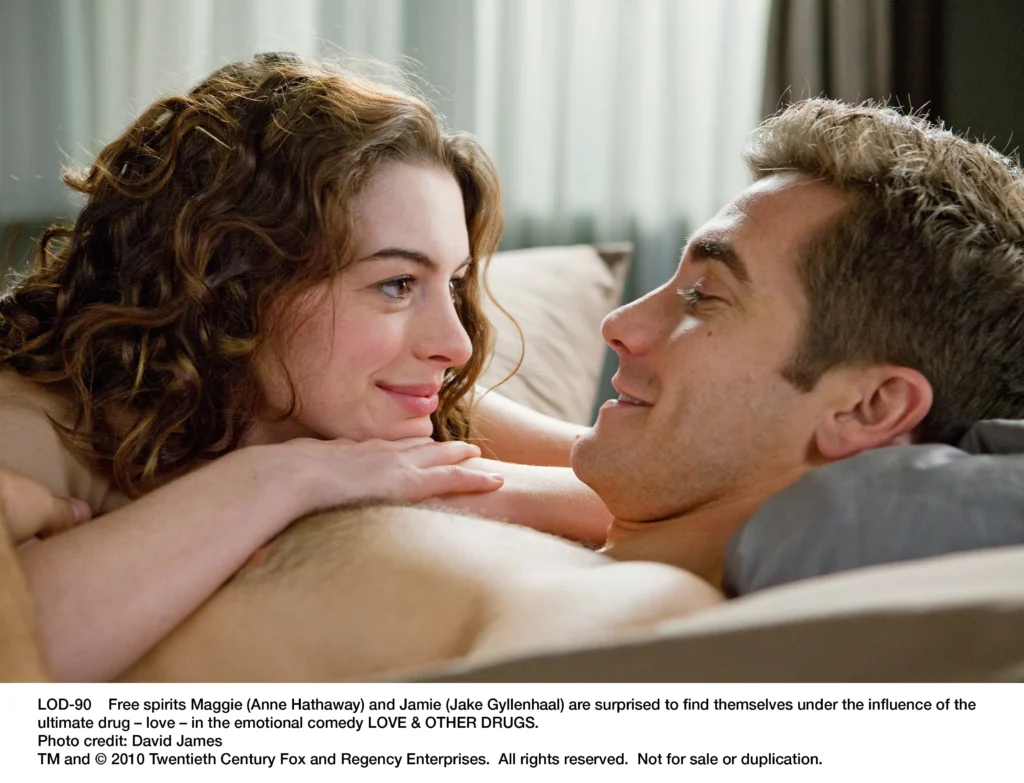
Edward Zwick can create grand spectacle (“The Last Samurai,” “Glory,” “Defiance”) but he is unsurpassed in creating honest moments of intimacy in couple relationships, from “thirtysomething” to “Once and Again” with his frequent partner, Marshall Herzkovitz. Zwick is co-writer and director of “Love and Other Drugs,” a very sexy romance set in the 1990’s world of pharmaceutical sales and health care challenges. Anne Hathaway and Jake Gyllenhaal, who played an unhappily married couple in “Brokeback Mountain” reunite in this film as a pair who are less naked with each other in the literal sense as they become more open to each other emotionally. I last spoke to Zwick about “Defiance” and was thrilled to have a chance to meet with him again to discuss one of my favorite films of the year.


Where did the movie come from?


Jamie Reidy wrote this book, Hard Sell, which doesn’t have a lot to do with the movie, but it is about his experiences as a pharmaceutical rep at the time of the introduction of Viagra. And a very talented guy named Charles Randolph wrote a draft of the script and it talked a lot about the Viagra experiences but it didn’t talk about the relationship that much. And then Marshall and I took that, keeping a lot of stuff that was Charles’ that was really good but also trying to add stuff we felt it needed.

It was a very interesting moment in American cultural history. Suddenly the FDA said they were relaxing the rules on advertising drugs to consumers. And consumers were going to their doctors and saying, “I want this.” Ad sales skyrocketed and drug sales skyrocketed. It was a go-go time in the 90’s. Everything was about making money and the character seemed to embody that to me.


We finished the script and then said, “Who is out there right now that really enchants us as actors?” I’d known Jake a little bit. His parents are in the business. I’d seen his work grow and grow and grow and I felt there were parts of him I knew that I hadn’t seen, that I felt I could show people and surprise them with. And Annie’s work was already great, and I saw her in “Rachel Getting Married” and especially Shakespeare in the Park and I said, “This girl is really great. She wants to take risks.” I said, “That’s who I want to do this movie.” I thought, “That’s a very sparkly, very sexy combo, and I went after them.”


They each had very interesting things to say about the script. They’re both very smart, intellectually smart and actor smart. We got to know each other very well. You have to gain a real level of trust to make a movie like this. Can we be both truthful and funny about squirmy personal things? Can we find moments that are relatable beyond just these two? It evoked all sorts of things in my own life and for other people, I hope. It’s contemporary not just about the relationship but about somebody not being able to get their meds.


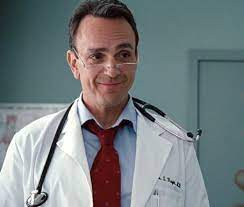
I was glad to see one of my favorite actors, Hank Azaria, in the film and I thought he was superb as the doctor. He has a difficult part because he has to create a very full character while delivering a lot of information about the medical profession.


He can do anything and do it so effortlessly you don’t see him working. Doctors are kind of this shibboleth in our society. We know what they do and we depend on them but we don’t know a lot about what it feels like from their side. The fact that this guy’s life could be morally ambiguous in certain degrees or that he would have complaints or frustrations or a cynical view of certain things was an opportunity within his character to reveal certain things. It was intrinsic to who his character was as opposed to being a mouthpiece for a movie. The key to write him was to understand what his circumstance was. And Hank is so good he rounds that out and makes it organic.


And what a surprise to see Jill Clayburgh and George Segal, a blast from them 70’s past.


Just to sit on the set with George and Jill was like bathing in the 1970’s movie culture. It was so important to me. They had each done Paul Mazursky movies, “Blume in Love” and “An Unmarried Woman,” those were touchstones to my childhood. And they were generous and fun and we hung together.


One of my favorite scenes in the movie is the Parkinson’s patient group meeting. Those were actors, weren’t they?


No, those were real Parkinson’s patients. I’ve known Michael J. Fox for a long time and I talked to him a lot about this. He said to me, “You have to understand. You can’t make it funny enough.” I said, “I got it.” We got a lot of patients and I gave them a lot of things to say, and then I asked them to tell me about their experience. These are good-hearted funny people reflecting on their experience. Yes, illness is serious, but the indignities are also funny. And that defines my world view. There is nothing that is so serious that you can’t also see its comic side. Comedy is a way of talking about the most serious things. I’m interested in the word “and,” not the word “but.”


How do you market a movie like this?


By showing the movie, by word of mouth. It’s about letting the movie sell itself, by showing the film to people and letting them talk about it. It’ll be interesting because it’s not one thing. It’s not a sequel or a remake or a superhero. It’s not a conventional rom-com. I’m going to a bunch of cities to get the word out. It’s a harder time to make original, less conventional movies. But God, we need them!

Related Tags:


Directors Interview Writers
THE MOVIE MOM® is a registered trademark of Nell Minow. Use of the mark without express consent from Nell Minow constitutes trademark infringement and unfair competition in violation of federal and state laws. All material © Nell Minow 1995-2026, all rights reserved, and no use or republication is permitted without explicit permission. This site hosts Nell Minow’s Movie Mom® archive, with material that originally appeared on Yahoo! Movies, Beliefnet, and other sources. Much of her new material can be found at Rogerebert.com, Huffington Post, and WheretoWatch. Her books include The Movie Mom’s Guide to Family Movies and 101 Must-See Movie Moments, and she can be heard each week on radio stations across the country.

Website Designed by Max LaZebnik