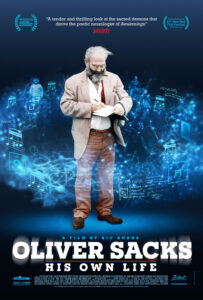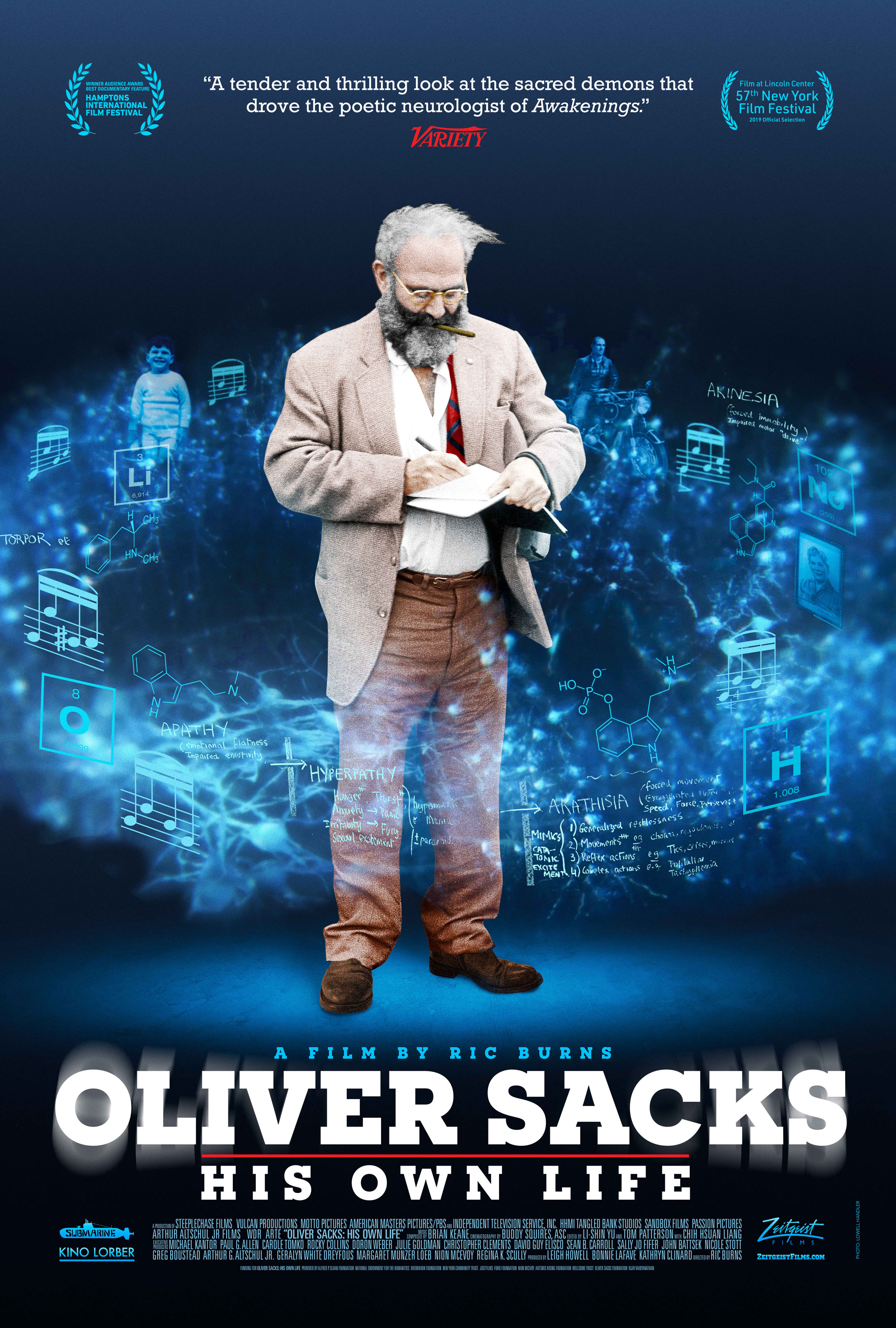
Oliver Sacks: His Own Life

Oliver Sacks: His Own Life

Posted on September 22, 2020 at 5:52 pm

B +
Lowest Recommended Age: High School
MPAA Rating: Not rated
Profanity: Some mild language
Alcohol/ Drugs: Drinking and drugs
Violence/ Scariness: References and some archival footage of illness and disability
Diversity Issues: A theme of the movie
Date Released to Theaters: September 23, 2020

Copyright Zeitgeist 2020
I wonder what kind of case study Oliver Sacks could write about himself. The author of many books about neurological issues including The Man Who Mistook His Wife for a Hat would make a fascinating subject for clinical assessment himself. It was that book that really transformed my thinking about the highly individualized ways we perceive and process information. While he wrote about extreme cases, from the man with brain damage who lived in an eternal present, with no capacity to create new memories to the post-encephalitic “locked-in” patients portrayed in the movie “Awakenings” and Temple Grandin, who has written so eloquently herself about her autism.

Oliver Sacks has, by any measure, an unusual brain. He has face-blindedness, for example, the inability to recognize even the faces of people he knows very well. And he has an exceptionally unusual combination of the kind of deep humanity that often accompanies empathy that can make it difficult to maintain observational objectivity. But what makes him unusual is that he also has the objectivity to be an exceptional clinician. The post-encephalitic patients had sad for years without any effort to help them before Sacks, who was coming for research, not clinical practice, came up with the idea of treating them with new medication that was being used to help people with Parkinson’s. He has, one commenter tells us, “the moral audacity to think something is alive in there.”

Very significantly, we learn in this film, Sacks revitalized the concept of the medical case study, which was considered outdated in a world driven by data. The case study is like a little novel. It is about the person, not the symptoms. Early in the film, Sacks tells us that he is equally a writer and a doctor, and we can see how each plays a part in his understanding of his patients. He says the primary diagnostic question is, “How are you?” He saw the symptoms as a reflection of cognition and perception, not just a reflection of brain damage or dysfunction. And framing the patient’s experience as a story is in itself therapeutic, making the case for sympathy and imagination. “His attention would release people.” They would be “storied back into the world.”

Sacks, who sees the patients with such wholeness and compassion, is compartmentalized himself. There is not only the writer/doctor split. His middle name is Wolf, and he sees himself as both Oliver and wolf, a yin/yang brain/body divide. He has been criticized for being an observer rather than a theorist, but as Grandin points out, without observation there is nothing to theorize about. Many people had the chance to observe the post-encephalitic patients, but Sacks observed something in them no one else did, and that observation included possibility of change.

In one of his books, Sacks wrote about a patient who could “hear” words spoken but not the inflections that reveal context and emotion, so very concrete and literal, and one who was the opposite, unable to comprehend language but acutely sensitive to tone and expression, who was thus in some ways better at discerning meaning. Sacks’ own superior observational skills were in part made possible by the deficits that eliminated distracting data.

Sacks relies on the support of others in his own life, outsourcing many tasks and even emotions and relationships. He has been in psychoanalysis for half a century. He took a lot of risks and abused drugs in his 20s. He gets help from his editor and close friend on some of life’s mundane details. After a one-night-stand on his 40th birthday, he did not have sex again for 25 years, and it was not until his 60’s that he had a close, intimate romantic relationship. And. we learn, early on in the film, he has been told he has only months left to live. With the same clinical distance he showed toward his own medical issues in A Leg to Stand On, he observes himself as a patient as he creates for us “a master class in how to die.” But it is also a master class in how to live, as he says, how to live with what can’t be changed and frame it as a story to give it meaning.

Parents should know that this movie includes frank discussion of drug abuse and sex as well as depictions including archival footage of people who have serious medical challenges. There is also a reference to Sacks’ own recovery from a serious accident.

Family discussion: How did Sacks’ experience as a child affect his decisions in his career? How did being a writer and a doctor help him be better at both?

If you like this, try: “Awakenings” and Sacks’ books
Related Tags:


Biography Documentary Illness, Medicine, and Health Care movie review Movies -- format Movies -- Reviews
The Way I See It

The Way I See It

Posted on September 18, 2020 at 11:01 am

B +
Lowest Recommended Age: Middle School
Profanity: None
Alcohol/ Drugs: None
Violence/ Scariness: Historical events, including military action and school and church shootings
Diversity Issues: A theme of the movie
Date Released to Theaters: September 18, 2020

Copyright 2020 Jaywalker Films
Pete Souza proves and exemplifies two perennial adages: If a picture is worth a thousand words, the photographs of Pete Souza, are as eloquent as a whole library. And if journalism is the first draft of history, Souza not only reminds us of how much of our sense of events is formed by images like his, and in his new documentary, “The Way I See It,” like the photographs he took, reward a deeper look.

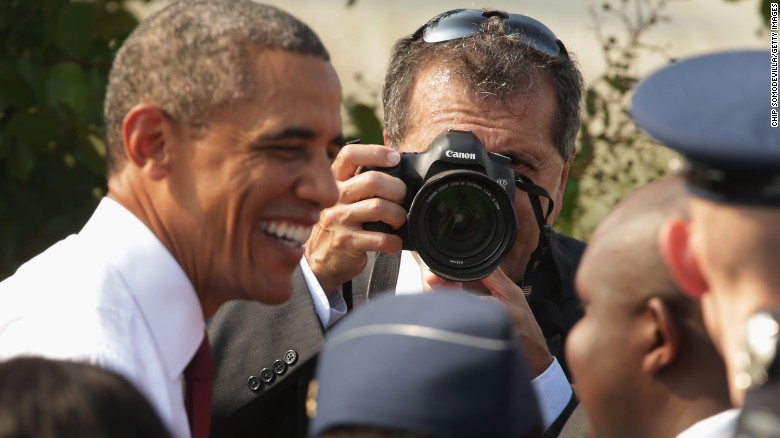
Pete Souza tells us he served as White House photographer to the most iconic Republican President, Ronald Reagan, and the most iconic Democratic President, Barack Obama, and that his inspiration was the work of his predecessors, including Cecil William Stoughton, John F. Kennedy’s photographer, and Yoichi Okamoto, who was Lyndon Johnson’s photographer. We see how revealing the photographs are, not just the images themselves but the way they reflect the Presidents, their personal style, their sense of history, their era, and what today we might call their brand. Presidents Reagan and Obama might both be iconic, but their approach to the photographs was very different. Reagan, coming from Hollywood, was acutely aware of image and messaging. In behind-the-scenes archival footage we see him with Nancy, coming up with what he thinks will be an appealing pose.

Obama, on the other hand, was more interested in an authentic portrait to bring Americans into his life. The one time he wanted to make sure a moment was captured for posterity was a very personal one; a successful block in a one-on-one basketball game with Reggie Love, his body man and friend, who was bigger and more experienced but not as competitive. Obama not only wanted a “jumbo” (the constantly updated photos selected for display through the White House); he wanted a signed admission from Love.

Souza did not think of himself as political, especially during his first stint at the White House. But after President Trump took office, Souza began responding to his most provocative tweets via Instagram posts from his archive of Obama images. He thus learned for the first time the term “throwing shade,” an understated but devastating counterpoint. His pictures took on a whole new meaning, leading to a book called Shade: A Tale of Two Presidents. A telling example is the well-known image of Obama and his advisors, including Hillary Clinton, in the situation room during the raid on Bin Laden’s hideout. The are all looking intently and with their full attention at the screen so they will not miss a second. The image Trump released from his situation room is posed, with him and his advisors facing the camera.

We hear from Obama-era advisors and historian Doris Kearns Goodwin but this is really Souza’s story, especially when we get to Obama’s pushing him to propose to his long-time girlfriend. “He wants everyone to be married,” Souza says, clearly reflecting on the warmth of the Obamas’ own relationship. Finally, the President made Souza an offer he could not refuse: a wedding in the Rose Garden, with Obama himself as an officiant. He does not say so, but he’s probably wishing he could have been the photographer as well as the groom.

This is a moving story of what it is like to be in the room where it happens, and to share that with the people who entrust the President with our lives and our freedom.

Parents should know that this film includes depiction of real-life tragedies, including school shootings and military actions.

Family discussion: What do we learn about each President’s personality and priorities in the photographs of the White House photographer? Did this movie change your mind about any of the Presidents it covered?

If you like this, try: Souza’s books

Related Tags:


Documentary movie review Movies -- format Movies -- Reviews Politics
Fast Times at Ridgemont High Table Read: Aniston, Pitt, Roberts, Morgan Freeman, and of course Sean Penn

Fast Times at Ridgemont High Table Read: Aniston, Pitt, Roberts, Morgan Freeman, and of course Sean Penn

Posted on September 18, 2020 at 10:14 am

Copyright 2020 Jimmy KImmel
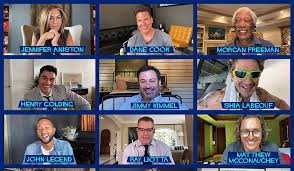
Imagine the 80’s classic “Fast Times at Ridgemont High” starring Oscar winners Morgan Freeman, Brad Pitt, Julia Roberts, John Legend, Matthew McConaughey and, of course, Sean Penn, plus Jennifer Aniston, Henry Golding, Jimmy Kimmel, and Shia LeBoeuf, and some comments from the original author, Cameron Crowe, who based the film on his own experiences as an undercover adult reporter pretending to be a high school kid, and director Amy Heckerling. As host Dane Cook and cast member (Mark “Rat” Ratner) reminds us, some changes have occurred since then so watch it with a sense of how far we’ve come rather than being surprised or offended. As much fun as it is to see these pros take on these roles, by far the best part is watching the actors enjoy each other’s performances, especially Sean Penn watching Shia LeBoeuf take on his iconic role of Spicoli.

And be sure to support Sean Penn’s charity, CORE, which supports COVID-19 testing and relief efforts.

Related Tags:


Cool Stuff
The Broken Hearts Gallery

The Broken Hearts Gallery

Posted on September 10, 2020 at 1:00 pm

B +
Lowest Recommended Age: Mature High Schooler
MPAA Rating: Rated PG-13 for sexual content throughout and some crude references, strong language and drug references
Profanity: Some strong and explicit language
Alcohol/ Drugs: Alcohol, drug references
Violence/ Scariness: Emotional confrontations, reference to a sad offscreen death
Diversity Issues: Exceptionally inclusive
Date Released to Theaters: September 11, 2020

Copyright 2020 TriStar Pictures
Maybe it’s my pandemic brain, but I found “The Broken Hearts Gallery” the most delightful romantic comedy in a long time, and I can’t wait to see it again. For all those who have been decrying the end of the romantic comedy because it is just too hard to come up with reasons to keep the lovers apart, let me make this Exhibit A for the defense. It turns out to be very simple. All you need is actors with enormous magnetism and chemistry, some banter that goes snap, crackle, and pop, a couple of misunderstandings and miscommunications, the all-important apology, and of course, spoiler alert, the happy ending. “The Broken Hearts Gallery,” written and directed by “Gossip Girl’s” Natalie Krinsky, is as refreshing and delicious as an ice cream cone on a hot day.

All credit to Krinsky, but the heart of this movie in every way is the adorable Geraldine Viswanathan (“Blockers,” “Bad Education”) as Lucy, who is every bit as endearing as any of the queens of romantic comedies from Doris Day to Meg Ryan and all of the various Jennifers and Jessicas with quippy best friends usually played by Judy Greer. Speaking of the essential role of the quippy best friends, A+ for the two in this film, played by powerhouses-who-deserve-their-own romantic comedies, “Hamilton’s” Phillipa Soo and “Booksmart’s” Molly Gordon as Lucy’s BFFs, support system, and Greek chorus.

Lucy has two passions. The first is art, especially the not-yet-discovered artists with something new to bring to the world. She has a low-level job in a high-level art gallery owned by a “Devil Wears Prada”-style terrifying boss lady, the film’s only under-written character and her name is too-on-the-nose Eva Woolf for goodness sakes. On the considerable other hand, she is played by Broadway legend Bernadette Peters. Lucy’s other passion is holding on to mementos and artifacts of failed relationships, which are more important to her than the relationships themselves. When she loses her current boyfriend, a colleague in the gallery (Utkarsh Ambudkar as Max) and her job in the same #epicfail, she tipsily climbs into a car she mistakes for a Lyft, the handsome guy who owns the car (Dacre Montgomery as Nick) decides to drive her home, and we can check off “meet cute” on our romantic comedy bingo card. Other boxes are checked off nicely, too as the couple bicker, develop grudging respect and then affection as they accomplish something together, get close, get less close, and then, well you know. Plus karaoke, exes, and, of course, wandering through an open market.

Here is what is not on the bingo card but should be from now on: like “The Personal History of David Copperfield,” this movie is casually, un-self-consciously, and joyfully inclusive in a way that feels bountiful, generous, and heart-warming. Krinsky does not waste time worrying about whether related characters look like they share DNA or have names to match their ethnicity, or whether a romantic comedy lead should be blonde and blue-eyed and size 00, and that allows us the luxury of freedom not to worry about it either. Romantic comedies may be aspirational with a dream of perfect understanding and intimacy and witty dialogue, but this one is understatedly aspirational on a whole other level.

Just as revolutionary, this movie gives us a romantic comedy heroine who is not insecure and clutzy. Lucy has issues but she also has confidence and a sense of where she is going. She is coping with loss in some ways that are more constructive than others, like everyone else, but understanding that is what life and movies are all about.

Nick is trying to open a boutique hotel, still under construction and running out of money. He impulsively hangs one of Lucy’s mementos, Max’s tie, on a nail and that inspires her to create the title art installation, which becomes hugely popular, and hugely cathartic for the broken-hearted people who come by to share their stories. The loss of a love is, Lucy says, the loneliest feeling. Sharing the story makes it less lonely. So does a charming romantic comedy that opens up all kinds of new possibilities, including looking for more from its talented writer/director and cast.

Parents should know that this film has some strong language and explicit sexual references that might earn an R if it were not a comedy. Characters drink and get tipsy and there is a drug reference.

Family discussion: What mementos are meaningful to you and why? What art installation can you create?

If you like this, try: “The Personal History of David Copperfield”

Related Tags:


Comedy movie review Movies -- format Movies -- Reviews Race and Diversity Romance
New Oscar Diversity Qualifications Announced

New Oscar Diversity Qualifications Announced

Posted on September 8, 2020 at 8:28 pm

The Academy of Motion Picture Arts and Sciences has announced new diversity requirements for films that want to be eligible for Oscar awards.

Oscar hopefuls will have to meet a new set of inclusive hiring standards in order to qualify for Best Picture, an effort the Academy of Motion Picture Arts and Sciences hopes will lead to greater diversity and representation both onscreen and behind the scenes.

It’s part of the Academy Awards’ ongoing response to criticism over its lingering lack of diverse nominees. The outcry became particularly intense five years ago when the hashtag #OscarsSoWhite forced a reckoning within the organization. Since that time, leadership of the Academy has tried to improve diversity within its voting body and encourage positive discussions within the industry, but this new set of guidelines is aimed at making it mandatory for contenders to be more inclusive of those who have traditionally been marginalized in Hollywood.

The policies will only become mandatory for the 96th Academy Awards in 2024, which will give would-be contenders three years to make sure they meet at least two of the four categories below that are designated A, B, C, and D.

STANDARD A: ON-SCREEN REPRESENTATION, THEMES AND NARRATIVES
To achieve Standard A, the film must meet one of the following criteria:

A1. Lead or significant supporting actors — At least one of the lead actors or significant supporting actors is from an underrepresented racial or ethnic group.

• Asian
• Hispanic/Latinx
• Black/African American
• Indigenous/Native American/Alaskan Native
• Middle Eastern/North African
• Native Hawaiian or other Pacific Islander
• Other underrepresented race or ethnicity

A2. General ensemble cast — At least 30% of all actors in secondary and more minor roles are from at least two of the following underrepresented groups:

• Women
• Racial or ethnic group
• LGBTQ+
• People with cognitive or physical disabilities, or who are deaf or hard of hearing

A3. Main storyline/subject matter — The main storyline(s), theme or narrative of the film is centered on an underrepresented group(s).

• Women
• Racial or ethnic group
• LGBTQ+
• People with cognitive or physical disabilities, or who are deaf or hard of hearing

STANDARD B: CREATIVE LEADERSHIP AND PROJECT TEAM
To achieve Standard B, the film must meet one of the criteria below:

B1. Creative leadership and department heads — At least two of the following creative leadership positions and department heads—Casting Director, Cinematographer, Composer, Costume Designer, Director, Editor, Hairstylist, Makeup Artist, Producer, Production Designer, Set Decorator, Sound, VFX Supervisor, Writer—are from the following underrepresented groups:

• Women
• Racial or ethnic group
• LGBTQ+
• People with cognitive or physical disabilities, or who are deaf or hard of hearing

WATCH

Archaeologist Reviews Archaeology in Movies, from ‘Indiana Jones’ to ‘Lara Croft: Tomb Raider’
More Vanity Fair Videos
MOST POPULAR
Image may contain: Human, Person, Suit, Coat, Clothing, Overcoat, Apparel, Face, and Meghan Markle
Prince Harry and Meghan Markle Are “Relieved and Pleased” to Pay Off the Frogmore Cottage Renovations
BY KATIE NICHOLL
Image may contain: Water, Outdoors, Nature, Sport, Sports, Human, Swimming, Person, and Underwater
On Witness and Respair: A Personal Tragedy Followed by Pandemic
BY JESMYN WARD

The Trump Campaign Is Spending Money Like a Guy Who Bankrupted a Casino (And Five Other Businesses)
BY BESS LEVIN
At least one of those positions must belong to the following underrepresented racial or ethnic group:

• Asian
• Hispanic/Latinx
• Black/African American
• Indigenous/Native American/Alaskan Native
• Middle Eastern/North African
• Native Hawaiian or other Pacific Islander
• Other underrepresented race or ethnicity

B2. Other key roles — At least six other crew/team and technical positions (excluding Production Assistants) are from an underrepresented racial or ethnic group. These positions include but are not limited to First AD, Gaffer, Script Supervisor, etc.

B3. Overall crew composition — At least 30% of the film’s crew is from the following underrepresented groups:

• Women
• Racial or ethnic group
• LGBTQ+
• People with cognitive or physical disabilities, or who are deaf or hard of hearing

STANDARD C: INDUSTRY ACCESS AND OPPORTUNITIES
To achieve Standard C, the film must meet both criteria below:

C1. Paid apprenticeship and internship opportunities — The film’s distribution or financing company has paid apprenticeships or internships that are from the following underrepresented groups and satisfy the criteria below:

• Women
• Racial or ethnic group
• LGBTQ+
• People with cognitive or physical disabilities, or who are deaf or hard of hearing

The major studios/distributors are required to have substantive, ongoing paid apprenticeships/internships inclusive of underrepresented groups (must also include racial or ethnic groups) in most of the following departments: production/development, physical production, post-production, music, VFX, acquisitions, business affairs, distribution, marketing and publicity.

The mini-major or independent studios/distributors must have a minimum of two apprentices/interns from the above underrepresented groups (at least one from an underrepresented racial or ethnic group) in at least one of the following departments: production/development, physical production, post-production, music, VFX, acquisitions, business affairs, distribution, marketing and publicity.

C2. Training opportunities and skills development (crew) — The film’s production, distribution and/or financing company offers training and/or work opportunities for below-the-line skill development to people from the following underrepresented groups:

• Women
• Racial or ethnic group
• LGBTQ+
• People with cognitive or physical disabilities, or who are deaf or hard of hearing

STANDARD D: AUDIENCE DEVELOPMENT
To achieve Standard D, the film must meet the criterion below:

D1. Representation in marketing, publicity, and distribution

The studio and/or film company has multiple in-house senior executives from among the following underrepresented groups (must include individuals from underrepresented racial or ethnic groups) on their marketing, publicity, and/or distribution teams.

Related Tags:


Awards Disabilities and Different Abilities Gender and Diversity Race and Diversity
THE MOVIE MOM® is a registered trademark of Nell Minow. Use of the mark without express consent from Nell Minow constitutes trademark infringement and unfair competition in violation of federal and state laws. All material © Nell Minow 1995-2026, all rights reserved, and no use or republication is permitted without explicit permission. This site hosts Nell Minow’s Movie Mom® archive, with material that originally appeared on Yahoo! Movies, Beliefnet, and other sources. Much of her new material can be found at Rogerebert.com, Huffington Post, and WheretoWatch. Her books include The Movie Mom’s Guide to Family Movies and 101 Must-See Movie Moments, and she can be heard each week on radio stations across the country.

Website Designed by Max LaZebnik