The Roses

The Roses

Posted on August 25, 2025 at 5:57 pm

B-
Lowest Recommended Age: Mature High Schooler
MPAA Rating: Rated R for language throughout, sexual content, and drug content
Profanity: Constant very strong and crude language
Alcohol/ Drugs: Drinking, drugs, drunkenness
Violence/ Scariness: Comic, cartoon-style peril, characters injured and killed
Diversity Issues: None
Date Released to Theaters: August 28, 2025
Copyright 2025 Searchlight

There’s a reason romantic fairy tales end with the wedding, assuring us that the couple lived happily ever after but not taking on the difficult task of showing us what that looks like. Very few movies attempt to show what happens after love is declared and the wedding cake has been served to the guests, when the couple has to figure out how to hold onto the stardust while sharing the grubbier and surprisingly controversial tasks of operating a household and, for many, raising children.

“The Roses,” like the 1989 Michael Douglas and Kathleen Turner “War of the Roses,” is based on a book by Warren Adler. Gone Girl author Gillian Flynn calls that book “Terrifying, black-humored, black-hearted and bristling,” a description many people might apply to her own work. The book and the two movies are about a once-loving marriage that curdles into scabrous loathing.

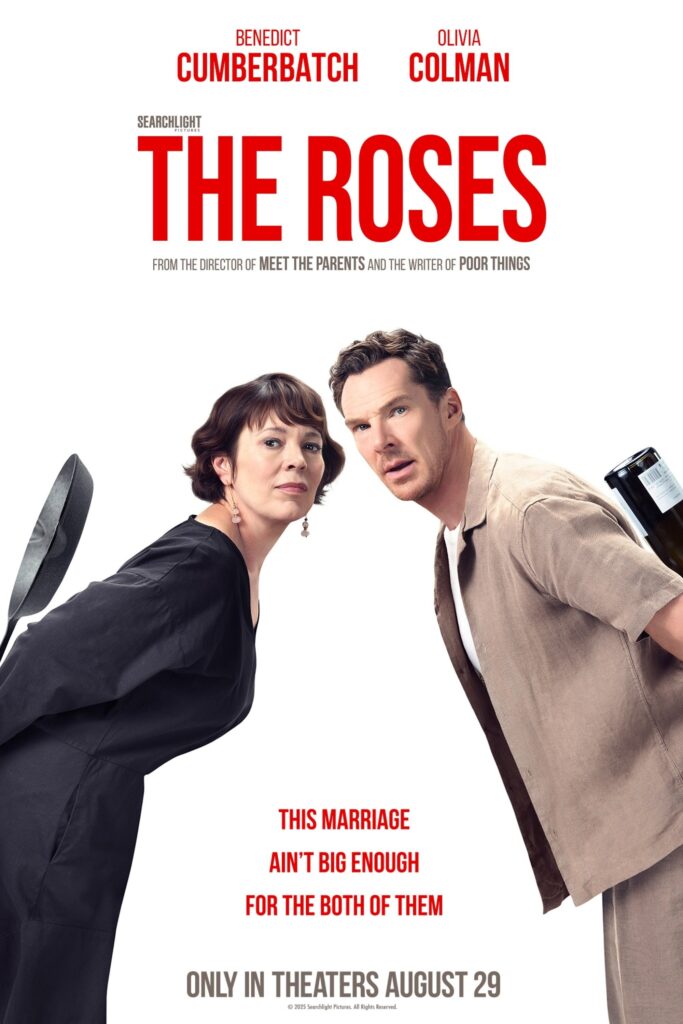
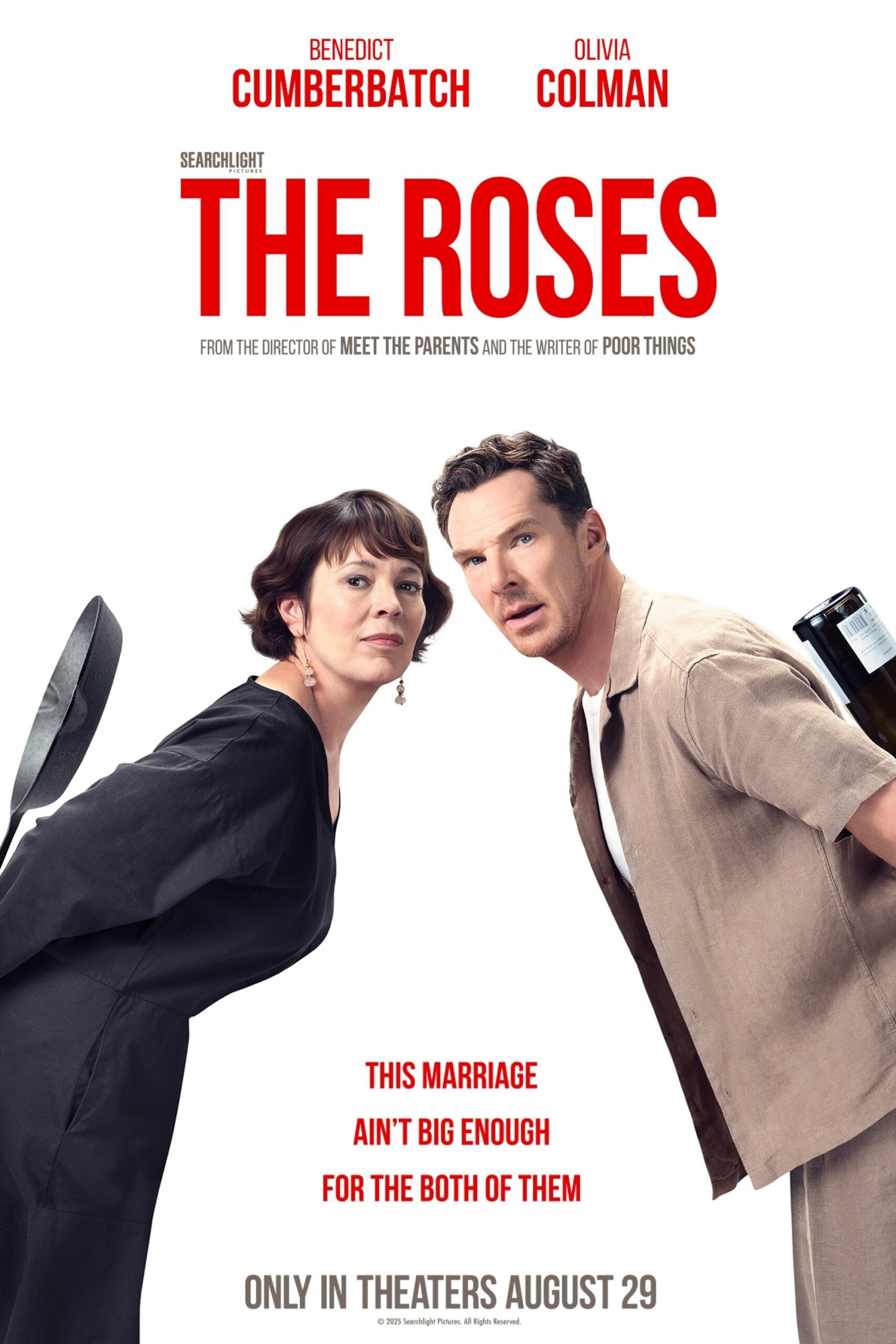
This lightly adapted version, changing some details but retaining the vitriol, stars Benedict Cumberbatch as Theo, an architect, and Olivia Colman as Ivy, a chef. The movie opens in a disastrous session with a counselor, as the couple tries to come up with what they love about each other but cannot resist the temptation to insult each other as viciously as possible instead. The counselor tells them there may not be a way to move forward and we get a glimpse of the underlying connection between them. They cannot help laughing at the brutality of the insults. You know the song lyric, “too hot not to cool down?” This is “too hot to ever get irretrievably icy.”

We go back in time to see their meeting in London, both of them unhappy because their ideas are not appreciated by their employers. Their immediate attracting is electric and speaking of too hot not to cool down, minutes after meeting they are having sex in the refrigerator closet.

A few years later, they are in California, parents of twins. Theo is excited about the unveiling of his dream project, a maritime museum and Ivy enjoys her barely-breaking-even crab restaurant near the water. They disagree about some parenting choices; Ivy loves to give them sugary treats and Theo is all about eating healthy and working out. But they are endearingly supportive of one another.

And then, their fortunes turn upside down. Theo’s building collapses, along with his future in the profession, the same night Ivy’s 30 covers a day restaurant instantly becomes impossible to get a reservation following one rave review. Ivy takes over as breadwinner, and Theo takes over as full-time dad, housekeeper, and physical trainer for the twins, who are as into it as he is. This is when Theo and Ivy begin to resent and then feel like they loathe each other. They separate

Colman and Cumberbatch are so endlessly watchable that it’s almost easy to overlook that this is essentially a one-joke movie, the same one over and over as Ivy and Noah get increasingly more frustrated and hurt and lash out in increasingly more lacerating ways. Comedy often comes from seeing someone burn bridges we do not dare to. The brilliant supporting cast is woefully underused, except for Allison Janney, transcending the limits of the script as Ivy’s divorce lawyer, and it just gets exhausting. The ending tries to have it both ways, likely to leave audiences saying, “Wait, what?” On the way there, depending on your tolerance for people saying terrible things to their spouses, you may find it funny.

Parents should know that this movie includes very crude and graphic language and sexual references, extreme insults and pranks, and drinking, drunkenness, and drug use. While presented in a heightened comic tone, the underlying hostility may disturb some audience members.

Family discussion: Did you find yourself taking sides over the course of the film? Whose side? Did you switch sides?

If you like this, try; “The War of the Roses” and the book by Warren Adler and, for a more dramatic and romantic look at marital discord over the years, “Two for the Road”
Related Tags:


Based on a book Comedy Family Issues movie review Movies -- format Movies -- Reviews Remake
Empire of Light

Empire of Light

Posted on December 8, 2022 at 5:38 pm

C
Lowest Recommended Age: Mature High Schooler
MPAA Rating: Rated R for sexual content, language and brief violence
Profanity: Very strong language
Alcohol/ Drugs: Alcohol, smoking, medication
Violence/ Scariness: Racist mob violence
Diversity Issues: A theme of the movie
Date Released to Theaters: December 9, 2022

Copyright 2022 Searchlight
“Empire of Light” has such enticing visuals and such thoughtful performances it can almost lull audiences into forgetting that the storyline and characters are like pieces from different jigsaw puzzles. They never come together. And, more problematic, they are two-dimensional cardboard depictions, not the real thing or even a worthy substitute.

The title refers to the setting, a once-grand movie theater called Empire across from the beach along England’s south coast. It is 1980, near the end of the year.

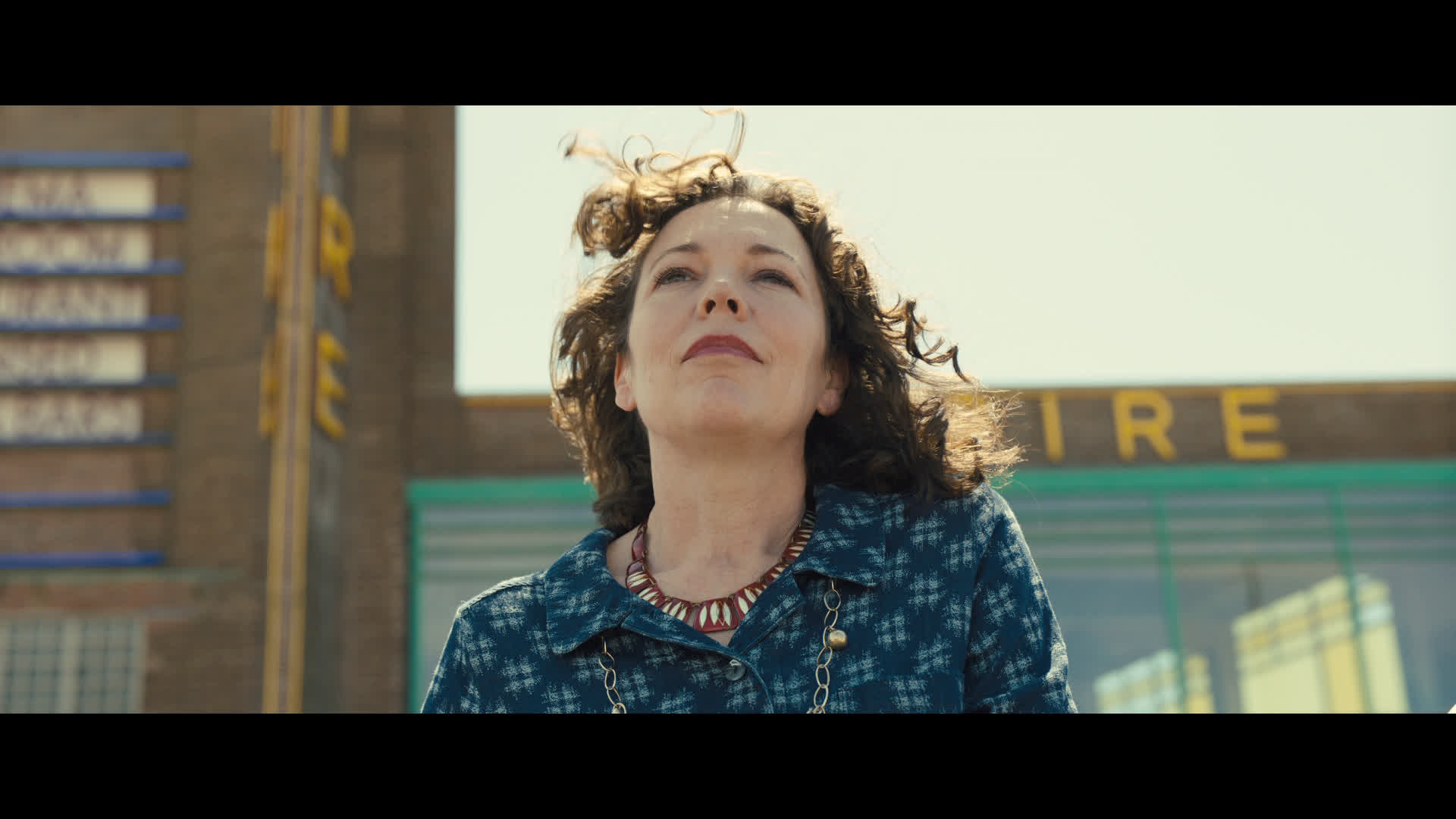
Hilary (Olivia Colman) is the manager, taking care of just about everything from sweeping up spilled popcorn to placing the boss’s slippers in front of the space heater to matching up the ticket stubs to make sure every customer is accounted for. It also includes sexually servicing the boss, Donald Ellis, who murmurs tender nothings like “You’re so helpful.”

Hilary has recently returned to the theater after a stint in a mental hospital. She takes medication for bipolar disorder and has regular check-ins with a doctor. That may be why she is tamped down, or it just may be English reserve. Or both. She admits to him that she feels a bit numb. Colman, never less than superb, is the best part of the film, showing us how Hilary’s smile and her eyes communicate opposite emotions.

The other staff includes Norman, the projectionist, who is proud of his understanding of optical physics (Toby Jones), Janine, with wild hair and punk-black lipstick (Hannah Onslow), and quiet but observant Neil (Tom Brooke). One day, Ellis introduces a new employee, Stephen (Micheal Ward), the son of an African immigrant, who is a nurse at the local hospital. Hilary is drawn to him, his gentle care for a bird with a broken wing and his good humor. She stops taking her medication and begins to feel less numb. Some feelings are welcome, some not, as when she snaps at Stephen for trying to amuse Janine by imitating an elderly customer. The same goes for an underused Jones, who is stuck with explaining the magic of the stories projected on a beam of light. Hilary’s recognition of the abuse Stephen suffers because he is Black seems like it is from another movie. A better one, as the issue is more about her reaction than about his experience.

The cinematography by all-time great Roger Deakins is enticing and production designer Mark Tildesley, who gives the Empire theater just the right amount of faded glory, especially in the top floor, once additional theaters with a gracious lounge, now abandoned by everyone but pigeons.

It is a joy to see Colman as Hilary. She shows us the pain and isolation Hilary is experiencing and handles the various stages of bipolar disorder without losing sight of the feelings of anger, jealousy, and longing that are about being human, not about being mentally ill. Ward has enormous appeal. But neither can overcome the underwritten characters created by writer/director Sam Mendes. Small moments engage us, especially those with Tanya Moodie as Stephen’s mother and Crystal Clarke as his love interest. but it never comes together. By the time Hilary finally decides to actually watch a movie and not just supervise the operations of the theater, the message is unforgivably heavy-handed, with the selection, a movie about someone who is removed from what is going on around him, just in case we did not get the message. Movies can be magical. They can bring us together. As Roger Ebert liked to say, they can be empathy machines. But not this one.

Parents should know that this film includes brief violence from a racist mob. Characters use strong language and they smoke and drink. Hilary takes (and does not take) psychotropic medication. There are sexual references and explicit situations.

Family discussion: What did Hilary learn about Stephen when he rescued the bird? Why didn’t she watch the movies? What movies feel magical to you?

If you like this, try: “Blinded by the Light,” set in the same era, and “The Fabelmans”

Related Tags:


Drama movie review Movies -- format Movies -- Reviews Romance
The Father

The Father

Posted on March 9, 2021 at 9:13 am

B +
Lowest Recommended Age: High School
MPAA Rating: Rated PG-13 for some strong language, and thematic material
Profanity: Some strong and crude language
Alcohol/ Drugs: Alcohol and medication
Violence/ Scariness: Tense confrontations
Diversity Issues: Disability issues
Date Released to Theaters: March 10, 2021

Copyright 2020 Sony Pictures Classics

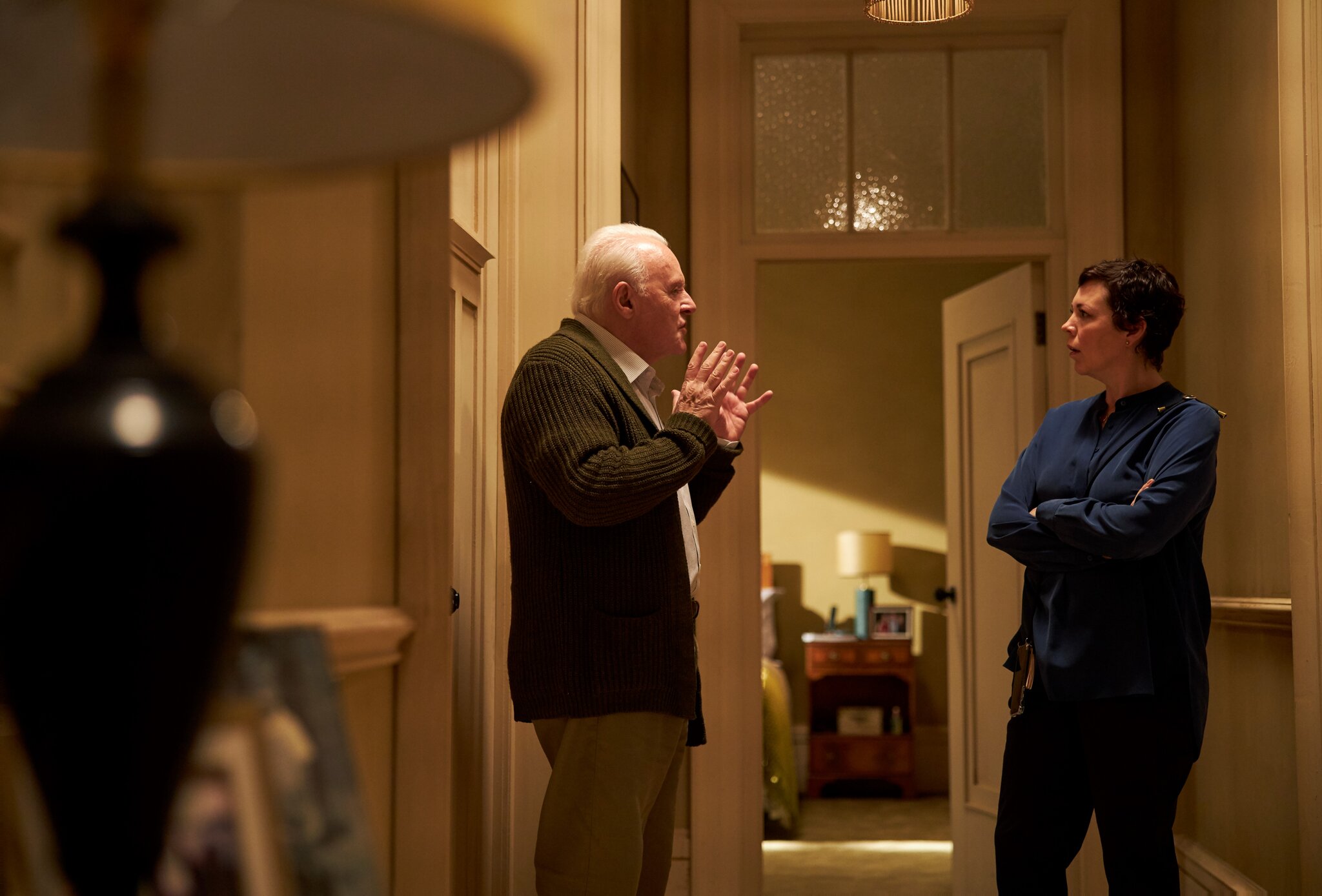
The beginning of any story — a movie, a play, a book — is like a puzzle. We are hardly aware of all the information we are processing, all the clues we are parsing to let us know who the characters are, where they are, when they are, and what is going on between them. And so, in “The Father,” we quickly come to some conclusions about Anthony (pronounced “An-tony”), played by Sir Anthony Hopkins. His daughter Anne (Olivia Colman) visits him in his apartment to chide him about firing his latest caregiver, as he has her several predecessors, and tells him that he must find a way to get along with his next caregiver because she is leaving London to live with her new boyfriend in Paris.

And then the movie proceeds to undermine almost everything we think we have seen and we gradually realize that we are seeing the world subjectively, through Anthony’s eyes and ears and he is the most unreliable of story-tellers because he is struggling with dementia. Just as last year’s “The Sound of Metal” told us the story of a musician’s hearing loss by letting us hear what he heard, and not hear what he didn’t, “The Father” tells us the story of Anthony’s fading memory by filtering what we are seeing through his ability to process it, so we are as unsure and unsettled as he is.

Everything we bring to the film about forming judgments and drawing conclusions is constantly undermined. Anne is sometimes played by Colman, sometimes by Olivia Williams. Sometimes she is married, sometimes divorced. Sometimes it’s his apartment, sometimes he has moved in with Anne. Sometimes he stands in the hallway, disoriented and lost. Sometimes Anne’s husband barks angrily at him.

A new caregiver (Imogen Poots) comes for an interview and we see Anthony putting everything he has into being charming and capable. He tells her he was once a tap dancer. (He was not.) He offers her a drink and has one himself. He tells her she looks like his other daughter, the one he thinks is still alive (she is not).

Hopkins is made for this role. Only a man of his decades of experience and dedication to meticulously observed and fearlessly vulnerable performances could show us Anthony’s valiant efforts to stay himself, to stay in charge. That makes the final moments, when we are finally returned to our own safe space as objective observers, even more shattering.

Parents should know that this movie concerns dementia and he strain it puts on family as well as the person struggling with memory loss. It includes some strong language, alcohol, and medication.

Family discussion: Does this film make you think differently about what it is like to have memory loss? How are the people in your life helping those who are facing this issue and those who are caring for them?

If you like this, try: “Away from Her,” “Still Alice,” “Still Mine,” “Dick Johnson is Dead,” “The Roads Not Taken,” and “Supernova”

Related Tags:


Drama Family Issues Illness, Medicine, and Health Care movie review Movies -- format Movies -- Reviews
THE MOVIE MOM® is a registered trademark of Nell Minow. Use of the mark without express consent from Nell Minow constitutes trademark infringement and unfair competition in violation of federal and state laws. All material © Nell Minow 1995-2025, all rights reserved, and no use or republication is permitted without explicit permission. This site hosts Nell Minow’s Movie Mom® archive, with material that originally appeared on Yahoo! Movies, Beliefnet, and other sources. Much of her new material can be found at Rogerebert.com, Huffington Post, and WheretoWatch. Her books include The Movie Mom’s Guide to Family Movies and 101 Must-See Movie Moments, and she can be heard each week on radio stations across the country.

Website Designed by Max LaZebnik