Ebenezer

Ebenezer

Posted on November 12, 2026 at 4:36 pm

B
Lowest Recommended Age: Middle School
MPAA Rating: Rated PG-13 for frightening material
Profanity: None
Alcohol/ Drugs: None
Violence/ Scariness: Scary ghosts, child abuse, sad deaths
Diversity Issues: Class and economic diversity
Date Released to Theaters: November 13, 2026
Ebenezer
Copyright 2026 Paramount

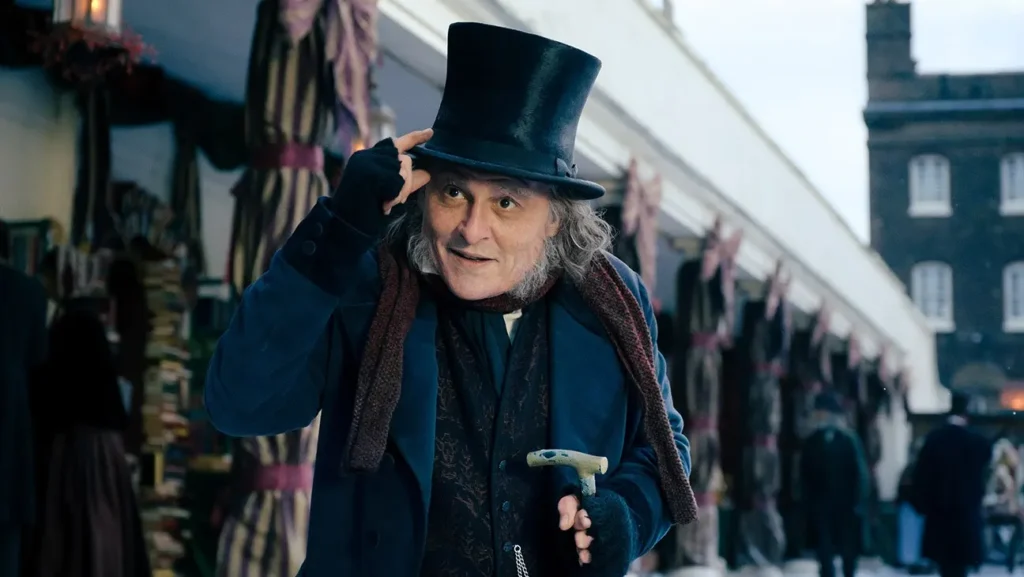
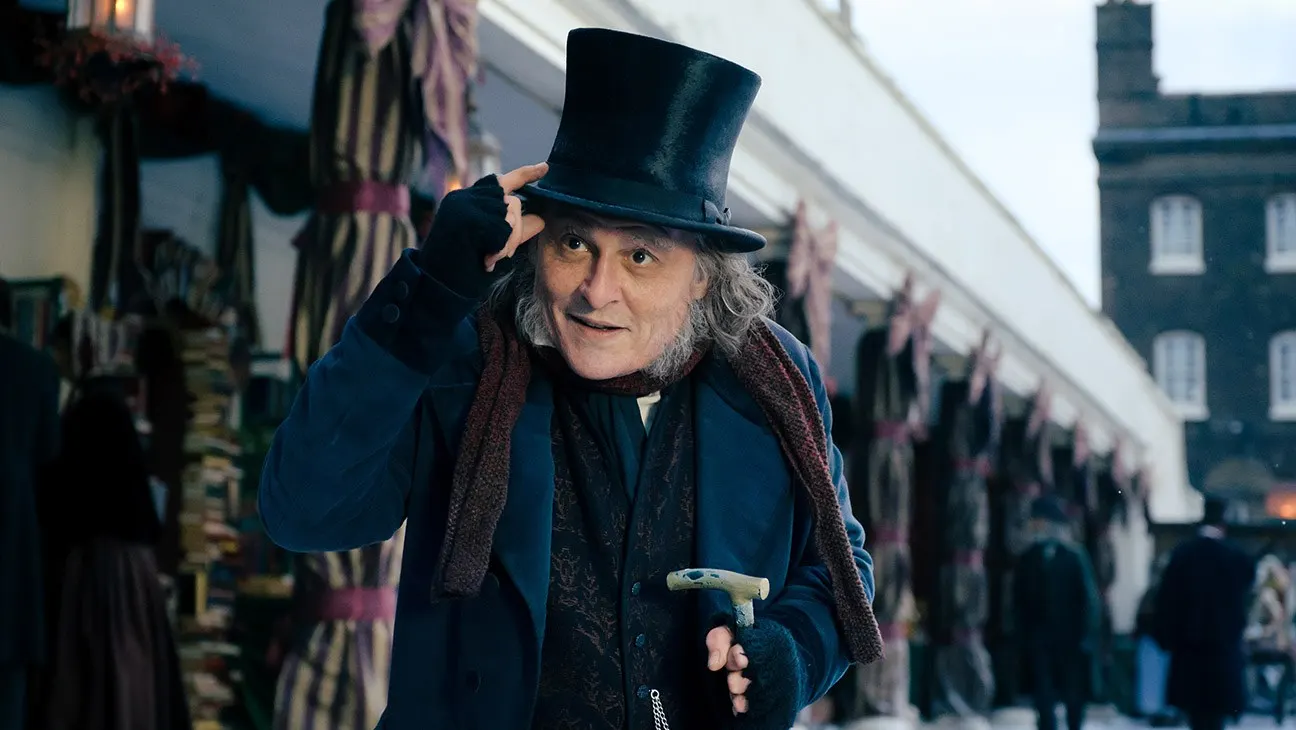
“Ebenezer” is the lastest of more than a dozen version of Charles Dickens’ A Christmas Carol. It is easy to understand the appeal of adapting the classic story of the cruel miser who is visited by three spirits on Christmas Eve and discovers the Christmas spirit for the screen. It is short, it is colorful and heartwarming, and the it is impossible not to warm to the idea of showing a man his own life to bring him to understanding and humanity. This version would be fine if not for so many that are better. My own favorites are the Alistair Sim version, the MGM version, and the Mr. Magoo musical. There are lesser versions as well. This latest, starring Johnny Depp, comes somewhere in the middle.

The setting is beautifully realized. Production design by Eve Stewart and cinematography by Checco Varese invite us into a chilly winter in Dickens-era London. It is Christmas Eve and Ebenezer Scrooge (Depp) and his partner, Jacob Marley (Sir Ian McKellen) are working on the books of their office, their clerk, Bob Cratchit (“Harry Potter’s” Rupert Grint) trying to ignore the cold and finish up so he can get home. Then Marley suddenly dies.

Seven years later, Scrooge has not spent the money to change the Scrooge and Marley sign outside the office and he is still threatening to make Cratchit come to the office on Christmas Day. Visitors arrive. First s Scrooge’s nephew, Fred (Sam Claflin), who wishes his uncle a merry Christmas and invites him to dinner. Scrooge rudely declines both. Then a pair of businessmen arrive to ask Scrooge to contribute to a charity providing food for the poor. Scrooge rudely declines them as well, accusing them of skimming the funds for themselves.

That night, Scrooge is visited by Marley’s ghost, who tells him that he will be visited by three spirits so he may avoid his partner’s fate of haunting the world bearing the chains his cruelty and selfishness forged to weigh him down after death. The first is the Spirit of Christmas Past (Andrea Riseborough), a sadder and scarier ghost than in most versions, who shows Scrooge some painful moments when he was a boy and a young man. Then is the near-gluttonous Spirit of Christmas Present (Trammell Tillman) who shows him the Cratchit family and Fred’s dinner with his wife and friends. And then there is the spooky, hooded Spirit of Christmas Yet to Come.

Scrooge is constantly peering through windows. It reminds us that he separates himself from others but it gets heavy-handed and repetitive. When he wakes on Christmas morning and wants to speak to the boy outside, instead of raising the window as in other versions, he smashes the glass. The eyes of the Spirit of Christmas Past have no iris, and her mention of her own regrets that doomed her to help others change their ways again communicate distancing and unwillingness to see others.

The images of crows throughout are also overdone. Much of what we know of the story is left out, including the merry and loving celebrations of the Cratchits and Fred. While those who are familiar with the story will miss seeing favorite moments, the bigger problem is that it removes the balance from what is presented to Scrooge, so his change of heart is not as meaningful.

Director Ti West (“V/H/S,” “Pearl’) leans into the horror of Scrooge’s literal and metaphoric haunting, and Depp shows us the way the miser’s past history of abuse, grief, and regret are turned outward to distance any possibility of warmth or generosity. In the book, the Spirit of Christmas Present lifts his robe to show Scrooge two starving waifs called Ignorance and Want. In this version, they gruesomely appear inside the dying spirit’s rib cage. Like some of the other changes, it is possibly more cinematic, but not particularly significant in telling the story.

The movie is fine. Parts of it are better than fine. But it never comes close to the far better films.

Parents should know that this film includes many supernatural characters and settings, some very disturbing. The story features child abuse, bullying, greed, and a sad offscreen death.

Family discussion: What does Scrooge learn from reviewing his past? Why does he reject Fred? If you were visited by three spirits, what would you want to see?

If you like this, try: the book and the other versions of the story as well as other Dickens books and films like David Copperfield and Great Expectations.
Related Tags:


Based on a book Drama Epic/Historical Fantasy movie review Movies -- format Movies -- Reviews Remake
Sense and Sensibility

Sense and Sensibility

Posted on October 14, 2026 at 5:41 pm

B +
Lowest Recommended Age: Middle School
MPAA Rating: Rated PG for some thematic elements, partial nudity and brief violence
Profanity: None
Alcohol/ Drugs: Social drinking
Violence/ Scariness: Duel (no one hurt)
Diversity Issues: Class issues
Date Released to Theaters: October 16, 2026
Copyright 2026 Focus

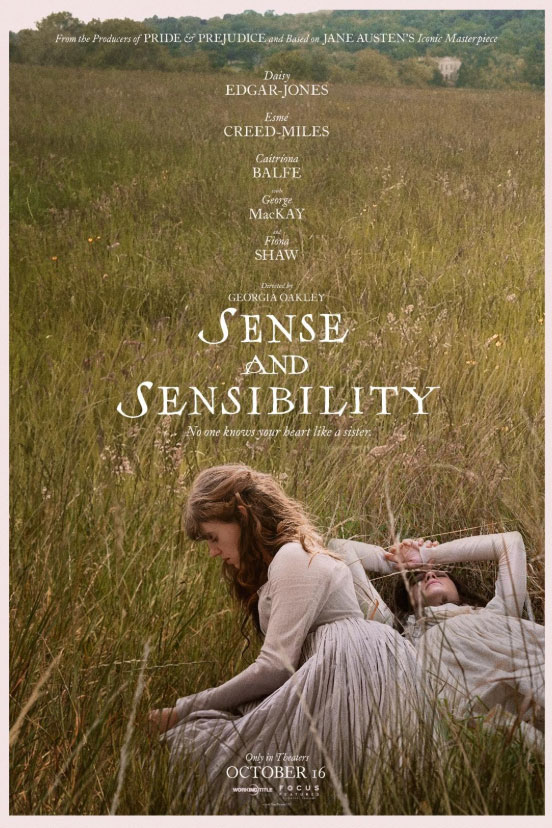
The new version of “Sense and Sensibility” is based on the classic Jane Austen book about two sisters, which has already inspired a beloved 1995 film starring Emma Thompson and Kate Winslet with Thompson’s Oscar-winning screenplay, as well as a 1971 four-part BBC miniseries, a 1981 seven-part BBC miniseries, a three-part BBC miniseries, two Hallmark movies, as well as many lightly inspired variations including one starring the Duff sisters and one called “From Prada to Nada.” So, any new version should find some way to justify itself by showing us some new insight or some improvement in acting or script. This latest version does not meet that test, but it does remind us why the story endures over the generations. The Emma Thompson version directed by Ang Lee is still the best, but this one, written and directed by women, is a pleasure to watch, despite some odd departures from the source material. 

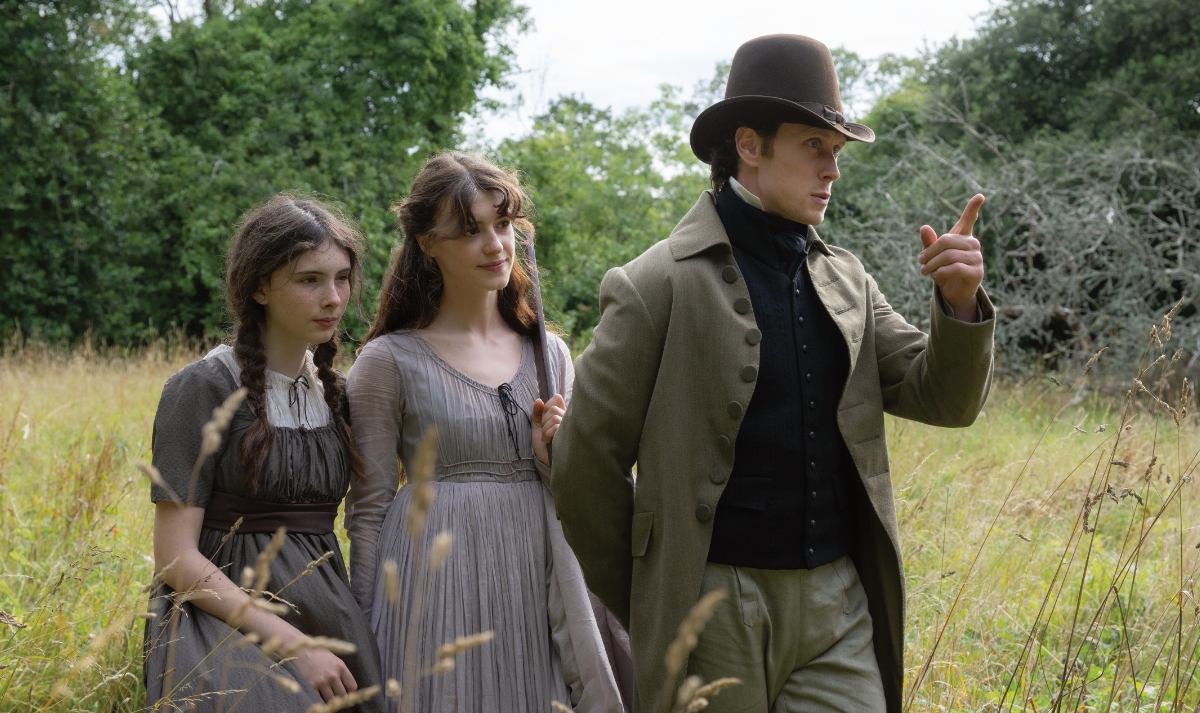
As in all of the previous versions and as indicated by the title, the two devoted sisters represent two different ways of looking at the world. Elinor Dashwood (Daisy Edgar-Jones) represents sense with an outlook that is practical and analytical. Marianne (Esmé Creed-Miles) is passionate, impulsive, and dreamy.  Director Georgia Oakley and screenwriter Diana Reid introduce us to Marianne as she is peacefully lying in a field and she is most often seen outdoors, while Elinor is usually inside.As the story begins, the girls’ father has died. As we know all too well from the literature of and about the period, that means their home will be inherited by their brother John (Tom Brooke of “Slow Horses”), because property almost always was entailed – automatically inherited by — the male heirs. John arrives with his selfish wife Fanny (Stacy Martin), who makes no effort to hide her wish that Marianne and Elinor, along with their mother, (Caitríona Balfe of “Outlander) and sister Margaret (Bodhi Rae Breathnach) would leave as soon as possible. While they try to find a place they can afford, Fanny’s shy brother Edward (George MacKay) comes for a visit. He and Elinor quickly become friends. While her behavior is perfectly proper, she and her mother begin to think he might propose. But he does not. And soon the Dashwoods have to accept the only offer of a new home they have, on the property of a distant relative, the warm-hearted but raucous and gossipy Mrs. Jennings (Fiona Shaw). Marianne, outdoors as usual, twists her ankle and is rescued by the handsome and very dashing Mr. Willoughby (Frank Dillane, who played the teenaged Tom Riddle in “Harry Potter and the Half-Blood Prince”). Despite Elinor’s pleas to be careful, Marianne loses her heart to him immediately and is certain he will propose to her. When he leaves abruptly, she is devastated.

One wise choice in this film was casting actors closer to the ages of the characters in the book. Winslet was 19 when she played Marianne, but Thompson and Grant were in their mid-30s. Edgar-Jones and Creed-Miles are young enough to understand their characters’ more naive choices. The use of the settings, glowingly filmed by Arnaud Potier, enhances the story. MacKay and Balfe are very good, and so is Bodhi Rae Breathnach as the younger sister, Margaret. The stand-out is the always-great Shaw, who makes Mrs. Jennings less of a caricature than in some of the other versions.

It is difficult to imagine any reason for some of the departures from the book than a lack of confidence in the audience attention span. Changing the character of Lucy Steele (Ceara Coveney) from the crass daughter of a middle-class landlord to recently impoverished upper class makes her role in the story less compelling. And there is simply no possible reason to insert a ridiculous duel.

Austen’s story and characters, appealing young performers, beautiful cinematography and score (Roger Goula) make this a worthy watch and a reason to be optimistic about the inevitable future version.

Parents should know that this film has brief partial nudity and brief violence (a duel, but no one gets hurt).

Family discussion: Are you more like Elinor or Marianne? Why has this story been so beloved for centuries?

If you like this, try: the book by Jane Austen and the Thompson/Grant/Winslet/Rickman version

Related Tags:


Based on a book Drama movie review Movies -- format Movies -- Reviews Remake Romance
The Odyssey

The Odyssey

Posted on July 15, 2026 at 12:00 pm

B +
Lowest Recommended Age: High School
Profanity: Some strong language
Alcohol/ Drugs: Memory-erasing flowers, wine
Violence/ Scariness: Extenseive war-time peril and violence, monsters, many characters injured and killed, graphic and disturbing images
Diversity Issues: None
Date Released to Theaters: July 17, 2026
The Odyssey
Copyright 2026 Universal

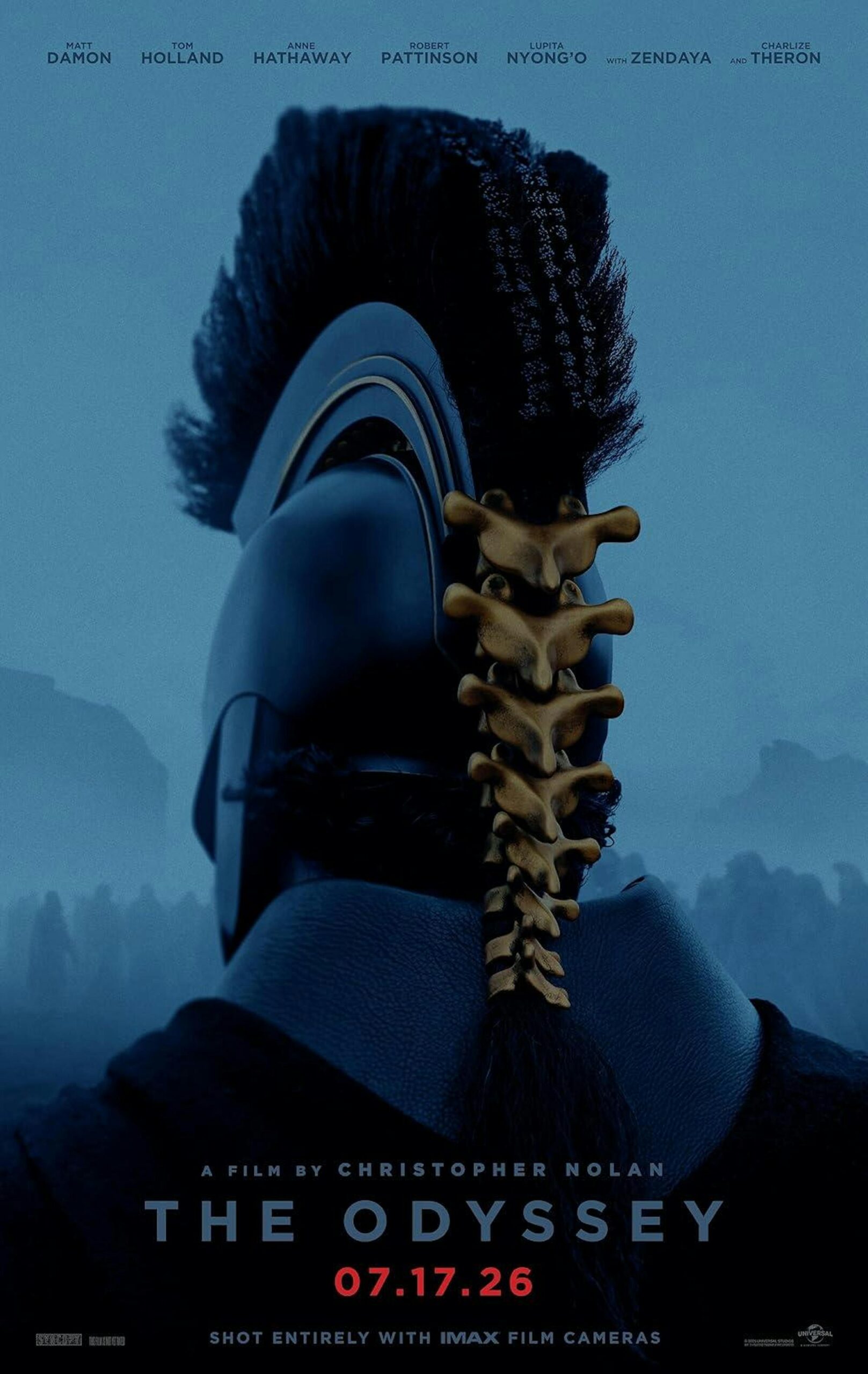
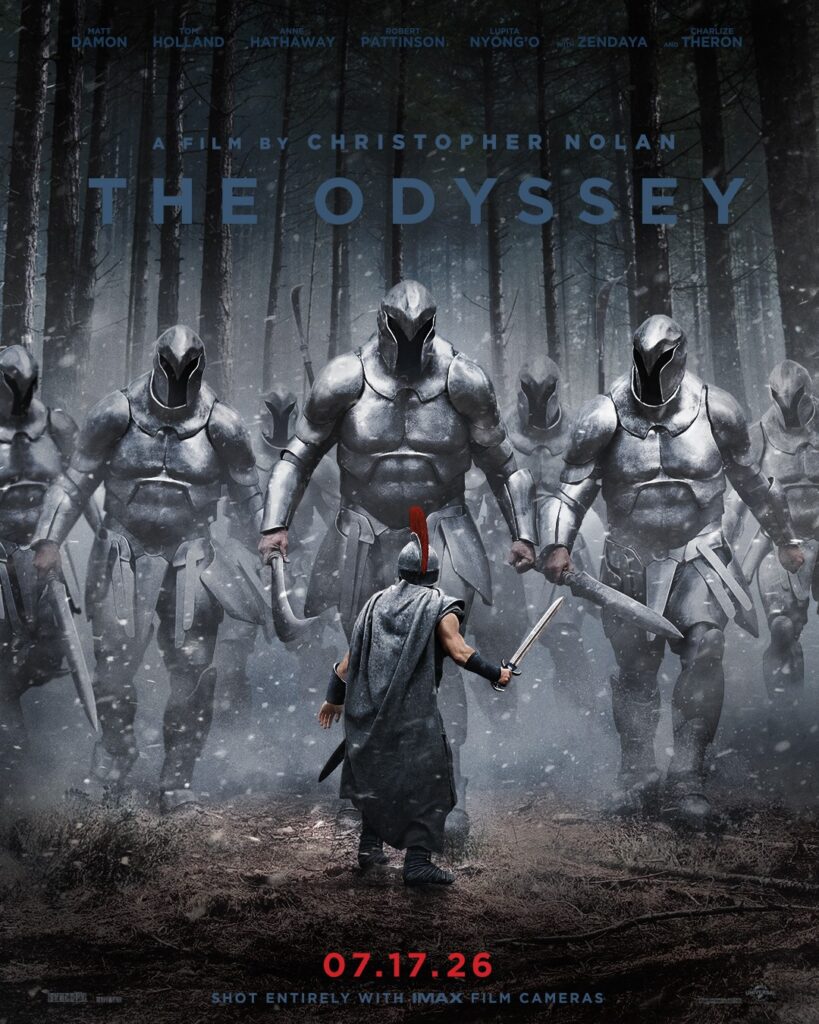
One of the foundational stories of the Western canon has a grand, sweeping, meticulously diligent new version in writer/director Christopher Nolan’s epic film, bristling with Oscar-winning talent and impressive seriousness of purpose. It is, with a few significant exceptions, true to Homer’s story dating back to 700-800 BC. But there are also vestigial reflections of Nolan’s previous film, “Oppenheimer,” both stories of men who must grapple with the consquences of their destructive, even ruthless, acts during wartime.

Matt Damon plays one of history’s most complex heroes, Odysseus, whose name and story still define journeys of adventure thousands of years later. The Odyssey follows Odysseus on his long voyage home after the victory of the Greeks, led by Agamemnon, with Achilles, Ajax, and Odysseus, in the Trojan War. Paris, a Trojan prince, had been asked to decide which of three goddesses was the most beautiful. Aphrodite, the goddess of love, bribed him by saying that if he picked her, she would give him the most beautiful human woman in the world. That woman was Helen (Lupita Nyong’o). She was the wife of the Greek king, Menelaus of Sparta (Jon Bernthal). But she is known throughout history as Helen of Troy, because she was kidnapped (or ran away with) Paris, leading to the war that made her known as “the face that launched a thousand ships.”

That war lasted ten years. It was Odysseus, known for his trickery, who came up with the idea of getting the soliders inside the Trojan’s impenetrable city by hiding in a gigantic statue of a horse, with a soldier named Sinon (Elliot Page) left behind to lie that the Greeks had retreated, leaving the horse as a tribute to the goddess Athena (Zendaya). When the Trojans drag it into the city, the Greek soldiers come out to win a decisive battle and end the war. This story is told in Virgil’s Anead, and in Nolan’s film we see parts of it more than once in flashbacks, part of elliptical, non-linear story-telling that may be confusing to those not familiar with Homer’s tale. (To refresh your memory or just get a quick recap, try this.)

But really, all you need to know is that Odysseus is on his way home, leading his men in (to start with) three boats, hoping to make it back before Agamemnon reaches his home just to be competitive. (Agamemnon will get home first but then be murdered by his wife, Helen’s sister (also Nyong’o).

It will take Odysseus a decade, with many stops along the way as the crew tries to replenish their provisions. The most well-known of their adventures are all brought to screen in unprecedented splendor by Nolan, and his “Oppenheimer” team, editor Jennifer Lame, production designer Ruth De Jong, and Oscar-winning cinematographer Hoyte van Hoytema, filming in Greece, Italy, Iceland, Morocco, and Scotland. This is the first-ever feature movie filmed entirely with IMAX cameras (in tribute, you can even get an IMAX camera popcorn bucket) and shown in 70 mm. The visuals are never less than spectacular. Odysseus and his men are traveling by boat and the sky and “the wine-dark sea” Homer described is filmed with a power and grandeur of a true epic. We get a visceral feeling of just how alone these men are, not just before GPS but before maps and navigation, entrusting to the gods to guide them home but knowing that the gods may be even more devious tricksters than Odysseus himself.

Odysseus tries to follow the “laws of Zeus,” particularly with regard to hospitable treatment of strangers, and killing even animals with honor, plucking his bow string to give them a chance to escape. When lives are at stake, though, he will do what is expedient. On their first stop, he leads his men onto an island where a cave is set up as a home, with a cozy fire. According to his beliefs about what the laws of Zeus require and assuming that the inhabitant of the cave will believe the same, he orders his men to stoke the fire to welcome their host. But the inhabitant is not a man. He is a gigantic cyclops, and in a genuinely terrifying moment, as soon as he enters the cave, he grabs one of the men and bites his head off. It is hard to understand why Nolan chose to omit one of the key elements of the story, Odysseus refusing to give the cyclops his name, instead saying he was called “Noman.” This is a very significant part of the story that is parallel to his not using his own name when he returns home, both relating to his sense of himself and his identity.

After a few more deaths, Odysseus is able to lead his men to an escape. But he violates his obligation to give the murdered men a decent burial. The conflict between his obligations under the law of Zeus and the choices to save as many lives as possible are a theme.

Copyright 2026 Universal

This conflict is presented in the immediate consequences of killing the cyclops. Odysseus learns that the monster was the son of the god Poseiden, who will now express his grief and anger by keeping them from reaching home. As in Homer’s original story, it explores the theme of human agency and the interference of the gods. We often see Odysseus near the goddess Athena.

Other adventures include two enchantresses. Calypso ( Charlize Theron) feeds Odysseus lotus flowers that make him forget the PTSD of his agonizing choices but also the fact that he has a family. Circe (Samatha Morton) turns his famished men into pigs (an extraordinary scene of transformation and body horror), and we see how clever Odysseus is in figuring out what she has done and forcing her to reverse the spell and help him get home. He travels to Hades where he meets the ghost of Sinon. He straps himself to the mast of his ship while his men have their ears blocked with wax to pass through the jagged rocks where the sirens sing men to their deaths.

Meanwhile, his wife, Penelope (Anne Hathaway) and son Telemachus (Tom Holland) are back in Ithaca, with dozens of suitors eating their food, drinking their wine, and trying to get Penelope to marry one of them so he can take over the kingdom. The most odious of the suitors is Antinous (Robert Pattinson), a maniuplative schemer who got Sinon to take his place in the war. Telemachus leaves Ithaca to see if he can find any news of his father from Menelaus.

It will take all of Odysseus’ craftiness and strength to defeat the suitors and reunite with his wife and son. Damon’s performance shows us all of the complexity that makes Odysseus an eternally enthralling hero. Pattinson continues to impress as he subverts his considerable looks and charisma to create a despicable, cowardly character. John Leguizamo is superb as the loyal Eumaeus. Even the three-hour run time cannot find enough time for Theron, Zendaya, and Morton, but each of those encounters could be an entire movie.

Nolan’s screenplay veers into colloquialisms that take us out of the movie now and then. But he has an unsurpassed gift for the language of cinema. The scenes of exploration, combat, and in Penelope’s castle in Ithaca are striking and narratively clear. Penelope fends off the suitors by telling them she cannot move forward until she finishes weaving a burial shroud for her late father-in-law. She weaves during the day and then unravels it at night. She appears modestly behind a screen as the suitors crowd the dining hall.

Nolan’s style is chilly and cerebral, with the female characters thinly sketched and too often just creating problems for or taking power away from men. That may be one reason that draws him to a story where a military hero has encounters with literal enchantresses who impede his progress. His exploration here of the conflicts even successful warriors feel about what they have done and what they have seen is moving. He made very significant changes to Homer’s concluding scenes (admittedly, contested by some scholars as added by others later). But the ending he chose has the same problems as the disputed version and it undermines the weight of what he has presented so compellingly throughout the story.

Parents should know that this film is extremely violence with many characters injured and killed, many with throats slit, monsters, ghosts, and graphic and disturbing images. Odysseus is drugged and characters drink wine. There is some strong language.

Family discussion: Why is this one of the most enduring stories in history? What does Odysseus regret the most? What decisions did he make that you think were wrong?

If you like this, try: the book (Fagles or Wilson translation) and a modern re-imagining from the Coen brothers, “O Brother Where Art Thou.”

Related Tags:


Based on a book Epic/Historical IMAX movie review Movies -- format Movies -- Reviews Remake Road Trip War
“Wuthering Heights”

“Wuthering Heights”

Posted on February 11, 2026 at 2:40 pm

C
Lowest Recommended Age: Mature High Schooler
MPAA Rating: ated R for sexual content, some violent content and language
Profanity: Some strong language
Alcohol/ Drugs: Drinking and drunkenness
Violence/ Scariness: Some peril and violence, a hanging, medical crisis, sad deaths
Diversity Issues: Class diversity
Date Released to Theaters: February 13, 2026

Emerald Fennell’s new film is more of a a sexy perfume commercial than a version of the classic Emily Bronte novel. The title and character names are from the book as are the windswept moors that act as setting and metaphor. But the book is not a romance; it is a story of obsession, repression, grief, and generational trauma. This version changes some of the relationships and, significantly, backstories to center the passionate love affair between Catherine Earnshaw (Margot Robbie) and Heathcliff (Jacob Elordi).

The movie begins with a crude joke. We hear what sounds like a sexual situation, with bedsprings squeaking and increasingly heavy breathing. And then we see that the source of the sounds is….the last strangled breaths of a man who is being hanged. The crowd is watching it as great entertainment. And a young girl (Charlotte Mellington as young Catherine) is mesmerized.

Catherine lives with her dissolute, brutish father (Martin Clunes) in an isolated, once-grand home. There are a few shabby servants and a between-classes woman named Nelly (Hong Chau), the out-of-wedlock daughter of a nobleman, who serves as Cathy’s caretaker. Mr. Earnshaw impulsively brings home a boy he rescued from being beaten. He has no name, so Catherine dubs him Heathcliff (Owen Cooper of “Adolescence” as young Heathcliff), after her late brother.

Catherine and Heathcliff have an instant, deep connection, but it is not entirely reciprocal. They are a lesser version of Buttercup and Wesley; she takes advantage of him and teases him, he is never anything but devoted and sincere, and they never have any kind of honest conversation about their feelings or prospects. She sulks and flounces. When she makes them late for dinner, he takes a beating from Mr. Earnshaw by lying that he was responsible.

“Wuthering Heights”
Copyright Warner Brothers 2025

The tiny population of the home that gives the book and the movie its name is all the people in this isolated area of the moors until the wealthy Edgar Linton moves five miles away with his ward, Isabella. Fennell is always superb at giving us striking, spectacular images that tell us a great deal about the characters, and the Linton home is one of Production Designer Suzie Davies’ most stunning achievements. Catherine (now played by Robbie) looks almost feral as she goes through a garden wall to enter the Linton’s exquisitely civilized space.

Soon, Heathcliff leaves and Catherine is married to Edgar. She now has magnificent jewels and a series of fabulous gowns in gorgeous settings, a sharp contrast to the wildness of the moors. Just in case we don’t get the point, Isabella makes a doll version of herself and Catherine and puts them in a dollhouse version of the Linton mansion, which itself, like an infinite regression, has a miniature version so the dolls can play with their own dollhouse. Oh, and the Catherine doll has Catherine’s own hair, taken from her hairbrush.

Fennell has some wild details, including Edgar having Catherine’s bedroom painted the color of her complexion, down to her freckle, and Catherine peeking through the floorboards to watch her servants have sex in the stable, using the horse’s bridle as a sex toy. And, again, a departure from the book, when Heathcliff returns, years later, he and Catherine have an affair. Perhaps the most significant departure is eliminating several characters and the multi-generational elements of the story. Or maybe it is when characters in a sexual relationship of domination and humiliation, and the one who is dominated end up chained like a dog and forced to communicate by barking. There’s no reason to believe these people care about each other beyond the fact that there are literally no other people around.

Pretty people in beautiful settings yearning, hurting each other, having sex — eye candy, titillation, but very superficial. At least a perfume commercial is over quickly.

Parents should know that this movie has very explicit sexual situations and references including domination and bondage, an alcoholic and abusive parent, sad deaths, strong language, drinking and smoking.

Family discussion:

If you like this, try: the book and the other movie versions, especially the one starring Sir Laurence Olivier.

Related Tags:


Based on a book Drama movie review Movies -- format Movies -- Reviews Remake Romance Tragedy
Anaconda

Anaconda

Posted on December 24, 2025 at 6:15 pm

B
Lowest Recommended Age: High School
MPAA Rating: Rated PG-13 for violence/action, strong language, some drug use and suggestive references
Profanity: Strong language
Alcohol/ Drugs: Drinking and drug use (played for comedy)
Violence/ Scariness: Extended peril and violence, guns, explosions, scary giant snakes
Diversity Issues: None
Date Released to Theaters: December 25, 2025
Anaconda
Copyright Columbia 2025

If you are in the mood for a movie that is self-aware but still cheerfully and unapologetically stupid but in a very funny way, I’ve got good news. “Anaconda” is here.

You may wonder if this is a remake of a legendarily cheesey 1997 creature film called “Anaconda,” and the answer is, sort of, part reboot, part meta-commentary. If you have no idea that there even was a movie starring Jon Voight, Jennifer Lopez, Ice Cube, Owen Wilson, Danny Trejo, and Eric Stoltz, consider yourself lucky and don’t worry about it because everything you need to know to appreciate this film will be recapped for you as the four main characters talk about why they want to do a remake/update. And by the way, if you have never seen the 1997 version, this one might just inspire you to give it a try.

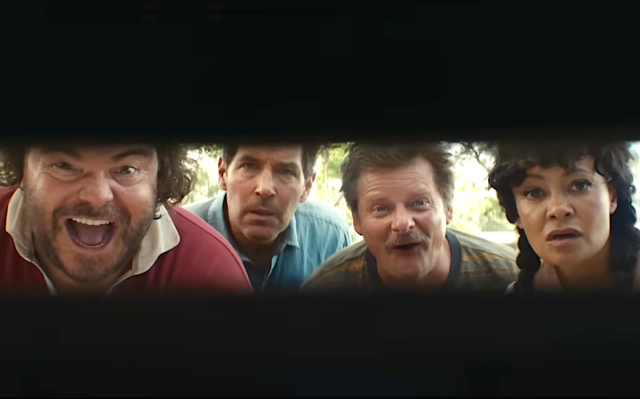
The four main characters, friends since childhood, are Doug, a wedding video photographer who would rather be making something more challenging (Jack Black), Griff, a Hollywood actor better described as unsuccessful rather than struggling, though he was in three episodes of “SWAT” (Paul Rudd), Kenny, once fired by Doug as a videographer because he was high (Steve Zahn), and Claire, a recently divorced lawyer looking for something to feel excited about (Thandiwe Newton, sadly underused as essentially the Wendy to the Lost Boys of the group). Griff tells the group he has obtained the rights to the 1997 “Anaconda” and proposes a 3-week shoot in the Amazon rainforest with him as star and Doug as director.

All four are at that mid-life point where they need to feel that they have not given up their dreams and so, with a screenplay by Doug and some modest financing from Claire, they are off to the rainforest. There they meet up with a snake wrangler named Santiago and his beloved anaconda, Heitor, and set off to film, having no idea that Ana, the person driving the boat (Daniela Melchior), is on the run from some scary-looking guys.

That’s the set up for a lot of meta-jokes about filmmaking, the process and the business, as well as various antics as many things go wrong in making their film, Ana’s pursuers keep pursing, and, perhaps needless to say, there are actual anacondas, well, CGI, but in the world of the movie, these are what Jon Voight called in the first film, “perfect killing machines” that “hold you tighter than your true love. And you get the privilege, of hearing your bones break before the power of embrace causes your veins to explode.”

The action and comedy, much of it extremely silly, are well balanced and keep things moving briskly. I might come down on the side of a little less carnage, but perhaps that is taking this more seriously than it is fair to expect of us. And some surprises near the end and during the credits are genuine delights.

Parents should know that this movie includes extended peril and violence including scary giant snakes, guns, and explosions. Characters are injured and killed. It also includes alcohol, drugs (portrayed for humor), and some strong language.

Family discussion: What project would you like to do with your friends? If you made a movie together, what would it be about?

If you like this, try: the original “Anaconda” film and “Tropic Thunder”

Related Tags:


Comedy movie review Movies -- format Movies -- Reviews Remake Scene After the Credits
THE MOVIE MOM® is a registered trademark of Nell Minow. Use of the mark without express consent from Nell Minow constitutes trademark infringement and unfair competition in violation of federal and state laws. All material © Nell Minow 1995-2026, all rights reserved, and no use or republication is permitted without explicit permission. This site hosts Nell Minow’s Movie Mom® archive, with material that originally appeared on Yahoo! Movies, Beliefnet, and other sources. Much of her new material can be found at Rogerebert.com, Huffington Post, and WheretoWatch. Her books include The Movie Mom’s Guide to Family Movies and 101 Must-See Movie Moments, and she can be heard each week on radio stations across the country.

Website Designed by Max LaZebnik