Trailer: The Dinner with Richard Gere and Steve Coogan
Posted on February 28, 2017 at 3:20 pm
Richard Gere, Laura Linney, Rebecca Hall, and Steve Coogan star in “The Dinner,” based on the international best-seller by Dutch author Herman Koch. At an elegant dinner the topic of conversation is far from elegant — what to do about two 15-year-old boys who have done something terrible.
Rated PG-13 for thematic elements, a violent image, sexuality and brief strong language
Profanity:
Some strong language
Alcohol/ Drugs:
Alcohol
Violence/ Scariness:
Suicides
Diversity Issues:
None
Date Released to Theaters:
March 10, 2017
Copyright CBS Films 2016
Life is messy. Stories are our way of cleaning it up to help us try to make sense of it. Some of those stories are in books or movies, but most of those stories are just the editing each of us does all the time in telling ourselves and others who we are. Whether it is explaining to a traffic cop why you should not get a ticket or the difference between the “how we met” story of a couple who are still together and one who has split up, or living in a version of Lake Woebegone, “where all the children are above average,” all of us burnish the truth a little to make ourselves feel better and look better.
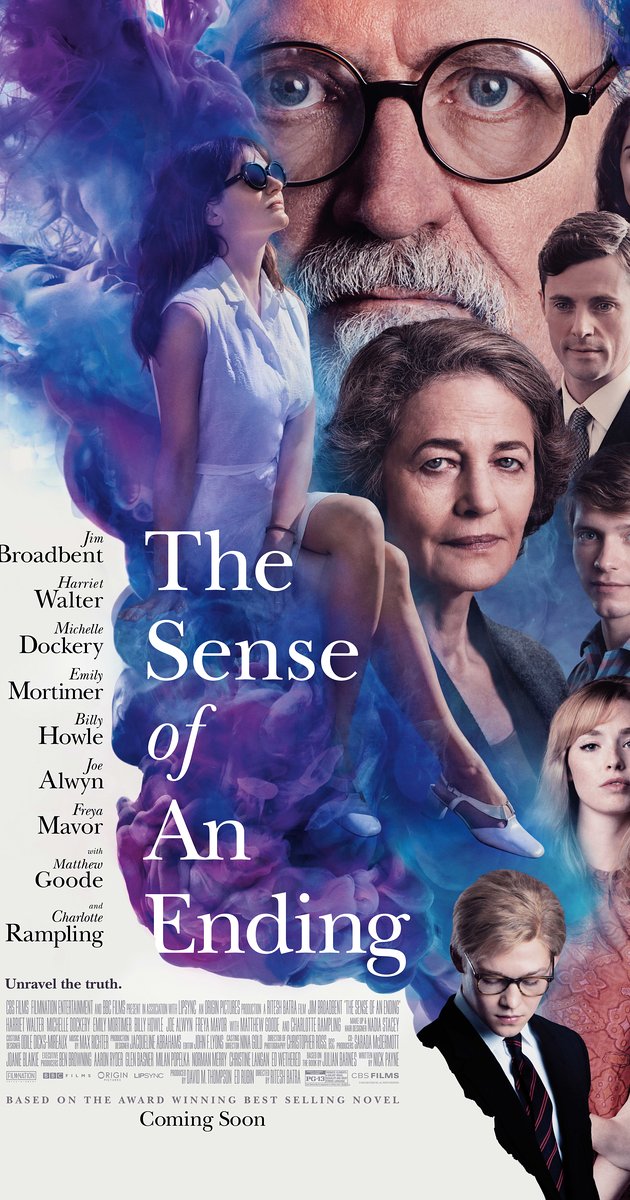
Julian Barnes’ award-winning novel The Sense of an Ending is the story of a older man who has to rethink the stories he has told himself and realign his understanding of his life. On screen, the delicacy of the performances stands in for the lyricism of his prose.
Tony Webster (Jim Broadbent) is semi-retired, the owner of a store that sells vintage cameras, and kind of semi-married, with a warm, companionable relationship with his lawyer ex-wife, Margaret (Harriet Walter, with a voice like a dry martini). Their daughter Susie (“Downton Abbey’s” Michelle Dockery) loves her dad, but finds him exasperating. She is pregnant, and says that her child will call him “Mudge,” for curmudgeon.
The camera store is significant. The vintage cameras are superbly crafted and in some ways better than digital cameras, but they are expensive and complicated and considered obsolete by most people. Tony identifies with the underappreciated quality of the instruments of precision and gets some satisfaction with being out of step with modern technology and mores.
But his romanticized view of the past is put into sharper focus (those cameras again) when he gets a letter about a bequest from a woman he had not seen since he was in his 20’s, when he was dating a woman named Veronica, and visited her family. After he and Veronica broke up, she dated his close friend Adrian, who later committed suicide. Now Veronica’s mother has left him Adrian’s journal, but that raises many questions: Why did she want him to have it? Where did she get it?
And where is it? Her letter says it is enclosed, but it is not. Tony could let it go, but he stubbornly insists on seeing what it is, without considering where it might lead.
We go back in time, the moments and even the gestures mirroring the present as Tony explores the past and reconsiders many of his most fundamental assumptions about how he has lived his life. Veronica (now played with quiet fury by Charlotte Rampling) will not let him to have the journal. Instead she gives him something else, a letter that will make Tony confront one of his most painful and shameful experiences and open up to his ex-wife as he never has before.
The honesty of story’s portrayal of the foolish and selfish mistakes we make and the hurt they can inflict on people around us is tempered by the film’s tenderness toward its characters and the sensitivity of the performances, especially Broadbent and Walter. It judges them less than Tony is pushed to judge himself, and that is why it is so touching.
Parents should know that this movie includes two suicides, some violence, strong language, sexual references and a situation, and tense confrontations.
Family discussion: Why did Victoria’s mother want Tony to have Adrian’s journal? Why was Tony wrong about Victoria’s brother? Why did he forget about the letter?
Action-style cartoon peril, chases, predators, no one hurt
Diversity Issues:
A metaphorical theme of the movie
Date Released to Theaters:
February 24, 2017
Copyright Lionsgate 2016
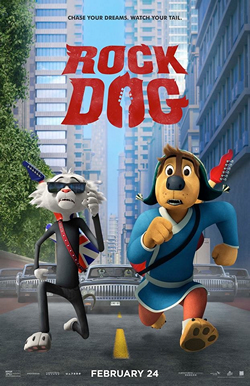
The second movie in three months featuring cartoon animals singing pop songs is “Rock Dog,” based on a Chinese graphic novel.
Luke Wilson provides the voice for Bodi, a sheepdog in Tibet, raised by his martinet father Khampa (J.K. Simmons). Bodi is never able to muster the “Kung Fu Panda” style mystic power his father tries to teach him as a part of the elaborate defense system he has put in place to protect the sheep from the Mafia-type wolves (led by Lewis Black as Linnux). At one time the community had two passions, making music and making wool. But after an attack by wolves, the instruments have all been locked away so that there will be no distractions from civil defense.
When a radio literally drops from the sky (an airplane loses some of its cargo), Bodi realizes his true purpose. He is not a watchdog — he is a musician.
Inspired by the music of rock star Angus Scattergood (Eddie Izzard), he decides to leave the mountain to follow in his footsteps: he will find a band in the legendary Rock ‘n’ Roll Park and play music no matter who tries to stop him. “Play your guts out and never stop, even when your dad tells you to stop, don’t stop.” He realizes that this is “the answer to my life,” and soon he is making music for delighted new fans.
Khampa reluctantly agrees to let Bodi go, but makes him promise he will return if he does not succeed. In the big city, he finds the Rock ‘n’ Roll Park, where he encounters a bully (Matt Dillon) who sends him to Scattergood’s booby-trapped fortress of a house as a prank.
Scattergood is desperately trying to come up with the new song his record label is demanding, but he is so isolated that he has run out of ideas, like Dana Carvey playing “Choppin’ Broccoli.”
There are some charming details (the sheep’s pub is called the Warp and Weft and serves shots of wheatgrass), and its international production team is reflected in its settings, like the Japan-inspired Rock ‘n’ Roll park, where Bodi and the bully have a shred-off. Bodi is a likeable hero and it is fun to see his cheery optimism paired with the burned-out, cynical Angus. Like the music they create, it is pleasantly entertaining.
Parents should know that this movie has cartoon action-style peril and violence, including predators, chases, fire, and some pratfalls, although no one is hurt. There is also some schoolyard language.
Family discussion: Why was it so hard for Angus to write a song? Why did he think he did not want to see anyone? How did Bodi know that music was his destiny?
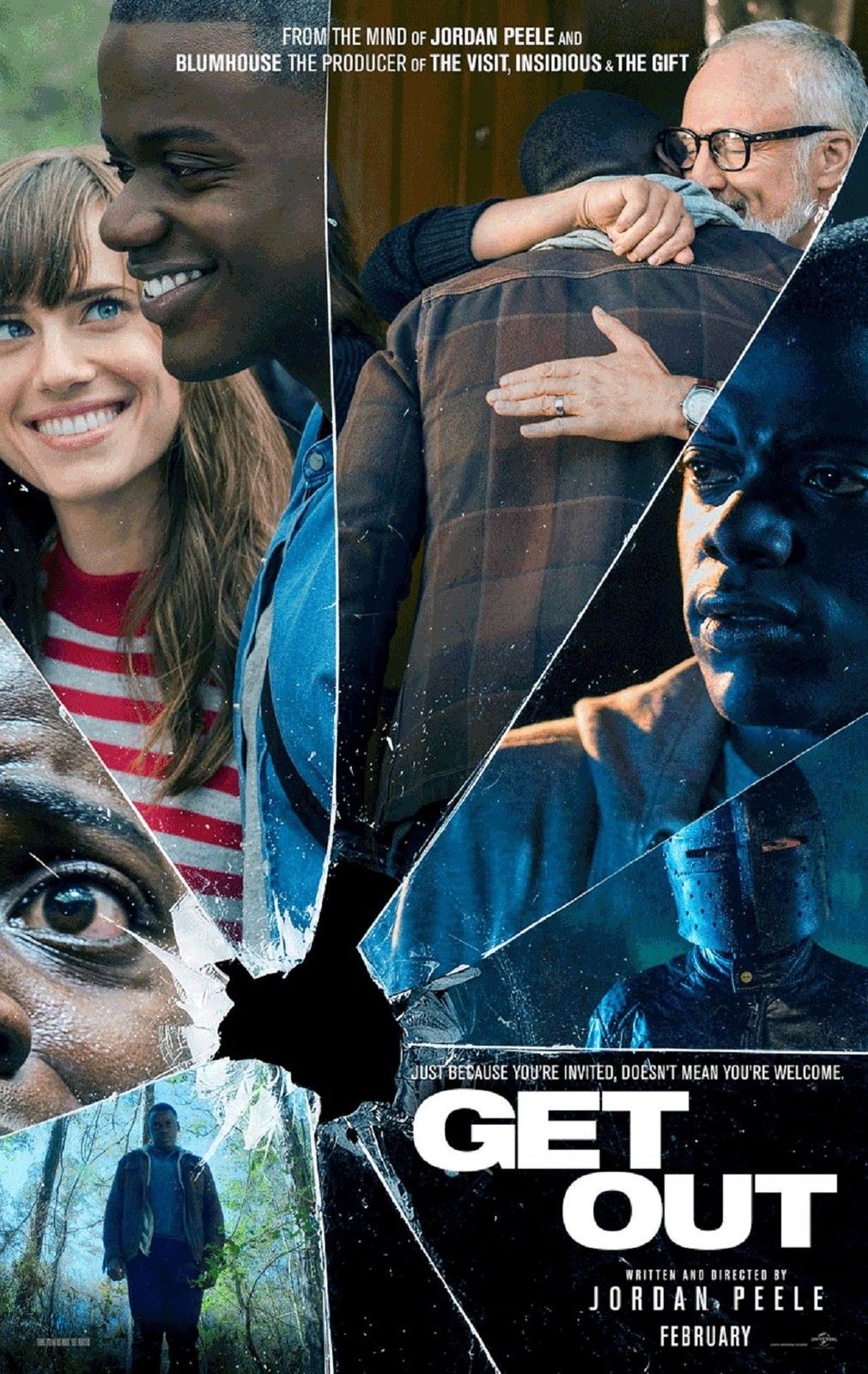
Two caveats before I begin the review: First, I am not very knowledgeable about horror films and therefore do not have the context I normally bring to evaluating a film. Second and more important, this movie has complex themes about race and privilege that I do not pretend to have authority to speak to. I strongly recommend that people who are interested in understanding this film read the perspectives of critics who are African-American or people of color, and I will post links to some of the ones I especially admire at the end of this review. With those limitations in mind, here are my thoughts on “Get Out,” in my opinion a superb film on many levels.
Writer/director Jordan Peele, like his “Key and Peele” partner Keegan-Michael Key, is biracial, which gives them both a lifelong experience with being both part of and observer of black and white culture and a lifelong fascination with code-switching, as we saw in their film “Keanu,” written by Peele. Moving from comedy to horror, Peele continues to explore the themes, giving depth and emotional power to a genre film. Unlike Quentin Tarantino, who carelessly purloins historic settings as a shortcut to the audience’s emotional investment so he can get right to the gore, Peele cannily plays the conventions of the genre and the discomfort and hostility about race off of each other.
It is one of the most terrifying prospects of ordinary life: meeting the family of the significant other. This familiarly excruciating prospect can be played for comedy (“Meet the Parents”) or drama (“Guess Who’s Coming to Dinner?”), but horror is perhaps its best fit, with room for some comedy and drama as well. The fact that Rose (“Girls” star Allison Williams) has not told her parents that her boyfriend of five months, Chris (Daniel Kaluuya), is black, adds another layer of tension. She assures him it does not matter. “They would have voted for Obama for a third time if they could!”
Kaluuya gives a star-making performance with help from cinematographer Toby Oliver, who makes this that rarest of movies, one that knows how to light African-Americans, especially those with darker skin, so that we can really see what they bring to the role. Watch his face in the early scenes as Chris navigates the fatuous pleasantries of Rose’s parents (Bradley Whitford and Catherine Keener, both excellent), and then the bro-ish thuggery of Rose’s brother, and then the condescending appraisals of the friends who all seem like they are on their way to the yacht club. We see him calibrate each of these interactions, trying to be a good sport, trying to go along, trying to make his girlfriend’s family feel comfortable with him, but starting to lose his patience. One of the film’s many shrewd understandings is the way that a lifetime of having to reassure white people that he is not going to hurt them or make them uncomfortable makes him slow to pick up on or slow to doubt himself about the creepiness of Rose’s family. An early scene, where Chris and Rose get questioned by a highway patrolman after hitting a deer is subtle but sharply drawn. And before you can say “foreshadowing,” Chris is getting a tour of the house and Rose’s dad is explaining that the basement had to be sealed off because of black mold. Hmm. And did I mention the prologue when a black guy walking down a peaceful suburban street is followed and then captured? And that the only person of color beside Chris at the party (the always-great LaKeith Stanfield) is strangely subdued and doesn’t know about fist bumps?
It would be a disservice to say any more about the plot. I won’t spoil the twists. I’ll just say that Peele knows what scares us and how to scare us and make us enjoy it, and gives us a lot to think about about some comedy as well. And that it may be that the scariest thing about the movie is the reminder that it has taken far too long to shine the correct light — literally and figuratively — on stories that should be told because they are just that good.
Parents should know that this is a horror film with theme of racism and exploitation, extended peril and violence including gun, choking, and bloody, graphic, and explicit medical images and sounds, characters injured and killed, suicide, references to sad loss of a parent, some strong language including racist epithets, sexual references and a non-explicit situation, and smoking.
Family discussion: When does the story turn from insensitive to offensive to sinister? What makes Chris decide that he has to leave?
If you like this, try: “Rosemary’s Baby,” “The Wicker Man” (original version) and “The Stepford Wives”
Rate R for disturbing violent content and images, sexual content including an assault, graphic nudity, and language
Profanity:
Very strong and crude language
Alcohol/ Drugs:
Alcohol
Violence/ Scariness:
Intense, graphic, and extensive peril and violence with many disturbing and graphic images, sexual assault, torture
Copyright 2016 Twentieth Century Fox
There’s jump out at you scary. And there’s something’s coming at me scary. And then there’s the slow, inexorable dread that builds inside you, and that is what director/co-writer Gore Verbinski is going for with “A Cure for Wellness.”
The unsettling through-the-looking-glass idea starts with the title itself. Isn’t wellness what a cure is supposed to achieve? Would a cure for wellness mean making a healthy person sick? Uh…yes. Prepare to feel your stomach drop like a bowling ball.
The best part of the movie is in exploring the world Verbinski creates, with production designer Eve Stewart, a health sanitarium where time seems to have stopped a century ago. A brief opening section establishes that it takes place now. An ambitious Wall Street trader named Lockhart (fast-rising star Dane DeHaan) has done something improper, and the bosses at his firm tell him that if he does not want to go to jail he has to retrieve Mr. Pembroke, the firm’s CEO, from a remote sanitarium so he can sign off on a big deal. Lockhart, confident of his ability to get deals done, and determined to stay out of trouble, takes the long, long drive up to the top of a mountain, to a facility somewhere between the Overlook Hotel in “The Shining,” the tuberculosis sanitorium in The Magic Mountain, and the Grand Budapest Hotel.
He briskly asks to see Pembroke and is informed that visiting hours are over. He does not pay enough attention to notice that things seem a bit…off. And when he is offered a glass of water, he does not hesitate to drink it. This, needless to say, is a mistake. He thinks he can leave and come back to see Pembroke later. This, also needless to say, is also a mistake.
Lockhart tries to find out what is going on. One might say that this is a mistake, too.
He starts to leave, but the car hits a deer and he wakes up in a hospital bed, his leg in a cast. Everyone is pleasant and rather vague, both staff and guests. But everything gets creepier and creepier, and it’s all atmosphere anyway. Don’t try to think about the story too much because it does not make a ton of sense and basically boils down to: creepy scene here, creepy scene there, REALLY creepy scene downstairs, excruciatingly creepy scene in the dentist’s chair, a not very surprising reveal.
Parents should know that this is a horror movie with extremely graphic and disturbing material and with many grisly and upsetting images including dead bodies, snakes, torture, sexual references and situations, nudity, sexual assault, incest, and very strong language.
Family discussion: What does Lockhart’s name tell us about the character? What does Hannah learn from him?
If you like this, try; “The Shining” and “Suspira”