Autism Awareness Month on SundanceNow Doc Club Channel
Posted on April 16, 2016 at 8:00 am
The SundanceNOw Doc Club observes Autism Awareness Month by showing three inspiring films that follow the triumphs and hurdles of individuals on the Autism spectrum. These stories show that through art and self expression, untraditional methods, and efforts of entire communities’ individuals with special needs can flourish.
SPECTRUM OF HOPE
Follow the journey of 10 musical theater students, their families, and their teachers as they travel from their NYC special needs school to compete in the Junior Theater Festival in Atlanta, Georgia. A powerful celebration of what can be accomplished through arts education, musical theater, and allowing individuals to grow on their own terms.
BEST KEPT SECRET
Janet Mino has taught her class of young men with autism for four years. When they all graduate in the spring of 2012, they will leave the security of the public school system forever. Take a closer look at the compounded difficulty of special needs individuals within the working-class and impoverished circumstances.
THE HORSE BOY
When two-year-old Rowan was diagnosed with autism, Rupert Isaacson, a writer and former horse trainer, and his wife Kristin Neff, a psychology professor, sought the best possible medical care, but traditional therapies had little effect. Then they discovered that Rowan has a profound affinity for animals—particularly horses—and the family set off on a quest that would change their lives forever.
“The Dark Horse” is based on the true story of Maori speed chess champion Genesis Potini, who struggled with bipolar disorder but taught underprivileged children to play chess.
Rated PG for some sequences of scary action and peril
Profanity:
None
Alcohol/ Drugs:
None
Violence/ Scariness:
Extended peril and violence including bees, a tiger, a snake, and fire
Diversity Issues:
A theme of the film
Date Released to Theaters:
April 15, 2016
Date Released to DVD:
August 29, 2016
Amazon.com ASIN:
B01CTNDO58
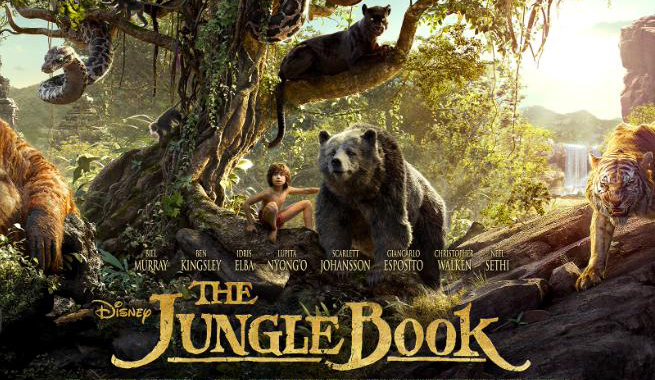
Copyright 2016 DisneyThe camera swoops behind the familiar Disney castle logo to take us to that magical place — you know, like the one that is found second star to the right and straight on ’til morning or through the wardrobe in the attic, down a rabbit hole, or via a house swept up in a Kansas tornado. Just a moment past the castle we are deep, 3D IMAX deep, in the midst of of a lush and luscious jungle, where a mop-headed, big-eyed boy in a red loincloth is running for his life.
The wolves are after him. No, the wolves are with him and a sleek black panther is after him. No, he catches him. No, they are friends. It is Mowgli (newcomer Neel Sethi) and the Bagheera (Sir Ben Kingsley), the panther who discovered him as a toddler and delivered him to the best mother he knew, the wolf Raksha (Lupita Nyong’o) who raised him lovingly along with her other cubs. While he matures more slowly and cannot do some of the things they can to stay safe, he can climb and use tools. Although Raksha tells him not to use “tricks” like pulleys, knots, and scoops, he feels very much a part of the wolf pack and solemnly recites along with the others:
Now this is the Law of the Jungle —
as old and as true as the sky;
And the Wolf that shall keep it may prosper,
but the Wolf that shall break it must die.
As the creeper that girdles the tree-trunk
the Law runneth forward and back —
For the strength of the Pack is the Wolf,
and the strength of the Wolf is the Pack.
When the rainy season ends, a dry spell shrinks the river so that the “peace rock” is showing. According to the well-established rules of the jungle, as long as they can see that rock, everyone may drink together in peace, meaning the predators cannot attack their usual prey. The one-eyed tiger with burn scars named Shere Khan (Idris Elba) sees Mowgli and warns the others that as soon as the rock is submerged again and the truce has ended, he will come for the boy and will do whatever it takes to kill him. Raksha reluctantly agrees to let Bagheera take him to the town, where Mowgli can be with other people. On the way, they have encounters with Kaa the mesmerizing snake (Scarlett Johansson), Baloo the easy-going bear (Bill Murray), and King Louis (Christopher Walken), an enormous ape (based on the extinct Gigantopithecus) who presides over an orangutan kingdom living in an ancient temple.
Fans of the Disney animated musical version will be happy to find some familiar moments within the superb score from John Debney.
But this is very much its own film, with stunning integration of the digital animals and the real-life boy. (Disneyphiles may think of Walt’s earliest short films featuring a real-life girl interacting with hand-drawn characters.) The world of the jungle is enchanting and vital, a Rousseauian dream of an Edenic natural world (in this PG film, while there is peril and some characters are injured and killed, any carnivore behavior happens off-screen). Sethi has an engagingly natural quality that is as important in bringing the digital characters to life as the brilliant work of the many, many artists and technicians whose names appear in the credits.
So does the storyline’s respect for this world and its inhabitants. Mowgli does not have many of the physical gifts of his wolf family or his friends in the forest. He does have some skills they do not, and it is heartwarming to see him develop simple tools like a stone ax and a pulley because they are not presented as superior or used to establish dominance, but to help his jungle community and to give thanks for all they have given him. This is gorgeous, inspiring filmmaking.
Parents should know that this movie includes extended peril with some violence and some disturbing images. A theme of the film is the tiger’s determination to kill Mowgli, and characters are injured and killed (including parents).
Family discussion: Why did the wolves and Baloo have different ideas about Mowgli’s “tricks?” Should Mowgli stay in the jungle or live with other humans?
If you like this, try: Rudyard Kipling’s Just-So Stories and two earlier films based on this story, one starring Sabu and the Disney animated version.
Copyright Broad Green 2016It would be so easy — and so wrong — to make this true story of a Maori chess champion who struggles with mental illness as he teaches underprivileged kids into a safe, simple, saccharine, uplifting story. But writer/director James Napier Robertson, who himself played hundreds of chess games with real-life speed chess champion Genesis Potini, trusts his story and his audience enough to give us a film that is refreshingly messy, even grungy, and therefore much more powerful.
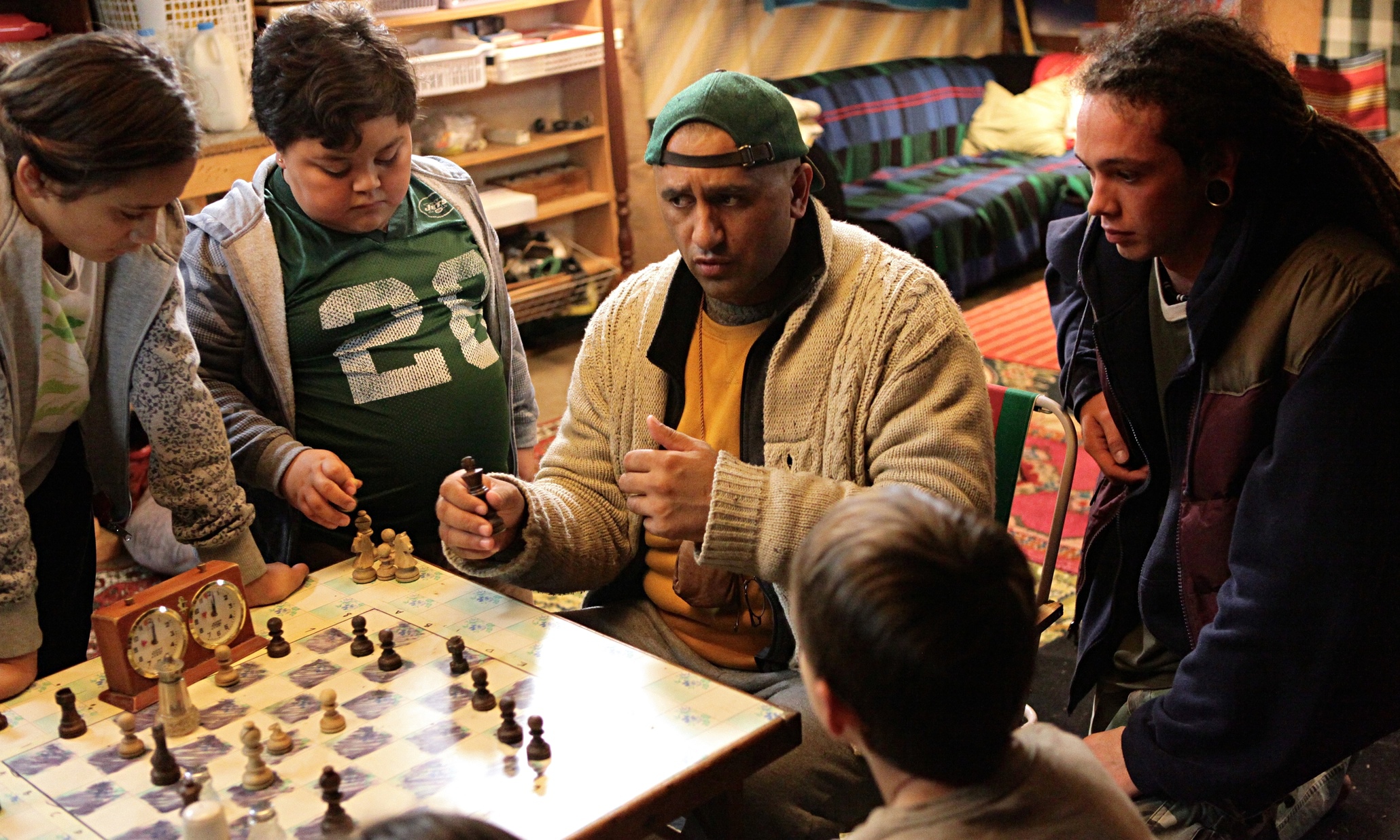
The extraordinary actor Cliff Curtis is renowned for being able to play almost any ethnicity, one reason he was an affecting Jesus in the recent Risen. Here, though, as in “Whale Rider,” he has a chance to play the part of a person of his own ethnic heritage, the speed chess champion Genesis Potini, who had bipolar disorder. Curtis shows us that Genesis is a person first, not a group of symptoms. In a meet, wanting so much for the kids he has trained to have a chance to succeed, he cannot restrain himself from shouting encouragement, and we see how painful it is for him to feel like two people at once, the one who cannot control his impulses and the one who understands what he is putting at risk.
Robertson also gives us an honest, unflinching look at the community where Genesis has come, after being released from the mental hospital with a fistful of pills and the direction to find something to care about. The only place he has to go is the home of his brother, Ariki (Wayne Hapi), and Ariki’s son, Mana (James Rolleston of “Boy”). Ariki is a member of a gang that hangs out, gets high, commits petty and not so petty crimes, and spends a lot of time in not so petty macho posturing. He does not like having Genesis there and soon kicks him out.
Genesis sees a flier for a program that provides enrichment services for needy kids and decides that this will be the purpose that will help him maintain equilibrium. He volunteers — waking the director up in the middle of the night to offer his services, and against his better judgment, the director accepts, warning Genesis that if he shows up, he cannot let the kids down. Genesis impulsively (he does everything impulsively) tells kids who have never seen a chess game before that they will be competing at a big tournament in six weeks. Before they learn how to play, he lets each of them pick a chess man to take home as a totem, and to bring with them every day so that the set can be a team again. It makes them into a team as well. He uses the money Ariki gave him for rent to buy chess sets for the kids and he sleeps outside.
Genesis’ splintered reality and lack of impulse control may be advantages for speed chess. All of the possibilities are laid out before him but that does not make him hesitate. But chess is a game of rules and it provides a certainty, order, and mastery that Genesis and the kids he teaches can hold onto and build on. Mana has to decide whether he will follow his father or his uncle. Genesis has to try to be the man Mana and the kids need. It might get corny but for Robertson’s unaffectedly gritty settings and understanding that modest gains can be enough for checkmate.
Parents should know that this movie includes violence, child abuse, drinking, drugs, mental illness, and extreme poverty. Characters use very strong language.
Family discussion: Why was helping the children so important to Genesis? Why was having Mana in the gang so important to his father?
If you like this, try: “Searching for Bobby Fischer,” “Bobby Fischer Against the World,” and “Endgame”