
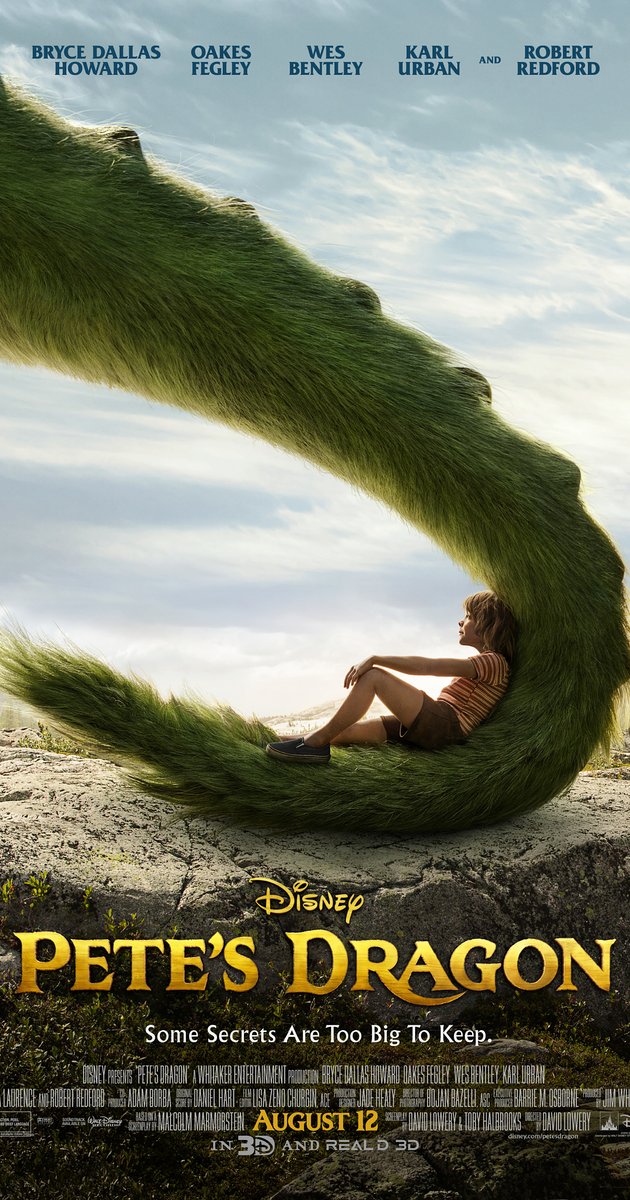
Interview: “Pete’s Dragon” Screenwriter David Lowery

Interview: “Pete’s Dragon” Screenwriter David Lowery

Posted on November 15, 2016 at 8:00 am

Pete’s Dragon” screenwriter David Lowery answered my questions about updating and transforming the Disney classic for a live-action 21st century remake, and how being the oldest of nine children helped him learn how to tell stories. The movie is available on DVD/Blu-ray November 29, 2016.

How did you decide what elements of the original were important to you to keep and what new elements you wanted to add?

The only elements I wanted to keep from the original was a dragon named Elliott who could turn invisible and a boy named Pete who was an orphan. And I took those elements and thought that if I just maintained those and kept the title I would have the flexibility to tell a completely new story that would stand alongside the original on its own two feet. And that was it, I took those elements, I didn’t go back and watch the original. I just really wanted to focus on telling a new story and creating something the audience could appreciate and love just as much as they loved the original.

How did growing up with so many younger sisters and brothers help you become a writer? Did you read to them, tell them stories?
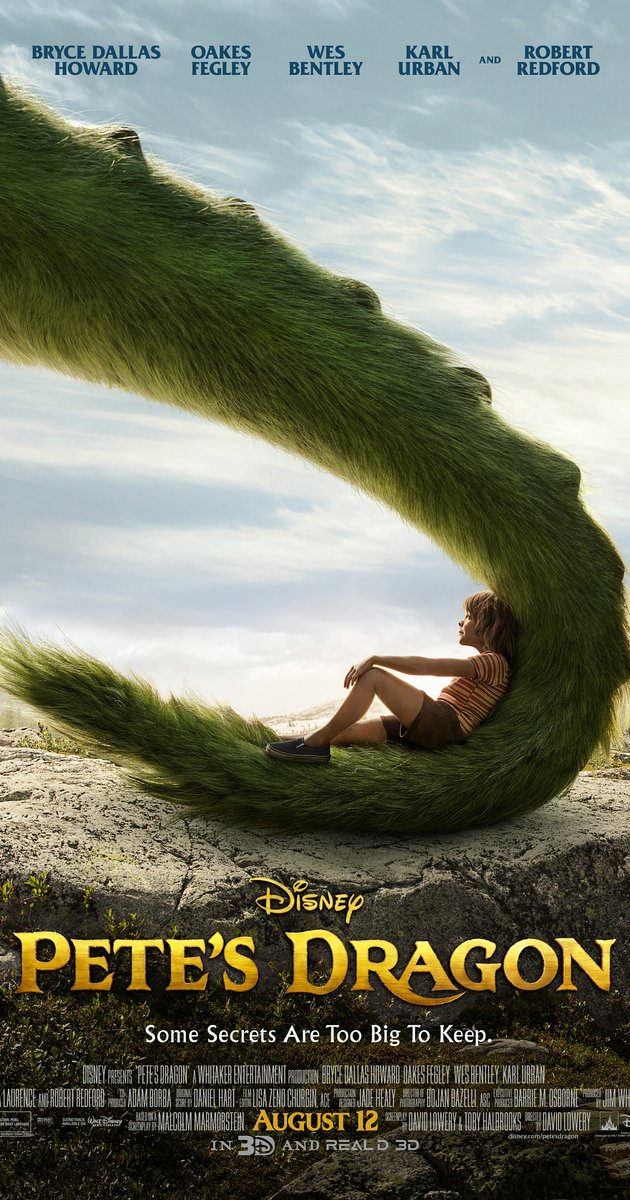
Copyright 2016 Disney

Oh man, that is a great question. I have eight younger brothers and sisters and it really taught me how to tap into a childlike sensibility. I definitely read to them. We wrote stories together, we wrote comic books together, we made movies together. Whenever I made a movie, my siblings were the actors. So we were creative together all the time. My parents encouraged us to always be expressing ourselves creatively through the arts, whether that be through movies or music and books, or drawings or paintings. And it really, I think, has had a big effect on who I am today as a filmmaker, not only in terms of my sense of collaboration but also in the way I approach storytelling. I always approach every movie I make whether it’s for adults or families with a very childlike sensibility and I think that’s because I spent so much of my life growing up around so many other kids and it really has an effect on how I see the world, how I want to see the world and how I feel I can best tell a story.

When you began working on the film what did you learn about the capacity for special effects or technology that inspired some of the storyline?

One of the things that was fun about this movie was getting to do visual effects on a scale that I never had done before. I knew a little bit about how CGI worked and how visual effects worked and I knew that Elliot would be entirely created on the computer but there was a lot that I had to learn, especially once we got done shooting and were in post production and I saw all the work that went into making him do anything. If they wanted him to blink his eyes it required a lot of steps to get him to blink his eyes right. It is an incredible team at Weta who brought him to life. There are modelers and sculptors, there are animators, there are people who are in charge of putting the 20 million hairs of fur on the body and making sure that that fur moves right if the wind is blowing. It’s just really incredible and so I learned a lot. There is no shortage of boring technical details that I could fill in here but it’s really amazing what is possible with modern digital technology. At the same time it’s important to learn the limits of it. You don’t push it too far because at the end of the day you want the movie to feel real. You want to feel like it is really happening. You want actors to feel like they belong in this world and so you have to find the right balance with it as well.

Your work often focuses on children who are on their own. Why is that a good basis for a story?

If a child is on their own they have somewhere they need to get, there is somewhere they need to be and that automatically gives your story a narrative arc because all of a sudden you have a journey that must be embarked upon. Whether it is a little kid that has run away from home or a little kid like my first film “St. Nick” or a little kid who is lost in the woods like “Pete’s Dragon” or even a grown-up who thinks he’s still a little kid like in my last film “Ain’t Them Bodies Saints,” where the Casey Affleck character in that movie a full grown man who is on the inside just a 7 year old playing with a gun and trying to find where he belongs in the world — I have gradually realized it is one of the key tenets of all my movies. It wasn’t intentional but I think part of it comes from having such a strong home life, of having such a strong family that I’m coming from that the thought of not having that has been the basis for so many of the stories I have sought to tell on the big screen. You tell stories of what you know but also you imagine yourself in different circumstances and how you would react to that. And I try to imagine myself in a world where I didn’t have the things I had growing up or I wasn’t surrounded by such a strong family that cared for me. That is great food for thought but also a great basis for exploring various stories.

Okay this is a two-part question, do you remember the first Disney movie you saw?

The very first Disney movie I saw was also the very first movie I ever saw, period. and that was “Pinocchio.” It was re-released in theaters in the 80s and my parents let me go see it and I just was spellbound. I had a huge crush on the Blue Fairy. There was a big cardboard stand of the Blue Fairy in the lobby of the theater and I wanted to take it home. I was just madly in love with her at the age of three or four, however old I was. I guess my favorite Disney animated character would probably be Ariel from “The Little Mermaid” because I was just obsessed with that movie. I really love that I really connected to her character and I still love it. I remember when we were shooting “Pete’s Dragon” when we moved locations as I got to another hotel and turned on the TV and “The Little Mermaid” was playing and I just sat down and watched the whole thing and that was one of the happiest moment in the entire shoot.

One thing that I loved about the film is that the bad guy is not entirely bad. What do you think makes a good movie villain?

David: You know a really good movie villain is someone who you love to hate, who is very enjoyable to watch even though you don’t like him but also one who you understand. You might not agree with him but you understand where he is coming from. With the character Gavin, I think the character is kind of a big dummy, he’s not the brightest, he is not the sharpest tool in the set but he doesn’t want to be a bad person, he thinks he is doing the right thing, he thinks he is protecting the town or protecting the kids and I think that’s important. I think it’s really important especially in this day and age to have empathy for people you don’t understand and you don’t agree with. And to understand they are not necessarily evil even if you strongly disagree with what they’re doing. So Gavin does some horrible things in this movie, he does some really bad things, but I wanted to make sure he was someone who can learn, who can grow because I believe that all people can and who ultimately isn’t that bad of a person because I do believe everybody has goodness in them and I wanted that to be present in this character.

There are some great movie villains who are just purely evil, I certainly enjoyed a lot of them over the course of movie history and sometimes it’s really fun to see someone you just purely hate and you’re happy to see die at the end of the film but I personally wanted to make a movie where the bad guy was someone who wasn’t purely bad but who got better, who grew as a human being. I really think that it’s important, especially for children, to see that there is more than one side to every story. There are perspectives that you are going to have to learn to adjust to as you grow older and as you meet people of different beliefs and different values and to understand that people make mistakes and come back from them and be better for it. I think that all those things are important for kids to understand and I wanted to just touch on that a little bit with the character of Gavin.

The forest in the story feels magical all on its own. How do you see the role of the natural world in the film and why is that important?

I think nature is spectacular, I really think it’s full of mystery and wonder and so many amazing things that we don’t even, we can’t even see. The ecosystem in the natural world that is beyond our comprehension is proof that magic does exist in the world. I don’t think that magic exists in terms of spells or witchcraft or anything like that but I do think that magic exists in the natural world and the forest. And I wanted the forest in the film to convey that sense of wonder and awe and mystery and magic because I do believe that that’s what you find in the real world.
Related Tags:


Behind the Scenes Interview Writers

Movie Aliens — How Do the Creatures in “Arrival” Compare?

Posted on November 14, 2016 at 11:18 pm

If you like movies about aliens, be sure to read Stephanie Merry’s great look at 40 years of movie extraterrestrials in the Washington Post.

The aliens in “Arrival” are spectacular, and that’s no small feat. In most “first contact” movies, the otherworldly creatures almost always let us down. Either they’re predictable — you know, little green men speaking an echoey, indecipherable language or stereotypical “Greys” with the big eyes and the egghead — or they look fake.

Carlos Huante tested many iterations with director Denis Villeneuve before they settled on the final design for “Arrival”… He settled on characters that tap into conflicting emotions: They’re serene yet daunting and huge yet indistinct. They’re heptapods, meaning they have seven legs, and they look like a cross between a giant hand and a squid; their “fingers” resemble starfish that emit an inky, smoky substance, which is how they express their entirely visual language.

They are strange but graceful. Other movie aliens have ranged from the humanoid to the insect-like, from the endearing (“E.T.,” “Close Encounters of the Third Kind”) to the creepy and strange (“Mars Attacks”) to the all-out terrifying (“Alien,” “War of the Worlds,” “Pacific Rim”). Merry’s article gives credit to the talented and imaginative designers who created aliens that were enticingly strange and yet believable.

Related Tags:


For Your Netflix Queue Movie History

New From Audible: Born a Crime Audiobook by Trevor Noah of “The Daily Show”

Posted on November 14, 2016 at 3:11 pm

“The Daily Show” host Trevor Noah has written a new memoir, Born a Crime: Stories from a South African Childhood, available as an audiobook from Audible, and we are pleased to be able to share a clip. In the Mail & Guardian, Darryl Accone wrote:

Born on February 20 1984, Trevor fell foul of any number of apartheid-era laws: to start, his parents had broken the Immorality Act (the 1927 version of which is the apt epigraph to the book).

In the simple, powerful prose that characterises Noah’s writing here, he recounts: “The doctors took her up to the delivery room, cut open her belly, and reached in and pulled out a half-white, half-black child who violated any number of laws, statutes, and regulations – I was born a crime.”

He was also born with a confusion of nationality, ethnicity and identity: “My mother lied and said I was born in KaNgwane, the semi-sovereign homeland for Swazi people living in South Africa. So my birth certificate doesn’t say that I’m Xhosa, which technically I am. And it doesn’t say that I’m Swiss, which the government wouldn’t allow. It just says that I’m from another country.”

The past is another country, they say, and Noah takes the reader through the years from 1984, with brief servings of our history and its lurid laws and practices around race, work, sex and violence to contextualise his personal story for non-South African readers.

This is Trevor Noah’s story told through stories and vignettes that are sharply observed, deftly conveyed and consistently candid. Growing organically from them is an affecting investigation of identity, ethnicity, language, masculinity, nationality and, most of all, humanity – all issues that the election of Donald Trump in the United States shows are foremost in minds and hearts everywhere.

The best way to enjoy this fascinating story is to hear it in Noah’s own voice, and the Audible version lets you feel as though he is really telling you his story.

Related Tags:


Books Trailers, Previews, and Clips

Critics Choice Award Nominations: Television

Posted on November 14, 2016 at 10:36 am

The Broadcast Television Journalists Association has announced the nominees for this year’s Critics Choice Awards. I was delighted to see nominations for the outrageous new series “Fleabag” and its creator Phoebe Waller-Bridge, and Rod Lurie’s “Killing Reagan” get a nod as well. The awards will be announced on A&E on Sunday, December 11 at 8PM ET/7PM CT/5PM PT.

BEST COMEDY SERIES
Atlanta – FX
Black-ish – ABC
Fleabag – Amazon
Modern Family – ABC
Silicon Valley – HBO
Unbreakable Kimmy Schmidt – Netflix
Veep – HBO

BEST ACTRESS IN A COMEDY SERIES
Ellie Kemper – Unbreakable Kimmy Schmidt – Netflix
Julia Louis-Dreyfus – Veep – HBO
Kate McKinnon – Saturday Night Live – NBC
Tracee Ellis Ross – Black-ish – ABC
Phoebe Waller-Bridge – Fleabag – Amazon
Constance Wu – Fresh Off the Boat – ABC

BEST ACTOR IN A COMEDY SERIES
Anthony Anderson – Black-ish – ABC
Will Forte – The Last Man on Earth – FOX
Donald Glover – Atlanta – FX
Bill Hader – Documentary Now! – IFC
Patrick Stewart – Blunt Talk – Starz
Jeffrey Tambor – Transparent – Amazon

BEST SUPPORTING ACTRESS IN A COMEDY SERIES
Julie Bowen – Modern Family – ABC
Anna Chlumsky – Veep – HBO
Allison Janney – Mom – CBS
Jane Krakowski – Unbreakable Kimmy Schmidt – Netflix
Judith Light – Transparent – Amazon
Allison Williams – Girls – HBO

BEST SUPPORTING ACTOR IN A COMEDY SERIES
Louie Anderson – Baskets – FX
Andre Braugher – Brooklyn Nine-Nine – FOX
Tituss Burgess – Unbreakable Kimmy Schmidt – Netflix
Ty Burrell – Modern Family – ABC
Tony Hale – Veep – HBO
T.J. Miller – Silicon Valley – HBO

BEST GUEST PERFORMER IN A COMEDY SERIES
Alec Baldwin – Saturday Night Live – NBC
Christine Baranski – The Big Bang Theory – CBS
Larry David – Saturday Night Live – NBC
Lisa Kudrow – Unbreakable Kimmy Schmidt – Netflix
Liam Neeson – Inside Amy Schumer – Comedy Central

BEST ANIMATED SERIES
Archer – FX
Bob’s Burgers – FOX
BoJack Horseman – Netflix
Son of Zorn – FOX
South Park – Comedy Central
The Simpsons – FOX

BEST REALITY COMPETITION SERIES
America’s Got Talent – NBC
MasterChef Junior – FOX
RuPaul’s Drag Race – Logo
Skin Wars – GSN
The Amazing Race – CBS
The Voice – NBC

BEST STRUCTURED REALITY SERIES
Chopped – Food Network
Inside The Actors Studio – Bravo
Penn & Teller: Fool Us – The CW
Project Runway – Lifetime
Shark Tank – ABC
Undercover Boss – CBS

BEST UNSTRUCTURED REALITY SERIES
Anthony Bourdain: Parts Unknown – CNN
Chrisley Knows Best – USA Network
Deadliest Catch – Discovery
Ice Road Truckers – History
Intervention – A&E
Naked and Afraid – Discovery

BEST TALK SHOW
Full Frontal with Samantha Bee – TBS
Jimmy Kimmel Live! – ABC
Last Week Tonight with John Oliver – HBO
The Daily Show with Trevor Noah – Comedy Central
The Late Late Show with James Corden – CBS
The Tonight Show Starring Jimmy Fallon – NBC

BEST REALITY SHOW HOST
Ted Allen – Chopped – Food Network
Tom Bergeron – Dancing with the Stars – ABC
Anthony Bourdain – Anthony Bourdain: Parts Unknown – CNN
Nick Cannon – America’s Got Talent – NBC
Carson Daly – The Voice – NBC
RuPaul – RuPaul’s Drag Race – Logo

BEST SUPPORTING ACTOR IN A DRAMA SERIES
Peter Dinklage – Game of Thrones – HBO
Kit Harington – Game of Thrones – HBO
John Lithgow – The Crown – Netflix
Michael McKean – Better Call Saul – AMC
Christian Slater – Mr. Robot – USA Network
Jon Voight – Ray Donovan – Showtime

BEST SUPPORTING ACTRESS IN A DRAMA SERIES
Christine Baranski – The Good Wife – CBS
Emilia Clarke – Game of Thrones – HBO
Lena Headey – Game of Thrones – HBO
Thandie Newton – Westworld – HBO
Maura Tierney – The Affair – Showtime
Constance Zimmer – UnREAL – Lifetime

BEST ACTOR IN A DRAMA SERIES
Sam Heughan – Outlander – Starz
Rami Malek – Mr. Robot – USA Network
Bob Odenkirk – Better Call Saul – AMC
Matthew Rhys – The Americans – FX
Liev Schreiber – Ray Donovan – Showtime
Kevin Spacey – House of Cards – Netflix

BEST ACTRESS IN A DRAMA SERIES
Caitriona Balfe – Outlander – Starz
Viola Davis – How to Get Away with Murder – ABC
Tatiana Maslany – Orphan Black – BBC America
Keri Russell – The Americans – FX
Evan Rachel Wood – Westworld – HBO
Robin Wright – House of Cards – Netflix

BEST DRAMA SERIES
Better Call Saul – AMC
Game of Thrones – HBO
Mr. Robot – USA Network
Stranger Things – Netflix
The Crown – Netflix
This Is Us – NBC
Westworld – HBO

BEST GUEST PERFORMER IN A DRAMA SERIES
Mahershala Ali – House of Cards – Netflix
Lisa Bonet – Ray Donovan – Showtime
Ellen Burstyn – House of Cards – Netflix
Michael J. Fox – The Good Wife – CBS
Jared Harris – The Crown – Netflix
Jeffrey Dean Morgan – The Walking Dead – AMC

BEST MOVIE MADE FOR TELEVISION OR LIMITED SERIES
All the Way – HBO
Confirmation – HBO
Killing Reagan – National Geographic
Roots – History
The Night Manager – AMC
The People v. O.J. Simpson – FX

BEST ACTOR IN A MOVIE MADE FOR TELEVISION OR LIMITED SERIES
Bryan Cranston – All the Way – HBO
Benedict Cumberbatch – Sherlock: The Abominable Bride – PBS
Cuba Gooding Jr. – The People v. O.J. Simpson – FX
Tom Hiddleston – The Night Manager – AMC
Tim Matheson – Killing Reagan – National Geographic
Courtney B. Vance – The People v. O.J. Simpson – FX

BEST SUPPORTING ACTOR IN A MOVIE MADE FOR TELEVISION OR LIMITED SERIES
Sterling K. Brown – The People v. O.J. Simpson – FX
Lane Garrison – Roots – History
Frank Langella – All the Way – HBO
Hugh Laurie – The Night Manager – AMC
John Travolta – The People v. O.J. Simpson – FX
Forest Whitaker – Roots – History

BEST ACTRESS IN A MOVIE MADE FOR TELEVISION OR LIMITED SERIES
Olivia Colman – The Night Manager – AMC
Felicity Huffman – American Crime – ABC
Cynthia Nixon – Killing Reagan – National Geographic
Sarah Paulson – The People v. O.J. Simpson – FX
Lili Taylor – American Crime – ABC
Kerry Washington – Confirmation – HBO

BEST SUPPORTING ACTRESS IN A MOVIE MADE FOR TELEVISION OR LIMITED SERIES
Elizabeth Debicki – The Night Manager – AMC
Regina King – American Crime – ABC
Sarah Lancashire – The Dresser – Starz
Melissa Leo – All the Way – HBO
Anna Paquin – Roots – History
Emily Watson – The Dresser – Starz

Related Tags:


Awards Television
Interview: Co-Director Angus MacLane on “Finding Dory”

Interview: Co-Director Angus MacLane on “Finding Dory”

Posted on November 14, 2016 at 8:00 am

Angus MacLane is co-director of the adorable “Finding Dory,” the sequel to “Finding Nemo.” In an interview, he spoke about the changes in technology and the decision to shift the focus to the memory-impaired fish voiced by Ellen DeGeneres. The DVD/Blu-Ray is available November 15, 2016.

How has the technology changed since finding Nemo and how did that affect your story, the setting and the characters?

That’s a good question. I think that thirteen years from release to release is such a huge time technologically. And so there was a brand-new animation system, there were brand-new articulation tools for the characters, there were brand-new lighting tools that were entirely different. So basically the system from the ground up was different. I think that one of the things that was a challenge in the first film was that water was so difficult to do and very complex, so it was difficult. It is still difficult but the effects we could get were so much more satisfying technologically that what we wanted to do was not the challenge that it was in the first film.

And so it just afforded us the chance to not worry about how these characters could break the surface of the water, which would have been a challenge in the first film, or where we were going to really spend our dollars doing splashes or big effects. They weren’t insignificant but it wasn’t a major hurdle in the same way where we would have to carefully plan for each of those effects that would potentially affect our story thirteen years ago. The technology improves and the renders in the computer speed improve and we’re always asking the computers and everyone to do things that are infinitely harder to keep pace with the speed and the technology. So it wasn’t any faster necessarily but we did have a lot of new technologies and a very capable crew to implement them and try out a bunch of new and interesting things.

Most sequels continue the story of the main character but this one makes Nemo and Marlin secondary to Dory. What went into that decision?

Well I think that the reason to do this film for Andrew Stanton really rested in seeing “Finding Nemo” in 3D several years ago, long after its release. He was worried about Dory. And so the question about where she had come from and if she was going to be okay became the reason for him to make the movie, the question that he most wanted to answer. So the idea was after this film the audience members would not be concerned for Dory and feel confident that if she got lost she could find your way back again.

This film has at least five characters with disabilities including Nemo, Dory and Hank. What was most important to you portraying the way that these characters adapt to and think about these disabilities?

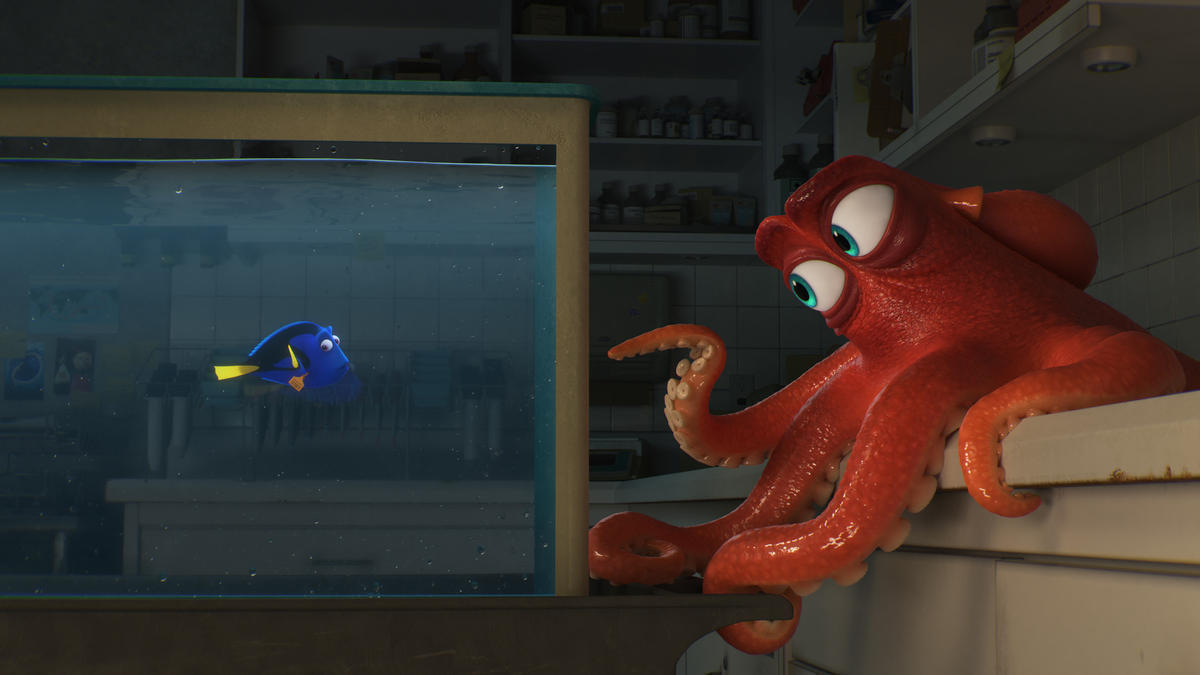
I think the thing that was most important to us was that we showed them as four dimensional characters. Everyone in the film is at kind of a different stage than Dory is about their disability. Dory over the course of the film — not to spoil it for those people that haven’t seen it — but she learns to fully accept and embrace her disability and work it in a way that she did not at the beginning of the film. Hank has already moved past that. He is already on to other things. He isn’t worried about it that much. I think that people with disabilities, they have everyday struggles but I think more than anything, the ones that we are familiar with are certainly very, very capable and it was about portraying the truth in that.

What exactly does a co-director do?

Copyright 2016 Disney

The co-director position is different for every movie. I had worked with Andrew most closely on “Wall-E” as a story artist and he was a Directing Animator and then he was the Executive Producer on “Burn-E,” the short film, and then on “Toy Story Of Terror.” So we had a wonderful creative partnership that continued on this film.

When I started working on the film, Andrew asked that I just try to do what wasn’t getting done and try to fill in the gaps. I was in pretty much all the meetings Andrew was in and there were some things that he delegated to me to manage. I would have input on pretty much everything with the understanding that it is ultimately Andrew’s decision. But he is a generous creative partner and an intelligent creative partner in the sense that he has surrounded himself with people who are not afraid to disagree with him if they have different opinions. And so a lot of the job is suggesting different ideas or trying to take a different point of view, and trying to drill down to get to the best idea. So it’s kind of a second opinion.

Do you remember your first Disney animated film you ever saw and what made the most significant impression?

It was either “Sleeping Beauty” or “The Rescuers.” For Sleeping Beauty it would have been that in the end Prince Philip has a battle with a dragon. And if it was “The Rescuers” I think it had this kind of really muted and dark and dirty colour palette that was kind of similar to or echoed a lot of the unease and uncomfortability of the 70’s animation. Most notable was the concept of a giant diamond inside this skull. It was kind of terrifying to me as a kid, so that kind of freaked me out.

And what was the best advice you ever got about directing, from Andrew Stanton or any of your other role models?

The most helpful stuff is just doing the job or being next to somebody that’s doing the job day in and day out and seeing the minutia that they deal with. But there’s something that John Lasseter said once about if you’re giving someone direction and they are not getting you what you want it’s not their fault, it’s your fault for not explaining it well. To me that’s just fantastic advice because in addition to being the person that explains what your vision is, it’s also your job to get other people excited about your vision. It should be a collaborative effort that involves all parties and it starts with the director and continues with the crew.

There are so many comedic moments throughout “Finding Dory.” Where do you guys fine inspiration to make it so funny from start to finish?

Angus: Most of it is trying to make each other laugh — to try to do something that’s weird, something that we think is funny. If you come with a gag that is in story, we try to make sure that that gag continues or is able to read as it goes through the production pipeline because jokes can be funny for different reasons and often jokes can be ruined if the elements that make it funny aren’t adhered to or understood as it goes through production. I’m glad you think it’s funny because I think we just are trying to make each other laugh, that’s kind of our rule.

Related Tags:


Behind the Scenes Interview
THE MOVIE MOM® is a registered trademark of Nell Minow. Use of the mark without express consent from Nell Minow constitutes trademark infringement and unfair competition in violation of federal and state laws. All material © Nell Minow 1995-2025, all rights reserved, and no use or republication is permitted without explicit permission. This site hosts Nell Minow’s Movie Mom® archive, with material that originally appeared on Yahoo! Movies, Beliefnet, and other sources. Much of her new material can be found at Rogerebert.com, Huffington Post, and WheretoWatch. Her books include The Movie Mom’s Guide to Family Movies and 101 Must-See Movie Moments, and she can be heard each week on radio stations across the country.

Website Designed by Max LaZebnik