Oscar Roundtable: Best Actor

Posted on February 7, 2013 at 8:00 am

Many thanks to Thelma Adams for including me in her Oscar Roundtable.  We began with a discussion of Best Actor nominees — who will win, who should win, and who was left out.  I was sorry that John Hawkes’ performance in “The Sessions” was overlooked.

The subtlety and wit and longing and humanity he brought to that performance was beautifully expressed. And I’d love to see Denzel Washington (my favorite actor of our era) win this year for “Flight.” He is always an actor of breathtaking precision and detail, but in this performance he opened up more than he ever has before, with a vulnerability and fearlessness that was, for me, the best performance of the year. Daniel Day-Lewis was unquestionably brilliant as “Lincoln.” That opening scene showed us his humility, wisdom, patience, and sympathy. Later we saw his strength, his pain, his struggle, his ferocity. I won’t object if/when he wins. But my own best actor award goes to Denzel.

Related Tags:


Actors Awards

Jen Chaney on Liz Lemon and “30 Rock”

Posted on January 31, 2013 at 3:59 pm

Two television programs with almost-identical themes premiered in the fall of 2006.  They were both behind-the-scenes shows about the writers and performers on a late-night topical sketch comedy series.

One was an hour-long drama from “The West Wing’s” Aaron Sorkin, starring “Friends” alum Matthew Perry.  The other was a half-hour comedy from Tina Fey, then best known as the Weekend Update anchor on “Saturday Night Live.”

I not only assumed that Sorkin’s “Studio 60” would be a triumph, I actually loved it.  Critics and audiences did not.  Meanwhile, “30 Rock,” lasted for seven years.  While it never had a huge audience, it had a very loyal one, and it has been very influential.  In fact, Sorkin himself appeared on one episode, making fun of “Studio 60.”

The always-brilliant Jen Chaney has an insightful piece on Slate about Fey’s influence as a woman writing and producing her own show, both in paving the way for producer/writer/stars like Whitney Cummings and Lena Dunham and in her commentary on the television business and the corporate world.

But if we learned anything from 30 Rock—aside from the fact that it’s possible to get away with putting both Jane Krakowski and Jon Hamm in black face when done in the proper comedic context—it’s that the TV business is liberally peppered with “dummies,” as Lemon would call them. Some are actual dummies, while others may be legitimately intelligent individuals, like Jack Donaghy, who nevertheless fill their network’s programming lineup with shows that cater to dummies (MILF Island). What is great and smart does not always survive, and with every flicker of progress for TV gender equality comes a setback, like the recent cancellations of Fox’s Ben and Kate and ABC’s Don’t Trust the B—- in Apt. 23, both of which were created by women.

Even though more opportunities for women now exist, TV comedy, like TV in general, still remains an unquestionably male-dominated field. Modern Family has been the Emmy-anointed Best Comedy on television for three years running, but only one of the 12 producers credited with last year’s victory is a woman. Fewer than half of the members of the writing staff of The Big Bang Theory are Pennys as opposed to Sheldons. According to IMDB, in the 20-plus years that The Simpsons has been on the air, only seven of its 71 episode-writing credits belong to women. Even the 30 Rock writing staff skews male but, to its credit, just barely: According toNBC, five of its 12 current writers are women.

The story of the show within the 30 Rock show reflects this reality in its usual hyperbolically humorous terms. Just look at Liz Lemon’s arc: She started out running a sketch-comedy series called The Girlie Show, which was defeminized to become TGS with Tracy Jordan and, finally, in a recent act of corporate-sponsored desperation designed to save the show from cancellation, turned into Bro Body Douche Presents the Man Cave, with Liz Lemon’s name in the credits changed to Todd Debeikis. The subtext: Sure, there’s a lot more lady business on TV these days. But ultimately, the place is still Bro-Town.

Which brings us to what may be the most important lesson and legacy of 30 Rock, at least for those looking at it as a guidepost for women in the entertainment field: the relationship between Liz Lemon and Jack Donaghy. Much has been said about the fact that Fey and her writers smartly opted to avoid a romance for their two foils, even though there were occasional zaps of sexual energy between them. Others—most notably Linda Holmes at NPR—lamented the degree to which Lemon eventually turned into a completely inept pseudochild who couldn’t function without approval from Daddy Donaghy. That piece and others expressing frustration with the state of Liz Lemonism circa the latter seasons of 30 Rock prompted Emily Nussbaum of The New Yorker to leap to the defense of both Lemon and her relationship with her superior. “Liz needed Jack because her life was a mess, but their rapport wasn’t primarily based around gender: it was about the cocky powerful suits versus the smug weakling creatives, although this satire was done (for once) with a woman at the center,” she wrote.

Related Tags:


Actors Television Writers

Happy birthday, Dolly Parton!

Posted on January 19, 2013 at 4:55 pm

I love Dolly Parton’s jubilent spirit.  When she is asked if she minds being thought of as a dumb blonde, she just smiles and says, “Not at all, because I know I’m not dumb, and I know I’m not blonde!”

http://www.youtube.com/watch?v=1plvBR02wDs

We wish her a very happy birthday.

Honor her by watching “9 to 5,” “Steel Magnolias,” “Best Little Whorehouse in Texas,” or “Joyful Noise.”  (I’m omitting “Rhinestone,” but that’s Sylvester Stallone’s fault, not hers!)

Related Tags:


Actors Music

Interview: Atticus Shaffer of “Frankenweenie”

Posted on January 7, 2013 at 8:00 am

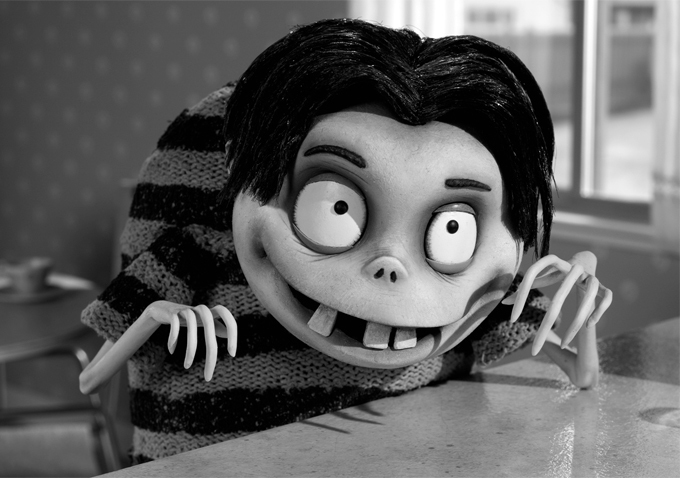
It was a lot of fun to talk to “The Middle’s” Atticus Shaffer about his performance in “Frankenweenie,” which comes out on DVD and Blu-Ray this week.  Shaffer provides the voice of Edgar “E.” Gore, the cheerfully ghoulish friend of the main character, Victor, the boy who brings his dead dog back to life.  The film, directed by Tim Burton, is based on the classic Frankenstein story — and on Burton’s own live action short film.  It is the first-ever black and white stop-motion animation feature film.

Tell me a little bit about how you first came to the project and when you first saw what your character was going to look like.

I came into the project just on an open call audition.  It was a year-long audition process and I really didn’t see anything about the character until after I’d gotten the part and they had started recording the animation. So I really didn’t know the specifics on what the character was going to look like until after I’d already gotten hired.

And when you first saw your character, what did you think?

I thought it was awesome. I thought it was so cool. One of the strangest things though, is whatever character I play recently, this is like on my show “The Middle” and what not, I always wear a striped shirt. So to see that he is wearing a striped shirt I was like “Oh my God! it follows me?”

So a striped shirt is definitely your trademark these days!  What about the teeth?

Well actually, I think that might have slightly come from me because Tim does like to record the actors when they are on the booth to kind of see mannerisms and what not to add to the characters. And I get into my role when I do voice-overs especially, so I hunched my back, I bared my teeth and I give the little finger thing, so I think I do definitely see traits of me in the character.

Before you made this film, were you very knowledgeable about the classic horror movies?

I am. I mean, I always have been. I love history of any kind so to be able to be a part of this, like to be able to see all these classic films I already had known for the most part. And during the audition process, because they did ask for Peter Lorre impressions at some point along the way, I was like, “challenge accepted” because I love doing impressions, I love doing accents. So I went in and my mom, being the awesome home school mom that she is, she rented me “The Maltese Falcon” and “Arsenic and Old Lace” and I already had “Casablanca.” And we sat down together and we watched the films and that alone was such a great education for me. It was just amazing.

What qualities of Peter Lorre do you pick up when you are trying to do a version of the characters he played?

Well, I mean, I do need to pick up as many qualities as I can. I really just pick up everything. I picked up how he behaves when he panics or when he is very calm and he is very sly and just all the variations and all the colors of him. I will pick that up and then obviously combine it with my own reactions to form the character.

And what kind of guidance did you get from Tim?

I really don’t get guidance, it’s the fact that he just knows exactly what he wants. He is the type of director that makes you fish for the answer. He knows exactly what he wants and he is able to relay that to you and then you as an actor can go “OK, I know what he means, let me just put it into my own perspective.”

Did you interact with the other actors or were you in a booth by yourself?

For the most part, I was in the booth by myself. I actually never even met the other cast members until we were promoting the movie before it came out. So for three years, I never knew any of them except for Tom Kenny who was in the film.  Peter Lorre is a new impression and I work better with a new impression when I just hear it and then I go into it. So they hired Tom Kenny and along with the voices that he does in the film, he would do a Peter Lorre impression and then I would do an impression of his impression. And also he would read opposite of me in the scene and that kind of helped me to get into the scene more.

If you could have in real life any one of the props that are in this movie, which one would you pick?

I actually already have a prop. Well, it’s not really a prop but I do have something from the film and it is a little Edgar doll that was used in the film. And that’s really, really cool but I am also very, very nervous because I have cats and I just know that they are going to go “Ooh doll! Let me rip it apart!” So I’m planning on getting a bulletproof glass and laser tripwires.

What do you think it is that makes horror movies so endlessly fascinating?

I think it depends on the type of horror movie.  The old classic horror movies, they were ingenious. There was a concept that you wouldn’t think of before like “The Wolf Man” or “Frankenstein.” It was these weird new concepts that were different, they were new at the time so then they were kind of fun and exciting. I don’t like horror movies now though, where they are just gory and everyone is going to die in the end and they leave you with a weird feeling. I don’t like that. I’ve never been a fan of those types of movies but I do like the zombie movies and stuff like that because that’s the classic horror genre and it’s the delicate horror that you would think of.

Why do people like to be scared?

I guess because people do like the adrenaline rush. Like sometimes there is this weird feeling that you get in all of us and I get it too, where you just feel like you need to watch a horror movie which is a weird unexplainable feeling I guess is a part of the human emotion, I suppose.

After this one, do you have a favorite Tim Burton movie?

I would probably say “Corpse Bride” — that was the first Tim Burton animation that I saw and I don’t know, that one really resonated with me and it stuck with me and I thought it was so good.

You worked on this film for three years?

Three years to make the film on top of another full year of auditioning.

Wow! so you started when you were how old?

I believe I was ten.

Is that before you were on “The Middle?”

It was actually during. I auditioned before I was on “The Middle” and then when I start being on “The Middle” they would record me while I was on the show.

You said that you like history.  Do you have a favorite era of history that you wish you could visit?

I love military history but I would probably have to say as an era, like if I had a time machine and I could just go back to that era it would probably be like the early, early nineteen hundreds and the late eighteen hundreds. That’s probably the era where technology is starting to become more advanced but is still old timey enough that you feel like you are in that little country log cabin type of thing.

What is some of the best advice you ever got about acting?

Some of the best advice really wasn’t for acting, it was just for life and it was from my mom.  It  was “always be yourself, don’t let people change you and don’t become a part of the big machine (that’s what I call it), the big machine of popularity. Just be yourself, explore your own interests and you will be successful.” That’s what I always keep in mind and I mean that’s how I like to live my life.

If you want people to take away one idea or one message from “Frankenweenie,” what would that be?

I have a huge appreciation for “Frankenweenie” because of the moral of the story and the fact that it is a black and white animation and hopefully it will inspire a new generation of kids to enjoy the old classic black and white films and have an appreciation for that part of our history. But then also the fact that the biggest message that resonates with me is the fact that you can love something so much and go to whatever extreme you wanted to in order to honor the memory or bring back that that you loved.

Related Tags:


Actors Interview

Tributes: Jack Klugman and Charles Durning

Posted on December 26, 2012 at 3:08 pm

The passing of Jack Klugman and Charles Durning, two actors with decades of fine performances in movies and television, reminds us that they made very significant contributions in other ways as well.  The New York Times points out that both men were successful not because they looked and acted like movie stars but because they looked and acted like real people.

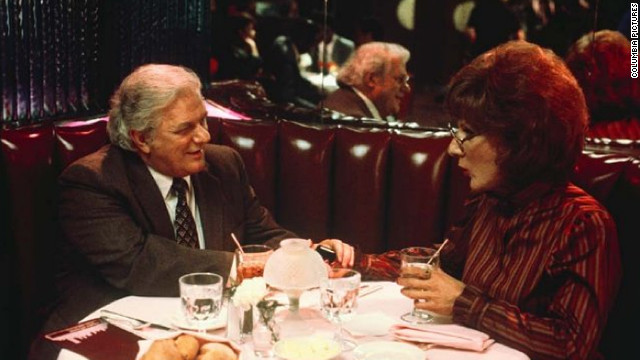
Mr. Klugman and Mr. Durning had their star turns too, but their careers were fueled more by supporting roles and ensemble work, jobs that require a different skill set, a knack for being plain old joes. So while “Tootsie” was a vehicle for Mr. Hoffman and “The Sting” was a showcase for Mr. Newman and Mr. Redford, who was that, a little way down the credits list in both films? Mr. Durning.

That’s not to say his or Mr. Klugman’s performances were ordinary. Mr. Durning earned an Oscar nomination (the first of two) for his flashy turn as the governor of Texas in the 1982 film “The Best Little Whorehouse in Texas”(though, again, he was a secondary character, supporting Burt Reynolds and Dolly Parton). And Mr. Klugman won two Emmys for his work in the 1970s sitcom “The Odd Couple” — tellingly for playing a classic one-of-the-guys character, the slobby Oscar Madison, in a show that was essentially a two-man ensemble piece (Tony Randall being the other half of the “couple”).

Jack Klugman is best remembered for his starring roles in two long-running television series, as the slob half of The Odd Couple and as the feisty medical examiner in Quincy, M.E. I especially like his performance in the classic “Twelve Angry Men.”  But his most powerful influence may be in his work for “orphan drugs.”  The Washington Post tells the story of how “he also played an instrumental role in passing critical health-care legislation, the Orphan Drug Act, through Congress in the early 1980s.”
The issue of orphan diseases was so obscure that only a single newspaper, the Los Angeles Times, sent a reporter to the hearing (and the Times only did so because a local boy suffering from Tourette’s testified). But the article caught the eye of a Hollywood writer and producer named Maurice Klugman, who himself suffered from a rare cancer and also happened to be Jack Klugman’s brother. Maurice Klugman wrote an episode of “Quincy” about Tourette’s and the orphan drug problem.

To capitalize on the publicity and build momentum for a bill, Rep. Henry Waxman (D) of California, the subcommittee chairman, invited Jack Klugman to testify before Congress. Nowadays on Capitol Hill, you’re as likely to run into Bono or Ben Affleck as your own representative. But at the time, a bona fide celebrity speaking to Congress was a huge deal. The New York Times ran a front-page story on Klugman and orphan diseases. That led to a bill with three big incentives for drug makers: a lighter regulatory burden for developing new orphan drugs, a seven-year monopoly, and a 90-percent tax credit for the cost of clinical trials. It also established an Office of Rare Diseases at the National Institutes of Health.

But the legislation was stalled.

In a fit of pique, Jack Klugman hit upon a novel idea. He and his brother wrote a second “Quincy” episode, this one revolving around an orphan drug bill that was being held up by a heartless (fictitious) senator. In the pivotal scene, Quincy confronts the senator in his office and demands that he look out the window. Peering down, the senator sees a huge crowd gathered with signs that read “We Want the Orphan Drug Act” and relents. To shoot the scene, the show’s producers hired 500 extras who really did suffer from rare diseases….Thanks to Klugman, the Waxman-Hatch Orphan Drug Act became law in 1983. In an ending Hollywood might have scripted, it has been a remarkable success. The FDA has approved more than 300 orphan drugs, with 1,100 more under development. One of the first developed under the law was AZT, the early AIDS treatment. Two years later, Congress expanded the law to include biological and chemical drugs, which helped spur the biotech industry.

Charles Durning was one of the most talented and durable of character actors.  He often played a cop  (“The Sting,” “Dog Day Afternoon,” “Sharkey’s Machine”), or a politician (President in “Twilight’s Last Gleaming,” Senator in “The Final Countdown,” mayor in “State and Main,” and an unforgettable Governor Menelaus Pappy “Pass the Biscuits” O’Daniel in “O Brother Where Art Thou”).  He was nominated for an Oscar for his role as another governor in “The Best Little Whorehouse in Texas,” where he showed himself an unexpectedly light-footed song and dance man.  I especially loved him as Burt Reynolds’ sympathetic brother in “Starting Over” and as Jessica Lange’s father with a crush on “Dorothy” in Tootsie.

Durning was a decorated WWII veteran who received three Purple Hears and a Silver Star.  He was in the first wave of soldiers to land on Omaha Beach during the D-Day invasion of Normandy. He was the only man in his unit to survive a machine-gun ambush. Despite suffering serious machine gun and shrapnel wounds, Durning killed seven German gunners.  Later, he was stabbed eight times by a German soldier but managed to kill him with a rock.  He was released from the hospital just in time to fight in the Battle of the Bulge, where he was taken prisoner.  He seldom spoke about the devastating emotional impact of his wartime experience, and the description of this part of his life in his obituaries is a powerful reminder of how much more there is to learn from the people who are (sometimes literally) not the star of the show.


Related Tags:


Actors Tribute
THE MOVIE MOM® is a registered trademark of Nell Minow. Use of the mark without express consent from Nell Minow constitutes trademark infringement and unfair competition in violation of federal and state laws. All material © Nell Minow 1995-2026, all rights reserved, and no use or republication is permitted without explicit permission. This site hosts Nell Minow’s Movie Mom® archive, with material that originally appeared on Yahoo! Movies, Beliefnet, and other sources. Much of her new material can be found at Rogerebert.com, Huffington Post, and WheretoWatch. Her books include The Movie Mom’s Guide to Family Movies and 101 Must-See Movie Moments, and she can be heard each week on radio stations across the country.

Website Designed by Max LaZebnik