Interview: Duncan Jones of ‘The Source Code’

Interview: Duncan Jones of ‘The Source Code’

Posted on March 31, 2011 at 8:00 am

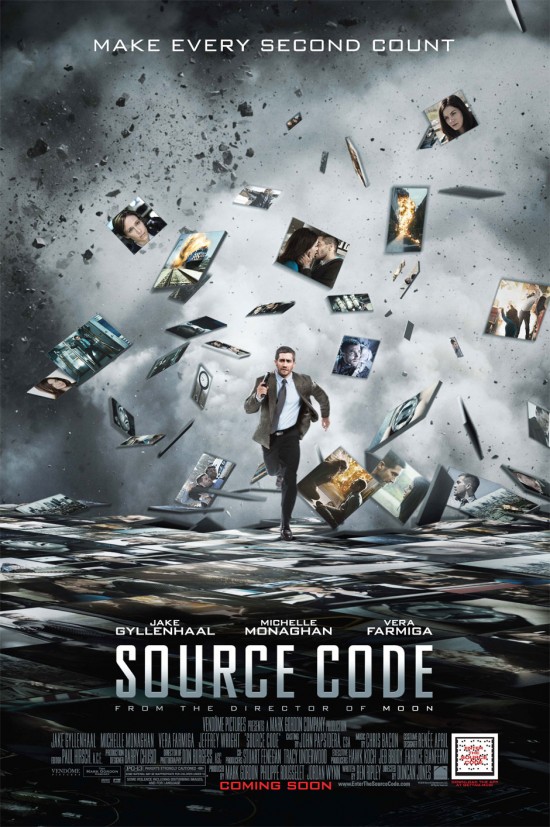
Duncan Jones, with only two films, has already established himself as an exceptionally able director. He wrote and directed his first film, “Moon” with Sam Rockwell, and it was remarkably assured, impressively creating a fully-realized future world that was believably normal — and on a tiny budget. His first big-budget film is another sci-fi story, “Source Code” with Jake Gyllenhaal as a man sent back in time by a military operation to relive the same eight minutes over and over until he can locate a bomber. I met with Jones in the wonderful circular Chimney Stack Room at the Georgetown Ritz and we had a great talk about my home town of Chicago, where the movie is set, about the movie’s secret tribute to the 1980’s television show, Quantum Leap, and about how his father, rock idol David Bowie, got him hooked on science fiction.

I’m from Chicago and I loved all the Chicago scenes in the movie!

I’m so glad. You’re the first person I’ve talked to other than the people who worked on it who can say we got it right. It was the first time I’ve ever been in a helicopter and it was stunning to be able to fly through the skyscrapers in Chicago. Incredible, amazing.

I loved seeing The Bean in the movie.

It’s a beautiful park. That whole area is lovely. And a great city.

And you used the Chicago commuter train through much of the movie, with its characteristic double-decker seating.

We took the real train a number of times to get a feel for it and take reference photographs and everything. And then we built our own in Montreal. The funny thing was that the real trains, a lot of the carriages date back to the 50’s and 60’s. They’re beautiful, but they look so period in some ways. We had to update the interior a bit or people would think he was really time-traveling!

I had just finished “Moon” and was doing the press tour for that. In Los Angeles, I had the chance to meet with some of the people I wanted to work with, and one of those was Jake Gyllenhaal, an amazing actor, very handsome, very talented. I was pitching ideas to him, and he said, “I have this script you should really read,” an original spec script by a young guy called Ben Ripley. It was a great read, fast, started off with an incredible ten pages and then keeps up that pace the whole way along.

I made my suggestions – I said, “I think the tone is quite serious. I wonder how you might feel about injecting a little bit of humor into it.” He liked that and we agreed that was what we wanted to do.

For you as a director, it is a real challenge as your main character repeats the same eight minutes over and over again to keep it fresh and interesting and different for the audience.

Yes, one of the most terrifying aspects of this script for a film-maker is how do I keep going back to this same event six or seven times and not bore the audience to tears. I had a graph and I literally worked it out on a visual level how each iteration would be different, whether we used a different angle or went to a different part of the train or move to the upstairs, always keeping variety there. And then narratively, we made sure there was no replication, always something new going on, something learned by Jake, a new relationship, new people. You still have the same eight minute event with continuity but no sense of replication.

We also get a montage taste of other trips back but about six in detail.

Why was the humor important?

I am a big science fiction fan myself. I see it divided up into hard sci-fi and soft sci-fi. Hard sci-fi is where you extrapolate into the future from where we are now and work out incrementally how we get from now to this point in the future. “2001” is a good example of a future you can believe might exist and you can see how we could get there. You understand it could actually happen. Soft sci-fi is a little more fantastical. It can have dragons or magic. And for me, time travel is in a gray area between the two.

I have a hard time believe it is possible but I love it as an idea and I understand the theoretics of it. My approach was, “Let’s use humor to cajole those like me who might not believe that it is possible,” to just say, “Take this leap of faith with me into this world where it is possible, just accept it because the story and the ride is worth it.” Humor does that. It is a very powerful tool in film because if you can get the audience and the protagonist to be laughing about the same thing, to be sharing a joke, in a way, or finding something amusing, the audience bonds with the character automatically.

When I saw the film, I wondered if you had changed the original ending.

We did, but not in the way you’d expect. There was a very sweet, romantic ending that beautifully finished that side of the story, the relationship side. But I am a sci-fi geek and I wanted to deal with this loose thread back at the facility.

It is a challenge to create a character who is interesting enough to play the villain but – without giving too much away here – not so interesting that he throws the movie out of balance, given the direction things end up going in the last third of the film.

I saw this documentary, “The Nuclear Boy Scout,” about this boy in the Midwest, about 15 years ago, trying to qualify for a Boy Scout merit badge in nuclear physics, incredibly smart but no comprehension about right and wrong and built a breeder reactor in his mother’s back yard, just going to antique stores and the library. He was able to create a breeder reactor. The government had to clean it up. Just because you’re smart doesn’t mean you have good judgment; that was where we started. As for casting, if you go with a bigger name, it makes it immediately obvious that if you do that you draw attention to that person. The actor we found, I had seem him at a casting session on video and I said, “There’s something about that performance in particular that captures what I saw in that documentary.”

You pay tribute in the film to some other sci-fi movies.

There were lots of references and parallels, including Quantum Leap, the TV show. My homage to that was the voice of the father: it’s Scott Bakula. He actually says, and we slipped it into the dialogue so it’s very organic, “Oh boy.” So the fans of the show will get that!

Throughout the film there are subtle homages to Hitchcock, here and there. The soundtrack has a Hitchcock vibe to it, and the setting on the train and the clock tower.

Who did the soundtrack?

Paul Hirsch, the amazing editor we had on board – he edited “Empire Strikes Back, “Ferris Bueller’s Day Off,” “Ray” – he’s a legend. He recommended Chris Bacon, this very young composer he had just worked with. We met with him at 11:00 at night, the day his wife had just given birth and he looked like a walking zombie. We hit him with all this information and told him what we wanted, something mischievous and mysterious, and said, “Can you write us something to see if you’re the right guy?” and four days later he came in with the opening theme as is.

It sounds like you worked very fast on this film.

Jake was finishing “Prince of Persia” and was going to disappear to do press for it. So we had about 35 days, about the same as “Moon.” I think that helps give it a sense of urgency; that energy does translate sometimes.

Have you always been a sci-fi fan? Books and movies?

Books first in fact. My dad is an avid reader and ever since I was a kid, I would read an hour a night. He always wanted me to read so if ever I was finding it difficult to get interested in something, he’d pull out Animal Farm or The Day of the Triffids to get me back in. “Blade Runner” is the be-all and end-all for me in science fiction. I strive to make something one day that has the sense of scope. It feels like you could pan the camera away from the actors and you would still be in that world.

My next film is science-fiction, too. My first film, “Moon,” was made for very little money. This is more of a Hollywood film. I’d love to take one of my own projects and make it with a “Source Code” kind of budget.

What do you look for in a project?

Empathy. The idea of identity, who someone is, whether the person they think they are is who everyone sees them as. Mostly that the audience can understand and feel for the main protagonist, that connection between the audience and the person whose story you’re seeing. My next one is science fiction and then I’m going to take a sabbatical and try something different.

Related Tags:


Behind the Scenes Directors Interview
Interview: Tom Shadyac of ‘I Am’

Interview: Tom Shadyac of ‘I Am’

Posted on March 30, 2011 at 8:00 am

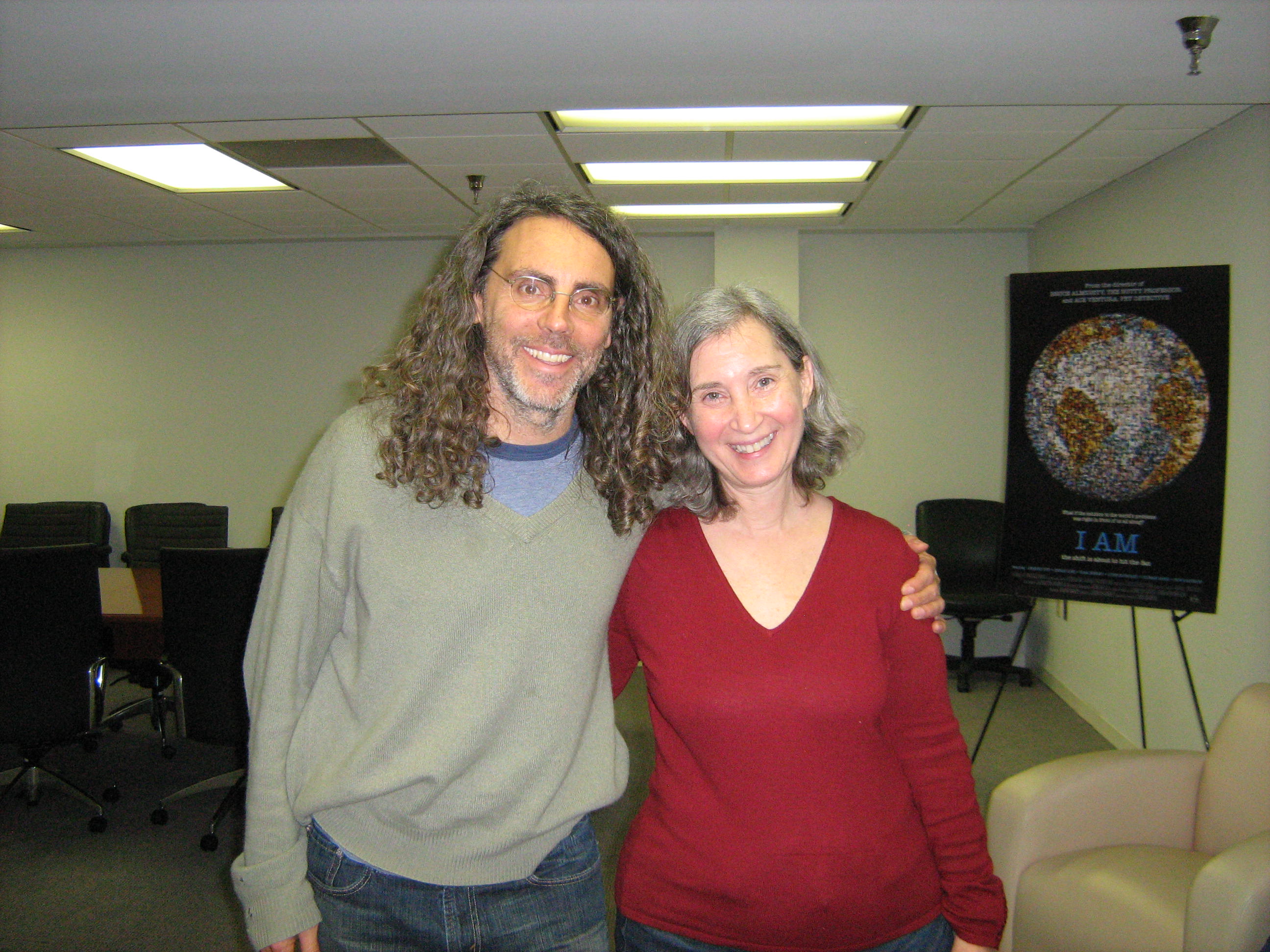
Tom Shadyac was one of the most successful directors in Hollywood. He had wealth and fame. He worked with superstars like Eddie Murphy and Jim Carrey. But a bicycle accident left him in terrible pain, physical and spiritual. He realized he was not happy or satisfied. And so he made a small documentary about two questions: what’s wrong with our world, and what can we do to make it better? The movie is filled with fascinating encounters with people who are questioning some of our most fundamental assumptions about the way we interact with each other and the universe, from cutting-edge scientists to people who study history, culture, and theology. It was a great pleasure to speak with him about his literal and spiritual journey.

How are you feeling now?

I feel so much better. I’m 95 percent and if this is as good as I get, I’m beaming. I didn’t think I’d come out of it, so even getting to 70 percent, I’m blessed. The mind-body-spirit is definitely connected for me. Not only did I call in the accident into my life because I didn’t have the courage to get out of my head and speak to my heart. So what better accident than one where I had to leave my head to feel my heart. I had been living this way in the closet and my head said you should not do a film about this or talk about it. and I didn’t have the courage to see outside the box. I believe that when I finally said I would start this conversation and share this story the tension was released in my healing and it improved by leaps and bounds.

The most profound moment for me in the film was when you said that after you had the dream house you realized it didn’t make you happy.

I had that message and I went on my merry way suppressing it, ignoring it. So I accumulated more — I bought a bigger house. I was being pulled along by the way we do things. Maybe the thought was there that this situation will be better, but it was a sleepwalk. That bell or this whistle will fill that emptiness.

Your late father appears in the film and he seems to have happiness figured out. He did meaningful work as the co-founder of St. Jude’s hospital in providing free medical care for sick children.

There was a sadness, though, in my father. I don’t think he saw what he did or how capable we are of creating societies based on compassion. At the end of the interview, he says he doesn’t think mankind can build businesses based on compassion because of who we are. People behave one way on Sunday and then forget about it the rest of the week. But I believe we behave that way, but that is not who we are. We’ve deluded ourselves that those ideas have to stay inside those churches and cannot walk in our daily lives. He didn’t see what he had done. He thought of the world outside St. Jude’s as competitive, angry, always at odds with each other.

The indigenous peoples you describe in the movie are very peaceful but there are others who are very violent, just like more developed societies.

That wasn’t the overriding indigenous way. They had conflicts and no one would suggest that a new society wouldn’t have conflict. But the conflicts were limited. If a person was hurt or a piece of land was taken payment had to be made for that, a warrior against a warrior. But not genocide. Not what’s happening today. There’s an ideology underlying that about our disconnection that’s run amok and it allows us to do all kinds of insane things.

You mention in the film how important it is to you to know your neighbors. That really requires a smaller community like indigenous tribes or small towns, doesn’t it?

It isn’t just the idea of small, the size of it, though that is important. But there are no barriers, no one was isolating themselves, taking all the land. A Native American had a tent; he didn’t get to own a peninsula. What we’ve built out of our society exacerbates the gap between us, between what are called the rich and the poor, though I don’t subscribe to those terms because the rich can be very poor and the poor can be very rich.

There were spiritual elements in some of your big-budget films, like “Bruce Almighty,” in which Jim Carrey gets to exercise God’s powers and learns that sacrificing for others is the most powerful thing he could do.

With my left hand I may have been helping to heal the world but with my own life I was fighting that message. “I want a more just world but not so just I can’t have everything.”

Do you think that there is a way in the context of a blockbuster film to convey the message you want to get across more effectively than with this small documentary?

That’s the kind of linear thinking that is not where I want to live. It’s important for me to do what’s on my heart and if I am called on to make a film that may touch a handful of people, I’ll do that. I do not want to be a servant of what Emerson called “the idolatry of magnitude,” that it has to be big to be important. The only giving mentioned in the Bible is the widow’s mite. She gave a penny but it was all she had and it was important. It was all she had. If a narrative film comes to me and it demands to be served, I will do it. It’s not that I wouldn’t make “Ace Ventura 3.” I would make another comedy because I believe it is sacred, a beautiful experience to bring people together to share laughter. But I would hope to behave differently as the director, not how I treat people — I always treated people respectfully. But in how I do the economy of my life. I don’t want to stand on top of a movie and say, “I am more valuable than you.” I want to say, “I want to be your brother, your sister, and I want you to be my sister, my brother,” and to have that reflected in the way I do the economic drawer of my life. If additional profits come, I want to distribute them to others. It was never mind in the first place.

How did you pick the people who appeared in this movie?

They changed me. Through the course of reading their work, seeing them interviewed, learning about their lives. “The People’s History of the United States” is a beautiful, brilliant work. The poetry of Rumi. The life of Desmond Tutu.

What was it like to meet them?

I walked into Howard’s office and it was as modest an office as I have ever been in. It spoke volumes about his modesty and humility. That is what I call integrity. Emerson says, “If you look in any drawer of a person’s life you know what a person is.” When I saw how he greeted me, when I saw his office, I saw he was open, compassionate, humble. But my economic drawer was taught to me by my society, not by my heart.

What was it like to go from a big budget film to a four-person crew?

Remember when Mel Gibson yelled out “Freedom!” in “Braveheart!?” It was very freeing to be able to see a shot and get the camera out and get the shot and not have to get a permit and a license and get the lighting and bring 240 people out there and the craft services truck. I like traveling light, an artistic extension of what is going on in my life.

Tell me more of what you have learned.

I’m much happier in this walk than I was in the isolated walk. I don’t think it’s about changing who we are; it’s about waking up to who we are. We know external things bring us joy to a certain point, but beyond that it doesn’t. How about competition bringing us together instead of separating us. Ignorance comes from the word “ignore.” We experience heaven when we serve each other. I felt that power with my father. When we feed others, we feed ourselves.

Related Tags:


Directors Interview Spiritual films
Interview: Fraser Heston of ‘Charlton Heston Presents The Bible’

Interview: Fraser Heston of ‘Charlton Heston Presents The Bible’

Posted on March 29, 2011 at 3:17 pm

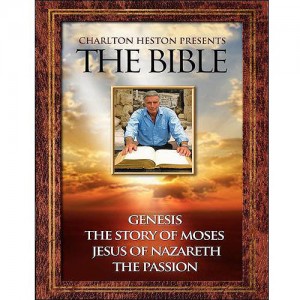
Fraser Heston was kind enough to take time to talk with me about the re-release of some of his father’s greatest films. Fraser, who played the baby Moses in The Ten Commandments, directed his father in Charlton Heston Presents the Bible. Both have been restored and are being re-released this week.

How did the Bible project come about?

That came out of a conversation between my dad and me many years ago, in the early 90’s. We were sitting around talking about what his next project should be. Dad said, “I’ve always wanted to record the Bible again.” He had done a wonderful recording for Vanguard records back in the 50’s. I said, “If we’re going to record the Bible, it has to be on film. We’re not going to do it behind a curtain. And we have to go to the holy land. We have to film in something like a Roman amphitheater. And we’re going to need some great Biblical art. Let’s illustrate these stories — we can’t just have my dad talking all the time. We found these marvelous paintings throughout the whole history of Biblical art. We decided to make a broader, much more open-ended and he ended up doing the commentaries between chapters. We didn’t do the whole Bible. We did his favorite stories, edited down. And then he comments and talks about it as a story-teller or an actor, not as a priest or a scholar, to share these stories and the beautiful art that goes with them, for people of all faiths.

The King James translation?

He loved the King James translation. It’s beautiful language and still very accessible. I think it’s the most powerful translation and he did as well. We talk about it, how it came to be written, how there are foibles and mistranslations and how it’s all part of the warp and weft of the fabric of the Bible.

How did you find the images?

You have to hire a whole department who researches these things and get the rights and get a filmable image – nowadays we do that all with a computer. The aggregate of all of these images together from Salvador Dali to the classics from the Sistine ceiling and the Michelangelo Moses, all of them together have such an impact.

What else is being restored and re-released?

“Ben Hur” and “The Ten Commandments.” And we’re also re-releasing some of our classic films through Warner Brothers like “Anthony and Cleopatra,” and “Mother Lode,” directed by my father and co-starring Kim Basinger,” and “Treasure Island,” with a young man you may have heard of: Christian Bale.

How long did it take?

It was as long as a feature. We were in the holy land for about three months. And of course in Jerusalem there’s a checkerboard of different faiths and they all have different Sabbaths and holidays. The Moslems have Friday, the Jews have Saturday, and the Christians have Sunday. And different sects have control the access to this monastery or that little place, and so on. One day I was filming in what they call the Hall of the Last Supper and went down to get a cup of coffee and found myself in the tomb of King David. I thought, “Oh, my gosh, this is amazing. I’ve just walked out of one chapter of the Bible and into another, transcended thousands of years of history.” It was pretty darn cool.

Do you have a favorite Bible story?

I love the New Testament but I am very, very partial to the story of Moses. The story of the exodus is the story of freedom. And how poignant today that people on the same ground, walking on the same sand, are fighting for their freedom in Egypt and North Africa. The irony couldn’t be stronger, could it? The words of Moses are inscribed on the Liberty Bell: “Go forward and proclaim liberty throughout the land.” That became a watchword for Dad. Everything he did had to do with freedom.

What stories did you hear about your portrayal of baby Moses in “The Ten Commandments?”

The very first telegram my mother got when I was born was from C.B. DeMille . He said, “Congratulations, he’s got the part!” And then they put me in the basket and the darn thing sank! My dad had to go out there and rescue me. I’ll never forgive them for that.

Did your father have a favorite Bible passage?

He loved the death of Moses, where he passes on his mantle to Joshua. He had it by heart and never forgot it, even when he had Alzheimer’s. It’s just a moving passage. “I shall not cross over.” It’s very moving and there are so many moving scenes in that story and in that film that just kind of ring true. So many small, human moments. Moses was not divine, though that was not always clear in the DeMille version. He questioned his worthiness, and that just makes you care about the guy. He has loves and hates and he has a temper. He becomes a very human character in a giant story. It’s a mistake to hold the Bible up as a remote, sheltered experience. It needs to be vibrant and contemporary. And “Man for All Seasons,” a whole Charlton Heston collection. He was an actor’s director. He was artistic; he looked at the scene from an artist’s point of view, a story-teller, not to call attention to himself as a director but just tell a story the best way he can. He learned that from William Wyler and C.B. DeMille. “Ben Hur” and “Ten Commandments” are not about the effects or the crowds or the action; it’s about the people. Many times the camera doesn’t move at all. Shots like that are what you remember from those films. We are so fortunate that a major part of our cultural heritage is being restore with such care by Warner’s made made available to a new generation.

I have one copy each of “Charlton Heston Presents the Bible” on DVD and “The Ten Comandments” on DVD and Blu-Ray to give away. To enter, send an email to moviemom@moviemom.com with the DVD or Blu-Ray you want in the subject line. Be sure to include your address. I will select a winner at random on April 2. Good luck! (My policy on accepting prizes to give away is posted on the site.)

Related Tags:


Behind the Scenes Contests and Giveaways Interview Spiritual films
Interview: Phil Hall of ‘What if They Lived?’

Interview: Phil Hall of ‘What if They Lived?’

Posted on March 24, 2011 at 8:00 am

We miss the performers who left us too soon almost as though we knew them.

In a new book, Phil Hall and Rory Leighton Aronsky ask What If They Lived?, with essays about stars and almost-stars from the silent era to the present, with biographical details, career assessments, and fascinating glimpses of projects they might have completed if they had lived longer. Hall was kind enough to answer my questions.

Q: How did this book come about?

Phil Hall: I always wondered what would have become of the great stars that died too young. If you see James Dean in “Giant” or Marilyn Monroe in “The Misfits,” it is difficult not to rue that there would be no further performances from its iconic stars – but if fate was kinder, could they have topped what they already created? The idea for the book percolated for years, but my attempts to get a publisher interested in the project were in vain. For whatever reason, many publishers did not think this was a good idea. Fortunately, BearManor Media, the publisher of my last book – The History of Independent Cinema – was convinced that this had potential. Rory Leighton Aronsky joined me as the co-author on the project, and here we are!

Q: Do you have a favorite of the stars that you wrote about?

Phil Hall: The biggest surprise for me was Jayne Mansfield. Many people have dismissed her as a second-rate Marilyn Monroe imitator that audiences rejected. In fact, she was an extremely talented comic actress and her films were popular. Unfortunately, her studio, 20th Century Fox, found it more profitable to loan her out to cheapo production companies for crummy movies rather than build star vehicles around her. That wrecked her film career. But she could have worked steadily without being a movie star. In the mid-1960s, she sold out New York’s Copacabana at a time when nightclubs were considered passe. I also found a clip of Mansfield appearing as a “mystery guest” on the TV show “What’s My Line.” She received the most thunderous audience response imaginable when she came on stage – and this was two years before her death in a 1967 automobile accident.

Q: Some of the performers you wrote about died as big stars, but some died before they achieved all they were capable of. Which of the stars you wrote about do you think would have surprised audiences the most by showing more than anyone knew they were capable of?

Phil Hall: By the time of his death, Robert Walker was on the cusp of showing a depth of versatility that was not present in many of his films. Walker spent most of the 1940s playing a light leading man or a stolid military type. In his last two films, “Strangers on a Train” and “My Son John,” he showed that he was capable of handling dark, complex dramatic roles. This would have opened a new avenue of career possibilities, and he think that could have enjoyed a long and successful career.

Q: You write about stars like James Dean and Marilyn Monroe who continue to be modern-day icons and others like Judy Tyler and Evelyn Preer who are hardly remembered. Why do some stars remain so present in our culture and others do not?

Phil Hall: A lot of it depends on their output. Judy Tyler had a solid career in television and theater, but she only made two films – and only one, “Jailhouse Rock,” is remembered today. The bulk of Evelyn Preer’s cinematic output came in the all-black “race films” produced by Oscar Micheaux, but most of these films are considered lost. A great deal of public recognition also rests on the role of film critics and scholars in defining the popular cinema culture. For example, Larry Semon was a very popular star of comedy films in the 1920s, but very few contemporary critics or scholars are willing to champion in his cause. And, in some cases, we remember the stars because of off-screen tragedies rather than on-screen triumphs: Roscoe Arbuckle, Thelma Todd and Sharon Tate are the most prominent examples. But the beauty of cinema is the ability to preserve a performance forever, with the hope that future generations will come to re-evaluate a star’s personality and talent. I would say that there is a greater popular appreciation of Dorothy Dandridge and Jayne Mansfield today, due in large part to critics, scholars and fan revisiting their performances and recognizing their value to the film culture.

Q: Is there one uncompleted project you wrote about that you most wish could have been made?

Phil Hall: Laird Cregar was supposed to do a Broadway version of Shakespeare’s “Henry VIII,” but he died before the production could take shape. I cannot imagine a better actor to play the monarch, and he could have easily made it into a signature role that could have been taken to the film or television screen.

Q: Your profiles of each of the stars are insightful and evocative. How did you do your research?

Phil Hall: By reading too many books, magazines and websites, and by having conversations with experts who knew more about the subject than I could. For example, online film critic John J. Puccio is also an expert on classical music, and he provided invaluable opinions regarding Mario Lanza’s future potential, while rock music writer Ricky Flake helped me speculate on the future that Elvis Presley never had.

Q: Why do you think Judy Garland would have focused on concerts rather than movies if she had lived?

Phil Hall: I think there would be a combination of factors. First, there was a lack of quality roles for women of Garland’s age and personality. Second, Garland had a reputation for being (for lack of a better word) difficult, and many producers were not eager to take that risk. Third, there was the same problem that kept Montgomery Clift away from films: getting insurance for the star. Garland’s health problems were front-page news for years, and her presence in a film would have jacked up the budget in order to cover her insurance.

Q: Some of the people you wrote about had their careers limited by racism, sexism, or homophobia. Did that influence your ideas about what would have been possible for them if they had lived until more tolerant times?

Phil Hall: It did, because the contemporary concept of tolerance was a fairly recent development. We cannot create an alternative universe for the past where these talented people could have flourished without the restrictions that limited their careers. At the same time, we have to take into consideration another discriminatory concept: ageism. Hollywood is an industry that in constantly on the search for young new faces – good parts for people in their forties or older are difficult to come by, especially for women. What roles would exist for a 50-year-old Marilyn Monroe? It would be like that lyric from Stephen Sondheim’s “Follies”: “First you’re another sloe-eyed vamp. Then someone’s mother, then you’re camp.”


Related Tags:


Actors Books Interview Writers
Interview: Tom McCarthy and Alex Shaffer of ‘Win Win’

Interview: Tom McCarthy and Alex Shaffer of ‘Win Win’

Posted on March 23, 2011 at 8:00 am

Copyright Searchlight 2011

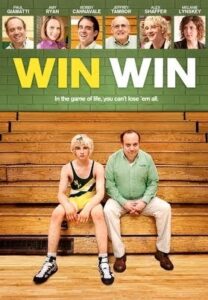
Tom McCarthy has appeared as an actor in movies like “Duplicity” and “Baby Mama” but he is now better known for his writing and directing the acclaimed films “The Station Agent,” the Oscar-winning “Spotlight,” and “The Visitor.”  His film “Win Win,” stars newcomer Alex Shaffer as a teenage wrestling champ who ends up staying with a lawyer/coach played by Paul Giamatti when his grandfather, who is in the early stages of dementia, is placed by Giamatti’s character into a nursing home.  I spoke to both of them about wrestling, writing, what it feels like to be good at both, and doing whatever it takes.

I don’t know much about wrestling so I was surprised by how fast you moved.

TM: Especially the lighter weights.  They are really exciting. The lighter weights it’s just wicked to watch.  That match that I went to at your school – even the refs couldn’t keep up.

AS: Over 130 or 140 it’s more about strength.

One of the key moments in the film has Paul Giamatti’s character asking your character, Kyle, what it feels like to be that good at something.  Kyle says it feels like being in control.  Is that how it feels?

AS: For Kyle, for me it just feels good to be that good.  It’s a very comforting feeling.

TM: That would have been a good answer for Kyle, too.

What makes you feel that good?

TM: I like being immersed in work.  I like it when I’m in a sweet spot in the work.  When I’m writing I have a ritual or a regimen and I get really lost in it, get out of my own head and follow an idea, or a story, or a character.  I really like being in that space.

What was the beginning of the idea of this movie for you?

TM: I have this mental folder that I drop things into and when they feel like they’re of the same world I start to put together the movie.  It certainly was the wrestling at the beginning.  I called Joe , my co-writer, and said, “Have you ever seen a movie about high school wrestling?”  We started to joke about our own bad experiences and then talked about the good ones, the world in general, how unique a world it was, looking back on it 20 years later.

And the other idea was about where we are in society, the title, “Win Win,” like “Oh, you can have a mortgage and pay nothing and a car and put no money down” and we all believed it for a while.  Oh, that’s great, why wouldn’t you do that!  It will cost nothing!  The other idea that aligned with that thought was that we are polarized in society.  The bad bankers did bad things – but those people are our neighbors.  We ride the train, the bus with them.  They’re not bad people; they just made some bad choices.

So wrestling with that part of our human condition – we all have that aptitude, to so surprisingly and sometimes shockingly bad things in certain scenarios.  Mike is confronted with that and that I felt very interested in.  It’s not enough to say, “I have a family, I have a good job, I’m a good person.”  That is not an excuse or a guarantee.  That I found interesting.

Alex, you went from doing something that you knew very well and were very good at to something that was completely new to you, and you were surrounded by some of the most experienced and talented actors in movies.  What was that like for you?

AS: I wasn’t nervous because it was something I didn’t care about that much.  Sorry, Tom!  Halfways, no more like one-third of the way through, I began to think, “I really want to do good.  I like this guy, I don’t want to ruin the movie for him.”

TM: I think that’s a good way to go into it!  I think that’s a problem for a lot of actors who go into an audition wanting it so badly, they sabotage themselves because they’re so anxious.  I think when I stopped caring about acting quite so much, when I got more involved in writing and directing, either I’m right for it or not, I started getting more jobs.

How did you like being a blonde for the filming?

AS: I was a blonde before the filming.

TM: He came to us like that!

AS: It wasn’t my idea for the movie.  Our team before we wrestled Phillipsburg, not every year but when the team’s good, we want to psych them out, so that year the whole team bleached our hair blonde.

I thought it was very funny that Amy Ryan’s character Jackie called you Eminem.

TM: We got a studio note about that: “Emeneim, isn’t he a little bit past now?”  I don’t think Jackie’s cutting edge!   And besides, now he won the Grammy!

AS: He’s amazing!  He will never be gone!
(more…)

Related Tags:


Actors Directors Interview Writers
THE MOVIE MOM® is a registered trademark of Nell Minow. Use of the mark without express consent from Nell Minow constitutes trademark infringement and unfair competition in violation of federal and state laws. All material © Nell Minow 1995-2026, all rights reserved, and no use or republication is permitted without explicit permission. This site hosts Nell Minow’s Movie Mom® archive, with material that originally appeared on Yahoo! Movies, Beliefnet, and other sources. Much of her new material can be found at Rogerebert.com, Huffington Post, and WheretoWatch. Her books include The Movie Mom’s Guide to Family Movies and 101 Must-See Movie Moments, and she can be heard each week on radio stations across the country.

Website Designed by Max LaZebnik