Interview: Writer/Director Tom McCarthy of the Adam Sandler Fantasy “The Cobbler”

Posted on March 12, 2015 at 10:00 am

I am a huge fan of writer/director Tom McCarthy (Win Win, “The Station Agent,” The Visitor), and was delighted to get a chance to talk to him about his new film, co-written with Paul Sado, “The Cobbler.”  It is a gentle fantasy starring Adam Sandler as a shoemaker who discovers his father’s old machine for sewing shoes has magical properties.  If he tries on the shoes repaired with that machine, he takes on the appearance of the shoe’s owners.  The film co-stars Dustin Hoffman, Dan Stevens (“Downton Abbey”), and Ellen Barkin.  It opens in theaters, and on VOD and iTunes March 13, 2015.

As an actor and as a writer, you have to use your imagination to step into the shoes of different characters all the time.  Is that what inspired this idea?

Probably a little bit. It didn’t dawn on me till later in the making of it.  It was probably as we started to rehearse with the actors that we realized realize it was something actors are very used to doing. Initially it was just the idea that you don’t know a man until you walk a mile in his shoes. There was something about that that sounds really compelling. The idea of exploring the interesting world of the Cobbler and the Shoe Repair Man as a way of exploring that idea.

The title, “The Cobbler,” has a fairy tale quality, very different from your earlier films. When you are creating a fantasy film, how do you work out all of the internal rules to keep it consistent and organic?

Paul and I really wrestled with what it meant, what we could do what we couldn’t do. We felt like, okay, there are definite limits to this. We had to keep double-checking to make sure we were not breaking any of our own rules.  We tried to keep it as simple as possible, what exactly Adam was allowed to do and what he wasn’t allowed to do, what he could control and what he couldn’t control. And like all superheroes, we figure his power would increase as he begin to master it as he got better at it.  But there certainly are stages when he is exploring it and having fun with it and in some cases abusing it and then ultimately using it for good.

What made you decide to try fantasy?

You are searching for new things, new things to challenge you at different ways and you are looking to have fun and you are looking to explore. I don’t ever profess to be limited to one particular school of filmmaking or any type of storytelling.  It’s always what sort of tickles me in the moment when I think of something exciting and challenging and “The Cobbler” was all those things for me.

“The Cobbler” was not the movie I was planning on making, I was planning on making “Spotlight,” the movie I am editing now.  Spotlight got pushed back because we couldn’t get it together in time. Paul and I had really been working on “The Cobbler” for a long time. So we just had the idea to just get together and bang ideas around.  Just the energy of collaboration and the synergy that it brings about is just really exciting and cool. Paul and I are old friends and we really connect so it was a good time.

Copyright The Cobbler 2015

It is quite a challenge for actors to have to not just play their own character but Adam Sandler’s character as well. 

Sometimes we just have to work on keeping it straight as we were in the moment. And then beyond that, when you have an actor like Dustin, it is really just little tweaks here and there reminding him of maybe what was too much, not enough or too much depending on where he was in the scene. All these people had a pretty good sense of how they were going to approach Adam. They weren’t just trying to mimic him. They were trying to get the essence of what Adam might be in their body. And it was really a little bit of modulation on everybody but not much. It was kind of just making sure that the story held together and that the audience could keep track of who is who at any particular time.

Your cast included some actors who are very trained and experienced and others who were not.  What did you think about as you were casting the film?

I’m always just trying to find what actor I think would best connect with the role.  Some secondary considerations are where the actor comes from and what their work ethic is like and how they approach material ultimately especially in a film like this where you are building an ensemble. But mostly it is who is right and then we work backwards from there. Some people are classically trained and some aren’t trained at all, some are connected, some come from  comedy and stand ups, some came out of rap, so people are coming from all kinds of places.  I think that adds a really nice texture to the movie. I think one thing I’m very proud of with this film is that it really represents New York in a very authentic way. I think it gets the culture, especially the Lower East Side. I think we did a good job of capturing that.

And if you could pick out one pair of size 10 1/2 shoes and be him for a day, who would you pick?

That’s a really good question. I think it would be kind of cool to check out Putin. I want to see what that guy does, walk around the Kremlin and see what is going on in that place. My feeling is Kruten doesn’t have a 10.5, though, I think he is a little guy, he is probably got like an 8 or something.

I liked the way you kept the origin of the magical shoe repair machine a little bit mysterious, even though you had the flashback with the men all speaking Yiddish as they came up with a plan to stop the neighborhood bully.

I didn’t understand a word of the Yiddish when I was filming it but it was really fun to listen to that language. They speak it so beautifully and it was nice to be around for a couple of days. But I think ultimately with that opening sequence , it’s a little nod to Max’s heritage and that period going back to a generation that would have been Jewish immigrants from mostly Eastern Europe who at that time were kind of flowing to the lower East Side and making that their home.  What Paul and I were playing with is this idea that all these sorts of different shop owners and tradesmen were being kind of run out by a slumlord/landlord who is raising rent and forcing them which of course is what we ended up dealing with later in the movie with Ellen Barkin.  Every generation has their own problems and if we would listen to our grandparents we would find out that there a lot of the same problems, just different looks. And so we thought that it is a cool way to see all the tradesmen coming to the cobbler asking for help and sort of setting up the motif. And for me also it was a little nod to a time when being a tradesman was a really respected position in society, as it should be. I think is really wonderful when you have talented craftsmen and tradesmen and I hope we never lose track of that, we don’t become one big mall. It is good to go shopping and deal with one person who fixes your shoes or works on your clothes or does whatever that is they are doing.  It is a nice way to do business.
 

Related Tags:


Directors Interview Writers

Interview: David Milchard of Russell Madness — Plus Copies to Give Away!

Posted on March 9, 2015 at 3:27 pm

Copyright Air Bud Entertainment 2015

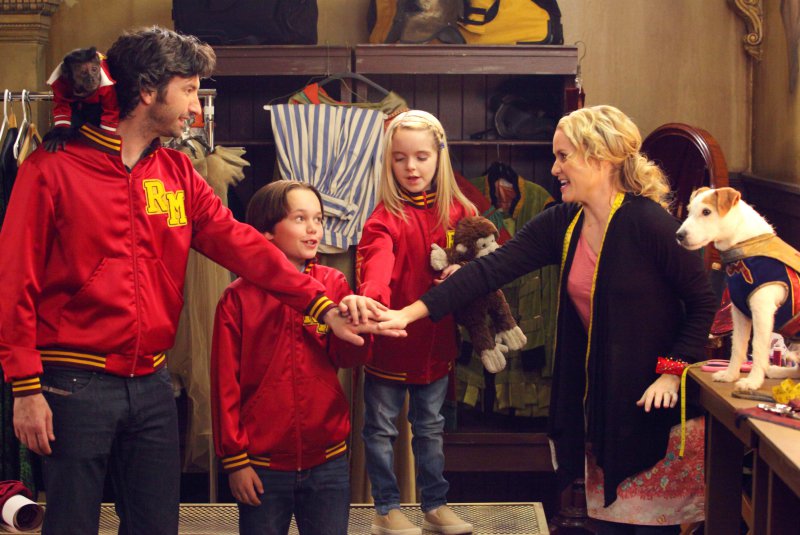
David Milchard stars in “Russell Madness” as the father of a family who inherits a wrestling arena.  But I think he would agree that the real stars of the film are the talking monkey and dog.

He took the time to talk to me about making the film, which is a lot of fun .  I have copies to give away!  Send me an email at moviemom@moviemom.com with Russell in the subject line and tell me  your favorite movie dog.   Don’t forget your address!  (US addresses only).  I’ll pick a winner at random on March 16, 2015.  Good luck!

They always say that actors don’t like to work with animals or children. You managed to do both in this film so tell me a little bit about what that was like.

A dog and a monkey!  A monkey is an animal but some people will say it is also a human. And I work with CGI which means there’s nothing there at the time. So I feel like I can do anything.  I have been through the hurricane class of acting.  Crystal is the name of the monkey.  I like Crystal. She was fantastic to work with.  It was a great experience; it was actually funny; the very first day on the set, I hadn’t met the monkey yet. And we were kind of in an important scene in terms of like how to get it done so it was a crash course on how to handle a monkey. Getting the monkey up on my shoulder and then acting as though I always had the monkey upon my shoulder, like it is totally normal. And then every now and then a monkey does what a monkey does which is like really screech loudly in your ear. But for the most part Crystal was a professional. Very well behaved and it was super fun to work with Crystal. And then I learned that if you ignore the monkey just a little bit they adore you more. So that is what I did.

What was it like to work with CGI, or, rather, to pretend that what would be inserted via CGI was there?

Copyright Air Bud Entertainment 2015
Copyright Air Bud Productions 2015

We were moving very quickly so sometimes they would film the dog and then they would remove the dog. The dog would do some crazy flip.  And then you had to react to a dog flipping but there was no dog. So it was challenging but it was fun and working with the Director, Robert Vince, was great because he was very honest. If it was working, he would be like “Perfect, great!”  If not, he would say, “No, we are going to do that one again,” and then he would explain if I was looking in the wrong spot or whatever but it was really great. After that, I’m definitely capable of handling anything right now. Give me any sort of situation actingwise, I am ready.

Your co-star is John Ratzenberger (“Cheers”), and I know he loves to improvise.

Yes and I love to do improv, too. I actually performed in a place called the Vancouver TheaterSports League and that’s where I get my chops for improv over the last, I guess 10 or so years and it was great.  Yes, John and I would mess around a little bit.  He kept me on my toes for sure.

You were very believable as a dad.  What did you do to help the kids in the film get comfortable with you?

It was lots of fun.  Working in the “Conversations With” Web Series was very helpful because it is not shot like a traditional TV set or anything like that.   And being an improviser I have worked with lots of kids on stage in front of a live audience, which is very exciting and dangerous if you will. And so I felt quite prepared when I got on set and the kids were great. I mean everyone was super fun and Mason Vale Cotton was a consummate professional.  He was very prepared. And he was also very adaptable.  I mean it is hard acting with the dogs and animals and stuff but he was patient and he was fantastic.

I’m glad you mentioned the very funny “Conversations With” on YouTube, where you played the role of a 2, then 3, now 4-year-old, saying exactly what she said to her father.  Tell me how you psych yourself into that role.

I think there is more kid in me than I realize. I always want to try and get what I want when I want it. And so I definitely tapped into that. But basically, being an improviser you just sort of say yes to situations and also you observe a lot. So I spent a lot of time watching my brother raise his two kids and like I said I taught improv as well so I have worked with kids in that way. And then just watching Coco, I studied her sometimes and see what she does. And then I take some creative license.

I like the way you capture the temperament of a child without having to use an exaggerated baby voice.

Yes, Matt Clark, my friend and my partner in crime in the series, we talked about that at length actually when we were starting. We were like “Well, how much like a kid do I play it?”  We try to find a fine line about what makes the most sense.  Sometimes I do act like a kid because it feels right and then other times I feel like no, this is an adult moment, this is when maybe Coco’s exploring the world of what it is like to be older.

One of the things that I particularly enjoyed in the “Russell Madness” movie was the set.  It was just gorgeous.

When I walked on to that set, I was like, “Oh my goodness! I’m in a real movie!”  The set was amazing. And we were all really sad when we had to go to the modern version, but that was amazing too.  Everyone loved it. And then we were all kind of like joking that we could just leave it up and start a wrestling league here.  We were all sad when we had to leave that set.

What do you think families will talk about after they see the film?

I think people are going to love this movie because it has got a great little story.  The parents will be happy with the family message: family first, family is the best tag team. And I think that is a great element of it.  The monkey talks and we hear the monkey and that is super fun. And then of course we have got the dogs so if you like dogs, you are in. If you like monkeys, you are in. You kind of got it all and the kids were both talented obviously and super cute. So it is fun.

Related Tags:


Actors Contests and Giveaways Fantasy For the Whole Family Interview Talking animals

A New Alphabet Book for Women’s History Month: Rad American Women A-Z

Posted on March 1, 2015 at 3:37 pm

Copyright 2015 City Lights/Sister Spit

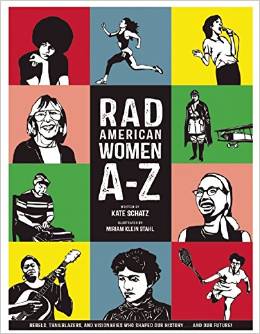
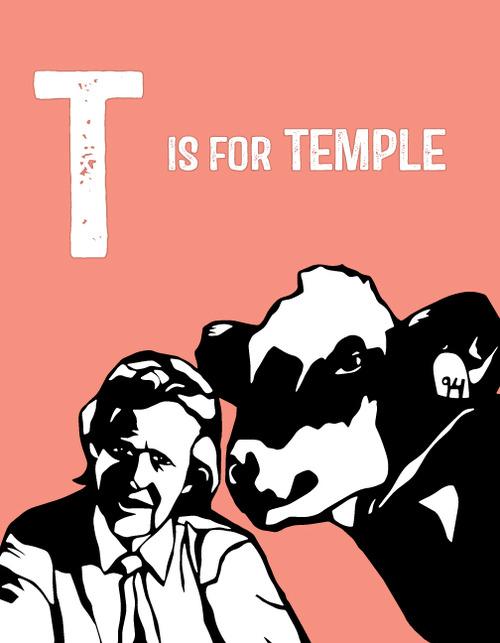
Rad American Women A-Z: Rebels, Trailblazers, and Visionaries who Shaped Our History . . . and Our Future! is a wonderful new alphabet book to teach girls, boys, and their families about sounds and letters and stories about women who dreamed big, accomplished great things, inspired others, and changed the world. Author Kate Schatz and illustrator Miriam Klein Stahl have created a wonderful tribute to these woman and resource for families.  Ms. Shatz answered my questions about the book.
Where did the idea for this project come from?

The idea came when my daughter (who’s now 5) was about two. She’s such an amazing kid, and I want her to grow up to be empowered and inspired. I’m very conscious of the images of women and girls in the media, and want her to see a wide range of possibilities for who she can be and what she can do. We have a house full of great books, but I wanted her to have something more to read—something fun and bold but also educational and inspiring, to teach her about history in a way she could appreciate once she was a little older. I couldn’t find the book I wanted, so I decided I’d try to write one myself. After I had my son, I felt even more motivated to create it, because it’s not just young girls that need powerful female role models—it’s boys, too.

Copyright 2015 City Lights/Sister Spit

Did you have female or feminist role models when you were growing up?

Absolutely. I was lucky enough to be raised by and around very strong, loving women. I’d cite my mother Barbara, and though she may not have identified as a feminist, my Nana as well. As a child I was always drawn to books about spunky, adventurous, bold girls—Harriet the Spy, Nancy Drew, the Anastasia Krupnik books. In middle school I wanted to be a journalist, and I loved (the TV character) Murphy Brown and MTV’s Tabitha Soren. And then I found feminist heroes in music: riot grrl, PJ Harvey, Ani DiFranco, Tori Amos. One thing to note about these figures is that they’re all white—outside of musicians and performers like Janet Jackson, Neneh Cherry, Tracy Chapman, and MC Lyte, I wasn’t exposed to a diverse array of feminist role models until later in high school (when I sought it out on my own) and then in college—that’s one thing I hope to remedy with this book.

Did anything surprise you as you researched the book?

Going into this project I considered myself to be relatively well-versed in women’s history—I quickly realized how much I don’t know, and how many fascinating women I’ve never heard of. It was also incredible to learn more about women I was familiar with. I often knew the basic gist of a person’s life and accomplishments (or thought I knew!) and as I went in-depth with my research I learned so much more. It was a humbling and exciting journey to explore and absorb all of these stories. Only 26 ended up in the book, but I learned about so many more!

What were your best resources for research?

I used a number of great books and websites. A Mighty Girl exposed me to a number of fantastic existing children’s books. I often visited the website for the PBS Makers project, as well as the National Women’s History Project and the National Women’s Hall of Fame. I visited the Oakland Public Library to check out specific biographies on individual women, but also used books like “The Reader’s Companion to U.S. Women’s History” and “What Every American Should Know About Women’s History” as frequent reference points. And of course I used your basic Google search, and actually found great value in the “suggested results” of these searches, which often led me to people I’d never heard of.

Copyright 2015 City Lights/Sister Spit

Why is it important for both boys and girls to learn about these women?

The term “women’s history” is significant, but also limiting, as it can imply that it’s a history only for or of interest to women—not for everyone. The women we profile are Americans, and their stories are part of American history, to be included in our textbooks and our collective consciousness alongside the many, many male heroes that we learn about. The majority of the women in the book are non-white, and for many reasons their stories have been left out of mainstream and traditional accounts of “important” historical events and individuals. Even when we do teach the history of women and people of color, it tends to rely on the same singular figures over and over. Children—and adults—should know that Amelia Earhart was not the only female aviator. Rosa Parks was not the only black woman in the Civil Rights movement. Susan B. Anthony was not the only one fighting for suffrage. These women were amazing and are absolutely important, but there’s so much more to the (hi)story.

Who were some of the women you most regretted having to leave out and will they be in some future edition?

For nearly every woman featured in this book, there are at least 3 others that were almost included. It was very challenging to decide. We do have plans for additional books, and are already planning several. Some letters just have more names to choose from—A, E, F, J, K, M, and S, for example—and some (Q, X, Y, Z) don’t. A was a big challenge, because it’s the first letter and it sets the tone—and because there are so many awesome, amazing As! It could have been Audre Lorde or Adrienne Rich or Abigail Adams or Anne Sullivan. F was almost Fannie Lou Hamer, but E is Ella Baker, and they were working in the same field at the same time, and we wanted as much variety as possible. I definitely want to include Fannie Lou in the next book! J was going to be Jane Addams, but when I learned about the amazing but not very well-known educator and activist Jovita Idar I decided to feature her instead. I love that M is for Maya Lin but I’d like to include astronaut Mae Jamison in a future book. S went through several iterations as well, and was almost Sister Corita Kent, an incredible nun who was a graphic artist, as well as Sylvia Rivera, a transgendered activist and Stonewall vet. Bottom line: there is no end to the incredible stories that deserve to be told.

Why is the X group so significant and what do you hope kids will get from that write-up?

X is significant because it reminds us of how much we don’t know, and how much is yet to come. It’s significant because the illustration and the text challenge how we define and perceive heroism and greatness—many of the images are of people doing “ordinary” things like reading, parenting, and working. You don’t need to be a nationally celebrated figure to be rad, to have an impact on the world. Hopefully readers will think of the many reasons why we don’t necessarily know the names of all the women who have done great, heroic things. Hopefully it will inspire them to consider the past but also look toward the future, and to recognize the radness in themselves and the people around them.

Related Tags:


Books Gender and Diversity Interview Writers

Interview: Ryan Potter, Hiro in “Big Hero 6”

Posted on February 24, 2015 at 3:58 pm

Ryan Potter provided the voice for Hiro in this week’s DVD/Blu-Ray Pick of the Week, the Oscar-winning Big Hero 6. Talking to him on the phone, it was easy to imagine I was talking to Hiro himself.

Other than a few moments with Maya Rudolph, who played Hiro’s harried guardian, he did not interact with the other voice performers. But, he told me, he was never recording by himself. “You know, it’s funny, sometimes you work with another actor, sometimes you don’t, but you are never really in a room by yourself. You are in the room with people just as important as other voice cast members of the film. You are in the room with the head of production, the director, the producer, the editor, the sound engineer the head of story. You get to create with people just as important to the film as let’s say Scott Adsit, who played Baymax. So you’re never in there by yourself.”

Copyright 2014 Walt Disney Studios

He was excited to find out that “Baymax is kind of a real thing. Someone over at Carnegie has created soft robotics and it’s unreal. There’s kind of danger of having a robot nurse or a robot caregiver is that they could potentially harm you because they are made out of metal. And we’re not made of metal so we are definitely susceptible to being injured by that. But having a soft kind of robot, not pliable but a rubbery or a bouncy nurse would make total sense. They would be able to be a caregiver without harming you.”

Potter told me that the filmmakers wanted “to cast true to Hiro’s ethnicity, which was Japanese-American. They just couldn’t quite find somebody and I guess they didn’t know about me at the time. And they were calling school programs and church groups. Don Hall was not going to give up on casting a Japanese-American, so when they found out about me I guess they were very excited and it kind of showed in the audition process. You usually to go in do this whole song and dance and go, ‘Oh how did I do?’ and the casting director would go like, ‘Alright, thank you, bye.’ This time I went in and I met Don and he was kind of quizzing me on Japanese pop culture. The two of us vibed. Instead of an audition it was more of a work session. It kind of created what Hiro ended up being in that audition. At the end of the day it came down to me being myself. And it was very surreal, I walked out of there very confident in what would we had done and couple hours later they called and asked what my availability was, and if I could send them everything I have done work wise. A couple weeks later we got the call that we got it and I’m like, ‘You are sure you don’t want to do a second audition?’ It was great.”

Copyright 2015 Ryan Potter

In creating the character, Potter had “a little bit of source material with the comic books,” but “Disney wanted to do their own interpretation. I saw how similar he looked to me when I was 13/14 years old. I went in there and said, ‘that looks at me when I was in middle school.’ So it was great.” He has spent a lot of time in both San Francisco and Tokyo, so he especially enjoyed the imaginary world of “San Fransokyo.” “Being able to see the blend is just uncanny. Tokyo is in a constant state of renewal. When a building gets too old they tear it down and build something new. And San Francisco is the very opposite. They appreciated heritage and preserve it to the best of their ability. So seeing how well they blended the two cities is absolutely unreal. They didn’t lean heavily to one side or the other. It’s literally the perfect 50-50 blend of both Tokyo and San Francisco.”

He feels that 2014 was one of the best years in the history of film, especially films with very smart heroes. “The Theory of Everything,” “Whiplash,” “the Imitation Game” are just three that like “Big Hero 6″ celebrate smart individuals in their field. It is an absolute honor to be able to be in ‘Big Hero 6’ and to represent one of the most successful films of the year in a year where film was as important as it was 75 years ago, in a year of legendary classics.”

He is also proud of the film’s ground-breaking representation of diversity on screen, “what the United States genuinely looks like. If the United States is the melting pot of the world you need entertainment, you need visuals that represent that. They were the first multicultural animated Disney characters of all time. I am very proud to be able to be a part of the film that’s going to open so many door for the Asian American community and the Latin American community and the African American community.”

Related Tags:


Actors Interview

Interview: Jody Lee Lipes of “Ballet 422”

Posted on February 16, 2015 at 3:55 pm

“Ballet 422” is a new documentary directed by cinematographer Jody Lee Lipes (Lena Dunham’s breakthrough “Tiny Furniture,” Judd Apatow’s upcoming “Trainwreck,” written by Amy Schumer).  It is an intimate, behind-the-scenes look at the creation of a new dance number for the New York City Ballet, choreographed by a young member of the Corps de Ballet named Justin Peck.  I was very fortunate to get a chance to speak to Lipes about the film.

The film really illuminates the extraordinary collaboration and teamwork by everyone, the dancers, lighting crew, costume designers, and musicians, very different from the stress and competition we have seen in ballet films from “The Red Shoes” to “The Turning Point” and “Black Swan.”

I don’t know that much about the culture of the ballet world in general but just in terms of Justin’s specifically and his process. This is very early in his career, this is a big opportunity. It was the second ballet he had choreographed to be performed at Lincoln Center for the company and the third overall. And I think there are a couple ways that people can respond to a certain inevitable insecurity that comes along with that. One is to sort of be pissed off and angry and blame things on other people and get upset when things don’t go your way and stamp your feet. And then the another way is to work really hard and to try to incorporate other people’s opinions and their knowledge and to use the people around you in the best possible sense to get closer to what you want.

Copyright 2015 Magnolia Pictures

Justin is much more like the second way and I think that kind of calm and that apparent confidence and cooperation and collaboration that he tries to create would lead to what we saw in the film. I think it’s top-down. Just as in any other creative group or business or social situation, the person in charge really dictates the tone.  A lot of the dancers were people that he basically grew up with and has been working with for a really long time. Instead of being jealous or angry or frustrated that they’re being told what to do by somebody below them, I think they’re really excited that one of their friends is becoming this really important artiste and they are excited that they were chosen to work with him and to help him and to collaborate with him.

So I think that is the tone of the film.  There are definitely some tension at points in the film. There is like a general tension underneath but it’s not really a film is driven by conflict. It is a process film so it is just really about all of the pieces that come together to make a work of art and each step along the way and hopefully the progression of that is enough to keep people interested and they don’t need screaming and crying to be interested in what’s happening.

My favorite example of that is just before the premiere, when the ballerina asks her co-star if there is anything he needs her to go over before they go on.

Yes, I agree. You are the first person that ever brought up that moment with Sterling and I have talked to many people about this film at this point. But it is really my favorite part of the movie too and I really love how Amar responds to that, too.

You let the story unfold without interviews or narration.  What made you decide on that style?

I don’t know like when that additional material became what you have to do to tell a story.  The documentaries that I always loved the most those or that are verité films. I’ll never forget the first time I saw Don’t Look Back, the  D. A. Pennebaker about Bob Dylan on tour in Europe.  It felt like there was so much happening.  My parents have Dylan records and I like them a lot but then when I saw that it was like a whole other thing. I was like, “Oh this is why people are so crazy about this guy.” There is a way that you can get to know people and that you can also put your own ideas into who they are in this style which is even more meaningful at times than if someone tells you who they are or decides for you what you should think about them.

It is like people showing you who they are through their actions and how they behave rather than through telling you what they want you to think about it. And also I think for me the goal is always to tell stories visually and cinematically and verbal story telling is a different thing to me. It is not always necessary and if you can avoid it sometimes it is a good thing to just let things happen. So it is just the kind of movie that I like basically but I think it works really well in this case because it is such a physical visual arts form and because there is this natural sort of ticking clock in this film because it there is only X amount of time until the premiere so I think the combination of those two things allows for this kind of storytelling.

I also think the narrative in the film is very very clear and it is very precise.

You tell us a lot with just a few words.  Knowing that Peck is so young and inexperienced and that he is a member of the less prestigious Corps de Ballet and that he has such a short time to create the piece.

The last thing in the world I want is someone who doesn’t know ballet to feel like they can’t access this film or that they can’t follow it because they are not in that world. Of course I want those who do like ballet to like this film but that’s just preaching to the choir.   The real challenge and the real storytelling comes when you are telling the story to people who don’t know anything about that world and who don’t care about the world. So it was very important that we set up the language and the rules of that world in order for people to follow it who do don’t care or don’t think they like ballet.

Did you intend for it to be a big surprise to find at the end that Justin was actually going to be appearing in a different number at the same time that he was doing this overwhelming work of putting his number together?

It was a surprise to us.  We did not find out until a couple of days before from Justin that he was dancing the same night.  But yes I think that’s one of my favorite parts of the film. It is like something that you couldn’t really write.  It’s kind of shocking to me still that that’s how things are done there.  He has two jobs and he has to do both of them and it was a very delicate balancing act to make sure that the audience doesn’t totally totally forget that he is a dancer. That was also a very delicate thing to do and part of that was making sure that the physical therapy scene was in there.

What do you want people to talk about after they have seen the movie? What is it that you want them to think about?

I want them to be entertained first of all because that is an important thing to me. I also just hope that people don’t think that this is a movie that is not just about dance, it is about a creative process in general. And I think for me the reason why that is interesting is because I’m always trying to get better at what I do and at the way that I make art and so I think I’m fascinated with how other people do that because I get to spy on their way of doing things. I’m always picking things up from that and learning how to behave and how to get what you want and how to make better work and challenge yourself more and how to treat people and all those things and so I hope that people will walk away with a greater appreciation for that.

There’s never a sense of anyone being self-conscious.  How did you make a safe environment for the people in the film so they could behave naturally?

A big part of that was the fact that I had already made a dance film two years ago so I had that that kind of leg up. The producers and I had a relationship with the company and the dancers already.  Ellen Bar is a Director of Media at New York City Ballet so she shoots with them all the time.

So this is not a new experience for them. They are used to being filmed for promotional stuff. So I think the right combination of those two things and also of Justin being cool and saying it’s okay and his strength and letting us be there watch him figure this out and the same thing for the dancers.  I think it sort of percolates down and the fact that he is cool he is okay with not being perfect on camera all the time really helps.

Your next project is a high-end Judd Apatow film.  That must be quite a contrast.

I have done a lot of different kinds of films over the years and whether I am working as the director or cinematographer I think that is a really healthy thing. I think it refreshes you to do things in a new way on a new scale, you go back and forth and have to use different muscles to do your filmmaking. So I hope I can always do that, I hope that I can always do dramatically different projects back to back. I think it keeps you awake and engaged.

Related Tags:


Directors Interview
THE MOVIE MOM® is a registered trademark of Nell Minow. Use of the mark without express consent from Nell Minow constitutes trademark infringement and unfair competition in violation of federal and state laws. All material © Nell Minow 1995-2026, all rights reserved, and no use or republication is permitted without explicit permission. This site hosts Nell Minow’s Movie Mom® archive, with material that originally appeared on Yahoo! Movies, Beliefnet, and other sources. Much of her new material can be found at Rogerebert.com, Huffington Post, and WheretoWatch. Her books include The Movie Mom’s Guide to Family Movies and 101 Must-See Movie Moments, and she can be heard each week on radio stations across the country.

Website Designed by Max LaZebnik