Interview: Dan Heath, Co-Composer of the “Big Eyes” Song

Posted on January 13, 2015 at 8:00 am

Tim Burton’s “Big Eyes” is based on the real-life case of Walter Keane, who said he was responsible for the hugely successful “big eye” paintings of children in the 1960’s, and his wife Margaret Keane, who, as determined in a court case, really painted them.  It is a haunting story with an appropriately haunting theme song, co-written by singer Lana Del Ray and her frequent collaborator Dan Heath.  He talked to me about how they worked together and what he learned from writing for reality television.

This is a story that began with an image and then became a drama and then you take it into a third dimension with music.

It began with Lana singing a melody into my voice memo on my iPhone. And then I took that and started building on it after having seen the film because I wanted it to blend in with the score by Danny Elfman as well and be a bit seamless. And I started building up chord changes, and the progression, and the textures and the layers and the strings and the bass and all that stuff based on the melody she was singing. And really my favorite part of the song is the bridge where it sort of breaks down and she ends up saying “it’s amazing what women in love will do.”  It’s such a pretty part because it’s a kind of descending pizzicato line and then it kicks back into this sort of epic chorus. But it was really nice to get to make the chorus so big because it’s quite dramatic and I like the dynamic range of the pieces. It was subdued in the verses and sort of explodes into this sort of epic thing in the chorus where she’s singing “with your big eyes and your big lies.” The process of writing was actually really good fun. We got quite a bit of creative freedom on it as well so there weren’t too many boundaries and it felt like we just got to do what we love to do which was amazing.

How did the score influence the way that you composed or orchestrated the song?

I’m a massive Danny Elfman fan and I’m a huge Tim Burton fan as well and I think whatever those two get involved together is just magic.  And so that was a good place to start.  Listening to the score, I did get different cues from different parts of the movie.  It wasn’t like I was sort of referencing. I just sort of got a vibe from it and feel from it and based on that vibe and feel, I definitely got a lot of inspiration from the film and the music in the film.

What was the first instrument you ever learned how to play?

Piano actually.  I started playing by ear when I was around five or six and when I was a bit older I started taking lessons and then got pretty serious about playing piano and really just getting good at it. By ten I think I was disciplined enough to practice six hours a day. That’s was the first instrument that I learned how to play and that’s what I write on today.  My piano skills just aren’t what they used to be but I still compose on the piano.

Did you grow up in a musical family?

My dad is not really that musical but he got me into a lot of good music when I was growing up. He got me into the Beatles and the Who and the Kinks and Abba. My mom was a classically trained pianist as well so she had more music on her side. I have to say that there was always a lot of music going on at home when I was growing up and I also got to see a lot of musicals growing up as well like “Phantom Of The The Opera” and Cats and “Starlight Express” and “Les Mis” and I always really enjoyed going to those things because they are really cool. And I went to a music oriented school when I was growing up as well. I was in the orchestra and I played a lot of classical music back then as well sort of like rock from the 60’s 70’s and 80’s music. I got introduced to Led Zeppelin when I was about 12 years old and that flipped my world upside down because it was incredible music. It still is. The first album I ever bought was that Batman soundtrack which Prince did a lot of songs on. And I used to listen to that like every night before going to bed I liked all the song and then I loved Guns n Roses Appetite for Desctruction. The first album that really just like sent me into a different place was Led Zeppelin IV, which was just incredible.

How did you start working with Lana Del Rey?

She used to go out with my best friend in the world about 10 years ago. I was living in Boston going to school at the time and I would go down and visit them in New York and that’s how I met her. And then over the years we stayed in touch and she used to play me bits and pieces of music she was working on and I used to play her bits and pieces of music I was working on. And then one day before she signed her record deal with Interscope we wrote one of her singles called Bluejeans and it was our first writing experience together ever. So it was a real success that we got to write that and it did so well and that sort of launched me into the songwriting world.

When you’re working with her are you thinking about her voice? Are you gearing it for her?

Totally yes, the stuff I write for her is different from the stuff I write for anybody else. I think the stuff I write for her has got a lot more of a cinematic feel, and it’s very magical and very ethereal and very emotional. I have just been working with her for a few years now, so I think I’m starting to get what she likes and what she doesn’t. But normally like if I really like something, she really likes it too which is really cool. It is great because we’re a good team.

You did cues for reality shows for a while, right?

I was very grateful for it at the time. You know, getting to do music and getting paid for it as well. It kept the lights on and it kept the rent paid.

I would imagine that it was actually quite a learning experience.

It did get my technical chops up a lot on how to deliver styles. It’s definitely worth a lot doing it. I was writing about three or four pieces of music a day sometimes in all sorts of different styles. There is comedy, there is tension, there is suspense, there is action and all that sort of stuff. You are turning out cues so quickly that I definitely learned a lot. I would say especially in the work ethic area, just knuckling down for a good ten hour day writing music.
It did the job and it was a great learning experience too and as I said before I’m extremely grateful that I had that because it did keep the lights on and did enable me to write music, get paid and also focus on my own stuff when I wasn’t doing that.

What are you working on next?

I’m working on my own EP right now which is really cool. I’m doing four tracks and all of them are going to be quite film-score-y but all of them are going to have original vocals and melodies and I’m working four different singers for each track. And so I’m really excited about that. I’m also going to be working on Lana’s new album. And I’m working with these very different singers, trying to get some good songs oout of the door. And hopefully I’m going to be doing a film this year as well, my own film, which I would love to do I am not sure where or how yet but that’s my hope.
Related Tags:


Composers Interview

Interview: Lacey Schwartz on Her Family’s “Little White Lie” — No One Told Her She Was a Black Daughter in a White Family

Posted on January 5, 2015 at 8:00 am

Lacey Schwartz grew up as the much-loved only child of warm, loving parents in a close-knit middle-class Jewish family. She did not resemble her parents, but they reassured her that she had a Sicilian grandparent who was the genetic source for her dark eyes and kinky hair. When she went to college and was invited to join the Black Students Alliance, she realized that she had find out the real story. That led to a documentary called Little White Lie.

Schwartz talked to me about making the film, including inviting a camera into the most intimate family conversations.

How did you get your parents to agree be filmed in such personal and intimate moments?

It’s a few things. One is I always try to acknowledge my own privilege in life and I think the biggest one I have is coming from a loving, supportive family – a family that you can definitely argue with and make mistakes in but nonetheless they have been in support of me for my whole life. And so I would say that’s the first part. The second part is that when I decided to do this film, I had to first go through the process of really having the conversation with myself about whose story is this to tell. And realizing that there’s always many different takes on one situation and that if I was going to make a film; I was setting up to tell my story. I wasn’t setting up to tell my parent’s story. And so what I did with not only just my parents but with my extended family is to tell them that them that I’m going to make a film about my life.

That kind of made it clear that I was going to do it no matter what. And I was asking everybody individually if they would participate and they would talk to me, and I was super lucky and again I am glad that everybody in my family was willing to do that. No one said no.

And we shot over the course of three years primarily and I would say a very high percentage of that footage was shot with one person shooting it who in the beginning he stayed at a hotel but by the end he was at my parents’ house for large periods of time. And in the beginning we didn’t have intense conversations it was the holidays, it was just hanging out. And so everybody really got to know him in a way that they became used to having conversations in front of him. So it wasn’t something where I just dropped in with a camera and asked them to talk about the stuff we had them talk about in a really personal way. It really took a long period of time and in the process of filming, it really worked in our favor.

At first, I thought, “Oh when we could afford it we are going to crew up.” I thought we would have a sound person and a producer there. That was the goal when I set out but from the beginning I couldn’t afford it. But it worked out for the best. He also was the co-director of the film because I’m a subject of the film. I can’t be directing and also be authentically living my life so when we actually shot I would step back from directing while the camera was rolling. And so he was the person who had to track what we were trying to get and figure out if we were getting it during the actual shooting. So he was really doing sound, he was shooting and he was really playing a crew director role. In retrospect I think it really worked in our favor because it did make it more intimate.

If you got a census form in the mail today how would you describe yourself?

When I’m checking off boxes I’m very aware of why people are asking the questions they are asking so I answer based on that- what will the information be used for. Also the forms have evolved since I was younger. For instance with the census form that gives you options to identify yourself in more than one way. But because I know the census is about how making sure that a community is counted I would check “black” because I want to make sure the black community is accounted for. I mean the President checks “black” right? I assume for the same reason.

copyright Lacey Schwartz 2014

Your participation in the Black Students Alliance in college was a real turning point for you. Did you ever experience any issues of not feeling fully accepted or connected to the other students in that group because you grew up in a white family and saw yourself as white?

That whole period of time for me, from when my parents got divorced until when I sat down with my mother and she told me the truth of why I look the way I do which is give or take about three years, was an incredible time, a positive, crazy time of discovery for me. One of the big themes that I look at in this film is denial. And not just the power of denial but the anatomy of denial – what does denial really look like? So one of the things I’m really trying to do is examine all the different elements. Every individual has their own timeline of denial including me even though it was learned behavior. And the way I break up the timeline is there is a period where you are really lying to yourself and you really can’t believe it. But there is sometimes the period where deep down you know that something is not right but you are not really yet ready to admit it. And I think that that period of time was those three years that I’m talking about for me.

Deep down I was like, “Something doesn’t make sense.” But I was getting to that place of build-up where I could ask the question. So in certain ways, getting to Georgetown and getting invited to the Black Students Alliance meeting, having black friends and being part of the black community for the first time although I wasn’t actually identifying with being black, I was just kind of mingling and connecting with them — that was such a interesting time. When that invitation came was like the first moment of awareness. My parents splitting up kind of opened up my consciousness, but the letter from Georgetown gave me some answers to try on and to get more comfortable with.

How did the students there welcome me? I know many people in my situation being biracial or whatever maybe didn’t always feel quite as accepted by the black community as I did. But I think a lot of it has to do with the fact that I came into connecting with the black community at institutions of higher learning like Georgetown University and then like going on to Harvard Law school where it was so diverse and people were very educated about the diversity within the black community. I wasn’t the only person in the black community who really had not grown up around a lot of other black kids as well. I went to speak at Princeton recently in front of a bunch of students and a black guy from Toronto said, “I was like one of four blacks at my high school.” And he said, “So now the diversity at Princeton to me is like super diverse.” So I was not the unique person in that experience.

Why was it so important to begin and end with your wedding?

I think the wedding for me signifies how I was being held back by these family secrets. It is just the idea of ultimately a “coming of age story,” this idea of growing up for me. And I think for many other people, although not everyone of course, the first part of your life is until you go away to college and go out on your own, when your parents for a large part define who you are- that is what happened for me. And then for the second section of my life I was defined almost I would say in opposition to what my parents were. I think that’s the kind of quintessential coming of age experience and then the third section, although I know obviously there are other sections to come, the third section is how do I reconcile those two pieces? When I was editing this film, I was preparing for my own wedding and I was really thinking about my parents marriage. So I think the wedding really represents for me the fact that I had to get past this stuff before I could move forward in my life and be able to combine my life with somebody else and combine our families and to come to terms with my family.

Do you have a relationship with your biological relatives? In the movie you seem to relate more to your classmates than your half-siblings.

I do to a certain degree, but we are not very close. I wanted to be honest about it because I think that in certain ways people almost expect you to feel that connection. I think that with my classmates I met them while discovering the black community, but in the end I wasn’t friends with them because they’re black. And it’s the same thing with my family, I’m not going to connect with them because they are black. And the other thing is that families are much more loaded than friendship relationships. You opt in to your friends in a whole different way than your family. The sister you see in there, I continue to connect with her and we certainly have a relationship. In this day and age of Facebook and all that it is much easier.

What do you hope people will talk about after they see your movie?

I hope they talk about their own experiences. I really want the film to be a tool for conversation and to get people talking about their own stories with friends and also with families. I look at families as a building block to society and it’s really difficult I think for society to move past some of the difficult issues we are dealing with until we are having these conversations in real ways within our families. So that’s what I really want. I want people to talk about what they are not talking about and the things that are holding them back in whatever way and having a negative effect on them. I think by having these conversations in their families it reverberates in their communities and then it goes out to society so that’s what I want.

Related Tags:


Directors Documentary Interview Race and Diversity

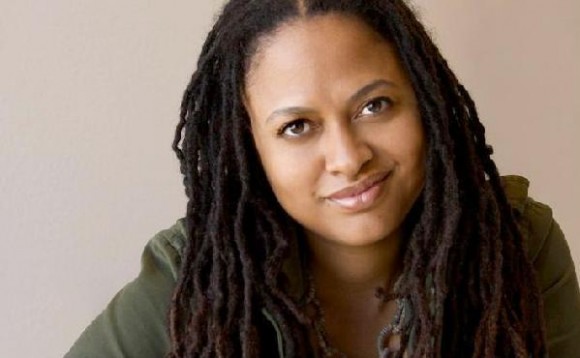
Interview: Ava DuVernay of “Selma”

Posted on December 21, 2014 at 9:41 pm

Copyright 2014 Paramount Pictures

My favorite movie of the year is “Selma,” the story of the Reverend Dr. Martin Luther King’s march from Selma, Alabama to the state capital, Montgomery, to bring attention to the barriers the Southern states were using to prevent black citizens from registering to vote. It was a very great honor to talk to director Ava DuVernay, who is the first black woman to be nominated for a Golden Globe as Best Director and is a good candidate for an Oscar nomination as well.

I have read a couple of times that you were hoping that this movie would change the conversation. So tell me how you want it to change the conversation.

I don’t know if I want it to change the conversation but I do want to be a part of the conversation. I feel that art meeting this cultural moment is an important thing. It is a little surreal that the film is ready at this particular moment. And so I think that you can’t help but say as an artist – Can we meet this cultural moment? Do we have something to say in this piece that might add to the energy that’s brewing right now? I think so. I can’t say what that will be because everyone will bring a different part of themselves to the film but certainly you are hoping as a storyteller that this story has some impact. So that’s my desire. We’ll see.

Copyright 2014 Ava DuVernay

People are understandably unhappy right now about the persistence of racial divides in this country. But how do you convey to those too young to remember the Civil Rights era the pervasive bigotry and abuse of that era?

AI think the beautiful thing about with “Selma” coming out is that we don’t have to re-create what it’s like because they are feeling it right now. I don’t have to say in 1965 all this bad stuff was happening so people went on to the street. They are doing it. This is the energy that is ambient right now. It’s all over. The atmosphere right now is that of change, that of the power of people, that of unrest. And so even a year ago, you would have to really explain how this felt to be so outraged that you left your house and took to the street and it’s happening now, literally all over the country in vibrant ways.

So I feel like it’s a blessing that we don’t have to articulate tone because people are living in that right at the moment, right now.

One thing that is very striking to me about the film is the impact that television had on Dr. King’s message getting out and letting the rest of the world know what was actually happening in a way that would not have happened even five years earlier. How do you feel that today’s media environment has helped or hurt to the way we talk about race in this country?

Oh, it’s a good question. I am a proponent of social media because there is no barrier, there is no filter, there is no one interpreting what I say or what I mean. I can say it and broadcast it to whoever wants to listen and whoever is following and sometimes things are hitting your timeline or your radar on social media that you don’t want to listen to which is also interesting.  And so I just think this era where people can broadcast themselves, where people can really amplify their own voices is tied so much with what was happening during the time of 1965 in this film in particular.  King was a master of optics. Television was new and he used television as a tactic for protest for the movement.

We had to find now how to use social media, how to use twitter as a tactic for the movie and what we found with the uprisings in the Middle East and Hong Kong and the Solidarity happening through this technological broadcast from individual to individual and so now the question is can tactical … Can tactics, can tools, can strategy be applied to this way of communicating with each other that’s kind of leaderless, it’s more people lead. So there’s a lot of ideas around… And I don’t know the answers but I don’t it is an exciting time and you just hope that the energy that’s happening right now is turbulent, toxic, triumphant time that we are in will equate to something very tangible.
One of the things about the Selma movement is they had a very specific ask.  It was all about voting rights. And now we have extraordinary optics of people having spontaneous protests around the country, around the world; we are able to see it on television, we are able to see it online, we are able to get messages on our text but what is the ask? What is the goal? I don’t know if that’s been as carefully defined.

Congratulations on the Golden Globe nominations!

It was exciting to share it with David . It was exciting because it was recognition for a film that we had worked long and hard on. And the most exciting thing about it that I know that it will bring attention to the film in a way that will get butts on seats. My highest hope is that people will see the work.

So many films are made every year.  Not a lot of those are made by women, even fewer of those are made by black women. The odds of those films being seen particularly when you have a black man in the lead about topics that are very closely aligned with the history of black people in this country around the politics of protest, there’s a good chance that might not get seen. We are doing okay right now but every little bit helps. And so I know what those Globe nominations mean in terms of validation and some people need that to say, “Hey, it would be good to check that out.” And that is a big deal so we are very happy about it.

And, I love David and to see “The world’s Best actor” next to his name – because he is the best actor, he is the best actor — that is wonderful.

Oprah Winfrey helped produce and plays an important role in the film.  Is it intimidating to direct her?

The day that I directed her, the first time that I directed her, Maya Angelou had died that morning.  So my heart was with her in a different way and all of my nerves were out the window.  I just really wanted to take care of her and make sure that she was taken care of.  Whenever I am directing anyone, for me it is all about them, trying to make them feel as comfortable as possible, as a safe as possible, as supported as possible in the performance. It’s not about me yelling, you know what I mean? Getting exactly what I want all the time. Maybe it is about making it what I want but they need to feel a true partner in it and we can only do that if you trust someone.  I think with someone that’s had as much experience as she has, she was just, especially on that such a hard day, so generous, so lonely, so nourishing to all of us.

Related Tags:


Directors Gender and Diversity Interview Race and Diversity Writers

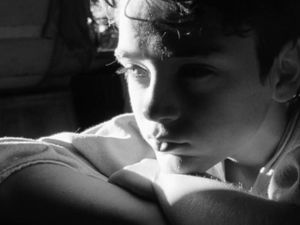
Interview: A.J. Edwards of the Lincoln Movie “The Better Angels”

Posted on November 16, 2014 at 8:00 am

A. J. Edwards is the writer and director of “The Better Angels,” a lyrical new film about the early years of Abraham Lincoln, when he was a boy growing up in a small log cabin. The title comes from Lincoln’s famous quote:
“We are not enemies, but friends. We must not be enemies. Though passion may have strained, it must not break our bonds of affection. The mystic chords of memory will swell when again touched, as surely they will be, by the better angels of our nature.”

I very much enjoyed talking with him about making this movie.

I’m from Illinois and we take Abraham Lincoln very, very seriously. I have heard about him all my life growing up. I have been to his home in Springfield, the Lincoln Museum, and the Library. But I did not know about this cousin, whose memories of growing up with Lincoln provide the narration for the film. So tell me a little bit about how you learned about the cousin and his story.

Dennis Hanks, Abraham Lincoln’s cousin, is essential to understanding the Indiana years because he provides one of the best and most thorough accounts of that time. And it is all available in a text in the form of an interview conducted by a journalist named Eleanor Atkinson when Dennis was what must have been his late 80s or 90s. He was a very old man sitting by the fire and over a series of nights, Atkinston interviewed him and got all these precious memories of his that give us a full picture of Lincoln as a boy, told by man who was with him. And it’s hilarious and tragic and so it’s just bittersweet and it reads like Mark Twain.

Was it difficult to cast the boys?

The boys and girls were found through a year-long search throughout Kentucky and it was one led by producer Jake DeVito and Casting Director Stephanie Coley. They scoured schools and youth groups, churches, camps for over a year. And we looked at thousands and thousands of kids all from rural Kentucky. Children of coal miners and everything just as Kentucky as we could get. And all for their athleticism, being outdoorsy, thoughtful, ready to engage with the world, young and old people alike. So we didn’t want video gamers and internet kids and kids that may have a little more boredom to them. And also their accents, they have this beautiful Appalachian accents, the same one Lincoln spoke with, and so that was very important to us.

You begin the film with Lincoln’s famous quote about owing everything to his mother. Most people think he was speaking of Nancy Hanks but some people think that was really reference to his stepmother. Which do you think it was?

You’re absolutely right.  That’s good research. There is disagreement about it and I think in fact maybe even the majority say that it was his biological mother Nancy, who was very dear to him. But the thesis of the film is how his stepmother was really a light to him in much darkness, the way that she guided him to the end of his life. She was just a positive force for good. And she is the one that really pulled him out of despair and grief when he was 10 years old. And she encouraged him towards education. She had a great amount of humanity. Her compassion, tolerance, gentleness — and their bond was a very special one. She also had a very beautiful interview that you can read when she was quite old. And the stories she tells are just very tender and there also some funny ones about him cutting up.

Where did you do your research?

We went to the Lincoln library in Springfield, went to the Boyhood Memorial in Indiana, went to his home as well in Springfield, the Coles County Cabin there in Lerna, and Thomas and Sarah Lincoln’s Cabin. We tried to travel around a lot and also read a lot over an extended period. Studying him is infectious and it’s a lifelong study. Anyone that picks up books about him you can’t stop, you’re it so fascinated.

I’m sure you know that he’s been portrayed on screen more than any other real-life character and second only to Sherlock Holmes. 

Amazingly in a hundred years of cinema no one has ever shown his Indiana years.

Why do you think it’s so important to explore that?

Well, it’s the most mysterious chapter; it’s the one that most people don’t know. They know his birth in Kentucky, they know his lawyer years in Illinois. But the tragic events that befell him in Indiana as well as the hope and joy that he experienced are essential to understanding his character. So much of him was shaped during the decade and a little bit more in Indiana. And it was shaped mainly by the positive influences of his two mothers and his teacher Andrew Crawford, the Catholic and veteran.

And even in just the strength of his father. He’s a disciplinarian, he’s a harsh man but he still has integrity, a strong sense of faith. He built their church, attended it regularly. He was a primitive Baptist to oppose slavery and moved his family from Kentucky to Indiana to get away from the institution of slavery. And Indiana was a free state. It was brought into the union that way. And so all of these people Lincoln were a reflection of, the best in them he absorbed. And certainly a good amount of him was God-given and a miracle, his greatness I mean. But there was definitely so much that he was reflecting. And that is all to say his better angels that he was reflecting.

There are two elements of the look of the film that were very powerful. And one was the beauty of the natural world, living out in the wilderness. And the other is the isolation, the incredible isolation of that world. Both were conveyed visually in the film. So how do you think those really affected him?

Oh yes, it was wild country for sure as Carl Sandburg, the great Illinois poet described. He said it was “land unknown to the plough” in his biography of Lincoln. And so many wild animals.  Lincoln and his father would go on bear hunts. And for sure the isolation must have affected him when his father left them during a very brutal winter in order to go find a new wife, which he did in Sarah Lincoln. He brought her home but during that time, during that absence, Lincoln was left to fend for himself with his sister and their 18-year-old cousin, Dennis. They were very lonely times. Dennis recounts them in that interview, they just sound very despairing.  And when Sarah returned with Thomas to find these children, her description of them was that they looked hardly human. They were so malnourished and so dirty that it was her first task to feed them, dress them, bathe them which she does in the film.  But nature is in the film as more than ornamentation, not just to be pretty but rather because that is their character, that was their life, they moved at the rhythm of nature be it Little Pigeon Creek that they lived beside, their source of water or the Ohio River which separated Indiana from Kentucky that was the main passageway by which all people traveled. There were the ponds and brooks that they enjoyed, the meadows, the fields that they worked. So many people are of a cynical view when they see the film and just talk about being pretty but no, it’s the locale and their entire universe.

Copyright Brothers K Productions 2014

I was very impressed by the way that the texture of the clothing seemed very authentic the way it came across in black and white.

The costume designer is a brilliant woman name Lisa Tomczeszyn and in this film she had quite a task ahead of her not only in the research that’s required and the authenticity that is expected in the costumes but also the fact that it’s a monochromatic palette. And so any film the goal is separation. You need people to separate from the background and in color that can be a lot easier, because blue and red are completely different, blue wall, red shirt, the actor will separate.  But in black and white blue and red can be the same shade. And so we had to do many tests to figure out how to get them to stand out from the darkness of the trees or the lightness of the sky or the kind of mid tones that the grass would be when they were out in the meadows. And so she was always having to switch things out to be getting them to separate from the background. She did a beautiful job, she really did her research and one of my favourite costumes in the picture is the dark big coat Sarah Lincoln arrives in, which is very iconic looking.  The bonnet that Diane Kruger wears just looks so cinematic.

I also loved the score of the film, which really helped to set the mood. 

The music is in part an original score by Hanan Townshend but the majority of it is some classical music by an Armenian-American composer, Alan Hovhaness, and Aaron Copland.  That Copland I really loved, it so emotional. It plays over the young boys reuniting after some time and they enjoyed some days together cutting up. Then there is a piece by 19th century Russian composer named Kalinnikov. That’s sort of the theme of the film and usually associated with the mothers. And then also there’s the work of 19th century German composer Bruckner and that’s a sort of grander theme that suggest the ideas of his growth every time its used.

What is it you hope people will take from the film?

One thing I don’t usually get a chance to speak about is a sense of the Calvinistic views of the time, the sense of destiny and faith that they were bound for something. It was not uncommon for families lose three or four siblings to sickness and death, a lot of children not living past three or four years old including Lincoln’s brother. He had a brother that died in infancy. If you lived to be 17, 18 years old that was quite an accomplishment, you had a greater sense of destiny that you were being preserved for something greater than yourself. There were forces in this world that were invisible to you that were guiding you always and sometimes guiding you through others, being the better angels.

But that sense of faith and destiny not only applies to all that Lincoln accomplished, some of the greatest accomplishments in this country’s history, but it applies to all of us that the film should act as a mirror that our circumstances now don’t determine the ones that will come later. Maybe we started in poverty, we started in sickness or we faced a job loss, divorce, death but those things aren’t eternal. And that hope, faith charity, these ideas can guide us to something better. And just as Lincoln pulled himself out of deep grief and loss and suffering, and was also pulled out of those things by his stepmother, a new chapter began for him. A door was opened and he was led further down the road to his great destiny. And so this movie is just a slice of that but you can make it about anyone because we all have these chapters of our lives. And so hopefully it’s a family film that young and old alike can enjoy because of these universal ideas. You know a picture without cynicism and instead it’s one that is hopefully filled with light for people.

Related Tags:


Based on a true story Biography Directors Interview

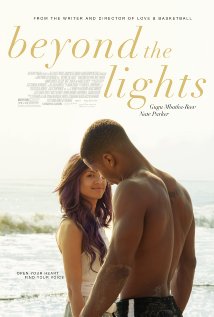
Interview: Nate Parker of “Beyond the Lights”

Posted on November 15, 2014 at 8:00 am

I first interviewed Nate Parker seven years ago about “The Great Debaters.” It was a great pleasure to catch up with him to discuss his performance in “Beyond the Lights,” one of the year’s best romantic dramas, with sizzling chemistry between the stars and some thoughtful insights into the pressures of celebrity to be hypersexualized.

Copyright 2104 Relativity Media

Your film got a very enthusiastic response at the screening last night!

It seemed as though people enjoyed it. It’s exciting, it’s good when you make something that you are proud of and the response is positive across the board. Gina ‘s scripts and her concise and visionary way of telling stories is something I appreciate, so I was very happy that people responded in a positive way.

We need to take about the karaoke scene.

I think I want to talk to a few record companies on this, you know. I want to do some work together.

I know that it takes a lot of talent to come across as untalented as you did in that scene. So tell me a little bit about how you selected the song and about how you prepared for that scene.

The section of the movie set in Mexico was its own movie in a way.  Our characters get away to really find ourselves and to study each other in our relationship.  Gina wanted it to be very laid back, very down to earth with the personal side of each of us us, the inner kid in us. And so when she brought the karaoke thing to me she asked me if I can sing. I said, “I can sing a little bit.” And she was like “Ok, well we are going to do something a little bit different.” And she made some suggestions on songs. I am a huge New Edition fan. So we came to that song and she said, “OK, I’m going to have her sing this after,” and I said, “OK, well I’m going to do a terrible job!”  And I had fun. I had fun just kind of just playing with it. People are always asking me, “Can you sing in real life?” I think can sing a little bit, I think I do a little bit better than what you see in the film. It was a really good set up as well to be so terrible and then to hear the beauty in her voice, and the song. I think it works, it works in a reverse way.  It puts people in very open and vulnerable place to see someone kind of make a fool of himself and kind of sets them up to receive this incredible moment from Gugu’s character.

I think it also is a character moment for your character because anybody that has got that kind of confidence and charm, I think that’s great. We get a very explicit view of what your character teaches her character but tell me a little bit about what you think your character learns from her.

First I learned the dangers of living for someone else because in the film with Danny Glover as my father he also has plans for my life, like her mother has for her. And the implications of following down my father’s path are little less severe but nonetheless it still living someone else’s life. And I think in seeing the way she deals with her mother and seeing that she has no say in her life kind of reminds me of what is happening in my life. And it gives me the courage to stand up to my father, to say that there are things for my life that I think I want to pursue. And being a great father he’s open to allowing this character to explore himself and explore the things that make them happy. So a lot of people asked me if I think that I saved her and I think the real answer is we saved each other. We came into each other’s lives at very pivotal moments and because we leaned on each other for strength we were able to find our own voices in our lives and ultimately make decisions that we were proud of in the end.

 I love the fact that your character has those quotes that he likes. And I wondered did you play a role in selecting any of those and are there any quotes that are really important in your life?

Yes, it’s funny you asked. I’m also big on quotes. Gina brought it to me without knowing that about me. And so some of those quotes she pulled, some of them I pulled. I recently read a quote by Dante that given the climate of our country kind of resonates, and has resonated with me.  He says, “the hottest places in hell are reserved for those who remain neutral in times of moral conflict.”  And I’m an activist first, I am very forthright in that. Where there is injustice I try to make a presence and deal with it. Martin Luther King also said, “Injustice anywhere is a threat to justice everywhere”. I think that those things are really, really a focus in my life. I try my very best to select projects that will deal with social issues in a way that can also be entertaining. When you watch this film you see how a woman who is so desperately hyperexualized and so removed from any sense of who she is as a person and even thinking of committing suicide and how it is important for young girls for them to see that you should be careful before they wish someone else’s life on their own. And that they should understand that to love someone else you love yourself first. And to love yourself you have got to know yourself. So these are themes that I think are not only important because they highlight an interesting story but it also sends a message to young people out there. As the father of four daughters, that means even more to me.

Gina mentioned how much she loves working with you.  What makes your partnership so successful?

One is that she is an activist as well. She’s is very big on perpetuating positivity on in the female space. And having daughters I am also big on that. Also she is a visionary, she’s very clear on what she wants to protect into the world that she does it without compromise and I’ve always admired her for that as a filmmaker. And now as an aspiring filmmaker and going into directing my feature, I very much pull on her and draw on her ideology when it comes to absolute solidarity and collaboration and never compromising on her vision. So she makes it easy to say yes.

What are some of the causes that you are most passionate about?

Oh man, there so many. A lot of what I do revolves around young black man. We started a project in Brooklyn called Leadership and Literacy through Debate where we use this debate platform to inspire young men that don’t know how to read to become literate. We started that with “The Great Debaters” and it continued on over the years.  I do a lot of work with Amnesty and the Boys and Girls Club. There’s a project called Peace4Kids that’s been going on for the last 15 years in South Los Angeles. So there are a lot of things that I’m involved with. I always say that where ever there are young people in need you’ll find me there trying to stand in the gap for them.

How do you guide and protect your daughters in a world where there are so many hyper sexualized role models for them?

Number one is history. They have to know their legacy where they came from because from that they will draw their identity. They will know all the moving parts that made them who they are and then through that they will understand that they have a high expectation of achievement moving forward based on what they know of himself. And I think far too often we don’t set the bar high enough for our children. We kind of allow them to be raised by their circumstances and environment. Instead of being intentional in the things that we teach them and the boundaries we set for their lives.

So for me and my girls, I’m big on history. Just teaching them about their ancestry, teaching them about the diaspora, teaching them about the many ancestors that came before them and sacrificed and thrived before them. And I read an article not too long ago, I don’t remember the name of the article but it talked about the three keys to success when it came to parenting and it was something that’s really stuck with me. And one is the superiority complex, believing that you’re here for something, for something greater. The second is, having a chip on your shoulder. Saying that there are people who will come before you, there are people you can make proud. That was big for me, understanding that I could create a life for my family for my mother and my sisters. I have four younger sisters and I have four daughters so it was huge for me knowing that I had the responsibility for creating a life for them. So I’ve always walked around life feeling like I needed to do more, I had something to prove. And the third was impulse control. And that was big for me when I was in school and understanding that if you would take a beat before you reacted in any situation. You would give yourself a better chance of choosing the right solution to that moment. So impulse control was a really, really big one especially in my movement with the young black males. Your instinct is not always the best decision and how to take a moment in that I let that sleep before you move into what you think is the right answer the right choice for your life.  And what are the consequences? I guess that’s the thing, that we don’t really understand that everything comes with consequences. Whether it be something as huge as addiction and gateway drugs but or something as small as sleeping in every day. These things all have consequences and once we learn to attach those to everything we do I think that we become a lot more intentional about the way we live our lives and there will be personal or image of success.


Related Tags:


Actors Interview
THE MOVIE MOM® is a registered trademark of Nell Minow. Use of the mark without express consent from Nell Minow constitutes trademark infringement and unfair competition in violation of federal and state laws. All material © Nell Minow 1995-2026, all rights reserved, and no use or republication is permitted without explicit permission. This site hosts Nell Minow’s Movie Mom® archive, with material that originally appeared on Yahoo! Movies, Beliefnet, and other sources. Much of her new material can be found at Rogerebert.com, Huffington Post, and WheretoWatch. Her books include The Movie Mom’s Guide to Family Movies and 101 Must-See Movie Moments, and she can be heard each week on radio stations across the country.

Website Designed by Max LaZebnik