Interview: “Mozart in the Jungle” Author Blair Tindall

Posted on January 22, 2015 at 3:55 pm

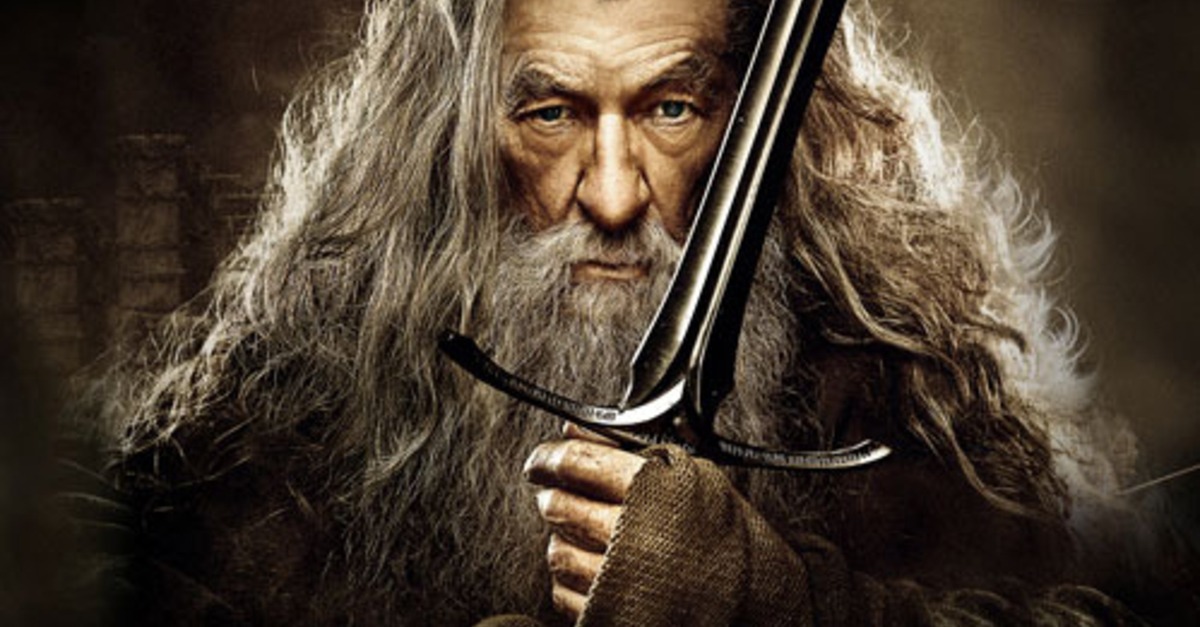
Photo copyright 2013 by Christian Steiner

Amazon’s sexy and provocative “Mozart in the Jungle” series stars Gael Garcia Bernal, Lola Kirke, and Malcolm McDowell in a story set in the intensely competitive world of a big city orchestra.  It is based on the tell-all tale by musician Blair Tindall, Mozart in the Jungle: Sex, Drugs, and Classical Music.  I am enjoying the series very much and was delighted to  have a chance to ask Ms. Tindall about it.

How unusual is it for musicians to perform in both orchestral and jazz/pop ensembles?

It’s very common. One of the more notable examples is Wynton Marsalis, a Juilliard-trained classical trumpeter who also heads Lincoln Center Jazz. Yo Yo Ma. Eddie Daniels. Chick Corea (classical Juilliard grad, I believe). Mark Inouye, new NY Phil principal trumpet. Hubert Laws. Jim Walker, former principal flute of LA Phil. LA studio cellist Armen Ksajikian. There are several in almost every major orchestra — I put out a call on Facebook last night and got 63 enthusiastic responses.

I’m on an album that was nominated for a jazz Grammy! “Remembrances,” Jon Faddis. This said, I know few who were originally jazz players crossing over to classical. They either learned both simultaneously, like Wynton, or explored jazz from a classical background.

One of the more common “other music’ jobs are Broadway shows. I played in about eight of them over 15 years, often rushing between the theater and Carnegie Hall or Lincoln Center. There’s a good example of this in the pilot, with the hilarious Broadway spoof “Oedipus Rocks,” and Cynthia stumbling in slightly late after a symphony performance. Lateness on Broadway is extremely uncommon, but it happens. People forget the one new early show time, people get stuck on the subway with no cell coverage, etc.  There was one instance of a horn player I know doing five performance the same NIGHT (not including afternoon) as he played in one movement here, the overture at the Philharmonic, stage band (usually only a few minutes) at both the Met and City Opera, and a short piece at Carnegie. He definitely won the contest! And made a lot of money that evening.

Nearly every Broadway percussionist, keyboard or reed player, trombonist, bassist and trumpeter does both.

What are the differences in culture between orchestral performers and other kinds of musicians?

Some of the differences are expected, but not at all universal. Some classical musicians are tattooed, some jazz/pop artists are not. I know quite a few jazz and pop musicians who are health nuts/vegan/fitness buffs, while others are not so much. Same with classical. For example, I went to visit a very successful and well-regarded classical friend in his 60s who’d just returned from a classical tour. He opened his apartment door, and pot smoke billowed out! Many of his colleagues won’t touch the stuff, others do.

But as the entertainment business grows more competitive because of online outlets, then entrepreneurialism — and therefore presenting the most polished version of your performance — has become important. Because of this, I think people are now more vigilant about taking care of their health.

Orchestral musicians are well-represented and protected by union contracts and regulations. They are non-profit organizations, and were originally formed early in the 20th century as a sort of social club for the wealthy. There’s still a touch of that, but the audience is far more diverse today. Still, every orchestra has a board of community movers and shakers who are responsible for raising money and choosing music director and CEO.

Pop, everyone playing it hopes, is for-profit. Not much fundraising, and audiences come because they’re passionate about the music — or particular scene/crowd the band draws. Except for certain cases, pop is largely not regulated by the union.

Jazz was once a bunch of passionate musicians on their own, No fundraising, little union representation, no non-profit status. That’s changed in the last 20 years, and it’s headed the way of symphonies. Now there are non-profit-status jazz organizations and festivals, although union rates — especially health and pension contributions, largely lag behind those of orchestral musicians.

Is there a bigger difference between their audiences?

They’re largely separate. The reason? Orchestras are nonprofit organizations, which in the the arts were largely set up as social clubs for the monied set, decades ago. They really caught that in the TV show. For some, attendance may be about the music, but often, it is more about networking and building a community attractive to business (orchestra, ballet, opera, museums are often considered essential here). Pop and jazz is much more band/genre-specific.

What do readers tell you most surprised them about your portrayal of the world of orchestral music?

Many are very interested about how freelance musicians piece together different jobs, and how we get hired. In my case, people are fascinated by the reedmaking. People want to know what goes on in rehearsals, and how many rehearsals are needed to put on a concert (for major orchestras, usually 4 rehearsals, or 10 hours’ worth). Many are surprised to learn that orchestras have CEOs and an army of executives and administrators, not to mention the salaries the top executives and conductors draw. Sometimes people are surprised to end up in the grocery line behind someone with an instrument. I think that not many audience members gave it much thought, as concerts are presented so formally, but are startled that musicians are just people in any other profession! We work hard, play, are dedicated, misbehave, and anything else you can think of. We’re just like any other cross-section of society — there’s some of everything.

What surprised you the most when you began playing professionally?

I started gigging at 14, so not much. But in NYC, I was surprised by the lengths musicians go to make a living. For example, a week at one of my orchestras, the Hudson Valley Philharmonic, in Poughkeepsie, involved up to 24 hours of commuting each week we performed. We usually got back to Manhattan after midnight, crossing the George Washington Bridge, only to be greeted by one of those squeegee guys banging on the hood. That said, my carpool bonded for life. We had some epic and fun car rides I wouldn’t trade for the world.

Do you think that today’s compositions — either symphonic or otherwise — will be played centuries from now as Mozart and Beethoven and Bach are still played today?

Definitely. Not everything, of course. But plenty who were contemporaries of Mozart, Beethoven and Bach have been forgotten. The great will always endure.

What did it feel like to see your words come alive in the series?  Are the characters the way you pictured them?

I couldn’t be more thrilled. The series is created by some of the best minds in Hollywood, people who also have a background in classical music. There were two musician/writers on the 10-writer staff. When I wrote the book, I made a list of every issue facing classical music, and found a scenario from my life that illustrated each one. Michael Zakin, the producer with American Zoetrope, scoured the book and captured that in vast detail. I was excited to discover the pilot script captured what I’d tried to convey, including the power struggles, orchestra administration, union politics, audience attitudes, and more.

I loved what they did with the characters — they captured much of what I tried to get across. Each character has something they can contribute to the issues in classical music, and the characters they added all have facets that can do the same. For example, the LA Philharmonic didn’t have a charismatic Latino conductor when the book was published. But that was a brilliant addition, and I love the friction/friendship between Rodrigo and Thomas. The Betty character (older oboist) is very close to the Betty in my book, who was a bassist in my building. My Betty was someone now in her 70s who’d battled her way through an army of men to succeed. She was sometimes angry at the young folks who have it easier, and romance eluded her until her married lover of 30 years was widowed. They only had a couple of years together before he died. The actor playing timpanist Dee Dee is actually a very successful bass player in real life. But although he doesn’t resemble any of the drug dealers of yore, he was perfect for the role.

What do you most want people to know about symphonic music?

You don’t have to know ANYTHING about music to enjoy it. The snob sitting next to you is probably bluffing. Just sit and enjoy. Watch the show and decide what music elates you. And there are plenty of places to try out performances free — YouTube is a great place to shop around. Most cities and towns have parks concerts that are very casual — take a picnic. Symphonies are reaching out to newer audiences with casual, shorter “rush hour” concerts, pre-concert lectures, and reduced rate tickets. It doesn’t have to be a formal, expensive affair. Listen to the radio, try out a casual concert, and listen. If it moves you, that’s the music you like; you don’t have to like it all!
Related Tags:


Internet, Gaming, Podcasts, and Apps Interview Writers

Interview: George Lopez and Carlos PenaVega of “Spare Parts”

Posted on January 22, 2015 at 3:50 pm

Copyright Nell Minow 2015

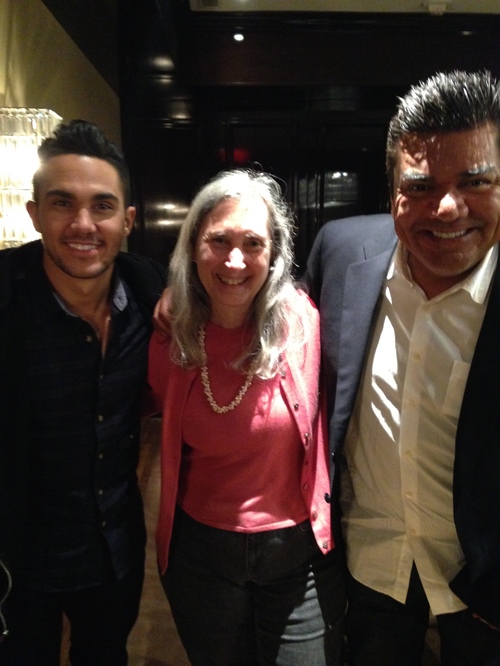
Spare Parts is based on the true story of four undocumented high school students who entered a robotics competition and beat the team from MIT.  I was lucky enough to get a chance to talk to George Lopez, who produced the film and stars as a character based on the two teachers who worked with the boys, and Carlos PenaVega of Big Time Rush, who plays Oscar, the most serious-minded and responsible member of the team.

PenaVega talked about how much fun the actors who played the team had with the robot built for the film.  “It’s kind of like movie magic because we show up, the robots are built and then we get to play. But they let us drive them around a bit so I kind of get to be like a pilot for a day.”  He is ebullient and talkative, not much like the character he played, who he described as “an incredible human being. He and I spoke through emails for a while but he was very vague and we got to finally meet on set, they came for a whole week, all the boys both teachers. And I think each one of us took time to just sit down with them, talk to them it’s like tell me your story out of your mouth, no more like online. I mean these kids went through so much and Oscar is such a strong human being especially for someone who speaks very little English, or who speaks but still has an accent.  He just so inspiring because we all have obstacles in our lives.  In my opinion he had some of the most difficult obstacles and he got through it.  He can do it, so can we.”  He was especially happy when his wife, Alexa PenaVega (“Spy Kids”) was cast as his character’s girlfriend.  “It was such a blessing because we had just gotten engaged and being apart for two, three months would have been difficult.  And she was amazing and you know just having George and my wife and Jamie Lee Curtis and Marisa, it was such good company and I wouldn’t have had it any other way.”  He was grateful for the three pieces of advice he got from Jamie Lee Curtis.  “Always be on time, which I’m working on.  Always know your lines. And number three never ask anybody to do something that you could do for yourself. Like if there is a glass of water over there and you can clearly get it, don’t be like, ‘Can you get me this?'”   To relax between scenes, the cast enjoyed singing show tunes and other songs.

He was very glad to get away from the buzz cut hairstyle his character has in the film.  “Continuity is a big thing in films so they would give me a buzz cut every day. Every single day. You know what, in the first month it was great but in the next months, I was like ‘no more, no more haircuts.'”

Lopez gave the young actors some advice as well.  Before shooting began, he took them to dinner and told them “to work hard and let’s make something that the kids could be proud of. That everybody would be proud of. ”  He was paying tribute not only to the characters in the story but to his own teachers who inspired and supported him.  “I had it when I was growing up and I had teachers that would talk to me kind of take me under their arm and stuff and tell me things I wanted to hear. And sometimes the things I did not want to hear and did not understand at that particular time but then I did later on.”

Lopez was eager to talk about why the story was so important to him.  “The fact that you could beat so many great universities with spending under $800 and how intelligence has no color. And ingenuity and determination and will can outweigh what somebody might learn in a book.  They were relentless and they would not give up.  The only reason they entered against the colleges was because they thought they didn’t want to lose to another high school. They didn’t go into win; they went to not lose to all the high schools. So that’s inspiring and it is a little bit of a kind of a thing that Latinos have, like you always feel a little bit uncomfortable even when you’re welcome. So hopefully this movie will be able to show people.  The movie is entertaining but it also shows Latinos that whatever they aspire to be can happen.”  He said it was the first movie he produced that had “such an incredible and credible cast. Having Jamie Lee Curtis do the movie and have her be so great in it but also to get Marisa Tomei in there and Esai Morales — I called him personally and asked him to be in it. And then finding these young men who were amazing actors and who also felt the story so it wasn’t really just another job for them. They felt the responsibility to do this movie and to make sure it was done properly. To honor the actual young man who we became quite friendly with.”

Related Tags:


Actors Interview

Interview: Meredith Anne Bull of “Strange Magic”

Posted on January 21, 2015 at 3:57 pm

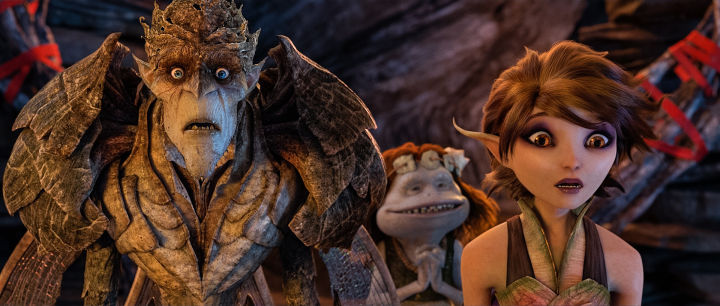
Bog King (voice of Alan Cumming), Griselda (voice of Maya Rudolph) and Marianne (voice of Evan Rachel Wood) are part of a colorful cast of goblins, elves, fairies and imps in "Strange Magic," a madcap fairy tale musical inspired by “A Midsummer Night's Dream.” Released by Touchstone Pictures, “Strange Magic” is in theaters Jan. 23, 2015. Strange Magic © & TM 2014 Lucasfilm Ltd. All Rights Reserved.
Bog King (voice of Alan Cumming), Griselda (voice of Maya Rudolph) and Marianne (voice of Evan Rachel Wood) in “Strange Magic.” Strange Magic © & TM 2014 Lucasfilm Ltd. All Rights Reserved.

Meredith Anne Bull stars in this week’s release “Strange Magic,” an animated musical fairy tale based on a story by George Lucas. She plays Dawn the “young, naive, unaffected and thrilled with life” younger sister of the heroine, Marianne, played by Evan Rachel Wood. She has done voice-over work before, but this was her first time as the voice of a feature film animated character. She says she felt very comfortable working in a recording studio, which is a challenge for some actors who don’t have a musical background. But it was a challenge to create a performance alone in a recording booth, “without the other actors around you to interact with. Sometimes the director will feed you lines and sometimes you are out there on your own and you have to pull from your imagination.” She did get to see some of the movie’s visuals, especially more recently. She began working on the film in 2011, before most of the animation work had been completed.  And the storyline changed over the year. But in the last year she got to see some short clips and had a better idea of what the final version would be like. She says her favorite fairy tales are “Red Riding Hood” and “Goldilocks,” which she thinks is “hilarious.”

Bull told me she originally auditioned for the part of Marianne, singing “Thriller” and “Like a Virgin.” They asked her to read for Dawn, though she says it is Marianne who is more like her in real life, more independent, with more of a dark sense of humor. “But they saw some part of Dawn in me. They’re more to her than being irresponsible and flying off the handle. She’s sensitive, and she really cares about her sister.  Sometimes she can be self-centered, and she lets her sister down at one point, but you see how much she cares about what her sister thinks of her.  She’s not just happy all the time, though that is certainly her go-to emotion.”

The movie has an assortment of contemporary songs, including a duet with Elijah Kelley, Bob Marley’s “Three Little Birds.”  “They’re not like the typical Prince Charming and Princess.  She’s like three feet taller than he is!”

She says the best piece of advice she ever got was from Kelley, who told her not to be intimidated, no matter who she was working with.  “This was kind of my first big film.  I was not exactly intimidated but a little squirrely to be around these people who are very established.  Elijah talked to me about not being intimidated — we are all people, we all have families, we all have insecurities and disappointments.  You should never let anyone make you feel less than you are.”

Related Tags:


Actors Animation Interview Musical

Interview: Kate Fowkes on Fantasy and Fairy Tales

Posted on January 20, 2015 at 3:56 pm

Copyright New Line 2001

Ten years ago, would anyone have believed there would be popular fairy-tale-inspired television series both serious (Once Upon a Time, Grimm), and comic/musical (Galavant)? Why do fantasy and fairy tales mean so much to us? I asked one of my favorite people, a specialist in the role that fantasy plays in our lives, for her thoughts. Kate Fowkes is a Professor of Media and Popular Culture in the Nido R. Qubein School of Communication at High Point University.  She holds an M.A. and a Ph.D. from the University of Texas at Austin, and a B.A. from Reed College.  She is the author of The Fantasy Film, and Giving Up the Ghost.  She has also contributed to a number of book anthologies on subjects ranging from film ghosts to Tim Burton movies.  She currently teaches an undergraduate course called “Myth and Media,” in which she and her students examine fantasy and fairy tale movies.

Of course fairy tales and fantasy have been around since stories began, but it seems we are in the midst of a revival of interest in very traditional stories about princesses and princes and quests and magic.  What is it about the enduring themes of these stories that seems so timely now?

This is a tough question to answer. Part of it may be that with our increased instant access to both old and new media (including electronic versions of older print stories), it is simply easier to rely on these old stories and characters as fodder for new movies and remakes. Hollywood has always loved to draw on proven successes both in adapting movies from books and in re-visioning previous movie successes—so this trend is perhaps merely a more exaggerated version of business as usual.

It also doesn’t hurt that visual and special effects, and movie-making technology in general are all better than they’ve ever been. This obviously facilitates the portrayal of fantastical creatures and magical events and makes for a very satisfying and wondrous movie-going experience.

It must be said that the success of “Star Wars” was hugely helpful in showing that fantasy-themed films could work (granted it was also a sci-fi/Western, but its emphasis on the mystical Force, etc. was part of what made the movie popular). In an ironic kind of time-travel way, it was partly the popularity of the “Lord of the Rings” book trilogy (which was originally one book) that paved the way for “Star Wars.” Not only did “Star Wars” make mysticism popular (thus paving the way for LOR eventually—see what I mean about the time loop) but George Lucas drew on the works of Joseph Campbell, who championed the importance of myth, folk-tales, and story-telling. This was all popularized further by screenwriting manuals such as one by Christopher Vogler who drew on Campbell to show how the “hero’s journey” could either be used to describe many Hollywood movies but could also be used as a template for screenwriters as they devised new screenplays.
While there had been some successful fantasy and fairy tale movies prior to 2001 (including “The Princess Bride”), 2001 was nevertheless a watershed year for fantasy and fairy tale movies. With the huge success of both the first LOR movie and the first Harry Potter film, the floodgates were open for movies that adopted or adapted fairy-tale and fantasy elements.

Copyright 2010 Wiley-Blackwell

(Also see my response to the question below.)

Do stories with fantasy and magic tend to be more popular in some eras more than others?  Does it correlate with particular political or economic challenges?

Many scholars would agree that the rise in popularity of science fiction movies throughout the 50s was at least in part due to the historical moment. The bulk of the films were scary and featured hostile aliens. The films might be said to reflect or mediate anxiety about technology (nuclear bombs), the space age (if we go to outer space, what will we find there?), and the burgeoning Civil Rights movement combined with Cold War paranoia (the alien “others” could represent our fear of all kinds of real-world, human others—from Communists to illegal aliens, to non-white ethnicities.)

Perhaps the same could be said for the historical moment of 2001 which featured not just LOR and Harry Potter in the movies, but which saw the country (and the world) reeling (so to speak) from the 9/11 attacks. What strikes me about this confluence of events is, in part, the complete and utter incomprehensibility of the fall of the twin towers and how we watched the footage over and over again on T.V. Was it really real? Could it really have happened? Because at first, it sure looked like a Hollywood action/disaster movie to a lot of us.

One of the things that J.R.R. Tolkien said about the value of “faery” stories is their ability to provide escape, recovery, consolation and “eucatastrophe.”

According to Tolkien, escape might be seen as a bad thing, but if you’re escaping from something unthinkably bad, it might serve an important cathartic purpose (and to most of us, 9/11 was unthinkably bad). In addition whether or not escape is good or bad will depend very much on the quality of what you’re escaping into.

By recovery, he meant that faery stories help us to rediscover the miraculousness and wonder of the ordinary world.   (—“Re-(dis)-covery?”) If we experienced 9/11 as a heretofore “impossible” scenario, there was also the feeling that maybe the world was not as we thought we knew it.   This is precisely the story told by fairy tales and other fantasies. Nothing is what it seems and impossible things happen all the time (take nothing for granted!). Maybe this type of story serves as a kind of antidote to the horrific feeling of unreality experienced by many people after 9/11. (Just as Gothic horror might be seen as the counterpart or mirror image of upbeat fantasy.)

If 9/11 was a terrible catastrophe, then Tolkien’s consolation and eucatastrophe (catastrophe’s opposite) describe the notion that we can suffer the most terrible defeat and still come out the other side –we can find consolation and even joy because we have faced our worst nightmares and lived to tell the tale, as “Into the Woods” articulates in the final scene. (The forest or woods are here seen as a metaphor for our deepest fears or greatest challenges.) So I might be going out on a limb here (to extend the “woods” metaphor), but I absolutely think that some of these films might operate in the way Tolkien described. (Note: Tolkien had a very specific idea of what qualifies as a “faery” story and if he were here, would disqualify many of the movies discussed here. While I am aware of that, I still think his ideas can be applied to a wide variety of fantasy movies.)
What are some of the ways that our current versions of fairy tales employ twists on the traditions and conventions of fantasy to make them more contemporary?

One way is to call attention to the “unrealistic” nature of the tales, playing up the fact that these are indeed stories and not reality. But at the same time, while many of the new movies cleverly suggest that elements of classic fairy tales are unrealistic and unbelievable, they then go on to fulfill the magical happy endings anyway, albeit often through humorous, self-referential routes. (See, for example, discussion of “Shrek” and “The Princess Bride” below).   The viewer thus gets to critique and examine the old story tropes, but also gets the fairy tale happy ending promised by classic fairy tales.

Another tactic is to examine classic fairy tale events and characters through a contemporary lens. In “Shrek” this happens by inverting gender stereotypes to highlight the disconnect between today’s smart, competent, athletic women and the classically sweet, passive and helpless princess. Other examples include imagining the magic mirror from Snow White as both the “reflection” of a foppish prince’s vanity (usually reserved for female characters), while also turning the mirror’s magical illusions into a parody of a modern dating-game T.V. show. Another humorous example is portraying the three blind mice employing contemporary aids for the blind as they sport dark glasses and find their way about with canes.

Finally, many of the newer fairy tales take advantage of the long format of feature length films (not to mention the long format of T.V. serials like “Once Upon a Time”) to explore and expand upon traditional two-dimensional characters. Much as the stage musical “Wicked” does, some of these newer movies provide satisfying backstories and motivations for otherwise simplistic characters, especially villains.

Do children today who see movies like “Tangled,” “Into the Woods,” “Shrek,” “The Princess Bride” and the new show “Galavant” understand fairy tales and Mother Goose well enough to appreciate the meta-humor?

Younger children probably don’t get much of the meta-humor but most of the “revisionist” fairy tales work on multiple levels so that all ages can find something to like.  Just as the T.V. show, “The Simpsons” succeeded in part because of its dense layers of funny intertextual references, these films use their intertextuality so that viewers can access the story and its humor in many different ways.

In addition, many of the revisionist fairy tale movies also embed mention of fairy tale conventions into the story so that even if viewers didn’t know the conventions in advance, they could still appreciate the jokes.  For example, in “Shrek”, the movie opens with a short story-book intro that summarizes the standard “rescue the princess” trope. Shrek reacts to this tradition by scoffing: “like that’s ever gonna happen!” And when Shrek does end up rescuing Fiona, she is indignant that he doesn’t fit the stereotypical prince or act out the usual “script.” This happens also in “The Princess Bride” where the little boy is read a story by his grandfather and is frequently indignant that the story is not going the way it’s supposed to. “Into the Woods” also features such moments and occasionally provides a fairy tale style of voice over narration to call attention to the relationship between character and events to classic fairy tales..  All of these movies use the “frame” of storytelling (“Once Upon a Time,” etc.). And “Into the Woods” ends with an emphasis on the importance of storytelling in general, thus completing the self-referential circle.

Is there a way to teach children about classic fairy tales without giving them messages we feel that we have outgrown about the roles of women?  Are there other traditional themes that are hard for us to accept today?

I think that’s exactly what many of these new movies are trying to do, although sometimes with mixed success. Expanding the notion of “true love” beyond a romantic heterosexual idea (as in “Frozen” and “Malificent”) and providing strong, capable female characters is one way both to change the “script” in the real world as well as to make the stories more acceptable and relevant to today’s audience.

But I am still disappointed in some of the films. “Star Dust” does nothing to change the pernicious idea that older women are ugly, evil and jealous of younger women. “Enchanted” sends its heroine out on a shopping spree in a makeover reminiscent of “Pretty Woman” (which is itself a pernicious live-action, contemporary “Cinderella” story), and even “Into the Woods” kills a married female character for kissing a married prince while the prince gets off easy by quipping that, afterall, he’s “charming” not “sincere.” And in another “joke,” the Cinderella character (the prince’s newly estranged wife) opines that she actually enjoys housecleaning. !!! Really??? And then the movie has the gall to drive home the point that we should pay attention to the stories we tell.   Can you say “irony??”

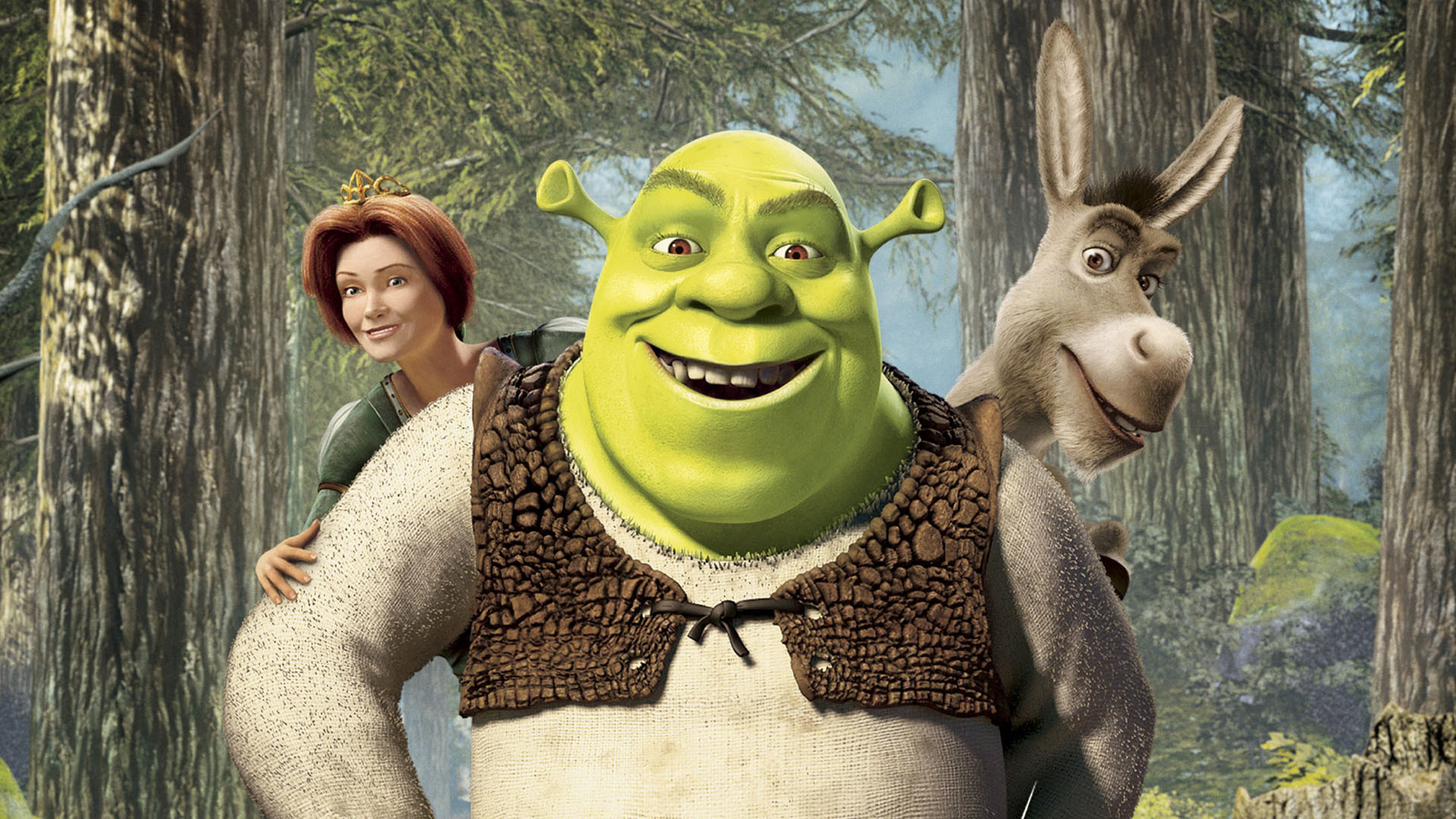
Copyright Dreamworks 2004

Even “Shrek” (delightfully funny as it is), doesn’t fully overcome gender and racial stereotypes. In her ogre state, Fiona is hardly hideous (I think she’s quite pleasant) and Donkey perpetuates a long line of comic, subservient black, male characters.

Many of the new versions of fantasy stories interweave characters from different fables into one narrative.  What is the appeal and impact of that kind of story-telling?

Whereas a movie like “Enchanted” has fun combining the “real world” with the animated fairy tale world by imagining what would happen if these two worlds intersected, “Shrek” and “Into the Woods” belabor the fact that these characters from different tales actually do all belong to the same magical universe. What’s interesting is that some scholars see fairy tale characters less as characters or people and more as narrative functions. When you recognize that the characters all belong to same type of magical universe it can be a fun game to see how they might interact with each other if you mixed and matched them.

This type of story-telling also provides the possibility of many new-ish variations on well-loved, easily recognized ideas. And as said before, we know that Hollywood loves to capitalize on familiarity and built-in popularity.
If fairy tales are an attempt to explain the inexplicable and control what seems uncontrollable, does our modern understanding of science make us more or less interested in fantasy than people were centuries ago?

The short answer to that is ….we have a different relationship to fantasy today than people did before the Enlightenment, the Industrial Revolution, and now the computer age with more and more immersive technologies like 3-D. and virtual reality (For example, just try to imagine someone centuries ago being shown ANY movie much less a mind blower like “Inception.”)   It would take me too long to tease out all these difference here, although I do discuss at least a piece of that puzzle in my book “The Fantasy Film.” Maybe this one will have to be a separate interview!

Do you have a favorite fairy tale and why?

I don’t have a favorite classic fairy tale unless you consider the movie, “The Wizard of Oz,” to be a classic fairy tale (Baum wrote the original book with the idea that it would be a modern-day fairy tale). It’s a nostalgic favorite but it holds up for me still. It’s got everything—scary suspense, whimsy and magic, humor, wonderful characters, great musical numbers, and lots of heartfelt sentiment. The Cowardly Lion still makes me laugh after all these years.

I also love “The Princess Bride.” It was one of the first successful revisionist fairy tales and it’s dramatic, sentimental, clever and funny. What more could you ask for? I regret I didn’t include it in my last book, but I didn’t have complete say over what went in there and I was horribly constrained by space issues.

If I were to include a more traditional fairy-tale movie here it would be Jean Cocteau’s “Beauty and the Beast” because it is so beautiful to look at. And the Beast is gorgeous (which gives you a hint about what’s going on in that story—we were never meant to find the beast to be completely hideous…)

And despite some minor misgivings, I’m a big fan of “Shrek” and “Shrek 2!”

Related Tags:


Interview Television Understanding Media and Pop Culture

Interview: David Heyman, Producer of “Paddington”

Posted on January 15, 2015 at 10:16 am

David Heyman was selected by Entertainment Weekly as one of the smartest people in Hollywood. It may be because he grabbed the rights to a children’s book called Harry Potter and the Philosopher’s Stone. I enjoyed his latest movie, “Paddington,” also based on a beloved children’s book series, and it was a lot of fun to talk to him about bringing the marmalade-loving bear to life.
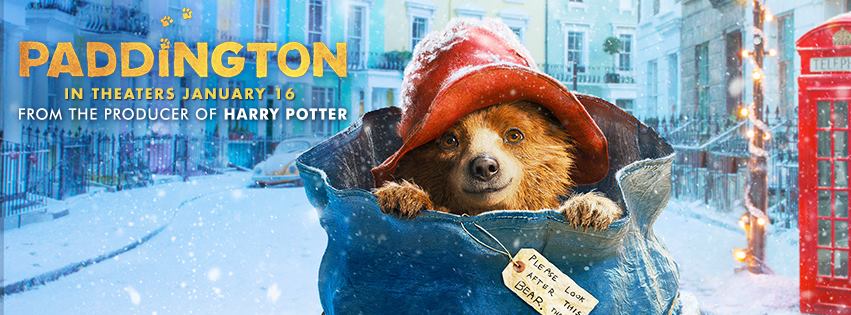
Paddington is known for his “hard stare,” and that is one of the highlights of the film. Have you ever tried doing a hard stare yourself?

Not frequently, but yes I have. I’m not sure I’m quite as effective as Paddington or can make people feel quite as uncomfortable but every once in a while I have to call upon my own hard stare.

It seems like Paddington’s hard stare would be a special challenge for the animators.

Copyright 2014 StudioCanal

I think that one of the reasons why it has taken so long for Paddington to get the film to actually happen is because the technology was not around to realize the bear. To have a bear who you are meant to feel with and care for, you know it’s the emotional center of the film. To have that little digital creation would not have been possible 10 years ago. To have eyes that listen, to make you look into them and make you feel sympathy and when he had the hard stare make you feel frightened is a great challenge and is a real testament to the brilliant people at Framestore who did the visual effects. They also did a film I made last year called “Gravity.”

Did Ben Wishaw, who provided the voice for Paddington, get wired up like Andy Serkis?

No, the difference between “Planet of the Apes” and Gollum and Paddington is Paddington is not a humanoid. So that motion capture we felt wouldn’t work and Framestore works more with animation than taking lots of reference. They did take some reference from, the brilliant clown called Javier Marzan who did a lot of comic work and tWhishaw, we filmed him performing as well.

Ben Wishaw’s voice is just perfect for Paddington.

Well, thank you. We began with Colin Firth who we thought we were so lucky to have and Colin was brilliant but his voice was just too chocolatey and velvety and mature for Paddington. And when we put his voice inside as we began to animate it just didn’t feel right. And it was quite interesting, it was a process and we realized we need someone more youthful, more innocent, with a bigger sense of wonder, a little bit off-center. And Colin obviously came to that realization before we did and so we went to Ben. As soon as we heard his voice it just felt right. He seems less confident, less assured and that felt right for that bear in that particular story.

What makes Paddington such an enduringly popular character?

We all in some ways feel like an outsider and that’s what Paddington is, he’s an outsider. So Ben’s voice really seemed to capture that. What I love about it is that it is about the kindness offered to strangers, it’s about embracing people who are other, it’s about being yourself. Paddington learns to not try and fit in but to be himself and in being himself he finds a home and a place that he belongs. And the Brown family, in our versions they are not the perfect family. They are a little dysfunctional. But through this bear, through embracing him they become whole again. And I think that in today’s world where there is so much friction and there’s so much pointing fingers at people because they’re not like us, I think that message of the kindness to strangers, of embracing others, is a really positive thing. t’s actually is a human story. It is a story about a family coming together it’s a story about an outsider finding a home, it’s about kindness, it’s about generosity, it’s about warmth.

I enjoyed the relationship between Mr. and Mrs. Brown, with him so risk-averse and her so spontaneous.

Sally Hawkins and Hugh Bonneville had almost a theater-length rehearsal period and over that time they begun to shape their characters. And in so doing I think gave it the truth that is not just paper thin.

And, not to give too much away, even your villain was acting out of slightly distorted but genuine family devotion.

There’s a wonderful Graham Greene line: to hate to lack imagination. And hate actually is so diminishing. There’s a context for why people do what they do, good or bad. And it doesn’t mean it’s okay. I’m not saying it justifies it but it explains it. And I think through explaining it in film and in life, in understanding the enemy you allow that not to be repeated. If you don’t understand it then it can just happen again and again if you just hate it you are diminishing it will happen again and again and again. To provide that motivation makes it more truthful.

I think that ultimately if you want to educate, encourage, effect change you need to make people realize the possibilities in life and embrace them. One thing I’m very proud of with this film is that it’s message is implicit but it’s not explicit. We don’t talk the message but the message is there. Because I think the danger with a lot of films, when you become polemic you end up preaching to the converted. That is why there is something in it for all ages. Seeing Paddington with my six-year-old and with my mother who is 77 and to share in that experience was one of the greatest experiences I’ve ever had in my life.

Related Tags:


Based on a book Behind the Scenes Interview
THE MOVIE MOM® is a registered trademark of Nell Minow. Use of the mark without express consent from Nell Minow constitutes trademark infringement and unfair competition in violation of federal and state laws. All material © Nell Minow 1995-2026, all rights reserved, and no use or republication is permitted without explicit permission. This site hosts Nell Minow’s Movie Mom® archive, with material that originally appeared on Yahoo! Movies, Beliefnet, and other sources. Much of her new material can be found at Rogerebert.com, Huffington Post, and WheretoWatch. Her books include The Movie Mom’s Guide to Family Movies and 101 Must-See Movie Moments, and she can be heard each week on radio stations across the country.

Website Designed by Max LaZebnik