Even Infants Have a Range of Perceptions When They Watch Screens
Posted on August 5, 2020 at 8:00 am
We have just begun to explore the complexities and wide range of differences in the way individuals watch and respond to what we see on screens. A new study about babies shows that these differences are present at birth. While these study results are illuminating, it does not change my firm position of no screen time before age three and no more than an hour a day and no theatrical screens before age five.
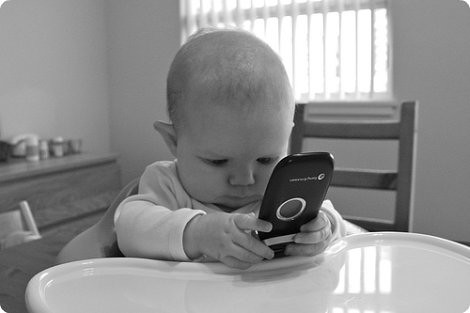
Children’s own temperament could be driving the amount of TV they watch – according to new research from the University of East Anglia and Birkbeck, University of London.
Copyright 2009 Carolien Dekeersmaeker
New findings published today show that the brain responses of 10-month-old babies could predict whether they would enjoy watching fast-paced TV shows six months later.
The research team says that the findings are important for the ongoing debate around early TV exposure.
Lead researcher Dr Teodora Gliga, from UEA’s School of Psychology, said: “The sensory environment surrounding babies and young children is really complex and cluttered, but the ability to pay attention to something is one of the first developmental milestones in babies.
“Even before they can ask questions, children vary greatly in how driven they are to explore their surroundings and engage with new sights or sounds.
“We wanted to find out why babies appear to be so different in the way that they seek out new visual sensory stimulation – such as being attracted to shiny objects, bright colours or moving images on TV.
“There have been various theories to explain these differences, with some suggesting that infants who are less sensitive will seek less stimulation, others suggesting that some infants are simply faster at processing information – an ability which could drive them to seek out new stimulation more frequently.
“In this study we bring support for a third theory by showing that a preference for novelty makes some infants seek more varied stimulation.”
Using a brain imaging method known as electroencephalography (EEG), the research team studied brain activity in 48 10-month old babies while they watched a 40-second clip from the Disney movie Fantasia on repeat.
They studied how the children’s brain waves responded to random interruptions to the movie – in the form of a black and white chequerboard suddenly flashing on screen.
Dr Gliga said: “As the babies watched the repeated video clip, EEG responses told us that they learned its content. We expected that, as the video became less novel and therefore engaged their attention less, they would start noticing the checkerboard.
“But some of the babies started responding to the checkerboard earlier on while still learning about the video – suggesting that these children had had enough of the old information.
“Conversely, others remained engaged with the video even when there was not much to learn from it,” she added.
Parents and carers were also asked to fill in a questionnaire about their babies’ sensory behaviours – including whether they enjoyed watching fast-paced brightly-coloured TV shows. This was followed up with a second similar questionnaire six months later.
Dr Gliga said: “It was very interesting to find that brain responses at 10 months, indicating how quickly infants switched their attention from the repeated video to the checkerboard, predicted whether they would enjoy watching fast-paced TV shows six months later.
“These findings are important for the ongoing debate on early TV exposure since they suggest that children’s temperament may drive differences in TV exposure.
“It is unlikely that our findings are explained by early TV exposure since parents reported that only a small proportion of 10-month-olds were watching TV shows,” she added.
Elena Serena Piccardi, from Birkbeck, University of London, said: “The next part of our research will aim to understand exactly what drives these individual differences in attention to novelty, including the role that early environments may have.
“Exploration and discovery are essential for children’s learning and cognitive development. Yet, different children may benefit from different environments for their learning. As such, this research will help us understand how individualized environments may nurture children’s learning, promote their cognitive development and, ultimately, support achievement of their full potential.
The research was led by UEA in collaboration with Birkbeck, University of London and Cambridge University. It was funded by the Medical Research Council.
‘Individual differences in infant visual sensory seeking’ is published in the journal Infancy on August 5, 2020.
Common Sense Media: Tweens, Teens, Tech and Mental Health: A Generation Coming of Age in Crisis
Posted on July 29, 2020 at 4:21 pm
A new report from Common Sense Media examines the impact of the pandemic on the already-increasing levels of anxiety and depression among tweens and teens.
When the coronavirus pandemic upended our lives, it introduced new social distancing requirements, public health challenges, and social unrest. Almost overnight, school, social activities, and work were all pushed online. It’s too early to know the lasting effects of this radical shift in behavior. Instead, this report seeks to understand how best to reach adolescents who are disproportionately affected and most vulnerable, support them in digital spaces, and improve their mental health outcomes.
The in-depth literature review, combined with essays from leading experts, synthesizes what’s known about associations between digital technology use and adolescent mental health—and outlines what stakeholders can do to help.
Geoffrey Canada: The Digital Divide is a Bigger Problem Than Lacking Access
Jacqueline Dougé: Meeting Teens Where They Are
Sonia Livingstone: Parenting for a Digital Future
Jennifer Siebel Newsom: We Must Design Tech and Media Platforms with Kids in Mind
Lina Acosta Sandaal: The Burdens of the Latinx Family
Tiera Chanté Tanksley: Finding Peace During the Protests: Digital Wellness Tools for Black Girl Activists
Andrew Yang: Our Kids are Walking Around with Slot Machines in Their Pockets
More movies for families to enjoy at home together. This week, some great summer movies!
The Endless Summer and The Endless Summer II The classic 1966 documentary about surfing and the 2003 update are both laid-back pleasures, gorgeous beaches, rolling waves, and balance in every sense of the word. You’ll even meet the real-life Gidget. (Also try: Step Into Liquid and Riding Giants)
Gidget: Speaking of Gidget, here’s the movie that made her a sensation, with Sandra Dee as the “girl midget” who shows the boys on the beach that she can rock a surfboard. Followed by “Gidget Goes Hawaiian” and “Gidget Goes to Rome” and the Sally Field television series.
DogTown and Z Boys: This documentary (much better than the feature film it inspired), is a rare look at a history-changing moment. A bunch of kids left to themselves in a summer drought when pools were all drained turned the sleepy world of skateboarding upside down, creating not just crazy tricks but a whole new world of extreme sports.
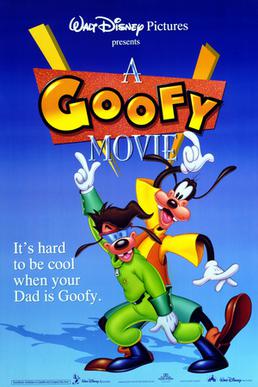
A Goofy Movie Let’s face it. All kids think their parents are goofy. But Max’s dad is the real Goofy. And when they take a cross-country car trip together (ah, remember those?) you can imagine, they get into some goofy situations and some heartwarming ones as well.
The Inkwell More mature audiences will appreciate this story about a sweet teenager visiting Martha’s Vinyard with his family. Larenz Tate and Jada Pinkett Smith are both outstanding.
The Flamingo Kid: This is one of my very favorites. Matt Dillon stars as a kid from a lower-class family who gets a job at a posh country club. Matt Dillon and Richard Crenna are terrific.
The Parent Trap: Two girls show up at summer camp and discover they are identical twins separated when their parents divorced. Both the original with Hayley Mills and the remake with Lindsay Lohan are a lot of fun.
Roll Bounce: Another one of my favorites, this is the story of a group of kids from the poor side of town who decide to compete in a roller skate competition. Great story, great skating, great soundtrack.
The Sandlot: You can almost feel the sunshine in this beloved family classic about a bunch of kids in the neighborhood who play baseball.
The Way Way Back: A teenager and his mom visit her mean boyfriend’s summer home, and the boy finds friends at the local amusement park. Sam Rockwell has one of his best roles as a slacker with a kind heart.
Mr. Morricone was a boldly adventurous composer who saw himself as a full partner in telling stories on-screen. He thrived with directors known for their visual excess, including Tarantino, Sergio Leone and Brian De Palma.
But Mr. Morricone, whose scores could be gritty, unsettling or exquisitely gentle, was impossible to categorize. His portfolio seemed to span every conceivable mainstream genre, including comedy, drama, romance, horror, political satire and historical epic.
Some examples:
And to understand better the embrace of film and score, see this very knowledgeable essay by Bilge Ebiri about the best pieces as they were used within the context of individual scenes in the films themselves. For example:
Though much of A Fistful of Dollars’ score is quite spare, for the final showdown, Morricone gives us something altogether more melodic and traditional. This ornate trumpet dirge popped up earlier in the film as well, but here, it fits perfectly — as the clouds of dynamite smoke and dust blow away to reveal Clint Eastwood’s character, seemingly back from the dead to exact retribution on Ramon Rojo and his gang. This has become established as one of Morricone’s signature pieces, which is somewhat ironic, as it’s also an homage to Dimitri Tiomkin’s score for Howard Hawks’s John Wayne Western Rio Bravo.
Morricone was a giant in the history of film. May his memory be a blessing.