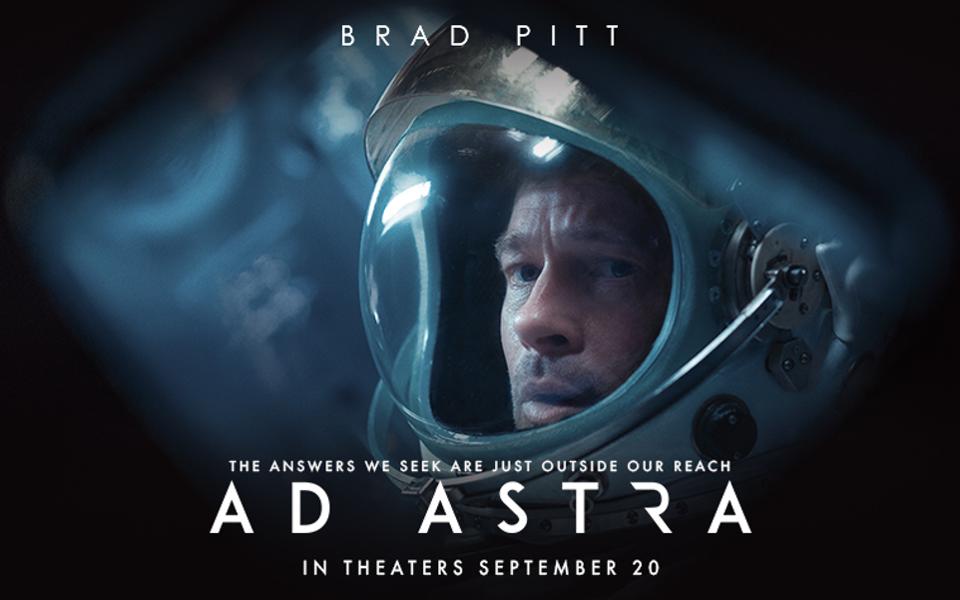
Gray himself is among the sincerest of interview subjects, a man who will openly discuss what he was trying to accomplish with certain scenes in his pictures, as well as whether he thinks he achieved it or not. He’s also kind of like the world’s most entertaining film professor, a constant fount of movie references who will happily break down some of the classics to explain how they work. Over the course of our conversation, he did both, opening up about his career, his mistakes, his favorite movies, and the challenges of making Ad Astra.
Copyright 20th Century FoxAn excerpt from one of his answers:
You kind of make the same movie over and over again, but in a different guise, because you change. I’m a different person than I was when I made my first film. And so that takes care of the films feeling different. You just try to focus on what it is you care about. I was very interested in fathers and sons. I’m not estranged from my father, thank heavens. But all relationships between father and son are very complicated relationships. Of course, with mother and son, and mother and daughter, and father and daughter … it’s all fraught, no matter how good we think it is. That makes drama. And it’s a shorthand. If I say to you, “Tommy and his friend, Bob …,” well, I have to go through hoops to explain to you that relationship. Why are they friends? When did they meet? What’s the nature? Does one look up to the other? But in a movie, if I say “fathers and sons,” you know exactly what I’m saying. There is a baggage.
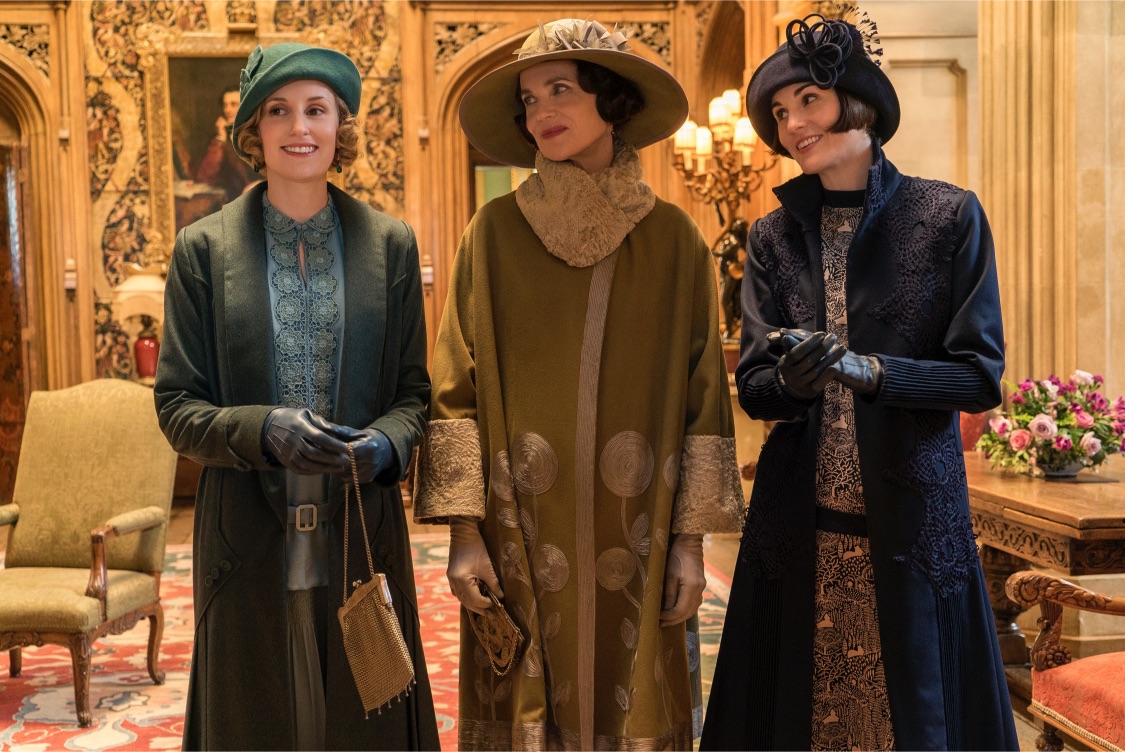
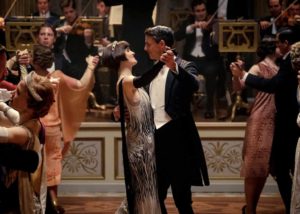
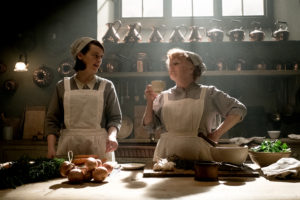
Producer Gareth Neame explains how he came up with the original idea for the “Downton Abbey” series, what went into adapting it for a feature film, why Americans and British fans see it differently, and why it is that fans respond to it so strongly, and confesses, at last, which is his favorite character.
What does it take to be a good producer?
I suppose you have to be quite tenacious, ideally you’re pretty passionate about what you do. I think you have to have attention to detail and you have to make the right judgment. Of course in every creative endeavor let’s say there are 100 key decisions that have to be made. The more of those 100 decisions you get right, the more likely it is you’re going to have a success. You can get a bunch of them wrong — you could put the wrong hair dresser on the show and you can have one of the writer’s not be quite right and the location you chose wasn’t the best place. Or you can get a number of these things right. Every show does but the more of them you get right the bigger difference it makes. So your judgment calls are quite important. And you have to find things you’re passionate about. It is really hard to produce something that you’re not enthusiastic about.
Running a production business is difficult because you can’t really love every show you make equally. Like Julian Fellowes would say, “Characters don’t love all their children equally; they have favorites.” Unless you’re going to make one thing at a time, it’s really hard to love everything. As a busy production company we make multiple shows but somehow you need to love all of those things as much as you can and you need to be tenacious and patient.
I suppose that’s what happened with the Downton movie. It’s taken me three years from the end of the television show to get it to the screen and that was an awful lot of persuading. We had to have 20 actors all be available at the same time and to make deals with us. We could probably have made it if a few of them didn’t show up a for the movie but we really wanted everyone there. We had to make the film at an affordable price so they had to make reasonable deals with us and fortunately all of them wanted to do it but they were waiting to see was it really going to happen. “If I commit are the others going to commit as well?” There was a little bit of everyone having to hold hands and go in together.
Is it true that the series was originally your idea?
I’m a British producer based in London so I like to find stories that are expressly British subjects. The great thing about the English country house genre, a genre I really like, is it’s pretty unique and it has all these wonderful iterations, comedy, romance, mystery, drama. There are so many different iterations of that genre giving us a slightly fictional world that never quite existed.
But certainly visually it exists and as you can see from Downton and other shows, there are lavish, beautiful historic properties. There was a very clear system of deference and protocol and everyone having their place which lends itself very well to drama. So I think it’s a good genre and it’s unique to Britain and so I’ve always thought it was a great environment. The idea was in my mind for several years. About 12 years ago now probably I was going through channels on the TV and I alighted upon an excerpt of Upstairs Downstairs and I knew what it was straightaway. I thought, “This is really interesting. I’m 40 and I’m too young ever to have watched that show, which means there are two generations who never saw it.” So I thought the time was right to invent this.
There’s a house I went to once near where my parents lived that had very well preserved servants’ quarters and kept exactly as it was in the Edwardian time and then it had all these gadgets in the kitchen like hundred-year-old toasters and ways that you kept things fresh. They actually had all kinds of gadgets and technology, just things that we have forgotten about now. That ended up in the show with Mrs. Patmore and the fridge and her aversion to technology because it was going to put her out of a job.
Roundabout the same time I got to know Fellowes and I was so impressed with his film Gosford Park and then I read his novel Snobs and I thought this man really has an outstanding of British culture and history and the way that we all speak. I can’t think of anyone really writing on screen who captures that strange way that we Brits have with speaking when we never really say what we mean, we say the opposite of what we mean. He captures that voice so well. I thought, “There’s something incredibly salable about Julian Fellowes and what he’s doing and he’s unique,” so I then said to him “Look, I’ve got this idea for this episodic show and in a lot of ways it’s returning to what you did with Gosford Park; it’s going back to that world but doing it as an episodic weekly show.” He’d never written/created a drama series so I didn’t know for certain if he was going to be able to do that to the degree that he did.
Do Americans and British audiences see it differently?
I just think there is an American fascination with the monarchy and the aristocracy and the places they live in and the clothes they wear, their behavior and the codes of behavior and so on and perhaps the servants life is a little bit more closely aligned to the lives that we’re all leading in a way anyway.
I think it is more egalitarian to the British audience because actually there’s a huge number of modern Brits who are descended from people who were in service and there were millions of people doing that so lots and lots of people can look back three generations ago when their grandmother was a maid. It’s quite normal.
The success in America is built on the mystique of the whole thing; it’s different and it’s quite glamorous. To Brits many of us live within a few minutes’ drive of some castle or ancient place. We live very comfortably alongside our history. Lots of people live in old houses. Some would say we look back a little bit too much. Perhaps we look back bit too much and America look forward a bit too much and aren’t knowledgeable enough about their history. There’s so much historical drama made in Britain that it’s not radical to us in a way.
My favorite scene in the film is the one with the Dowager Duchess and Lady Mary just quietly talking about some very important issues.
I think the passing over of the baton is always been a theme of the great houses. These characters are really tenants on a temporary basis and they have to look after it during their time but they may hand it on. That’s why they have survived because they do always hang on to the next generation and I think many families recognize the fact that these things can skip a generation. Violet, as she says in that scene, she loves her son but she sees Mary as the true descendent and I think that can be very true in families that sometimes there’s a very strong bond between grandparent and grandchild.
Mary’s probably was the heart of the show. When people say, “Who was your favorite character?” which they often do, I’d do a runaround and say I love all of them. But I always come back to her because she’s the heart of it.
We wanted to make the Downton movie. We didn’t say we were going to make a franchise but who knows, maybe we do go back if it does really well and Mary is the person who is running the whole thing and has the baton that Violet has passed her.
Tonight on TCM, “Cinemability: The Art of Inclusion” tells the story of disability representation in films, followed by some classic, if not consistent with current standards, examples, including “Freaks” (“You’re one of us now!”), “Hunchback of Notre Dame,” and “Johnny Belinda,” with Oscar-winner Jane Wyman as a young deaf woman.
For many years, it seemed that the most reliable way to get an Oscar was to play someone with disabilities. In addition to Wyman, actors who have won Oscars for portraying disabled or ill characters include Dustin Hoffman (“Rain Man”), Daniel Day-Lewis (“My Left Foot”), Colin Firth (“The King’s Speech”), Geoffrey Rush (“Shine”), Al Pacino (“Scent of a Woman”), Jamie Foxx (“Ray”), Tom Hanks (“Forrest Gump”), Tom Hanks again (“Philadelphia”), Matthew McConaughey (“Dallas Buyers Club”), Marlee Matlin (“Children of a Lesser God”), Jack Nicholson (“As Good as it Gets”), and Eddie Redmayne (“The Theory of Everything”). Of those, only Matlin had the real-life disability she was portraying. Increasingly, Hollywood is being urged to cast disabled actors to play disabled characters, which will open up opportunities to talented performers and provide more meaningful authenticity to the representation we see on screen.
A top movie at the box office and a top limited series on Netflix, both based on true stories about women, have something else in common. Both were also made by women, with female writers, producers, and directors.
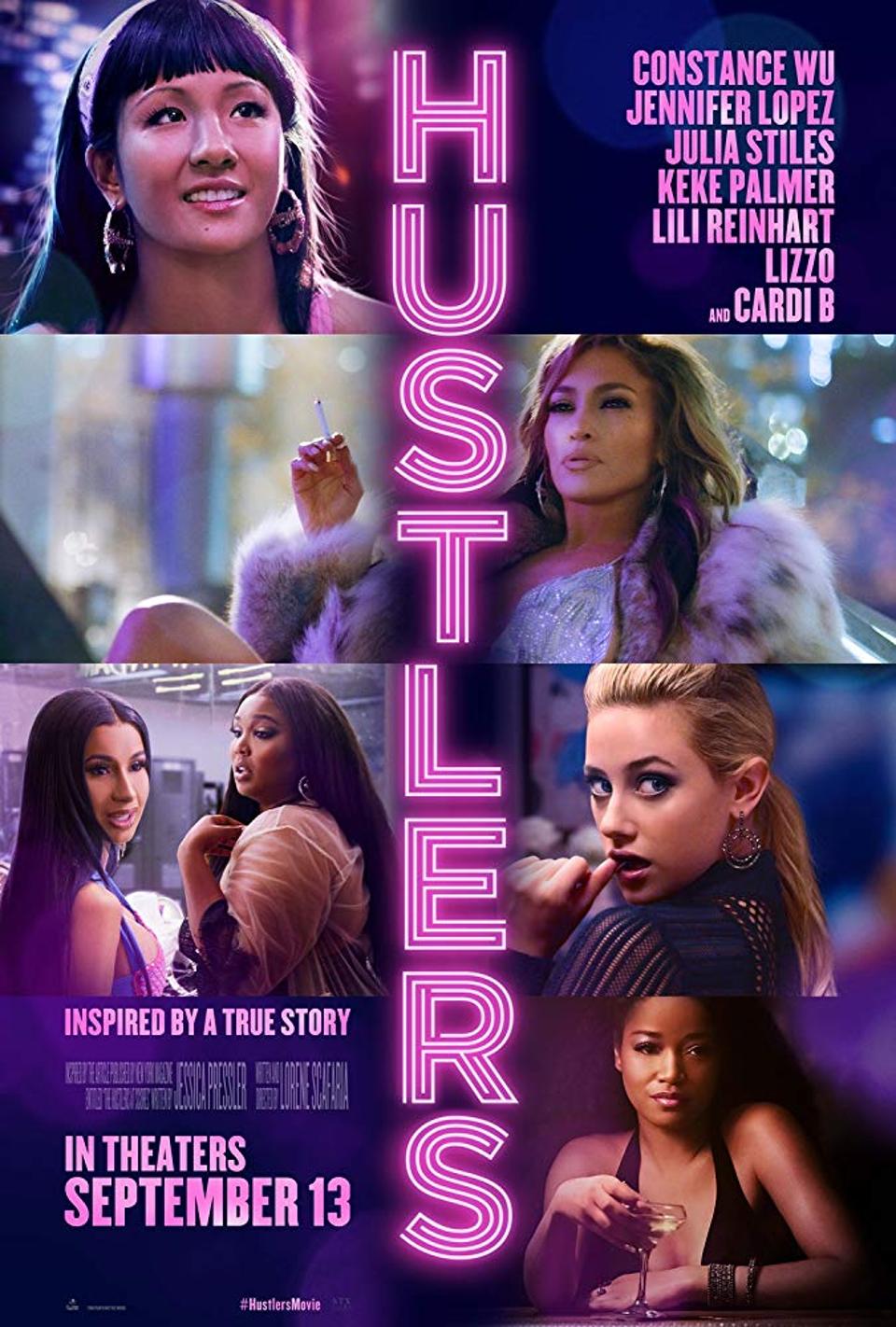
The Washington Post’s Sonia Rao writes about “Hustlers,” based on the story of a group of strippers who drugged and stole from Wall Street financiers:
None of this is to say that a male director couldn’t have achieved something similar, but it’s worth noting that Scafaria and other female producers had to fight to keep their vision for the film intact. Producer Elaine Goldsmith-Thomas told New York magazine that while some male studio executives were fine with how men treated women in, say, “The Wolf of Wall Street” — directed by Martin Scorsese, who passed on “Hustlers” — they were “a little uncomfortable” with a flipped premise.
For Vulture, my friend and fellow critic Jen Chaney writes that the limited series, written by Susannah Grant, Michael Chabon, andAyelet Waldman and directed by Grant, Jill Soloway, and Michael Dinner, “Unbelievable” on Netflix is the “most feminist crime show I’ve ever seen.”
Contrasting moments like distinguish Unbelievable as the most feminist crime show in recent memory, but one that is not feminist in the typical, “look at women being badasses” way that Hollywood often does feminism. As created by Susannah Grant, this series, which is ostensibly about the attempt to track down a serial rapist after his initial victim is deemed unreliable, is really about how women move through the world, not only as victims or detectives but as employees and bosses, mothers and partners, colleagues and friends. It’s a show about what happens when women use their voices, and how challenging it can be to figure out how to speak up and when.
The fact that Unbelievable is all of these things while still working within the traditional structure of the detective genre makes it quite remarkable.
Rao concludes:
If its opening weekend is any indication, “Hustlers” might become the latest female-led film to soar at the box office. That wouldn’t make it an exception to any rule — a study released in December by Creative Arts Agency and tech company Shift7 found that, between January 2014 and December 2017, female-led movies actually outperformed their male-led counterparts worldwide.
The Good Place: Special Effects from Dave Niednagel
Posted on September 21, 2019 at 8:11 am
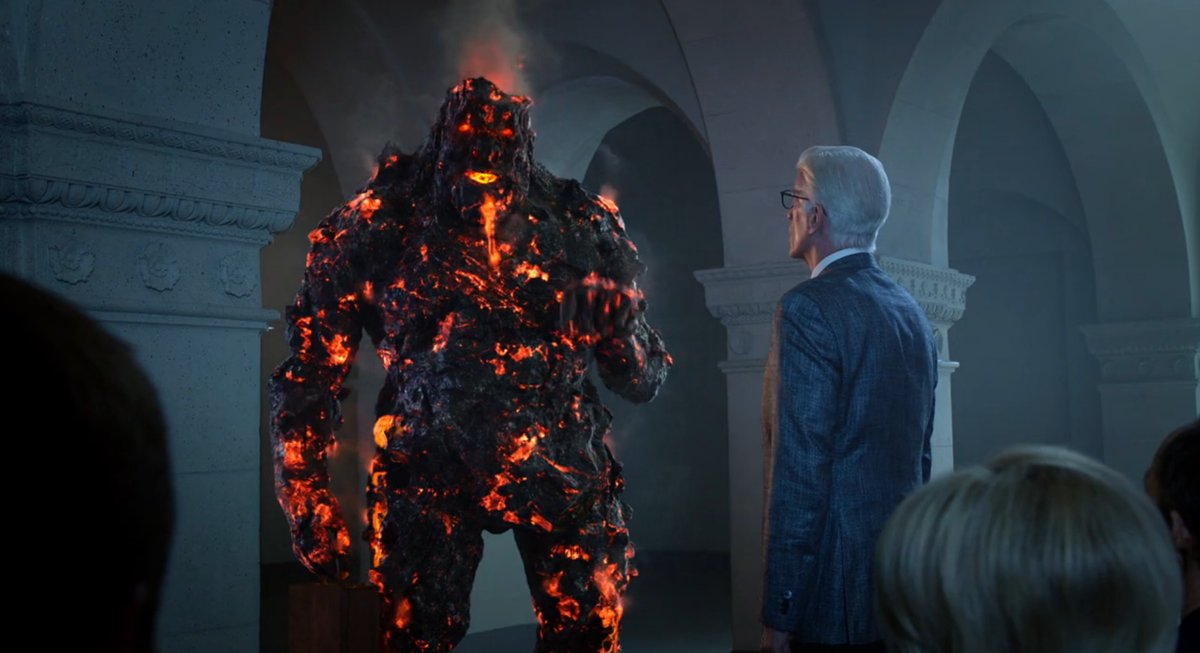
The Good Place is my favorite series on television and I always listen to the podcast hosted by Marc Evan Jackson, who plays the demon named Shawn. One of my favorite episodes featured the man who does the wonderfully imaginative and often whimsical special effects, Dave Neidnagel. NBC’s behind the scenes special about the show this week included some adorable examples of Neidnagel trying out the effects with his daughters.