Women In and About Hollywood

Posted on August 20, 2012 at 8:00 am

The New York Times convened a panel of women who work in Hollywood to talk about the barriers they face.

For the top 250 domestic films of 2011, only 18 percent of behind-the-camera positions, including producer and director, were held by women. Hollywood is still mostly men making movies for men.   Manohla Dargis recently said that one problem was Hollywood’s lack of faith in movies for women, “which paints women as fickle instead of reliable repeat customers.’’

I especially liked the comments of Melissa Silverstein, who points out that studio executives are too quick to attribute the failure of any women-focused films to a lack of audience rather than treating them as evidence of poor quality of the product like “John Carter” or “Battleship.”  She says, “Men fail up in Hollywood and women fail out.”

Hollywood is one of the only industries that does not take the female consumer seriously. It does not cater to or produce nearly enough content for women, who make upwards of 80 percent of all consumer-spending decisions. Forget trying to find movies if you are in your 40s and female. It’s like you don’t even exist. But the reality is that women in midlife finally have time to go to the movies when they are freed from raising the kids. Honestly, if Hollywood could wrap its collective brain around the fact that women want to see and talk about movies just as much as men do, then more jobs for women in film would follow.

“Brave’s” Brenda Chapman spoke candidly about how difficult it was for her to be replaced as director of the film, which would have been the first Pixar movie directed by a woman and which was her original idea.

It has been a heartbreakingly hard road for me over the last year and a half. When Pixar took me off of “Brave” – a story that came from my heart, inspired by my relationship with my daughter – it was devastating.  To keep my name attached to ‘Brave,’ I was persistent and stuck to my principles. Animation directors are not protected like live-action directors, who have the Directors Guild to go to battle for them. We are replaced on a regular basis – and that was a real issue for me. This was a story that I created, which came from a very personal place, as a woman and a mother. To have it taken away and given to someone else, and a man at that, was truly distressing on so many levels. But in the end, my vision came through in the film. It simply wouldn’t have worked without it (and didn’t at one point), and I knew this at my core. So I kept my head held high, stayed committed to my principles, and was supported by some strong women (and men!). In the end, it worked out, and I’m very proud of the movie, and that I ultimately stood up for myself, just like Merida, the protagonist in “Brave.”  Sometimes women express an idea and are shot down, only to have a man express essentially the same idea and have it broadly embraced. Until there is a sufficient number of women executives in high places, this will continue to happen.

There is some talk of a female “Expendables,” but I am pretty sure that is not what these women have in mind.
Related Tags:


Behind the Scenes

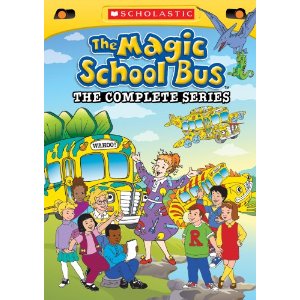
“Magic Schoolbus: The Complete Series” — Contest for Teachers Only

Posted on August 19, 2012 at 3:55 pm

This year’s back-to-school contest for teachers only is really special — Magic School Bus: The Complete Series.  Join Ms. Frizzle and her students on field trips that go to outer space, inside the human body, back in time to see the dinosaurs, and learn about science, history, and the pleasures of curiosity.

To enter: send me an email at moviemom@moviemom.com with “Schoolbus” in the subject line and tell me the name of your school and the grade you teach.  Don’t forget your address!  I will pick a winner at random on August 26.


Related Tags:


Contests and Giveaways Early Readers Elementary School

TV Characters Who Love to Read

Posted on August 18, 2012 at 3:43 pm

Flavorwire has a marvelous collection of video clips of television characters talking about books and how much they love to read.  The shows include “Mad Men,” “Freaks and Geeks,” “South Park,” and “The Wire,” and books include The Great Gatsby, The Catcher in the Rye, On the Road, Lady Chatterley’s Lover, Fox in Socks, David Copperfield, and two books by Paul Ryan favorite Ayn Rand.


Related Tags:


Books Television

Christopher Guest to Create a Series for HBO

Posted on August 17, 2012 at 8:01 am

I was delighted to hear that Christopher Guest, the writer-director behind the improvisational mockumentaries “Best in Show,” “Waiting for Guffman,” and “This is Spinal Tap,” will be creating a new series for HBO, and even more delighted when I read in the New York Times that it will star Chris O’Dowd of “Bridesmaids” and “Pirate Radio.”  Guest and Jim Piddock (the English-accented broadcaster who uneasily shares the microphone with Fred Willard in “Best in Show”) will write the series.  HBO says: “Having recently lost his job and girlfriend, Tom has a rather unsure sense of his own identity. But when he inherits a mysterious box of belongings from a great aunt that he never met, he starts investigating his family lineage and uncovers a whole world of unusual stories and characters and a growing sense of who he is and who his real family are.”  Sounds wonderful!

Related Tags:


Television

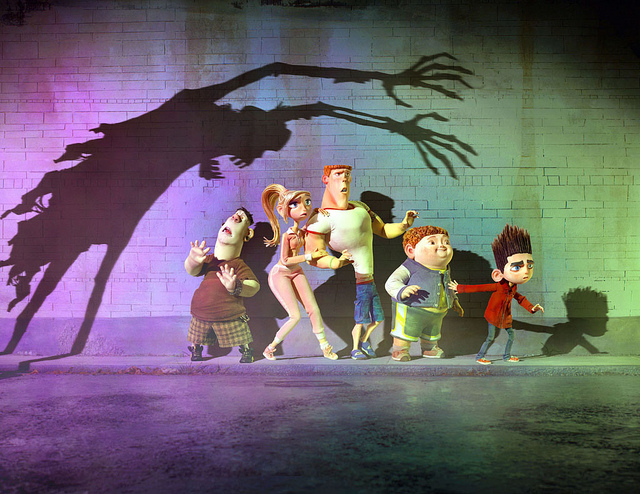
Interview: Writer-Directors of “ParaNorman”

Posted on August 16, 2012 at 8:00 am

I loved seeing the “ParaNorman” panel at Comic-Con, so I was especially excited to get a chance for an interview with writer-director Chris Butler and co-director Sam Fell, and I had a blast talking to them about why kids and grownups like scary movies and the challenges of stop-action animation.

You really pretty much made a list of everything that is impossible to do in stop-motion and did it.  I mean, tossing toilet paper around? 

Chris: I know, that was certainly…

Sam: It was a real trick, there, and I remember when I first wrote that scene I thought, “What would work so well in stop-mo would be toilet paper kind of sculpting forms of zombies…” and then when it came to do it, it was like the most difficult thing you could ever do.

Chris: It was long-time that Brian worked on that toilet paper, it was his specialty, and he was doing it for like a year.  He’d come up with these, almost like these platters of toilet paper styles and techniques…

Sam: And we’d go to see it, and he’d say, “Look at this,” and you’ll hold up to the light and you’d say, yeah, I can’t see the wires…And you’d go, oh, that’s pretty good…and you’d make his day because you’d like his toilet paper.

What were some of the other big challenges?  At Comic-Con you said no one had ever done stop motion characters with thick necks before.

Chris: Normally with a puppet you want a separate head and then a neck between the two and you can articulate them all around and especially with our technique where we change the faces so there’s a natural line under here, so you can change the faces…but with a fat neck character, it’s very hard to articulate and…

Sam: It does not move the way skin does…

Chris: And there are horrible bulges, and it’s very hard to know how to separate the face from the neck, and this is one shape, so…

Sam: Technically a nightmare.  We all knew it was very dangerous territory.  We sat around and discussed, “Should we change the design of this character?” And it was like, no, no, because that’s him, and so let’s find a solution to make it work.  That’s the approach at Leika and it was the approach on “Coralline.”  We took it even further on this.  It’s easy to see stop-motion as this little bit of nostalgic history, it’s this cute charming thing from old TV shows.  And it’s a beautiful hand-made thing and we loved that aspect of it, but that’s no reason to not take into the future with all the innovations that we have at our disposal.

Chris: We have a visions effects department now integrated into the studio, you know? And it’s all just on desktops, now, so it’s relatively cheap and it’s not like having to go to some big, expensive post-house any more.  They’re there, so when you’re designing your shot, you can be, “Hey, come on down,” and they tell us how things should be done or how many passes we need or make suggestions.

Sam: So you can plan a shot around them is what you’re saying, as much as anything.

Chris: It’s very efficient.

If you could take home one of the props for the movie and live with it in your house, what would it be?  I know I’d pick the alarm clock!

Sam: Everyone says the alarm clock or the tooth brush.

Chris: I like the van, I guess, or the station wagon.  I love those vehicles.

Sam: It’s actually not a prop, but I think it’s a thing of beauty: the dead judge’s cape is so beautiful, it’s a work of art because it’s not just a cape that’s been designed correctly, it’s a cape that’s been designed correctly and then has the asymmetry of the design style, plus it’s animatable, plus it’s got all the rottenness of being in the grave for 300 years.  It’s an amazing thing.

Chris: A lot of construction to it.

You tread a very fine line there between scary and reassuring and funny and I love narratively the way you resolve that, but visually, how do you calibrate that and what do you look at?

Chris: The zombies were possibly the scariest thing, they have to play both ways.  One thing we knew is that they’ve been in the ground a long time, so we weren’t going to do gore, but I think it was just going through that whole ensemble of zombies and figuring out how they were rotten in the different ways, and that gave us goofy and scary.

Sam: And I think that’s the benefit of telling a story like this in animation—is that you’re already one step removed from reality, so the very process of charactering in the first place is a safe distance, I think, for kids to be, you know…

Chris: To be dealing with a rotting body!

Sam: Yeah, if we’d done this in live-action, it would’ve been more gratuitously gruesome, more grotesque, and I think doing it this way you can design those zombies so that they are cool images…

Chris: and you can have the idea, as well, like we figured out how his face fell off, you know? So his jaw is still flapping, he’s got that flapping bit?  But because it’s stylized, it’s sort of art…

Sam: It’s taking advantage of cartooning, if you like, that aspect of animation, whereas I wouldn’t say this movie is a cartoon, because there are real things at stake; you think of the characters as real people, but certainly it’s useful to be able to stylize in that way…

Caricature.

Sam: Yeah, exactly.

(more…)

Related Tags:


Directors Interview Writers
THE MOVIE MOM® is a registered trademark of Nell Minow. Use of the mark without express consent from Nell Minow constitutes trademark infringement and unfair competition in violation of federal and state laws. All material © Nell Minow 1995-2026, all rights reserved, and no use or republication is permitted without explicit permission. This site hosts Nell Minow’s Movie Mom® archive, with material that originally appeared on Yahoo! Movies, Beliefnet, and other sources. Much of her new material can be found at Rogerebert.com, Huffington Post, and WheretoWatch. Her books include The Movie Mom’s Guide to Family Movies and 101 Must-See Movie Moments, and she can be heard each week on radio stations across the country.

Website Designed by Max LaZebnik