The Song That Changed My Life

Posted on April 1, 2012 at 3:59 pm

BYUtv’s original new TV series, The Song That Changed My Life, tells the story behind an artist’s inspiration and reveals the song that changed the entire direction of their life. Following the 3/31 premiere, an episode featuring Duncan Sheik will air tomorrow night. The Tony award winning New York-based artist, composer, songwriter and producer first gained notoriety for his 1996 hit “Barely Breathing,” and went on to compose for stage and film, winning two Tony awards for the renowned musical, Spring Awakenings and a Grammy.

The Song That Changed My Life includes candid conversations, informal interviews, never-before-seen rehearsal footage and performance, offering an intimate view into an artist’s creative process and how that one pivotal piece of music inspires and continues to motivate their careers.

Future episodes will feature:


·        4/9: The Lower Lights: Gathering Indie players from the likes of Neon Trees, Ryan Shupe and the Rubberband, Fictionist, and solo acts like Brooke White, Mindy Gledhill and Sarah Sample, The Lower Lights brings together 40+ artists from around the country to revive and make fresh takes on an unexpected form—hymns.

·        4/16: Jack and White Brooke White (American Idol alum) and Singer-Songwriter Jack Matranga bring acoustic pop to folk sounds with their powerful harmonies and compelling lyrical stories.

·         4/23, 5/28: Fictionist: Marrying majestic harmonies and unforgettable pop hooks, Indie pop bassist Stuart Maxfield and keyboardist Jacob Jones collide 70’s era harmonies with gritty guitar licks and lyrical song twists.

·         Later episodes will include Dar Williams, Over the Rhine, Sixpence None the Richer and more.

Related Tags:


Music Television

“October Baby” Is Not As Controversial As Its Supporters Claim

Posted on March 31, 2012 at 8:00 am

http://www.youtube.com/watch?v=LxH2fPhrNEc

“October Baby” exceeded expectations in its opening weekend last week, making a respectable $1.7 million in only 390 theaters.  It is the story of a college student with multiple health problems who finds out for the first time that she was adopted and that her physical problems are the result of a failed abortion.  She goes on a journey with a friend to find her birth mother.

The reaction from critics was lukewarm at best, with only a 24 percent positive rating on Rotten Tomatoes, which also shows a healthy 89 percent approval from audience members.  That kind of disparity is not unusual, of course, because audiences are self-selected and those who make the effort to register their reactions online are a smaller self-selected subset motivated by strong feelings.

I’m always glad when a movie finds its audience, but it bugs me that the movie’s producers are trying to make the responses to the film into some sort of controversy, with some support from commentators.  I’d like to provide some clarification.

The producers are correct that it was a mistake for Hollywood studios to turn them down, as ticket sales show.  There is a substantial audience for this kind of movie and it is foolish to overlook (and underestimate) them.  Given the response to this movie, I believe that will change and I look forward to more resources being made available for better explorations of these vital themes.  And I respect the producers’ allocation of 10 percent of the profits of the film to the Every Life is Beautiful Fund, supporting “frontline organizations helping women face crisis pregnancies, life-affirming adoption agencies and those caring for orphans.”  Both those who believe in a woman’s right to choose and those who oppose abortion should be united on behalf of organizations that support reproductive health, pregnant women, and alternatives for those who want to carry their babies to term.

But the producers and commentators are wrong in saying that people who do not like the movie should be dismissed as biased left-wing abortion-supporters.  No one should make that claim unless they are willing to acknowledge that their own reaction to the film is just as likely to be affected by their political beliefs.  And no one should use language to describe another person’s political or religious views that the other person does not consider accurate.  It would be wonderful if good intentions were all that was necessary to make a good movie, but that is not the case.  Critics who reviewed the film as a movie and not as a piece of advocacy were entitled to critique it on that basis.  When TimesWatch, which is upfront about its mission to “reveal the New York Times’ liberal political agenda” says that the Times review by my friend Jeannette Catsoulis “seethed with anger and evident indignation that pro-lifers still existed in this day and age,” it is itself seething so hotly that it overlooks what Catsoulis really said: she did not like the movie because she thought it presented its arguments in an inflammatory and skewed manner.  In particular, she points to a significant scene in which a nurse played by Jasmine Guy speaks in Hell House terms about her experiences assisting in an abortion clinic.  She says that the movie communicates in the language of “guilt and fear” and that it “traffics primarily in soapy melodrama and false compassion.”

I agree with Catsoulis’ assessment of the film.  There are some affecting moments but overall it undermines its points with heavy-handedness and weak performances.   Even one of its strongest supporters admitted that its storyline is “sappy” and that it has poor pacing and under-developed characters.  Others will disagree.  That is true of any film and that is part of what makes it worthwhile and satisfying to talk about the movies we watch.  But we have to be able to do that without trying to discredit those who see them differently.  I especially object to those who complain about criticism of “October Baby” by generalizing about people of “faith,” assuming that the term is equivalent to conservative Christians who oppose abortion.  There are many faiths and there are many ways of interpreting and honoring God.  It does not help bring us closer to understanding and commonality to use divisive language like “faith-based” when what it really refers to is just one subset of the world of believers.  I really liked the part of the film where the Christian girl gets some wise and compassionate counsel from a Catholic priest.  I wish the commentary about the film embraced that kind of ecumenicalism.

It also bothers me when supporters of the film claim that it is fair to both sides.  The film’s promotional materials say that it “honestly and evenhandedly invites audiences to explore their own views of life’s value and the importance of their choices.”  It is not even-handed.  It has a clear point of view.  There is nothing wrong with advocacy on behalf of a cause you feel passionate about, as long as you are honest about what you are doing.  Failing to do so opens the people behind this film up to criticism like that from Catsoulis about the legitimacy of the way they frame the issues and the limits of the film’s notion of forgiveness.

As happens much too often in our polarized us/them debates these days, the claim of “controversy” is inflated and more inspired by marketing than by any effort to “explore” these painful and wrenching issues.  This is a movie about one of the most contested of all debates and no one should suggest that the people who made it and the people who see it will not bring to it their views on abortion.  But we should not let anyone make it more than that by describing those views in heightened and divisive terms or pretend that all criticism of the film is based on its message and not its story-telling.  It is nice that the film promotes forgiveness but it would be better if it promoted respect and finding common ground.

The film-makers have said that they wanted this film to appeal to an evangelical audience.  On their website they speak of the movie’s “ministry impact” and urge churches to arrange for congregational viewings.  But they also want to expand its reach to show outsiders that they should not stereotype evangelicals.  Filmmaker Jon Erwin said, “ if there’s a Christian virgin character, she’s the nerd. I wanted to swing the pendulum to say Christian home-schooling virgin teenagers, of which I was one—we’re not that weird!”  I agree that mainstream media too often caricatures people of faith and those who oppose abortion rights and I like the way “October Baby” shows us some nice, normal college students who are committed Christians.  If the supporters of the film and the people behind it also make some progress in swinging the pendulum on the way they characterize those of different faiths and supporters of abortion rights, we might get further with those conversations we all agree we need to have.


Related Tags:


Commentary Spiritual films
“The Best Man” and My Dad’s Un-Conventional Idea

“The Best Man” and My Dad’s Un-Conventional Idea

Posted on March 29, 2012 at 2:51 pm

I’m very proud of my dad’s piece in Politico today about the advantages of a brokered convention.

I’ve been at a brokered convention and worked for a candidate who came out of it. Even though my candidate lost the general election, it was still a far more robust and constructive process than the primary-caucus marathon of the past half-century.

My dad, who has been involved in national, state, and local campaigns since 1948, says that

primary voters push GOP candidates to the right, and Democratic candidates left. Independent voters, who occupy the center, wonder why the parties nominate candidates who don’t represent their views. The nominees then spend the general election recanting what they said in the primaries, to persuade the independents, who decide elections.

We thought getting rid of the brokered conventions would do away with smoke-filled rooms and backroom deals. We just substituted one set of bosses for another.

I also read today that a new production of Gore Vidal’s play, “The Best Man” is about to open on Broadway with an all-star cast that includes “Will and Grace” star Eric McCormack, Candace Bergan, James Earl Jones, Angela Lansbury, and, in a small role, Donna Hanover, who knows something about politics as the former wife of the mayor of New York City.  Vidal, whose political expertise was in part based on his being related to Jaqueline Kennedy, penned a sharp story about two Presidential candidates at a brokered convention along the lines of the ones my dad wrote about.  The movie version, starring Henry Fonda and Cliff Robertson, is one of my all-time favorite political dramas and as timely as the day it was written.

http://www.youtube.com/watch?v=CbJoI6yToc4
Related Tags:


For Your Netflix Queue Neglected gem
Winners: “Lion of Judah,” “Under Our Skin,” and “Happy Feet 2”

Winners: “Lion of Judah,” “Under Our Skin,” and “Happy Feet 2”

Posted on March 29, 2012 at 2:46 pm

Thanks for entering!  The lucky winners are:

Lion of Judah — Jay S., Olathe KS; Latonya R., Hattiesburg MS; David D., New Cumberland PA
Under Our Skin — Barbara G., Bronxville NY; Lucretia P., Morgantown West VA
Happy Feet Two — Kathy G, Mead CO

Don’t forget — this is the last day to enter the contest for “The Muppets!”  Be sure to read the directions carefully.

Related Tags:


Contests and Giveaways
Interview: Lily Collins of “Mirror Mirror”

Interview: Lily Collins of “Mirror Mirror”

Posted on March 29, 2012 at 8:01 am

Lily Collins was so gracious I felt I really was talking to a fairy tale princess.  The daughter of rocker Phil Collins appeared in “The Blind Side” and this joyous, gorgeously re-imagined updating of “Snow White” is her first starring role.  She talked to me about learning how to sword-fight and her favorite advice about acting.


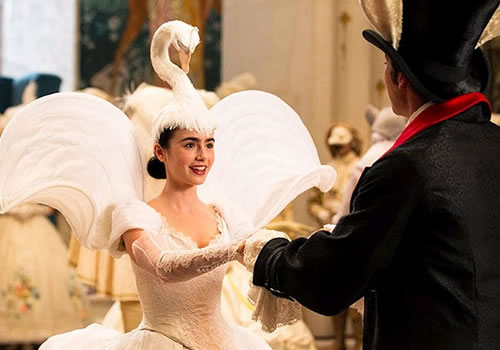
We have to talk about the swan dress.

I know, the head and the wings were just the most beautiful little accompaniment to the outfit…I would forget, though, that I had them both on, and I would go to squeeze by people and forget that my span was much longer and I would sometimes knock things over with them, but they were so beautiful and intricately made, so delicate and absolutely like pieces of art, they were an honor to wear.

How does it make you feel different to look at yourself fin the mirror and see that? 

Well, it definitely helps get into character when you’re wearing a corset everyday, you truly do feel like the character, it makes all the difference in the world. But also, they were so emblematic of who Snow was—and in the tone of the movie it just amped up the feeling of the film..

The sword fights are amazing!  Tell me what kind of training you did and what that was like.

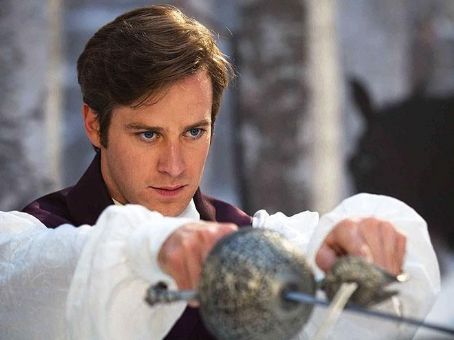
Armie Hammer and I trained including during the filming for about four months.  It was very intense, lots of sweating and bruises, but it was so much fun and I had never imagined that I would get to do something like that before.

This is the first time we’ve seen him in a comic role.

He’s hilarious! He’s kind of the perfect mixture of being goofy and aloof in the role, as well as being a gentleman, totally regal, and very, very humble. Armie is, as a person as well, just kind of great mixture of all these different attributes. Most of all, I didn’t realize how much of a jokester and how funny he is, he can make you laugh at the top of the hat.

What was the biggest challenge of filming for you?

I’d never done a film a big as this before, or worked as many hours as I did—and I think it was just making sure I maintained that balance of work and being able to rest and take care of myself, because I did do so many different new things on this film, and I was in a foreign place and on my own there, and it was really just making sure I kept a defined balance between having my time to be myself as well as the character.

This is a very different version of Snow White than we’ve seen before, and not just different in the plotline, but a very different version of the characters. So if her name was Snow Jones, who is she and how did you imagine her?

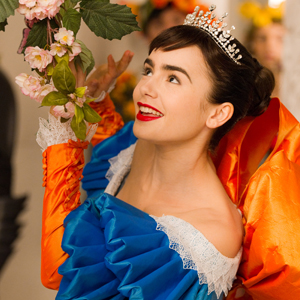
I really wanted to play her, not as a caricature of a fairy tale princess or as an animated character; I wanted to make her a real girl who was feisty, and who really was passionate, and learned throughout the process that she went through with the dwarfs and experiencing new things, she learned to believe in herself and found that it was what was inside her that made her able to conquer her dreams and go after what she believed in. Never once does she look in the mirror herself, because she’s never aware of what her beauty means, or that she is even as beautiful as everyone says she is. It was really what she found within herself through her new friends and experiences. So, I think she was someone who was very open to spontaneity and life and love, and someone who wasn’t afraid to get a little dirty at times, to go and fight, be on par with the prince and not allow the fact that she was a girl change anything.

I was very touched by the scene near the beginning where you leave the palace for the first time.. The look on your face was so radiant and luminous, and you became aware for the first time what was out there. Tell me a little bit about your process, what was it that you were thinking and how did you achieve that?

I try to put myself in the shoes of whatever character I’m playing and I guess I just imagine the idea of really what it would be like if I was locked away and not allowed to go out and really had the courage to step outside my comfort zone, and experience what was outside of the castle.  I thought about the idea of meeting a man for the first time and how it kind of made me feel something other than what I was used to, and the idea of being shocked at the reality of a situation, not really knowing was evil was, because Snow was kept away so long that she doesn’t really see what evil is.  So when she goes through the village for the first time, she’s so genuinely hurt by it that she can’t help but show her sadness and kind of the inner-child quality of pure disappointment and confusion. So, I try to just put myself in the character’s shoes, and because it’s the beginning of the story, she’s still very much a child in that sense, seeing everything for the first time. I think of how a child would react—children react in such a genuine way and they don’t think, really, how their reactions are going to affect people, they just let it come out; that’s how she was at the beginning.

What was the best advice that you got about acting?

To remember that you are playing someone other than yourself, and so when taking on a role, of course, it’s you taking on a role, so you’re going to add a bit of yourself, but it’s okay to separate your own beliefs and your own characteristics from this character, because that’s what acting is—you’re taking on another role. If you’re going to go for it, go for it, and dedicate yourself 100% to something, because if you’re fully in a character and you go for it, there’s nothing like feeling that feeling of accomplishing, something as someone else, if you’re really going to be a part of the story and be a different character, you should put your whole heart and soul into it, because once you’re dedicated to it, it really comes across.

 

Related Tags:


Actors Breakthrough Perfomers Interview
THE MOVIE MOM® is a registered trademark of Nell Minow. Use of the mark without express consent from Nell Minow constitutes trademark infringement and unfair competition in violation of federal and state laws. All material © Nell Minow 1995-2026, all rights reserved, and no use or republication is permitted without explicit permission. This site hosts Nell Minow’s Movie Mom® archive, with material that originally appeared on Yahoo! Movies, Beliefnet, and other sources. Much of her new material can be found at Rogerebert.com, Huffington Post, and WheretoWatch. Her books include The Movie Mom’s Guide to Family Movies and 101 Must-See Movie Moments, and she can be heard each week on radio stations across the country.

Website Designed by Max LaZebnik