VeggieTales – 25 Favorite Very Veggie Tunes – Big Idea
Send me an email at moviemom@moviemom.com with “Robin Good” in the subject line and tell me your favorite Veggie Tales song. Don’t forget your address (US addresses only). Good luck! I’ll pick a winner at random on March 12.
I’m the oldest of three girls and so I have always had a special fondness for movies about sisters. I was delighted to see that Turner Classic Movies has a full schedule of sister movies today, from the classic Meet Me In St. Louis (Judy Garland, Lucille Bremer, Margaret O’Brien, and Joan Carroll) to the less classic but highly entertaining Two Weeks With Love (Jane Powell and then-newcomer Debbie Reynolds). Big hugs to my sisters, Martha and Mary — I wish we could make popcorn and watch the whole line-up together.
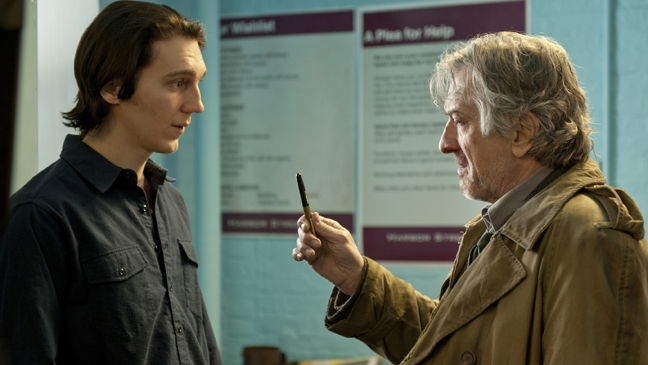
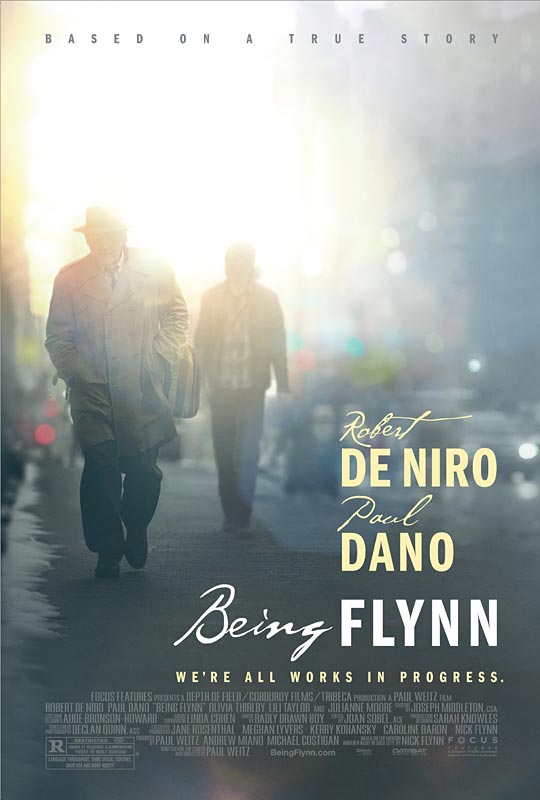
Paul Weitz wrote and directed “Being Flynn,” which opens today, starring Robert De Niro and Paul Dano. It is based on Another Bullshit Night in Suck City: A Memoir, Nick Flynn’s book about his experiences working in a homeless shelter, when his estranged father turned up looking for a place to stay. I really enjoyed speaking to Weitz about how the themes of this story related to his relationship with his own father and about his mother, who co-starred in one of my favorite films and then retired to be a full-time mom.
How did you become involved with this project?
I was sent the book eight years ago. It is quite poetic. But it boiled down to some form of fable about the central question: are we fated to become our parents? How much are we pre-determined by our heritage or how much can we become our own people? The details of the book are extreme. It’s about a guy who didn’t know his father growing up. He would occasionally get letters from him from prison saying things like, “Never fear, I’m going to win the Nobel Prize in two years.” Nick Flynn, the author, ended up finding a calling and a dignity and an excitement working in a homeless shelter in Boston in his 20’s. And then it was completely destabilized when his father showed up at the shelter to live because he had hit the skids. It was an odd experience. It’s a story in which the real Jonathan Flynn, the character Robert De Niro plays in the film, really exists. He has this delusion that he is one of just three great writers than America has produced. He never published the novel he was working on over the decades. But in terms of his being convinced of his own greatness, it is odd that he is now being played by Robert De Niro in a movie.
It was really marvelous spending time with Nick who has generosity of spirit and who has forged a relationship with his father. He has really gotten though his demons. Between Nick and De Niro, who has had to navigate this insane level of stardom and has a wonderful dry sense of humor and sense of irony about himself and is utterly devoted to the work. I am interested in the idea of humility and the relationship between ego and creativity and how destructive ego can be. This is really a stark example of someone who is so tortured by needing to be great that he never achieved anything and somebody else who had the humility it takes to become a writer.
There’s a wonderful example of humility and humanity in the movie when Nick is asked by one of the residents of the shelter for a new pair of pants and checks with someone else on the staff about what size to get. The other staffer says gently, “Just ask him.”
The actor in that scene was one of the non-traditional actors in the movie and he had formerly been homeless. This is at a point when Nick is learning how to work in the shelter. I don’t feel qualified to talk about homelessness as an issue but I have spent time with homeless people and I have learned that each of them has an individual path through his life which leads them to this situation. Just deal with them as people, and as individuals. That is one great benefit of the job I have of telling stories. You get involved in other people’s lives and learn that each one of them has a narrative going on.
Were there many “non-traditional” actors in the film, current or former homeless people?
There were a number of people sent to us by an aids services organization. It was important to me not only to have Nick Flynn around but also to have people who had been homeless and could inform me whether we were doing things properly or not. Actors are always trying to get to the point of erasing the acting, where you can’t see it. Non-actors are starting there but they are confronted with the weird apparatus of film-making. You might do the same scene five times without having the camera on you. We had one guy who has a line about burning himself intentionally so he could get morphine and he was fine and then we said, “Now we’ll do it on camera” and he completely flubbed it. I really enjoy that kind of challenge as a director, to go to him and say, “Don’t worry, we’ll do it as many times as we need to.” It’s always exciting to direct non-actors.
That must be the opposite of dealing with experienced, highly trained professionals like De Niro and Julianne Moore (who plays Nick’s mother in flashbacks).
Absolutely. Somebody like Julianne, coming in to do a supporting role, it’s so important with that role that the character not be someone you’re feeling sorry for throughout. Nick’s mom was a great a and fun single mom who had a lot of dignity before she succumbed to her demons. Julianne was keen to make sure that there was some humor and warmth in that character.
I was very struck by the music in the movie’s soundtrack.
My brother and I did a film called “About a Boy” with all the music by Badly Drawn Boy. In this case, with two characters doing voiceover there was a danger of feeling you were watching two movies. I had temporary music while I was editing with some of his pieces and some pieces by Bach. He and an arranger did some Bach-esque versions of the melodies of some of his music that tied everything together.
What are the challenges of voiceovers — to make sure they don’t over-explain?
Usually voiceover is used to horrible effect because the studio says no one understands what is going on in the movie. In this case, because they are two writers, I liked the idea that they were competing over who owned the story and trying to steal the story from each other. Nick said the part his father particularly enjoyed and laughed at the part was when De Niro, playing him, says, “You are me! I made you!” It’s happening on a dramatic level and I liked the two people trying to tug with each other over the ownership of the story.
You came from a show business family and went into the family business — and with your brother.
We share an office and look at each other’s cuts and try to be supportive of each other, which is great. My dad was a fashion designer who wanted to be a writer. He looked at it as basically a silly way to make a living. I had the odd experience of growing up in a tie and jacket because my dad had a kids’ line. The normal adolescent rebellion that might involve dressing a certain way was very explosive in my household. He would write at night and thought of himself as a Hemingway-esque character, and he was, he had a very picturesque life. I was always conscious that there was some battle going on with him and I identified with the characters in the book.
My mom was a successful actress in the 1950’s. She was effortlessly graceful and humble and a really terrific mom. It was a lesson in humility from a very intelligent woman.
I loved her in “Imitation of Life.”
They don’t make them like that any more! Emblazoned in my mind is where she becomes kind of a stripper and sings this campy song. Lypsinka does that as part of his act. She’s remained friendly with the woman who played her mom, Juanita Moore, and I got to do a Q&A with them.
What’s next for you?
I’m hoping to make “Admission” with Tina Fey as a college admissions officer.
Brother White premieres this Sunday on GMC and I was thrilled to get a chance to speak to one of my favorite actresses, the fabulous Jackée, whose Emmy-award winning role in “227” has led to her own eponymous series. Brother White is a white pastor who goes from working for the head of a glamorous mega-church to the tiny, impoverished Divine Faith Apostolic Church in Atlanta. It is also the story of the parishioners and neighbors who welcome him including Jackée’s character, the skeptical choir director. The movie has heart, humor, and a stirring appearance by Bebe Winans. There’s a discussion guide for viewers who want to explore its themes of community and faith.
I began by telling Jackée I had just enjoyed watching her again on cable as the outspoken hairdresser in Deliver Us from Eva and that led to a conversation about her early years in show business, Brother White‘s real-life inspiration, and why the story is so close to her heart.
Tell me a little bit about the movie and your character.
Well, it’s an uplifting movie. Parents and children can watch it together, which is so rare. A family entertainment usually means just for the little ones, but it’s also something for the adults. And also, it’s a drama and a comedy which is what I wanted to do. And we were able to do a lot of improvisations. The director was so kind and loose about it that I was really able to use my comedy chops. The character was able to be more fully formed, not just as fun but seen as a warm human being full of misunderstandings. So I like that.
I think you really your finger on it. It’s the combination of the humor and the serious and there really is something in there for everybody.
You don’t have to be afraid to go away for a moment while the kids are watching it. When you come back, everything will still be okay. You didn’t miss anything that will be harmful to them. That’s what I liked about it. I do care about that; I do care about what kids see, and what adults see as well.
I like this one because there’s nobody in it who’s perfect. Everybody has got some lessons to learn. Everybody has got some faults to deal with. And yet, there’s also a lot of humanity, a lot of decency in it.
Right, and that’s what we need. People don’t think so but it helps to ease your soul. That’s the kind of movie it is, so you can see the spirit and the soul that you don’t feel, when you watch it, you’re like “Whoa! What was that?!” Sometimes you watch something where that last ten minutes it all goes to pot, and you go up and go “Blah! You and I wasted 2 hours.”
Now, were you raised the church? Did you go to church while you were growing up?
Oh yes, I was raised Baptist in North Carolina. Yes, definitely, so this was right up my alley.
How did you first find out about this project?
I’ve been working with GMC, the Gospel Music Channel, for about 5 years now, trying to find the right project. I’ve done a couple of other projects for them, and they’ve finally found one that my character, when I read it, I said, “It’s perfect.”
What makes it perfect for you? What do you look for in the character that you play?
Like you’ve said, humanity and I look for some drama because I can do comedy; I do it in my sleep, but normally that’s what I get. I eat with dramatic action, So when I see something where I can use my dramatic skills, I want to go for it. It was right up my alley.
When you were growing up, was there a particular performer or movie that really made you want to become a performer yourself?
When I was growing up, I used to listen to the radio. At 6 years old, my earliest memories are of trying to hide from my sisters and brothers that I would listen to the radio, and sometimes I’d be singing along with the radio. A couple of times, they busted me. So it was really the radio, and singing was my first love. I went into the high school of music and studied opera. Then, I started taking acting lessons in the 10th grade, and I never stopped. Remarkably, it took, and I did a show when I was a junior in high school, “The King and I.” The audience stood up and gave me such an ovation that I said “Oh this is for me.” Then, when I found out I was funny, that I could do comedy, my career just took off.
How did you first know that you were funny? Were you funny with your family?
No… I really don’t know it until I did a soap opera, “Another World, which is not on TV anymore. I played Millie Mason, a lady of the night. It wasn’t written to be comic but they let me be funny and that was when I knew this was what I going to do. Then on “227,” I really got to be funny.
What does it feel like when you are performing and you can hear people laugh?
It makes me want to do more. Once you get them to laugh, you want to keep going. You don’t want the laughs until they’re sick! As a comedian, you don’t think “Oh, they laughed!” Your thought is, “Oh, let me get another joke in here.”. I’m always ready for the next joke that fits into what we’re doing, not just because it’s funny. Sometimes, you can have a funny thing that you can do that doesn’t fit in you’re doing, and it will put everybody else off track. You have to just do it in context, so when I’m able to see something coming, I jump in there and that’s what happened with “Brother White.” They just let the camera loose on me, because I was able to jump in and get my little brand of comedy to add to the story.
And you often get a chance to do improvisation when you are acting?
No, this is the first time in a long time. It’s been years that I have allowed me to just cut loose, so I was very happy coming home from work, which is very rare. Usually, you just want to go home and go to sleep. But because they let me improvise I would think about the next day. I don’t know if they planned that way, but it worked out, and it made me very happy. I was very happy it turned out so well.
I think it’s a very important thing for movies of all kind, but also particularly faith-based movies, that they allow for some humor. That’s how you invite the audience in, and that’s why preachers like to begin with a joke.
You can have some levity with your religion. Everybody’s not disciplined enough to understand what they listen to, so blend it with some humor so they’ll open up more. They’ll be able to open up more to what we’re trying to teach them. That’s what this movie is trying to teach. Don’t judge a person by what you see, because my character was judging the pastor because he was white and she was not sure what he was doing here. He turned out to be the right thing, but she was able to admit “I was wrong.” And that was another lesson. You’ve got to admit when you are wrong and then open up even more. When you’re wrong, try to learn the lesson that you missed out on out on. That’s what I think is interesting.
You know it’s really based on a true story. The author actually lived with an African-American family in South Central L.A. for almost three years. He’s a Mennonite. To quote him, he said “A Mennonite is a step above the Amish because they use use electricity.”
What do you think is funny? Who makes you laugh so that you can’t stop?
Lucille Ball, Betty White, Mae West. I’m old school, because timing is key. If you don’t have timing, you really can’t do comedy. You got to know the timing before you even say the line. You got to know the laugh is coming and then top it with another laugh. You can’t know that until you know it. I’m old school. I don’t look at too many other people and there’s not many female comedians, even though people think so. There’s stand up, but in terms of television, there’s not really many female comedians, so you have to draw from the veterans. That’s what I think.
What is your next project?
I’m getting ready to do a play called “I need a Man.” We’ll make a tour in a couple of weeks. We’re going to tour it nationwide and we’re going to film it as well. Ruben Studdard will be in it. It’s fun play, it’s music, and we had a lot of fun. And you can follow me on Twitter.
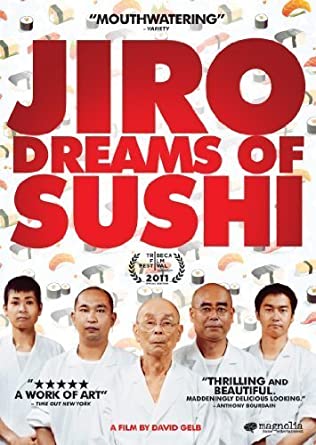
“Jiro Dreams of Sushi” is a documentary about a man who has devoted his entire life to his tiny 10-seat sushi restaurant, with results so transcendently delicious that the prestigious Michelin Guide says it is worth the trip to Japan to taste it. Customers sign up months in advance for a meal that costs $300. I think my favorite thing in the film is watching their hands. They’re so balletic in the way they move their hands and so strong. But the movie is about more than sushi; it is about the yearning to give ourselves to the search for perfection in whatever field we choose — or whatever field chooses us. I spoke to first-time director David Gelb about making the film and about how Jiro inspired him to view his film the way Jiro views his food.
I enjoyed your film very much and I had the reaction I’m sure everybody else did, which is that it made me very hungry. I have to begin by asking since you were the cinematographer as well as the director, how did you make the food look so luscious?
Well it’s just a testament to how beautiful his sushi is. I’d read that for Burger King commercials or McDonalds commercials they do a lot of make-up work on the food, but in this case the food just comes out looking beautiful. From a photographer’s point of view all that I had to do was to frame it nicely and use a selective focus to zero in the viewer’s eye on the most delicious part of the fish, be it the glistening of the tuna fat or the shimmer of the skin of the mackerel. It was just about guiding the viewer’s eye to the part that I think was most delicious.
You set yourself quite a difficult challenge because of the five senses, probably the most difficult one to convey on film is taste.
Yep.
Why did you decide to make a documentary about something that is so difficult to convey in cinema?
I think that it’s just that I love food and especially sushi. This was an opportunity to go to Japan and ply my trade, which is filmmaking, but at that same time be surrounded by some of the best food in the world and just eat really well and live the life of a Japanese sushi chef’s apprentice, just being there and being able to go to the fish market every day. I crave that kind of experience when I’m filming. Whenever I make a film I want to experience whatever it is that I’m shooting so I just wanted to run with the sushi chefs if you will.
One of the things that I think is so wonderful about this film is the way it transcends the specifics – the specifics are all great and it’s great to go see the market and the process and all of that, but it’s about loving what you do and giving yourself fully to it, and that applies to everybody. There was a line in the film where somebody says it’s very Japanese to have an apprenticeship that’s so painful. Did you get the sense that that’s a generational thing and that it’s less true of the current generation?
I think that Jiro’s restaurant represents the pinnacle in the sort of tradition of perfection in a restaurant. There are other restaurants like that as well, but it’s actually becoming very difficult to find young staff to subscribe to this kind of patience and to dedicate this amount of time to food because sushi chefs in the United States sometimes are being trained for three months, six months, and Jiro’s restaurant you have to wait ten years before they even let you make the egg sushi.
Yes you have to squeeze the towels!
Copyright 2011 Magnolia
Exactly. It requires a bit of patience and the apprentices aren’t paid that much because even though they’re charging a lot of money for the sushi, the overhead is extremely high because they’re getting the absolute best of every single ingredient every day. It’s an uphill battle for the future for sure because as apprentices leave they’re going to want to start their own careers and their own restaurants, and it’s becoming increasingly hard to replace them.
It’s becoming increasingly hard to replace the food as well and you touch on the issue of sustainability. What is the solution to that problem?
There’s really no easy answer to this problem of sustainability, specifically to Bluefin tuna. We included it in the film not only because I’m very concerned about it, but Jiro-san and Yoshikazu-san are very concerned about overfishing and bad fishing techniques because they want future generations to be able to enjoy sushi, but also the scarcity of tuna is driving up their costs and making their business almost unsustainable. A couple of the things that they specifically lament is the use of bottom trawling techniques where they drag nets across the bottom of the ocean and pick up pretty much everything. They pick up tuna, but they’re also picking up baby tuna and beds of fish eggs and other sea creatures that should not be harvested in that way. If you take all of the tuna out of the water there’s going to be no young tuna to replace them and so Jiro and Yoshikazu only use line-caught fish whenever possible. They think the fishing technique, this bottom trawling technique, should be banned. And it should be. In addition to that, they amazed at how often people are eating sushi. Yoshikazu says in the film that when he was a child, sushi was something that you would eat once every few months or once a year as a celebration. Now sushi is everywhere and it’s become very affordable, again because of this bottom trawling technique and they literally mine the tuna out of the ocean and blast freeze them like they’re basically a commodity. All of this is done to increase the profits and reduce the price so they can sell more of it to more people. I think what I’ve learned from Yoshikazu and Jiro is that the best way to eat sushi is to eat it less often, but when you do, go to a really good restaurant.
The very best, right?
Where they really are applying the craft and taking good care to make it really good.
Can you talk to me a little about your music choices, which I thought were very unusual to use this classical western style music? I guess some Philip Glass in there too. So tell me a little bit about your thoughts on that.
The biggest challenge when you’re shooting a film about a true genius and someone who is the best in their field is to try to elevate the elements of the movie so that they’re worthy of him. I lugged some of the best camera equipment available in the world to Japan so I could shoot the sushi in a way that would be appropriate to him. We wanted to use the best music as well, which is why we chose pieces by Mozart and Tchaikovsky, Bach, and Philip Glass. These are masters and some of the greatest composers in the world so I just thought it was a fit to try and bring everything up to Jiro’s level or as close to Jiro’s level as possible. And specifically Philip Glass’ music, and I only discovered this in hindsight, is that the Philip Glass music is actually a metaphor for Jiro’s work ethic because the music is repetitive yet always escalating and building and reaching new level and heights. Jiro comes to work every single day repeating the same process and repeating the same thing, but just looking for that little bit of improvement. I feel like that kind of matches the Philip Glass music quite beautifully.
It was very interesting to me that Jiro-San compared himself to a French chef, which is really the opposite of sushi in terms of the number of ingredients, and the way you have all the different parts of the meal on the plate at the same time and all of that.
Sure sure, but I’ll make just one comment about Robuchon is that he is a chef where all the processes are there to enhance the basic purity of the flavour of the ingredient. He puts a whole stick of butter into his mashed potatoes, but only because the butter enhances the flavour of the potato. The philosophy is still kind of there and even though sushi seems so simple, that it’s just fish and rice, there’s great pain and work going into bringing that fish to its most delicious state and the same with the rice as well.
Tell me what observing his meticulous attention to detail, how that inspired you as a filmmaker.
His dogged pursuit of perfection even though he knows that he’ll attain it, I think that was something that was constantly echoing in the mind of me and the editor as we were putting the movie together. We were just always trying to make it better and better and better even if that meant taking a step back to take two steps forward. Some of the most painful parts of the editing were cutting out sections or scenes or characters that were incredibly compelling and beautiful and interesting, but were not helping the story as a whole. We had to make sure the whole individual scenes were going to create a whole that was greater than the sum of its parts. Sometimes if we would make a breakthrough in the story we would require moving large sections of edited material that we thought were fantastic. It was just really being willing to put in the extra work to just make the movie just slightly better. Sometimes just making that tiny bit of improvement requires a ton of work. The last 20% takes 50% of the effort. The closer that you get to the end, the further away the finish line seems to be all the time, and just like Jiro would do we would refuse to give up until we pretty much got there. But right when you cross the finish line you realize actually there’s another finish line way way down the field and we’ll have to attack that on the next movie.


 I have a special prize pack for Robin Good & His Not So Merry Men


 (Judy Garland, Lucille Bremer, Margaret O’Brien, and Joan Carroll) to the less classic but highly entertaining
 (Jane Powell and then-newcomer Debbie Reynolds). Big hugs to my sisters, Martha and Mary — I wish we could make popcorn and watch the whole line-up together.
 , Nick Flynn’s book about his experiences working in a homeless shelter, when his estranged father turned up looking for a place to stay. I really enjoyed speaking to Weitz about how the themes of this story related to his relationship with his own father and about his mother, who co-starred in one of my favorite films and then retired to be a full-time mom.
 premieres this Sunday on GMC and I was thrilled to get a chance to speak to one of my favorite actresses, the fabulous