Jessica Winter has a great list on Slate of breakthrough performances with an unusual focus. I always love the thrill of discovering a new talent; it is one of the greatest pleasures the movies bring us. But Ms. Winter makes the point that these mesmerizing newcomers can do something a star cannot. We are happy to buy tickets to see our established favorites like Will Smith, Tom Hanks, and Julia Roberts. But the very thing we love about them — our knowledge of them, even our sense of a fan relationship with them — makes it impossible for them to disappear into a role the way a newcomer does. Every time we see an actor we learn a little more about the individual as we observe the performance. There are gestures and expressions that stay the same from role to role. But a first performance can transfix us into dissolving the line between actor and character. Winter’s examples all come with very telling clips illustrating her point.
Mike Mills is a graphic designer-turned film-maker. His new movie, “Beginners,” is inspired by his own experience. Ewan McGregor plays Oliver, a graphic designer whose father, at age 74, came out and declared that he would spend the rest of his life as an openly gay man. The film goes back and forth in time as the father, played by Christopher Plummer, thoroughly enjoys his new life, even after he becomes ill with cancer. After his death, Oliver begins to explore a relationship with a French actress (Mélanie Laurent of “Inglourious Basterds”), both haunted and inspired by his father’s late-life changes.
I spoke to Mills about grief, dogs, and falling in love without talking.
I loved the authenticity of the portrayal of the designer, very rare in movies. Was that you in the close-up of the hand doing the lettering and drawing? It was clearly someone who was both talented and experienced.
It’s me and Ewan. I taught Ewan to draw a bit. He wanted to learn. He’s really crafty. He builds bikes and motorcycles and cars. He started drawing and he was very quick to figure it out.
And when he did not want to do what the client wanted for the album cover — that was very true not just for artists but for any creative person.
Especially when you are in that grief place, where you don’t really want to compromise. You feel like life is short so you want to go for it the way that seems right to you. You can be unreasonable and uncompromising and not even aware of it. It’s sort of a beautiful thing. It’s a weird gift of grief.
Tell me about your decision to structure it the way you did, impressionistically rather than chronologically.
It started because that was what grief was like for me. You’re walking around in the present, but bits of conversations and memories keep coming back to you. All those emotional exchanges are still so alive, constantly slipping in time. All the assumptions that we assume all day long become impossible to sustain. Incredibly un-complacent and uncomfortable. And as a film-maker, I like movies that do that, like “8 1/2” and “Stardust Memories” or “Annie Hall.” They’re very formally playful. I’m more comfortable if I can work on a story in a more broken-down, multi-viewed way. I’ve got the history monologues, the conversations with the dog. The denser and more multi-platformed it is, the freer I felt.
The dog is wonderful!
Animals are really important to me. I have a boarder collie and it is one of the most important relationships in my whole life. We talk all the time. Obviously, in the movie, it is Oliver projecting what the dog is saying. It’s a way for him to express his feelings. It became a neat, sideways way to get into Oliver’s brain. Dogs are wonderfully mysterious. We don’t know what they are thinking. It’s that otherness that fascinates us. They love us across the species divide and we love them. The same thing with the drawings. It wasn’t me trying to get my drawings into the film. It worked as a way to show Oliver’s emotions. I could go from a memory to cut to a drawing and it made sense emotionally because you’re seeing his reaction, his world.
I’d like to know where the idea came from that when Oliver meets the girl he falls for she can’t talk and can only communicate by notes.
That came from Lou Taylor Pucci, who was in my last film. He plays the magician in the party scene — partly because I got that whole idea from him. He met a girl when he had laryngitis and he couldn’t talk. He met a girl and fell in love in a way that he wouldn’t have if he was talking. He couldn’t be superficial and take the easy route. He got really vulnerable really fast. He told me that story and I asked if I could use it.
Interview: Breckin Meyer and Mark-Paul Gosselaar of “Franklin & Bash”
Posted on May 31, 2011 at 3:36 pm
“Franklin & Bash” is a new lawyer show on TNT. It is about two brash, rule-breaking best friend lawyers who join a very conservative, old-school law firm. It is sometimes silly but it is sexy, funny, and fun. And it stars two guys who have been acting since their teens, Breckin Meyer (“The Craft,” “Clueless,” “Garfield,” “Robot Chicken”) and Mark-Paul Gosselaar (“Saved By the Bell,” “NYPD Blue,” “Passing the Bar”). Like the characters they play, they do not take themselves seriously, but they take their work seriously.
I spoke to them about what they learned as child actors and how practicing law is like being in show business.
What did you do to get comfortable with the legal language and procedures?
Gosselaar: I was on a show called “Raising the Bar” for two seasons. The creator of that show was a public defender in the South Bronx. That was much more letter of the law — he was on set all the time and tried to make sure we stayed as true as possible because it was so important for him. He wanted to teach America about what it was really like. I interned for a week at the Bronx defenders’ office. So the set-up was not at all like what we’re working with now but Bill Chase, one of the co-creators is an attorney and we have questions or don’t understand something or a pronunciation he is there.
Meyer: Yeah, like “objection” — how do you say that? And this word, “law…..”
Gosselaar: We’re much looser on this show, of course, but the law is the catalyst for the stories. You get the great stories of struggle and conflict and the way our characters relate to the clients. And in a way, putting on a trial is like putting on a play.
You play long-time friends but you did not know each other before the show. How do you create that sense of history and chemistry?
Meyer: You always cross your fingers that first you even get along with the other actor, second that you have something in common. Mark-Paul and I had more in common with each other than we even knew. We both started acting very young and have consistently worked. We’re both family guys, both have kids.
Gosselaar: Our personal lives parallel each other, too.
Meyer: And our work styles. We both show up knowing our stuff, and then we will have fun with it. We take the work seriously but not each other at all. That’s where the fun comes from on the show — the drama comes from the cases and having now been bought up by this white-shoe law firm, how do you stay true to fighting for the underdog when your firm is working for the corporation you are fighting against? But the fun is in these two guys and we were lucky that we really get along. We are shooting in LA but we shot the pilot in Atlanta and it helped a lot, being “sequestered” there away from our families. Normally we finish and go to our houses. In Atlanta we’d have dinner and work on the script — part was we had nothing else to do but part of it was we loved the show and wanted it to work. The script was so good — if we could elevate that, it would be amazing. We worked non-stop, more than on anything else I can think of, around the clock, and neither one of us ever said, “Uncle.”
Tell me about working with the wonderful Malcolm McDowell (“Clockwork Orange,” “If…”), who plays the head of the law firm.
Meyer: He’s everything you want Malcolm McDowell to be. He’s funny, he’s intense, he’s terrifying, and he is so sweet! He is a living legend. He’s done a thousand movies and is 287 years old. If anyone has earned the right to be a diva, it’s him. But he showed up on set exactly the way we do, knowing his stuff and wanting to have fun. It sets the bar for everyone. It sets the tone for a really nice set where everyone’s free to try and fail. And he has the greatest stories known to men. He’s worked with everybody.
I’ve seen the first episode, but tell me about what’s coming up later in the season.
Meyer: Beau Bridges comes in as my dad, a litigator. James Van Der Beek comes on as the ADA’s fiance, who needs a lawyer. We go into the backstory.
Gosselaar: Our characters evolve. We began with the personal injury and smaller-time pot cases. Now we’re doing more corporate, some murder trials, and in the third episode a woman who was fired for being too hot, but it isn’t your conventional vision of what hot would be.
Meyer: That’s one of our favorites.
Gosselaar: And Jason Alexander comes on as a Bernie Madoff-type character.
You both began as child actors so you have had a lot of opportunities to observe the way that movies and television work. What did you learn from watching the grown-ups around you?
Gosselaar: Don’t be an ass.
Meyer: Don’t be a jackass. It’s a job. Know your stuff.
Gosselaar: Take pride in what you do. It has to stem from what we saw around us at home. Our parents instilled in us how important it is to take pride in what you do.
Meyer: No one in my family is in the business, no one in his family is in the business. That helps, too. Even though we were in the business, we grew up out of the business. There are times to have fun and goof off and we were kids, but it was a job and we saw it that way. We were looking at the work, so we avoided the sense of entitlement. There’s a lot of luck to it, too, but you have to be determined, and we both were. And it’s the only I knew that I am mildly good at.
In honor of Memorial Day, take a break from picnics and sales and share one of these great films about American soldiers, sailors, and Marines. And be sure to take time thank the military and veterans in your life for all they have done to keep us safe and free.
1. Sergeant York Gary Cooper won an Oscar for his portrayal of WWI hero Alvin York, the pacifist from the hills of Tennessee who carried out one of the most extraordinary missions in military history using lessons from his life on a farm. He captured 132 men by himself, still a record for a single soldier. In addition to the exciting story of his heroism in war, this is also the thoughtful story of his spiritual journey. He is a pacifist, opposed to fighting of any kind. By thinking of what he is doing as saving lives, he is able to find the inspiration and resolve for this historic achievement.
2. Saving Private Ryan Director Steven Spielberg salutes his father and the greatest generation with this story set in the D-Day invasion of Normandy. It frankly portrays the brutality and carnage of war and its wrenching losses, but it also portrays the honor, sacrifice, heroism, and meaning.
3. Mister Roberts There are battles — and heroes — of all kinds. Henry Fonda plays a Naval lieutenant assigned to a cargo ship during WWII who feels very far from the action. He learns that his defense of the crew against a petty and tyrannical captain (James Cagney), on behalf of “all the guys everywhere who sail from Tedium to Apathy…and back again, with an occasional side trip to Monotony,” is an important and meaningful contribution.
4. M*A*S*H Set during the Korean War but released in and very much a commentary on the Vietnam War, this is the story of surgeons stationed at a Mobile Army Surgical Hospital. The emphasis is on war’s essential absurdity — these are doctors whose job is to heal soldiers to they can be sent back into battle — and on the ways that different people respond to those situations, responses that often escalate the absurdity. See also “Captain Newman, M.D.,” with Gregory Peck as a sympathetic Army psychiatrist during WWII as well as the long-running television series this film inspired.
5. Glory The Civil War 54th Massachusetts Volunteer Regiment, one of the first formal units of the U.S. Army to be made up entirely of African American men, inspired his film. Led by abolitionist Robert Shaw (Matthew Broderick), and based on his letters, this is a story of heart-breaking courage, as the men had to battle not only with the Confederacy but with the bigotry of most of the white officers on their own side.
6. The Longest Day An all-star cast shines in this sincere re-telling of the events of the invasion of Normandy D-Day, one of the transformational moments of WWII. Many of the military consultants and advisors who helped with the film’s production were actual participants (from both sides) in the action on D-Day, and are portrayed in the film.
7. Band of Brothers This 10-part miniseries produced by Tom Hanks and Steven Spielberg is based on the best-seller by Stephen Ambrose about the WWII experiences of E Company (“Easy Company”), the members of the 506th Parachute Infantry Regiment, United States Army 101st Airborne Division and one of its officers, Richard Winters (played by Damian Lewis), from basic training through the American airborne landings in Normandy, Operation Market Garden, the Battle of Bastogne and the end of the war.
8. Patton George C. Scott won an Oscar for his portrayal of WWII General George S. Patton. The film also won six additional Oscars, including Best Picture. Its screenplay, co-written by Francis Ford Coppola, frankly portrays Patton’s mistakes and faults as well as his leadership in turning the tide of the war.
9. The Caine Mutiny/A Few Good MenThese two movies, one set in WWII and one contemporary, both center on court martial trials with similar themes — what price do we pay for the luxury of feeling safe?
10. Gardens of Stone This underrated gem from Francis Ford Coppola about the “Old Guard,” the regiment responsible for the funerals at Arlington National Cemetery has beautiful performances from James Caan, James Earl Jones, and D.B. Sweeney and subtly but powerfully explores some of the deepest and most troubling questions about the price we pay — and the price we call on others to pay — for our freedoms.
Studios spend tens of millions of dollars to get the best equipment to photograph and record the most beautiful performers wearing the most gorgeous clothes in the most spectacular settings. And then we go to see them in a movie theater with the wrong lens on the projector, badly focused, and an inadequate bulb.
Do you remember what a movie should look like? Do you notice when one doesn’t look right? Do you feel the vague sense that something is missing? I do. I know in my bones how a movie should look. I have been trained by the best projection in the world, at film festivals and in expert screening rooms. When I see a film that looks wrong, I want to get up and complain to the manager and ask that the projectionist be informed. But these days the projectionist is tending a dozen digital projectors, and I will be told, “That’s how it’s supposed to look. It came that way from the studio.”
He explains that some theaters are showing 2D movies through a 3D lens, which dims the image as much as 50 percent, even up to 85 percent in some cases.


 Gary Cooper won an Oscar for his portrayal of WWI hero Alvin York, the pacifist from the hills of Tennessee who carried out one of the most extraordinary missions in military history using lessons from his life on a farm. He captured 132 men by himself, still a record for a single soldier. In addition to the exciting story of his heroism in war, this is also the thoughtful story of his spiritual journey. He is a pacifist, opposed to fighting of any kind. By thinking of what he is doing as saving lives, he is able to find the inspiration and resolve for this historic achievement.
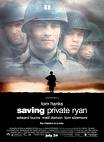
 Director Steven Spielberg salutes his father and the greatest generation with this story set in the D-Day invasion of Normandy. It frankly portrays the brutality and carnage of war and its wrenching losses, but it also portrays the honor, sacrifice, heroism, and meaning.
 There are battles — and heroes — of all kinds. Henry Fonda plays a Naval lieutenant assigned to a cargo ship during WWII who feels very far from the action. He learns that his defense of the crew against a petty and tyrannical captain (James Cagney), on behalf of “all the guys everywhere who sail from Tedium to Apathy…and back again, with an occasional side trip to Monotony,” is an important and meaningful contribution.
 Set during the Korean War but released in and very much a commentary on the Vietnam War, this is the story of surgeons stationed at a Mobile Army Surgical Hospital. The emphasis is on war’s essential absurdity — these are doctors whose job is to heal soldiers to they can be sent back into battle — and on the ways that different people respond to those situations, responses that often escalate the absurdity. See also “Captain Newman, M.D.,” with Gregory Peck as a sympathetic Army psychiatrist during WWII as well as the long-running television series this film inspired.
 The Civil War
 An all-star cast shines in this sincere re-telling of the events of the invasion of Normandy D-Day, one of the transformational moments of WWII. Many of the military consultants and advisors who helped with the film’s production were actual participants (from both sides) in the action on D-Day, and are portrayed in the film.
 This 10-part miniseries produced by Tom Hanks and Steven Spielberg is based on the best-seller by Stephen Ambrose about the WWII experiences of E Company (“Easy Company”), the members of the 506th Parachute Infantry Regiment, United States Army 101st Airborne Division and one of its officers, Richard Winters (played by Damian Lewis), from basic training through the American airborne landings in Normandy, Operation Market Garden, the Battle of Bastogne and the end of the war.
 George C. Scott won an Oscar for his portrayal of WWII General George S. Patton. The film also won six additional Oscars, including Best Picture. Its screenplay, co-written by Francis Ford Coppola, frankly portrays Patton’s mistakes and faults as well as his leadership in turning the tide of the war.
 /
 This underrated gem from Francis Ford Coppola about the “Old Guard,” the regiment responsible for the funerals at Arlington National Cemetery has beautiful performances from James Caan, James Earl Jones, and D.B. Sweeney and subtly but powerfully explores some of the deepest and most troubling questions about the price we pay — and the price we call on others to pay — for our freedoms.