Nat Gertler on the Story Behind the Real Green Book
Posted on November 30, 2018 at 3:34 pm
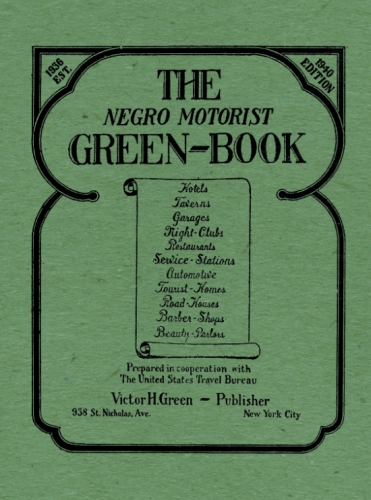
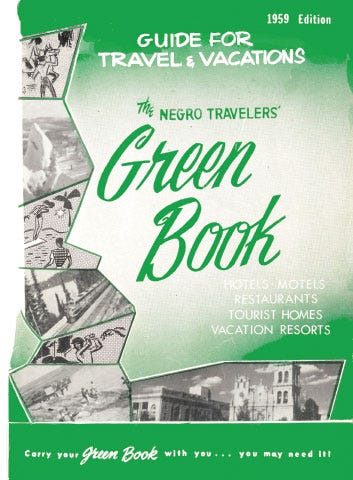
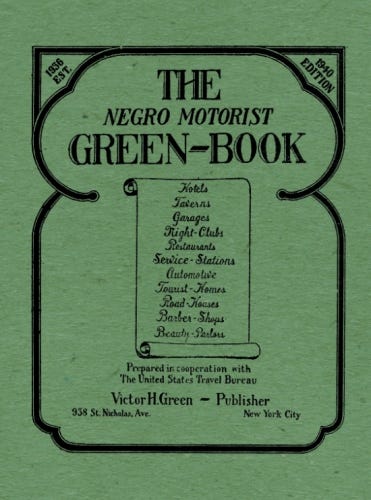
Nat Gertler’s About Comics is the publisher of the reprinted Green Book, the travel guide that inspired the title of one of the year’s best movies. It listed hotels, restaurants, and other businesses that welcomed Black tourists before the 1964 Civil Rights Act required public accommodations to be open to everyone. In the movie, Black musician Don Shirley was restricted to modest-to-shabby Green Book-listed businesses while his white driver stayed with the other members of the trio at whites-only hotels. In an interview, Gertler explained the history of the Green Book andhow the reprint became one of his most popular publications.
How did the Green Book get started and who published it originally?
Victor Hugo Green started the annual series in 1936. He was a mailman, delivering the mail in Hackensack, New Jersey but living in Harlem. The first year’s book just covered the New York area, but the demand for a national book was quickly apparent.
How did people buy it? Bookstores or through the mail?
The Green Book was available through the mail, and some Black organizations made it available to their members. And some of the locations listed in the book got copies to distribute — after all, if you were staying at one hotel that accepted Black customers, odds are you were going to do some traveling and need to stay somewhere else. Some years’ editions had cover versions with places for those hotels to stamp their names and addresses. But perhaps the most interesting source was gas stations — specifically Standard Oil stations (that was Esso then, Exxon now.) Unlike other major gas chains, Standard Oil allowed African Americans to own station franchises. In the 1949 Green Book — that’s one of the eight editions that I’ve reprinted so far — there’s even an article by Standard Oil’s special representative to what was then called the “Negro market.”
Who vetted the hotels and restaurants? Were most of them black-owned?
The Guide tries to make clear that the listings aren’t endorsements — a normal listing isn’t mean to guarantee the quality of an establishment, that it just indicates that they were willing to take travelers of color…. although at times they created the implication that businesses that went beyond the simple listing and bought an ad were, of course, particularly good places to stay. Some businesses submitted themselves for listings, some were submitted by customers, but one particularly good source were African American postal workers, just like Green himself. After all, mailmen travel the neighborhood, they know what’s going on.
How does a business with a name like “About Comics” end up publishing something so non-comic as the Green Book?
About Comics is a small company… just one guy, that’s me. If you hear me saying “we,” that’s the corporate “we,” much like the royal “we.” And most of what I’ve published over the years have been comics or at least comics-related, but I’ve got no boss I have to convince when I want to try publishing something else. A lot of what I did is simply driven by my curiosity; when I get to wondering about something, trying to publish it is my way of doing research.
Maybe about three years ago, I read a couple articles about the Negro Motorist Green Book, and it immediately caught my curiosity. It linked to some things that my stepmother had told me. My stepmother, Poco, is half Black, half Cherokee, and when she was in high school she’d be going to one of her athletic competitions, but the bus would leave all of her teammates, all white girls, at one of the hotels in town and then have to drive Poco out to someplace beyond the city limits where she could stay. The sweetest woman you can imagine — I didn’t know her as a teen, of course, for all I know she was a hellion back then, but that’s neither here nor there, that’s not what she was being judged on. Still, to know she was treated like that.
So I was curious about the Green Book, decided to get one for myself so I could experience it… and then found that they were collectors items, museum pieces really. Museums were paying tens of thousands for one. That wasn’t in my budget, at least not just to satisfy my curiosity. But hey, why not see if I could republish it? If there was enough demand for the original editions to send the price that high, maybe I could sell a couple hundred copies of a facsimile edition and make it worth the time I put into reprinting it… and if not, hey, at least I’d have satisfied my own curiosity. And, lucky for me, it turned out that I was not the only one curious about it.
What surprised you about what it included?
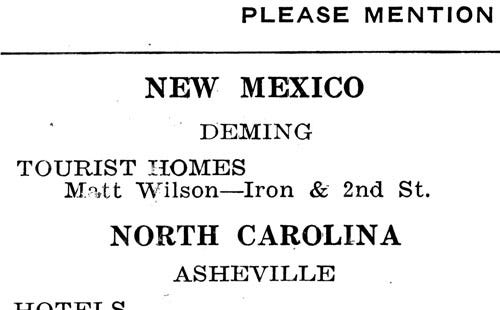
I kind of expected it to be a book filled with anger, with screeds against discrimination and with warnings about the horrible things that might happen to you in certain places… but what I found was a very practical document. Just listings of places that were willing to take you as a customer, and maybe some articles, travelogues or other travel advice. And in a way, that was even scarier, even more horrible, because the practicality of it all just lets you know how damnably rote this all was. Green didn’t need to explain to the reader what the problem was, his readers knew what problem was being addressed. And he didn’t need to warn against going certain places, just let you know where you could go… and the sparseness of locations at time told a story. The first volume I reprinted — the 1940 edition, still my best seller — for the entire state of New Mexico, there’s only one entry, just one place to stay. And it’s listed as a “tourist home”, and what that meant was that this wasn’t a hotel, this was just some Black family that was willing to put you up for the night on your trip, kind of the AirBNB of its day. Now, this might not have been the only actual relevant business in New Mexico, the Green Book was still growing and learning about the places that were out there… but if it wasn’t listed in the Green Book, how were you going to find it?
When did you get started in publishing? What have been your most popular titles?
This year is About Comics’ 20th anniversary. At the moment, the 1940 Negro Motorist Green Book actually is our biggest seller — it sells well through Amazon, and we sell a lot of copies to museum gift shops. In terms of comics material, our best sellers have been our books of the stuff that Charles M. Schulz did besides Peanuts, like the book we have out collecting his other newspaper series,It’s Only a Game, which he did for newspapers in the late 1950s. But we’ve also had really strong sales on things we do aimed at aspiring comics creators.Panel One, a collection of comic book scripts by big comic book names like Neil Gaiman and Kurt Busiek, and even filmmaker Kevin Smith, has been perennially strong. and our Blank Comic Book Panelbook series, which is literally just books filled with empty triangles for kids to draw comics in, has done surprisingly well.
What’s coming next?
Copyright About Comics 2018
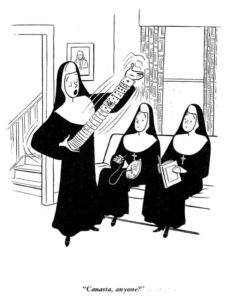
You know how I said that publishing is often my form of research? Well, about a year ago I discovered the odd world of 1950s Catholic cartoon books. These are books mostly of single panel gag cartoons about nuns, and there were dozens of them, some selling in the hundreds of thousands of copies. It’s this subculture that I haven’t really seen anyone try to cover. Anyway, I launched a line on April Fools Day, trying to get everyone to believe that I was only kidding about suddenly publishing a pile of nun cartoon books, when in reality, I was! By the end of the year, I’ll have published two dozen books of these cartoons. The one I’m laying out now is monk and nun cartoons drawn by an actual monk. If folks are interested, I suggest that they follow @dailynun1 on Instagram or Twitter — they’ll get a different nun cartoon in their feed every day, plus they’ll see announcements when I have new volumes out.
Happy Hannukah 2018/5779: All of a Kind Family Hannukah
Posted on November 30, 2018 at 8:00 am
Copyright Schwartz & Wade 2018
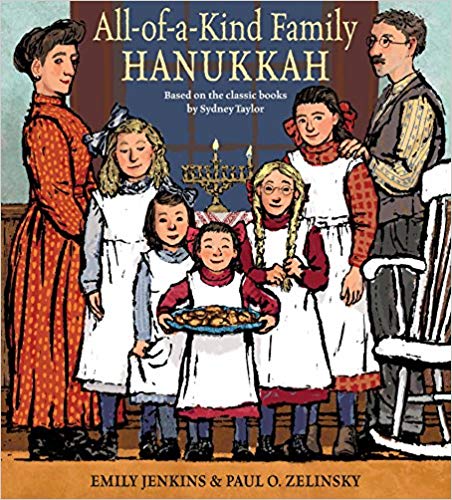
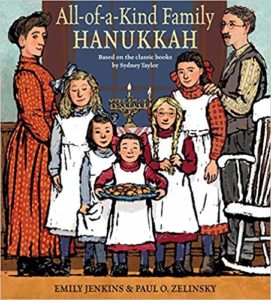
One of my favorite book series for kids is Sidney Taylor’s All of a Kind Family, the story of a big, loving Jewish immigrant family around the turn of the last century. Based on Taylor’s own family, the title comes from the five sisters who were “all of a kind” until a brother arrived.
Copyright Schwartz & Wade 2018
And now Emily Jenkins continues the series with All of a Kind Family Hannukah, with inviting illustrations by Caldecott Award winner Paul Zelinsky. It’s a delight for any family.
My favorite Thanksgiving movie is “What’s Cooking?”
And everyone should listen to Arlo Guthrie’s classic “Alice’s Restaurant,” which tells the story of one Thanksgiving that led to an arrest for…garbage.
Have a peaceful and grateful Thanksgiving, everyone!
Spirit Award Nominees for the Best Indie Films of 2018
Posted on November 20, 2018 at 5:47 pm
The nominees for the Spirit Awards have been announced:
Copyright A24 2018
BEST FEATURE
EIGHTH GRADE
Producers: Eli Bush, Scott Rudin, Christopher Storer, Lila Yacoub
FIRST REFORMED
Producers: Jack Binder, Greg Clark, Gary Hamilton, Victoria Hill, David Hinojosa, Frank Murray, Deepak Sikka, Christine Vachon
IF BEALE STREET COULD TALK
Producers: Dede Gardner, Barry Jenkins, Jeremy Kleiner, Sara Murphy, Adele Romanski
LEAVE NO TRACE
Producers: Anne Harrison, Linda Reisman, Anne Rosellini
YOU WERE NEVER REALLY HERE
Producers: Rosa Attab, Pascal Caucheteux, Rebecca O’Brien, Lynne Ramsay, James Wilson
(Award given to the producer)
BEST FIRST FEATURE
HEREDITARY
Director: Ari Aster
Producers: Kevin Frakes, Lars Knudsen, Buddy Patrick
Copyright Annapurna Pictures 2018
SORRY TO BOTHER YOU
Director: Boots Riley
Producers: Nina Yang Bongiovi, Jonathan Duffy, Charles D. King, George Rush, Forest Whitaker, Kelly Williams
THE TALE
Director/Producer: Jennifer Fox
Producers: Sol Bondy, Lawrence Inglee, Mynette Louie, Oren Moverman, Simone Pero, Reka Posta, Laura Rister, Regina K. Scully, Lynda Weinman
WE THE ANIMALS
Director: Jeremiah Zagar
Producers: Andrew Goldman, Christina D. King, Paul Mezey, Jeremy Yaches
WILDLIFE
Director/Producer: Paul Dano
Producers: Andrew Duncan, Jake Gyllenhaal, Riva Marker, Oren Moverman, Ann Ruark, Alex Saks
(Award given to the producer and director)
BEST DIRECTOR
Paul Schrader, First Reformed
Barry Jenkins, If Beale Street Could Talk
Debra Granik, Leave No Trace
Tamara Jenkins, Private Life
Lynne Ramsay, You Were Never Really Here
BEST SCREENPLAY
Nicole Holofcener, Jeff Whitty, Can You Ever Forgive Me?
Richard Glatzer (writer, story by), Rebecca Lenkiewicz, Wash Westmoreland, Colette
Paul Schrader, First Reformed
Tamara Jenkins, Private Life
Boots Riley, Sorry to Bother You
BEST FIRST SCREENPLAY
Quinn Shephard (writer, story by), Laurie Shephard (story by), Blame
Bo Burnham, Eighth Grade
Christina Choe, Nancy
Jennifer Fox, The Tale
Cory Finley, Thoroughbreds
JOHN CASSAVETES AWARD
A BREAD FACTORY
Writer/Director/Producer: Patrick Wang
Producers: Daryl Freimark, Matt Miller
EN EL SÉPTIMO DÍA
Writer/Director/Producer: Jim McKay
Producers: Alex Bach, Lindsey Cordero, Caroline Kaplan, Michael Stipe
NEVER GOIN’ BACK
Writer/Director: Augustine Frizzell
Producers: Liz Cardenas, Toby Halbrooks, James M. Johnston
SÓCRATES
Writer/Director/Producer: Alex Moratto
Writer: Thayná Mantesso
Producers: Ramin Bahrani, Jefferson Paulino, Tammy Weiss
THUNDER ROAD
Writer/Director: Jim Cummings
Producers: Natalie Metzger, Zack Parker, Benjamin Weissner
(Award given to the best feature made for under $500,000; given to the writer, director and producer)
BEST MALE LEAD
Copyright 2018 Foley Walkers Studio
Daveed Diggs, Blindspotting
Ethan Hawke, First Reformed
John Cho, Searching
Christian Malheiros, Sócrates
Joaquin Phoenix, You Were Never Really Here
BEST FEMALE LEAD
Elsie Fisher, Eighth Grade
Toni Collette, Hereditary
Helena Howard, Madeline’s Madeline
Regina Hall, Support the Girls
Glenn Close, The Wife
Carey Mulligan, Wildlife
BEST SUPPORTING MALE
Adam Driver, BLACKkKLANSMAN
Richard E. Grant, Can You Ever Forgive Me?
Josh Hamilton, Eighth Grade
John David Washington, Monsters and Men
Raúl Castillo, We the Animals
BEST SUPPORTING FEMALE
Tyne Daly, A Bread Factory
Regina King, If Beale Street Could Talk
Thomasin Harcourt McKenzie, Leave No Trace
J. Smith-Cameron, Nancy
Kayli Carter, Private Life
BEST CINEMATOGRAPHY
Ashley Connor, Madeline’s Madeline
Benjamin Loeb, Mandy
Sayombhu Mukdeeprom, Suspiria
Zak Mulligan, We the Animals
Diego Garcia, Wildlife
BEST EDITING
Luke Dunkley, Nick Fenton, Chris Gill, Julian Hart, American Animals
Nick Houy, Mid90s
Anne Fabini, Alex Hall, Gary Levy, The Tale
Keiko Deguchi, Brian A. Kates, Jeremiah Zagar, We the Animals
Joe Bini, You Were Never Really Here
BEST INTERNATIONAL FILM
BURNING (South Korea)
Director: Lee Chang-Dong
HAPPY AS LAZZARO (Italy)
Director: Alice Rohrwacher
ROMA (Mexico)
Director: Alfonso Cuarón
SHOPLIFTERS (Japan)
Director: Kore-eda Hirokazu
THE FAVOURITE (United Kingdom)
Director: Yorgos Lanthimos
BEST DOCUMENTARY
HALE COUNTY THIS MORNING, THIS EVENING
Director/Producer: RaMell Ross
Producer: Joslyn Barnes, Su Kim
MINDING THE GAP
Director/Producer: Bing Liu
Producer: Diane Quon
OF FATHERS AND SONS
Director: Talal Derki
Producers: Hans Robert Eisenhauer, Ansgar Frerich, Eva Kemme, Tobias N. Siebert
ON HER SHOULDERS
Director: Alexandria Bombach
Producers: Hayley Pappas, Brock Williams
SHIRKERS
Director/Producer: Sandi Tan
Producers: Jessica Levin, Maya Rudolph
WON’T YOU BE MY NEIGHBOR?
Director/Producer: Morgan Neville
Producer: Caryn Capotosto, Nicholas Ma
(Award given to the director and producer)
ROBERT ALTMAN AWARD
SUSPIRIA
Director: Luca Guadagnino
Casting Directors: Avy Kaufman, Stella Savino
Ensemble Cast: Malgosia Bela, Ingrid Caven, Lutz Ebersdorf, Elena Fokina, Mia Goth, Jessica Harper, Dakota Johnson, Gala Moody, Chloë Grace Moretz, Renée Soutendijk, Tilda Swinton, Sylvie Testud, Angela Winkler
(Award given to one film’s director, casting director and ensemble cast)
BONNIE AWARD SPONSORED BY AMERICAN AIRLINES
Karyn Kusama
Tamara Jenkins
Debra Granik
(Bonnie Tiburzi Caputo joined American Airlines in 1973 at age 24, becoming the first female pilot to fly for a major U.S. airline. In her honor, the second annual Bonnie Award will recognize a mid-career female director with a $50,000 unrestricted grant, sponsored by American Airlines.)
PRODUCERS AWARD
Jonathan Duffy and Kelly Williams
Gabrielle Nadig
Shrihari Sathe
(The Producers Award, now in its 22nd year, honors emerging producers who, despite highly limited resources demonstrate the creativity, tenacity and vision required to produce quality, independent films. The award includes a $25,000 unrestricted grant.)
SOMEONE TO WATCH AWARD
LEMONADE
Director: Ioana Uricaru
SÓCRATES
Director: Alex Moratto
WE THE ANIMALS
Director: Jeremiah Zagar
(The Someone to Watch Award, now in its 25th year, recognizes a talented filmmaker of singular vision who has not yet received appropriate recognition. The award includes a $25,000 unrestricted.)
TRUER THAN FICTION AWARD
HALE COUNTY THIS MORNING, THIS EVENING
Director: RaMell Ross

 The Green Book