 Patrick Creadon’s new film about Notre Dame’s Father Theodore Hesburgh is one of my favorite films of the year. Like the popular documentaries that came out this year about Supreme Court Justice Ruth Bader Ginsburg and Mr. Rogers, it is an extraordinary story about an extraordinary life, devoting much of its focus to Father Ted’s work on huge, complex, controversial issues like civil rights, but it also shows us how small kindnesses made a big difference in the lives of students and other individuals. And it includes an interview with my dad, Newton Minow, who was invited by Father Ted to become the first Jewish trustee of Notre Dame University and who became one of Father Ted’s oldest friends and biggest fans. The film will be shown September 4, 2018 at the Midwest Independent Film Festival.
In an interview, Creadon, also the director of the delightful “Wordplay” (about crossword puzzles and the people who love them) and the provocative “I.O.U.S.A” (the threat that debt poses to the US economy), talked about the most important lesson he learned from Father Ted.
“I don’t subscribe to this idea that when you’re telling a story or a nonfiction story that the film has to reside in a dark edgy underbelly space; not for everything,” he said. The link that draws him to a story is passion. “Passion in other people is what is most inspiring.”
This film had a special meaning for Creadon and his wife Christine O’Malley, who co-produced it.
The Hesburgh film is an extremely personal project for us. Both of our fathers went to Notre Dame, both of our grandfathers went to Notre Dame, I went to Notre Dame, so we grew up not just in a Notre Dame family but we grew up in a Hesburgh family. Father Hesburgh is really…he really was the father of the University for 35 years. At the same time our mantra from day one was, “We’re making a documentary film about a historical figure; we’re not trying to do a puff piece, we’re not trying to do a promotional piece on behalf of the school and the family.”
In fact we were one hundred percent independent from the school and from the Hesburgh family and from the Holy Cross congregation of which Father Hesburgh was a member. We raised the money independently and we had final creative say. That was critically important because I didn’t want anyone looking at the film and thinking this is like a promotional piece for the university; it isn’t. We had the same journalistic approach to “Hesburgh” as we did for any of the films we’ve ever made but at the same time it was very personal for us. I think we do our best work when we pick projects that we really feel connected to but at the same time it was important for us to make a film for general audience, we were not making a film for the Notre Dame community, we were making a film for general audience.
Creadon said that even though he could not remember a time before he knew that Father Ted was an important figure in America, at Notre Dame, and to his own family, he learned a great deal in researching the film.
The things I knew about Father Hesburgh when we began are the following: I knew that he had received 150 honorary degrees which is in the Guinness Book of World Records, I knew that he had served on 16 presidential commissions and I knew that he was the president of Notre Dame for 35 years. I think for a lot of people, that’s kind of all they know. They don’t know why he was chosen to do all that work, they don’t know what were his qualities as a human being, what were his leadership qualities. What we found in the 18 months that it took to make the film, what we discovered, was that more than anything he had a very strong moral compass. For one he knew the difference between right and wrong always and always tried to do the right thing but more importantly I think the defining quality of Father Hesburgh is that he enjoyed bringing people together. He truly enjoyed the friendships, the diplomacy, and the finding common ground that it takes to move our society forward.
It was Father Ted’s genuine love for people that made it possible for him to create consensus on the most intractable issues.
He was a problem solver and he was very, very good with people. People liked him. Even though he was fully committed to his Catholic faith and his Catholic heritage he was one hundred percent tolerant and respectful of other people’s faiths or people who did not have a faith. He was not a, ”It’s my way or the highway” guy. He was not that way with his politics, he was not that way with his faith, he was not that way with his style of education.
It’s, “Let’s find common ground” and “Let’s aspire to be the best individuals that we can be.” That’s who Father Ted was. I have one hundred percent faith in the sense that we’re going to get through the problems today and we’re going to find our way back to each other.
Over and over in the film, we see Father Ted bring people together to solve problems through patience, endless energy, a genuine curiosity about how different people saw the world, and by setting an example of integrity and goodwill.
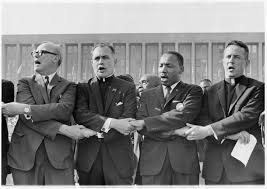
Remember Hesburgh was only 35 when he became president of Notre Dame. He was 40 when he was chosen to be on the Civil Rights Commission and the average age of the other five commissioners was 65. He was a kid; he was a generation younger than all of them but I think Eisenhower saw something in him and had seen his work in some other arenas and he said, “I want to get that guy on the commission.” What you come to understand is that the commission could’ve easily failed; they didn’t get along. The commissioners didn’t really get along; they were Northerners and Southerners, Democrats and Republicans.
The commission was really a reflection of the country and Hesburgh for one wanted victory. He wanted to accomplish the mission. Father Ted is almost like an Indiana Jones character. He would just go off to do these very important missions that people couldn’t figure out how to fix. He had an ability to try to encourage people to bring out their best selves. I think because of the way he lived his life he wanted people to rise to the occasion. He did that in a quiet way. He certainly wasn’t a yeller, he wasn’t demanding, he wasn’t mean spirited, he was just one of the good guys. I’ve come to understand what great leadership really looks like; it looks a lot like Father Ted.