Singer-songwriter-actress Alicia Keys has announced that she is not going to wear make-up any more, even in performance and on television. In the midst of the over-the-top as always VMA awards on MTV Sunday night she looked fresh, natural, and comfortable. Her spontaneous a capella song from the podium matched her unretouched look.
Women are bombarded with a lot of messages about what is wrong with the way they look, mostly from people who want to see us things to make us look and smell “better.” It is great to have a counter-message from Keys that tells us it is possible to feel happy the way we are.
She says she was inspired by showing up for a photo shoot ready to be made up and photographed, and then the photographer asked if he could take her picture without makeup.
“I swear it is the strongest, most empowered, most free, and most honestly beautiful that I have ever felt,” she wrote.
“I hope to God it’s a revolution … ‘Cause I don’t want to cover up anymore. Not my face, not my mind, not my soul, not my thoughts, not my dreams, not my struggles, not my emotional growth. Nothing.”
#8 Nora Charles (Myrna Loy in the “Thin Man” series)
Movies love to tell us stories about falling in love: the rush of emotion, the fear of intimacy, the exquisite romantic thrill. And it is not hard to find a movie about the agony of love, the anguish of betrayal, the pain of loss. But it is very rare to see a movie about being in love, and almost impossible to find a single film, much less a series, where the lead characters are a married couple who do not just love each other and support each other – they get a genuine kick out of each other. They make marriage seem sexy and fun.
Only one couple in movie history fits that category: the witty, glamorous, but down-to-earth Nick and Nora Charles in the “Thin Man” series of six films about a debonair detective and his society wife. Myrna Loy played Nora opposite her 14-time co-star William Powell, and there has never been a better on-screen match for impeccable comic timing and romantic chemistry.
As the first film begins, they are near-newlyweds. After marrying the wealthy Nora, Nick has retired from detecting and they seem to be living a life of champagne and caviar. Nick is asked to help an old friend find her missing father (the “thin man” of the title, not Nick). Nora is a game girl, whatever is up, whether it is matching Nick by downing a half-dozen martinis or hosting an elegant party for low-lifes and crooks. “Oh, Nicky. I love you because you know such lovely people,” she says, and she means it. She is confident in herself and their marriage. When she sees him hugging the girl he is helping, she is not at all jealous – they make faces at each other over the girl’s shoulder, communicating to themselves and to us their instinctive understanding. Their relationship is never in question.
Dashiell Hammett based the character in part on his long-time love, playwright Lillian Hellman. She described Nick and Nora as “maybe one of the few marriages in modern literature where the man and woman like each other and have a fine time together.” And we have a fine time watching them.
#33 Princess Ann (Audrey Hepburn in “Roman Holiday)
Ann (Audrey Hepburn) is the princess of a small, highly civilized country on a diplomatic tour. She is to be unfailingly polite and gracious, promoting trade relations with her always-uncontroversial elegance. Her activities are limited to receptions, photo ops, various ceremonies and speeches like “youth and progress.” “Everything we do is so wholesome,” she sighs.
She is a Cinderella-in-reverse, losing her shoe at the beginning of the story. She has been standing so long in a receiving line, greeting an endless line of dignitaries, that she discreetly takes her sore foot out of her high heel to stretch it, and accidentally knocks it over so she cannot find it again without revealing her indiscretion. That night, she rebels and is given medicine to help her sleep and advice to so “exactly what you wish for a while.” While under the power of the drug, she runs away and ends up falling asleep in the apartment of an American journalist (Gregory Peck).
Ann seems to have everything and so she is an unlikely heroine. But she gets our sympathy because of her wish for the simplest of pleasures – to sleep in pajamas, to get her hair bobbed, to buy an ice cream, to walk around without handlers or photographers, to talk to someone who does not know she is a princess. Hepburn, who would win an Oscar for her first lead role, is enchanting as the princess who longs for the joys of a commoner. Seeing her discover them for the first time makes us rediscover them for ourselves.
#48 Tess McGill (Melanie Griffith in “Working Girl”)
Tess (Melanie Griffith) wants to believe that being smart and working hard will make it possible for her to realize her dream of becoming an investment banker. But the sexist jerks she works for as a secretary will not take her seriously. And her new boss, a woman (Sigourney Weaver), pretends to support her but steals her idea. A boyfriend betrayal and a Valium later, she is stealing her boss’s dress, cutting off her Staten Island poof hairdo (“You want to be taken seriously, you need serious hair”), and pretending to be in the job she wishes she had.
Way too many movie heroines have destiny-changing makeovers. But there is no trying-on-outfits montage here. Yes, she looks ravishing in her boss’s glamorous cocktail dress. But it turns out she has made a mistake. Dress for the event is business attire. She is still out of place.
And yet, looking different brings her to the attention of Jack (Harrison Ford, terrific in a highly unusual supporting role). When they meet in “her” office the next day, he is as won over by her “head for business” as by her “body for sin.”
In a crucial moment, Tess is able to show that the business idea her boss has stolen is hers by owning her intelligence, hard work, judgment – and her roots, acknowledging that it was reading one of the “lower class” newspapers led her to the idea that is going to be worth a great deal of money to her company and its client. She shows us and herself that it is her Staten Island savvy as well as her Wall Street ambition that make her indispensible to Jack, to her new employer, and to us.
Wloszczyna wrote:
*Among the most popular types of characters, based on how they are primarily portrayed onscreen, few are mainly defined by their relationship to a man or a child. There are six action heroes; five journalists/writers/editors; five girls in their teens and younger; four upper-class/socialite/royalty types; two housewives, one mother and one mail-order bride and mother; two office workers; two waitresses; two teachers; two business owners; and two law enforcers.
*18 of the characters resulted in acting Oscars for the actresses who played them, with many more leading to Academy Award nominations. In other words, if you build great female characters, they will likely be noticed and rewarded.
*Only three films that produced worthy Wonder Women had female directors—the 1994 version of “Little Women,” “Whale Rider” and “Winter’s Bone.” However, 18 out of the 55 characters—almost a third—were conceived wholly or in part by women screenwriters and/or authors. “I don’t think men can’t write great parts for women, since we have many on our list,” Ferdinand says. “However, the insight that women can bring to these characters and their lives is self-evident in the results. We know when something feels true and right to us.”
We will let AWFJ’s own Wonder Woman, founder Merin, have the last word. “These characters represent our good friends,” she says. “This is a list of films that every mother will want their daughters (and their sons) to see. It could serve as a primer for a course on women’s images in film through the years.”
Be sure to check out the whole list and watch all the movies! Let me know of any you think we left out. Remember, these are fictional characters — we hope to do a list based on real-life characters like Helen Keller, Tina Turner, and Erin Brockovich next.
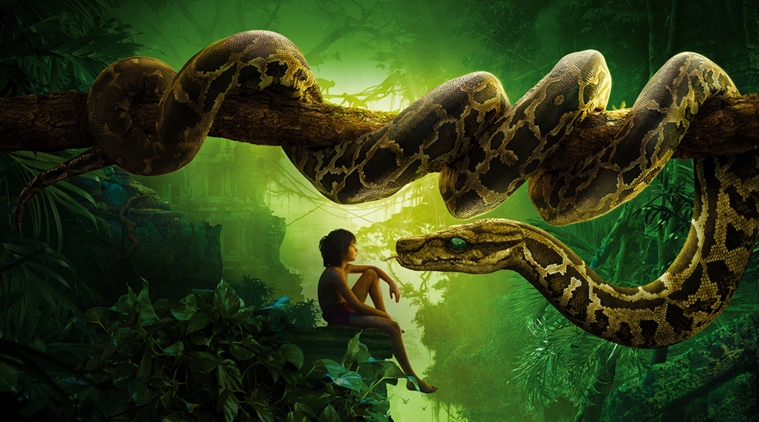
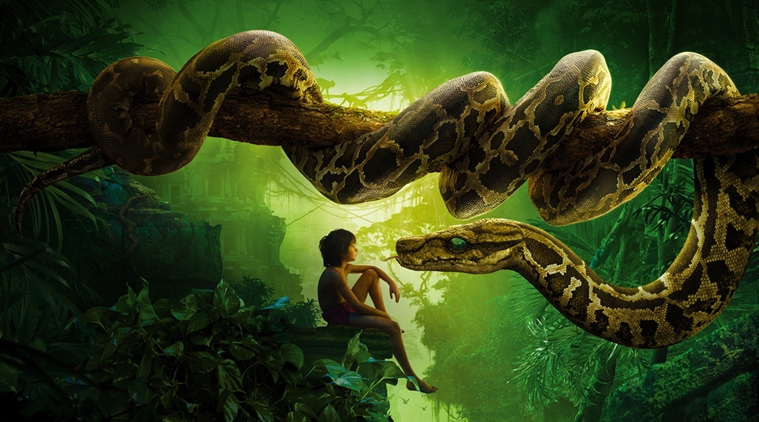
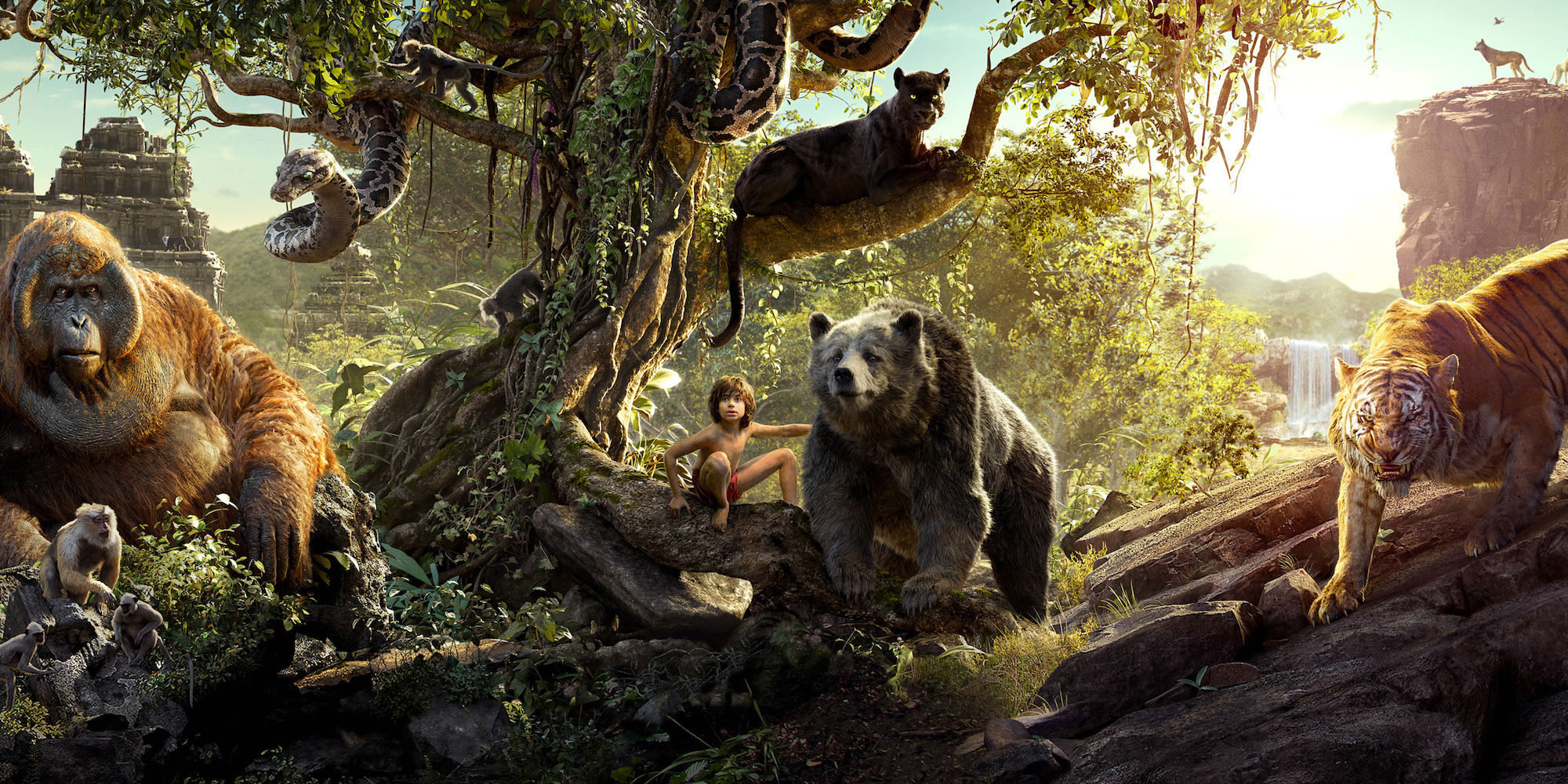
Copyright 2016 DisneyOne of the most visually striking and just plain beautiful films of the year is Disney’s gorgeous live-action remake of “The Jungle Book.” The man responsible for the look of the film is production designer Christopher Glass, and it was a thrill to get a chance to talk to him about it.
“It’s kind of funny,” Glass told me, “because Jon Favreau, Bill Pope, Rob Legato, me, everyone working on the movie, all of us come from the same philosophy where more practical is better. You know we talked about CG movies, movies that were mostly done on the computer and the shortcomings or the strengths, what works and what doesn’t work, and then it’s kind of ironic because we’re making a movie that’s 98 percent computer generated. But I think that is actually good that we all had this healthy skepticism of the technology. Rob Legato is a master of the technology and so is Andy Jones the animator and Adam Valdez and Dan Lemmon. So really what we needed on this movie was kind of that spirit of doing things practically but yet we knew that a lot of it wasn’t going to be practical. But having said that there was a lot of practical stuff but it was all snippets and slices of sets and a prop sometimes like a cow bell would be real, like the stuff around Mowgli inside King Louie’s Temple next to him is real. We had some real fruit on the ground. We threw real fruit out of a fruit launcher when he throws the fruit down on the ground. But there’s some CG. You don’t know where the line begins or ends and that was kind of our intention. Jon wanted to blur the line between reality and what we create in the computer. We wanted to be fooled ourselves.”
In a non CG film you can see the footage immediately after it has been filmed. But because of all the effects, the crew would not see what the scenes looked like for months. “It wasn’t like the next day you would see the finished shot; it was an iterated thing. So our challenge was to see if we could fool one another and there were times when we were fooled, and sometimes it would be the reverse, sometime Jon would be like, ‘Oh that is so fake’, but it would be real. I would say, ‘No that’s actually my set.’ He would be like, ‘Oh, that’s the fakest part’ and I’d be ‘Oh no.’ It felt sometimes like it was backwards. There were literally times I was designing sets after we had already shot the scene physically and edited it then I would design the set; it was very odd.”
Ultimately the real and virtual worlds were so integrated that it was hard to tell where the line was. “Basically anything Mowgli is touching is mostly real. If his feet are touching it or his hands are touching it, but not always. The animals aren’t real, some trees are definitely not but a lot of the plants and the things he’s walking through are, and even the grass he is walking through when he is talking to Bagheera. We built a little strip of grass like 4 feet wide for him to walk through. Technically it served the purpose of giving him interaction. If you have to animate everything that the kid is touching and everything it would have made his task even more daunting than it already was. And if you do end up replacing stuff it’s a great lighting reference and physical interaction reference for the animator so that they can copy that when they are doing the rest of it so that it behaves in the same way or looks the same.”
Glass was very impressed with Neel Sethi, the young actor who played Mowgli, and how natural he was even when he had to imagine how it would all look. “A lot of the stuff he did do completely with nothing but blue and he did a great job. I think even well-seasoned actors have more trouble. A kid is pretending and he’s cool with it. He was talking to the puppets and it worked.”
Glass had been to India and other jungles before. “And we did have a team that went out and took at least 80,000 photographs of India. We had research that were on for many, many months; we just researched everything that we could. We used the Internet, we used books, we called consulates, we talked to directors who were shooting. There was the “Monkey Kingdom” movie that was shot in Sri Lanka and India. We talked to them about monkeys, how they behave and what kind of places they lived and they showed us their footage. We discovered the pangolin, the weird-looking scaly animal that’s highly endangered and I said, ‘Oh let’s put that in the movie.’ We took some liberties but we really tried to keep everything as something that could be realistically found in India. Now obviously we have exaggerated sizes, and we created a world that was more like the composite of India because the kid really couldn’t walk from a really jungle area to a really desert-y area overnight like that. In reality that would take months and weeks. And we looked at the Disney ’67 movie and we had to incorporate the feeling much of that film, too. It’s more colorful, with more flowers, more whimsy and I had to bring that into the real rendering of the plants and things. We tried to find the balance of where it starts to looked too weird, where it looked good. So it was all just a lot of experimentation and a lot of research.”
I once heard that all movie plots fall into just two categories: a boy (or girl) leaves home and a stranger comes to town. Someone else said that every movie story is about the search for authenticity. In my book, I list thirteen plots, from the classic antagonists/strangers on a journey (“Wizard of Oz,” “Midnight Run,” “It Happened One Night,” “Toy Story”) to the ups and downs and sometimes ups again of romance (“An Affair to Remember,””Annie Hall,” “Bringing Up Baby”), to what Alfred Hitchcock called the macguffin search for anything from the lost treasure to the secret formula (“Raiders of the Lost Ark,” the James Bond and Jason Bourne movies), to rise-and-fall (and sometimes rise) biopics (“Ray,” “Dreamgirls,” “All the King’s Men,” “Race”).
New York Magazine has the most detailed and entertaining list of every possible plot in fiction, whether novels or movies. The examples include a wide range of classics to read or re-read.
Today’s news: Ghostbusters ‘tanks’, ‘stumbles’ with 53% drop in its second week.
Presumably that’s a bad performance compared to other action movies in their second week then?
Let’s check…
Captain America: Civil War: -59.5%
Dark Knight: -52%
Amazing Spider Man: -61%
Oh, and for an example of an actual ‘tanking’:
Batman vs Superman: -69%
Now, let’s examine all the reporting last week that Ghostbusters was going to struggle because of its first week multiplier against its budget…
Ghostbusters first weekend US figures: $46m
It had a $144m budget, so in its first week it made 32% of that.
Descriptions: ‘Lacklustre’, ‘problematic’, ‘will haunt Sony’
Star Trek Beyond first weekend US figures: $59.6m
It had a $189m budget, so in its first week it made 30% of its budget.
Reporting: ‘Dominates’, ‘wins big’
To be clear: there are articles describing both movies’ openings as ‘solid’. But there’s basically no one calling Beyond worrying or Ghostbusters a big win.