The Good Dinosaur

The Good Dinosaur

Posted on November 24, 2015 at 5:43 pm

Copyright Disney 2015

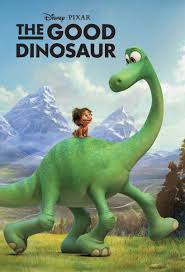
“The Good Dinosaur” is the good movie. Not the great movie. Not the especially memorable movie. Just the perfectly nice and pleasant movie, much stronger in visual splendor than in storyline.

Delayed for 18 months as Disney replaced the original director and realigned the story, the seams are palpable. And too much of it is much too familiar: a mismatched pair has to find their way home (see “Finding Nemo,” “Toy Story,” etc. etc.), a young animal is devastated by witnessing the death of his father through a natural disaster (see “The Lion King” — the staging is very similar), a boy with no family is cared for and preyed upon in the wilderness by animals (“The Jungle Book”), and it takes place a long, long time ago (see “Ice Age,” “The Land Before Time,” and “The Croods”).

But it is beautiful to look at, and the story is very sweet, a traditional “boy and his dog,” except here the “boy” is the dinosaur and the human is more like a pet. In the world of this film, the asteroid that killed the dinosaurs bypassed earth, and so millions of years after the real dinos died off, they are not only still here, but they are thriving. Humans are just beginning to stand erect and have not yet developed language or tamed fire (but have somehow invented very handy leaf-clothes that are woven together so well they always cover the private bits). The dinosaurs can speak and they have learned how to farm, using their snouts to plow the field and building a silo to store grains for the winter. A loving herbivore dino couple (Jeffrey Wright and Frances McDormand) lovingly watch their three eggs hatch as the story begins. The biggest egg produces the smallest dino baby. They name him Arlo (Raymond Ochoa).

While his brother and sister are confident and capable, Arlo is fearful and anxious. His chore is feeding the chickens and they terrify him. His parents explain that each of the children will have a chance to literally make their mark — to add their paw print to the silo to show that they have made a contribution to the family. “You’ve got to earn your mark by doing something big for something bigger than yourself,” the father dinosaur explains.

Arlo’s siblings make their marks. But Arlo cannot seem to get beyond his fears. His father gives him a chance to set a trap for the animal that has been stealing their grain. But when the creature — a little human boy — is caught, Arlo lets him go. The father dinosaur tries to teach Arlo how to handle fear. But, leading Arlo to chase after the boy, a thunderstorm swells the river and Arlo’s father only has time to save his son before he is swept away.

Arlo gets separated from his family, and the only one who can help him is the young human, who crawls on all fours and pants like a puppy. Arlo names him Spot, and together they meet a variety challenges, many involving friendly characters or predators. Highlights include a very funny Styracosaurus whose antler protuberances are occupied by birds and animals (see “Thidwick the Big-Hearted Moose.”) But it is very funny to hear him introduce each of them, explaining about one of the birds, “He protects me from having unrealistic goals.” A brief visit to a collection of gophers who get literally blown out of their holes is delightfully choreographed. Sam Elliott provides just the right gravelly bass voice as another dinosaur dad who is less scary than he looks (but even that is too reminiscent of the better shark scene in “Nemo”).

The patched-together quality is most telling in a quasi-dream sequence (see “Footsteps” plaques at your aunt’s house) and an ending that seems to undercut some of what we thought we learned about what makes a family. The visuals are gorgeous, especially the clouds, the landscape, and the play of water and light. But the story is only intermittently as engaging as the background images.

Be sure to get there in time to see the short film before the feature, a heartwarming autobiographical tale about a Hindu father at his morning prayers. As he pays tribute to his deities, his son is on the other side of the room, watching a television show about superheroes. The way they are brought together has more imagination, heart, and inspiration in its brief running time than “The Good Dinosaur” has as a full-length feature.

Parents should know that this film includes extended peril, with some characters injured and killed (and eaten). There is a sad death of parent (who returns in a dream, which may be confusing or disturbing to young children), omnivorous dinosaurs with big teeth, etc., trippy fermented berries, and some potty humor.

Family discussion: How will you make your mark? Who in your family has a scar and what is the story behind it?

If you like this, try: “The Land Before Time,” “Finding Nemo,” and “Inside Out’

Related Tags:


3D Animation Fantasy For the Whole Family Scene After the Credits
Minions Mini-Movie!

Minions Mini-Movie!

Posted on November 23, 2015 at 10:00 pm

The minions are back! Universal Pictures Home Entertainment has just released a Minions mini-movies online in celebration of the Minions release on Digital HD on November 24 and Blu-ray, DVD and On Demand December 8.
The new mini-movie features Stuart, Kevin and Bob as they battle it out in the ultimate “Competition.”

Related Tags:


Animation For the Whole Family Series/Sequel Shorts
Interview: “Shaun the Sheep” Co-Writer/Director Richard Starzak

Interview: “Shaun the Sheep” Co-Writer/Director Richard Starzak

Posted on November 23, 2015 at 3:51 pm

Copyright 2015 Lionsgate

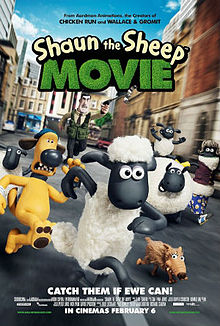
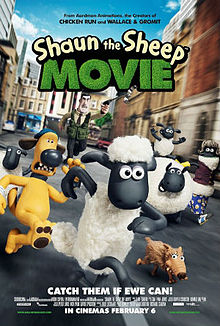
Richard Starzak and Mark Burton wrote and directed the adorable “Shaun the Sheep,” and it was a lot of fun to talk to him about making a stop-motion animation movie with no words. The DVD/Blu-Ray, which will be available November 24, 2015, has a behind-the-scenes featurette showing Starzak and Burton acting out some of the movements for the animators “to get the timing right for comedy” and working with actor Justin Fletcher on recording some of the non-verbal sounds. The idea of having the mouths of the sheep go off to the side of their snouts came from one of the storyboard artists “just to indicate that the character was smiling and we thought it was funny so we kept it there. Some people think it looks very strange and some people kind of don’t worry about it.”

The vehicles in the film are as individual as the human and animal characters. “We tried to give everything a bit of personality.”

It is a painstaking, very slow process to move each of the characters very slightly, take a picture, and then move it again. “We aim for about two seconds per animator a day so in a week we’re expected to do about ten seconds on average. That’s times sixteen animators so it would be two or three minutes of animation during the week…We use mainly the live action video to time how long we need for any particular shot. It’s a bit of jigsaw puzzle. You have to fit the film into a certain amount of time but it’s kind of trial and error. We shoot and then we might adjust them after we have shot them, we might take the odd frame out here and there, we’ll double up the odd frame so it is constantly being reassessed. I suppose the film ended up a few minutes longer than we intended but that’s fine; the timing was worthwhile so we were happy with that.”

Working without dialogue was liberating. “Strangely, yes, it makes life in some ways more difficult but also really focuses you on the story. We kind of have a lot of evidence particularly when children watch the film, they really concentrate on the film as they do on the television episodes because it requires all the attention but they get more immersed in it as a result. So I found it very liberating because it’s a very pure way of making a film. It’s very cinematic. I can’t wait to make another one really, I love the idea of not using dialogue.”

One of the challenges is directing the voice talent on recording the various sounds that the characters make. “They are noises but they are still very crucial to get the right tone so it’s a question of the voice talent that we use actually understanding and getting the tone right so they can watch and understand how to enhance and how to make any shot or movement more understandable. It’s a lot of trial and error. And it’s very strange standing there saying, ‘Can you put a little more despair into that squeak?’ or ‘Can you make that squeak slightly lighter?'” It’s a process but we get there in the end. We put up the storyboards against a temporary track of grunts and squeaks and then we invite the voice artist to lay down some sounds for us and after the process is finished we refine them and we get them in again to see if they can improve on what we’ve already got.”

Starzak was influenced by silent film masters like Buster Keaton and Jacques Tati. “When I first started the series I always had Buster Keaton in mind because there is not a lot that you can do with Shaun’s face. He has just got eyes and occasionally a mouth but there’s not a lot to express with so I’ve got a picture of Buster Keaton on the door on the way into the studio to remind people what we’re trying to do. We watched a lot of funny comedies. Jacques Tati films are very clever in including a lot of ideas in the same shot and playing out the shots obviously with sounds but no dialogue which is kind of what we were aiming for.”

The most complicated scene in the film takes place in a restaurant, where the sheep are disguised as humans. “It’s almost a comedy of manners. We had to stage four characters sitting around the table then there was another table with two characters plus there was the waitress and the maître d’ and everything was quite complicated. The most fun thing to do was the hospital scene.”

Related Tags:


Animation Behind the Scenes Directors Interview Writers
The Peanuts Movie

The Peanuts Movie

Posted on November 5, 2015 at 5:26 pm

B
Lowest Recommended Age: Kindergarten - 3rd Grade
MPAA Rating: G
Profanity: None
Alcohol/ Drugs: None
Violence/ Scariness: Some tense scenes of anxiety, hurt feelings, and shyness, some mild action scenes and peril (Snoopy’s flying ace battles)
Diversity Issues: None
Date Released to Theaters: November 6, 2015
Date Released to DVD: February 29, 2016
Amazon.com ASIN: B018WXLHVM

I admit that I approached this film with some of the same trepidation Charlie Brown approaches the football, knowing Lucy’s history of pulling it out of the way at the last second. I’m a fan of Charles Schultz’s original comic strip and fond of many of the animated specials and features that were careful to preserve the simplicity of his aesthetic. I was concerned that a more fully-animated version (in 3D!) would drown out the gentle storylines. But Schulz’s family has been careful to preserve his legacy. The script is co-written by his son and grandson and is timed to appear on the 65th anniversary of the strip and the 50th anniversary of the classic “Charlie Brown Christmas” special. And Blue Sky (which made the “Ice Age” and “Rio” movies) understands the material and its audiences — the older generations who are attached to the original version and today’s children, who are new to these characters.

The brightly colored, rounded figures were easier to get used to than I feared. The iconic details — Charlie Brown’s yellow shirt with the brown zigzag (it turns out he has a whole closetful) and wisps of hair are familiarly iconic. It’s not a period piece but there is a timeless quality. Phones are corded landlines. We never see a laptop and no one ever checks Google or GPS. Indeed, one of the most important items in the story is a pencil. It has glitter and a feather decorating it, but it also has the teeth marks of its sometimes nervous owner, and that is something you won’t find on a smartphone.

The movie does not commit any serious blunders. There are pleasant moments and welcome echoes of the past, but it does not justify its existence by adding anything of value to the canon already available. The first and best of the television specials, A Charlie Brown Christmas, is less than half an hour long, but it has more wit, charm, poignancy, than this feature film, and it includes one of the most beautiful holiday songs ever written, the piercingly bittersweet Christmastime is Here. In almost two hours, this film has time for just a snippet, to make room for inferior contemporary pop songs. A joke about “merch” seems ill-advised given the strip’s history of selling its characters for everything from insurance to toothbrushes.

The film begins promisingly, with Schroder playing the studio’s theme music on his piano and an immersive soft, gentle snowfall. It’s the most joyous day of the year — a snow day — and we meet the characters as they wake up and choose the winter activities they most enjoy. Charlie Brown decides it is a good time for him to try the kite again, figuring that the “kite-eating tree” will be out of commission in winter. It does not go well. Once school is back in session, a new student arrives, a girl with red hair, and Charlie Brown is smitten — and terrified. How can he impress her?

The Schulzes are true to the spirit of the original. We squirm with Charlie Brown as he agonizes over his insecurity, especially when he is faced with a dilemma at the school talent show and when he is awarded an honor it turns out he did not deserve. The sections with Snoopy’s Red Baron fantasy are of less interest and appeal and the 3D effects and the talents of top-tier musical stars (Trombone Shorty playing the “waa waas” for the adult voices and Kristen Chenoweth as Snoopy’s daring aviatrix love interest) are underused. The best use of this film is as an introduction to the classic television specials — and the original comic strips that inspired them.

Parents should know that this film includes some tense scenes of anxiety, hurt feelings, and shyness, and some mild action scenes and peril (Snoopy’s flying ace battles).

Family discussion: Which character is most like your friends? Which would you most want to be like? Why don’t we hear the grown-up voices?

If you like this, try: The Peanuts comic strip collections and the television specials.

Related Tags:


3D Animation Comic book/Comic Strip/Graphic Novel DVD/Blu-Ray Pick of the Week School Stories About Kids

Owlegories

Posted on November 3, 2015 at 8:00 am

“Owlegories” is a new “gospel-centered” animated series and app for kids, designed to teach them about God through the amazing things found in nature. They are Biblical allegories told by owls.

It is a bright, colorful, and accessible series.

I have a copy to give away! Send me an email at moviemom@moviemom.com with Owl in the subject line and tell me your favorite bird. Don’t forget your address! (US addresses only). I’ll pick a winner at random on November 10, 2015. Good luck!

Related Tags:


Animation Contests and Giveaways Elementary School Preschoolers Spiritual films
THE MOVIE MOM® is a registered trademark of Nell Minow. Use of the mark without express consent from Nell Minow constitutes trademark infringement and unfair competition in violation of federal and state laws. All material © Nell Minow 1995-2026, all rights reserved, and no use or republication is permitted without explicit permission. This site hosts Nell Minow’s Movie Mom® archive, with material that originally appeared on Yahoo! Movies, Beliefnet, and other sources. Much of her new material can be found at Rogerebert.com, Huffington Post, and WheretoWatch. Her books include The Movie Mom’s Guide to Family Movies and 101 Must-See Movie Moments, and she can be heard each week on radio stations across the country.

Website Designed by Max LaZebnik