Tense and scary scenes including characters being swallowed by a whale and apparent death
Diversity Issues:
None
Date Released to Theaters:
1940
Date Released to DVD:
January 30, 2017
Amazon.com ASIN:
B01M105H8W
Copyright Disney 2017This week Disney is releasing a glorious new edition of its most most gorgeous, splendid, and fully realized of all of its hand-drawn animation classics before the use of photocopiers and computers. Every detail is brilliantly executed, from the intricate clocks in Geppetto’s workshop to the foam on the waves as the enormous whale Monstro thrashes the water. It also has one of Disney’s finest scores, featuring “When You Wish Upon a Star,” which has become the Disney theme song. “I’ve Got No Strings,” “Give a Little Whistle,” and “An Actor’s Life for Me” are also memorable. It is the classic story about the wooden puppet whose nose grows when he tells a lie and has to almost turn into a donkey before he can become a real boy, told with endless imagination and beauty, a must-see for all families.
This new edition has some great behind-the-scenes extras.
“Pinocchio” is a natural for the first discussions with kids about telling the truth (especially admitting a mistake) and not talking to strangers. Talk to them, too, about how to find their own conscience and listen to it as if it were Jiminy Cricket. The trip to Pleasure Island may also lead to a discussion of why things that feel like fun may be harmful, and the difference between fun and happiness.
Morgan Taylor is the illustrator, animator, and musician who created Gustafer Yellowgold, the pointy-headed little yellow guy from the sun featured in DVDs and live concert performances.
Gustafer is a friendly creature who came to Earth from the sun and has an unusual magnetism for making friends with some of Earth’s odder creatures. His best friend is Forrest Applecrumbie the flightless Pterodactyl. Gustafer and Forrest built a small cottage-style home on the edge of an uncharted wooded area in Minnesota. He has a pet Eel named Slim (short for Slimothy) and a pet Dragon named Asparagus who lives in his fireplace and loves corn on the cob. Gustafer’s pals, the Mustard Slugs practice their math under the shrubbery.
Where did the name Gustafer Yellowgold come from?
I started drawing picture books illustrating the lyrics of some of my more humorous songs and I got to the point where I had to draw the cover for the book. I had this yellow pointy headed guy I had been drawing. I wanted his name to be unusual, slightly tongue-twistery, and warm-sounding. I love worldplay. Gustafer Yellowgold was fun to say and sounded friendly, and projected a confident image. I chose the name and googled it just to make sure it wasn’t taken!
When was this?
It was in the winter 2004, going into 2005. It began with the songs “Tiny Purple Moon” and “Pterodactyl Tuxedo.” I had already written them but they fit in with what I was doing with Gustafer. I looked over the songs I had and asked, “Which songs would fit with this project?” I had been subconsciously creating this whole fictitious world. I had a number of humorous pop songs sung in first person. I knew it wasn’t me, though. They were created in these moments of creative freedom. I had this character but no story around him, but there was something that I always doodled, and then I said “Okay so I’ll use that guy.” I had this “I’m From the Sun” song. Wait a second, the guy is from the sun!
Now I have used up all of my old songs. Four on Mellow Fever are the last of those. The songs for the fourth DVD are all new and almost totally written already.
You have a new baby. Is he your test audience?
He is just turning 11 months and he really perks up when we have the music on. He was there during the mixing and editing, sometimes on my lap. He is just now starting to realize that it’s something; he picks up the doll and looks at it.
Where does Gustafer’s mellow, laid-back sensibility come from?
It comes from my taste in music and song-writing. It is therapy in a way to think about that question and about the genesis of the creative process. When I am creating something, especially music, my creative nucleus exists in about 1976-78. My mom always had the radio on in the kitchen, a soft rock AM station. I think about how I felt at the time getting ready for school, interested in comics and music and filled with creative inspiration. I gravitate toward those feelings, chasing that feeling of safety, oblivious to everything except the immediate surrounding, when I am creating something.
You have some unusual collaborators including some of the people from Wilco and Lisa Loeb helping you with the music. How did that come about?
When I moved in NY in 1999 from Dayton, I met every musician, singer-songwriter in NY and made a bunch of new friends. One of the guys from Wilco was getting ready to tour and asked me to recommend a bass player. I said, “Well dude, I play bass!” “Oh really?” So I toured with them and I guested on their last record. I asked them to come in and mash harmonies for Gustafer. I also played bass on a band that was opening for Lisa Loeb. She became aware of Gustafer and came to our off-Broadway shows and we worked on a couple of songs together. I said, “Hey you want to sing on the new Gustafer record?” There was a song with a counter-melody that I thought would be good for her.
What do kids learn from Gustafer Yellowgold?
They learn the power of imagination, some abstract thoughts, they learn to read because all the text is on the screen, they learn to stop and appreciate some small things, the details in nature, they learn about relationships with people of all different backgrounds and colors. His world is kind of a little melting pot of weird personalities.
Interview: Michael Landon, Jr. of ‘The Velveteen Rabbit’
Posted on February 25, 2009 at 8:00 am
Michael Landon Jr.’s new film is The Velveteen Rabbit, based on the classic book by Margery Williams about the stuffed toy bunny loved so dearly that it becomes “real.”
The movie opens in select cities this Friday, February 27, and will be out on DVD next month. Landon was interviewed by Guideposts, and I also had the great pleasure of talking with him about the film. It must have taken a lot of courage to adapt a book that has such passionately devoted fans!
It was very daunting. One of the things though that I wanted to do that’s quite different than Margery Williams’ source material was that she tells the story form the rabbit’s point of view and there have been sweet little films that covered that ground already. I wanted to give the boy’s point of view and combine live action and animation.
In our story, the boy, called Toby, is sent away for the holidays with his stern grandmother. He finds the attic with all the forgotten toys and this little rabbit leads him to this imaginary world that he loves. Is the movie live action or animated?
Both! It is live action, shot in Montreal, until Toby goes to the imaginary world, and that part is animated. We wanted to try to give it a period kind of feel because it takes place in 1910. We wanted to keep that feel through 2D and update it a little with 3D. Feature Films for Families owns an animation company and they spearheaded the animation, which took over three years. The cast includes Ellen Burstyn, Tom Skerritt, and Jane Seymour. The live action scenes were done more than three years ago. Wow, so the kid who played Toby must be practically grown up!
He’s a teenager now! Wild to hear him. Why has this story been so powerful for so many people over the generations?
The theme for me is that love makes us real. That’s a theme that transcends time. There’s definitely something for everyone in this film and something to connect the generations, just as it is when you read the story to children. Any parents and grandparents who see this, they’ll leave inspired and not only entertained but want to be closer and love better. Did you have a special toy when you were a kid?
Charlie, a monkey! He was by far my favorite, he was my bud. He would still be with me but my mom got rid of all my stuffed animals, which devastated me. What films and film-makers inspired you?
In terms of overall storytelling ability, Spielberg. No one is as versatile as he is. He can can tell a story like “E.T.” and then do “Jaws” and “Schindler’s List.” He’s on the top of my list. I like visionary directors like Ridley Scott. He is stunning. His background in production design makes his films something to behold, mesmerizing. Chris Nolan is a genius film-maker; I’m blown away by him. Going back years, Frank Capra is one of my all-time favorite classic directors, who tells a story that is not only compelling but makes me want to be a better person. That’s more of what I set out to do with this film and my others, too. What makes you laugh?
My kids crack me up, not necessarily on purpose! And I love the old Pink Panther films with Peter Sellers. What are you doing next?
I’m finishing up a novel, The Silent Gift, co-writing with Cindy Kelley, with whom I co-wrote “The Velveteen Rabbit” and other films. Coming in late spring early summer I have “The Shunning,” an Amish story based on a novel by Beverly Lewis and I am also working on “When Calls the Heart” with Maggie Grace. I have a history with both of those authors and it is wonderful to be able to continue to develop those relationships.
The rare sequel that improves on the original, “Madagascar 2” keeps the silliness and steps up the heart. In the first film, four zoo animals run away and after a series of adventures are sent to live in an African wildlife refuge. Alex the pampered city lion (voice of Ben Stiller), Marty the zebra who longs for the veldt (voice of Chris Rock), Melman the hypochondriac giraffe (voice of David Schwimmer), and Gloria, the warm-hearted hippo (voice of Jada Pinkett Smith) are still, so to speak, fish out of water when it comes to living in the wild. Alex especially is eager to get back home. But their plane, piloted by ditsy penguins, crashes and they find themselves again in the wilderness.
But this time, it feels like home. Alex is reunited with the parents he barely remembers (voices of Bernie Mac and Sherri Shepherd). Marty is overjoyed to be at last among his own kind with a herd of zebras. Gloria wants to settle down with a mate and is delighted to see some handsome hippos as possible prospects. And Melman’s expertise with medical treatment gets him dubbed the new witch doctor. He is able to save the life of a young giraffe by setting his broken leg.
But a rival for the “alpha lion” position (voice of Alec Baldwin) tricks Alex’s father into forcing Alex to fight and banishing him when he loses. Marty finds that while the other zebras may look and act exactly like him, he misses his best friend. Melman tries to find a way to tell Gloria how much he cares for her. And Alex has to find a way to be true to himself as a lion and as a New Yorker.
While there is nothing as tone-deaf as the first film’s focus on whether Alex would eat his best friend, there are still a few clangers. Though gently handled, part of the plot concerns a character’s offer to sacrifice himself by jumping into lava because some of the animals believe it will appease the gods and restore their water supply. A cub is captured by poachers and his father is shot (minor injury). A feisty elderly woman’s fistfights are intended to be humorous. There is nothing especially new here. But it is funny and colorful and even a little bit sweet and you gotta love those nutty penguins.
Writing about the original version of “The Electric Company” reminded me of one of my all-time favorite short films by John and Faith Hubley, who later went on to work on the “Letterman” segments of that show. It is the story of two little girls playing and it is called “Windy Day.”
When the Hubleys began making films, animation was very structured and scripted. Their great innovation was the use of improvised dialogue and impressionistic images and the result was fresh, natural, innovative, and remarkably touching. In “Windy Day,” the dialogue is the private conversation of the Hubley daughters as they were playing. I first saw and loved it when I was just past the ages of those girls myself, and I thought of it often as I listened in on my own children at play.
The Hubleys created many more wonderful films, including “Everybody Rides the Carousel,” based on the work of Erik Erikson about the psychological stages of development, and “The Hat” about two border guards (played by Dudley Moore and Dizzy Gillespie) who argue over what they should do when one’s hat blows into the other’s territory.



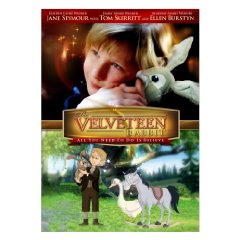
 by Margery Williams about the stuffed toy bunny loved so dearly that it becomes “real.”
 next month.
  that covered that ground already. I wanted to give the boy’s point of view and combine live action and animation.