American Pastoral

American Pastoral

Posted on October 20, 2016 at 5:47 pm

C
Lowest Recommended Age: Mature High Schooler
MPAA Rating: Rated R for some strong sexual material, language and brief violent images
Profanity: Very explicit and strong language
Alcohol/ Drugs: Alcohol, drugs
Violence/ Scariness: Mostly offscreen violence including riots, domestic terrorism, characters injured and killed
Diversity Issues: Reflects the biases of its era
Date Released to Theaters: October 21, 2016

Copyright 2016 Lakeshore
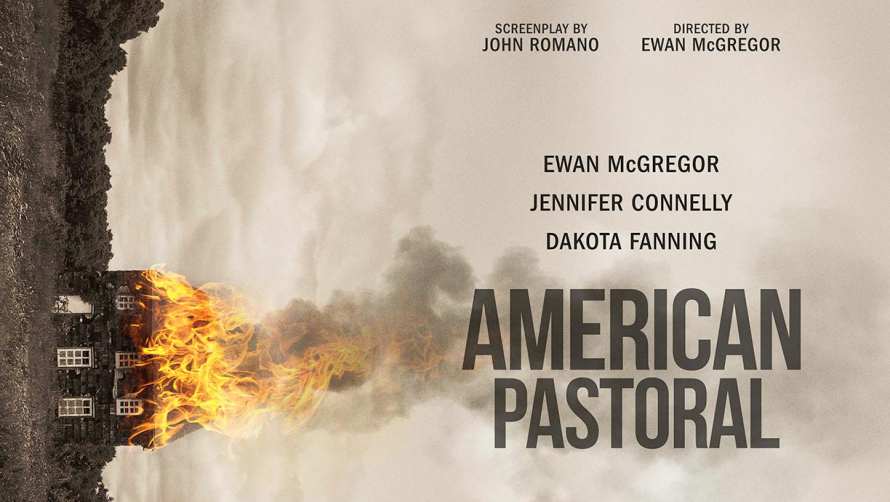
Ewan McGregor’s first film as a director is “American Pastoral,” based on Philip Roth’s Pulitzer Prize-winning novel about a man whose good and lucky life is torn apart by the upheavals of the 1960’s. It is a thoughtful and diligent effort, but the film cannot overcome two insurmountable problems of adaptation.

The first is the timing. The book was published in 1997, the first of Roth’s American trilogy, and it described the contemporary experience of people who had raised children in post WWII era of peace and prosperity, believing that they had given their children everything they were denied growing up during the Depression and war years, only to find that they raised a generation of angry teenagers who rejected the gifts they had been so proud to present. The dismay they felt is presented in the book as evidence of nobility of spirit; today, in the midst of another era of political polarization and resentment of the first generation as powerful a demographic as the baby boomers, it is difficult to see it as anything other than representing white male privilege.

The second is the inherent challenge of any adaptation of a work of fiction. It is impossible to replicate the experience of a novel, and this one, which depends so entirely on its voice, loses a great deal of its power in the translation to a visual medium. The framing story, with Roth representative Nathan Zuckerman (David Strathairn) attending a reunion and hearing the story that will become the movie from an old friend, is entirely superfluous, missing the essential focus of the book on the limits to our ability to understand the lives of others, even those we think we understand. Zuckerman helpfully sums it up for us: “It’s getting them wrong that is living, getting them wrong and wrong and wrong and then, on careful consideration, getting them wrong again. That’s how we know we’re alive: we’re wrong.”

Zuckerman hears the story of “Swede” Luvov, the kind of golden boy that every high school has to have, the one who is effortlessly good at everything and so nice that you can’t even hate him for it. Swede was a superb athlete and young enough that he was drafted into the army near the end of WWII and just missed action. He returned to a hero’s welcome and married a beauty queen named Dawn (Jennifer Connelly), with the grudging approval of his parents because she was not Jewish.

And then he has the perfect life that his personal grace and talent and respect should earn. He and Dawn move to a house in the country and have cows. He takes over his father’s business, a glove factory, where they produce fine leather goods and treat their workers — mostly African Americans — well. He and Dawn have a beautiful blonde daughter named Merry and she loves them and their bucolic, pastoral life. Everything makes sense.

And then nothing makes sense. Merry (now played by Dakota Fanning) becomes an angry teenager and is enthralled by the protesters against the Vietnam War (and the patriarchy, and pretty much everything else her parents represent). She bitterly accuses: “You’re just contented middle class people.” He helplessly replies, “Some people would be happy to have contented middle class parents.”

She disappears after a post office is bombed. Swede and Dawn are devastated. He cannot stop looking for her. Dawn has a breakdown.

They all try their best, but the result is static and off-key. We are supposed to admire Swede’s decency, but the movie is slanted so precipitously in his favor that even McGregor’s palpable sincerity cannot obscure the film’s smug misogyny. The men are decent, sympathetic, patient, and virtuous. Most of the women are needy, unstable, and sexually provocative. As a child Merry asks for a kiss on the lips and then confesses that she always goes too far. These women should be happy with whatever the men want to give them. They mostly exist merely to disappoint or betray the men in their lives, and sometimes the other women, too.

Or, they are one-dimensional saints. Samantha Mathis (good to see her as always) has a brief scene as a member of the community who is philosophical after a devastating loss. Vicky (“Orange is the New Black’s” Uzo Aduba) is Swede’s top manager in the glove factory. Though Aduba is excellent, the role is limited to a bland loyal subordinate.

When there are riots outside the factory following the murder of Martin Luther King, Vicky helps Swede hang a banner out of the window that reads: Negroes Work Here. Instead of Zuckerman’s meditation on how the people who spend so much of your life envying end up having less enviable lives than your superficial, incurious assessment contemplated, it would have been much more telling to explore the world of a man who thinks that employing African Americans in a glove factory should protect him from the consequences of the system that has for so long tilted in his favor.

Parents should know that this movie includes very explicit sexual references and situations, very strong language, domestic terrorism and murder, riots, alcohol, and drugs.

Family discussion: What do we learn from the framing story at the reunion? What should Merry’s parents have done differently, either before or after the bombing?

If you like this, try: “Goodbye Columbus,” “The Human Stain,” and “Indignation,” also based on books by Philip Roth

Related Tags:


Based on a book Drama Movies -- format
Jack Reacher: Never Go Back

Jack Reacher: Never Go Back

Posted on October 20, 2016 at 5:12 pm

Copyright Paramount 2016
Tom Cruise is back in a second “Jack Reacher” movie, based on the hard-boiled series by Lee Child. Jack Reacher is a quintessential and perfectly named fantasy action hero — former military but resistant to authority, capable of instant assessment of threats and options, crackerjack fighting skills, and no strings of any kind. He has no home, no family, no ID other than an expired military card, no car, no bank account, no possessions, just a passion for justice and a knack for getting into and out of trouble. And the equally perfectly named Cruise, capable of challenging himself as an actor but apparently not at the moment very interested in it, except maybe physically, is just right for Reacher, a bit world-weary but ever-righteous. He still runs very fast and looks good with his shirt off.

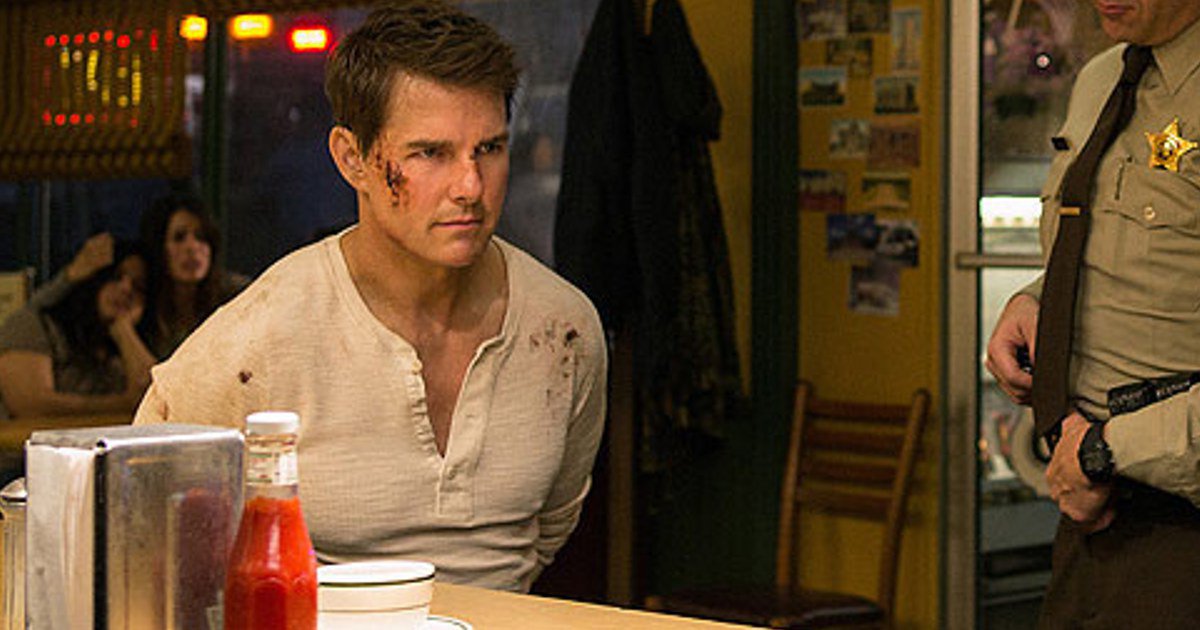
We first see Reacher in a diner with his hands cuffed behind his back, a bit scuffed up but characteristically steely. A sheriff informs him he is about to be arrested and charged with felony assault of the men lying injured on the ground. He coolly informs the officers that the pay phone is about to ring and that it is the sheriff who will soon be wearing the cuffs. The officer’s derisive snort is barely over before the phone rings, and sure enough, Reacher is right again.

He has solved a problem for the military (we won’t worry about the various laws — and bones — he broke on the way), and thanking him is his successor as overseer of an investigative unit, Major Susan Turner (Cobie Smulders of “How I Met Your Mother” and “Avengers”). They do a little phone flirting, and he decides to go see her in DC, only to find she has just been arrested for espionage. So, now Reacher has what he loves best, an injustice that only he can make right, of such an order of magnitude that it is certain to provide many opportunities for mayhem. But there is one problem that is, for a change, entirely outside of his ability to shoot, punch, or evade. Turner’s military attorney conveniently agrees to meet with Reacher (in an officer’s club, surrounded by pretty much everyone who might be interested), and he conveniently happens to have Reacher’s file with him as well, and helpfully shows Reacher the paperwork showing that a woman had filed a child support request with the military because she said the father of her teenage daughter was Jack Reacher. The same bad guys who are after Maj. Turner are after the girl, so Reacher ends up on the run with both Turner and his possible daughter Sam (Danika Yarosh).

Pairing up again with Edward Zwick (“The Last Samurai”) and with a script by Zwick and his “thirtysomething” partner Marshall Herskovitz (with Richard Wenk), Cruise stays right in his “Mission Impossible” action hero sweet spot. The interplay with Sam gives a little balance and emotional weight to the various fight scenes and shoot-outs, without diminishing the appeal of the ever-able hero with no strings.

Parents should know that the violence in this film is borderline R with very intense action and fight scenes, chases, fights, shoot-outs and explosions, torture, hired killers, corruption, many characters injured and killed, threat of rape, some strong language.

Family discussion: How was military training and experience reflected in the choices made by both the good and bad guys in this movie? What did Jack want the answer to be about Sam?

If you like this, try: the earlier “Jack Reacher” film and the “Bourne” series

Related Tags:


Action/Adventure Based on a book Crime Series/Sequel
Interview with Kara Holden of “Middle School: The Worst Years of My Life”

Interview with Kara Holden of “Middle School: The Worst Years of My Life”

Posted on October 14, 2016 at 3:01 pm

Copyright Lionsgate 2016
Writer Kara Holden says middle school is when “your eyes are being opened to the world and you’re not as sheltered as you once were able to be. You’re growing up. That’s a part of growing up, being disappointed and coming across difficulties unfortunately. But there’s also the turmoil of hormones and changing and feeling the difference between boy and girls. It is just so many changes at once that just reaches a boiling point.” That’s the setting for her new film, “Middle School: The Worst Years of My Life,” a comic revenge fantasy with a lot of insight and a lot of heart. It is based on James Patterson’s novel about Rafe Khachaturian, who rebels against a tyrannical middle school principal with a series of pranks. In an interview, Holden spoke about her own middle school experience and what she does to keep her focus when she’s writing.

Did you ever play any pranks or engage in any rebellions when you were in middle school?

I wish, no. I was definitely goody two shoes for sure but in my head. I had a rich imaginative life much like Rafe but I wasn’t able to act on much of it. So I would write stories or I would write things in my journal about what I wish I could do. And I was never was quite bold enough to go as far as he went which was what was fun about writing this. It’s very much wishful filming.

Of all the pranks in the film, which is the one that you vicariously fantasized the most about doing yourself?

I love the sprinkler one. It’s definitely my favorite. I just love the idea of everyone getting out of class, dancing in the hall. There was something about it that just made everyone loosen up and have fun and have a huge party in the middle of a school. I would love to have that happen. No matter who you are, you are going to love a crazy experience like that.

It’s refreshing that the girl characters in the film are complicated, real characters.

That was incredibly important to me. I did want not want them to be the boilerplate girl character, the annoying sister character. I definitely wanted them to be full of life like the girls that I know and to have that spunk. Actually my niece Jane, not that she is Georgia, but she has a lot of that fun, spunk and spirit. She will stand up for herself and I wanted that message to come across. At the same time there this that tenderness. Georgia is bold and strong but she’s not afraid to show her vulnerability which I think is very important also, that we could be well-rounded. And I love Jeanne, she’s my alter ego of what I wished I could be. She’s smart and she’s cool and I love that she’s the one who runs the audio-visual club, that she was doing the investigating, and she’s tenacious. She had a voice and she wasn’t afraid to use it and I loved that. I just enjoyed writing them both and of course the mom as well. I think that more people need to speak up, boys and girls really to speak up for what they believe is right. And that’s what Rafe did as well, he uses his gift for art to raise awareness of what was right. So that’s great.

The movie has some great comedy and fantasy revenge, but it is grounded in a reality that acknowledges some very real losses and problems.

It was really important to me that all of these characters are grounded in the heart and in a reality that can feel real. Every person, especially kids, we all experience hardship and there are some things that can’t “be fixed.” But we can grow, we can learn from these things and we can move on in a positive direction and I wanted that to really be a part of it. And truly hats off to the actors who were able to play all so well, to do the comedy and the drama, I think that added to it but really the comedy stemmed from the base of the bedrock of the movie, which is a very heartfelt thing. I don’t want to give away any spoilers but I think that was underneath in my head in every scene I knew why the things were happening that were happening and I was grounded in character and that is I think what makes it work. If the humour comes from the character, from where they are and not just on top of a bunch of jokes, then it’s going to feel cohesive when you move from comedy to drama.

Leo is a wonderful character, too.

I mean I’m amazed by all of them I think they all did incredible work but Leo gives Rafe the confidence that he needs to pull off these things. Leo believes in him so Rafe discovers and learns to believe in himself. I think the fact that Leo has good intentions in all that he does is what makes him so great. He is a hellraiser for good. So I think that’s what makes him so likable and that’s why you care about him and the relationship between Leo and Rafe. It feels real and you root for them. I think it’s important that we see that they are there for each other.

Tell me about your writing day. What’s the first thing that you do when you wake up in the morning?

The first thing I do is, I go in and I wake up my son, he’s a year and a half. I don’t wake him, he usually wakes me up. I hear him in his room, and I can take care of him and I take care of my animals and then I get ready and I go to an office outside of my house. Actually before I leave I do a little bit of my emailing and things because I don’t have Wi-Fi at my office on purpose. It’s the most perfect place. It has no windows. It’s just a room with a desk and a computer and I have to work and that’s good for me because like most writers I’m very procrastination-prone. Once I get to my office it’s all good.

You’ve worked in a variety of genres. As a writer, how do you locate the audience in the world they will be entering?

That’s a good question because for me pretty much the connecting fibre from all of the films I’ve done, whether it be inspirational sports or more of a drama or is also a comedy and a drama as well, is that they all have humor hopefully and heart. I try to do that in all of them even though they are in different genres from family to more adult or the inspirational world. I try and get the characters up front. With “Middle School” I immediately had the idea that I wanted to just get into how much his art meant to him and having that fun little animation bit at the beginning clued us in that this is going to be fun and a little bit of a wishful film and have some fantasy right on the very first page. You just set it up from the get-go what you are in store for by some sort of a visual or an action that a character is taking that you recognize as either funny or more serious. In a comedy it feels good to get a surprise, to switch things up a little, to give you something serious. Sometimes you just need a break in a drama so it feels good to laugh. And by the way that’s life. It’s a great combination — comedy and sentimentality and difficulty all mixed up. So I like to have something sort of heightened but the reflection of life so we can recognize ourselves in it when we see it and that’s what makes us love it.

Related Tags:


Based on a book Interview Writers
Middle School: The Worst Years of My Life

Middle School: The Worst Years of My Life

Posted on October 6, 2016 at 5:53 pm

B+
Lowest Recommended Age: Middle School
MPAA Rating: Rated PG for rude humor throughout, language and thematic elements
Profanity: Some schoolyard language
Alcohol/ Drugs: Social drinking (adult)
Violence/ Scariness: Some peril, sad off-screen death of a child, parental abandonment and marital break-up, cartoonishly exaggerated adult villains, some misbehavior including vandalism and mayhem
Diversity Issues: Diverse characters
Date Released to Theaters: October 7, 2016
Date Released to DVD: January 2, 2017
Amazon.com ASIN: B01LTHWXX4
Copyright Lionsgate 2016

This just might be the most accurate movie title of all time. Middle school is pretty much the worst years of everyone’s life. Terrible stress and tragedy happens at all ages, but it is the years from 12 to 14 where the internal turmoil and agonizing uncertainty are so acute that we still wince remembering them decades later. This film, based on the series of books by mega-bestselling author James Patterson (with Chris Tebbetts and illustrations by Laura Park) has some delightfully satisfying moments of fantasy revenge against a tyrannical, rules-obssessed principal and a borderline-abusive potential stepfather. But it sneaks in some quietly touching and surprisingly wise insights about loss and working with a “new normal.” Bright direction and an exceptionally engaging cast of kids make this film a genuine fall family treat.

Rafe Khatchadorian (Griffin Gluck) has been expelled from two schools (we never find out why) and has just one more chance. He would rather stay home all day and draw pictures in his notebook, where he has created a whole world of monsters and aliens, charmingly animated. “There’s a big world out there,” Rafe’s mother (Lauren Graham) tells him. “There’s a big world in there, too,” he says. And it is clear that is the world he prefers.

He does not even make it inside the building, though, when he meets the new school’s Principal Dwight (Andy Daly), who cares about just two things: his rules, and the school’s test score ranking. Dwight’s rules basically outlaw anything that is fun, friendly, expressive of individuality, or likely to keep the school from the #1 test score ranking Dwight cherishes so deeply that he has cultivated a number 1 bush by topiary in front of the school. Dwight’s consigliere/enforcer is Ida Stricker (“Parks and Recreation’s” Retta). So, bright, patterned shirts, talking in the hallways, even drawing in a notebook — all banned. There’s also a school bully who threatens to give Rafe “a wedgie so bad you’ll be able to taste your underwear.”

But there are three bright spots. Rafe’s best friend, Leo (Thomas Barbusca), is always there to make him laugh and spur him on. There’s a friendly girl named Jeannie (Isabela Moner), and a kind, sympathetic teacher (“Happy Endings'” Adam Pally) who uses the Drake and the Wu-Tang Clan to teach the class about macroeconomic trends. Rafe decides to take on Dwight by breaking every rule, with Leo’s help. Meanwhile, Rafe’s mom is getting serious with the boyfriend Rafe and his sister call “Bear” (Rob Riggle in his usual role of a walking Axe body spray).

The revenge fantasy is funny and satisfying, mostly about making the pompous Principal Dwight look silly. And it gives Rafe a way to begin to make new friends, to resolve issues with the school bully, and to think through the other problems in his life.

The film is bright and fun, like its sparkling soundtrack of pop songs. The young actors are refreshingly natural and Barbusca has great comic timing. Rafe’s sister Georgia (Alexa Nisenson) and love interest Jeanne (Isabela Moner) are real characters, smart and capable. When the more serious issues arise, it is organic and sensitively handled. The pranks are signed RAFE, which stands for “rules aren’t for everyone.” But this movie is.

Parents should know that this film includes schoolyard epithets, potty humor, references to death of a child, parental abandonment, and marital breakup, comically exaggerated adult villains, cartoon-style peril, and tween misbehavior including driving and mild vandalism.

Family discussion: What is the best way to challenge unfair rules? What school rules would you like to change?

If you like this, try: “Harriet the Spy,” “How to Eat Fried Worms,” and the book series that inspired the film

Related Tags:


Based on a book Comedy Coming of age DVD/Blu-Ray Pick of the Week Family Issues School Stories About Kids Tweens
The Birth of a Nation

The Birth of a Nation

Posted on October 6, 2016 at 5:52 pm

B+
Lowest Recommended Age: Mature High Schooler
MPAA Rating: Rated R for disturbing violent content, and some brief nudity
Profanity: Racist epithets
Alcohol/ Drugs: Drinking and drunkenness
Violence/ Scariness: Intense, brutal, and graphic violence, rape, murder, hanging, lynching
Diversity Issues: A theme of the movie
Date Released to Theaters: October 7, 2016
Date Released to DVD: January 9, 2017
Amazon.com ASIN: B01LTHN5TU

Copyright 2016 Fox Searchlight
Nat Turner was an enslaved man in early 19th century Virginia who led other enslaved people in an armed rebellion against slaveholders thirty years before the Civil War. They killed more than 50 white people and more than 200 black people.

For actor Nate Parker, Turner’s story has been a long-time passion project, and he has audaciously claimed, or reclaimed the title of the D.W. Griffith silent film as revered for its innovations in cinematic storytelling as it is reviled for its racist, pro-KKK storyline. “The Birth of a Nation” title is provocative, timely, serious-minded, and powerful, and so is the film. The title refutes the pernicious narrative of the 1915 Griffith film, an act of rebellion and justice and an assertion of dignity and humanity. And so does the quote at the beginning of the film, from the man who both wrote of the inalienable rights of all men and was a slaveholder, Thomas Jefferson. The film opens with a selection from this passage:

an the liberties of a nation be thought secure when we have removed their only firm basis, a conviction in the minds of the people that these liberties are of the gift of God? That they are not to be violated but with his wrath? Indeed I tremble for my country when I reflect that God is just: that his justice cannot sleep for ever: that considering numbers, nature and natural means only, a revolution of the wheel of fortune, an exchange of situation, is among possible events: that it may become probable by supernatural interference! The Almighty has no attribute which can take side with us in such a contest.–But it is impossible to be temperate and to pursue this subject through the various considerations of policy, of morals, of history natural and civil. We must be contented to hope they will force their way into every one’s mind. I think a change already perceptible, since the origin of the present revolution. The spirit of the master is abating, that of the slave rising from the dust, his condition mollifying, the way I hope preparing, under the auspices of heaven, for a total emancipation, and that this is disposed, in the order of events, to be with the consent of the masters, rather than by their extirpation.

We first see Nat as a young boy, in a firelight gathering where enslaved people have congregated for some moments that recall the traditions of their home. Three birthmarks on the boy’s chest identify him as someone who will be a leader. Nat’s father, trying to get food for his family, kills a slave hunter and runs away.

There is a tense scene of terrible menace, as the other slave hunters come looking for Nat’s father that night, threatening Nat’s mother and grandmother, and finally the boy, too. We then see Nat running from a young white boy on the plantation, only to find that it is an innocent game, and the two seem to share a genuine sense of companionship. This is mirrored later in the film, when the then-adult Nat sees a little white girl playing with an enslaved girl by tugging her along with a rope like a dog on a leash.

Later, noticing the boy’s intelligence, the wife of the plantation owner (Penelope Ann Miller) brings the boy inside her home and teaches him to read. But the books on the shelves are not for him. “These books are for white folks. They are full of things your kind won’t understand.” There is just one book she will let him read: the Bible. He becomes a fervent believer, preaching the gospel to the other enslaved people.

As adults, Sam (Armie Hammer), the boy who was playing with him, has become the plantation owner and Nat (Parker) is his trusted servant. Nat persuades Sam to buy a woman who is being auctioned, and who clearly has suffered terribly. She becomes his wife and they love each other dearly.

When Sam falls on hard times and begins to drink too much, he starts renting out Nat’s services as a preacher to the other slaveholders. The plantation owners hope that his lessons about God’s will and the promise of heaven will keep them compliant. But Nat’s travels bring him into contact with the horrific atrocities inflicted by other slave holders. And some of the Bible’s lessons about justice and opposing tyranny take on an urgent power, as Nat’s wife is raped and beaten by slave hunters, another enslaved woman (Gabrielle Union) is forced to have sex with a man Sam hopes to do business with, and Nat is brutally whipped for baptizing a white man. He increasingly sees visions of a rebellion.

As a film, the movie falters, slipping into melodrama that recalls the Griffith film in ways it does not intend. But it transcends its storytelling shortcomings because of its palpable sincerity and passion, its force as a searing statement of history, and its relevance today. The fight for justice is a defining purpose of humanity, and Nat Turner’s cause goes on.

Parents should know that this film includes brutal slavery-related abuse including whipping, rape, beating, and forced feeding, a marital sexual situation with some nudity, drinking and drunkenness, and strong and racist language.

Family discussion: What made Nat Turner willing to take the risks of a rebellion? Why does this movie share the title of the famous D.W. Griffith silent film?

If you like this, try: “12 Years a Slave” and “Amistad” and read Nat Turner’s own words

Related Tags:


Based on a book Based on a true story Drama DVD/Blu-Ray Pick of the Week Epic/Historical
THE MOVIE MOM® is a registered trademark of Nell Minow. Use of the mark without express consent from Nell Minow constitutes trademark infringement and unfair competition in violation of federal and state laws. All material © Nell Minow 1995-2025, all rights reserved, and no use or republication is permitted without explicit permission. This site hosts Nell Minow’s Movie Mom® archive, with material that originally appeared on Yahoo! Movies, Beliefnet, and other sources. Much of her new material can be found at Rogerebert.com, Huffington Post, and WheretoWatch. Her books include The Movie Mom’s Guide to Family Movies and 101 Must-See Movie Moments, and she can be heard each week on radio stations across the country.

Website Designed by Max LaZebnik