Carol

Carol

Posted on November 24, 2015 at 5:54 pm

Copyright 2015 Weinstein Company

The most romantic movie of the year is “Carol,” based on a novel by Patricia Highsmith, the author of Strangers on a Train and The Talented Mr. Ripley. But Carol, her second novel, was originally published under another title and under another name. It was semi-autobiographical, it was the story of a lesbian relationship, and, unlike the rest of the very limited literature about lesbians at the time, it was not a tragic story. It was almost four decades before Highsmith acknowledged that she was the author.

There is some irony, then, in the idea that this film, depicting a story that was so controversial in the repressed “love that dare not speak its name” mid-century time when it was written is for that very reason ideally suited to depict a romance that is so rich and resonant. Now, when writers complain about how difficult it is to come up with believable ways to keep their characters from having sex in the first act (Stephenie Meyer had to make her male character a vampire for that reason in the Twilight series), making this love affair doubly forbidden by making the couple both women in the conformist 1950’s is the ultimate depiction of the anxious giddiness of being on the brink of falling in love.

The longing. The hesitation. The ecstasy of feeling seen. The harrowing insecurity of feeling seen. The exquisite torture of it all.

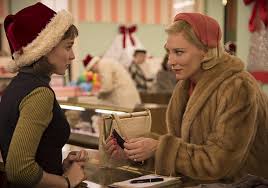
This is all gorgeously portrayed in every detail on the screen. Director Todd Haynes, working with an outstanding team of designers and director of photography Edward Lachman tells the story with each setting and camera angle and the flawless performances of the two lead actors, Cate Blanchett in the title role as a wealthy woman in the midst of a divorce and Rooney Mara as Therese, a young shopgirl and would-be photographer.

The intricacy, the precision, and the delicacy of the storytelling allows us to experience the relationship along with the two women. It wisely avoids the usual lazy shortcuts to indicate attraction: the “You love this obscure thing? I love the same obscure thing!” conversation or the montage over a pop song. Instead, the conversational topics are mundane and the responses are not especially witty or incisive. But what we see is that they are good enough for Therese and Carol, and that pulls us in.

Haynes skillfully makes sure that the relationship never seems predatory, even though Carol is older, sophisticated, and wealthy and Therese is young, inexperienced, and vulnerable. Therese herself admits she is so unsure of herself she can hardly figure out what to order for lunch. Haynes and his stars never allow the relationship to seem anything but equally chosen. Even a scene where Carol tries out some make-up on Therese avoids the usual “makeover” trope. When she tells Therese to touch the perfume to her pulse points, we can feel both sets of pulses flutter. The dialogue is often oblique, but its meaning is always true-hearted.

Parents should know that this film includes sexual references and an explicit situation, nudity, some strong language, drinking, smoking, and discussions of divorce, adultery, and custody.

Family discussion: What do we learn from the questions Therese asked Richard? How does this movie illustrate what one character calls the difference between what people say and what they really feel?

If you like this, try: “Far from Heaven” and “Strangers on a Train”
Related Tags:


Based on a book GLBTQ and Diversity Romance
The Hunger Games: Mockingjay Part 2

The Hunger Games: Mockingjay Part 2

Posted on November 19, 2015 at 5:52 pm

MPAA Rating: Rated PG-13 for intense sequences of violence and action, and for some thematic material
Profanity: Some mild language
Alcohol/ Drugs: Social drinking
Violence/ Scariness: Constant and intense peril and violence, guns, explosions, arrows, mines, zombie-like creatures, many adult and child characters injured and killed
Diversity Issues: Diverse characters
Date Released to Theaters: November 20, 2015
Date Released to DVD: March 21, 2016
Amazon.com ASIN: B0189HKE5Q

Copyright Lionsgate 2015

Can we all just agree that from now on we’ll try to keep it to one book/one movie? This final entry in the Hunger Games series will give the fans what they’ve been waiting for. It’s faithful to the book and it’s perfectly fine. But part 4 is not as good as part 3 and I am not persuaded that it needed to be a separate film.

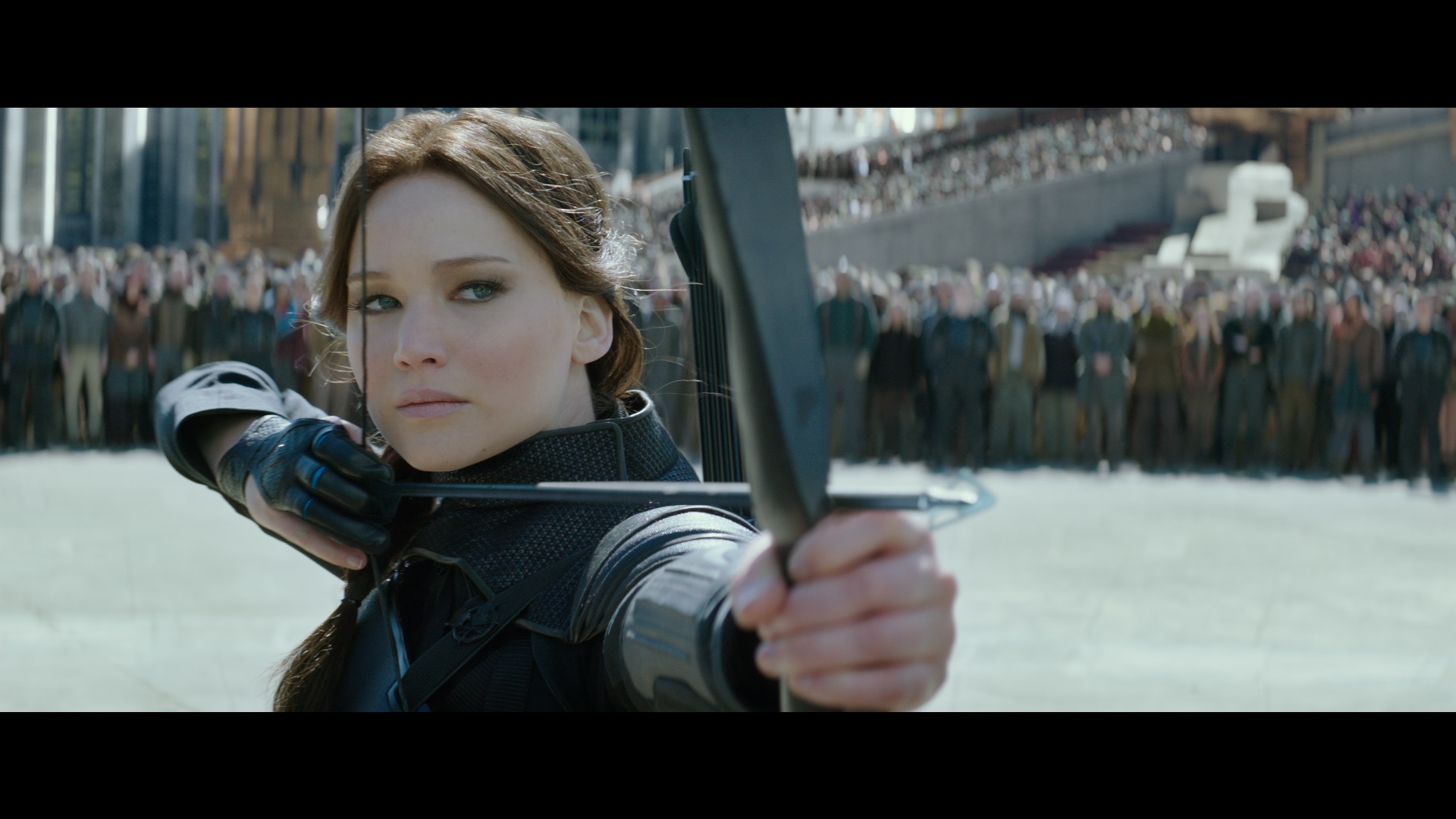
Jennifer Lawrence is still very much the Girl on Fire and still the heart and soul of the entire series as Katniss Everdeen, whose archery skills, heart, and integrity inspire a rebellion.

Those qualities also make her a double target, wanted by both of the opposing forces. Dictator President Snow (Donald Sutherland) wants to get rid of her. But the leader of the rebel group, President Alma Coin, wants to use her for propaganda purposes. As soon as Katniss recovers from the injuries she suffered in part 3, she is back in the field, not so much to fight as to appear to fight, with a camera crew following along.

Also at the end of part 3 we saw that Peeta (Josh Hutcherson), who was tortured by Snow’s “Peacekeepers,” is now convinced that it is Katniss who is the enemy. Even the gentle Prim Everdeen (Willow Shields) cannot reach him.

Katniss is deeply conflicted. She has pretended to be in love with Peeta to win the Games and is so disconnected from her feelings she has no idea whether she loves him or not, or, if she is, if he will ever be himself again. Her old friend Gale is in love with her and she does not know how to respond to him, either. While she is passionately committed to bringing down President Snow, she is not willing to go along with the tactics President Coin believes are necessary. She finds it hard to trust anyone, even herself. The abrasive Johanna Mason (Jenna Malone, a refreshing break from the earnest doggedness of just about everyone else) reminds her that some people say what they mean.

All Katniss is certain of is that President Snow must die and she wants to be the one who kills him. So she and a group of rebel soldiers (don’t get too attached — they’re mostly red shirts) set off with one map showing where the mines and traps have been laid out and, for each of them, a capsule of poison to kill themselves in case of capture.

The middle section of the film is more FPS video game than story as the group faces one diabolical threat after another and it becomes numbing, even comedic as we go from guns and traps to a toxic inky flood and then some zombie-esque creatures, as though it is not just President Snow but author Suzanne Collins who wants to make sure no possible destructive force is overlooked.

There is a brief respite at the home of Tigris (a slinky and imposing Eugenie Bonderant, a woman who has been surgically modified to resemble a jungle cat. Like “Ender’s Game,” another story with very young heroes, the climax does not come where you think, in a manner that allows Katniss to evade genuine resolution of the moral quandaries of ends and means.

Director Francis Lawrence (no relation to Jennifer) has steered this big, unwieldy ship of a story safely into harbor. If he erred on the side of satisfying the books’ fans over those who might come to the story first on screen, that is understandable. But it means that at least half of the relief at having it resolved will be that no one is planning a part 5.

Parents should know that this film includes intense, extended, and sometimes graphic peril and violence with many adult and child characters injured and killed, as well as references to torture, guns, explosions, murder, chase scenes, themes of dystopia and tyranny.

Family discussion: Could the rebels have won without Coin’s decision? Was it worth it? Why are Snow’s forces called Peacekeepers?

If you like this, try: the other films in the series and the books by Suzanne Collins

Related Tags:


Based on a book DVD/Blu-Ray Pick of the Week Fantasy Series/Sequel Stories about Teens

Stephen King’s “Misery” — Now on Broadway with Bruce Willis and Laurie Metcalf

Posted on November 15, 2015 at 3:26 pm

Stephen King’s novel about a deranged fan who captures her favorite author became the film Misery, with an Oscar-winning performance by Kathy Bates.

Now it has been adapted for live theater, with a Broadway production starring Bruce Willis and Laurie Metcalf.

Related Tags:


Based on a book Live Theater
Room

Room

Posted on October 15, 2015 at 5:50 pm

Copyright A24 2015
Copyright A24 2015

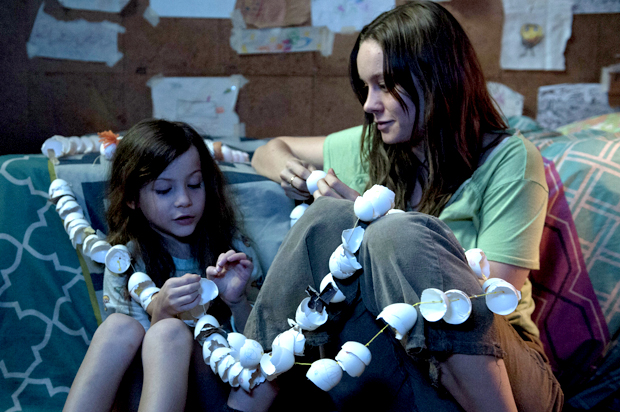
Jack (Jacob Tremblay) wakes up on his fifth birthday and says hello to everything in his world. Through his eyes, and his narration, we gradually come to understand that his world is so entirely circumscribed by the walls of his tiny home that no definite or indefinite articles are needed. There is only one of everything, and everything means very little.

Where Jack and his mother, Ma (Oscar winner Brie Larson) live is just called “Room.” And anything outside of Room, the world Jack glimpses in the flickers of a broken down television, is, his mother tells him, just pretend. Their entire world is contained in Room, and anything they have is brought to them by a gruff-voiced man they call Old Nick (Sean Bridgers). When he comes to Room, opening the locked door whose combination Ma is not allowed to know, Jack hides in Wardrobe until he is gone.

It is only gradually that we come to understand what Jack still does not see. Ma was a teenager when Old Nick captured her and locked her in the shed behind his house so he could rape her and keep her there as his prisoner. She became pregnant with Jack two years later.

Keeping Jack safe and happy is what has kept her from despair. As horrifying as her circumstances are, they have enabled her to maintain a sense of control over Jack’s world that helps her through the absence of control she feels, having to cajole Old Nick for even the smallest accommodation and with no way to escape or contact her family.

But she cannot control Jack’s getting older, challenging her authority, and wanting to know more about what is really happening. That means he may be getting old enough to help her with a daring plan of escape.

Irish writer Emma Donoghue wrote the screenplay, adapted from her book. While it was inspired in part by a real-life case, this is not a true crime story or a woman in jeopardy thriller. Like the post-apocalyptic “The Road,” this is a heightened dramatic exploration of universal experiences all parents — and children of parents — struggle with: the challenges of setting boundaries in an ever-shifting relationship and balancing the need for protection with the need for independence.

And that is why Ma’s greatest challenge comes after the escape. It is surreal to be back in the bedroom she left as a teenager, with her parents who are both the same and different. At first, Jack is terrified. Ma is numb. Everything outside of Room has to be re-evaluated and re-negotiated. Issues of identity, control, separation, boundaries, and what parents and children owe each other are sensitively explored. Larson is one of the finest young actors making movies today and her interaction with the gifted Tremblay is natural, fiercely devoted, and deeply moving.

Parents should know that this movie deals with abduction, rape, and abuse. While they are portrayed sensitively, the material is disturbing. The movie includes strong language, tense scenes, and a suicide attempt.

Family discussion: How was going home different from what Ma expected? How did Ma and Jack differ in their reactions to the escape? Why didn’t Ma’s father want to look at Jack?

If you like this, try: another magnificent performance by Brie Larson in “Short Term 12”

Related Tags:


Based on a book Drama
THE MOVIE MOM® is a registered trademark of Nell Minow. Use of the mark without express consent from Nell Minow constitutes trademark infringement and unfair competition in violation of federal and state laws. All material © Nell Minow 1995-2026, all rights reserved, and no use or republication is permitted without explicit permission. This site hosts Nell Minow’s Movie Mom® archive, with material that originally appeared on Yahoo! Movies, Beliefnet, and other sources. Much of her new material can be found at Rogerebert.com, Huffington Post, and WheretoWatch. Her books include The Movie Mom’s Guide to Family Movies and 101 Must-See Movie Moments, and she can be heard each week on radio stations across the country.

Website Designed by Max LaZebnik