R for strong and disturbing war violence, and language throughout including some sexual references
Profanity:
Very strong language
Alcohol/ Drugs:
Drinking and drunkenness
Violence/ Scariness:
Wartime violence including battles and snipers, characters injured and killed, disturbing images
Diversity Issues:
A theme of the movie
Date Released to Theaters:
January 16, 2015
Date Released to DVD:
May 18, 2015
Amazon.com ASIN:
B00RGZ915C
Copyright 2015 Warner Brothers
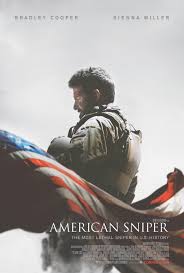
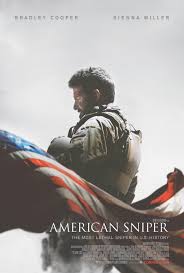
The highest-grossing movie of 2014 is also one of the most controversial. Director Clint Eastwood and producer-star Bradley Cooper have made a more subtle and nuanced film than either the people who loved it or the people who hated it give him credit for. Extremists on both sides found validation for their views, whether for or against the wars in Iraq and Afghanistan or for or against the actions of the military there. That may be the most significant proof of the evenhandedness of Eastwood, a man who made two separate films about Iwo Jima to tell the stories of both the Japanese and American military.
We see Chris Kyle as a young boy, hunting with his father (Ben Reed). We learn two key facts. First, even at that age, Kyle is a very good shot. Second, we hear his father explain that there are sheep, wolves, and sheepdogs, and he expects his boys to grow up to be protectors of sheep, not wolves or their victims.
Nevertheless, Chris grows up (now played by a bulked-up Cooper) without much direction until he decides to enlist. In the movie, it is a response to news reports about Americans being killed by terrorists, following time spent as a ranch hand and finding his girlfriend in bed with another man. In fact, Kyle had always planned to join the military and he does not mention the girlfriend in his book.
This is the kind of diversion from the truth that has caused some viewers to argue that the portrayal is slanted. Later on, as he becomes the deadliest sniper in US military history, the film again unnecessarily ramps up the drama as though Eastwood does not trust the audience to appreciate the intensity, moral quandaries, and psychological impact of war or the courage and skill required of the military. They really did not have to inflate the story of the bounty being put on his head or make it seem as though he was the only one.
The movie and Kyle’s book both begin with a real-life story of Kyle’s first day, where he shoots a woman with a grenade (in the movie, he shoots the child she hands it to as well). This parallels a later moment where he has to decide whether to shoot. Kyle says in both book and movie that he has no regrets. Whether the viewer concludes that is the reason or the result of combat is left to us.
Parents should know that this movie concerns the real-life experiences of a military sniper in combat, with many characters injured and killed and disturbing images. Characters use strong language and there are sexual references and situations and drinking and drunkenness.
Family discussion: Who are the sheep/wolves/sheepdogs in your life?
If you like this, try: “The Hurt Locker” and “The War Tapes”
“Pitch Perfect 2” is — bear with me — the musical comedy variation on the “Furious 7” recipe for success. The sequel jettisons any pretense of seriousness of purpose, structural logic, or psychological authenticity, joyfully tosses off any pretense of taking itself, its heartwarmingly diverse characters, or its storyline seriously. And both, unexpectedly but utterly deservedly, will make you teary-eyed. Substitute exquisitely harmonized snippets of popular songs for cars flying out of planes, and it’s basically the same movie. And there’s nothing wrong with that. “Pitch Perfect 2” is even more fun than the first.
Beca (Anna Kendrick) was just starting college in the first film, about her reluctant agreement to join the all-girl acapella group called The Barden Bellas, led by Aubrey (Anna Camp) and her loyal lieutenant Chloe (Brittany Snow). Now Aubrey has graduated but Chloe is still there, deliberately flunking so she will not have to leave the now-three-time national champion Bellas. Beca is a senior, hoping she can take on a dream internship with a musical producer (Keegan-Michael Key, the “angry Obama”) without disrupting the group.
But the group has been disrupted. The Bellas performed at the President’s birthday celebration (footage of the Obamas is inserted to make it look like they were really there), with Fat Amy (Rebel Wilson) coming in like a wrecking ball on a trapeze. It was a triumph until it became a disaster when Fat Amy’s skin-tight jumpsuit split open and she wasn’t wearing underwear.
The Bellas are banned from collegiate competition, and are not even allowed to conduct auditions. Too bad for those hoping for a reprise of one of the first film’s most entertaining scenes, but there is simply no time. We hardly get a chance to hear Barden’s male acapella group, the Treblemakers, either. This is all about the Bellas fighting their way back with the only option left to them — an international competition, up against the world champions, Germany’s Das Sound Machine, a group so terrifyingly huge and technically perfect it is a kind of acapella Triumph of the Will.
But we’re not here for the plot; we’re here for the music, and there is a ton of it, all so good and so varied that it is frustrating to get it in such short snippets. Songs made popular by the Andrews Sisters, Hansen, Taylor Swift, En Vogue, Mika, Montell Jordan, and Carrie Underwood zip by, most hilariously in a sing-off that tops the original’s. Categories include “Songs About Butts” (one character points out that’s pretty much everything on the radio) and “I Dated John Mayer.” Hilariously, one of the competing acapella groups is the Green Bay Packers. And Snoop Dogg shows up to sing a Christmas song.
There is one new addition to the Bellas, though, “True Grit’s” Hailee Steinfeld as Emily, an eager but shy freshman whose mom (Katey Sagal) was a Bella, so she’s a legacy. She also writes songs.
Will the Bellas get their mojo back? Will Beca impress her boss? Will Aubrey show up for a pep talk? Will there be some delicious silliness along the way? Will Emily’s new songs be game-changers when the long-standing tradition is covers only? How about some romance (a bit) and some comedy (a lot)? But what’s the deal with the false eyelashes on everyone? Did Elizabeth Banks bring on her Effie Trinket makeup team? Fat Amy’s no/yes from Fat Amy when Bumper (Adam Devine of “Modern Family”) says he wants to have sex with her is ooky and just plain off.
But first time director Banks, who co-produced the first film and the sequel, and returns, this time as both commentator on acapella competitions and as head of the organization, manages a very large cast and an even larger set list. She keeps the tone light and breezy, balancing the outrageous (hate mail from Supreme Court Justice Sonia Sotomayor?) with the touching. A call-back to the first film’s breakout hit “Cups,” is simply lovely. If some elements of what we can barely dignify by terming a storyline are pat and predictable, the song choices are not. From the very first moment, with an a capella rendition of the Universal” logo music, we are in mash-up heaven. It is worth the price of admission to hear “MmmBop” acapella, and then, icing on the cake and cherry on the sundae, we get some Kris Kross “Jump” action as well. Acca-heaven.
Parents should know that this film includes some crude sexual and bodily function humor, some strong language, and comic violence (no one hurt). There is a joke that seems to imply that a woman’s “no” to an invitation to have sex is not to be taken seriously, but it later turns out that this is part of a consensual relationship.
Family discussion: What makes you special? What makes your friends and family special? How do you find your voice to express who you are?
If you like this, try: the first “Pitch Perfect” and the television show “The Sing-Off”
Interview: Jonny Campbell, Director of J.K. Rowling’s “The Casual Vacancy”
Posted on May 7, 2015 at 12:53 pm
Copyright 2012 Little BrownJ.K. Rowling’s first book for adults was the dark, sometimes savage story of small town politics, The Casual Vacancy. The title refers to an elected office that is vacated before the term is up, which in this story occurs in Pagford, a small, cozy-looking English village. But its inhabitants are miserable. The town is filled with deceit, selfishness, betrayal, cruelty, and a government that alternates between negligence and incompetence for the poor and highly effective protection for the privileged.
I spoke to director Jonny Campbell about the two-part miniseries adaptation now appearing on HBO, which Slate’s Kay Waldman calls “infinitely better than the book.” At times melodramatic, at time satiric, at times comic, at times tragic, the story follows characters who are often desperate and always trying to protect themselves from hurt and loss.
J. K. Rowling called this story a comic tragedy or a tragic comedy. So how do you as a director signal to the audience what it is that they are seeing, especially since everyone is familiar with her very different Harry Potter books?
The screenplay and the story tell me what I’m supposed to convey to the audience and quite honestly I take great pleasure in the fact that sometimes the tone can be inconsistent, different. Tragic comedy — you don’t get much more extreme than that. People write articles and pieces and analyses of the show, criticisms, features, whatever, and you start to get a picture of how people receive it. I read one earlier today which said it was totally inconsistent and I was left not quite knowing what to feel at the end… Isn’t that brilliant?
For me the tone is the way I like to tell the story. but based on the script. I don’t try and spoon feed it to people. You need to leave people to make up their own mind about the character, rather than dictating and telling people. Now I’m not trying to claim that this is perfect or this is an in-depth insight into the myriad of characters. It just wouldn’t be possible to do that in three hours. What we did try and do is let each character be there on a need to get to know basis. So you kind of stir in the characters as and when you want to turn a new chapter or when the story develops and you feel the audience can withstand yet another new face and we are talking about not less than 30 characters here, you add them in. If people think it’s inconsistent I see that as a strength. Life is full of variation and equally at the end you hope people are moved. If some people are left floundering going, “I’m not quite sure what I’m supposed to feel,” that’s fine too.
You’ve got a community of people in Pagford that are living cheek by jowl. The danger is it can become a bit soapy. It’s very much my intention to try and not let it do that because while these people’s lives at the end of the book will still keep going, like the end of the movie you know you want to make people aware that they have stopped, the end of the story is here. And the other thing to say is one of J. K. Rowlings’ intentions in writing this was she wanted to write a contemporary novel which had the sensibilities of the 19th century novels. I didn’t realize this at first when I read the screenplay. And I hadn’t read the book at that point, so the penny dropped for me it when it sort of dawned on me that this was very much in the sort of vein of Charles Dickens in terms of shining a light on every aspect of every strata within society within the confines of the story. I’m a huge Dickens fan. In his books you you have a vulnerable teenage character whether it’s David Copperfield or Oliver Twist or Pip you have this central character who is being sort of bashed around like in a pinball machine through the sort of the straits of life by various eccentric characters who even in the Dickens context has to be sort of slightly heightened and caricature in their nature. But here people often see that as a weakness, saying “that character is stereotypical and caricature.” And yet if they were wearing wigs and bonnets then we never would level that criticism at all Because it is a contemporary setting it just shows what people’s expectations are and why I felt this was really original piece. If you watch it with an open mind you totally get it. If you don’t to be prejudiced by your sort of preconceptions about… I am being introduce to this character, I want to know everything about their story, everything about their journey it is like “hang on a second”, they are playing a part in this machine of telling the story about society, about the family in particular but to be patient and just watch it unfold. Don’t be impatient and let yourself go a bit.
As a director, you had a real challenge in managing so many characters and stories.
When you read the novel, it is one of the difficulties is trying to put a face to a name almost. In a way that makes it easier with an adaptation because at least you have an actor being that character. When you are reading it in a novel you kind of just have to close your eyes and keep reminding yourself as part of the joy of reading a book who is who, but here equally it was about not trying to introduce everybody at the same level one after the other but as and when they become necessary for the storytelling. You might not know their name at first. That might come a bit later.
So we wanted a sort of contrast in, both in terms of Sarah Phelps writing the screenplay and bring the characters in like a mixture of a recipe. You say, “Well, hang on, we are able to take another character at this point and if so is this the best time to name check them, is this the best time to have a visual cue?” When we first see Colin Wall you just see the back of his head. You’re forcing the audience a little bit to sort of go, “I guess that must be her husband and that’s her son” instead of telling them everything. I find that more interesting. One of the thrills of doing it is setting out all the chess pieces before you could really go to town on cranking up the story, hopefully ratcheting up the stakes.
I noticed several different times where you used images of reflections. What did that convey?
You get an extra mark for spotting that. Whether it’s a reflection in the mirror, or in the water, or in the river that goes around Pagford like a noose sort of tying itself, constricting the village, there’s a visual metaphor. In terms of the reflections that was deliberate in terms of distorting things, showing that things aren’t always what they seem and that it’s a way of holding the mirror up to ourselves. That’s what J. K. Rowling does in the novel very astutely. She has this uncanny ability within one sentence to sum up absolutely the motivation of a character to make a particular decision and that whole process. And I think what they ended up doing thought and action and that’s one of the fascinating joys of reading the book.
When you try to adopt that into a screenplay, it would be foolhardy to try and just verbatim transpose that into a screenplay, it just can’t do it. You would not be successful anyway so we had to make some decisions not everyone was going to agree with what but we did want to try and do was visually to be constantly challenging the viewer to think about those characters their own locations, their environment become a part of the storytelling part of them, sort of an echo of their own characters and there’s a lot of detail in the set design to visualize thoughts. We had to sort of use anything we could to sort of try and get that across. But the mirror itself was about in a very simplistic level about those in society, with a mottled old antique mirror indicating a timeless story and hopefully implicated by the typeface of the Casual Vacancy itself. This is a classic story in a temporary setting.
I was very struck in particular by the performance of Julia McKenzie, as this kindly-looking lady who is shockingly vicious.Copyright 2015 HBO
She’s a grand dame of the British acting establishment, a huge musical and operatic star and she’s been in lots of comedies over the years and more recently she was Ms. Marple. So she’s a perfect choice to play Shirley because she starts off as this of doddery, smiling, respected sort of harmless cardigan-wearing granny and then as the story progresses you see the Machiavellicome out and you realize that she’s pulling the strings and her husband is pretty much her puppet. And she’s Lady Macbeth by the end. I think she turns in an astonishing performance.
She says to her daughter-in-law, “You are not a victim. You are a failure.” It is devastating.
Yes, it all goes pear-shaped for her from that moment. It is like by speaking what she feels to be the truth, by seeing the inner workings of her mind, we know she is despicable in that moment. So it makes the scene where she’s forgiven all the more touching or at least more meaningful because because part of the story is having not a happy ending but just a sense of “hang on, some kind of change has to come through this village.” That moment of forgiveness is almost like a blessing. It is for me one of the really key moments.
It may be a British costume drama based on a classic novel, but Thomas Hardy’s saga of a headstrong woman and the three marriage proposals from very different men is not the usual corsets and teacups. Far from the Madding Crowd is the story of Bathsheba Everdene (a radiant Carey Mulligan), an orphan who inherits a farm and announces to the staff, “It is my intention to astonish you all.”
What gives the story a vital, even modern tone is the independence of its heroine, who is often wrong, but who has good instincts and accepts the consequences of her mistakes and learns from them. There is romance and drama in the story, tragedy and betrayal, but it engages in a bracing fashion with issues of class, honor, and values. It is not much of a spoiler alert to say that Hardy favored those who were most connected to the land and nature.
It begins in 1870, when Everdene is at first a poor relative living on her aunt’s small farm. She had intended to take on the favorite profession of literary heroines: governess. But “she was far too wild,” nothing like the meek Jane Eyre. She rides straddling her horse, no sidesaddle. The very handsome farmer next door is Gabriel Oak (Matthias Schoenaerts, radiating quiet integrity) who presents her with a lamb and asks her to marry him. She likes him very much but turns him down. “I shouldn’t mind being a bride and having a wedding if I didn’t have to have a husband.”
Their positions are suddenly and dramatically changed. She inherits a farm, rising to the lower levels of the landed gentry. He loses his flock in a calamitous accident and is unable to keep the farm. As he is looking for work, he stops to put out a fire in what turns out to be Everdene’s new farm. She offers to hire him if the change in their positions will not be too awkward for him, and he agrees. Her next proposal is from her neighbor, a reserved and lonely older man named William Boldwood (Michael Sheen), who is not bold at all, but who was encouraged by a valentine Everdene sent him impulsively, not thinking he would take it seriously. Her third proposal is from an officer named Frank Troy (Tom Sturridge), who tells her she is beautiful, shows off his swordsmanship, and introduces her to sensual pleasures. He does not tell her he was supposed to marry someone else.
David Nicholls, who wrote the excellent miniseries adaptation of Hardy’s Tess of the d’Urbervilles, would have benefited from miniseries length for a story of this scope. It is rushed and abrupt at times. But Nicholls and director Thomas Vinterberg never let the story get musty or dated. It is firmly grounded in the most literal sense, always returning to the land as the source of what is good and true, and to the people who understand that as the real heroes and the ones who know what love can be.
Parents should know that this film includes sexual references and a non-explicit situation, violence, and sad deaths including a murder.
Family discussion: What was Bathsheba looking for? Why did it take her so long to figure that out? What appealed to her about each of her suitors? Why do you think this heroine inspired the name of “Hunger Games” heroine Katniss Everdeen?
If you like this, try: the earlier version with Julie Christie and the book by Thomas Hardy, and “My Brilliant Career”
Thomas Hardy’s classic novel Far from the Madding Crowd is the story of headstrong Bathsheba Everdene, who inherits a farm and who receives marriage proposals from three very different men. A new version starring Carey Mulligan, Michael Sheen, Tom Sturridge, and Matthias Schoenaerts opens this Friday.
The 1967 version starred Julie Christie, Terence Stamp, Peter Finch, and Alan Bates.



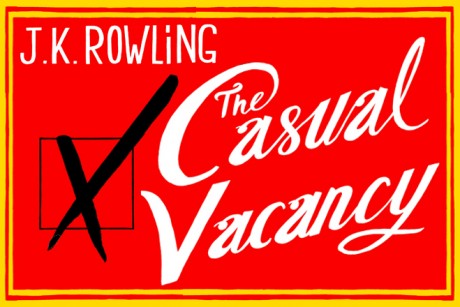

 . The title refers to an elected office that is vacated before the term is up, which in this story occurs in Pagford, a small, cozy-looking English village. But its inhabitants are miserable. The town is filled with deceit, selfishness, betrayal, cruelty, and a government that alternates between negligence and incompetence for the poor and highly effective protection for the privileged.
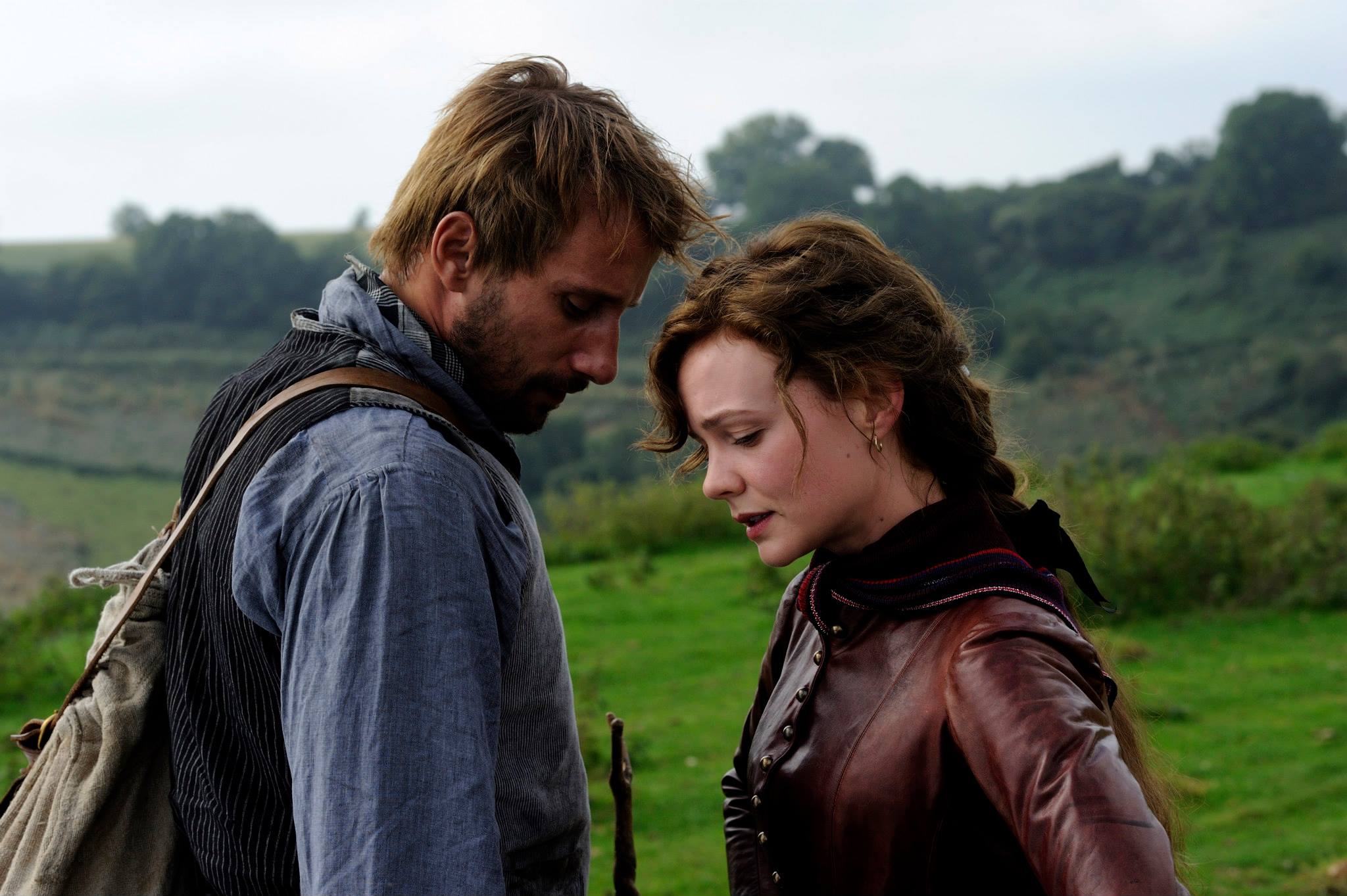
 is the story of Bathsheba Everdene (a radiant Carey Mulligan), an orphan who inherits a farm and announces to the staff, “It is my intention to astonish you all.”
 , would have benefited from miniseries length for a story of this scope. It is rushed and abrupt at times. But Nicholls and director Thomas Vinterberg never let the story get musty or dated. It is firmly grounded in the most literal sense, always returning to the land as the source of what is good and true, and to the people who understand that as the real heroes and the ones who know what love can be.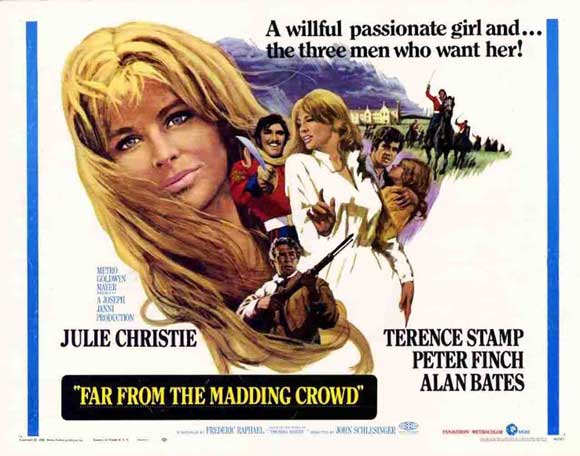
 is the story of headstrong Bathsheba Everdene, who inherits a farm and who receives marriage proposals from three very different men. A new version starring Carey Mulligan, Michael Sheen, Tom Sturridge, and Matthias Schoenaerts opens this Friday.
  .
.