
Left Behind

Posted on October 5, 2014 at 12:01 am

“Left Behind” is being marketed as Christian entertainment, but it does not qualify in either category.

It is far inferior to the modestly budgeted but sincere straight-to-DVD starring Kirk Cameron, based on the blockbuster best-selling book series by Tim LaHaye and Jerry B. Jenkins, itself inspired by the Book of Revelations. This version has a bigger budget and a real, Oscar-winning movie star, Nicolas Cage. But what it doesn’t have is any meaningful spiritual content aside from referring to a couple of Bible verses and the underlying premise that people of faith are taken up to heaven while those who did not live Godly lives are “left behind.” All of the significance and context of the book and the original film are swept away for just another disaster movie. This is not a movie about faith or grace. It is a movie about a plane that is in the air when the Rapture occurs, so that children and babies disappear along with some of the passengers and crew, and the sole remaining pilot (Cage) has to keep everyone calm and safe while he thinks about how he should have listened to his wife (Lea Thompson), a believer, instead of being driven away by her faith into a possible dalliance with a flight attendant.

With a musical score that sounds like the music you are stuck with on hold waiting for tech support and cheesy special effects, it feels like a low-budget disaster film from the 1970’s. There was laughter throughout the theater in one scene where a plane crashed in a parking lot because the stock footage used for the explosion was so clumsily inserted. And when Nicolas Cage plays a pilot on a plane in trouble, it is a huge disappointment that we only get one brief outburst. What is the point of putting the Cage rage-monster in a film if he doesn’t blow his top? Instead he just alternates between moping and steely determination, not his strengths.

But the real failure here is the hollowing out of the storyline. It is a sad irony that a movie intended to warn about the dangers of soullessness is itself so empty.  At the end of 2014, it turned up on most critics’ worst of the year lists.

Cassi Thomson (who plays a devout Christian on “Switched at Birth” and a Mormon on “Big Love”) is Chloë, who comes home from college to surprise her father on his birthday only to find out that he won’t be there.  Her father is the heroically named Rayford Steele (Cage), and he is a pilot and he will be flying to Europe.  She waits at the airport to say goodbye to him before he leaves, and rescues a handsome television reporter named Buck Williams (Chad Michael Murray, in the film’s best performance) from a woman who tries to warn him of a coming Biblical catastrophe.  Then Chloë sees her father walking to the gate with a flight attendant.  There is something about the way they are leaning toward each other that indicates a close relationship.  Chloë is devastated.  It turns out Buck is on Ray’s plane, and Chloë gives him a message for her father.

Suddenly, when the plane is over the Atlantic and Chloë and her brother are at the mall, people disappear, taken out of their clothes.  The rest of the film is Ray in the plane and Chloë on the ground, trying to figure out what has happened and why and what to do next.

The book and the original film had provocative notions of how current world events were playing into the predictions contained in Revelations.  There were characters who represented the forces of evil and there were characters trying to make sense of what it meant to be left behind.  This version has none of that.  There is the thinnest gloss of faith-based content, as though the filmmakers are afraid of offending a mainstream audience.  Even worse, it appears they assume that the faith-based audience is so loyal they will not care about cardboard characters, clumsy dialog, painful attempts at humor involving a little person, and poorly-staged action scenes.  I hope that the success of well-made faith-based media this year will make it impossible for the filmmakers here to complain that the criticism of this film, which showed up on most of the 10 worst lists of 2014, is based on bias.

Parents should know that this film has a great deal of peril and violence, discussions of infidelity, sad losses, drinking and drugs, and some disturbing images.

Family discussion: What separated those who were taken and those who were left behind? What would you have written on the ticket envelope Chloë asked Buck to deliver?

If you like this, try: the original film with Kirk Cameron and the book series
Related Tags:


Based on a book Remake Spiritual films

Gone Girl

Posted on October 2, 2014 at 6:00 pm

gone girl

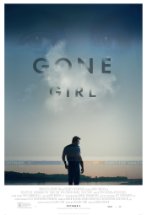
Amy (Rosamund Pike) is watching television, vitally, even viscerally enthralled by what is happening on screen. The look on her face, mingled fascination and calculation, a hint of tooth and claw under her placid, golden girl beauty, is one of the most mesmerizing sights on screen this year.

Pike gives an extraordinary performance in the title role of David Fincher’s film based on the sensationally popular  thriller by Gillian Flynn that was carried by just about everyone riding public transportation last year, many of whom became so engrossed that they missed their stops.

Ben Affleck is perfectly cast as the once-glamorous and smooth, now just slightly seedy Nick Dunne. His face is still handsome but his jawline is softening, his eyes are beginning to get puffy, and his smile, still calibrated for a face a little bit handsomer than the one he has not quite adjusted to seeing in the mirror.

On their fifth anniversary, Nick’s wife Amy (Pike) disappears, leaving behind some disturbing signs of a struggle and the front door open. Nick calls the police and spends the night with his twin sister, closest confidant, and business partner, Go (Carrie Coon). He sleeps in his clothes and does not clean up the next morning. He knows he will be a more compelling vision of a devastated husband if he looks like a mess.

That is the first indication of one of the story’s key themes: the gulf between the way we present ourselves and the way we are. We learn through flashbacks and Amy’s diary about how they met and fell in love, or a reasonable facsimile. They were buoyed by ease and that made marriage feel easy, too.  They had glamorous writing jobs in those last few moments before print publishing collapsed. They had a charming brownstone, bought with Amy’s money, or, rather, the money her parents earned by publishing a successful series of children’s books inspired by their daughter, the Amazing Amy stories. Her parents set aside the profits for the daughter who inspired them. But then there was the recession. Jobs, gone. Money, gone. The economic downturn eroded the golden couple’s notion of each other, of themselves, of success. It is so easy to be in love when you don’t have to blame each other for everything turning out so badly.

When Nick’s mother became ill, they moved back to the small town in Missouri where he and Go grew up, to help take care of her. With the last of their money, they bought a house and a bar for Nick to run with Go. Amy stayed home and wrote in her diary. And now she’s gone.

If there’s one thing television news loves to cover, it’s a missing blonde woman. The Nancy Grace-ish Ellen Abbott (a dead-on Missi Pyle) is all over the story. Is Nick the tragic young husband, longing for his wife to return? Or, as we have seen too often in this high-profile cases, is he a murderer so heartless that he staged the whole thing?  One detective (“Almost Famous'” Patrick Fugit) thinks the simple answer is usually the right one.  His partner (Kim Dickens, nicely wry) believes in complications.  This case has plenty.

No spoilers here. Either you’ve read the book and already know or you haven’t and deserve to be surprised. I’ll just say there are superb performances by everyone, including Tyler Perry as a celebrity criminal defense lawyer and Neil Patrick Harris and Scoot McNairy as Amy’s former boyfriends.  And Fincher keeps the energy taut and the tone deliciously nasty.

Parents should know that this is a crime story with some bloody violence, as well as sexual references and situations, nudity, strong language, and drinking.

Family discussion: What would have happened if Nick and Amy had kept their jobs and money and stayed in New York? What will happen after the ending of the movie?

If you like this, try: “To Die For” and the novels by Gillian Flynn, including Dark Places, soon to be a movie starring Charlize Theron.
Related Tags:


Based on a book Thriller

Trailer — Exodus: Gods and Kings, The Story of Moses with Christian Bale

Posted on October 1, 2014 at 8:00 pm

Christian Bale and Sir Ben Kingsley star in “Exodus: Gods and Kings,” the story of Moses and the exodus of the Jews from Egypt. It opens this December.

Related Tags:


Based on a book Spiritual films Trailers, Previews, and Clips

Tracks

Posted on September 25, 2014 at 6:00 pm

B+
Lowest Recommended Age: High School
MPAA Rating: Rated PG-13 for thematic elements, some partial nudity, disturbing images and brief strong language
Profanity: Some strong language, one F-word
Alcohol/ Drugs: Drinking
Violence/ Scariness: Animals and humans in peril, sad animal death, references to suicide
Diversity Issues: Diverse characters
Date Released to Theaters: September 26, 2014

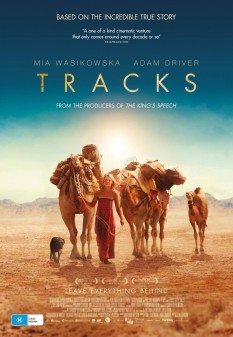
tracks-movie-posterIn 1977, a 27-year-old woman named Robyn Davidson took a dog and four camels and walked 1700 miles across the Australian desert. A National Geographic photographer met up with her four times to cover it for the magazine. That led to a book, the international best-seller Tracks.  And now it is a film, starring Mia Wasikowska, with Adam Driver as photographer Rick Smolan, and directed by John Curran, whose previous films (“The Painted Veil,” “We Don’t Live Here Anymore”) show a gift for letting the environment be an essential part of the story-telling.  The result is a journey set in surroundings of punishing conditions but spectacular beauty that manages to be meditative and internal, and all the more illuminating for it.

This is the first of two movies based on soul-restoring real-life hikes taken by real-life women that we will be seeing this fall, both based on best-selling books, with Reese Witherspoon’s more high-profile “Wild” coming out December 5, 2014.  While there are flashbacks to suggest that Davidson took on the trip to deal with some family losses, in real life Davidson has not just refused to give a reason; she has insisted that it is a foolish question to ask.  She walked across Australia for the same reason that Mallory climbed Mount Everest.  “Because it’s there.”  Her version of a response: “Why not?”  It’s pretty clear why not.  It is very dangerous.  The terrain is blisteringly hot and with very little water.  If she is injured or lost, no one will be there to help her.  But she is determined to go, indenturing herself with camel dealers to learn how to train camels and earn some to take with her.  When the first one cheats her out of what is due to her, she reluctantly agrees to allow National Geographic to sponsor the trip, though it means she will have to allow Smolan to meet up with her four times to take photos.

This is not the usual travelogue, with adventures that include quirky characters, daunting dangers, and lessons learned, though all are there.  Along the way, she meets up with Aboriginal people, including one who serves as a guide for a part of the journey because it includes sacred land which she is not permitted to travel on without him.  She comes across a farmhouse, and the couple who live there welcome her in a beautifully understated manner.

You’d also expect spectacularly gorgeous and exotic scenery, and that is there, too.  And, with just one person on screen much of the time, a lot of voiceover narration, though that’s not too bad.  Most of all, this is a spiritual saga, a pilgrimage.  Davidson wanted to be alone — she admits that she is much more comfortable with animals than with people.  And she wanted to accomplish something difficult by herself.  It almost seems at moments as though we are intruding in her beautiful solitude.  But mostly, we are sharing it, and feel grateful for the privilege.

Parents should know that this film includes sad and disturbing material including suicide of a parent (off-screen) and putting down animals, dangerous activities, peril, animals shot and poisoned, some disturbing images of dead animals, some strong language (one f-word), and non-sexual nudity (female rear).

Family discussion: Why was Robyn happiest away from people? What was the hardest moment of her trip and why?

If you like this, try: other movies set in the Australian desert, including “Walkabout” and “Priscilla, Queen of the Desert”

Related Tags:


Action/Adventure Animals and Nature Based on a book Based on a true story Drama Movies -- format

The Boxtrolls

Posted on September 25, 2014 at 5:59 pm

A-
Lowest Recommended Age: Kindergarten - 3rd Grade
MPAA Rating: Rated PG for action, some peril and mild rude humor
Profanity: None
Alcohol/ Drugs: None
Violence/ Scariness: Cartoon-style peril and some violence, comic allergic reaction, references to disturbing violence, some gross images
Diversity Issues: A theme of the movie
Date Released to Theaters: September 26, 2014
Date Released to DVD: January 19, 2015
Amazon.com ASIN: B00HLTDARS
The-Box-Trolls-2
Copyright LAIKA Studios 2014

LAIKA Studios (Paranorman and Coraline) has created another  loveably crooked world, this time inspired by Alan Snow’s Here Be Monsters! (The Ratbridge Chronicles).  It’s their first period setting, a sort of slightly bent Edwardian with a touch of steampunk, in the town of Cheesebridge.  LAIKA’s motto may be “No straight lines, no right angles, no perfect circles,” but this wobbly community is rigidly stratified, with the White Hats at the top of society, nibbling on exotic cheeses in the elegant Tasting Room and hosting elegant parties, the lower class Red Hats desperate to be accepted by them. There is an entirely separate group, the gentle Boxtrolls, who live underneath the city, turning rubbish into Rube Goldbergian machines and tending their garden.  They are called Boxtrolls because of their attire — discarded cardboard boxes.  And their names come from the boxes they wear: Fish, Fragile, Shoes, and Specs.

And then there is Eggs (Isaac Hempsted Wright).  He thinks he is a Boxtroll, but he is a human, left as a baby by his father, who was trying to keep him safe.  Apparently Cheesbridge follows Noam Chomsky’s theories of language: while the Boxtrolls speak in a sort of mumbly pidgin talk, Eggs speaks flawless and rather aristocratic-sounding English.  Their happy life is disturbed by Snatcher (Sir Ben Kingsley), the leader of the Red Hats, who conducts raids to capture the Boxtrolls.  He knows they are harmless, but he has persuaded the White Hats that the Boxtrolls capture and eat human children so that they will depend on him to exterminate them.  If Snatcher gets rid of all of them, the Mayor of Cheesebridge has promised to give him a White Hat and allow him into the sanctum sanctorum, the Tasting Room.  There is one problem, though.  Snatcher, despite his protestations to the contrary, is massively lactose-intolerant.

Mayor Lord Portly-Rind (Jared Harris) and his wife Lady Portly-Rind (Toni Collette) have a daughter named Winnie (Elle Fanning, the sister of “Coraline” star Dakota Fanning).  She longs for them to pay attention to her.  Their neglect has led her to develop a macabre fascination with what she imagines are the atrocities of the Boxtrolls and she decides to investigate.  When she finds out that the Boxtrolls are harmless, she agrees to help Eggs tell her father that Snatcher has lied.  Eggs will need to be persuaded that he is in fact human and then taught some of the basics of human interaction so that he can deliver the message.

The word “immersive” is often used to describe movies with 3D effects that seem to make the images surround the viewer by extending both in front of and behind the screen.  But LAIKA’s films are more deeply immersive than that because of the intricacy of the world they create.  Most animated movies use miles of code to show us how every individual hair in an animal’s fur rustles in the wind.  But the handmade touch and infinite care of LAIKA’s stop-motion films, where figures and props are nudged ever so slightly for each individual frame and craftspeople spend months creating practical (not digital or virtual) effects to evoke water, fire, and clouds, creates an environment that is tantalizingly complex and invites many viewings to explore its wonders.

LAIKA is perfectionist in its dedication to not being perfect.  It embraces the messiness of life.  The Boxtrolls’ cavern is grimy and dank, and the Portly-Rind home filled with dessicated finery, but both are brimming with endlessly inventive detail, especially the elaborate mechanics of the Boxtrolls’ cave and the meticulous choreography of the White Hats’ ball.  Every single object reflects the care taken by the filmmakers and every detail reflects some element of character and story, which are messy as well.  Winnie, who has so much, is lonely and neglected.  But she is brave and honest.

Eggs, who has so little, is surrounded by love.  He is loyal and courageous.  And Snatcher, who is so desperate for acceptance that he will don an elaborate disguise, make libelous accusations, and put his health and even his life at risk, is ultimately not really able to destroy the Boxtrolls.  His henchmen, played by Tracey Morgan, Nick Frost, and Richard Ayoade are less wicked than existentially confused, trying to persuade themselves that they are on the right side.

The visuals are deliciously grotesque at times, but the message is a sweet one: families come in all sizes and shapes, sometimes biological, sometimes not, but what defines them is love.

NOTE: Be sure to stay through the credits to see some existential ponderings by the characters and a brief cameo by animator/CEO Travis Knight.

Parents should know that there are some comic but grotesque and macabre images.  Characters are in peril and apparently killed, though shown later to be imprisoned.  A character appears to have lost his mind.  Another character explodes (offscreen).

Family discussion: Why was it so important for Snatcher to be a White Hat?  Why didn’t Winnie’s parents pay more attention to her?  Why did some of the Red Hats think they were the good guys?

If you like this, try: “Coraline,” “Paranorman,” and “Monster House”

Related Tags:


3D Animation Based on a book DVD/Blu-Ray Pick of the Week Fantasy For the Whole Family Scene After the Credits Stories About Kids
THE MOVIE MOM® is a registered trademark of Nell Minow. Use of the mark without express consent from Nell Minow constitutes trademark infringement and unfair competition in violation of federal and state laws. All material © Nell Minow 1995-2026, all rights reserved, and no use or republication is permitted without explicit permission. This site hosts Nell Minow’s Movie Mom® archive, with material that originally appeared on Yahoo! Movies, Beliefnet, and other sources. Much of her new material can be found at Rogerebert.com, Huffington Post, and WheretoWatch. Her books include The Movie Mom’s Guide to Family Movies and 101 Must-See Movie Moments, and she can be heard each week on radio stations across the country.

Website Designed by Max LaZebnik