Fifty Years of Fiddler on the Roof

Posted on September 20, 2014 at 8:00 am
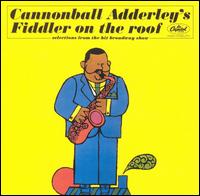
fiddler japaneseThe Yiddish-language stories of Sholem Alechim, collected as Tevye the Dairyman and The Railroad Stories (Library of Yiddish Classics), inspired one of the most successful, influential, and widely performed Broadway musicals of all time, “Fiddler on the Roof,” which opened fifty years ago this week. It set the then-record of 3000 performances and still is listed as the 16th longest-running Broadway musical in history. There has been hardly a day since this story about a Jewish community in czarist Russia opened that it has not been performed somewhere around the world. Its songs, including “Sunrise, Sunset” and “If I Were a Rich Man,” have become standards, performed and recorded by singers around the world.

The play establishes its setting with the opening number, “Tradition,” where the fathers, mothers, sons, and daughters sing about the roles established for them by their culture and religion. But the theme of the play will be the pressure of modernity as all of the assumptions and beliefs of the community will be challenged.Cannonball_Adderley's_Fiddler_on_the_Roof
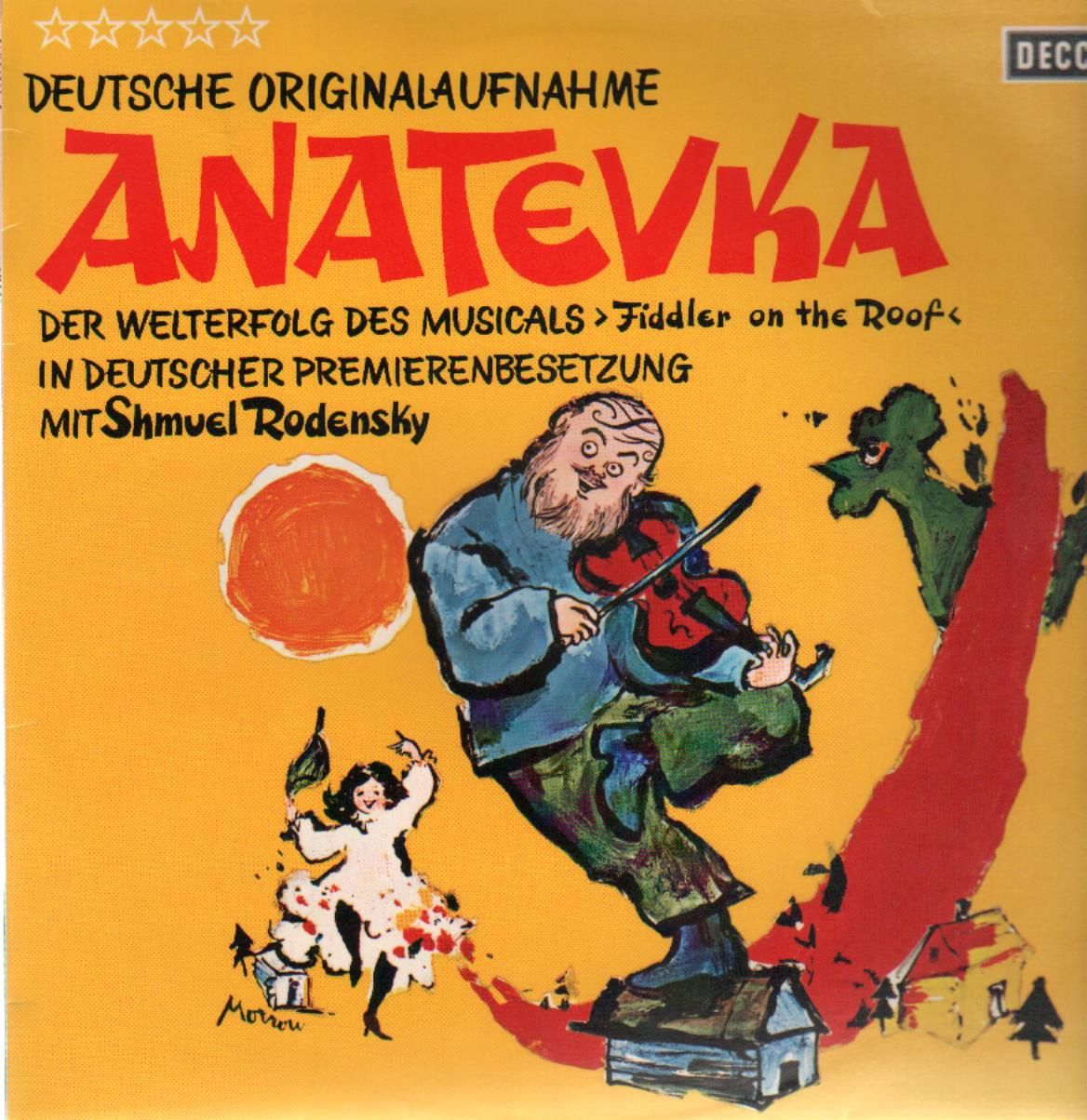
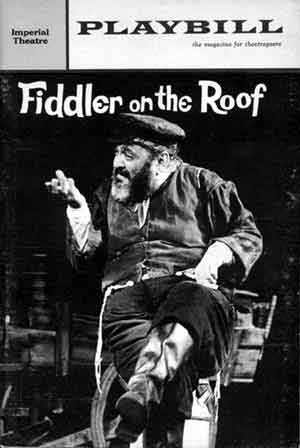
The central character is Tevye (played by Zero Mostel on Broadway and the Israeli actor Topol in the movie). He is a poor milkman with five daughtersshmuel_rodensky_in-anatevka_-_fiddler_on_the_roof.  Tradition would give Tevye the role of selecting husbands for his daughters based on what would be socially and economically advantageous. He approves of the widower butcher for his oldest daughter. But she challenges tradition by asking for his approval for her to marry the shy tailor she loves. Tevye must bend because he loves her and wants her to be happy. Seeing her in love makes him question for the first time whether his wife of 25 years, chosen for him, loves him. But his second daughter asks him to bend farther. She loves a hot-headed revolutionary, and she says they will marry whether Tevye approves or not. He is worried, but he gives them his blessing.

And then the third daughter asks him to bend further. She is in love with a non-Jew. Tevye says that is something he cannot accept. It shakes the foundations of his beliefs to even consider it. But not as much as they will be shaken by an anti-Semitic pogrom, with the Czar’s men all but destroying their village. The title of the play comes from the image of a musician precariously trying to maintain his balance and stay safely on a roof. The play ends with Tevye following millions of Europeans over the late 19th and early 20th century — immigrating to America, under the lamp held high for them by the Statue of Liberty.fiddlerplaybill
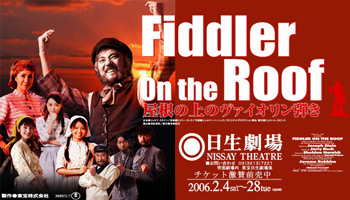
Many years ago, my parents were visiting Tokyo and saw that a production of “Fiddler on the Roof” was on stage there. They bought tickets. Even though it was in Japanese, with Japanese actors, they recognized the story and music. And they enjoyed the enthusiastic response of the audience. When it was over, my father asked one of the Japanese audience members who spoke English why the play was so popular there. He smiled, “It’s very Japanese!” The details, including the style of the music, are very particular to one group. But the themes of balancing tradition with growing understanding about ourselves and the world, about struggles between parents and children, about what is best for the community and what is best for the individual, are universal.
Related Tags:


Based on a book Based on a play Classic Family Issues For Your Netflix Queue Live Theater Musical

This is Where I Leave You

Posted on September 18, 2014 at 5:59 pm

B-
Lowest Recommended Age: Mature High Schooler
MPAA Rating: Rated R for language, sexual content and some drug use
Profanity: Very strong and crude language
Alcohol/ Drugs: Drinking, smoking, drugs, references to pharmaceuticals
Violence/ Scariness: Scuffles, sad death
Diversity Issues: None
Date Released to Theaters: September 19, 2014
Date Released to DVD: December 15, 2014
Amazon.com ASIN: B00K2CI008
Copyright 2014 Warner Brothers

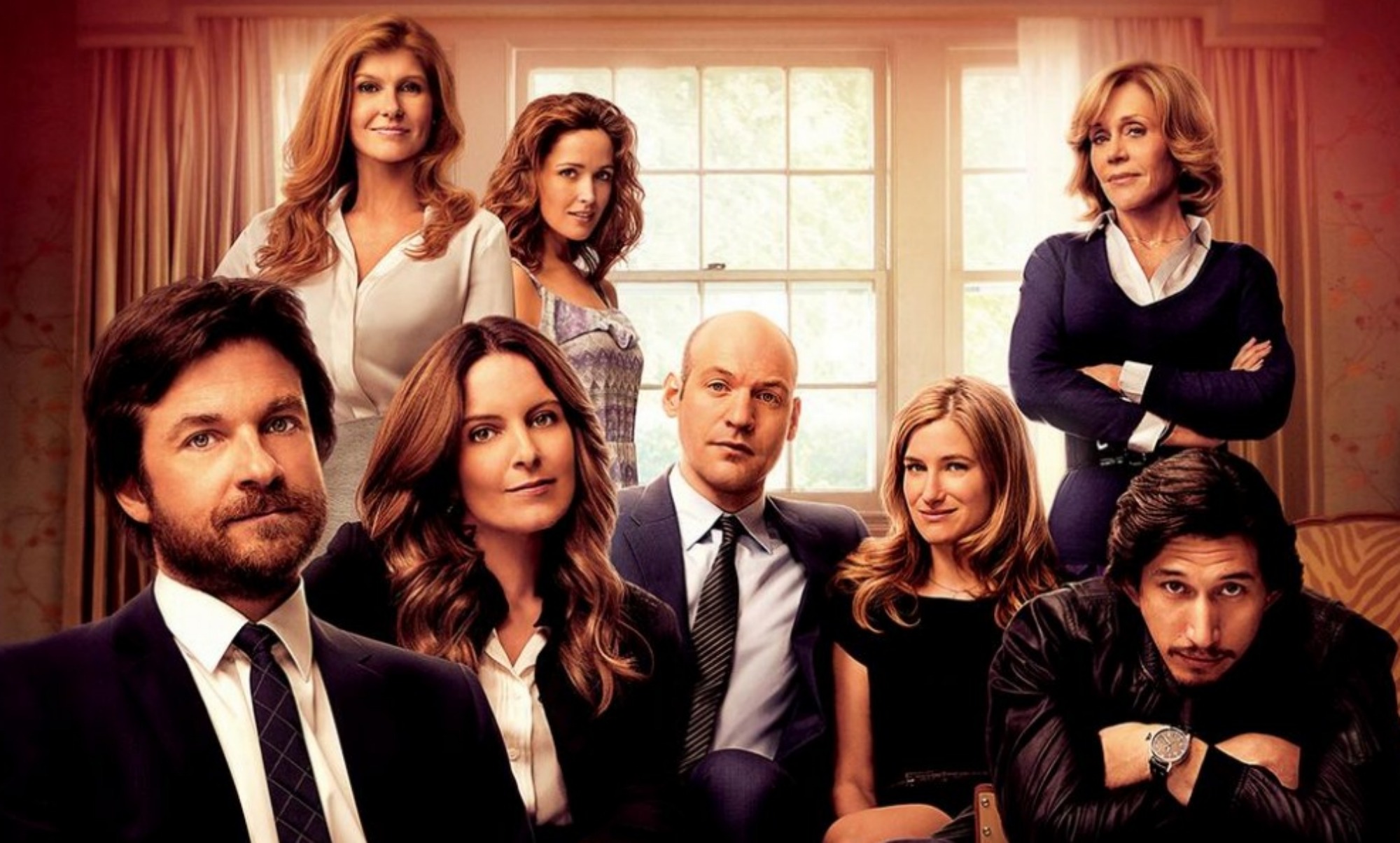
A toddler carries his little potty out in front of the house so he can try out his new-found skill in public. Twice. Plus another time when the contents of the potty are first displayed for the family and then kind of accidentally tossed onto one of the relatives. This is pretty much the theme of “This is Where I Leave You,” one of those estranged relatives gathering under pressure movies that tries to put the “fun” in dysfunctional.” It’s pretty much great actors trying to make sense of characters who are continuously inappropriate, unpleasant, and miserable, with boundary issues that make Russia/Ukraine seem manageable. And they almost succeed.

Jonathan Tropper wrote the screenplay based on his novel about four siblings returning home for their father’s funeral. Their mother Hillary (Jane Fonda) is a family therapist and the author of a best-selling book on child development that (boundary issue alert) revealed many embarrassing details about the siblings and is now celebrating the 25th anniversary of its initial publication with a re-release. She is given to wildly inappropriate revelations about her sex life with their father (another boundary alert), and showing off her newly enhanced breasts.

She tells her four children that their father’s last wish was for them to observe the Jewish tradition of sitting “shiva,” a seven-day period of mourning where the family stays at home together and receives visits from those who wish to pay condolences.  They understand that “it’s going to be hard and it’s going to be uncomfortable, and we’re going to get on each other’s nerves.”  But, Hillary says, they have no choice.  “You’re grounded.”

They try to protest, but reluctantly agree. Paul (Corey Stoll) is the only one who has stayed in their hometown, the responsible brother who took over the family business, and married Annie (Kathryn Hahn), who is struggling with fertility issues. Wendy (Tina Fey) is married to one of those guys who is always on his cell phone talking about some big financial deal. She has two children, the aforesaid toddler and a baby. Judd (Jason Bateman) is in freefall, having just learned that his wife has been having an affair with his skeezy boss (Dax Shepard), the host of a shock jock radio show called “Man Up.” And then there is Philip (Adam Driver), the irresponsible baby of the family, who arrives in a Porsche convertible, with a new girlfriend named Tracy (Connie Britton), who is much older and a therapist.  You don’t need to be a therapist to figure out that there are some mommy issues there.  Everyone but Phillip is aware that Tracy is way out of his league and he does not deserve her.

The three out of town siblings all encounter past loves.  Wendy’s is Horry (Timothy Olyphant), who was brain-damaged in an accident and still lives with his mother Linda (Debra Monk), Hillary’s neighbor and close friend.  Phillip sees Chelsea (Carly Brooke Pearlstein), who looks, as Tracy notes, like a Victoria’s Secret model.  And Judd sees Penny (a terrific Rose Byrne), living back in their home town and teaching figure skating.  Each presents temptations as the siblings struggle to make sense of their choices, and struggle even more to communicate.  “Deflecting emotion with logistics.  Nice.” “It’s what we do.”  Some secrets will be revealed (though not always intentionally) while others are protected.

Tropper’s screenplay is better than the book because we are not limited to Judd’s depressed narration and because it corrects what I thought was a mistake in the final resolution of Judd’s relationship with his wife.  And it is helped a great deal by performances that give the characters more believability and complexity than the book did.  But director Shawn Levy (“The Internship,” “Night at the Museum”) has always been stronger with broad comedy than with narrative, romance, and sentiment, and this storyline plays into his tendency to meander. Are we supposed to laugh at the Altmans because they are so awful or sympathize with them because all families are crazy at times? The bad choices, lack of respect, and wild swings of character keep us distant from the characters, despite the best efforts of the terrific cast.

Parents should know that this film includes very strong and crude language, sexual references (some vulgar) and explicit situations, nudity, adultery, drinking, smoking, marijuana and pharmaceuticals

Family discussion: How are the Altman siblings alike? How are they different? How do you feel about “complicated?”

If you like this, try: “This Christmas” and “Flirting With Disaster”

Related Tags:


Based on a book Comedy Drama Family Issues Movies -- format

The Maze Runner

Posted on September 18, 2014 at 5:59 pm

B
Lowest Recommended Age: High School
MPAA Rating: Rated PG-13 for thematic elements and intense sequences of sci-fi violence and action, including some disturbing images
Profanity: Some strong language
Alcohol/ Drugs: Underage drinking
Violence/ Scariness: Extended sci-fi action, peril and violence with many disturbing images, including monsters, dead bodies, apparent suicide, and wounds, many characters injured and killed
Diversity Issues: Diverse characters
Date Released to Theaters: September 19, 2014
Date Released to DVD: December 15, 2014
Amazon.com ASIN: B00OY7YPGK

maze runnerYes, it’s another dystopic YA trilogy (actually, there’s a fourth volume, a prequel), and yes, only a teenager with fabulous cheekbones can save the day. But “The Maze Runner” is not a lesser repeat. It is a worthy addition to the genre, an absorbing drama with surprising turns and even more surprising resonance to contemporary conflicts.

Our main character learns what is going on around him at the same time we do. He awakens with a gasp in an elevator cage hurtling to the surface. His memory is gone. He does not know who he is or where he is. When the elevator stops, he finds that he is in a wilderness, the entire population adolescent boys. They call it The Glade. For three years, one boy has arrived by that same elevator every month, along with some supplies in a box marked WCKD. We learn along with the boy, called “Greenie” by the others because he is new, that they have created a society with rules and assigned tasks. The Glade is surrounded by a massive maze that re-arranges itself every night. One group of boys, called Runners,” explore the maze every day to try to map its variations and figure out an escape path. They have to be out of the maze at night because horrible monsters called The Grievers come out. No one who was in the maze at night has ever survived. A “sting” from one of the monsters is toxic, causing madness. The other boys, led by Alby (Aml Ameen of “The Butler”), introduce the greenie to their world and tell him he will remember his name. “It’s the one thing they let us keep.” He does remember. His name is Thomas (Dylan O’Brien).

The boys understand the concept of parents but have no memory of ever having had any. Chuck (Blake Cooper), one of the youngest and most tender-hearted of the boys in The Glade, confides to Thomas that he has carved a little totem for the parents he cannot remember but hopes to be returned to some day.

Alby explains the rules to Thomas. Everyone must do his part. Never harm another Glader. “None of this works unless we have trust.” Never go beyond these walls. But those rules are based on the past. Thomas’ arrival signals some changes. Or did he create those changes? That is an issue that will be debated and then fought over.

“You’re not like the others,” someone says to Thomas. “You’re curious.” Thomas says that if they have not figured a way out in three years, it is time to try something new. Some of the others agree with him, especially after the elevator arrives with someone new — a girl — with a note that says she will be the last one.

A little bit “Lord of the Flies” (boys creating their own society, the struggle between animal instincts and human justice), a little bit “Hunger Games” (teenagers used as pawns by adults), it still manages to bring some imaginative and provocative themes and create distinctive characters. The maze itself is stunning. Production designer Marc Fisichella and the entire sound team have created a maze that is more than an obstacle course or a metaphor. The conflicts as the boys try to maintain some control in the midst of an environment that, like the maze, shifts and constricts are absorbing. The result is a film that you do not need to be a teenager or a YA fan to appreciate.

Parents should know that this film has sci-fi-style action, peril and violence, guns, knives, many young characters injured and killed, suicide, scary and disgusting monsters, some disturbing images, some strong language, and teen drinking.

Family discussion: Why do Thomas and Gally have different ideas about what to do? What was the maze supposed to test?

If you like this, try: the book series and other dystopian films like “The Hunger Games” and “Divergent”

Related Tags:


Based on a book DVD/Blu-Ray Pick of the Week Fantasy Stories about Teens

The Drop

Posted on September 11, 2014 at 6:00 pm

Author Dennis Lehane writes about a world of desperation, fear, and damaged people inflicting further damage. His novels have been filmed as “Mystic River” and “Gone Baby Gone.” And now his short story, “Animal Rescue,” has been turned into “The Drop,” about a “drop bar,” a dingy place with dingy regulars, a bitter former owner still resentful of the thugs who took it over, a soft-hearted bartender and the dog he rescues from a garbage can, and lots of cash, dropped at the bar by racketeers to be picked up by bigger, tougher, racketeers. You know what that means: colorful, highly euphemistic dialog said by top-notch actors doing their best to play hard, hard men. Very little is said in this world but a lot is understood.
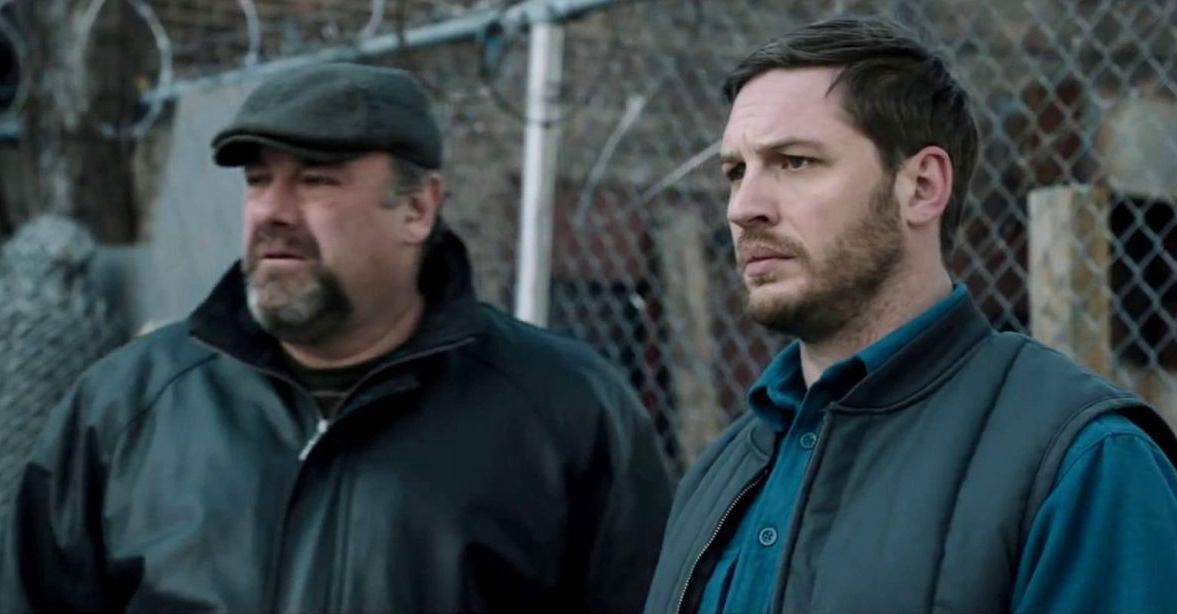
Fortunately, here that means we get James Gandolfini in a beautifully nuanced performance that makes us miss him even more sharply. He plays “Cousin Marv,” whose name is still on the bar, but no longer on the deed. Now he’s just the manager, and he quietly but meaningfully tells Bob (Tom Hardy), the bartender, to take down the Christmas decorations (“It’s December 27th!”) and stop running a tab for the flowsy barfly at the end of the counter. Oh, and no more rounds for the boys at the bar, even though they are observing the 10th anniversary of a friend’s death. We will learn later that there is more significance to the last two items than losing the revenue on a few drinks.

Copyright 2014 Fox Searchlight

On his way home, Bob hears a noise in a neighbor’s garbage can. It is a badly injured puppy. The wary neighbor is Nadia (Noomi Rapace), who insists on taking a picture of Bob’s driver’s license on her cell phone and sending it to four friends before she will even talk to him about the puppy. She helps him clean it up and reluctantly agrees to care for it for a couple of days so he can decide what to do. He adopts the puppy and names it Rocco. And she offers to care for the puppy while he is at work to make some extra money.

For a moment, things are looking up for the lonely Bob. But not for Cousin Marv’s or for Cousin Marv. Marv and Bob are held up at gunpoint by two guys in masks who may not be entirely unknown to them. The owners are tough Chechen gangsters who expect them to get the money back and who give them a glimpse of some guys they are in the middle of torturing just to make sure the message is received. And Cousin Marv’s is set to be the drop bar for the biggest betting night of the year, the Super Bowl. A cop (John Ortiz of “Silver Linings Playbook”) is nosing around. And there is pressure on Bob as well. A very unstable guy in the neighborhood, reputed to have killed a guy, says he is Rocco’s owner and he may have some feelings of ownership toward Nadia as well. Also, there is a body part formerly belonging to someone who was formerly alive, and it will need to be disposed of.

The storyline is all right, but what matters here is the mood, and that is excellent, with Gandolfini, as always, a master class in acting. There are so many layers to his performance, whether he is answering his sister’s question about dinner or refusing to look inside a bag that clearly cannot contain any good news. His expression in his very last scene of the film is particularly compelling.

Hardy’s quiet power is beautifully restrained. Ann Dowd as Marv’s wistful sister and Matthias Schoenaerts as Eric, Rocco’s volatile former owner are also very good. In some ways, Eric is the most revealing character in the story. Asked what he wants, he isn’t sure, except that he doesn’t want Bob to think he has anything over on him. People want money, of course, and power, and to be left alone. But what drives them really nuts is the fear that someone has more than they do and there’s nothing they can do about it.

Parents should know that this plot concerns various crimes and attempted crimes including extortion, robbery, torture, and murder, with many characters injured and killed, as well as some graphic and disturbing images, drinking, smoking, and constant strong language.

Family discussion: The original title of the story this film was based on is “Animal Rescue.” Would that have been more appropriate for the film? Why did Bob stay at the bar?

If you like this, try: “Killing Them Softly” and “Get Shorty,” both featuring James Gandolfini

Related Tags:


Based on a book Crime Drama Thriller

Cinderella — With Music by Rodgers and Hammerstein

Posted on September 10, 2014 at 8:00 am

Every family will enjoy the 50th anniversary edition of the glorious Rodgers & Hammerstein’s Cinderella, starring Lesley Ann Warren, with Celeste Holm as the fairy godmother, Jo Van Fleet as the evil stepmother, and Walter Pidgeon and Ginger Rogers as the King and Queen. One of the ugly stepsisters is played by Pat Carroll, who would go on to provide the voice for one of Disney’s most memorable villains, Ursula in “The Little Mermaid.” And the prince is played by “General Hospital’s” Stuart Damon. The performances are delightful but the star of the show is the wonderful music from Richard Rodgers and Oscar Hammerstein. It was later remade with Brandy, Whitney Houston, and Bernadette Peters, equally delightful. And the rare first version with Julie Andrews is available now as well. All three are perfect for families to watch together.

http://www.youtube.com/watch?v=VtFhREtPdiE

“Cinderella” was the only musical Rodgers and Hammerstein (“Carousel,” “The King and I,” “The Sound of Music”) ever wrote for television. But it ended up on the duo’s home turf anyway when “Cinderella” became a Broadway hit, with Tony Award-winning costumes.

Related Tags:


Based on a book Classic Fantasy For the Whole Family Movie Mom’s Top Picks for Families Musical New on DVD/Blu-Ray Romance
THE MOVIE MOM® is a registered trademark of Nell Minow. Use of the mark without express consent from Nell Minow constitutes trademark infringement and unfair competition in violation of federal and state laws. All material © Nell Minow 1995-2026, all rights reserved, and no use or republication is permitted without explicit permission. This site hosts Nell Minow’s Movie Mom® archive, with material that originally appeared on Yahoo! Movies, Beliefnet, and other sources. Much of her new material can be found at Rogerebert.com, Huffington Post, and WheretoWatch. Her books include The Movie Mom’s Guide to Family Movies and 101 Must-See Movie Moments, and she can be heard each week on radio stations across the country.

Website Designed by Max LaZebnik