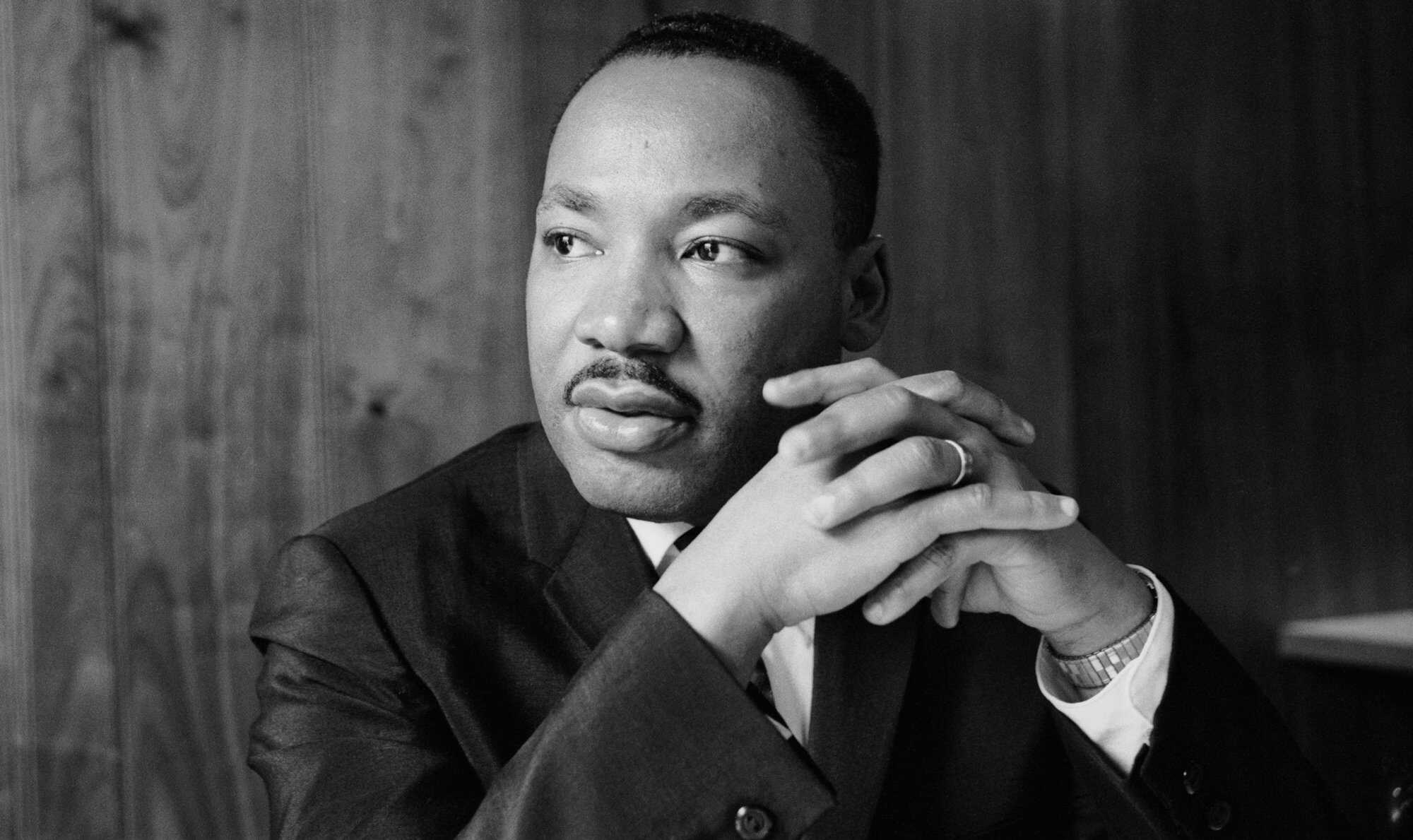
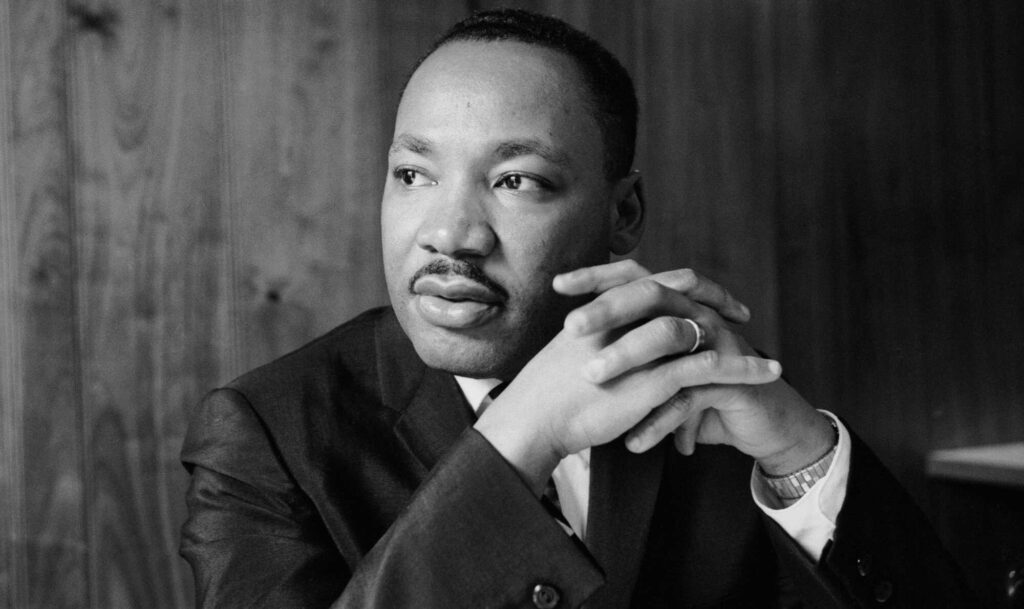
As we celebrate the birthday of Martin Luther King, every family should take time to talk about this great American leader and hero of the Civil Rights Movement. There are outstanding films and other resources for all ages.
I highly recommend the magnificent movie Boycott, starring Jeffrey Wright as Dr. King. And every family should study the history of the Montgomery bus boycott that changed the world.
The March, narrated by Denzel Washington, is a documentary about the historic March on Washington with Dr. King’s famous “I have a dream” speech. Rustin, produced by Barack and Michelle Obama and featuring a magnificent performance by Colman Domingo, came out in 2023.
The brilliant film Selma tells the story of the fight for voting rights.
The Long Walk Home, starring Whoopi Goldberg and Sissy Spacek, makes clear that the boycott was a reminder to black and white women of their rights and opportunities — and risk of change.
Citizen King is a PBS documentary with archival footage of Dr. King and his colleagues.
Martin Luther King Jr. – I Have a Dream has his famous speech in full, still one of the most powerful moments in the history of oratory and one of the most meaningful moments in the history of freedom.
Tense emotional confrontations, serious medical problems, sad death
Diversity Issues:
Some references to antisemitism and prejudice against LGBTQIA people
Date Released to Theaters:
December 15, 2023
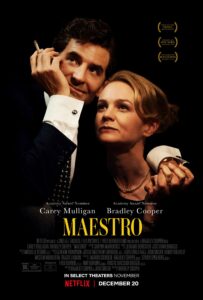
Copyright 2023 NetflixThere are moments in “Maestro” that are as stunning and bravura as the works of the brilliant man who is the subject of the film. It is the story of one of the formative figures of 20th century music, composer/conductor/musician/educator Leonard Bernstein. Bradley Cooper co-wrote, directed and stars as Bernstein, whose music provides every note of the score and sometimes commentary on the narrative. Some of his choices work better than others, but every frame of the film reflects his profound immersion in Bernstein’s life and his growing mastery of cinematic storytelling.
It begins with a brilliant introduction to Bernstein as a character and to his story at an early turning point. Bernstein answers the phone. His voice is measured. Someone is ill. He expresses concern. But that means a once-in-a-lifetime opportunity and the second he gets off the call his ecstatic jubilation bursts from him as he kisses the man in his bed and races down to the theater, still in his robe. Conductor Bruno Walter is ill and Bernstein will conduct that night’s concert. To call it a triumph is an understatement. It was a sensation. And Cooper the director makes us not just see but feel it.
One of Bernstein’s early compositions was the music for what would become the musical and later Gene Kelly film “On the Town.” Cooper makes a very daring choice by having Bernstein and his date and future wife Felicia Montealegre (Carey Mulligan) attend a rehearsal that becomes something of a dream ballet. The characters interact with the dancers to show us the developing dynamic of their relationship.
In another extraordinary scene, Bernstein and Felicia, now married and middle-aged, are having an argument in their Manhattan apartment. It is staged with a deep understanding of the characters, their deep but sometimes toxic connection, and of how we as the audience take in the setting. Felicia sits by the window, still but furious. Leonard hunches over in a chair, talking quickly, deflecting rather than engaging. Surreally, outside the window, the Macy’s Thanksgiving Day parade is passing by and in the next room the Bernstein children are calling out to their parents to come see Snoopy. Every detail of pacing, composition, and emotion is superb.
And one more unforgettable scene — Cooper re-enacts Bernstein conducting Mahler’s 2nd that does more than copy the physicality of Bernstein’s version as it was filmed; he inhabits it, showing us the passion, the depth of understanding, and the way Bernstein was able to communicate the most delicate nuance to a huge number of musicians and singers.
This movie is not about Bernstein as the musician and composer. There are documentaries and scholarly analyses and archival clips for that. This is about Felicia and how their relationship reflected his conflicts but made possible his achievements.
This is the story of the marriage of two people who loved each other deeply and loved their children. Felicia knew that Leonard was gay or bi-sexual (as indicated by the “On the Town” scene) before they were married and she was confident that her acceptance would make their connected impenetrable in any meaningful way. But it is much harder than she expected. It is not just about who he is physically attracted to. It is that seduction is as core to him as music. Cooper at times, especially in scenes that re-create archival material like the Edward R. Murrow television interview, seems to be replicating Bernstein. But in much of the film, especially those moments when he is thrilled by someone new, we see it is all of one piece with his furious engagement with music, with creative partners, with romantic partners, with his children and his environment — to him, with all of life.
Parents should know that this film has extended mature material including sexual references and situations, very strong language, drinking, constant smoking, tense emotional confrontations, serious illness, and a sad death.
Family discussion: What should Leonard have said to his daughter? What held Leonard and Felicia together? Do you have a favorite of his compositions?
If you like this, try: Bernstein’s music in “Candide,” “On the Town,” and “West Side Story” and his wonderful Young People’s Concerts. And learn more about the years of study that went into this performance.
Rated R for strong violence, some grisly images, sexual content and brief language
Profanity:
Some strong language
Alcohol/ Drugs:
Alcohol
Violence/ Scariness:
Very graphic and disturbing images in scenes of battle
Diversity Issues:
None
Date Released to Theaters:
November 22, 2023
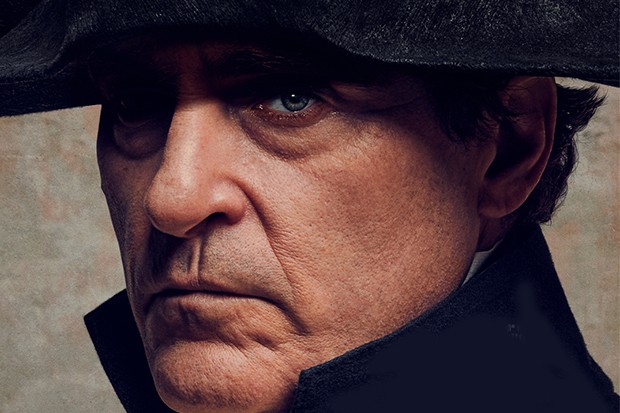
Copyright 2023 ColumbiaNapoleon Bonaparte is one of history’s most consequential figures but you will not understand him or his influence any better after watching Ridley Scott’s almost-three-hour epic. Joaquin Phoenix plays the general-turned emperor-turned exile-turned emperor again and then again turned exile, and Vanessa Kirby plays his wife, Josephine, to whom he wrote sizzling love letters, some included in the film, along with some of the gigantic battles he fought and won and one he lost so resoundingly that its name persists hundreds of years later as a term for career-ending failure.
The press notes for the film tell us that we will see Napoleon’s life “through the prism” of his volatile relationship with Josephine. It does not do either. Phoenix, who makes little effort to change his age or facial expression as the film covers decades, is burdened with some truly terrible dialogue, including what may be this year’s single worst line: “Fate has brought me to this lamb chop.” The legend of Napoleon inspired the name of the psychological syndrome of grandiosity, a supreme, all-encompassing sense of superiority. In this film, that is indicated with comments like, “I admit when I make a mistake. But I never make a mistake.”
As for that prism of the relationship, it does not live up to the love letters. Napoleon seems to be obsessed with Josephine, more about possessing her than being close to her or even considering her feelings in any way. He makes love like he wages battle — it’s about moving fast and destroying the other side.
Josephine’s feelings about Napoleon are more practical. When they meet, her confinement as a political prisoner is so recent her hair has not grown out. She showed her survival skill by escaping the fate of her first husband, who was executed, by getting pregnant. about her survival and then, as he rises in stature, she seems to enjoy the attention and fancy clothes and parties.
The movie careens back and forth between the zoomed-in, intimate but chilly portrayal of the marriage and the zoomed-out epic battle scenes, artfully staged but even with graphic carnage, remote. As the Duke of Wellington, Rupert Everett, arriving well past the two-hour mark, reminds us what a vivid and arresting performance brings to a film.
Director Ridley Scott has promised a four-hour version for streaming, so maybe that will be smoother and do a better job of integrating the different parts of the story. In that case, perhaps it is best to think of this as a very long trailer.
Parents should know that this is an R-rated film with graphic and disturbing images of battles that include guns and swords. As we are told before the closing credits, millions of people were killed, and we see some of the injuries and deaths in very explicit detail. A character is killed offscreen by guillotine, to the approving cheers of a crowd. There are sexual references, including adultery, and very explicit sexual situations. Characters drink and use some strong language.
Family discussion: What were Napoleon’s greatest strengths and weaknesses? Why did the French return to a monarchy?
If you like this, try: the silent Abel Gance classic, “Napoleon”
Rated PG-13 for some strong language and crude material
Profanity:
Some strong language
Alcohol/ Drugs:
Drinking and drunkenness
Violence/ Scariness:
Reference to very sad death of a child, comic vehicular injury
Diversity Issues:
A theme of the movie
Date Released to Theaters:
November 10, 2023
Copyright 2023 SearchlightTwo coaches are fired for dismal performance at the beginning of “Next Goal Wins,” the fact-based story of the worst professional soccer team in the world, based on the 2014 documentary of the same name. The team that not only never won a game but never scored a goal is on the tiny US territory of American Samoa. Still smarting after the worst defeat in the history of international soccer, 31-nil against Australia, Tavita (Oscar Knightley) reluctantly fires the team’s gentle coach, and announces he is bringing in someone from the outside world.
Meanwhile, in one of the funniest scenes of the year, Thomas Rongen (Michael Fassbender) is also being fired. To make it even more painful, the message is coming from the sport’s supervising panel, which includes his soon-to-be-ex-wife (Elisabeth Moss as Gail) and her new boyfriend (Will Arnett as Alex). They are not unsympathetic, but Tom’s performance and that of the team he coaches have deteriorated badly and they think he needs a chance of scene. There’s hardly a bigger change than a team in a tiny island on the other side of the world. Without any alternative, he goes, bringing a suitcase full of alcohol with him.
Taika Waititi, who co-wrote and directed the film and appears briefly as a minister, benefits from one of the most enduringly popular of all genres, the fact-based underdog team combined with the redemption arc for the coach story — think of “The Bad News Bears” or “A League of Our Own.” He is very aware of the minefield that is impossible to avoid in a story of people of color whose job in these stories is usually to be cute and a little bit simple and to be both enlightened by the more sophisticated, if troubled, white coach and to enlighten him as well with their folk wisdom. Waititi, who grew up in New Zealand with a white, Jewish mother and a Maori father, has a delicate touch, and calls out the issue explicitly a couple of times to let us know that these characters and this film may be whimsical, almost a fairy tale, but these are real people who are very aware of these tropes not just in stories, but in their lives. They even joke about not wanting Tom to be a white savior and about pretending to share mystical native wisdom to inspire him. There is gentle humor about the Samoans, but not at their expense. We do not get to know too many of the players, but Tavita and his wife Ruth, played by the wonderful Rachel House, have significant roles.
Waititi’s character almost winks at us as he introduces the film, telling us it is a true story “with a couple of embellishments.” But the parts you might guess are made up really did happen. One of the team’s star players was Jaiyah Saelua, a trans woman in our terms, but in Samoan culture a part of a third gender called fa’afafine that is not only accepted but cherished. In real life, Tom was supportive of Jaiyah without any hesitation, but the film adds some tension by giving Tom some trouble accepting Jaiyah (a heartfelt performance by non-binary actor Kaimana). And the basics of the story really happened, including the ignominious Australia game and how meaningful the experience was for Tom and the Team.
It is warm-hearted and endearing. It has the same appealingly modest tone that the team does; it just wants to have fun and score one goal.
Parents should know that this film includes some strong language, drinking, a very sad off-screen death, a vehicular injury played for comedy, and some discussion of being uncomfortable around non-binary and trans people (note, in real life, as you can see in the documentary, Rongen was unhesitating and unequivocal in his support for the trans player).
Family discussion: Have you ever had a coach who made a difference in your life? What would you do if you were asked to coach this team?
If you like this, try; “A League of Their Own,” “The Damned United,” and “Ted Lasso”
Rated R for violence, some grisly images, and language
Profanity:
Strong and racist language
Alcohol/ Drugs:
Drinking and drunkenness
Violence/ Scariness:
Extended peril and violence including murder, guns, explosions
Diversity Issues:
A theme of the movie
Date Released to Theaters:
October 20, 2023
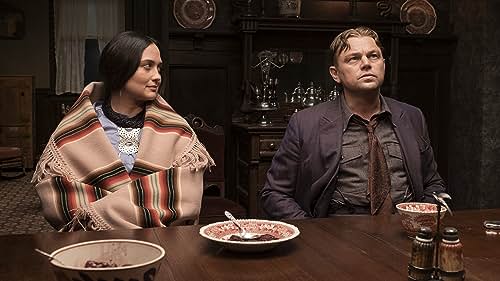
Copyright AppleTV 2023Martin Scorsese brings everything he knows to the fact-based epic “Killers of the Flower Moon,” everything he knows about filmmaking and everything he knows about the conflicts and betrayals in American history, despite all efforts to remove them from curricula and libraries, continue to pulsate through our culture.
The film is based on the prize-winning book of the same name by David Grann, set about a century ago in Oklahoma. America forcibly relocated the Osage tribal members to a part of the country they thought was valueless. Times change. Technology changes. And it turned out that what was under that land was suddenly accessible and valuable: oil. The bounty the Osage never sought brought them riches they never dreamed of. The money brought the kind of people who will do anything to get it. That includes bending the law to the breaking point, with the government placing severe restrictions on Osage access to the money, appointing white “guardians” to oversee every expenditure and getting paid to do so, exploitation and con artists, price gouging, getting access to the money by marrying Osage women, and murder.
As the film begins, the approximately 2000 Osage are among the most prosperous communities in the world. They live in gracious, beautifully appointed homes. They have white servants. The women wear the latest fashions and expensive jewelry. Their towns are vibrant and modern. They go to a white church but retain many of their tribal traditions.
The most prominent white member of the community is William King Hale (Robert De Niro). “Call me King,” he says genially but meaningfully to his nephew, Ernest Burkhart (Leonardo DiCaprio), a WWI veteran who has just arrived in town. Ernest swiftly moves from driver to husband to Mollie, one of the Osage sisters who are prominent holders of “headrights” to the revenues from the oil, yet still needing permission to spend the money. Those rights cannot be sold or given away, but they can be inherited. So, many white men, like Ernest who candidly admits that he loves money and liquor and hates to work, marry Osage women, putting them in line to inherit. Even better if they can accelerate that transfer by accelerating their deaths.
Spectacular production design by Jack Fisk and cinematography by Rodrigo Prieto (who also did “Barbie,” so he’s having quite a year), editing by Scorsese favorite Thelma Schoonmaker, and music from The Band’s Robbie Robertson (who grew up on a native reservation) create a world that is vivid and specific but also a metaphor that resonates with America’s founding themes and failures to live up to the promise of the Declaration of Independence. Mollie and her sisters are doubly restricted as Indians and women and Mollie is additionally vulnerable because she has diabetes. At the sometimes poisonous heart of the film is the Ernest/Mollie relationship. From their first magnetic conversation when Mollie accurately but somehow also fondly calls Ernest a coyote who wants money, the themes of love and betrayal intertwine. Ernest’s increasing corruption shows on DiCaprio’s face, disintegrating like Dorian Gray’s portrait. De Niro shows us Hale’s smooth veneer, as he pretends to be devoted to the Osage, especially Mollie and her sisters, and as he speaks of murder as though he is making plans for a picnic. A white man is asked to kill someone and instantly refuses until he is told the target is an Indian. That alters the transaction. And it makes clear the othering that expands as the envy of the white Oklahomans distorts their thinking.
The book focuses on the pre-FBI investigator (Jesse Plemons, genial, implacable, incorruptible, and determined) working under J. Edgar Hoover, the movie, with a script by Scorsese and Eric Roth, wisely makes Mollie the center. Gladstone is a wonder, showing us her mingled love for her husband and her people, her devastating grief over the loss of her family, and her growing recognition that she has been betrayed. The film calls on us to keep watching her face, calm to the point of stoicism as she sits with her grief and her shrinking options.
The film takes its time, over 3 1/2 hours, but every minute is earned. This is a rare film that is not just excellent, but important.
Parents should know this is a fact-based story of racism, plunder, murder and exploitation. Characters are in peril and are murdered by guns and an explosion and fire. There is an attempted murder by poison and references to suicide. There are intense and graphic images. Characters use strong language, drink, and smoke.
Family discussion: Is there a way to find justice for these abuses? Who should be responsible? What does the relationship between Mollie and Ernest symbolize about the relationship between the US and its people?