The Sound of Music Celebrates its 50th Anniversary
Posted on March 9, 2015 at 8:00 am
A glorious new 50th anniversary Blu-Ray edition of Sound of Music is out this week, featuring commentary, behind the scenes footage, and all kinds of extras — sure to be one of your “favorite things.”
Rated PG for thematic material, some violence and language
Profanity:
Some strong language
Alcohol/ Drugs:
Drinking
Violence/ Scariness:
Some gang-style violence, mostly off-screen, characters injured
Diversity Issues:
A theme of the movie
Date Released to Theaters:
February 20, 2015
Date Released to DVD:
June 1, 2015
Amazon.com ASIN:
B00UI5CUSM
Copyright Disney 2015
In 1987, Coach Jim White (Kevin Costner), who had never coached or even run cross country, took a team of kids from one of the poorest communities in California to a state championship. Of course that would have to become a Disney movie. But in 2015, it is near-impossible to make a movie about a white coach and his all-Latino team without falling into one of two equally fatal traps. We are no longer in an era when it is acceptable to have a “mighty whitey” movie has a white savior teaching people of color a better way to live. We are also no longer in an era where it is acceptable to have a “magical Negro” plotline, with a person of color teaching a white person a better way to live. We all have people in our lives who teach us important lessons, but presenting these stories in a sensitive way is an almost insurmountable challenge.
“McFarland USA” comes as close as it can to surmounting that challenge by wisely — and honestly — showing what everyone in the story learns from the experience. That comes from warm, sensitive performances by all involved and by telling details. The best is after the team comes in last in their first meet because the coach failed to check out the terrain. The team had never practiced on an incline and the course of the raise included some steep passages. So, for their next practice, Coach White brings them to a place where he and the audience see enormous piles of something under tarps. White knows only that this is a good place to practice running uphill. The team knows what is under the tarps — millions of discarded almond shells, removed by field workers, so supermarkets across the country can stock shelled nuts in little plastic pouches. The symbolism, and White’s growing understanding not just of the challenges faced by his team but of their dedication, perseverance, and strength is un-sappy and touching.
It begins with White getting fired for an outburst at an arrogant high school football captain, and taking a job as an assistant football coach in the small farm town of McFarland in central California. The entire population is Latino and most of them work in the fields as “pickers,” starting at age 10. The kids and teenagers work before and after school. White is quickly relieved of his responsibilities as assistant coach when he takes a player out of the game because he has been injured. He decides to start a cross-country team, even though the principal tells him ‘That’s a private school sport. They breathe different air.” White has no experience. Also, because this is 1987, it would be about a decade before he could just Google how to do it. No one at the school has the time — or the shoes — for distance running. But he can see that they can run, and he gets them to agree to try to compete. At first, he does not even have a stopwatch to time their runs. He uses a kitchen timer.
It is a poor community. No one in the boys’ families has more than a 9th grade education. The high school is next door to the prison, with a barbed-wire fence. The families see sports as “not essential,” a distraction that keeps the boys away from paying work on the fields. “Every hour with you is food off my table,” says one father. But White and the community learn to trust each other, even after a scary encounter.
Director Niki Caro (“Whale Rider”) has a sensitive touch and a trust in her story and characters that gives them space to breathe. The running scenes are vivid and exciting. By the time we get to the end credit sequence, showing the team now in their 40’s and still running every day in McFarland, we see that more than the state championship has been won.
Parents should know that there are a few bad words, some drinking, and some gang-style violence. It is mostly off-screen, but characters are injured and there are brief disturbing images.
Family discussion: Which teachers have made you see that you were capable of more than you thought? How did White and the team demonstrate that to each other? When did the team start calling him “coach” and why?
It may not be the most accurate of the more than 200 movies featuring Abraham Lincoln, but this quiet John Ford film is still one of my favorites, especially in the depiction of his tragic love for Anne Rutledge.
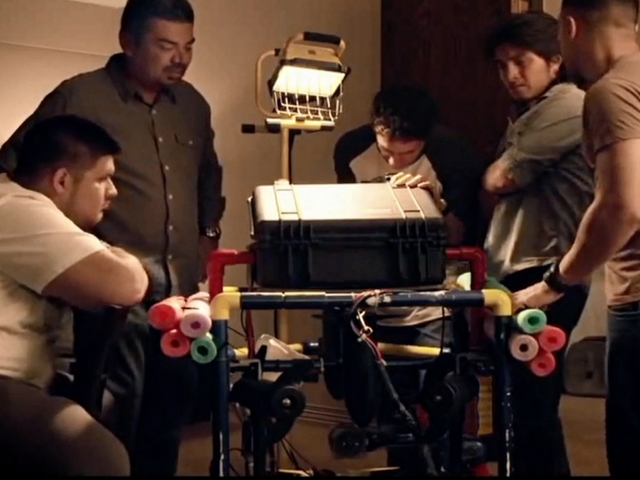
Unlike its robotic superstar, there is not much ingenuity in the storyline. Everything added on, especially the fictionalized backstory for Cameron, is predictable and superfluous and distracting. Lopez is an amiable presence, but these detours reveal his limits as an actor. We want to focus on the students and their robot, to see them solve problems in engineering and teamwork (which is a form of engineering, too). But too much of the running time is devoted to Cameron’s past and his possible romance with a fellow teacher, played by the always-wonderful Marisa Tomei. If she played the coach, this would have been a much better movie. Still, with a storyline like this one, it cannot help being fun to watch.
Cameron is an engineer with a PhD who tells the school’s principal (Jamie Lee Curtis, in a performance of great warmth and wit) he wants a temporary job as a substitute teacher. She notes that he has moved around a lot, but she does not have any alternatives. He agrees to coach the school’s engineering club because he is assured no one will want to join.
Oscar (Carlos PenaVega) shows up with a flier. He is an outstanding JROTC cadet and was crushed to learn that he cannot join the US Military without proof of citizenship. He thinks participating in a NASA-sponsored robotics competition will make it harder to be turned down. Cameron reluctantly agrees to help.
They assemble a team that includes the brain (David Del Rio), the kid who always gets into trouble but is a whiz at mechanics (José Julián), and the muscle (Oscar Javier Gutierrez II) — one problem they cannot engineer around is that someone has to be strong enough to lift their robot. Each has his own challenges. The brain is bullied at school. The troublemaker is under a lot of pressure to take care of his brother. The muscle has to be able to pass a tough oral exam at the competition to show that every member of the team understands the details of the robot. Oscar falls in love with a pretty classmate named Karla (sweetly played by PenaVega’s real-life wife, Alexa), but worries that his illegal status puts her at risk. All of the students are hiding from the ICE, which has already sent one of their mothers back to Mexico.
And then there is the challenge of the competition itself. Not only does this robot have to operate underwater, it has to execute an immensely complicated series of tasks in a limited time period. When the team shows up, they are so certain they will lose anyway that they decide they might as well compete with the college teams instead of the other high school teams. The night before they have to compete the robot has a disastrous leak. Their very creative and inexpensive (and hilarious) solution is one of the film’s high points.
The film’s name refers to more than the repurposed junk used to assemble the robot. Their triumph is bittersweet because their undocumented status prevents them from taking the opportunities available to those who are citizens. This film makes it clear that it is our loss, as it prevents our country from benefiting from the perseverance and skill that made an $800 robot created by kids kick the robotic butt of the $18,000 robot from MIT.
Parents should know that this film includes some teen crime including armed robbery, violence including bullying, some strong language and tense family confrontations and teen kissing.
Family discussion: What was the team’s most difficult challenge? Who was the teacher who inspired you the most and why?


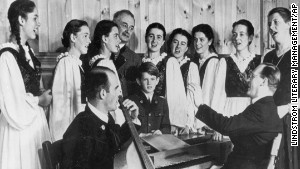 Much of the story is true. Maria was a postulant, sent by the convent to become a tutor for one of the ten (not seven) children of nobleman and Naval officer Georg Von Trapp. They got married, but it was seven years before the Nazis took over Austria. Maria always insisted, though, that Georg was not at all like the stern, humorless character of the early scenes. And they escaped by train, not by the mountains. A new book about the real story behind the family and the film is a lot of fun: The Sound of Music Story: How A Beguiling Young Novice, A Handsome Austrian Captain, and Ten Singing Von Trapp Children Inspired the Most Beloved Film of All Time

 , and films like “October Sky” and “Stand and Deliver”