Trailer: True Story with James Franco and Jonah Hill
Posted on January 7, 2015 at 3:52 pm
James Franco and Jonah Hill star in “True Story,” a title with layers of meaning. It is based on the real life story of reporter Michael Finkel (Hill), who was fired because he fabricated and altered facts in a “true story” he wrote for the New York Times. And then he discovered that a murderer (Franco) had been living his own version of a “true story,” representing himself as “New York Times reporter Michael Finkel.” Finkel’s book, True Story: Murder, Memoir, Mea Culpa, is the basis for this film, which co-stars Felicity Jones (“The Theory of Everything”), Gretchen Mol, and impressive newcomer Genevieve Angelson. It will be showing at Sundance later this month.
How True Should a “Based on a True Story” Movie Be?
Posted on January 2, 2015 at 8:10 pm
What does “based on a true story” really mean? The Washington Post had a front-page story titled, “‘Selma’ sets off a controversy amid Oscar buzz,” describing the objections by Lyndon Johnson administration insiders to the way he was portrayed. They say it was his idea to go to Selma, that he supported Dr. King’s efforts, and that he had nothing to do with the FBI’s surveillance and J. Edgar Hoover’s sending tapes of King’s supposed affairs to Mrs. King.
Historian Michael Bechloss has posted this handwritten note made by King for his conversation with LBJ:
And now my friend Jen Yamoto is summarizing objections to “Selma” and to other “based on a true story” films “Foxcatcher,” “The Imitation Game,” “Unbroken,” and “Big Eyes.” Some of these are the concerns of those trying to make sure that those who take their “history” from Oscar-worthy feature films at least begin to question the capacity of any dramatic work to be accurate in conveying historical events. But some are just sniping by competitors in the Oscar race.
As Jen writes:
Oscar voting opened Monday, and like clockwork, the haters have come calling. As Deadline’s Pete Hammond wrote on Monday, ’tis the season for controversy over fact-based awards contenders: Now, Bennett Miller’s real-life Olympian tragedy Foxcatcher and Tim Burton’s art exposé Big Eyeshave joined MLK Jr. drama Selma, the Alan Turing biopic The Imitation Game and Angelina Jolie’s Unbroken in ducking for cover over accuracy issues in mixing fact-based stories with narrative structure.
Even the most scrupulous accuracy will still reflect choices of perspective, tone, and emphasis. The best we can hope from any work of art is that it is the beginning, not the end, of an inquiry into the subject.
if the Gotcha Game is here to stay, we can at least agree on some new rules. And we can begin by adjusting our own attitudes toward fact-based films and their inevitable nit-pickers. Rather than the dualistic one’s-right-one’s-wrong model, it behooves audiences to cultivate a third eye — a new, more sophisticated way of appreciating both the art and the reality that inspires it.
It is one of the most famous paintings of the 20th Century, a masterwork by Gustav Klimt, a portrait of his friend Adele Bloch-Bauer. It was confiscated by the Nazis during WWII. And then, 60 years later, it became the subject of an international lawsuit as Bloch-Bauer’s niece sued the Austrian government for its return. That case was the subject of three documentaries, Adele’s Wish, Stealing Klimt, and The Rape of Europa. “The Woman in Gold,” a new feature film about the lawsuit with Helen Mirren and Ryan Reynolds, will be in theaters this spring.
Rated PG-13 for disturbing thematic material including violence, a suggestive moment, and brief strong language
Profanity:
Some strong and racist language
Alcohol/ Drugs:
Some drinking and smoking
Violence/ Scariness:
Very brutal violence including abuse and beatings by law enforcement and individuals, characters injured and killed
Diversity Issues:
A theme of the movie
Date Released to Theaters:
December 25, 2014
Date Released to DVD:
May 4, 2015
Amazon.com ASIN:
B00S1MYWBW
Copyright 2014 Cloud Eight Films
“Selma,” director Ava DuVernay’s film about Dr. Martin Luther King, Jr. and the march from Selma, Alabama to the state capital at Montgomery, to make the case for the right to vote, is superb as biography, as history, and as drama. It is one of the best movies of this year and this decade.
And somehow it has arrived just as we need it most, as Americans continue to struggle to reconcile our notions of equality. This film is a powerful reminder of the Civil Rights Movement cry that “we’re not where we want to be, we’re not where we’re going to be, but, thank God, we’re not where we were.” It is a reminder of the difference one person can make, and the inescapability of an idea whose time has come. And it should also be a powerful reminder that the voting rights people fought — and died — must be exercised to carry that dream forward.
This is a story of politics and race and history, but it is also very much the story of a man who just wanted to be “a pastor in a small college town” but found himself called to lead a movement, even though he put himself, his followers, and his family at risk. King has to try to keep his supporters together, increasingly difficult as the very progress he has made has made them impatient and independent.
British actor David Oyelowo makes Dr. King into a real person, polite and respectful but also canny and insistent in his meetings with President Lyndon Johnson (Tom Wilkinson) in the Oval Office, devoted and compassionate with the members of the movement, stirring and inspirational at the pulpit and podium, and at his most vulnerable when he is alone with his wife, Coretta Scott King (Carmen Ejogo, who played the same role in the superb “Boycott”). Even over the course of the few weeks covered by this film, we see Dr. King constantly assessing, re-evaluating, learning, and growing.
We also see that wiliest of politicians, LBJ, outmaneuvered by King, partly because he refused to give up but also because for the first time there was television coverage of what was going on and the rest of the country, 70 million viewers, were no longer able to pretend that this country was living up to its ideals of justice and equality. Even with the passage of the monumental Civil Rights Act, which required equal treatment without regard to race or gender in public accommodations and the workplace, the inability to vote imposed an insurmountable barrier to meaningful change. At the beginning of the film, we see Annie Lee Cooper carefully, deliberately filling in her application to register to vote. When the contemptuous official quizzes her on the number of county judges in the state, she is prepared with the answer. Clearly, she has tried this before and done her homework. She gives the correct number: 67. He responds, “Name them.”
“This voting thing is just going to have to wait,” Johnson explains. “You have one problem. I have a hundred and one.” He tries to persuade King that his War on Poverty is of central importance to black citizens. King understood that without the right to vote, blacks would continue to be excluded.
Everyone tries to stop him. The FBI sends tapes to Mrs. King that purport to reveal King’s affairs. There are constant threats and supporters are murdered. A church is bombed, killing Four Little Girls. The first time they try to walk to Montgomery, the 600 marchers are attacked by the police with tear gas and billy clubs wrapped in barbed wire.
But television cameras send pictures of the police brutality to 70 million viewers across the country. The images put even more pressure on Johnson, who finally brings Governor George Wallace (Tim Roth) to the Oval Office, to force some progress on the man whose inaugural address included the words, “In the name of the greatest people that have ever trod this earth, I draw the line in the dust and toss the gauntlet before the feet of tyranny, and I say segregation now, segregation tomorrow, segregation forever.”
Today we live in a world that is saturated in images and opinions, often angry ones. This film, like King’s patient but insistent voice, is a clarion call, the story of a man, a movement, and a journey that can and must continue.
Parents should know that the movie’s themes include historic depiction of virulent racism including verbal and physical attacks and murder, strong language including racist epithets, brief sexual sounds and discussion of affairs.
Family Discussion: How did Dr. King make President Johnson change his mind? How did President Johnson make George Wallace change his mind?
If you like this, try: Other films about the Civil Rights movement including “Boycott” (also featuring Carmen Ejogo as Coretta Scott King), “Separate But Equal,” and “Eyes on the Prize”
Rated PG-13 for war violence including intense sequences of brutality, and for brief language
Profanity:
Some strong and offensive/abusive language
Alcohol/ Drugs:
None
Violence/ Scariness:
Intense wartime peril and violence, characters injured, abused, and killed, some disturbing images, parent strikes a child with a belt
Diversity Issues:
A theme of the movie
Date Released to Theaters:
December 25, 2014
Date Released to DVD:
March 23, 2015
Amazon.com ASIN:
B00HLTDC9O
Copyright 2014 Universal Pictures
Oscar-winning actress Angelina Jolie breaks into the top ranks of American directors with “Unbroken,” showing an exceptional understanding not just of actors, but of tone, scale, and letting the camera tell the story. Working with the magnificent cinematography of Roger Deakins (“True Grit,” “Skyfall”), she adopts a classical style well-suited to the WWII setting, but every choice is careful, thoughtful, and powerful.
Based on the best-seller by Laura Hillenbrand, this is the story of Louis Zamperini, the son of Italian immigrants. He was a rebellious kid who became an Olympic athlete. His bomber plane crashed over the Pacific, and he survived for 47 days at sea, before being captured with one surviving crewmate, by the Japanese. In the prison camp, he was singled out for horrific abuse and repeatedly beaten.
The screenplay by the famously off-beat Joel and Ethan Coen is straightforward, direct, and sincere, keeping the focus on the war years, with the incidents from Zamperini’s past brought it primarily to show us how he relies on his memories to keep going. “Nobody’s chasing me,” he tells his brother who is urging him to run faster as he trains for a race. “I’m chasing you,” his brother tells him.
That internalized sense of mission helps him hold onto the idea of his own power as the brutal Japanese captors try to take everything away from him.
The opening scene puts us in the sky, and Jolie superbly evokes the thrill and the terror of flying on a bombing mission in aircraft that seem barely past the era of the Wright brothers. The crash scene is vertiginously disorienting. Jack O’Connell plays Zamperini with an effortless masculinity, understanding that it has nothing to do with macho posturing, just an imperishable sense of integrity, courage, and honor. O’Connell, Finn Witrock (“Noah”), and Domhnall Gleeson (“About Time”) perfectly capture the rhythms of an experienced crew, some amiable wisecracks and bravado to recognize the perilousness of their situation, but always focused, on task, and always, always, putting the team first.
We become so attached that it is sharply painful to see the characters experience such deprivation and abusive treatment. Japanese pop star Miyavi (real name Takamasa Ishihara) plays the sadistic Mutsushiro Watanabe, known as Bird. He knows of Zamperini’s celebrity as an athlete and sees that he is a symbol to the other prisoners.
If the Bird can break Zamperini, it will crush the morale of the whole camp. So, he singles Zamperini out for beatings and mind games. But Zamperini knows that “we beat them by making it to the end of the war alive.” He simply will not give up, and defining his own sense of what it means to win allows him to maintain a sense of control that is his most powerful weapon.
It is gorgeously filmed, superbly acted, and directed with great sensitivity and compassion, but the real impact of the film comes at the end, when we learn through a few simple titles, what happened to Zamperini after the war. Even Jolie recognizes that there is nothing she can put on screen to match the real-life footage of Zamperini, back in Japan at four days before his 81st birthday, running with the Olympic torch.
Parents should know that this movie includes very intense and disturbing wartime peril and violence, with a plane crash, an extended period lost at sea, and grueling prison camp abuse, and some strong language including racist epithets. School-age bullies harass and punch a character and a parent beats a child with a belt.
Family Discussion: What was the toughest challenge for Louis? Why didn’t he give up? Why did he forgive his captors?



 ,
,  . “The Woman in Gold,” a new feature film about the lawsuit with Helen Mirren and Ryan Reynolds, will be in theaters this spring.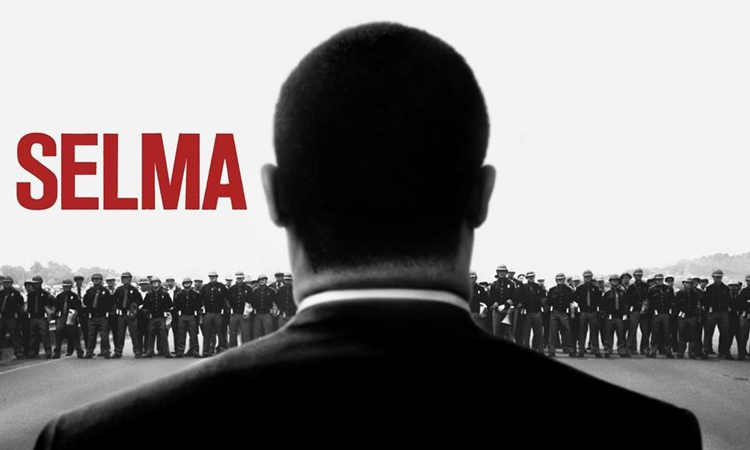
 . The first time they try to walk to Montgomery, the 600 marchers are attacked by the police with tear gas and billy clubs wrapped in barbed wire.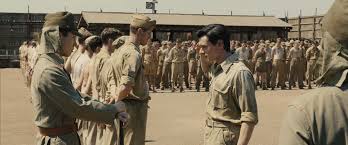
 , this is the story of Louis Zamperini, the son of Italian immigrants. He was a rebellious kid who became an Olympic athlete. His bomber plane crashed over the Pacific, and he survived for 47 days at sea, before being captured with one surviving crewmate, by the Japanese. In the prison camp, he was singled out for horrific abuse and repeatedly beaten.
 , and Zamperini’s own book,
  , along with the films
  and
and  , also based on real-life WWII stories of American prisoners of war.