Contest: Win a DVD of “Louder than Words” starring David Duchovny
Posted on September 7, 2014 at 3:59 pm
Copyright Identity Films 2014
David Duchovny, Tim Hutton, and Hope Davis star in Louder than Words, a fact-based story about parents who find a way to pay tribute to the daughter they lost by building The Maria Fareri Children’s Hospital, a state of the art facility in Westchester, New York that recognizes the essential role of the family in caring for a sick child.
I have three copies of this heartwarming story to give away. To enter, send me an email at moviemom@moviemom.com with “Maria” in the subject line and tell me what helps you feel better when you are sick. Don’t forget your address! (US addresses only) I will pick three winners at random on September 15, 2014.
Rated PG for thematic material, a scene of violence, and brief smoking
Profanity:
Mild language
Alcohol/ Drugs:
Smoking
Violence/ Scariness:
Shooting, very sad death, serious illness, parental abuse, tense confrontations
Diversity Issues:
Diverse characters
Date Released to Theaters:
August 22, 2014
This dreary assemblage of every possible sports cliché has one thing in common with the game it portrays. Every time it seems to be going somewhere, it stops.
More frustratingly, it wastes the opportunity to tell a good story by trying to squeeze in too many great ones. There are too many crises, too many story arcs, too few resolutions, too few reasons for us to invest in the outcome. When a movie is based on (or even “inspired by”) something that really happened, the first step has to be deciding what the theme is and streamlining all of the real-life details that are not central to that theme. Or, as a coach might say, “Don’t lose focus.”
The real-life high school football team that inspired this story is Concord, California’s De La Salle Spartans, from a small, all-boys Catholic school. They hold the all-time winning streak record for any sport in any category and at any level. We meet the team just as the streak is about to end. The last game of the season is the 151st win in a row. But then Coach Bob Ladouceur (Jim Caviezel) has a heart attack. A player is killed in a drive-by shooting. Another one becomes an orphan, responsible for his younger brother. The other teams do not want to play the Spartans anymore, so they take on the number one team in the state (in a game that is the subject of a book. The winning streak that went from 1992-2004 came to an end.
That’s an interesting place for a sports movie to begin, a refreshing change from the over-familiar sports movie storyline of a scrappy group of underdogs who have to learn to work together. And the film is sincere and good-hearted, though not much we haven’t learned from reading Kipling’s If, especially the part about understanding that winning and losing are both imposters. But the dramatic force of the narrative keeps being mowed down by so many over-familiar sports movie lines that the film’s greatest appeal may be as a drinking game. How many times do we have to hear about how the teammates are family, especially when we hear it more than we see it? (Though I did enjoy seeing the team come on the field holding hands like a kindergarten field trip.)
There is a lot to explore here about what we learn from winning and how much more we learn from losing. Ladouceur’s techniques include “commitment cards” with training goals, practice goals, and game goals, each one written by a player and shared with a teammate to help them understand they are responsible for each other’s performance as well as their own. It is good to hear a coach say that end zone antics are inappropriate and that the purpose of the training is not to produce great high school football players but responsible men.
A number of issues are set up or glancingly referred to without any real connection or follow-through, including some of the coach’s lessons about what matters more than winning. The coach’s son says that when he needed a dad he got a coach and when he needed a coach all he got was a “lame dad.” The coach’s wife (a criminally under-used Laura Dern) says he does not share himself with her or their children. Ladouceur acknowledges that he has been “a bad husband and a worse dad.” But all we see as a response is Ladouceur burning some burgers when he tries to grill.
We do not get enough of the history between the two players who struggle over whether they will stay together through college for it to be meaningful. A brutish father (Clancy Brown) pushes his quarterback son to break the state record in scoring, but the resolution is not set up in a way that makes it a triumph for anyone. Intrusive product placement from a sporting goods store is a distraction as well. As though to keep us on track, equally intrusive sports announcers keep reminding us what the stakes are. Even more intrusive is a musical score that is ploddingly obvious, with hip-hop in a black player’s home and syrupy pop over the white characters. Meanwhile, over on the sidelines (literally), Michael Chiklis as the assistant coach turns in the film’s most intriguing performance.
“It’s no longer about who the bigger, stronger, faster players are,” the coach who has the bigger, stronger, faster players says about playing against the Spartans. (You can tell what’s coming next, right?) “It’s about who plays with more heart.” The heart in this film is mostly over the end credits, where we see the truly inspirational Ladouceur and wish we had just seen a documentary about him instead.
Parents should know that this film includes the tragic murder of a teenager, serious illness of a parent, death of a parent, parental abuse of a teenager, scenes of wounded warriors in rehab, smoking, and brief crude sexual references
Family discussion: What goals will you put on your commitment card? Why didn’t the coach want his players to pay attention to the streak? What was his most important lesson?
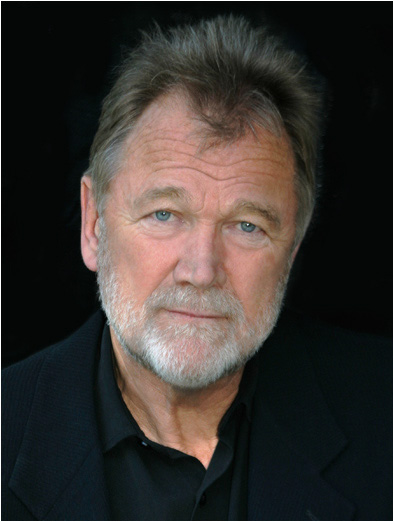
Bo Svenson is an actor, writer, director, judo champion, and, as I was lucky enough to find out, an enthralling guy to talk to, turning an interview into a wide-ranging conversation.
Copyright 2014 Bo Svenson
Svenson was born in Sweden. His family emigrated to the United States and he joined the U.S Marines when he was 17. Honorably discharged after six years of service, he was in pursuit of a Ph.D. in metaphysics when he was ‘discovered’ by Hollywood. He has starred in over sixty motion pictures, including Delta Force, North Dallas Forty, and Inglourious Basterds, and several hundred hours of U.S. network television, including the Walking Tall TV series.
He has competed in world championships, Olympic trials, and/or international competition, in judo, ice hockey, yachting, and track-and-field. He holds black belts in judo, karate, and aikido, and he is a licensed NASCAR driver. He was honored by the Martial Arts Hall of Fame.
In 1961, when he was a U.S. Marine, he earned his first degree black belt in judo at the cradle of judo, the Kodokan in Tokyo. A year later he heard about a red-haired Jewish American woman from Brooklyn training at the Kodokan (at a time when no women were allowed). She was Rusty Kanokogi, nee Rena Glickman. “She took the name from a neighbor’s dog that she truly loved,” Svenson told me. “After the dog was killed by a car, she wanted the dog’s name to go on, to be embodied, somehow.” After her death in 2009, Svenson got the rights to tell her story. He has written and is about to direct a film about Rusty Kanokogi, called “Don’t Call Me Sir.”
It is a remarkable story. In 1959, when she was a single mother, Rusty Kanokogi disguised herself as a man in order to compete in the New York State YMCA Judo Championship. She beat the reigning champion and won the tournament. While on the podium after having received her medal she was asked if she was a girl. She admitted that she was.
They took the medal back.
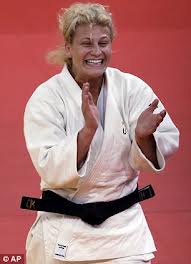
Rusty Kanokogi vowed to change how women were treated in sports. She got women’s judo accepted as a competitive sport and an Olympic event. Kayla Harrison will portray Rusty. She is the 2012 Olympic gold medalist in judo, the first American, man or woman to be Olympic champion in the event that Rusty created.
“There’s not much difference between martial arts and learning how to type, from my perspective,” Svenson told me. “It’s repetition. Once you get beyond the mechanics of it, it is personalized by who you are, your being. Eventually it’s an issue of the person, the person’s ability, focus, needs. There are people in this world who don’t have a need to conquer someone else. I don’t have a need to beat someone in competition. I enjoyed the competition. I didn’t care if I won or lost. That outlook becomes a problem if you want to stand on top of the podium. I enjoyed the people.”
“A hero is someone who does something at great personal sacrifice for mankind,” he said. “Rusty certainly did. She worked hard for years to get women’s judo to be a competitive sport and an Olympic event. She fought against gender and ethnic bias. She was Jewish and she was a girl and she didn’t feel that either should stand in the way of whatever she was capable of. She set out to right the wrong across the board, and she did.”
Svenson wrote the screenplay. He said that when he was supporting himself as an actor to pay his tuition in the PhD program in metaphysics at USC, one of the most important things he learned was that “art is a word that is derived from the first three letters of the word ‘artificial.’ The greater the art, the less noticeable the artificiality. When it comes to my writing — to everything, really — I am attracted to authenticity, to that which is least contrived.”
He told me that judo is the world’s second most popular sport, with more than 50 million people participating internationally. He resisted the pressure from Hollywood to put a “name” actress in the story to cast someone who was a judo champion like the woman she is portraying. “I abhor deceit of any kind. Kayla Harrison is the most extraordinary young lady. She has been confronted with challenges that would break any other person. She is fabulous and I know she will be fabulous as Rusty in the movie. After all the dumb movies I’ve been in, I’m thrilled to be part of something that has heart, soul, authenticity. It is about something. People who see it will have experienced something. They will be better off than they were before it began. It is a wonderful, wonderful journey to be on.”
Forty years ago today, Richard Nixon became the first and so far only President of the United States to resign from office. Elected easily just two years before, he was about to be impeached for his role in the Watergate break-in and the obstruction of justice in attempting to cover up what had happened.
His Vice President, Spiro Agnew, had already resigned in disgrace for unrelated corruption charges, and so, appointed as a replacement and without ever having been elected to national office, Gerald Ford became President, telling us that “the long national nightmare is over.” Nixon continues to fascinate us as a man of enormous strengths undermined by deep flaws. He has inspired shelves of books, award-winning films, and even an opera.
Some of the best documentary and feature films about Nixon are:
All the President’s Men Robert Redford and Dustin Hoffman play Washington Post reporters Bob Woodward and Carl Bernstein in this brilliant film about the investigative journalism that first informed us about Watergate. Screenwriter William Goldman and supporting actor Jason Robards won Oscars, as did the production design and sound.
Frost/Nixon Frank Langella and Michael Sheen star in Ron Howard’s film about the interviews that Richard Nixon thought would help to restore his reputation.