Zero Dark Thirty

Posted on January 10, 2013 at 6:00 pm

A-
Lowest Recommended Age: Mature High Schooler
MPAA Rating: Rated R for strong violence including brutal disturbing images, and for language
Profanity: Constant very strong language
Alcohol/ Drugs: Drinking, smoking
Violence/ Scariness: Intense and disturbing wartime images including torture and terrorism
Diversity Issues: Diverse characters
Date Released to Theaters: January 11, 2013
Date Released to DVD: March 18, 2013
Amazon.com ASIN: B00B1E6FF8

It begins with heart-breaking audio of 911 calls from the World Trade Center on September 11, 2001.  A frantic woman who asks if she is going to die is soothed by the operator until she is suddenly gone and we hear the operator’s dawning understanding of the magnitude of the disaster.

And then it is two years later and we are watching the torture-aided interrogation of a detainee in Pakistan.  Dan (Jason Clarke) is forthright and almost clinical as he tells Ammar (Reda Kateb) that he will hurt him for every lie.  The interrogation is witnessed by a new arrival who we will know only as Maya (Jessica Chastain).  She turns down the chance to stay outside the room.  “There’s no shame if you want to watch from the monitor.”  Maybe she is proving something to Dan, maybe she is proving something to herself, maybe she is so intent on finding Osama Bin Laden that she wants to make sure she does not miss a detail.  Probably all three.

Director Kathryn Bigelow brings that same intensity of focus to telling the story that Maya brings to the search.  After “The Hurt Locker,” Bigelow, the first woman to win the Best Director Oscar, re-teamed with screenwriter Mark Boal to make a movie about what they thought would be the unsuccessful search for Bin Laden.  Their project was overtaken by events as Bigelow and Boal were all but embedded with the military and CIA to do their research in real time, giving the movie an intimate, gritty, documentary feel.

Maya goes to work.  “You don’t think she’s a little young for the hard stuff?” one of her new colleagues asks.  “Washington says she’s a killer.”  This is not a movie where we go home with the heroes and see them hug their children.  It is not a movie where we see them struggle with their demons or sit down over drinks to give us endearing details about their lives or explain why they do what they do.  At one point, Maya is asked about her background and she says she has done nothing since she got out of school but look for Bin Laden.  She acknowledges that there is a reason she was particularly suited for this task, but she never reveals it.  This is the story of hard-working, even driven professionals who have to make life or death decisions all the time, about what it takes and about the price they pay.

People come and go in the story.  A new President is elected and the policy on torture changes.*  The policy on the level of certainty required as a basis for action changes, too.  Dan goes back home.  “I need to do something normal for a while.  I’ve seen too many guys naked.” And, he says, “You don’t want to be the last one holding a dog collar when the oversight committee comes.”  Some of the CIA and military investigators are killed and she is attacked.  But then there is a breakthrough and she has another challenge — persuading the military and the politicians that she is right about where Bin Laden is hiding.  James Gandolfini, Mark Strong, Jennifer Ehele, and Kyle Chandler are all outstanding as Maya’s colleagues.

And then it is time to bring in Seal Team 6.  The attack is brilliantly staged, much of it through night goggles that let us see the compound and the shoot-out through their eyes.

It is also a gripping, masterfully assembled story.  Even though we know how it ends, it will leave you breathless.


Parents should know that this film includes terrorism, war, and torture scenes with some very graphic images, characters injured and killed, some sexual references, very strong language, and drinking and smoking.

Family discussion: What does this movie stay about torture?  Was Mya right to be so confident?  What made her good at her job?

If you like this, try:  the documentaries “Restrepo,” “Gunner Palace,” and “Standard Operating Procedure”

*Those who claim that this movie is pro-torture are not paying attention.  While some people in the movie may be pro-torture, that is not the same thing as having the movie promote torture.  The movie makes clear that establishing a high probability of Bin Laden’s location depended on years of intensive research and was based on correlating many, many sources of information.  Mya gets critical data other ways.  And the movie’s unblinking portrayal of torture is there to remind of what happened, and, perhaps, of Golda Meier’s famous comment about the true tragedy of war: “When peace comes we will perhaps in time be able to forgive the Arabs for killing our sons, but it will be harder for us to forgive them for having forced us to kill their sons.”


Related Tags:


Action/Adventure Based on a true story Drama DVD/Blu-Ray Pick of the Week

Hyde Park on Hudson

Posted on December 13, 2012 at 5:50 pm

When Franklin Roosevelt’s sixth cousin Margaret “Daisy” Suckley (pronounced “sook-lee”) died at age 99, a cache of letters was found in a suitcase under her bed.  Everyone knew she had spent years working near Roosevelt, and most thought he had kindly provided for her by allowing her to act as his cataloger and librarian.  But the letters revealed a close and tender friendship and implied that there was more.  And so, in this fact-based story of the first visit to the United States by a British monarch, Franklin and Eleanor Roosevelt (and Franklin’s redoutable mother) welcomed King George V (that’s “The King’s Speech” king, no longer looking like Colin Firth but recognizable by his stutter) and his wife, Queen Elizabeth, the parents of the current about-to-become-a-great-grandmother Queen Elizabeth II to the Roosevelt’s summer home in New York State.  And fed them hot dogs.

So there are really two movies here.  Bill Murray is superb as Roosevelt, famously described by Oliver Wendell Holmes as having “a second-class intellect, but a first-class temperament.”  Murray gives a beautifully subtle, complex and fully immersed performance as the patrician President whose polio-induced paralysis gave him a deeper understanding and sense of purpose.  The scene where he has an impromptu late-night meeting with the young king is one of the best of the year.

But the movie gets soapy and uncomfortably speculative when it focuses on the relationship between Daisy and the President.  Is it a romance?  Is it a story about Daisy’s spirit enlarging as she goes from adolescent crush to a sort of sister-wife support group with the other women in FDR’s harem, including his secretary and, of course, his wife Eleanor, beautifully played with asperity and an endearing sense of rebellion by Murray’s “Rushmore” co-star Olivia Williams. But the film wavers uncertainly between geopolitics illuminated by personality (well handled) and the schoolgirl longings and skeezy predation of his relationship with Daisy.

Parents should know that this film has frank sexual references and situations (one briefly explicit) including approving depiction of adultery, some strong language, and social drinking as well as a positive portrayal of characters with disabilities.

Family discussion:  Why do the women forgive Roosevelt?  What did the King learn from his conversation with Roosevelt?  What did they have in common?

If you like this, try: “The King’s Speech,” “Sunrise at Campobello,” and the book Closest Companion: The Unknown Story of the Intimate Friendship Between Franklin Roosevelt and Margaret Suckley by historian Geoffrey Ward

Related Tags:


Based on a true story Biography Drama Politics

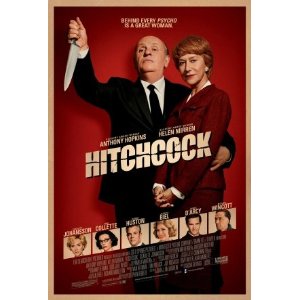
Hitchcock

Posted on November 22, 2012 at 6:00 pm

Alfred Hitchcock loved to scare people and he did it very, very well.  This highly entertaining story of the making of one of his most controversial (and terrifying) films stars Sir Anthony Hopkins as the portly British

He did it well because he understood fear from the inside.  He was drawn to what repelled him and repelled by what attracted him.  Hitchcock produced and directed film and television programs that are still, more than half a century later classics of suspense and horror.  He released a series of glossy, sexy hits like “Rear Window” and “To Catch a Thief” in the 1950’s.  And then he decided to do a film that was not glossy, sexy or romantic, inspired by the horrific crimes of body-snatcher/killer Ed Gein.  Hitchcock had a contract with Paramount, but the studio was reluctant about the grisliness of the storyline.  Hitchcock took out a mortgage and financed the production himself, using crew from his television show and shooting in black and white to save money.  (He also said the film would be too gory in color.)

Hopkins is masterful as Hitchcock.  He is subsumed in make-up and padding but it is a performance, not a caricature.  He shows us the great director’s playfulness and wit.  We see the way he struggles with his repressions and internal tortures and the way he is able to draw on them, almost clinically, to create popular movies that happen to be cinematic masterpieces.  What took the world of movies so long to match Hopkins with Mirren?  She is marvelous here as the wife who understands him thoroughly but sometimes wishes he would try to understand her.  Scarlett Johansson is sensational as Janet Leigh, the consumate professional who is that rarest find in Hollywood, a truly nice person, and James D’Arcy nails Anthony Perkins’ tremulousness.  It’s a surprisingly tender-hearted story as well as a tribute to the Hitchcocks and all those who love to make movies.

Parents should know that this film includes some strong and disturbing material and “boo”-style scares, depiction of real-life serial murderer Ed Gein and fictional killer Norman Bates, some graphic images, sexual references and situations, and partial nudity.

Family discussion: Why was it hard for Alfred to acknowledge Alma’s contributions? Why did he like to scare people? Why do people like to be scared?  What should Alma have done?

If you like this, try: “Psycho” and other Hitchcock classics like “Rear Window” and “The Birds” and the books Alfred Hitchcock and the Making of Psycho by Stephen Rebello and the book-length interview Hitchcock/Truffaut by Francois Truffaut.

Related Tags:


Based on a true story Drama Romance

Lincoln

Posted on November 8, 2012 at 6:00 pm

B+
Lowest Recommended Age: High School
MPAA Rating: Rated PG-13 for an intense scene of war violence, some images of carnage, and brief strong language
Profanity: Some strong language, one f-word
Alcohol/ Drugs: Drinking, smoking
Violence/ Scariness: Battle violence with some graphic images, sad deaths, assassination
Diversity Issues: A theme of the movie
Date Released to Theaters: November 9, 2012
Date Released to DVD: March 25, 2013
Amazon.com ASIN: B009AMANH4

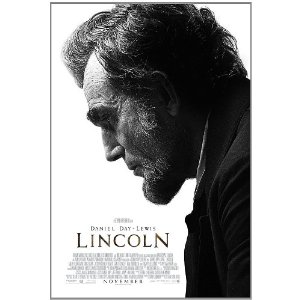
The first question about big, prestige films like “Lincoln” is always where it falls on what I call the spinach scale.  Will I tell people to see it because it is entertaining or because it is good for them.  For all its meticulous attention to historical verisimilitude and its extended depiction of people in rooms talking about a Constitutional amendment, “Lincoln” is not an eat-your-spinach-because-it’s-good-for-you movie.  It is a robust, engrossing story that illuminates our own time as well as the era of the 16th and arguably greatest President.

Task number one for director Steven Spielberg, screenwriter Tony Kushner (Angels in America), and star Daniel Day-Lewis is to make the icon into a human being, to show us his greatness but also his humanity.  In our hearts, this almost-literally larger than life man sounds like James Earl Jones — we can almost hear that deep voice reciting the Gettysburg address.  But those who actually heard Lincoln speak described his voice as high, thin, and reedy-sounding.  It may be jarring at first, but in an exceptionally well-designed introductory scene Day-Lewis deploys that timbre with such gentleness and modesty that it quickly becomes an asset not just to his performance but to our understanding of this man.

Lincoln is sitting quietly, talking to a small group of Union soldiers, two black and two white.  We see immediately that the soldiers respect him greatly — they can recite the Gettysburg address from memory — but that they feel completely comfortable being honest with him about their experiences and their recommendations.  What we feel immediately is that he is both respected and trusted, and that he has a rare ability to listen.  He may not be a modest man — at one point he thunders, “I am the President of the United States and clothed in immense power!”  But he is a humble man, who understands that he can best lead by allowing others to move forward with him.  He loves to share stories, more than others love to hear them.  But like a great preacher, he knows that it is the stories that persuade people.  Everyone softens a little for a story, especially one with a punchline.  And a story helps the listener toward the conclusion without feeling pushed.

A century and a half later, audiences may be surprised to see how little has changed.  Indeed, even the vilest insults of the Twitterverse and the shrillest complaints of Super-PAC ads do not touch the comments made by Members of Congress, who do not hesitate to question each other’s integrity or sanity.  “Fatuous nincompoop,” for example.

Audiences may be more surprised to find that “Democrat” and “Republican” seem to have switched places.  What has not changed is the way that politics attracts people of great cowardice and even greater courage, of people who hold on and people who reach forward, of people who want to help themselves and people who want to help others at great cost to themselves, including those who can never thank them.

When Lincoln decides that his most important priority is eradicating slavery through approval of the 13th Amendment to the Constitution, his team brings in a trio of lobbyists (John Hawkes, Tim Blake Nelson, and a wonderfully puckish James Spader) who are as cheerfully cynical as anyone on K Street today.  Through a combination of bribes and threats, they work to get the votes they need.  It is clear the Civil War is about to end, and if the South is readmitted to the Union, it will never pass.  Lincoln understood that the only way to keep the country together was to take its most divisive issue off the table.  He also understood that doing so would have its own terrible costs.  Even those who supported the Amendment had to make compromises, including its most ardent defender (a scene-stealing performance by Tommy Lee Jones as Pennsylvania’s Thaddeus Stevens).

Kushner and Spielberg, like their main character, recognize the power of story-telling, and this illuminating tale would make its subject proud and perhaps to inspire all of us to aspire to that as well.

Parents should know that this film has some battle scenes, graphic images in hospital including amputated limbs, some strong language including one f-word, sad losses, drinking, and smoking.

Family discussion: There are a lot of compromises in this movie and a lot of shading of the truth – which were the most difficult?  Why was the passage of the 13th amendment so important?  What moments in the film reminded you of today’s political debates and strategies?

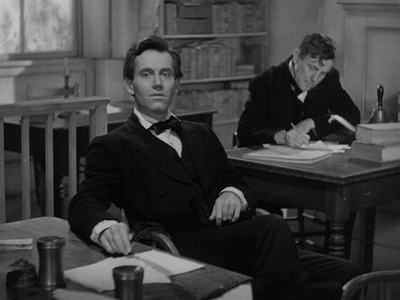
If you like this, try: some of the other portrayals of Lincoln on film, including “Young Mr. Lincoln” and “Abe Lincoln of Illinois” and the musical about the Declaration of Independence, “1776”

Related Tags:


Based on a true story Biography Drama DVD/Blu-Ray Pick of the Week Epic/Historical Politics War

Argo

Posted on October 11, 2012 at 6:00 pm

A-
Lowest Recommended Age: High School
MPAA Rating: Rated R for language and some violent images
Profanity: Very strong language
Alcohol/ Drugs: Drinking, smoking
Violence/ Scariness: Scenes of mob violence, hostages, references to terrorism
Diversity Issues: Ethnic, political, and cultural differences a theme of the movie
Date Released to Theaters: October 12, 2012
Date Released to DVD: February 18, 2013
Amazon.com ASIN: B00AHTYGRW

The movie within the movie, an outlandish space fantasy possibly named “Argo” for Jason’s vessel in the ancient Greek myth, may be more believable than the true and recently declassified story that surrounds it.  In 1979, when American State Department employees were taken hostage in Iran, six escaped and were hidden by the Canadian ambassador.  A CIA “exfiltration” expert who specializes in getting people out of difficult situations, rescued them by disguising them as members of a Canadian film crew, scouting locations for a fictitious Hollywood movie called “Argo.”

It is like an episode of the television series “Mission: Impossible” except that (1) it really happened and (2) it was much, much harder.  Unlike “Mission: Impossible,” the people creating an elaborate false reality in order to fool the other side had to work with civilians.  And they had to navigate a lot of bureaucratic, diplomatic, and national-security-related internal conflicts in a volatile environment with limited sharing of information.  James Bond has something more valuable than a license to kill.  He has a license to pretty much do whatever he wants with M ready to stand behind him.  But Tony Mendez (played by director Ben Affleck) has to make a lot of literally life-or-death decisions very quickly and yet is still subject to oversight by layers of people with different priorities and points of view.

Affleck, following “The Town” and “Gone Baby Gone” (and a screenwriting Oscar for “Good Will Hunting”) is no longer one of Hollywood’s most promising new directors — he has arrived.  This film works on every level.  Even though we know the Americans were rescued (Canada’s embassy was given a prominent location near the White House in gratitude for their efforts), the tension is ferocious.  The scenes in Hollywood, with John Goodman and a sure-to-be-nominated for a third Oscar Alan Arkin are as sharp and witty, recalling “The Producers” and “Get Shorty.”  But rather than an easy way to provide contrast or comic relief, Affleck and first-time screenwriter Chris Terrio (based on an article in Wired Magazine) use those scenes to provide context, along with some tang and bite.  One masterful section of the film intercuts the two stories as the Hollywood group set up shop, secure the rights to the screenplay, and put together a staged reading to get publicity to demonstrate their bona fides while the six Americans are trapped and the exfiltration mission gets underway.  There are a lot of similarities — both sides deal in illusion, and not just the illusion of the sci-fi fantasy film they are pretending to make.  The constant lying about the project comes naturally to Arkin’s character, an old-time Hollywood guy who has seen it all and who himself has no illusions about the integrity and loyalty of those around him.  He says, “You’re worried about the Ayatollah.  Try the WGA.”

Affleck locates the film in its era with hair and clothes that evoke the time period without exaggeration or ridicule, not easy to do with 70’s styles.  He even used 70’s era film stock and borrowed some of the staging from movies of the era like “All the President’s Men,” and the opening titles are in a 70’s font.  But the film also has some important insights about what happened and about our own time, reflected in the conflicts of three decades ago.  It begins with a brief description of the events leading to the hostage crisis, emphasizing America’s support (to benefit the oil companies) of the Shah’s brutal regime, told somewhat differently than it would have been in 1979.

“You don’t have a better bad idea than this?” a State Department official asks the CIA.  “This is the best bad idea we have,” is the reply from Jack O’Donnell (Bryan Cranston).  They can’t fake any of the usual identities for the Americans because they are too easy to disprove.  The normal reasons for foreigners to be abroad — teaching, studying, aid — are not plausible.  Only something completely outrageous could be true.  And it turns out that Iranians are as in love with Hollywood movies as everyone else.  This one is a good reminder of why we all feel that way.

Parents should know that this film includes scenes of mob violence, hostages, references to terrorism, characters in peril, tense confrontations, alcohol, a lot of smoking, and very strong language.

Family discussion: Why did the Canadians take in the Americans?  Why did Mendez defy his orders?  What would you do if someone approached you the way Mendez approached the Hollywood insiders?

If you like this, try: “Charlie Wilson’s War”


Related Tags:


Based on a true story Drama DVD/Blu-Ray Pick of the Week Politics Spies
THE MOVIE MOM® is a registered trademark of Nell Minow. Use of the mark without express consent from Nell Minow constitutes trademark infringement and unfair competition in violation of federal and state laws. All material © Nell Minow 1995-2026, all rights reserved, and no use or republication is permitted without explicit permission. This site hosts Nell Minow’s Movie Mom® archive, with material that originally appeared on Yahoo! Movies, Beliefnet, and other sources. Much of her new material can be found at Rogerebert.com, Huffington Post, and WheretoWatch. Her books include The Movie Mom’s Guide to Family Movies and 101 Must-See Movie Moments, and she can be heard each week on radio stations across the country.

Website Designed by Max LaZebnik