Jean-Michel Cousteau’s Secret Ocean 3D

Posted on March 20, 2015 at 7:00 am

B+
Lowest Recommended Age: Kindergarten - 3rd Grade
MPAA Rating: Not rated
Profanity: None
Alcohol/ Drugs: None
Violence/ Scariness: Reference to predators
Diversity Issues: None
Date Released to Theaters: March 20, 2015

Jean-Michel Cousteau begins this dazzling underwater documentary with archival footage of his father’s pioneering work in showing us life in the other two-thirds of the planet. And then he uses the latest technology to bring those flickering monotone images up to date with spectacular visions of exquisite sea animals shaped like plants, a 30-pound snail that eats food to make it taste bad to predators, a creature that looks like a pile of twigs and has no head and no blood but can regenerate its appendages, a candy-cane striped shrimp, all in a world exotic, strange, and wondrously interdependent with our own. Plankton, we learn from narrator Dr. Sylvia Earle, is not just the source of food for many of the creatures who live in the sea (and who themselves are food for other animals), but the source of much of the oxygen we breathe. The environmental message is subtle, but powerful. These creatures cannot survive without us and we cannot survive without them.

The images are stunning beyond words, but it would have been nice to get more information about the locations and habits of the animals we are observing. Still, this is as spectacular a series of images and as provocative a series of characters as you will see on any screen this year.

Scheduled venues for Jean-Michel Cousteau’s Secret Ocean 3D:

01 – DIGITAL3D – February 20, 2015 – Oregon Museum of Science & Industry, Portland (OR)
02 – IMAX3D – February 27, 2015 – The Henry Ford Museum IMAX Theatre, Dearborn (MI)
03 – DIGITAL3D – March 6, 2015 – Moody Gardens 3D Theater, Galveston (TX)
04 – IMAX3D – March 20, 2015 – Indiana State Museum IMAX 3D Theatre, Indianapolis (IN)
05 – IMAX3D – March 20, 2015 – Smithsonian’s National Museum of Natural History Samuel C. Johnson IMAX, Washington (DC)
06 – IMAX3D – April 3, 2015 – Montreal Science Center Telus IMAX 3D Theater, Montreal (QC)
07 – IMAX3D – April 16, 2015 – New England Aquarium Simons IMAX Theatre, Boston (MA)
08 – IMAX2D (DOME) – No later than April 20, 2015 – Planetario Puebla Omnimax Theater, Puebla (Mexico)
09 – DIGITAL3D – May 22, 2015 – Houston Museum of Natural Science 3D Theater, Houston (TX)
10 – DIGITAL3D – May 23, 2015 – New Mexico Museum of Natural History Lockheed-Martin DYNA Theatre, Albuquerque (NM)
11 – DIGITAL3D – June 12, 2015 – Milwaukee Public Museum 3D Theater, Milwaukee (WI)
12 – DIGITAL3D – July 10, 2015 – American Museum of Natural History 3D Theatre, New York City (NY)
13 – IMAX3D (DIGITAL) – No later than August 30, 2015 – Challenger Learning Center IMAX, Tallahassee (FL)
Related Tags:


3D Animals and Nature Documentary Movies -- format

Trailer: Documentary About Illustrator Hilary Knight of “Eloise” and “Mrs. Piggle-Wiggle”

Posted on March 11, 2015 at 8:00 am

Copyright Scholastic 1987

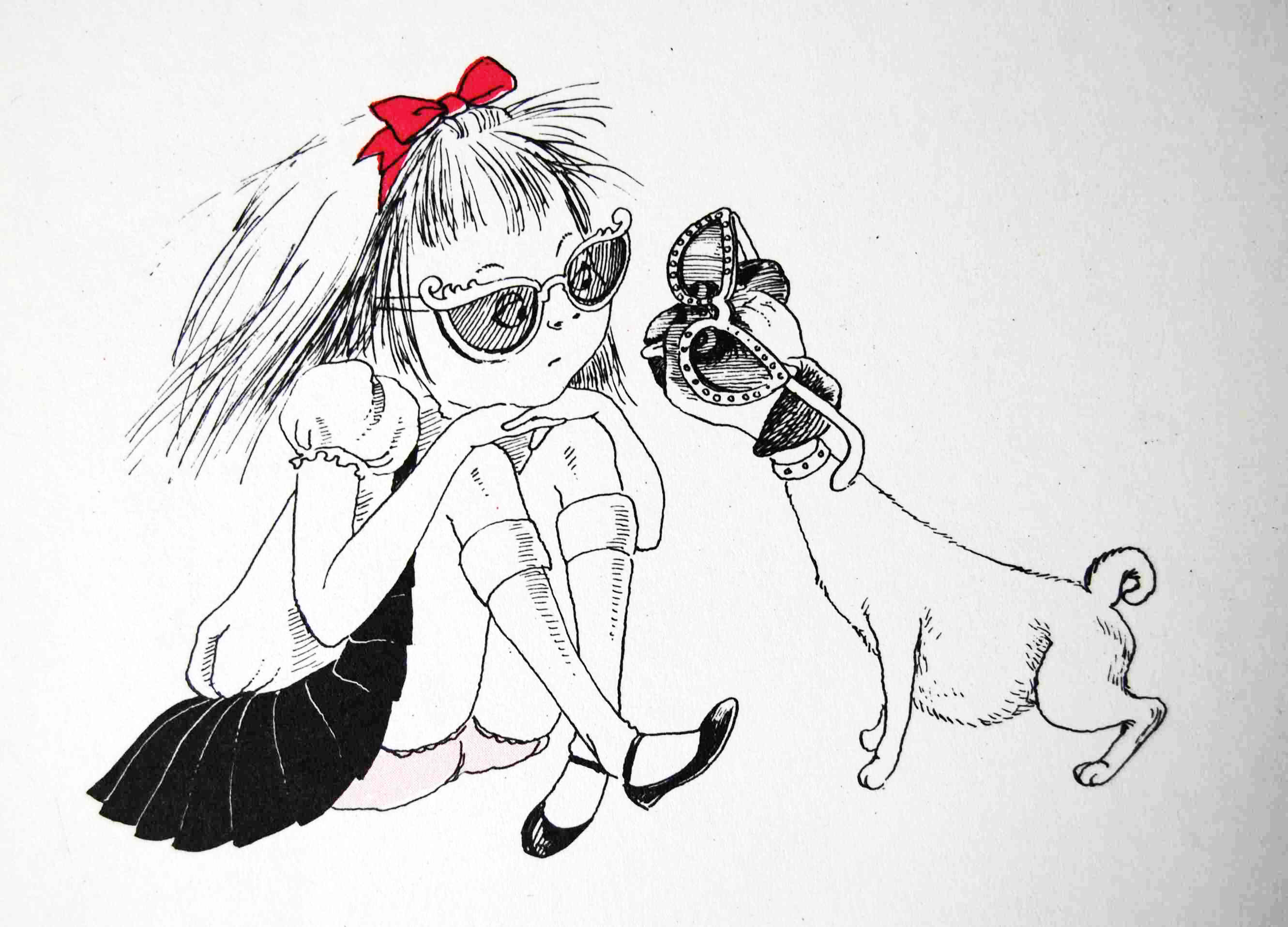
I have loved Hilary Knight’s illustrations for as long as I can remember. The words about Eloise, the little girl who lives in New York’s Plaza Hotel, were written by nightclub singer Kay Thompson. But the illustrations were by Hilary Knight, and I pored over them for hours because they were do detailed, witty, and expressive. Later, when I first read Mrs. Piggle-Wiggle, I recognized Knight’s penwork right away.

Lena Dunham (“Girls”) loves Eloise and Knight so dearly she has an Eloise tattoo. She spoke to the New York Daily News:

“I think so many young women were obsessed with Eloise’s unruly magic,” she said. “She’s just such a remarkably independent, vanity-free, complex little girl, and as a little girl you don’t see that many representations of yourself beyond a good little child with pigtails. So it was meaningful.”

And now she has made a documentary about Knight called, “It’s Me, Hilary,” that will be on HBO, premiering March 23, 2015.

Related Tags:


Documentary Television Trailers, Previews, and Clips

Watch This Year’s Documentary Oscar Winner Free Online: CitizenFour

Posted on March 7, 2015 at 8:00 am

CitizenFour,” the Oscar-winning documentary about Edward Snowden, is free online.

Whether you consider him a hero or a traitor, it is well worth watching, and considering the fragile balance between privacy and national security — and who decides.

Related Tags:


Documentary

Tribute: Documentary Pioneer Albert Maysles

Posted on March 6, 2015 at 3:05 pm

We mourn the loss of film visionary Albert Maysles, who with his brother David, showed us a new way to see film and a new way to see the world.  They were the first Americans to create intimate, unstructured documentary storytelling without experts talking from behind their desks or extended narration.  This is “direct cinema,” the distinctly American version of French “cinema verité.”  The Maysles brothers were the first to make non-fiction feature films where the drama of human life unfolds as is, without scripts, sets, or narration.  In part, this was due to their way of looking at the world, which was open-hearted and non-judgemental.  But it was also due to changes in technology since the very earliest days of documentary.  In 1960, he said, “With the equipment we have today, which is directly descended from the equipment we made; you could go beyond the illustrated lecture for the first time. These innovations made it possible to get what was happening so clearly and directly that the person viewing the film would feel as though he was actually present at those events. For the first time, it was possible for someone watching a documentary to feel as though he was standing in the shoes of the person he was seeing onscreen.”

Maysles’ subjects had lives that were in some ways ordinary, like those of us in the audience. Salesman was about door-to-door Bible salesmen.  He said, “There are daily acts of generosity and kindness and love that should be represented on film.”

But he also made extraordinary films about extraordinary lives.  Perhaps his most famous was Grey Gardens, about “Big Edie” and “Little Edie” Beale, relatives of Jacqueline Kennedy Onassis who continued to live in their crumbling East Hampton mansion with no money and very little contact with the outside world.  The movie was later adapted into a hit Broadway musical and a movie with Drew Barrymore.

He filmed Janis Joplin, Jimi Hendrix, the Who, Otis Redding, and the Mamas and the Papas.

He filmed the Rolling Stones.

He filmed Paul McCartney.

He said,

As a documentarian I happily place my fate and faith in reality. It is my caretaker, the provider of subjects, themes, experiences – all endowed with the power of truth and the romance of discovery. And the closer I adhere to reality the more honest and authentic my tales. After all, the knowledge of the real world is exactly what we need to better understand and therefore possibly to love one another. It’s my way of making the world a better place.

May his memory be a blessing.


Related Tags:


Directors Documentary Film History Tribute

Merchants of Doubt

Posted on March 5, 2015 at 5:30 pm

B+
Lowest Recommended Age: Middle School
MPAA Rating: Rated PG-13 for brief strong language
Profanity: Brief strong language
Alcohol/ Drugs: Discussion of tobacco
Violence/ Scariness: References to injury and environmental degredation
Diversity Issues: None
Date Released to Theaters: March 6, 2015
Copyright 2015 Sony Pictures Classics

Do you remember the tobacco executives standing up before a Congressional Committee, their right hands raised, each of them swearing that they did not believe that tobacco caused cancer?  That was in 1994, three decades after the US Surgeon General’s report showing the adverse health effects of cigarettes.  Any other consumer product with that much proof of its destructive impact would have been restricted or banned long ago.  But the tobacco industry was able to delay or prevent meaningful government action through a series of  public relations maneuvers and strategic lobbying and campaign contributions.  Ultimately, tobacco consumption was reduced in the United States.  Television ads were banned.  Warning labels were required.  Very big fines were assessed following lawsuits that revealed a history of intentional deception as toxic as cigarettes themselves.

But the legacy of using corporate money to undermine science and thus to undermine public policy as well may be the most devastating effect of all.  As documented in “Merchants of Doubt,” based on Merchants of Doubt: How a Handful of Scientists Obscured the Truth on Issues from Tobacco Smoke to Global Warming, by Naomi Oreskes and Erik M. Conway, corporations have used distraction, delay, and downright deceit to create pretend opposition to scientific findings. Their tactics have included those as sophisticated and complex as the creation of fake “public interest groups” with secret funding by corporations and their trade associations, to those as simple and old-fashioned as releasing the private contact information of the scientists and encouraging a barrage of bullying threats and personal attacks.

One of the film’s most devastating segments deals with a two-year, Pulitzer Prize-winning investigation by two Chicago Tribune reporters about how the tobacco companies thwarted potential regulation by fraudulently shifting the blame for home fires from cigarettes to the failure of furniture to be coated with toxic flame retardant chemicals. Fake experts and fake studies work because no one, neither the journalists who are hard-wired to present “both sides” nor the law-makers and regulators who are often looking for a way to justify the decisions their corporate funders are supporting, ever make an effort to find out the experience, expertise, reputation, or conflicts of interests of these industry-supported “experts.”

The focus now is climate change, with more than 97 percent of the world’s climate scientists agreed that it is a severe, even critical problem and millions of dollars spent by the fossil fuel industries to distort, delay, and deceive. In the film, former Congressman Robert Inglis, who identified himself as having been elected from “the reddest county in the reddest state in the country” (South Carolina), and who considers himself a hard-core conservative, lost his bid for reelection because, after a visit to Antarctica where he witnessed the evidence of climate change, he was considered a traitor, perhaps less by his constituents than by the industry funding anyone who would oppose government action on climate change.

No matter what you think about tobacco, climate change, or fire retardants, this is an essential film because it addresses the key issue of trust. Whatever policies you support, everyone should agree that they must be grounded in the clearest and best-documented facts. Who can we believe? What questions should we ask? As Senator Whitehouse said last week, “You can believe every single major American scientific society, or you can believe the Senator with the snowball.”

Related Tags:


Documentary Movies -- format Politics
THE MOVIE MOM® is a registered trademark of Nell Minow. Use of the mark without express consent from Nell Minow constitutes trademark infringement and unfair competition in violation of federal and state laws. All material © Nell Minow 1995-2026, all rights reserved, and no use or republication is permitted without explicit permission. This site hosts Nell Minow’s Movie Mom® archive, with material that originally appeared on Yahoo! Movies, Beliefnet, and other sources. Much of her new material can be found at Rogerebert.com, Huffington Post, and WheretoWatch. Her books include The Movie Mom’s Guide to Family Movies and 101 Must-See Movie Moments, and she can be heard each week on radio stations across the country.

Website Designed by Max LaZebnik