The story of Exodus is central to three of the world’s most significant religions and one of the Bible’s most cinematic stories, with a flawed but charismatic hero and a stirring story of slaves seeking freedom. It has already been filmed at least eight times, from Veggie Tales’ Moe & The Big Exit to Cecil B. DeMille’s epic The Ten Commandments, with Charlton Heston and Yul Brynner and Jeffrey Katzenberg’s animated The Prince of Egypt. Now Ridley Scott, who showed his mastery of sword and sandal epics with Gladiator has taken on the story with an all-star (but mostly non Middle-Eastern) cast and the latest 3D technology to really deliver on the special effects. Not so much on the theology part, though, or even the morality or meaning of it. Scott is clearly more interested in chases and battles and plagues, and so busy with it that he leaves out some of the story’s most important incidents. For example, instead of having to leave the palace because he killed an Egyptian who was beating a slave, Scott gives us a soapy story about Ramses’ jealousy. And we know Ramses is decadent because every time we see him, he’s eating.
The action and special effects work well, though. This is a two and a half hour movie that starts in the middle of the story and Scott keeps it moving. We first see Moses (Christian Bale) and Ramses (Joel Edgerton) as Seti (John Turturro), the Pharaoh, is giving them each a sword. At first, Ramses, Seti’s son, thinks he has been given the wrong one. But Seti has given them each other’s swords on purpose, to remind them that they must care for each other as they are about to go into battle. A seer has a prophesy: “In the battle, a leader will be saved and his savior will someday lead.” This inflames Ramses’ insecurity, especially when it comes true.
After Seti’s death, Ramses puts Moses in prison and tries to have him killed. Moses finds a home with a small community of shepherds and falls in love with Zipporah (María Valverde). Their life there is very sweet for nine years until he sees a burning bush and receives a message from God. Scott makes an imaginative choice here about portraying the Deity that I won’t give away, but I am still trying to decide how I feel about it. God tells him what he already knew in his heart. The Hebrews are his people and he cannot run away from his responsibility to help them find freedom. So he goes back to Memphis.
Bale holds the screen well as Moses, but Turturro, Kingsley, and Sigourney Weaver as Ramses’ mother do not have enough to do to. But there is a lot of time devoted to spectacle. Well past the two-hour mark, there are still 40 years of wandering in the desert and the Ten Commandments (twice) to get through, and they are sped through very quickly. The striking of the rock to get water, manna, the golden calf, and Moses not being permitted to enter the promised land are all skipped over. Two significant ideas that are included are Moses’ disagreements with God (and God’s approval of it) and the journey from the first scene, where Ramses believes in omens and faith and Moses believes in reason, to the end of the film, where they switch places.
Moses tells Ramses he must free the slaves and Ramses says the same thing that people have said throughout history when there is no possible moral justification for their position. He says that it is not economically feasible and will take a long time. Moses, trained as a general, gets the Hebrews to attack the Egyptians’ supply chain, but God gets impatient and steps in with the plagues, which are very vivid and rather disturbing. After the death of the Egyptian first-born children, including his own son, Ramses tells the Hebrews to go. But then he and his army ride after them, until the miracle at the Red Sea, very impressively staged. But, again, the focus is shifted from the story of the Exodus to much less interesting battle between two cousins raised as brothers.
The visual scope here is impressive. There just isn’t much soul.
Parents should know that this movie includes Biblical themes including slavery, plagues and other kinds of peril and abuse, extensive peril and violence, battles, many characters injured and killed including children, and disturbing scenes with dismemberment and dead bodies.
Family discussion: How did being raised as a prince affect the way Moses saw himself and his role? How was he affected by learning the story of his birth? Why does he object to the plagues?
If you like this, try: “The Ten Commandments” with Charlton Heston
In a small East Texas community “with a church on every corner,” 10 churches were burned. One church showed the Christian film “Fireproof” one night and showed that it was far from fireproof itself the next day.
This is a documentary about the impact on the community and also about the investigation that led to the arrest and conviction of two young men who could barely explain why they did it. The title comes from graffiti carved into a wall that becomes a clue. And there is a wrenching twist. One of the two young men is the brother of a woman who works in law enforcement.
But the real themes of the film go beyond a crime procedural. This is the story of a culture that allows young people to get lost and the failure of religious institutions to reach them. And it is also the story of great resilience, compassion, and forgiveness. The most powerful scene in the film is at the sentencing proceeding, where one of the clergyman uses his time on the stand not to tell the judge about what he and his congregation had suffered but to speak from the heart, asking the young men who burned down his church for their forgiveness and assuring them that they had his.
“Getting slapped in the face by your hypocrisy hurts like hell,” one minister says somberly. He has reason to welcome this dose of humility. The young men who torched the churches belonged to his congregation. But of course the problem is that they did not feel they belonged anywhere. The film’s sympathetic portrayal of the believers is undercut in the final image by a quote from the anarchist Buenaventura Durruti: “The only church that illuminates is a burning church.”
If this was a feature film, we would have the satisfaction of some sort of cathartic breakthrough explaining what happened. But real life is messy and often unsatisfying. “I’ve been here for three years and still don’t know the motive,” one of the arsonists says. Have they learned anything? “When you fight with God, you’re just going to lose.”
Parents should know that this movie includes frank discussion of drug and alcohol abuse, crime, and a sad parental death.
Family discussion: What kind of punishment is appropriate here? If you disagree with what the judge ordered, why? Why do you think the boys burned the churches?
If you like this, try: “At the Death House Door” and “Into the Abyss”
Interview: Laura Poitras of the Edward Snowden Documentary “Citizenfour”
Posted on November 5, 2014 at 12:00 pm
I normally begin my interviews by asking for permission to record the conversation for my notes. But there was something eerily resonant about that routine request when I spoke to journalist Laura Poitras, director of the new documentary “Citizenfour,” about Edward Snowden, a contractor for the NSA who leaked massive amounts of confidential information about the pervasive and invasive intrusion of government spies into private exchanges by phone or email, even without any evidence of a threat to national security. Snowden first contacted Poitras, identifying himself only as “citizenfour.” They agreed to meet in Hong Kong, and most of the film takes place in his hotel room, as, joined by Guardian reporter Glenn Greenwald, they prepare for the release of the information and their stories about it. Even though we know what happened, it is tense, gripping, and mesmerizing to see those last few moments before Snowden’s face was on front pages and every newscast around the world.
Poitras agreed to be taped, noting that she had to assume she was always being recorded. I began by asking her about the limitations she felt as a filmmaker in making a visually dynamic film while being confined to just one room. “At first when I walked in, it was like ‘oh wow, this represents limitations here. We are still stuck in this room, the walls, there is so much white in the room, there is no space.’ That was my first impression but I think actually in the editing room I realized that there are ways in which it was really a blessing, that you get this kind of claustrophobic feeling that increases over the days and that time sort of stops and then slowly we feel the outside world coming in. So I do think in the end it turned out to be a positive thing. And then in terms of the dynamics that happened, it was pretty extraordinary for the building of events – from the first meeting to the publication to the global reaction, and then ultimately to Snowden leaving and going underground so I feel it was really interesting in the fact that is kind of awkward in this contained place. Honestly I was thinking there is a lot of white in this room. White is not easy to work with but I think in retrospect I am appreciative of that circumstance.”
I asked how to achieve the right balance between secrecy and privacy. “From what I’ve seen since 9/11, we’ve eroded civil liberties in the name of national security and I think that the government is becoming increasingly secretive about what it is doing. People know less and less and so for instance in terms of NSA surveillance, there is a public law, and then the government has the secret law or secret interpretation of that law. And I think that is really problematic. I don’t think that these kinds of policies or decisions should be made behind the scenes by people in secret with no public debates or inner knowledge. I think that is problematic and I think we’ve been drifting more and more into increasing secrecy in the government. It’s a problem. Elected officials are there on our behalf and we should know what our government is doing. I think is also false to say it is making us more secure because what we have right now is a situation where the U.S. is going around the world and making more enemies than it is making friends. We should re-think our policies. James Risen has a book, Pay Any Price: Greed, Power, and Endless War. This idea of the endless war — we have been at war since 2001 with these various countries and now we are seeing some of the unintended consequences of that. I would question whether or not the policy direction that the U.S. is going is actually making us any safer and I think there are lots of evidence to suggest that it is not. And collecting information on people who are suspected of nothing on a large massive scale doesn’t make us safer either because then here we have intelligence agencies that are drowning in too much information plus we are violating fundamental rights of our citizens around the world.”
She disputes the argument that the massive collection of data makes it less personally invasive. “I don’t think so at all, I think if you look at for instance journalists, if you’re collecting the call records of all journalists and you want to know who are their sources then you just query their phone records and so I think that it can be used in very invasive ways. I don’t think that because they collect so much it means that it is less invasive.” And she does not think that this level of surveillance would have prevented 9/11. “The CIA knew that there were people who came into this country and they didn’t pass the information to the FBI. So that is not example that they are swimming information it is that they didn’t communicate it to the people who could have prevented what happened.
Poitras is concerned that the depth and breadth of the information collected is itself a security risk. “There are people saying something like five million people have security clearances in this country. That is a lot of people. And there is more and more contracting out to other people who are not even working for the government. They are working for private companies and all have access to this amount of information.” I asked her to compare the intrusion of government with the apparently even more massive use of personal data by corporations like Google and Facebook. ” I think it is different. The power that the government has is very different than the power that the private company has. So I think there are actual big differences in terms of how this information can be used. But I think they people should also questions about how much information these companies have about us.” And, she pointed out, the government can use the information collected by Google and Facebook as well. “I also think there is a question of consent. When do you consent to share information and what is not consent.”
She respects the work of Senators Ron Wyden and Mark Udall in trying to establish more accountability and better policies, “but I also think that they could go further. They have immunity, so that they can come forward and let the public know what is happening if they have concerns about the scope and extent of these kind of programs. I’d love to see a real inquiry into the extent of surveillance and I think that those two senators are the forefront of pushing for that, but I urge them to do more.” And is Edward Snowden a hero? “That is not a question I engage in. I just find it a bit reductive and so I will pass on that question.”
Documentary filmmaking is now one of the most dynamic and compelling forms of journalism, so I asked Poitras what a movie can do in reporting that print cannot. Her answer was more about the timing issue than the format.
“They are totally different. They are both bound by by journalistic principles of making sure you do your fact checking and all that kind of stuff but it also needs to have more lasting meaning and raise more universal questions. Otherwise it is not going to be interesting. When I work on a news story, it has a certain impact but in a documentary, we were very clear in editing room our job is not to break news. That I can continue to report on this material and work on the news but the film needs to say something that is not just interesting for a certain amount of time but that will have lasting resonance and so for me, it is a question about individuals who take personal risks and that becomes more of a universal story. Yes, it is about NSA and NSA surveillance but it’s about human nature in different ways.”


 to Cecil B. DeMille’s epic
  , with Charlton Heston and Yul Brynner and Jeffrey Katzenberg’s animated
  . Now Ridley Scott, who showed his mastery of sword and sandal epics with
  has taken on the story with an all-star (but mostly non Middle-Eastern) cast and the latest 3D technology to really deliver on the special effects. Not so much on the theology part, though, or even the morality or meaning of it. Scott is clearly more interested in chases and battles and plagues, and so busy with it that he leaves out some of the story’s most important incidents. For example, instead of having to leave the palace because he killed an Egyptian who was beating a slave, Scott gives us a soapy story about Ramses’ jealousy. And we know Ramses is decadent because every time we see him, he’s eating.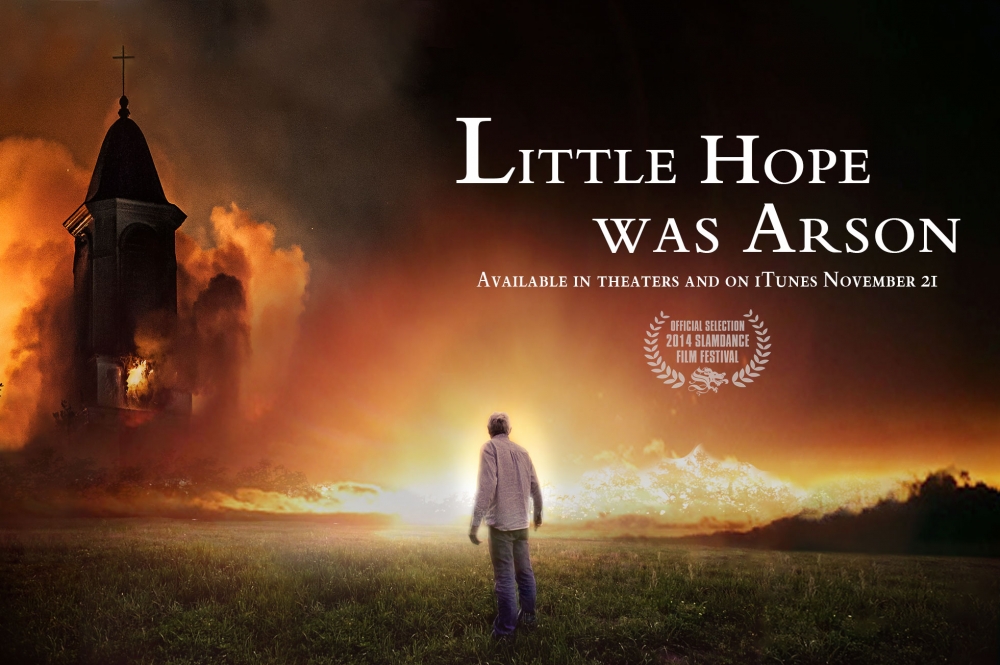
 . This idea of the endless war — we have been at war since 2001 with these various countries and now we are seeing some of the unintended consequences of that. I would question whether or not the policy direction that the U.S. is going is actually making us any safer and I think there are lots of evidence to suggest that it is not. And collecting information on people who are suspected of nothing on a large massive scale doesn’t make us safer either because then here we have intelligence agencies that are drowning in too much information plus we are violating fundamental rights of our citizens around the world.”