Silence

Silence

Posted on January 5, 2017 at 5:27 pm
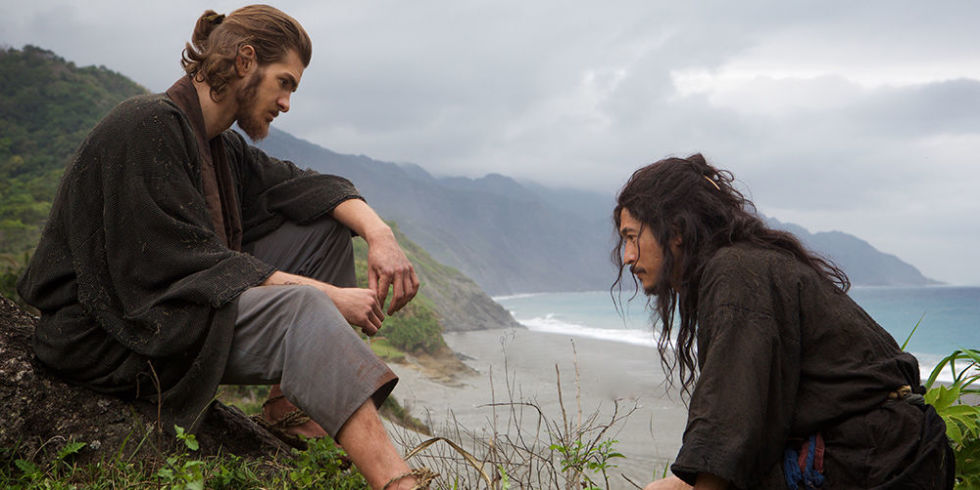
Copyright Paramount 2016
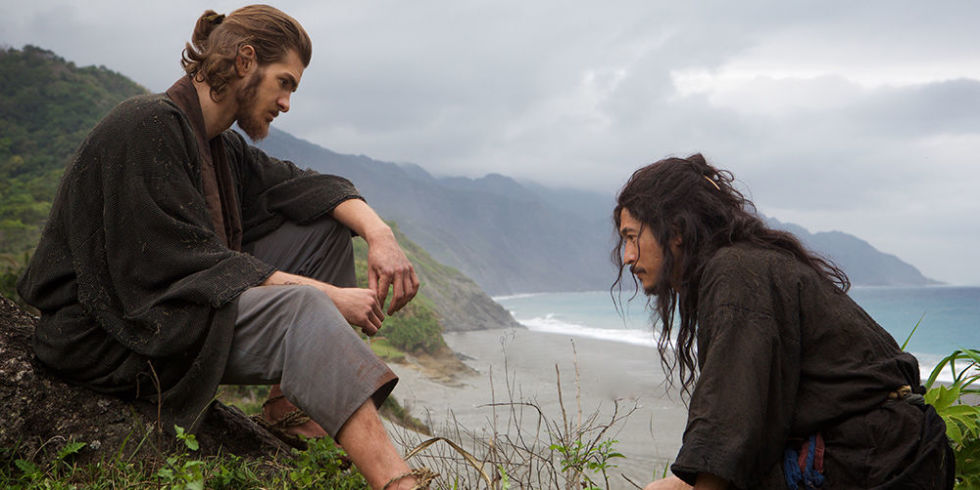
Like Joseph Conrad’s Heart of Darkness and Francis Ford Coppola’s Vietnam-era adaptation, Apocalypse Now, Martin Scorsese’s “Silence” is the story of men who take a journey to find a former leader who has disappeared into the untamed natural world.

It is the mid-17th century. Two Portuguese priests, Father Rodrigues (Andrew Garfield) and Father Garrpe (Adam Driver) go to Japan in search of their teacher and mentor, Father Ferreira (Liam Neeson). After receiving disturbing reports that he has publicly abandoned his faith, they say, “We have no choice but to save his soul.” They leave with “no luggage except our hearts.”

Ferreira had gone to Japan as a missionary and he and his colleagues had some success in converting Buddhist peasants. But Japan has now outlawed Christianity in any form, and as we see immediately, the officials have decided that the best way to eradicate it is to torture believers, forcing the priests to watch. Early efforts to fight Christianity failed because killing the priests made them martyrs, showing the strength and power of their faith when they refused to renounce it, even under torture. So the officials responsible for eradicating Christianity have had to develop a more subtle approach. Instead of torturing the priests, they torture and murder their followers, telling the priests that all they have to do to stop it is recant. It can be as simple as putting a foot on an icon of Jesus. “It’s a formality,” the Japanese official says in a soothing voice. “You don’t have to believe it.”

The priests have a choice: deny their faith in Jesus and Christianity or allow the suffering and death of innocent people. What should they do? Who has the answer?

For Martin Scorsese, who co-wrote and directed, this movie has been a passion project for three decades, since he read the award-winning novel by Shusaku Endo, inspired by the true stories of 17th century priests in Japan. Scorsese, who once thought of becoming a priest grapples here with the big questions about the letter and the spirit in the context of a time and a faith that traditionally has put a lot of emphasis on the letter as a frame and a discipline for the spirit. It is also a faith tradition that understands suffering as a part of faith practice, whether a way to appreciate the suffering of Jesus or to test one’s faith or to better understand others’ experiences, or to earn the rewards of heaven. The gorgeous visual scope and striking images are as powerful in telling the story of the clash of culture and religion as the narrative.

When it comes to performances, the film is off-balance, probably unintentionally, as the Japanese characters are more complex and completely realized than the one-dimensional priests. Garfield seems at sea as an actor, not just as a character, except in a few scenes where he has a chance to debate the “Inquisitor” (a wry, clever Issey Ogata). This movie about silence is at its best in the verbal jousting on faith, culture, truth, and power.

Translation: Extremely tense scenes of torture and brutality with some very disturbing graphic images, characters injured and killed

Recommendation: Mature teens-Adults

Family discussion: Were you surprised by the final shot? In the debate with the Inquisitor about culture and faith, who was right?

If you like this, try: “Unbroken” and “The Last Temptation of Christ”
Related Tags:


Based on a book Epic/Historical Spiritual films
The Birth of a Nation

The Birth of a Nation

Posted on October 6, 2016 at 5:52 pm

B+
Lowest Recommended Age: Mature High Schooler
MPAA Rating: Rated R for disturbing violent content, and some brief nudity
Profanity: Racist epithets
Alcohol/ Drugs: Drinking and drunkenness
Violence/ Scariness: Intense, brutal, and graphic violence, rape, murder, hanging, lynching
Diversity Issues: A theme of the movie
Date Released to Theaters: October 7, 2016
Date Released to DVD: January 9, 2017
Amazon.com ASIN: B01LTHN5TU

Copyright 2016 Fox Searchlight
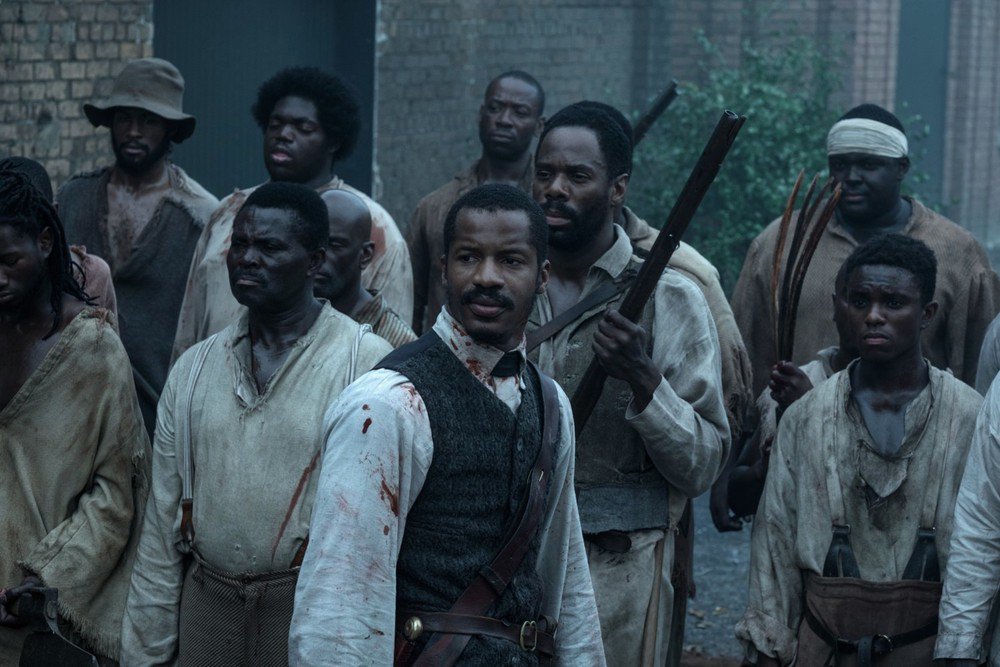
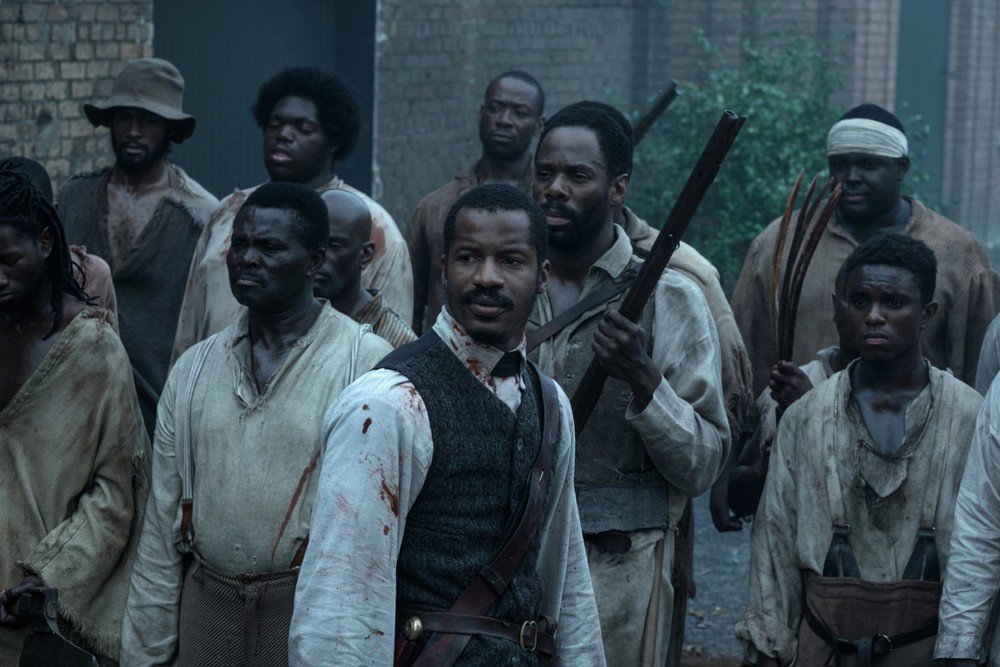
Nat Turner was an enslaved man in early 19th century Virginia who led other enslaved people in an armed rebellion against slaveholders thirty years before the Civil War. They killed more than 50 white people and more than 200 black people.

For actor Nate Parker, Turner’s story has been a long-time passion project, and he has audaciously claimed, or reclaimed the title of the D.W. Griffith silent film as revered for its innovations in cinematic storytelling as it is reviled for its racist, pro-KKK storyline. “The Birth of a Nation” title is provocative, timely, serious-minded, and powerful, and so is the film. The title refutes the pernicious narrative of the 1915 Griffith film, an act of rebellion and justice and an assertion of dignity and humanity. And so does the quote at the beginning of the film, from the man who both wrote of the inalienable rights of all men and was a slaveholder, Thomas Jefferson. The film opens with a selection from this passage:

an the liberties of a nation be thought secure when we have removed their only firm basis, a conviction in the minds of the people that these liberties are of the gift of God? That they are not to be violated but with his wrath? Indeed I tremble for my country when I reflect that God is just: that his justice cannot sleep for ever: that considering numbers, nature and natural means only, a revolution of the wheel of fortune, an exchange of situation, is among possible events: that it may become probable by supernatural interference! The Almighty has no attribute which can take side with us in such a contest.–But it is impossible to be temperate and to pursue this subject through the various considerations of policy, of morals, of history natural and civil. We must be contented to hope they will force their way into every one’s mind. I think a change already perceptible, since the origin of the present revolution. The spirit of the master is abating, that of the slave rising from the dust, his condition mollifying, the way I hope preparing, under the auspices of heaven, for a total emancipation, and that this is disposed, in the order of events, to be with the consent of the masters, rather than by their extirpation.

We first see Nat as a young boy, in a firelight gathering where enslaved people have congregated for some moments that recall the traditions of their home. Three birthmarks on the boy’s chest identify him as someone who will be a leader. Nat’s father, trying to get food for his family, kills a slave hunter and runs away.

There is a tense scene of terrible menace, as the other slave hunters come looking for Nat’s father that night, threatening Nat’s mother and grandmother, and finally the boy, too. We then see Nat running from a young white boy on the plantation, only to find that it is an innocent game, and the two seem to share a genuine sense of companionship. This is mirrored later in the film, when the then-adult Nat sees a little white girl playing with an enslaved girl by tugging her along with a rope like a dog on a leash.

Later, noticing the boy’s intelligence, the wife of the plantation owner (Penelope Ann Miller) brings the boy inside her home and teaches him to read. But the books on the shelves are not for him. “These books are for white folks. They are full of things your kind won’t understand.” There is just one book she will let him read: the Bible. He becomes a fervent believer, preaching the gospel to the other enslaved people.

As adults, Sam (Armie Hammer), the boy who was playing with him, has become the plantation owner and Nat (Parker) is his trusted servant. Nat persuades Sam to buy a woman who is being auctioned, and who clearly has suffered terribly. She becomes his wife and they love each other dearly.

When Sam falls on hard times and begins to drink too much, he starts renting out Nat’s services as a preacher to the other slaveholders. The plantation owners hope that his lessons about God’s will and the promise of heaven will keep them compliant. But Nat’s travels bring him into contact with the horrific atrocities inflicted by other slave holders. And some of the Bible’s lessons about justice and opposing tyranny take on an urgent power, as Nat’s wife is raped and beaten by slave hunters, another enslaved woman (Gabrielle Union) is forced to have sex with a man Sam hopes to do business with, and Nat is brutally whipped for baptizing a white man. He increasingly sees visions of a rebellion.

As a film, the movie falters, slipping into melodrama that recalls the Griffith film in ways it does not intend. But it transcends its storytelling shortcomings because of its palpable sincerity and passion, its force as a searing statement of history, and its relevance today. The fight for justice is a defining purpose of humanity, and Nat Turner’s cause goes on.

Parents should know that this film includes brutal slavery-related abuse including whipping, rape, beating, and forced feeding, a marital sexual situation with some nudity, drinking and drunkenness, and strong and racist language.

Family discussion: What made Nat Turner willing to take the risks of a rebellion? Why does this movie share the title of the famous D.W. Griffith silent film?

If you like this, try: “12 Years a Slave” and “Amistad” and read Nat Turner’s own words

Related Tags:


Based on a book Based on a true story Drama DVD/Blu-Ray Pick of the Week Epic/Historical
Ben-Hur

Ben-Hur

Posted on August 18, 2016 at 5:25 pm

B
Lowest Recommended Age: High School
MPAA Rating: Rated PG-13 for sequences of violence and disturbing images
Profanity: None
Alcohol/ Drugs: Some social drinking
Violence/ Scariness: Intense and sometimes graphic peril and violence including battle scenes, crucifixions, abuse, and accidents, characters injured and killed
Diversity Issues: A theme of the movie
Date Released to Theaters: August 19, 2016

Copyright 2016 Paramount
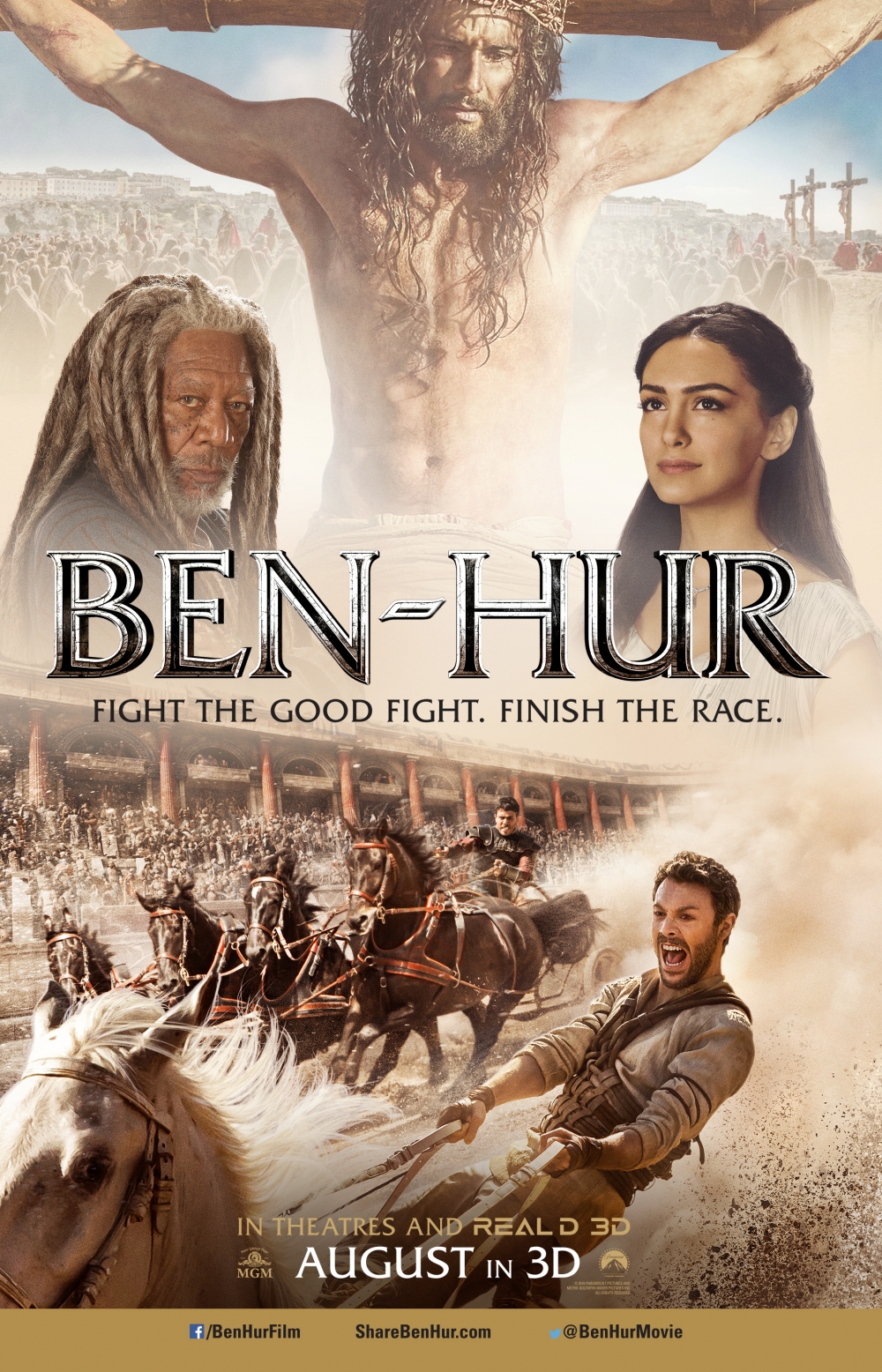
Lew Wallace’s 1880 book, Ben-Hur: A Tale of the Christ, had a revolutionary idea in a spiritual setting. The story of a minor, fictional character at the time of the crucifixion was the first to try to illuminate epic themes through the depiction of a character who was not a participant. Indeed, the title character was hardly aware of the monumental events going on around him. He was too busy dealing with his own personal crises like being enslaved and having his mother and sister contract leprosy. Wallace’s book became the top seller of the century. And then it became a play, two silent films, a Best Picture Oscar winner tied for first place for the most Academy Awards, plus two animated versions and a television miniseries.

Now Roma Downey and Mark Burnett, following the enormous success of their “Bible,” “A.D” and “Son of God” know the genre well and have remade the grand but dated three hour and thirty-seven minute epic. Their version is brisker, not just in the overall running time of just over two hours but in the more contemporary quick cuts and trimmed storyline. It is also more explicitly religious. While earlier versions suggested the presence of Jesus but did not include his face or voice, he is more explicitly involved in the storyline here, portrayed by Brazilian actor Rodrigo Santoro.

As in all of the earlier versions, it is the story of Judah Ben-Hur (Jack Huston), a Jewish prince who is wrongly accused of a hostile act against the Roman invaders and sold into slavery. In this version the Roman Messala (Toby Kebbell) is more than a close friend; he is Judah’s adopted brother. They are devoted to one another but also deeply competitive.

Messala, in love with Judah’s sister, joins the Roman army in hopes of achieving enough wealth and status to be considered worthy of her. When he returns to Jerusalem, Judah is married to Esther (Nazanin Boniadi). Messala and Judah agree to find a way for the local population to live peacefully under Roman occupation. But a rebel hiding in Judah’s house kills one of the Roman officers and Judah is blamed. Messala refuses to protect him or his family. Judah becomes a galley slave, spending five years chained to an oar on a Roman naval ship.

When the ship is sunk, he escapes. An African named Ilderim (Morgan Freeman) gives him a chance to win back his freedom by competing in a chariot race. And that, after all, is what everyone remembers about “Ben-Hur.” Director Timur Bekmambetov is known for action scenes with tremendous vitality and he more than delivers with the chariot race, which is thrillingly dynamic. The naval battle scenes are also exciting. The screenplay has some clunky dialog and awkward transitions, but Huston is always engaged and engaging and balances the intensity of the action scenes with an inspiring message of forgiveness. The movie is true to the story that has endured in its various versions for more than a century.

Parents should know that this film includes intense and sometimes graphic peril and violence with many characters injured and killed, battle scenes, whipping, abuse, crucifixions, some disturbing images, brief non-explicit sexual situation and mild sexual references.

Family discussion: What changed Ben-Hur’s mind about Messala? Was Ben-Hur right to try to make peace with the Romans? What did Pilate mean when he said, “They’re Romans now?”

If you like this, try; “Risen” and the 1959 version of “Ben-Hur”

Related Tags:


3D Action/Adventure Based on a book Drama Epic/Historical Movies -- format Spiritual films
Free State of Jones

Free State of Jones

Posted on June 23, 2016 at 5:40 pm

B+
Lowest Recommended Age: High School
MPAA Rating: Rated R for brutal battle scenes and disturbing graphic images
Profanity: Some strong and racist language
Alcohol/ Drugs: Alcohol
Violence/ Scariness: Intense and graphic violence including battle scenes, hanging of adults and children, brutal abuse, rape, and lynching
Diversity Issues: A theme of the movie
Date Released to Theaters: June 24, 2016

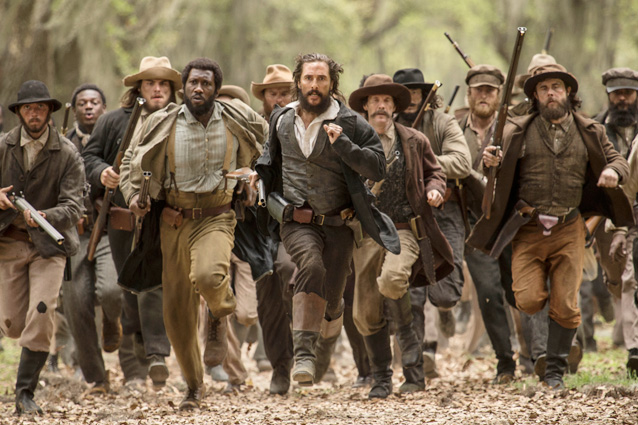
freestateofjonesThe timing is not great. “Free State of Jones” is a Civil War drama based on the true story of a community of Confederate deserters and runaway enslaved people who banded together to fight for their own vision of freedom. It was filmed once before as “Tap Roots,” with Van Heflin, Susan Hayward, and Boris Karloff (as an Indian!), but this version, from “The Hunger Games'” Gary Ross, deals forthrightly with the racial issues, or at least tries to. There is an inescapable and maybe unconquerable problem in telling a story set in Civil War era Mississippi with a glorified white man as the hero, in a time when one of the most anticipated films of the year is the Sundance Grand Jury and Audience award winner “Birth of a Nation,” a film that grabbed and repurposed its title from the blatantly racist D.W. Griffith film of the silent era.

Ross brings the same passion for tackling tyranny to this story that he did to “Hunger Games.” It’s just that we’re no longer dealing with speculation and metaphor, and that means a political overlay reflecting both historical and contemporary controversies.

Matthew McConaughey plays Newt Knight, a Mississippi farmer with a wife and young son who is serving as a nurse in the Confederate army. Early on, we see him removing the uniform from a wounded enlisted man so he can tell the doctors he is an officer and get him treated. Increasingly frustrated with the endless carnage on behalf of wealthy elites who exploit the poor, it is too much for him at last when his nephew is killed in battle and he leaves, taking the body home to be buried. There he finds the Confederate forces are taking all of the food from the local farmers, leaving them to starve. On the run from the military seeking defectors, he hides out in a swamp, where he meets up with runaway slaves. There he decides that his allegiance is not to the Confederacy, which is sending poor boys to fight to preserve what today we might call the 1 percent. “I ain’t fighting for cotton,” another solider tells him. “I’m fighting for honor.” “That’s good,” Knight responds. I’d hate to be fighting for cotton.”

Writer/director Ross, working with the locations where these events occurred and a touching score from Nicholas Britell, evocatively conveys the hardscrabble lives, the literal and spiritual grit, the desperation and conviction it inspires. Knight hands guns to three little girls and, when the Confederate officer does not take them serious, Knight tells him that guns will shoot anybody. “It don’t seem to matter where the bullet comes from.” The depth of research is evident throughout, but it is never pedantic. The storyline is grounded in historical events like the Confederacy’s requisitioning of food and supplies, and post-war exploitation and terrorism, led by former Confederate officials, that prevented former enslaved persons from basic rights and murdered those who tried to assert them. There are brief glimpses into a conflict 85 years later, as the descendent of Knight’s relationship with a former slave named Rachel (Gugu Mbatha-Raw) is criminally prosecuted for marrying a white woman in violation of the state’s laws prohibiting mixed marriages. It is there to remind us that we can never dismiss the events of the past as behind us.

Parents should know that this film has very intense and graphic violence including Civil War battles and skirmishes, hanging, rape, and lynching, adults and children injured and killed, very disturbing images, some strong language with racist epithets, some sexual references

Family discussion: What did Knight find most unjust about the Confederacy?  What did we learn from the 1948 courtroom scenes?

If you like this, try: “Glory” and “The Red Badge of Courage” and read about the story that inspired the film.

Related Tags:


Based on a book Based on a true story Drama Epic/Historical Movies -- format Race and Diversity War

Roots 2016 — Remake of the Classic Series Based on Alex Haley’s Book

Posted on May 25, 2016 at 3:03 pm

The 1977 television miniseries Roots, based on the book by Alex Haley, was one of the foremost cultural events of the decade, watched by millions and discussed by everyone. It followed the story of Haley’s family from the capture of his African ancestor, Kunta Kinte (Levar Burton), who was enslaved and brutally abused. For generations, the family struggles to stay together and to hold onto their culture and history.

A remake of the series begins on May 30, 2016, on the History Channel, and also on Lifetime and A&E. Levar Burton is one of the producers. The cast includes Forest Whitaker as Fiddler, Anna Paquin as Nancy Holt, Jonathan Rhys Meyers as Tom Lea, Anika Noni Rose as Kizzy, Tip “T.I.” Harris as Cyrus, Emayatzy Corinealdi as Belle, Matthew Goode as Dr. William Waller, Mekhi Phifer as Jerusalem, James Purefoy as John Waller, Laurence Fishburne as Alex Haley, and newcomers Regé-Jean Page as Chicken George and Malachi Kirby as Kunta Kinte.

https://www.youtube.com/watch?v=ZZwaqFhs9fo

According to the New York Times,

“I think we also think more in terms of the social violence of being separated from your entire genealogy in Africa.”

That is a rift “Roots” tries to highlight, with a new understanding about the real Kunta Kinte, now said to be an educated young man from a prominent, well-to-do family, who lived not in a remote village (as depicted in the 1977 version) but on the shore of a bustling trading post. “He spoke probably four languages,” Mr. Wolper said.

His characterization changed, too: While Mr. Burton’s is a headstrong naïf, the new Kunta is “a little tougher, a little edgier,” Mr. Wolper said, in what he hoped would be a more contemporary spin. Though one of the iconic images of the original was Mr. Burton in shackles, in promotions for this one — “focused thematically more on defiance, resistance and the ability to overcome the shackles of the body,” Mr. Wolper said — Kunta Kinte is shown breaking through his chains.

The new series reflects changes in culture and understanding since 1977, and, like the original, has some important context for contemporary conflicts. The older series is dated in terms of production values and perspective, but it is well worth re-visiting, in part to better understand what has and has not changed.

https://www.youtube.com/watch?v=EE0mOzkJWnM
Related Tags:


Based on a book Based on a true story Epic/Historical Remake Television
THE MOVIE MOM® is a registered trademark of Nell Minow. Use of the mark without express consent from Nell Minow constitutes trademark infringement and unfair competition in violation of federal and state laws. All material © Nell Minow 1995-2026, all rights reserved, and no use or republication is permitted without explicit permission. This site hosts Nell Minow’s Movie Mom® archive, with material that originally appeared on Yahoo! Movies, Beliefnet, and other sources. Much of her new material can be found at Rogerebert.com, Huffington Post, and WheretoWatch. Her books include The Movie Mom’s Guide to Family Movies and 101 Must-See Movie Moments, and she can be heard each week on radio stations across the country.

Website Designed by Max LaZebnik