Far from the Madding Crowd

Posted on April 30, 2015 at 5:45 pm

B+
Lowest Recommended Age: Middle School
MPAA Rating: Rated PG-13 for some sexuality and violence
Profanity: Mild language
Alcohol/ Drugs: Drinking and drunkenness
Violence/ Scariness: Some violence including gun, character killed
Diversity Issues: Class issues
Date Released to Theaters: May 1, 2015
Date Released to DVD: August 3, 2015
Amazon.com ASIN: B00ZRBQTXO
Copyright 2015 Fox Searchlight
Copyright 2015 DNA Films

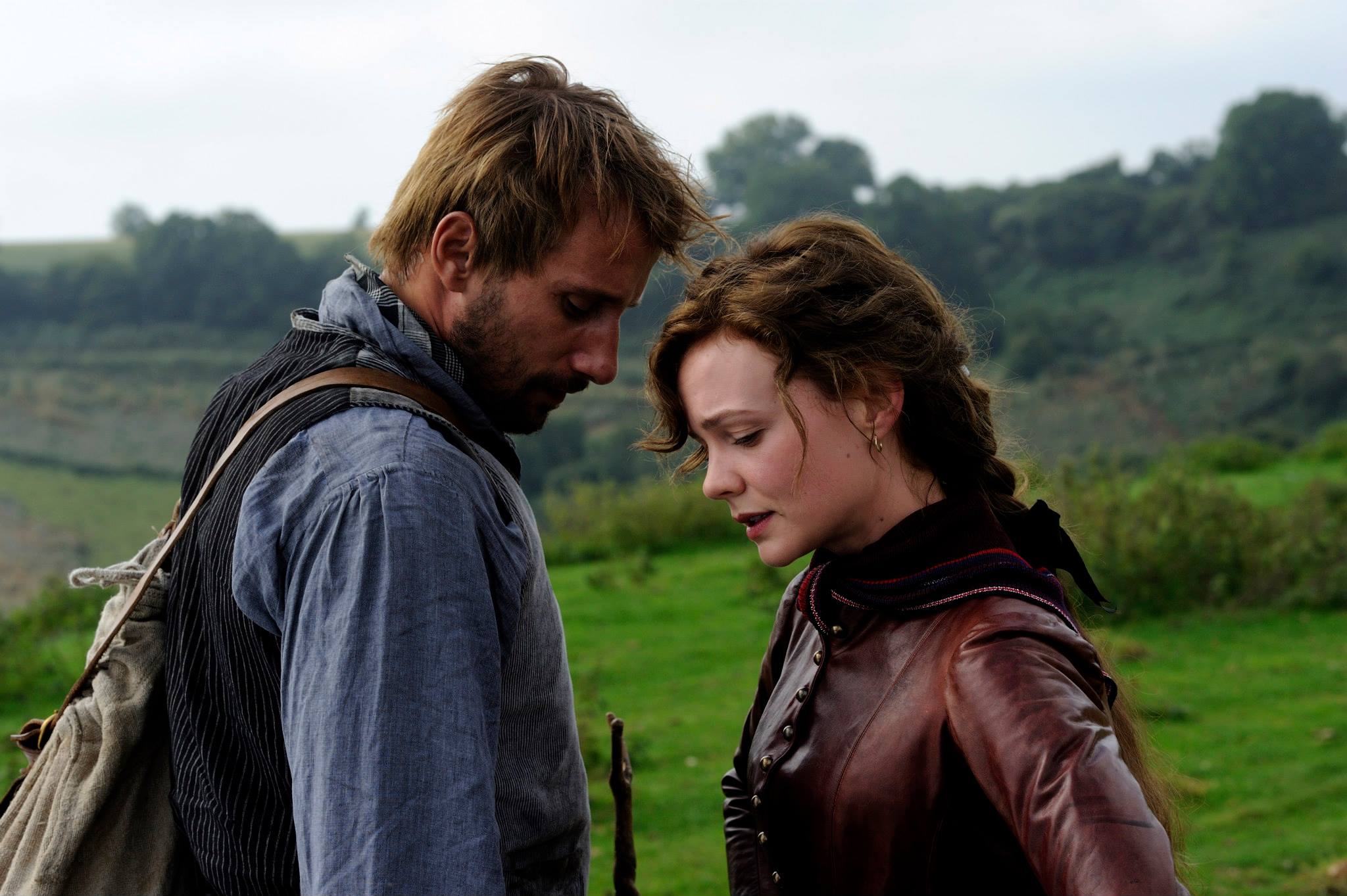
It may be a British costume drama based on a classic novel, but Thomas Hardy’s saga of a headstrong woman and the three marriage proposals from very different men is not the usual corsets and teacups. Far from the Madding Crowd is the story of Bathsheba Everdene (a radiant Carey Mulligan), an orphan who inherits a farm and announces to the staff, “It is my intention to astonish you all.”

What gives the story a vital, even modern tone is the independence of its heroine, who is often wrong, but who has good instincts and accepts the consequences of her mistakes and learns from them. There is romance and drama in the story, tragedy and betrayal, but it engages in a bracing fashion with issues of class, honor, and values. It is not much of a spoiler alert to say that Hardy favored those who were most connected to the land and nature.

It begins in 1870, when Everdene is at first a poor relative living on her aunt’s small farm. She had intended to take on the favorite profession of literary heroines: governess. But “she was far too wild,” nothing like the meek Jane Eyre. She rides straddling her horse, no sidesaddle. The very handsome farmer next door is Gabriel Oak (Matthias Schoenaerts, radiating quiet integrity) who presents her with a lamb and asks her to marry him. She likes him very much but turns him down. “I shouldn’t mind being a bride and having a wedding if I didn’t have to have a husband.”

Their positions are suddenly and dramatically changed. She inherits a farm, rising to the lower levels of the landed gentry. He loses his flock in a calamitous accident and is unable to keep the farm. As he is looking for work, he stops to put out a fire in what turns out to be Everdene’s new farm. She offers to hire him if the change in their positions will not be too awkward for him, and he agrees. Her next proposal is from her neighbor, a reserved and lonely older man named William Boldwood (Michael Sheen), who is not bold at all, but who was encouraged by a valentine Everdene sent him impulsively, not thinking he would take it seriously. Her third proposal is from an officer named Frank Troy (Tom Sturridge), who tells her she is beautiful, shows off his swordsmanship, and introduces her to sensual pleasures. He does not tell her he was supposed to marry someone else.

David Nicholls, who wrote the excellent miniseries adaptation of Hardy’s Tess of the d’Urbervilles, would have benefited from miniseries length for a story of this scope. It is rushed and abrupt at times. But Nicholls and director Thomas Vinterberg never let the story get musty or dated. It is firmly grounded in the most literal sense, always returning to the land as the source of what is good and true, and to the people who understand that as the real heroes and the ones who know what love can be.

Parents should know that this film includes sexual references and a non-explicit situation, violence, and sad deaths including a murder.

Family discussion: What was Bathsheba looking for? Why did it take her so long to figure that out? What appealed to her about each of her suitors? Why do you think this heroine inspired the name of “Hunger Games” heroine Katniss Everdeen?

If you like this, try: the earlier version with Julie Christie and the book by Thomas Hardy, and “My Brilliant Career”
Related Tags:


Based on a book Drama DVD/Blu-Ray Pick of the Week Epic/Historical Remake Romance
Selma

Selma

Posted on December 24, 2014 at 5:55 pm

A+
Lowest Recommended Age: Preschool
MPAA Rating: Rated PG-13 for disturbing thematic material including violence, a suggestive moment, and brief strong language
Profanity: Some strong and racist language
Alcohol/ Drugs: Some drinking and smoking
Violence/ Scariness: Very brutal violence including abuse and beatings by law enforcement and individuals, characters injured and killed
Diversity Issues: A theme of the movie
Date Released to Theaters: December 25, 2014
Date Released to DVD: May 4, 2015
Amazon.com ASIN: B00S1MYWBW
Copyright 2014 Cloud Eight Films

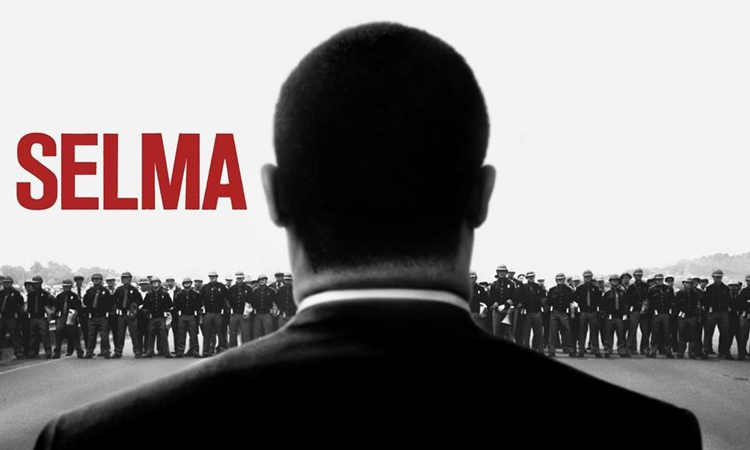
“Selma,” director Ava DuVernay’s film about Dr. Martin Luther King, Jr. and the march from Selma, Alabama to the state capital at Montgomery, to make the case for the right to vote, is superb as biography, as history, and as drama. It is one of the best movies of this year and this decade.

And somehow it has arrived just as we need it most, as Americans continue to struggle to reconcile our notions of equality. This film is a powerful reminder of the Civil Rights Movement cry that “we’re not where we want to be, we’re not where we’re going to be, but, thank God, we’re not where we were.” It is a reminder of the difference one person can make, and the inescapability of an idea whose time has come. And it should also be a powerful reminder that the voting rights people fought — and died — must be exercised to carry that dream forward.

This is a story of politics and race and history, but it is also very much the story of a man who just wanted to be “a pastor in a small college town” but found himself called to lead a movement, even though he put himself, his followers, and his family at risk. King has to try to keep his supporters together, increasingly difficult as the very progress he has made has made them impatient and independent.

British actor David Oyelowo makes Dr. King into a real person, polite and respectful but also canny and insistent in his meetings with President Lyndon Johnson (Tom Wilkinson) in the Oval Office, devoted and compassionate with the members of the movement, stirring and inspirational at the pulpit and podium, and at his most vulnerable when he is alone with his wife, Coretta Scott King (Carmen Ejogo, who played the same role in the superb “Boycott”). Even over the course of the few weeks covered by this film, we see Dr. King constantly assessing, re-evaluating, learning, and growing.

We also see that wiliest of politicians, LBJ, outmaneuvered by King, partly because he refused to give up but also because for the first time there was television coverage of what was going on and the rest of the country, 70 million viewers, were no longer able to pretend that this country was living up to its ideals of justice and equality. Even with the passage of the monumental Civil Rights Act, which required equal treatment without regard to race or gender in public accommodations and the workplace, the inability to vote imposed an insurmountable barrier to meaningful change. At the beginning of the film, we see Annie Lee Cooper carefully, deliberately filling in her application to register to vote. When the contemptuous official quizzes her on the number of county judges in the state, she is prepared with the answer. Clearly, she has tried this before and done her homework. She gives the correct number: 67. He responds, “Name them.”

“This voting thing is just going to have to wait,” Johnson explains. “You have one problem. I have a hundred and one.” He tries to persuade King that his War on Poverty is of central importance to black citizens. King understood that without the right to vote, blacks would continue to be excluded.

Everyone tries to stop him. The FBI sends tapes to Mrs. King that purport to reveal King’s affairs. There are constant threats and supporters are murdered. A church is bombed, killing Four Little Girls. The first time they try to walk to Montgomery, the 600 marchers are attacked by the police with tear gas and billy clubs wrapped in barbed wire.

But television cameras send pictures of the police brutality to 70 million viewers across the country. The images put even more pressure on Johnson, who finally brings Governor George Wallace (Tim Roth) to the Oval Office, to force some progress on the man whose inaugural address included the words, “In the name of the greatest people that have ever trod this earth, I draw the line in the dust and toss the gauntlet before the feet of tyranny, and I say segregation now, segregation tomorrow, segregation forever.”

Today we live in a world that is saturated in images and opinions, often angry ones. This film, like King’s patient but insistent voice, is a clarion call, the story of a man, a movement, and a journey that can and must continue.

Parents should know that the movie’s themes include historic depiction of virulent racism including verbal and physical attacks and murder, strong language including racist epithets, brief sexual sounds and discussion of affairs.

Family Discussion: How did Dr. King make President Johnson change his mind? How did President Johnson make George Wallace change his mind?

If you like this, try: Other films about the Civil Rights movement including “Boycott” (also featuring Carmen Ejogo as Coretta Scott King), “Separate But Equal,” and “Eyes on the Prize”

Related Tags:


Based on a true story Drama DVD/Blu-Ray Pick of the Week Epic/Historical Politics Race and Diversity

The Hobbit: The Battle of the Five Armies

Posted on December 16, 2014 at 5:47 pm

Copyright Warner Brothers Studios 2014

Visually stunning, capably presented, and utterly unnecessary, this final in the six-movie Tolkien cycle is just for the fans.  I think even Tolkien himself would cry “no mas” at this point.  Remember how the third LoTR movie had about five or six endings because Jackson just could not bear to let go?  This whole movie is like that.

It’s not bad.  There’s just too much of it.

The second of the Hobbit movies remains my favorite because it had the most excitingly staged action scenes and the best characters.  And it left us with a heck of a cliffhanger as Smaug the dragon delivered on the promise of the title, leaving his lair to desolate the village of Lake-Town.  But that all gets resolved pretty quickly (and excitingly) and then, as this title makes clear, most of the rest of the time is not about the original quest to reclaim the Lonely Mountain or the sub-quest to obtain the powerful Arkenstone.  It is about a battle of just about everyone, with shifting loyalties and heartbreaking losses.  If you are not a hard-core Tolkienite at the Stephen Colbert level, here’s the one key guideline to keep in mind: the worse the teeth, the more evil the creature sporting them.  The elves, dwarves, and men may have their grievances with each other and may even go into battle against each other, but as any crossword puzzle fan knows, Orcs are the bad guys, ugly cusses with terrible gnashy teeth, and nothing unites rivals and enemies quicker than the arrival of a much worse enemy coming after all of them.

Martin Freeman (television’s “Sherlock” and “Fargo”) returns as Bilbo Baggins, the heart and the moral center of the story.  While my mind wandered at times to consider such questions as who does all that intricate hair-braiding that the characters sport?  It must be like a middle school slumber party around those campfires, with everyone in a circle doing the hair of the person in front of them.  Isn’t that total turnaround by Thorin Oakenshield a little unbelievable? And I can never figure out exactly the scope of the powers and jurisdiction of characters like Gandalf and Galadriel. Plus, the snively traitor guy gets much too much screen time.

But I never stopped admiring the gorgeously imagined visuals or the subtle complexity of Freeman’s performance. As we see on “Sherlock,” there is no one better at showing us a thoughtful and deeply honorable struggle over how to respond to terrifying and complex challenges. There may be epic battles, shifting loyalties, elaborate stunts, and a lot of gnashing of very scary-looking teeth, but it is the part of the title before the colon that is what matters.

Parents should know that this movie has extensive and graphic peril and war violence with many sad deaths and some disturbing images.

Family discussion: What was the most difficult decision made by Thranduil? By Bilbo?

If you like this try: The other Hobbit and Lord of the Rings films by Peter Jackson and the books by J.R.R. Tolkien

Related Tags:


3D Action/Adventure Based on a book Drama Epic/Historical Series/Sequel War

Exodus: Gods and Kings

Posted on December 11, 2014 at 9:51 pm

Copyright 2014 Twentieth Century Fox

The story of Exodus is central to three of the world’s most significant religions and one of the Bible’s most cinematic stories, with a flawed but charismatic hero and a stirring story of slaves seeking freedom.  It has already been filmed at least eight times, from Veggie Tales’ Moe & The Big Exit to Cecil B. DeMille’s epic The Ten Commandments, with Charlton Heston and Yul Brynner and Jeffrey Katzenberg’s animated The Prince of Egypt.  Now Ridley Scott, who showed his mastery of sword and sandal epics with Gladiator has taken on the story with an all-star (but mostly non Middle-Eastern) cast and the latest 3D technology to really deliver on the special effects.  Not so much on the theology part, though, or even the morality or meaning of it.  Scott is clearly more interested in chases and battles and plagues, and so busy with it that he leaves out some of the story’s most important incidents.  For example, instead of having to leave the palace because he killed an Egyptian who was beating a slave, Scott gives us a soapy story about Ramses’ jealousy.  And we know Ramses is decadent because every time we see him, he’s eating.
The action and special effects work well, though.  This is a two and a half hour movie that starts in the middle of the story and Scott keeps it moving.  We first see Moses (Christian Bale) and Ramses (Joel Edgerton) as Seti (John Turturro), the Pharaoh, is giving them each a sword.  At first, Ramses, Seti’s son, thinks he has been given the wrong one.  But Seti has given them each other’s swords on purpose, to remind them that they must care for each other as they are about to go into battle.  A seer has a prophesy: “In the battle, a leader will be saved and his savior will someday lead.”  This inflames Ramses’ insecurity, especially when it comes true.

After Seti’s death, Ramses puts Moses in prison and tries to have him killed.  Moses finds a home with a small community of shepherds and falls in love with Zipporah (María Valverde).  Their life there is very sweet for nine years until he sees a burning bush and receives a message from God.  Scott makes an imaginative choice here about portraying the Deity that I won’t give away, but I am still trying to decide how I feel about it.  God tells him what he already knew in his heart.  The Hebrews are his people and he cannot run away from his responsibility to help them find freedom.  So he goes back to Memphis.

Bale holds the screen well as Moses, but Turturro, Kingsley, and Sigourney Weaver as Ramses’ mother do not have enough to do to.  But there is a lot of time devoted to spectacle.  Well past the two-hour mark, there are still 40 years of wandering in the desert and the Ten Commandments (twice) to get through, and they are sped through very quickly.  The striking of the rock to get water, manna, the golden calf, and Moses not being permitted to enter the promised land are all skipped over.  Two significant ideas that are included are Moses’ disagreements with God (and God’s approval of it) and the journey from the first scene, where Ramses believes in omens and faith and Moses believes in reason, to the end of the film, where they switch places.

Moses tells Ramses he must free the slaves and Ramses says the same thing that people have said throughout history when there is no possible moral justification for their position.  He says that it is not economically feasible and will take a long time.  Moses, trained as a general, gets the Hebrews to attack the Egyptians’ supply chain, but God gets impatient and steps in with the plagues, which are very vivid and rather disturbing.  After the death of the Egyptian first-born children, including his own son, Ramses tells the Hebrews to go.  But then he and his army ride after them, until the miracle at the Red Sea, very impressively staged.  But, again, the focus is shifted from the story of the Exodus to much less interesting battle between two cousins raised as brothers.  

The visual scope here is impressive.  There just isn’t much soul.

Parents should know that this movie includes Biblical themes including slavery, plagues and other kinds of peril and abuse, extensive peril and violence, battles, many characters injured and killed including children, and disturbing scenes with dismemberment and dead bodies.

Family discussion: How did being raised as a prince affect the way Moses saw himself and his role? How was he affected by learning the story of his birth? Why does he object to the plagues?

If you like this, try: “The Ten Commandments” with Charlton Heston

Related Tags:


3D Action/Adventure Based on a book Documentary Drama Epic/Historical Remake Spiritual films

The Hunger Games: Mockingjay

Posted on November 20, 2014 at 5:59 pm

B+
Lowest Recommended Age: Middle School
MPAA Rating: Rated PG-13 for intense sequences of violence and action, some disturbing images and thematic material
Profanity: Mild language
Alcohol/ Drugs: None
Violence/ Scariness: Intense peril and violence with hundreds of deaths, grisly scenes, torture
Diversity Issues: None
Date Released to Theaters: November 21, 2014
Date Released to DVD: March 6, 2015
Amazon.com ASIN: B00PYLT0OW
Copyright 2014 Lionsgate

It seems no different at first. While the second in the “Hunger Games” series ended with the surprise last-minute rescue of heroine Katniss Everden (Jennifer Lawrence), and the even bigger surprise that insider Plutarch Heavensbee (Philip Seymour Hoffman) was secretly helping to organize a rebellion against the fascist dictator President Snow (Donald Sutherland), we begin this first half of the final installment with Katniss gripped by anxiety and terror, listening to the voice of someone we cannot see, calling her “Miss Everdeen,” which sounds respectful, even deferential, but still delivering orders. Is this more of the same? Just another version of the world of Panem where the thinnest gloss of rhetoric about ideals and values is used to disguise the vilest abuse, corruption and even genocide.

No, this is District 13, thought to have been exterminated, but in reality literally driven underground, as much as 40 stories down, as they work to find a way to overthrow President Snow’s totalitarian regime. They are led by Alma Coin (a somber Julianne Moore), President of the rebel forces. Coin can be abrupt, but it is a manifestation of urgency and decisiveness, not dictatorship. Snow dresses in spotless white, surrounded by lush white roses, and the capital city of Panem is a riot of garish, decadent colors. District 13 is all in gray, looking a bit like Janet Jackson’s “Revolution” video, evoking its uniformity in dedication to its goal and seriousness of purpose. Coin is not cynical, but she is realistic, constantly establishing priorities, understanding the consequences but willing to pay the price.

Coin and Heavensbee believe Katniss is what they have been waiting for, a symbol who will communicate to the other districts that the time has come for rebellion. She is the Mockingjay, named for the distinctive birds creation through genetic manipulation mating with natural species. Katniss is a figure whose sacrifice and resilience lend her enormous national credibility. She was made into a celebrity by Snow through the original Hunger Games.

Now Coin wants to use that as a weapon against Snow’s regime. They try to make a “propo” (propaganda) video with CGI effects, but realize that Katniss is too honest to be effective unless she is telling the truth. So, they take her to see what has happened to her home community in District 12. It has been reduced to rubble, with an enormous pile of skeletons of those who died there. And so Katniss is able to produce the outrage and resolve Coin’s forces are looking for in the video.

Katniss agrees to serve as symbol, on condition that the rebel forces rescue the Hunger Games competitors who were left behind, and pardon them for whatever they have done. She believes Peeta (Josh Hutcherson) is dead, but then he appears on a televised broadcast hosted by Caesar Flickerman (Stanley Tucci), the game show emcee with the sepulchral smile. Her joy turns to horror as she hears him plead for her to stop any opposition to Snow. Has he been tortured? Does he know something she does not?

That seems more likely as the initial attempts at rebellion result in enormous losses, including the firebombing of a hospital. With support from Haymitch (Woody Harrelson), now reluctantly sober, and Effie (Elizabeth Banks), whose adjustment to live without wigs, make-up, and fashions that would make Lady Gaga say “too much” provides much of the film’s comic relief, Katniss struggles with PTSD and with the painful moral dilemmas of asking others to risk their lives for a cause that may be doomed.

The series is a respectful adaptation of the books, but its real strength is not the writing of Suzanne Collins but the performance of Jennifer Lawrence, who is to the film all that Katniss is to the rebellion and more. Once again, Katniss is the heart of the story and Jennifer Lawrence is the heart of the film.  In a plot that has her devastated and horrified much of the time, she manages to give a performance that is moving but never an atom out of control. Her conviction and presence is what anchors the film and makes the wildest absurdities of the storyline work. While I am not in favor of splitting the book in two just to double the box office, this version skillfully finds a story arc that comes to a satisfying conclusion while making us eager to see what happens next.

Translation: Brutal dictatorship relying on military force, bombing (including bombing unarmed civilians), shooting, executions, hundreds injured and killed, disturbing images including wounded civilians and piles of skeletons, torture (off screen), some teen kisses

Family discussion: What made Katniss the best choice to symbolize the rebellion? Why was it necessary to have a symbol? Why did President Snow refuse to use the word “rebel?”

If you like this, try: the first two “Hunger Games” films and “The Maze Runner”

Related Tags:


Action/Adventure Based on a book DVD/Blu-Ray Pick of the Week Epic/Historical Series/Sequel Stories about Teens
THE MOVIE MOM® is a registered trademark of Nell Minow. Use of the mark without express consent from Nell Minow constitutes trademark infringement and unfair competition in violation of federal and state laws. All material © Nell Minow 1995-2026, all rights reserved, and no use or republication is permitted without explicit permission. This site hosts Nell Minow’s Movie Mom® archive, with material that originally appeared on Yahoo! Movies, Beliefnet, and other sources. Much of her new material can be found at Rogerebert.com, Huffington Post, and WheretoWatch. Her books include The Movie Mom’s Guide to Family Movies and 101 Must-See Movie Moments, and she can be heard each week on radio stations across the country.

Website Designed by Max LaZebnik