
Cloud Atlas

Posted on October 25, 2012 at 6:00 pm
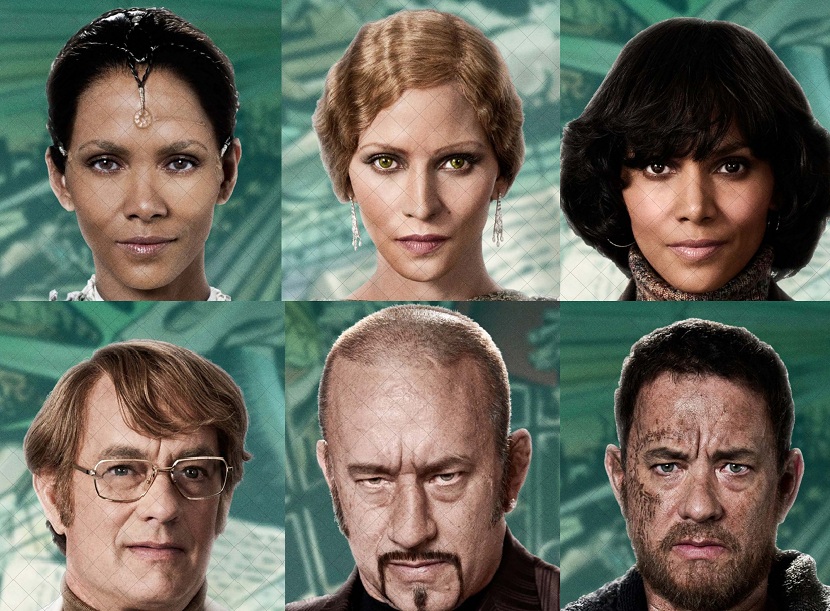
Six nested stories set in the past, present, and future entwine grand themes of the conflicts between those who would oppress and those who demand freedom, those who must create and those who want to repeat what is already there, those who love and those who are afraid to love or be loved.  Some in the audience will be enchanted by the grand scope of the story-telling and the intricate details of the mosaic that make up each of the story’s parts.  Others will be impatient with the gimmicks and distracted by the prosthetics, wigs, and make-up.  Many will grapple with the frustration of experiencing both reactions.

When they made the “Matrix” films, they were known as the Wachowski brothers, Andy and Larry.  But since then, Larry has become Lana while resisting terms like “transition” as “complicity in a binary gender narrative.”  That clearly fueled the commitment to age, race, and gender fluidity throughout the film. Even the most sharp-eyed cataloger of prosthetic noses and teeth will be surprised as the credits reveal the multiple roles taken by Tom Hanks, Halle Berry, Hugo Weaving (Mr. Smith in the “Matrix” films), Hugh Grant, Jim Sturgess, James Broadbent, Ben Wishaw, Keith David, Doona Bae, and others.

The oldest story, set in the early 19th century and told in the  traditional style of ahistorical drama, has Sturgess as a man disturbed by the abuse of slaves in the Pacific who is being poisoned by a doctor (Hanks) he thinks is curing him.  His journals become a book on a shelf in the next story, set in the 1930’s, with a musician (Wishaw) writing to the man he loves about assisting a venerated composer and working on his own composition, called “Cloud Atlas.”  In the 1970’s, styled to remind us of that era’s “paranoid cinema” films like “The Parallax View” and “The China Syndrome,”  an investigative reporter (Berry) gets stuck in an elevator with an elderly scientist who gives her some important information about a nuclear facility.  She discovers his 40-years-old correspondence with the musician in his papers.  In the present day, we see something of a shaggy dog story as a British publisher (Broadbent) goes on the run from hooligans and ends up having to escape from a “One Flew Over the Cuckoo’s Nest”-style facility.

Two stories are set in the future.  The first, in what is now Korea, has a “Blade Runner-“ish society made up of consumers and “fabricants.”  One of them sees a movie based on the story of the publisher’s escape (starring Hanks), which helps her understand that she must rebel against the abuses of her society.  Her story becomes part of the origin myths of a post-apocalyptic society hundreds of years even farther into the future, where much of humanity has returned to an almost bronze-age level of technology and everyone speaks in a Jar-Jar Binks form of pidgin English that may have worked better on the printed page but on screen is intrusive and overdone.

As the the “Matrix” films, the more specific and concrete it gets, the less resonance it has.  Its greatest message about human aspiration and inspiration and connection is in the message as medium.  The scope and audacity of this undertaking, the biggest budget independent film in history, with the Wachowskis putting up their own homes to make the final budget numbers, outshines the details that never quite reach the clouds.

Parents should know that this film includes some graphic violence including murders, rape, shoot-outs, knives, arrows, suicide, brutal whipping, poison, car crashes, and a character being thrown off a balcony.  Characters are in peril, injured and killed.  There are dead bodies with disturbing images, some strong words including f-word and n-word, gay and heterosexual sexual references and explicit situations as well as nudity, crude sexual humor, portrayal of slavery and totalitarianism, smoking, and drug use.

Family discussion: Which of the stories was the most compelling and why?  Who was the bravest character?  Who learned the most?

If you like this, try: the book by David Mitchell and the “Matrix” movies
 

Related Tags:


Action/Adventure Based on a book Drama Epic/Historical Fantasy Romance Science-Fiction

Snow White and the Huntsman

Posted on May 31, 2012 at 6:06 pm

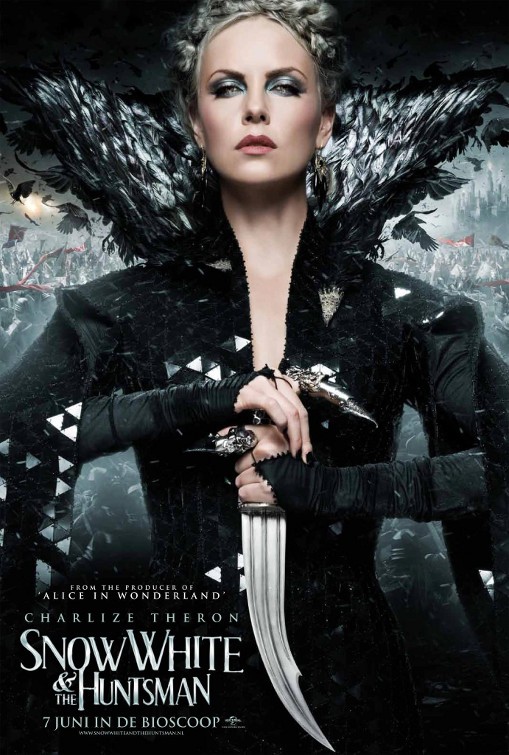
Director Rupert Sanders is known for making television commercials that look like fairy tales, with angels falling from the sky for a guy who uses Axe body spray and a boy battling samurai warriors with Excalibur to sell X-Box game consoles.  With his first feature film he has made a fairy tale that looks like a commercial, with every frame filled with eye-popping images and a lot of dramatic posing.  A 30 second version would have made a great commercial for perfume or skin cream.  As a movie, it is just so-so, with uneven performances and dodgy pacing.  After over 100 movie versions of the classic fairy tale about the girl whose lips are red as blood, skin is white as snow, and hair black as ebony and the evil stepmother who orders her taken into the woods and killed, the Disney animated version is still the fairest of them all.

Like Tarsem’s superior “Mirror Mirror,” released earlier this year, this version makes Snow White into an action heroine, leading the battle against her evil stepmother.  Charlize Theron plays Ravenna, who literally bewitches a king grieving for his late wife.  She murders him on their wedding night, taking over his kingdom with the help of her creepy brother/henchman Finn (Sam Spruell) and locking the young princess in a grubby tower.  Ravenna cares for just one thing — eternal beauty.  She swans around looking haughty in fabulous Colleen Atwood costumes that can best be described as haute predator couture, with all kinds of intricate spikes and skulls.  Everything is either sharp or poisonous and laced-up tightly, with talon-like finger-armor.  She stalks and flounces nicely but when it is time for her to get ferocious she is all eye-rolls and screeches, a bad version of Carol Burnett doing Norma Desmond.

Ravenna has an enormous gold mirror that looks like giant frisbee hanging on the wall, and the robed creature who lives inside assures her that she is the fairest in the land.  She also gets some reassurance from skeevy Finn, with whom she shares the creepiest brother watching his sister take a bath scene since “Bunny Lake is Missing.”  You also know he’s twisted from his terrible haircut, a sort of medieval mullet.
While Ravenna is bathing in thick cream and literally sucking the life out of young women, Snow White (Kristen Stewart) is still locked in the tower.  For years.  But she stays so pure that when the birds come to perch on her window, she does not grab and eat them.  She just allows them to show her a loose nail she can use as a weapon, which comes in very handy as Finn arrives shortly to indicate some predatory tendencies and take her to the queen.  The mirror guy has informed Ravenna that Snow White has come of age.  Her purity is so powerful that she alone has the power to destroy Ravenna, says the mirror.  But her power is so great that if Ravenna can eat her heart, she will no longer need touch-ups and refills.  Her beauty will stay as it is forever.

When Snow White escapes into the Dark Forest, where everything is creepy and scary and even Ravenna has no power.  The only person who knows the Dark Forest well enough to bring her back is The Huntsman (no name), played by “The Avengers'” Thor, Chris Hemsworth.  Ravenna promises to bring his dead wife back to life if he will capture the prisoner and he agrees to go.  But Snow White isn’t the only one who gets tripped up in the forest.  Sanders gets much too enmeshed in all of the tree-branches-turning to snakes-style special effects and the forest section of the film goes on much too long, with at least three too many set-ups and confrontations, including the return of Finn.  And it gets worse when they emerge into a sort of Light Forest fairyland, when the story really starts to go haywire, with a whole “chosen one” theme that had people in the audience groaning.  Stewart is out of her league.  She is fine playing characters like the vulnerable Bella in “Twilight,” but when called on here to inspire the troops, she sounds like she is ordering pizza.

And then there are the dwarfs.  It is hard to imagine that in 2012 anyone could think it is appropriate to cast full-size actors, no matter how talented and no matter how persuasive the special effects, as little people.  It is a shame to see Bob Hoskins, Nick Frost, Ian McShane, Toby Jones, and others in roles that should be played by little people.  By the time they show up, the plot has fallen apart, with an unnecessary love triangle and a preposterous encounter with a troll.  Nearly everyone’s accents waver, some of the dialogue is truly awful, and I am certain no one in a fairy tale should ever use the word “okay.”  Recasting Snow White as the hero of her own story is long overdue and production designer Dominic Watkins creates some real magic.  But this is not only not the best Snow White; it’s not the best one in the last four months.


Parents should know that this film includes fantasy and battle violence with many characters injured and killed, and some graphic and disturbing images including bloody wounds, bugs, and snakes.  There is brief partial nudity and some scenes of a brother watching his sister bathe and then suggestively touching a young woman in a predatory manner.

Family discussion:  How did Ravenna’s costumes reflect her character?  How did the three drops of blood spilled by both characters’ mothers show their connection?

If you like this, try: Some of the more than 100 other movie versions of this story including the recent “Mirror Mirror” and the Disney animated classic

Related Tags:


Action/Adventure Based on a book Epic/Historical Fantasy Remake

For Greater Glory

Posted on May 31, 2012 at 6:00 pm

B-
Lowest Recommended Age: Mature High Schooler
Profanity: Mild language
Alcohol/ Drugs: Drinking
Violence/ Scariness: Extended battle violence with many characters and animals killed, children tortured and killed
Diversity Issues: A theme of the movie, strong female characters
Date Released to Theaters: June 1, 2012

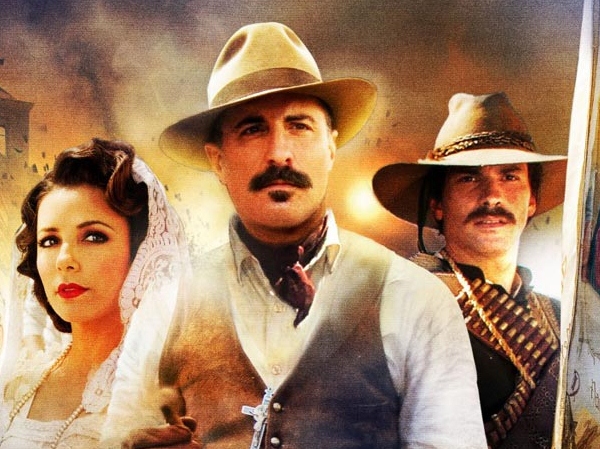
In 1926, the atheist President of Mexico Plutarco Elias Calles (Rubén Blades) decided to secularize the country by edict.  He deported non-Mexican priests and prohibited the remaining priests from appearing outside of the churches in their cassocks.  Rebels fought back, at first with peaceful protests and then with increasing force until it became an armed conflict known as the Cristero War or Christiada.   This film, financed in part by the Catholic fraternal society The Knights of Columbus, is a faith-based and often heavy-handed retelling of the story, focusing on characters who have since been recognized by the church as martyrs and canonized.

Andy Garcia and Oscar Isaac bring some depth and dignity to a script that is sincere but clunky.  Garcia plays Enrique Gorostieta Velarde, a non-believer married to a devout woman (Eva Longoria) and a former general now painfully under-employed as a manager at a soap factory.  When the Cristeros offer him the job of commanding their troops, he accepts because he wants to do the work he was born for, because it will please his wife, and because, he discovers, he would like to believe in something.  One of his biggest challenges is winning the respect of the Cristero’s legendary fighter, Victoriano Ramirez (Isaac), known as “El Catorce” because he defeated fourteen of the President’s army by himself.  Rodriguez plays one of the women who played key roles in transporting guns and ammunition.

The battle scenes are impressively staged and there are some affecting moments, but it assumes a level of belief and commitment on the part of its audience that may not apply to those who are not familiar with Catholic teachings.  Ultimately, it is closer to worship than story-telling, more likely to validate believers than to engage new hearts.

Parents should know that this film has extended battle violence with many characters and animals injured and killed, graphic and disturbing images, and a harrowing scene of a child who is tortured and killed.

Family discussion: How does the quote at the beginning of the movie relate to the story? How did participating in the fight change the general’s mind about God?

If you like this, try: “The Mission” and “Braveheart”

Related Tags:


Action/Adventure Based on a true story Epic/Historical Movies -- format War

Titanic 3D

Posted on April 3, 2012 at 6:05 pm

B
Lowest Recommended Age: Middle School
MPAA Rating: Rated PG-13 for disaster-related peril and violence, nudity, sensuality, and brief language
Profanity: Some strong language
Alcohol/ Drugs: Drinking, drunkenness, smoking
Violence/ Scariness: Scenes of historic disaster with many deaths, chase with gun, scuffles
Diversity Issues: A theme of the movie
Date Released to Theaters: April 4, 2012
Amazon.com ASIN: B000ANVQ0K

Classic Greek tragedies explored the theme of hubris as human characters dared to take on the attributes of the gods only to find their hopes crushed. This is a real-life story of hubris, as the ship declared to be “unsinkable” (and therefore not equipped with lifeboats for the majority of the passengers) sank on its maiden voyage from England to the United States.  In recognition of the 100th anniversary of the sinking of the Titanic, the Oscar-winning blockbuster film is being re-released in 3D.

In this blockbuster movie, winner of ten Oscars including Best Picture and Best Director and on its way to becoming the highest-grossing movie of all time, the disaster serves as the backdrop to a tragic love story between Rose (Kate Winslet), an upper class (though impoverished) girl and Jack (Leonardo DiCaprio), a lower class (though artistic) boy who won the ticket in a poker game.

http://www.youtube.com/watch?v=mzgtthLqIJE

The movie raises important questions about choices faced by the characters, as we see a wide range of behavior from the most honorable to the most despicable. The captain (whose decision to try to break a speed record contributed to the disaster) and the ship’s designer (whose plan for additional lifeboats was abandoned because it made the decks look too cluttered) go down with the ship, but the owner and Rose’s greedy and snobbish fiance survive. Molly Brown (dubbed “Unsinkable” for her bravery that night) tries to persuade the other passengers in the lifeboats to go back for the rest. But they refuse, knowing that there is no way to rescue them without losing their own lives. They wait to be picked up by another ship, listening to the shrieks of the others until they all gone.

Many parents have asked me about the appeal of this movie to young teens, especially teen-age girls. The answer is that in addition to the appeal of its young stars, director James Cameron has written an almost perfect adolescent fantasy for girls. Rose is an ideal heroine, rebelling against her mother’s snobbishness and insistence that she marry for money. And Jack is an ideal romantic hero — sensitive, brave, honorable, completely devoted, and (very important for young girls) not aggressive (she makes the decision to pursue the relationship, and he is struck all but dumb when she insists on posing nude). If he is not quite androgynous, he is not exactly bursting with testosterone either, and, ultimately, he is not around. As with so many other fantasies of the perfect romance, from Heathcliff and Cathy in “Wuthering Heights” to Rick and Ilse in “Casablanca” the characters have all the pleasures of the romantic dream with no risk of having to actually build a life with anyone. It is interesting that the glimpses we get of Rose’s life after the Titanic show her alone, though we meet her granddaughter and hear her refer to her husband. Parents can have some very good discussions with teens about this movie by listening carefully and respectfully when they explain why it is important to them, as this is a crucial stage in their development.

Parents should know that this film includes nudity, a non-explicit sexual situation, a chase with a gun, and the depiction of a real-life tragedy that includes hundreds of deaths.

Family discussion: What is the most important thing Rose learns from Jack?  What do we learn about her life after Titanic?  Do you agree with her decision about the necklace?

If you like this, try: An earlier version of the story, “A Night to Remember” and documentaries like Titanic: The 100th Anniversary Collection and National Geographic – Secrets of the Titanic

Related Tags:


Action/Adventure Based on a true story Drama Epic/Historical Family Issues Movies -- format Romance
THE MOVIE MOM® is a registered trademark of Nell Minow. Use of the mark without express consent from Nell Minow constitutes trademark infringement and unfair competition in violation of federal and state laws. All material © Nell Minow 1995-2025, all rights reserved, and no use or republication is permitted without explicit permission. This site hosts Nell Minow’s Movie Mom® archive, with material that originally appeared on Yahoo! Movies, Beliefnet, and other sources. Much of her new material can be found at Rogerebert.com, Huffington Post, and WheretoWatch. Her books include The Movie Mom’s Guide to Family Movies and 101 Must-See Movie Moments, and she can be heard each week on radio stations across the country.

Website Designed by Max LaZebnik