This is Where I Leave You

Posted on September 18, 2014 at 5:59 pm

B-
Lowest Recommended Age: Mature High Schooler
MPAA Rating: Rated R for language, sexual content and some drug use
Profanity: Very strong and crude language
Alcohol/ Drugs: Drinking, smoking, drugs, references to pharmaceuticals
Violence/ Scariness: Scuffles, sad death
Diversity Issues: None
Date Released to Theaters: September 19, 2014
Date Released to DVD: December 15, 2014
Amazon.com ASIN: B00K2CI008
Copyright 2014 Warner Brothers

A toddler carries his little potty out in front of the house so he can try out his new-found skill in public. Twice. Plus another time when the contents of the potty are first displayed for the family and then kind of accidentally tossed onto one of the relatives. This is pretty much the theme of “This is Where I Leave You,” one of those estranged relatives gathering under pressure movies that tries to put the “fun” in dysfunctional.” It’s pretty much great actors trying to make sense of characters who are continuously inappropriate, unpleasant, and miserable, with boundary issues that make Russia/Ukraine seem manageable. And they almost succeed.

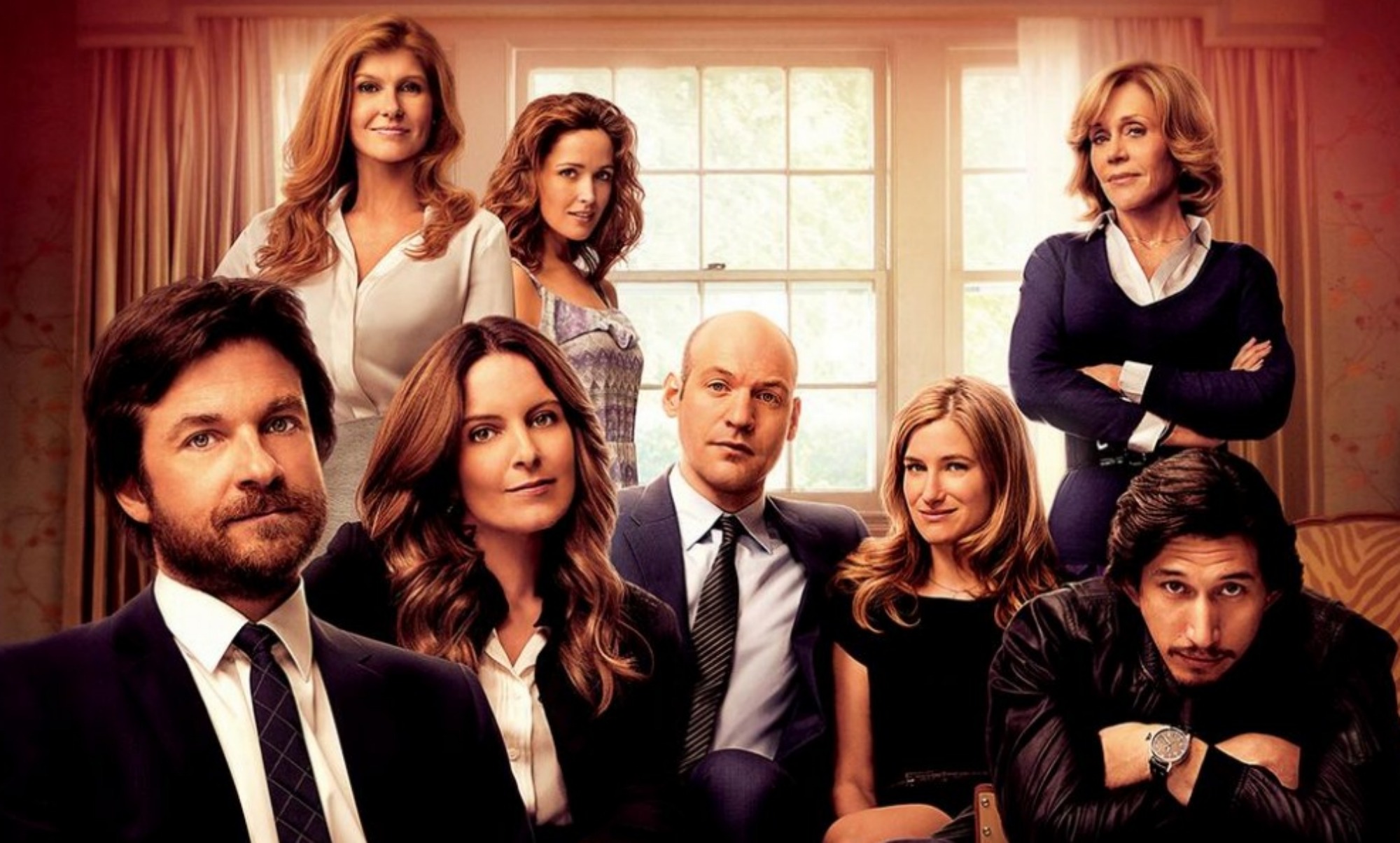
Jonathan Tropper wrote the screenplay based on his novel about four siblings returning home for their father’s funeral. Their mother Hillary (Jane Fonda) is a family therapist and the author of a best-selling book on child development that (boundary issue alert) revealed many embarrassing details about the siblings and is now celebrating the 25th anniversary of its initial publication with a re-release. She is given to wildly inappropriate revelations about her sex life with their father (another boundary alert), and showing off her newly enhanced breasts.

She tells her four children that their father’s last wish was for them to observe the Jewish tradition of sitting “shiva,” a seven-day period of mourning where the family stays at home together and receives visits from those who wish to pay condolences.  They understand that “it’s going to be hard and it’s going to be uncomfortable, and we’re going to get on each other’s nerves.”  But, Hillary says, they have no choice.  “You’re grounded.”

They try to protest, but reluctantly agree. Paul (Corey Stoll) is the only one who has stayed in their hometown, the responsible brother who took over the family business, and married Annie (Kathryn Hahn), who is struggling with fertility issues. Wendy (Tina Fey) is married to one of those guys who is always on his cell phone talking about some big financial deal. She has two children, the aforesaid toddler and a baby. Judd (Jason Bateman) is in freefall, having just learned that his wife has been having an affair with his skeezy boss (Dax Shepard), the host of a shock jock radio show called “Man Up.” And then there is Philip (Adam Driver), the irresponsible baby of the family, who arrives in a Porsche convertible, with a new girlfriend named Tracy (Connie Britton), who is much older and a therapist.  You don’t need to be a therapist to figure out that there are some mommy issues there.  Everyone but Phillip is aware that Tracy is way out of his league and he does not deserve her.

The three out of town siblings all encounter past loves.  Wendy’s is Horry (Timothy Olyphant), who was brain-damaged in an accident and still lives with his mother Linda (Debra Monk), Hillary’s neighbor and close friend.  Phillip sees Chelsea (Carly Brooke Pearlstein), who looks, as Tracy notes, like a Victoria’s Secret model.  And Judd sees Penny (a terrific Rose Byrne), living back in their home town and teaching figure skating.  Each presents temptations as the siblings struggle to make sense of their choices, and struggle even more to communicate.  “Deflecting emotion with logistics.  Nice.” “It’s what we do.”  Some secrets will be revealed (though not always intentionally) while others are protected.

Tropper’s screenplay is better than the book because we are not limited to Judd’s depressed narration and because it corrects what I thought was a mistake in the final resolution of Judd’s relationship with his wife.  And it is helped a great deal by performances that give the characters more believability and complexity than the book did.  But director Shawn Levy (“The Internship,” “Night at the Museum”) has always been stronger with broad comedy than with narrative, romance, and sentiment, and this storyline plays into his tendency to meander. Are we supposed to laugh at the Altmans because they are so awful or sympathize with them because all families are crazy at times? The bad choices, lack of respect, and wild swings of character keep us distant from the characters, despite the best efforts of the terrific cast.

Parents should know that this film includes very strong and crude language, sexual references (some vulgar) and explicit situations, nudity, adultery, drinking, smoking, marijuana and pharmaceuticals

Family discussion: How are the Altman siblings alike? How are they different? How do you feel about “complicated?”

If you like this, try: “This Christmas” and “Flirting With Disaster”

Related Tags:


Based on a book Comedy Drama Family Issues Movies -- format

Coming Soon: Evergreen Christmas

Posted on September 5, 2014 at 1:30 am

Copyright 2014 Wonderstar Productions
Naomi Judd and Robert Loggia star in “Evergreen Christmas,” on DVD and VOD November 4, 2014.

Leaving her seemingly glamorous Hollywood life on hold, Evie Lee is forced to return to her small hometown of Balsam Falls, Tennessee and her family’s once-thriving Christmas tree farm to attend her father’s unexpected funeral. As the eldest sibling, she finds herself executor of an estate that owes a massive inheritance tax, much to her younger brother’s dismay. Torn between pursuing her music career and saving her family’s legacy, she must decide what it really means to find her place in the world.

Related Tags:


Family Issues Holidays Musical New on DVD/Blu-Ray

The Identical

Posted on September 4, 2014 at 5:51 pm

C-
Lowest Recommended Age: Middle School
MPAA Rating: Rated PG for thematic material and smoking
Profanity: Mild language
Alcohol/ Drugs: Drinking, smoking
Violence/ Scariness: Some scuffles
Diversity Issues: None
Date Released to Theaters: September 5, 2014

Copyright 2014 City of Peace Films
“The Identical” is an incompetent mishmash of mawkish sentimentality larded with a few pleasant musical numbers and some random asides about Israel.  I’m not making this up.

It is inspired by an intriguing fact.  Elvis Presley was a twin.  His brother was stillborn.  Screenwriter Howard Klausner (“The Grace Card”) changes the names and imagines what would have happened if the twin had lived but been raised in a different family.  The focus of this story is on Ryan Wade (Elvis impersonator Blake Rayne), the boy who was given up, adopted by a kindhearted Baptist preacher and his wife, played by Ray Liotta and Ashley Judd.  We don’t know much about the child who stayed with his biological parents except that he grew up to be a rock and roll superstar known as “The Dream.” Ryan is a good kid who loves music.  After a stint in the army, he tells his father that he won’t be following him into the clergy.  He works as a mechanic until he wins a Dream impersonation competition and gets hired to perform at state fairs and other venues. We get glimpses of The Dream (also played by Rayne), performing, riding in a limo through a cornfield, flying in a private plane, looking haunted, but we never find out anything about what his life was like, or what music means to him.

The dramatic possibilities in this story surely have to be in the nature/nurture saga that explains the enduring popularity of real-life stories of identical twins separated at birth as well as fictional tales from “The Man in the Iron Mask” to “Big Business.” And there is some potential for pointed satire along the lines of “Walk Hard” or a thoughtful exploration of the racial and cultural divides that melded into the early years of rock and roll. But “The Identical” bypasses all of this for a story that is both lightweight and dreary and a hero who is too good to be true, played by performer who is much more comfortable with the musical numbers than he is with the dialog. I do give him credit for holding his own despite a series of some of the most appalling wigs ever put on screen.

Even supremely talented actors like Liotta and Judd can’t make much of this movie’s dialog, which is stilted and pedestrian. Among the missed opportunities here is the chance to see what Liotta could do delivering a stem-winding sermon to his Baptist congregation. He does deliver some nice thoughts about kindness and tolerance. But all we get from his appearances in church is a watered down commentary on the importance of supporting Israel (with candles burning on a menorah behind him!) during the 6-Day War of 1967. While the film is being marketed as faith-based, there is very little content relating to the role of faith in the lives of any of the Christian or Jewish characters. It is awkwardly written and uncertain in tone, failing as commentary and as story.

Parents should know that this film includes drinking, smoking, difficult family issues, sad deaths, and family conflicts.

Family discussion: Should Reece have told Ryan the truth? Why do audiences like tribute groups that imitate star performers?

If you like this, try: “August Rush” and “The Buddy Holly Story”

Related Tags:


Drama Family Issues Movies -- format Musical

Love is Strange

Posted on August 28, 2014 at 5:59 pm

Love is strange.  As this movie opens, a deeply devoted couple of more than three decades wakes up and prepares for a big, important, emotional, happy occasion.  They bicker a little bit, but it is clear to them and to us that these are reassuringly familiar rhythms for them, almost a contrapuntal love duet in words.  Later in the film, two people who admire and care for each other deeply but are getting on one another’s nerves, converse in terms that are genuinely thoughtful and polite, and yet it is clear to us and to them that they are seconds short of wanting to throttle each other.  One of them will tell his husband in a phone call, “When you live with people, you know them better than you want to.”  That is, unless you share a true, romantic love.  That’s what’s strange — how it is that other people’s quirks that would annoy us if we spent too much time together somehow seem endearing when it is someone you love.  Love is what makes us not strange to the special people who truly understand us.

Copyright 2014 Sony Pictures Classics

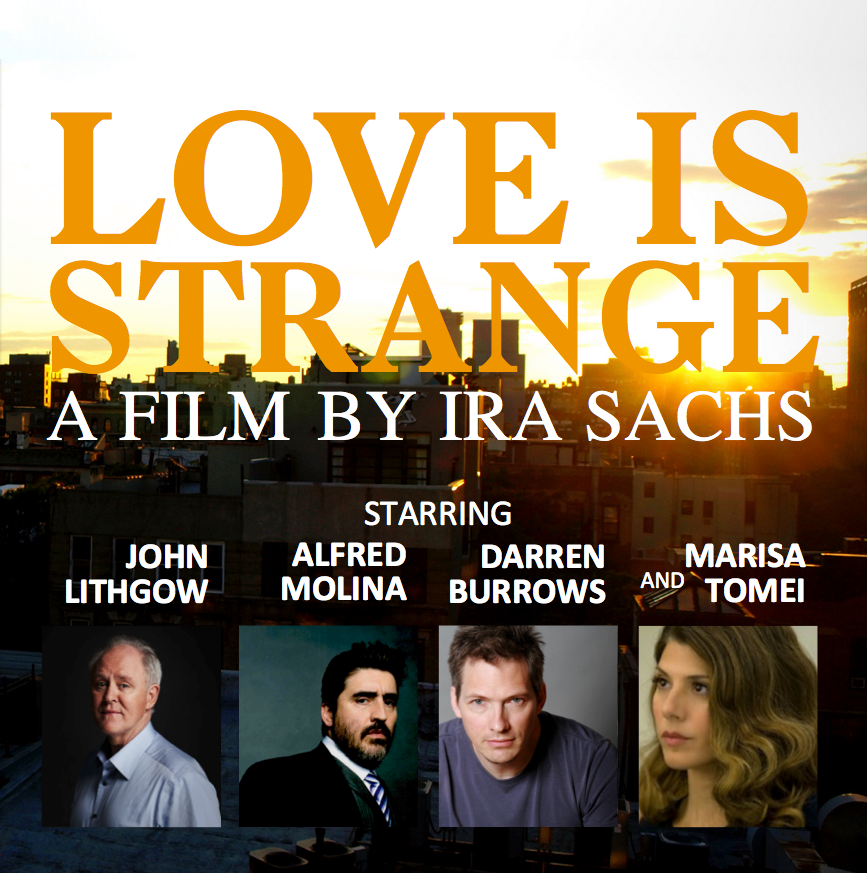
John Lithgow and Alfred Molina play Ben and George, a comfortable but far from wealthy couple who have lived happily together in New York, in a life rich with art, culture, friends, and family.  Ben is an artist.  George is a choir leader in a Catholic school.  As the film opens, it is their wedding day.  Gathered in their apartment afterward, they are toasted by their loved ones, including Ben’s niece-in-law, Kate (Marisa Tomei), a writer, who makes a beautiful speech about how seeing them together, when she was dating their nephew, showed her what a loving partnership could be.

But their marriage is too much for the bishop who oversees George’s school, and he is fired.  Ben and George go into financial free-fall.  They can no longer afford their apartment, and they call on their friends and family to help them while they try to find something less expensive. Everyone wants to help, but this is New York, where space is very limited, and no one can take them both. (A niece who lives in a large house in Poughkeepsie keeps offering, but no one considers that an option.) Ben goes to stay with his nephew, a harried documentary filmmaker, and his wife, Kate, and their teenage son, Joey (Charlie Tahan). He will be sleeping in Joe’s bunk bed. George will be sleeping on the sofa in the small apartment of friends, another gay couple, both cops, who have an active social life.

What “Brokeback Mountain” did to convey that movie romances between gorgeous, glamorous movie stars do not all have to be heterosexual, this film does even better for showing us that the real love story is the one that stretches over decades. Lithgow and Molina exquisitely capture the intimacy and interdependence that only those in very long-term relationships understand. They lightly touch on past disappointments, even betrayals. They tenderly support one another’s vulnerabilities.

The brilliant timing and wit of the scene where Kate is trying to get work done while Ben is cluelessly trying to be a good guest by making social chit-chat is a highlight. Tomei is outstanding, as always. Tahan is marvelously open as a good kid who understandably feels crowded to have a 70-something uncle in his bunk bed. Writer-director Ira Sachs has enough respect for his characters and his audience to allow everyone to be nice. There are no bad guys here (except for the off-screen bishop). But that just makes clear how precious those moments are when we experience the love of those to whom we are never strangers.

Parents should know that this movie is rated R for language only.  There is a sad death.

Family discussion:  What would you advise Ben and George to do?  This movie shows small moments many movies overlook and skips the big moments many movies would include – – why?

If you like this, try: writer/director Ira Sachs’ other films, including “Married Life,” and the classic 1937 film Make Way for Tomorrow.

Related Tags:


Family Issues

The Hundred Foot Journey

Posted on August 7, 2014 at 5:59 pm

B
Lowest Recommended Age: Middle School
MPAA Rating: Rated PG for thematic elements, some violence, language and brief sensuality
Profanity: Brief strong language
Alcohol/ Drugs: Wine
Violence/ Scariness: Fires, sad death of parent, characters injured, vandalism
Diversity Issues: A theme of the movie
Date Released to Theaters: August 8, 2014
Date Released to DVD: December 1, 2014
Amazon.com ASIN: B00MI56UI6
Copyright 2014 DreamWorks Studios

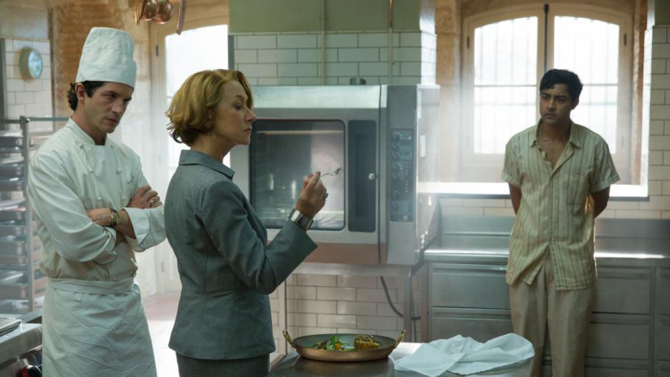
Shakespeare famously made fun of the notion of a sighing lover creating an ode “to his mistress’ eyebrow.” But it would take Shakespeare to do justice to Helen Mirren as a French woman of impeccable bearing who is able to punctuate her declarations with a perfect circumflex of that divine eyebrow, exquisitely conveying the steely authority that comes not just from being the boss but from being right.

Producers Oprah Winfrey and Steven Spielberg, screenwriter Steven Knight, and director Lasse Halström have adapted the book by Richard C. Morais into a cozy saga along the lines of Halström’s “Chocolat,” about a cross-cultural competition that turns into an alliance.  Every sunbeam, every garnish, and yes, every eyebrow is presented exactly comme il faut, and it has Mirren’s splendid performance.  And yet, for a story that is about the importance of excellence and innovation, it feels a little, well, under-spiced and overcooked.

Manish Dayal plays Hassan, the son of an Indian family that has been in the restaurant business for generations.  His mother was the first to recognize his gift for food, and brought him into the kitchen to teach him her skill with seasonings and her understanding of food as a sacred gift that shares memories as well as nourishment for the spirit and the body.  She knew that before one could cook, one must know how to taste.  When she is killed in a fire set by a rioting mob, Hassan’s father (Om Puri) moves the family to London.  But he is restless and no one likes the dreary weather.  “In England, the vegetables had no soul, no life.”  Papa took the family to find a new home.

Their van breaks down in a small French village, and, as Papa says, sometimes brakes break for a reason.  There is an abandoned restaurant for sale.  And if it is across the street from one of the most renowned restaurants in all of France, the proud awardee of one coveted Michelin star, well that is not a reason to be wary; it is a challenge.  The red Michelin guide awards one star to a restaurant that is worth a visit, two for a restaurant that is worth a detour, and three, the ultimate prize, for one that is worth a special journey.  Or, as a character puts it in this film, “One is good, two is amazing, three is for the gods.”

That is Margaret (the bewitchingly lovely Charlotte Le Bon), who rescues the Hassan family and gives them food so delicious that they wonder if they died in the accident and went to heaven. The olive oil is pressed from her trees.  The cheese is from her cows.  And she, too, is a would-be chef.  She works in the kitchen of the Michelin-starred restaurant, owned by the imperious Mme. Mallory (Mirren).  The world may be filled with chaos and mediocrity and disappointment, but the portion that is under the control of Mme. Mallory strives for perfection and almost always achieves it.

The Hassans open up their restaurant, even though there is no reason for anyone but eternal optimist Papa to believe that anyone in a small town in France wants to eat Indian food.  At first, there is war between the two restaurants.  But when Mme. Mallory realizes that it has gone too far, she admits that Hassan’s great gifts as a chef give them a connection far deeper than any commercial rivalry could obscure.  The hundred foot journey is from the Hassans’ home to Mme. Mallory’s establishment on the other side of the road.

The cinematography by “American Hustle’s” Linus Sandgren is luscious, the charming countryside dappled with syrupy golden sunshine, the food almost tactile and fragrant.  Mirren’s performance, from the steely resolve of the early scenes to the softening as she opens her heart, is always splendid, and, in contrast to the rest of the film, never overdone.  Maybe it’s just that the combination of Spielberg and Winfrey is just too potent.  They are going to warm your heart whether you want it or not.  It isn’t just the sunlight that is syrupy; the story is, too, much more than the book, with not one but two romances.  They may be sweet, but they also throw the theme off-balance, with collateral damage to the abilities and ambitions of the two key female characters, shrinking them to the role of love object/cheerleader.  The chef characters would know better than to allow such a sour flavor in anything so sugary.

Parents should know that this film includes themes of racism and cross-cultural conflicts, vandalism, riot, fires, and a sad death of a parent.

Family discussion: What is the difference between a cook and a chef? Which of the restaurants or dishes in this film would you like to try?

If you like this, try: “Chocolat” by the same director, and some other foodie movies like “Chef” and “Julie & Julia”

Related Tags:


Based on a book Comedy Date movie Drama DVD/Blu-Ray Pick of the Week Family Issues Romance
THE MOVIE MOM® is a registered trademark of Nell Minow. Use of the mark without express consent from Nell Minow constitutes trademark infringement and unfair competition in violation of federal and state laws. All material © Nell Minow 1995-2026, all rights reserved, and no use or republication is permitted without explicit permission. This site hosts Nell Minow’s Movie Mom® archive, with material that originally appeared on Yahoo! Movies, Beliefnet, and other sources. Much of her new material can be found at Rogerebert.com, Huffington Post, and WheretoWatch. Her books include The Movie Mom’s Guide to Family Movies and 101 Must-See Movie Moments, and she can be heard each week on radio stations across the country.

Website Designed by Max LaZebnik