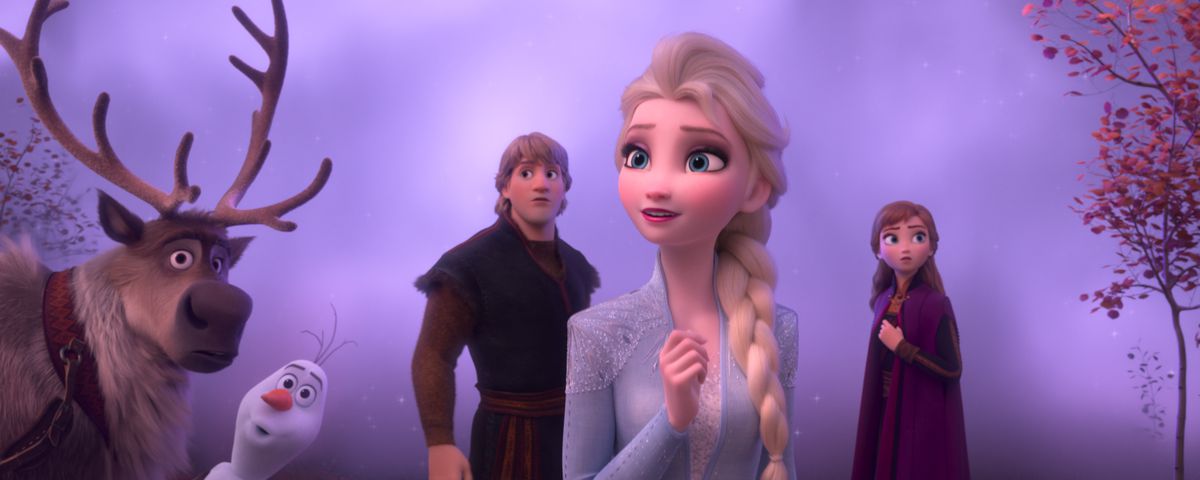
“Frozen II” has an autumnal palette, with russet and gold setting the stage for an unexpectedly elegiac tone in the follow-up to one of Disney’s most beloved animated features. Even the irrepressibly cheerful snowman Olaf (Josh Gad), now permafrosted so even the warmest hugs don’t melt him, is worried about change as the leaves turn orange and float down from tree branches. He is confident, though, that as soon as he gets older he will understand everything. After all, that’s what he expects from Elsa (Idina Menzel), Anna (Kristen Bell), and Kristoff (Jonathan Groff). Anna reassures him (in song, of course) that yes, some things change, but some things are forever. She tells him that even when you don’t know the answers you can always just do the next right thing, and that will help.
Parents should know that this film includes cartoon/action-style peril and violence, off-screen sad deaths of parents, and references to historic violence.
Family discussion: How can you decide what is the next right thing? What in your life will change and what will stay the same? How do you respond to changes you don’t expect?
If you like this, try: “Frozen,” “Inside Out” and “The Princess and the Frog”
Rated PG-13 for mature thematic content, some disturbing images, violence, and language
Profanity:
Strong and offensive language including anti-Semitic insults
Alcohol/ Drugs:
Alcohol
Violence/ Scariness:
Intense and disturbing peril and violence including a child injured in an explosion, wartime violence, bombs. guns, tragic deaths
Diversity Issues:
A theme of the movie
Date Released to Theaters:
October 25, 2019
Date Released to DVD:
February 17, 2020
Copyright Fox Searchlight 2019
The first thing you need to know is that writer/director Taika Waititi does not play HItler in “JoJo Rabbit,” and it does not portray the real Adolf Hitler as a comic figure. Waititi plays a child’s imaginary version of Hitler. He has more in common with Chris O’Dowd’s imaginary friend character in his very funny and endearing Moone Boy. In both, the adult male figure is a child’s idea of what a man is, or what he would like to be when he grows up. In the case of Jojo Rabbit, the nickname for the 10-year-old Austrian boy at the center of the film, he is especially in need of a role model because of the uncertainty in his own life and the upheavals that are all around him. So it makes sense that he would respond by clinging to something that seems strong and structured and certain. And that is why when we first see him, he is looking in the mirror to admire himself in his Hitler Youth uniform, very excited to learn all about becoming an active member of the Nazi party. His imaginary friend represents what he would like to be, but JoJo is a child, so to us, his version of Hitler is ten-year-old’s fantasy. Which means he is very silly.
I tell you all this because for the first half hour or so of “JoJo Rabbit” you might think you’re watching some sort of “Springtime for Hitler,” from “The Producers.” But it turns out that while “JoJo Rabbit” does portray the Nazis in a heightened, satiric, silly manner, this is not an insensitive or superficial film. But by the end, it wants to pack a wallop, as it should, and it does.
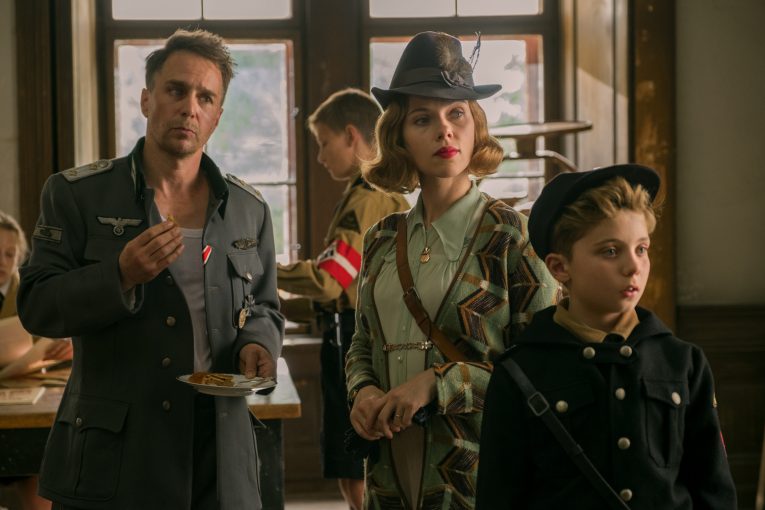
JoJo (Roman Griffin Davis, in a knockout of a performance) lives with his mother, Rosie (a career-best Scarlett Johansson, warm and witty). His father is off in the war but has not been heard from for a long while. JoJo and his best friend Yorki (Archie Yates) go off to Hitler Youth camp, led by Captain Klenzendorf (Sam Rockwell), assisted by Fraulein Rahm (Rebel Wilson). The other boys laugh at him when he cannot bring himself to kill a rabbit (prompting his derisive nickname), and so to prove his courage, urged on by the imaginary Hitler, he takes a risk that leads to his being injured in an explosion, leaving scars on his face. He cannot return to school, so Rosie takes him to the Hitler Youth office and insists that Klenzdorf give him a job.
And then something happens that turns JoJo’s ideas about strength, courage, and power upside down. His ideas about Jews, too, though that takes a while. Waititi handles the tonal shift with great skill, and by the end of the film, the heightened tone blends seamlessly with the surreal absurdity of war, making the conclusion as meaningful to us as it is to the characters.
Parents should know that this movie is set in the last months of WWII and has wartime violence including guns and bombs, portrayal of virulent and systemic anti-Semitism. A child is injured in an explosion and a parent is murdered. Characters use strong language, drink alcohol, and smoke.
Family discussion: Why did JoJo imagine Hitler as an imaginary friend? What made him change his mind about Elsa? Why didn’t Elsa tell him what she knew about the letters?
If you like this, try: Hunt for the Wilderpeople and What We Do in the Shadows from the same writer/director. You may also enjoy satiric takes on war like “Oh, What a Lovely War,” “M*A*S*H,” and “King of Hearts.”
Rated PG for intense sequences of fantasy action/violence and brief scary images
Profanity:
None
Alcohol/ Drugs:
None
Violence/ Scariness:
Extended fantasy peril and violence, characters injured, cursed, and killed, disturbing images
Diversity Issues:
A metaphorical theme of the movie
Date Released to Theaters:
October 18, 2019
Date Released to DVD:
January 13, 2020
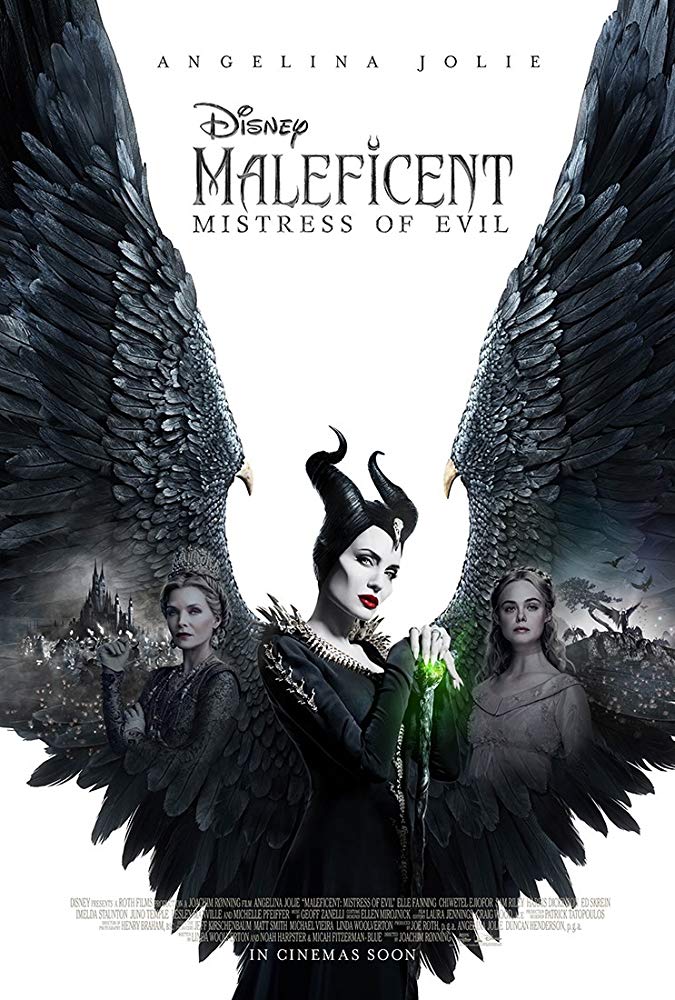
Copyright Disney 2019Come on, Disney. You can do better than this. “Mistress of Evil” makes Maleficent sound like she is hosting cheesy old horror movies on late night television. Maleficent, of course, is the wicked fairy from the classic animated Disney version of “Sleeping Beauty” who was so angry she wasn’t invited to Princess Aurora’s christening that she cursed her to eternal slumber after pricking her finger on the spindle of a spinning wheel. She could only be awakened by true love’s kiss, and ultimate her fury is so great she turns into a fire-breathing dragon. All because she felt she should have been on the palace guest list.
On the 60th anniversary of that film’s release, we get this sequel to the 2014 “Maleficent,” with Angelina Jolie as a villain more sinned against than sinning. It turns out it was more than a social oversight that made her angry. She was a fairy cruelly betrayed by the human man she loved, who ruined her so he could become king (the severing of her wings was a deeply disturbing scene). Basically, she was Glenn Close from “Fatal Attraction” with horns and magical powers. Who needs to boil a bunny when you can just zap people?
But then she could not help loving the darling little Princess Aurora. The famously maternal Angelina Jolie — formerly the famously wild child Angelina Jolie — was well cast as the fairy whose anger was cooled by the love of a child. Everything ended up pretty close to happily ever after, but that doesn’t help the box office so here we are again.
Princess Aurora (Elle Fanning) is now queen of the Moors, which is fairy territory, and everyone loves her, from little pixies to Groot-like tree creatures. She floats around in hippie chick finery, and everything is blossoms and butterflies, kind, and peaceful. She accepts a proposal from Prince Philip (now played by Harris Dickinson), son of the king and queen who rule over the neighboring human country. Like so many brides before her, she implores her family, meaning Maleficent, to behave at the meet-the-prospective-in-laws dinner. And like so many meet-the-prospective-inlaw dinners, it does not go as well as the young couple hoped. Maleficent feels insulted, she lashes out, the king (Robert Lindsay) collapses, Maleficent is blamed (after all, she does know how to curse people into perpetual sleep), Aurora feels betrayed. And so, the princess stays with her new family, and Maleficent is banned again.
This time is different, though, because Maleficent finds for the first time, her own community, with horned and winged creatures like herself, though none with her magical gifts. They are outcasts, living in a secret underground community. The film’s best moments are those that make the most of the fabulously inventive visual designers and effects crew, and the “It’s a Small World”-style tour of the many variations within this group will make audiences wish for a pause button.
Unfortunately, some of the rest of the film will make them wish for a fast-forward button, including some very oddly off-key moments that give the movie a disconcertingly inconsistent tone. “I see what you did there” is not a line that belongs in what is otherwise a straightforward fantasy, not a post-modern, air-quotes, meta-take. The title character is intended to be complex, but she is just inconsistent as well. Nearly as emaciated as Joaquin Phoenix in “Joker,” with sepulchral skin and red red lips over dainty white fangs, she has heightened cheekbones that could cut glass and make Jolie look like she ate a coat hanger.
And then there is the political overlay, with messages about welcoming immigrants. non-violence, and justice for minorities that are lovely thoughts but not conveyed with any special insight or depth. More attention is given to some nonsense about creating a powder that is instantly deadly to fae folk, which is then deployed in mass quantities, but to keep the PG rating the amount of carnage is left unclear. Michelle Pfeiffer is the most vital element of the film as Philip’s mother (and her gowns and jewels are stunning), but she is not given enough to work with in the messy script, over-plotted and under-written. That’s the real villain in this fairy tale.
Parents should know that this film includes fantasy/action peril and violence much more intense than a typical PG with some very disturbing images including dissolving magical creatures, betrayal by a parent, curses, and a very sad death.
Family discussion: Why did Boora and Conall disagree? How are the issues in the movie similar to conflicts in the news? Why did Conall say we should not use our anger? Why did Aurora ask Maleficent to cover her horns and why did she apologize?
If you like this, try: the first “Maleficent,” “Sleeping Beauty,” and “Stardust”
Rated R for bloody violence, language throughout, some drug and sexual content
Profanity:
Constant very strong language
Alcohol/ Drugs:
Alcohol and marijuana
Violence/ Scariness:
Extremely violent and gory zombie peril and action with many characters injured and killed and many gruesome images
Diversity Issues:
None
Date Released to Theaters:
October 18, 2019
Date Released to DVD:
January 20, 2020
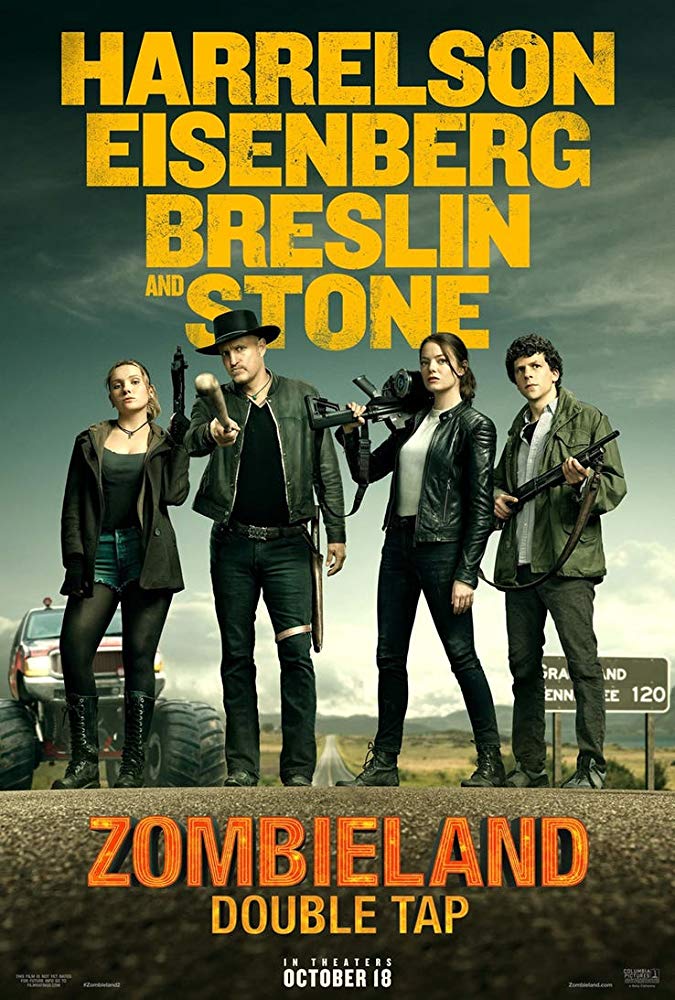
Copyright Columbia 2019Start lining up the cast for part three; we’re going to need another one of these every decade or so. The original Zombieland was a brash, grimly funny story about a post-apocalyptic world in which characters who would otherwise be unlikely to meet, much less spend time together, identified only by their home towns, form a kind of family in the midst of zombie attacks. They are the high-strung but determined Columbus (Jesse Eisenberg), the tough, peppery cowboy Tallahassee (Woody Harrelson), and two survival-savvy sisters who are skeptical of anyone else, Little Rock (Abigail Breslin) and Wichita (Emma Stone).
As Zombieland: Double Tap opens, the group is moving into the White House, now surrounded by fields of overgrown vegetation. It makes a good fortress and there are lots of cool things to play with, from a Twister game to Presidential portraits and gifts given by dignitaries over the years. Columbus and Wichita are a couple, but there is a problem. In this era of chaos and unpredictability, everyone has different ideas about what makes them feel safe. Columbus keeps making lists of his rules for survival (humorously displayed on screen) and wants to make the relationship official by proposing — with the Hope Diamond, which, like everything else, is up for grabs. But Wichita feels safest not having any connections, except for her sister, and Little Rock, now a teenager, wants to find someone her own age. So they leave.
On a “retail therapy” expedition to a shopping mall, Tallahassee and Columbus meet Madison (Zooey Deutch), who has been living there. Deutch just about steals the movie with one of the truly great comic performances of the year as the perfectly ditsy girl whose understanding of what is going on may be dim and who may not be willing to shoot zombies, but who has a knack for survival on her own terms. Just as she and Columbus get together, Wichita returns. Little Rock has run off with a guitar-playing pacifist named Berkeley (Avan Jogia). So, the group goes on the road to find her, running into some new characters, including many zombies, now faster, stronger, and smarter than before, an Elvis fan near Graceland, and a duo who seem uncannily parallel to Columbus and Tallahassee (Thomas Middleditch and Luke Wilson, both terrific).
Like the original, the zombie attacks and shoot-outs are punctuated with deadpan (maybe the correct term is undead-pan) humor, brilliantly delivered by the powerhouse cast. From the opening Columbia logo showing the lady using her torch to bash some zombies, the film moves briskly along with a gruesomely delightful mix of mayhem, romance, and humor. It’s a story about family, resilience, courage, and staying limber — with a great scene over the credits featuring a not-too-surprising guest star.
Parents should know that this film includes constant zombie peril and violence with many graphic, bloody, and disturbing images, characters injured and killed, constant very strong and crude language, sexual references and non-explicit situations, and alcohol and marijuana.
Family discussion: Why did Wichita say no to Columbus? What rules do you follow?
If you like this, try: the first “Zombieland” and “Sean of the Dead”
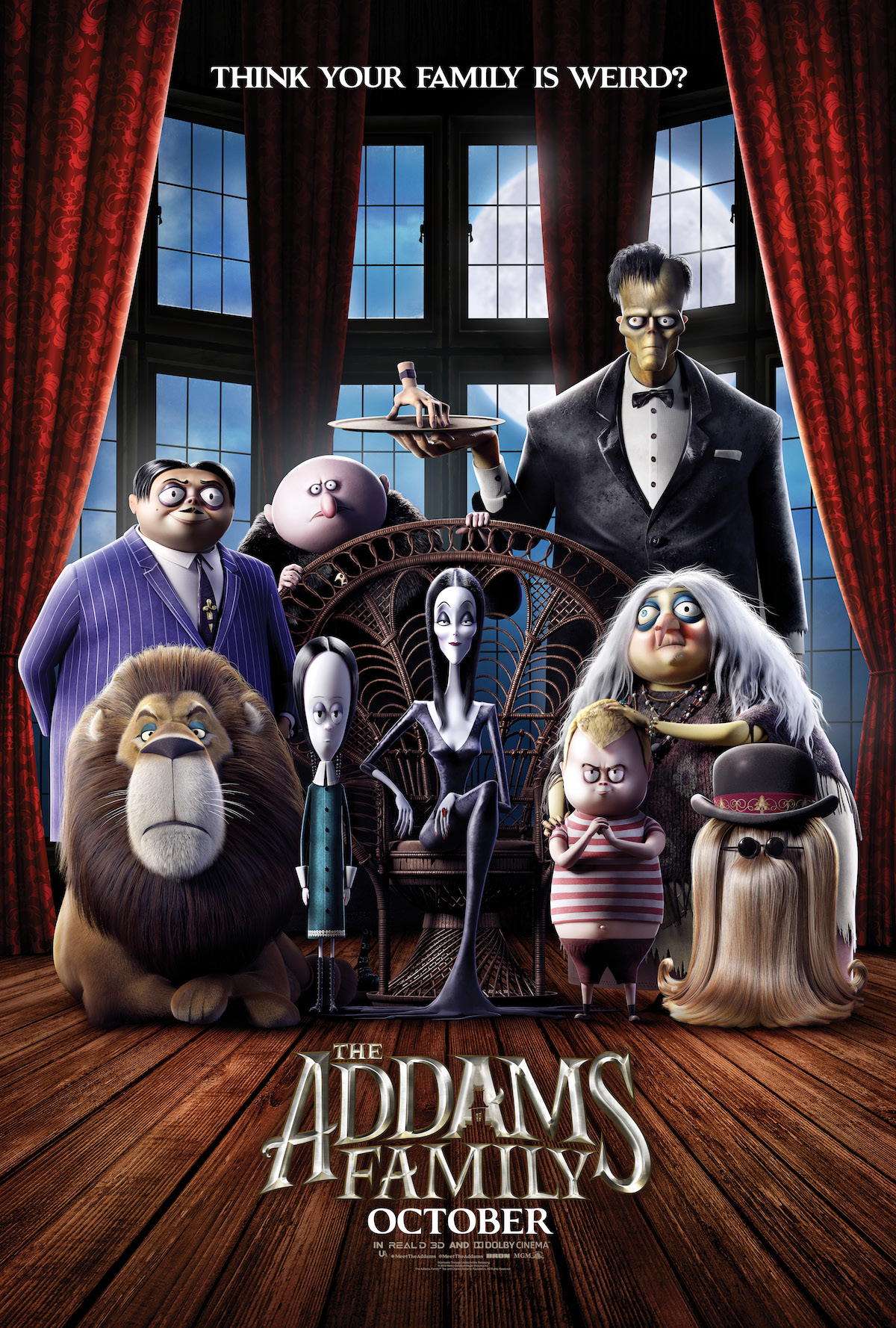
There are about half a dozen bright spots in the new animated feature “The Addams Family,” but in between them is the unbright and unoriginal storyline about how the real monsters are the ordinary people, not the weird people.
Parents should know that this film includes monsters and peril. It is more funny-scary than scary-scary but there are some images that might disturb sensitive viewers, as well as comic/action-style peril with no one hurt, bullies, a neglectful parent, potty humor. Some may be disturbed by a casual portrayal of child who decides to live with a different family
Family discussion: Which characters are really scary? What does “assimilation” mean? What does your family do to recognize adulthood?
If you like this, try: “Hotel Translyvania,” “Igor,” and the “Addams Family” television books, series and films