
The Secret World of Arrietty

Posted on February 16, 2012 at 6:00 pm

A spirited young heroine and an enchantingly beautiful setting make a story of friendship and courage beguiling in Studio Ghibli’s adaptation of Mary Norton’s popular series of “Borrower” books.  First published in the mid-1950’s, the stories are on based on a fanciful but entirely plausible explanation for the disappearance of small household items.  Norton says are taken by “Borrowers,” tiny people who live inside the walls and beneath the floorboards.  We never see them because they are terrified of what they call “human beans.”

The story begins as two big changes are taking place in a charming country cottage.  A four-inch 14-year-old named Arrietty (Bridgit Mendler) is finally old enough to embark on her first borrowing expedition, in search of sugar and facial tissue.  She is the only daughter of stalwart provider Pod and anxious homemaker Homily (real-life sitcom star spouses Will Arnett and Amy Poehler), who fear they may be the last Borrowers left in the world.  And a frail “bean” boy named Shawn (David Henrie) arrives at the cottage, where he will be cared for until he has surgery.

Both the human and the Borrower children will ignore the warnings of the adults around them to learn about each other’s worlds and then to become friends.

It seems only fair that a story about borrowing should itself borrow so seamlessly across borders of time, geography, and culture.  Norton’s British mid-century story, Ghibli’s Japanese animation, and American distributor Disney-selected voice talent all complement settings that are not so much regionless as an idyllic pan-global amalgamation.  Less universally appealing is the script.  It is more linear than many Studio Ghibli films but the dialog is stiff and the jokes are clunky, even delivered by reliable comic actors Arnett, Poehler, and Carol Burnett as the housekeeper who brings in exterminators to capture the Borrowers.

Studio Ghibli and screenwriter/producer Hayao Miyazaki are justly famous as masters of gorgeous hand-painted watercolor backgrounds invoking an enticing vision of lush gardens and inviting living spaces.  Instead of the hyper-reality of digitally-created CGI images in most of today’s animated films, the hand-painted world of Arrietty is dreamy but tactile, with ladybugs shaking fat dew drops from velvety leaves and an exquisitely furnished dollhouse that is of interest to both the large and small residents of the cottage. But the backgrounds are so gorgeously painted that by comparison the characters can look under-drawn, like paper dolls with large but unexpressive, Keane-like eyes.

The animators have a lot of fun with scale, as we go back and forth between the “bean”-sized world and the tiny replica inhabited by the Borrowers.  Each image is filled with captivating detail as we see items from one world re-contextualized in another.  In their own little quarters, “borrowed” items are cleverly repurposed by Pod and Homily with detail that makes us wish for a pause button.  One sugar cube seems small in a bowl on the “bean’s” table.  But for Arrietty, it is nearly as wide as her shoulders, as a grub is the size of an armadillo, a rat is the size of a lion, and a pin becomes a sword.  The angles are superbly used to establish the perspective of the tiny Borrowers.  Scaling the “bean” kitchen table looks vertiginous.

What is most effective is the way the sense of peaceful shelter and retreat in the country setting contrasts with the precariousness of the situations faced by Shawn and Arrietty.  He soberly faces the possibility that he might not survive his surgery and she risks her life whenever she leaves her home.  The drama is deepened, too, by the contrast between Shawn’s physical fragility and Arrietty’s robust energy.  He can hardly walk across the garden without stopping to catch his breath while she rappels the household furniture as though she is scaling Everest.  But both learn from each other and their tentative steps toward friendship are sweetly expressed.

Parents should know that this G-rated film includes a seriously ill child who discusses the possibility that he might not survive surgery and some moments of peril.

Family discussion: What do Shawn and Arrietty learn from one another?  How is “borrowing” different from stealing?  How do Pod and Homily show their different ways of looking at the world?

If you like this, try: “The Indian in the Cupboard.” “My Neighbor Totoro,” and the Borrower books by Mary Norton

Related Tags:


Animation Based on a book Fantasy For the Whole Family Stories About Kids

Beauty and the Beast

Posted on January 12, 2012 at 6:00 pm

A+
Lowest Recommended Age: Kindergarten - 3rd Grade
MPAA Rating: G
Profanity: None
Alcohol/ Drugs: Beer, scenes in bar
Violence/ Scariness: Some scary moments with wolves, fighting
Diversity Issues: Theme of not judging by appearances
Date Released to Theaters: January 13, 2012
Date Released to DVD: September 20, 2016
Amazon.com ASIN: B004WE01YA

“Beauty and the Beast” is one of Disney’s most beloved fairy tales and the first animated film to be nominated for a Best Picture Oscar.  This week Disney celebrates its 25th anniversary with a splendid new DVD release that includes some special extras. 

Ultimately, what makes “Beauty and the Beast” so winning, though, is its story, characters, and songs, which need no restoration.  They are as fresh as ever.  Clever lyrics by the late Howard Ashman are a delight, with a brute singing about how he decorates with antlers or the stirring Oscar-winning theme song played as the couple dances alone in an enormous ballroom.  And it is a joy to revisit the timeless pleasures of traditional Disney storytelling, with no attempts to add sizzle from celebrity voice talent or radio-friendly pop songs.  The movie’s roots are in Broadway, with performances from Tony-winners Angela Lansbury and Jerry Orbach and tuneful ballads from composer Alan Menken, including the rousing “Be Our Guest” and the joyous introductory “Belle.” Notice the way that only Belle wears blue in the opening scenes, helping to set her apart from the people in her village.  We know before she does that she and the Beast have something in common when we see that he also wears blue.

Belle (voice of Broadway star Paige O’Hara)  is the book-loving daughter of an absent-minded inventor. She wants “more than this provincial life” and the boorish hunter Gaston, who hopes to marry her.

Lost in the woods, Belle’s father stumbles into what appears to be a deserted castle. But the castle is inhabited by the angry Beast, once a prince, now under a spell that will last forever unless he finds love before he turns 21. The same spell turned all of the human staff of the castle into objects — a clock, a candelabra, a teapot, a mop.

The Beast, furious at being seen by an intruder, locks Belle’s father in the dungeon. Belle comes after her father and offers to take his place. The Beast accepts, lets her father go, and tells Belle she must stay with him forever.

At first antagonistic, she begins to find the Beast appealingly gentle and kind, wounded in spirit, rather than cruel.  He shares her love of books.  Back in Belle’s village, Gaston tries to get Belle’s father committed, saying that his talk of the Beast shows he is delusional.  Belle, home on a visit to care for her father, proves that the Beast exists to show that her father is telling the truth.  The townspeople are terrified and form a mob to kill the Beast.

In a fight with Gaston, the Beast is badly wounded. Belle tells him she loves him, which ends the spell. He becomes once again the handsome prince, and they live happily ever after.

Parents should know that this movie has some scary moments when Belle is chased by wolves and when Gaston and the townspeople storm the Beast’s castle.  It appears briefly that the Beast has been killed.  Characters drink beer and there are scenes in a bar.

Family discussion: Gaston and the Beast both wanted to marry Belle — how were their reasons different?  Why did the prince became the beast and what did he have to learn before he could return to his handsome exterior? What did Belle have to learn? What made her decide she liked the Beast?

If you like this, try: Some of the other movie adaptations of this story. One of the most lyrically beautiful of all films ever made is Jean Cocteau’s version of this story, “Belle et Bete.” The Faerie Tale Theatre version stars Susan Sarandon and Klaus Kinski, and is very well done.

Related Tags:


3D Animation Based on a book Classic Comedy DVD/Blu-Ray Pick of the Week For the Whole Family Movies -- format Musical Romance

The Snowman: Walking in the Air

Posted on December 18, 2011 at 3:58 pm

If you are feeling frazzled with holiday preparations, take a moment to enjoy the pure magic of this excerpt from one of the finest animated films ever made:

http://www.youtube.com/watch?v=ubeVUnGQOIk&feature=related
Related Tags:


Animation Based on a book For the Whole Family Movie Mom’s Top Picks for Families Music Shorts
Interview: Nancy Stafford of ‘Christmas with a Capital C’

Interview: Nancy Stafford of ‘Christmas with a Capital C’

Posted on December 15, 2011 at 8:00 am

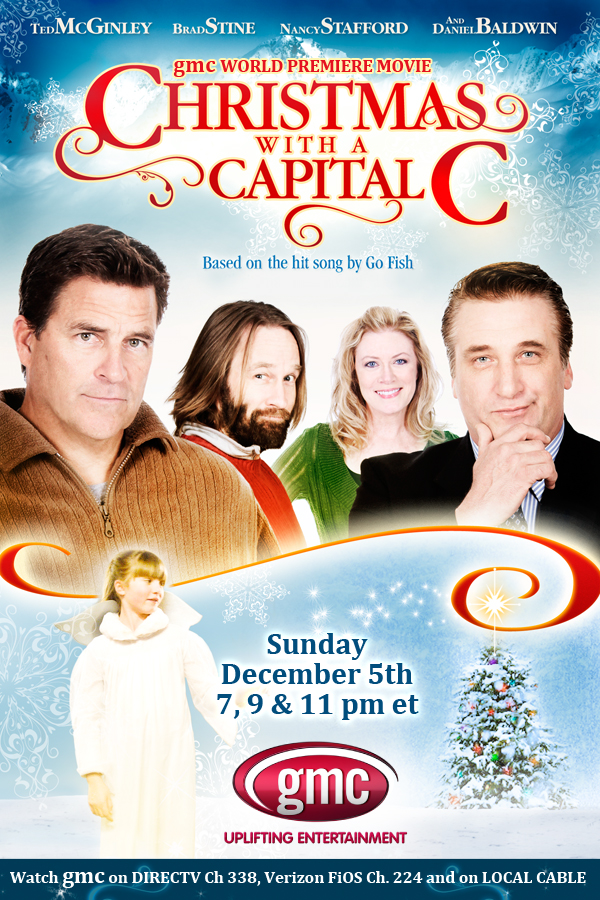
The beautiful and talented Nancy Stafford (“Matlock”) stars in the heartwarming Christmas with a Capital C, now available on DVD.  She spoke to me about the movie and about the way her faith leads her to projects that share her message of faith and God’s love for each of us.

Tell me about the character you play in this movie.

I love this movie and I love my character!  I play the heart and soul of the film, all due to the fabulous work of Andrea Gyertson Nasfell, who wrote the movie.  I play the wife of the mayor of a small town in Alaska, played by Ted McGinley.  We’re the kind of town where everyone gathers together at Christmas big time and we have a tradition of putting the nativity scene in the city park.  And then a long-time childhood friend comes back to town and challenges us with a legal battle to remove the religious display from city property and gets an injunction, the town is split.  Some people think we ought to make it more inclusive and get rid of the name “Christmas” but others say “we can’t let these folks to roll all over us.”  My character is the one who brings some reason and some heart.  She says instead of being combative and argue our way into agreement, why don’t we put our feet to faith and allow our actions instead of argument be the thing that is louder?  Why can’t we be Jesus with skin on and do what Jesus said He had come to do, to be Emmanuel, the God with us, and be the heart and soul and mind of Christ for the people around us.  The whole city launches a Christmas with a Capital C campaign of acts of kindness and service.  We give away hot chocolate and wash people’s windows and do things for the homeless and those who have a little less.  It changes the heart of the Grinch character but it also changes the whole town.  I love the film because it makes the world recognize how ridiculous it is to try to take Christ out of Christmas but it is also a message to the church.  It’s not to say we should not stand up for truth and righteousness but it is to say that our positive actions, our loving response to the people around us, even those who don’t agree with us, that changes people’s hearts.

Your character really tells people to start with themselves and that will change people more than arguing with them.

I got to say the best speeches in the film!

Tell me about your “Grinch” character.

Daniel Baldwin, one of the bad Baldwin boys.  He’s a lovely guy, but plays a hardened character who grew up in the town but has gone off and seen the world and has had some unfortunate run-ins with Christians who have turned him off big-time.  I can relate to that.  I grew up in the church myself but when I went to college and didn’t have to go to church I chose not to.  I had some issues with what I saw as hypocrisy in the church.  So I get it!  I was a prodigal for 15 years before I darkened the door of a church again.  So I know there are a lot of people who don’t have a problem with Jesus but they have a problem with the church.  So this guy comes back and he is hurt and disappointed and he does not want to participate or have it in his face.  But he is a hurting and broken man.  He has some vulnerability.  So in the story when our daughter gives him cookies and it’s such a literal picture of her peeking in the window and seeing what was really happening in his house, like peeking into his soul and seeing that he is destitute on the inside.

Is it important to you that the projects you work on reflect your faith?

Yes, it is terribly important to me.  I have been blessed to do two faith-based projects.  For a lot of years I did not want to do them.  I have been lucky enough to have some success in secular marketplace and only in the past few years I have seen Christian films that can hold up in the marketplace of films, that are looking better and better.  But even though I have done secular work my faith has still been the driving force on what I choose to do.  It dictates everything I do in life.  I am not going to do anything that is counter with a Kingdom value. Over the years, as a result, I’ve worked less and less, but God is gracious and won’t let me leave the business.  Part of it is the projects I turn down and part is just the roles for women over 50 in Hollywood.  But I am speaking a lot and doing conferences and retreats and writing books and ministering to women, so my world is more spread out.

Do you have a favorite Bible verse?

There are so many!  But I love Isaiah 61.  They are life verses for me.  They resonate to my heart and have been transforming for me.  When the old prophet Isaiah is telling of Jesus coming, the pre-incarnate Christ talking through this prophet saying. “I’ve come to preach the good news, bind up the broken-hearted…oil of gladness instead of despair.”  The great exchange we get when we have a life in Christ continues to touch me.

I’d love to hear about your new book.

I love this book! It’s called The Wonder of His Love: A Journey to the Heart of God.  It’s a 30-day devotional that invites the reader to dive into the heart of God and discover 30 aspects of His love we might not always see or understand.  Each one is on 30 different ways that God loves us.  It’s really personal but people really seem to respond to it.  I love women and I minister to women and my first book was for women but this one is for everyone, men and women, not a chick book.  I write what I need.  When I started writing Beauty by the Book: Seeing Yourself as God Sees You it was because I desperately needed to be reminded of who I am in Christ.  I needed to assured and reminded of my value and my true worth, not based on what I look like or what I have or how I perform but on how He says about me me.  The same thing with this book.  I needed in my own life to be reminded of God’s actual, unshaking, immeasurable love for me.  As I pored over scripture, I just saw it flying off the page.  I started writing down a list of the aspects, the qualities of God’s love, His nature.  I thought, if I need this, maybe someone else needs encouragement.  When I’m walking through shadow times and in heartache or pain or disappointment, when it seems He cannot see me, when I can’t see His love at all, it is steadfast and always there.

Related Tags:


Actors Family Issues For the Whole Family Holidays Spiritual films

Simon, Theodore, and….Alvin: “Christmas Don’t Be Late”

Posted on December 13, 2011 at 8:00 am

As the latest Chipmunks movie opens up this week, we remember how it all got started, with the Grammy-winning 1958 song, “Christmas Don’t Be Late:”

http://www.youtube.com/watch?v=917SpFHHUU0&feature=related

The singing chipmunks were created by songwriter Ross Bagdasarian, who had appeared in the Alfred Hitchcock movie, “Rear Window” (as the piano player across the courtyard, playing one of his own compositions) and had some success as the co-writer of the Rosemary Clooney hit, “Come On-a My House” and writer/performer of the novelty song, “The Witch Doctor.”  He came up with the idea of recording songs at high speeds to make the voices sound amusingly squeaky.  The 1958 song “Christmas Don’t Be Late” was his first chipmunks recording and he played Dave and did all the voices, naming the three chipmunks after record executives.  Later recordings used women’s voices.  His son, Ross Bagdasarian Jr., is now responsible for bringing Alvin, Simon, Theodore and their long-suffering manager Dave to a new generation.

Related Tags:


Animation For the Whole Family Holidays Music Shorts
THE MOVIE MOM® is a registered trademark of Nell Minow. Use of the mark without express consent from Nell Minow constitutes trademark infringement and unfair competition in violation of federal and state laws. All material © Nell Minow 1995-2026, all rights reserved, and no use or republication is permitted without explicit permission. This site hosts Nell Minow’s Movie Mom® archive, with material that originally appeared on Yahoo! Movies, Beliefnet, and other sources. Much of her new material can be found at Rogerebert.com, Huffington Post, and WheretoWatch. Her books include The Movie Mom’s Guide to Family Movies and 101 Must-See Movie Moments, and she can be heard each week on radio stations across the country.

Website Designed by Max LaZebnik