Solo: A Star Wars Story

Solo: A Star Wars Story

Posted on May 22, 2018 at 2:32 pm

B +
Lowest Recommended Age: Middle School
MPAA Rating: Rated PG-13 for sequences of sci-fi action/violence
Profanity: Mild language
Alcohol/ Drugs: Some alcohol
Violence/ Scariness: Extended sci-fi style peril, action, and violence, chases, shootouts, explosions, characters injured and killed
Diversity Issues: Diverse characters
Date Released to Theaters: May 24, 2018
Date Released to DVD: September 24, 2018
Copyright 2018 Disney

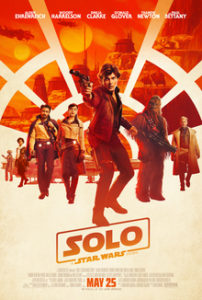
The moment I became a “Star Wars” fan forever was in the cantina scene in what I will always refer to as the first “Star Wars” movie, now of course known as Episode IV, “A New Hope.” It was when Ben Kenobi tells Han (Harrison Ford, of course) he hopes to avoid any Imperial entanglements, and Han leans back and says, “Well, that’s the real trick, isn’t it?” with so much rakish charm that we have to instantly forgive him for bragging about making the Kessel run in under 12 parsecs. (We will always be too polite to mention that parsecs measure distance not time. Who knows, maybe a long time ago in a galaxy far, far away, they told time in parsecs.)

So, would I like to see that Kessel run? And how Han met Chewy the wookiee? And how me met the dashing buccaneer, Lando Calrissian, played by Billy Dee Williams in Episodes V and VI and here by master-of-all-arts Donald Glover? And the bet that won Han the brand-spanking-new Millennium Falcon? Written by “Empire Strikes Back” and “Force Awakens” screenwriter Lawrence Kasdan, with his son Jonathan (“Dawson’s Creek”)? With the divine Phoebe Waller-Bridge (“Fleabag”) voicing a slightly loopy and more than slightly lippy droid? You bet I do!

Does it deliver? You bet your Han Solo hanging dice it does! Does Han shoot first? This time he does!

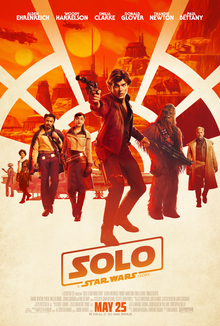
This prequel has the wonderfully charismatic Alden Ehrenreich (the “Would that t’were so simple” guy from “Hail, Ceasar!”) as Han, who lives with other orphans in a work camp led by Lady Proxima (voiced by Linda Hunt). Think Fagin, without the warmth. He has a plan to escape with the girl he loves, Qi’ra (“Game of Thrones” dragon-rider Emilia Clarke). Han is a bit of a rascal, but also an optimist back in these teenage years. “Wherever we go it can’t be worse than where we’ve been,” he says. But we know it can.

And as we know from films like “Casablanca” and “The Fifth Element,” whether it’s the letters of transit or the multipass, you have to have the right paperwork to get away. Han escapes (and in the film’s cheesiest moment, is assigned a last name based on his solitary status) but Qi’ra is captured. Han decided to enlist with the Imperial forces to get trained as a pilot so he can return to save her.

Three years later, Han has been thrown out of the academy and is now a grunt in the Imperial military. He meets a bandit named Beckett (Woody Harrelson), and his ragtag crew (is there any other kind?) of daredevils, and agrees to join forces with them on a heist so he can get a ship go back and rescue Qi’ra. This leads to a marvelously staged sci-fi version of a western train robbery.

It turns out that Beckett is not stealing on his own behalf, but working for someone else, someone who is not forgiving when things do not go well, harking back to the original cantina scene again, where we learn that Han had to jettison the cargo he was delivering to Jabba the Hutt. The big crime boss is Dryden Vos, played by Paul Bettany, with scars across his face as though a space tiger clawed his cheeks, scars that redden when he gets angry. Beckett and Han have to try again.

Along the way Han meets Chewbacca (Joonas Suotamo) and Lando. I am not going to spoil how; I’ll just say that both encounters are fitting and highly entertaining. Han does meet up with Qi’ra again, but is not ready to see how she has been affected by what she has had to do to survive. She joins the team and they take on another big heist. There’s a high-stakes card game, a trial by combat, and good advice that gets ignored. And the better you know the series, the more references and callbacks you will be delighted to discover. There are new insights about well-known characters and intriguing new ones, especially Waller-Bridge as a droid with a few crossed wires. In addition to the touches that center this in the “Star Wars” universe, there are references to classic movie genres, heist films and westerns and maybe “The Wages of Fear.” It may not be necessary, but it is most welcome, a thrilling and warm-hearted adventure in its own right that fits as satisfyingly into the “Star Wars” universe as that last piece in a jigsaw puzzle.

Parents should know that like all “Star Wars” movies, this one has non-stop peril and action with some disturbing images and many characters injured and killed. There is some mild language and some alcohol.

Family discussion: What do you think happened when Han was at the Academy? What is Han’s greatest skill?

If you like this, try: the other “Star Wars” films
Related Tags:


Action/Adventure DVD/Blu-Ray movie review Movies -- format Science-Fiction Series/Sequel
Pope Francis — A Man of His Word

Pope Francis — A Man of His Word

Posted on May 18, 2018 at 7:30 pm

B +
Lowest Recommended Age: Middle School
MPAA Rating: Rated PG for thematic material including images of suffering
Profanity: None
Alcohol/ Drugs: None
Violence/ Scariness: Images of tragic circumstances including illness and oppression
Diversity Issues: A theme of the movie
Date Released to Theaters: May 18, 2018
Date Released to DVD: December 3, 2018
Copyright 2018 Focus Features

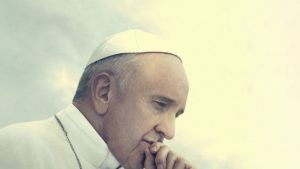
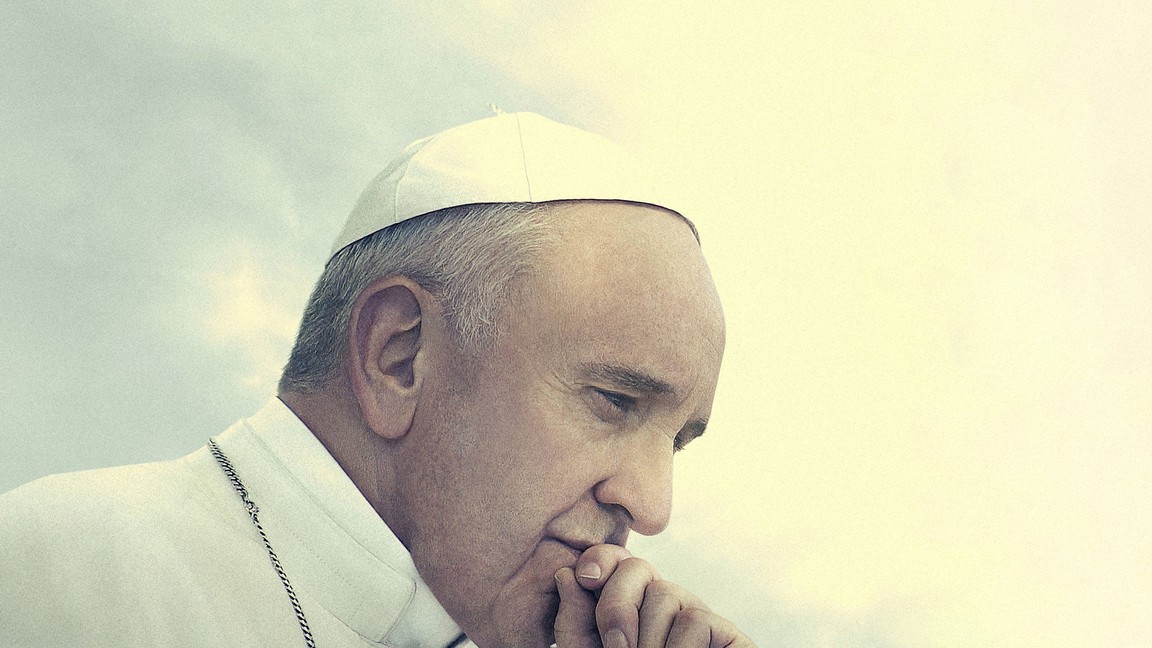
Wim Wenders’ unabashedly admiring documentary about Pope Francis is an intriguing and inspiring look at the man who is breaking a number of precedents in the Holy See. He is the first pope from South America after 265 predecessors, mostly from Italy. He is the first Jesuit, an order known for scholarship who “seek to find God in all things.” And he was the first to choose the name Francis, after the 16th century saint who was devoted to animals and nature.

He is unaffected, explaining that he wants to live very simply. He speaks to audiences and to us via the camera with candor and sincerity on topics ranging from the environment to interfaith understanding to the “three T’s” he says should be the foundations of our lives: in English, they are work (for dignity and contribution to the community — “to imitate God with your hands by creating”), land (to support sustainable resources), and roof (home, family).

Wenders interweaves a re-enactment of moments in the life of St. Francis to show parallels with his namesake. But the heart of the movie is seeing His Holiness interact with the crowds of people who are palpably moved by him. Visiting an American prison, he reminds the inmates that the very first man to become a saint was a prisoner like them. And then, in an act of infinite tenderness, he washes and kisses prisoners’ feet. A girl asks him why he has renounced wealth. He tells her that poverty around the world is a scandal, and “we must all become a little bit poorer…poverty is central to the gospel.” We can see the lugubrious faces of some of the Vatican priests and cardinals, looking as though this is not a welcome interpretation. Later, visiting his home country of Argentina, the crowd almost ecstatic with pride, he reminds them of a local expression: “You can always add water to the beans.”

One of the most striking scenes in the film has images of environmental damage projected onto the outside of St. Peter’s Basilica. “The poorest of the poor is Mother Earth. We have plundered her.” And he reminds us that it is the poorest of the poor who suffer first and most from environmental degradation.

His Holiness appears before the United States Congress and goes to Jerusalem to meet with rabbis and imams. He sits alone in a cell at the Holocaust museum Yad Vashem. He speaks movingly to groups and to us about the importance of listening. He misses the connection of taking confession. He says smiles are “the flower of the heart” and speaks of the importance of of having a sense of humor. He tells us the prayer of St. Thomas More he says every morning that always makes him smile.

“An artist is an apostle of beauty,” he tells us. Wenders has taken that to heart and created a film that gives us a rare chance to hear directly from a man whose devotion and compassion will inspire anyone.

Parents should know that this film includes some footage of suffering, including illness, poverty, and abuse.

Family discussion: How do the “three T’s” appear in your life? Why is listening especially important to Pope Francis?

If you like this, try: “The Letters” and “Nuns on the Bus”

Related Tags:


Documentary DVD/Blu-Ray movie review Movies -- Reviews Spiritual films
Bobby Kennedy for President: Interview with Dawn Porter About Her Netflix Series

Bobby Kennedy for President: Interview with Dawn Porter About Her Netflix Series

Posted on May 18, 2018 at 8:32 am

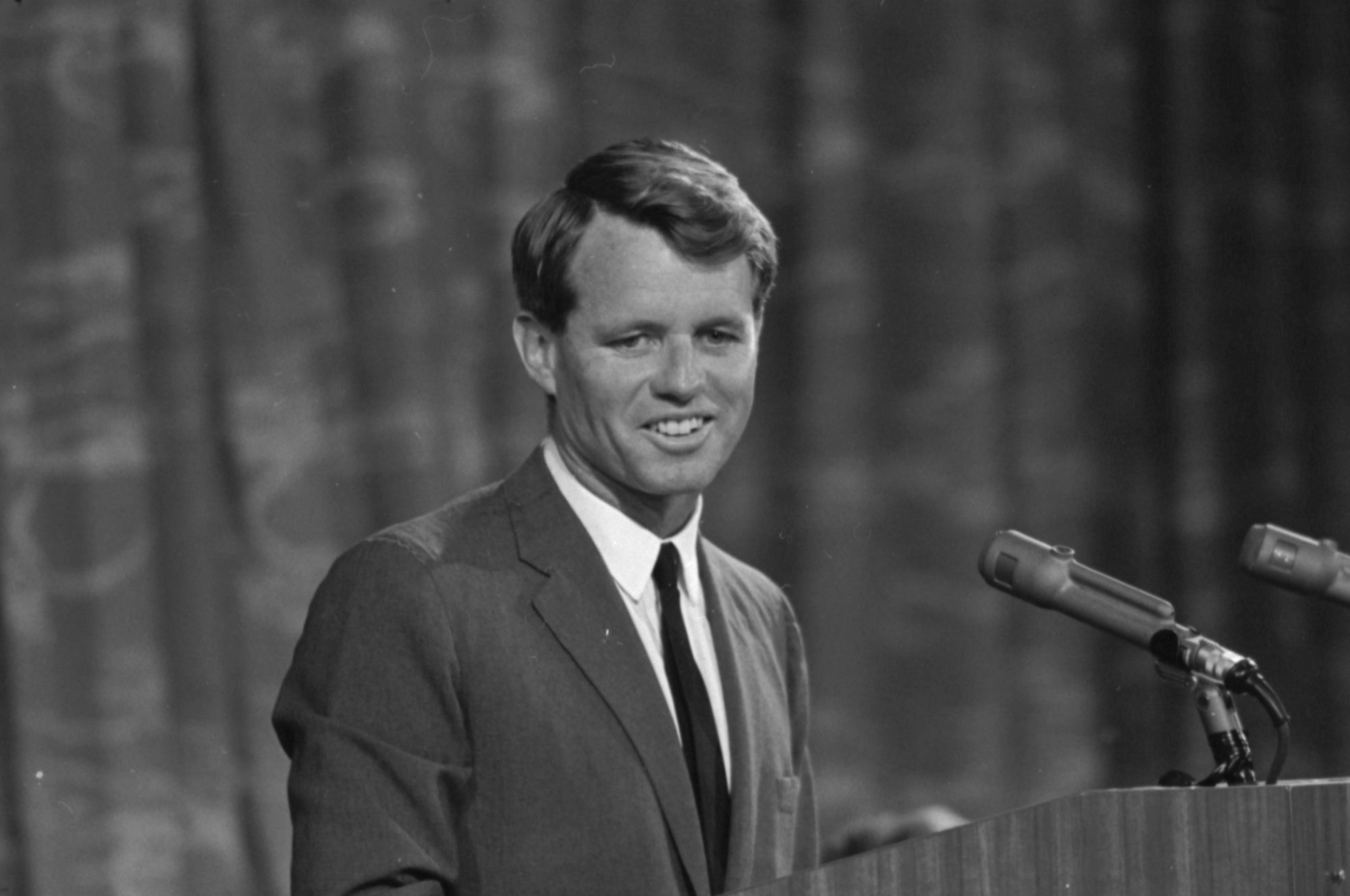
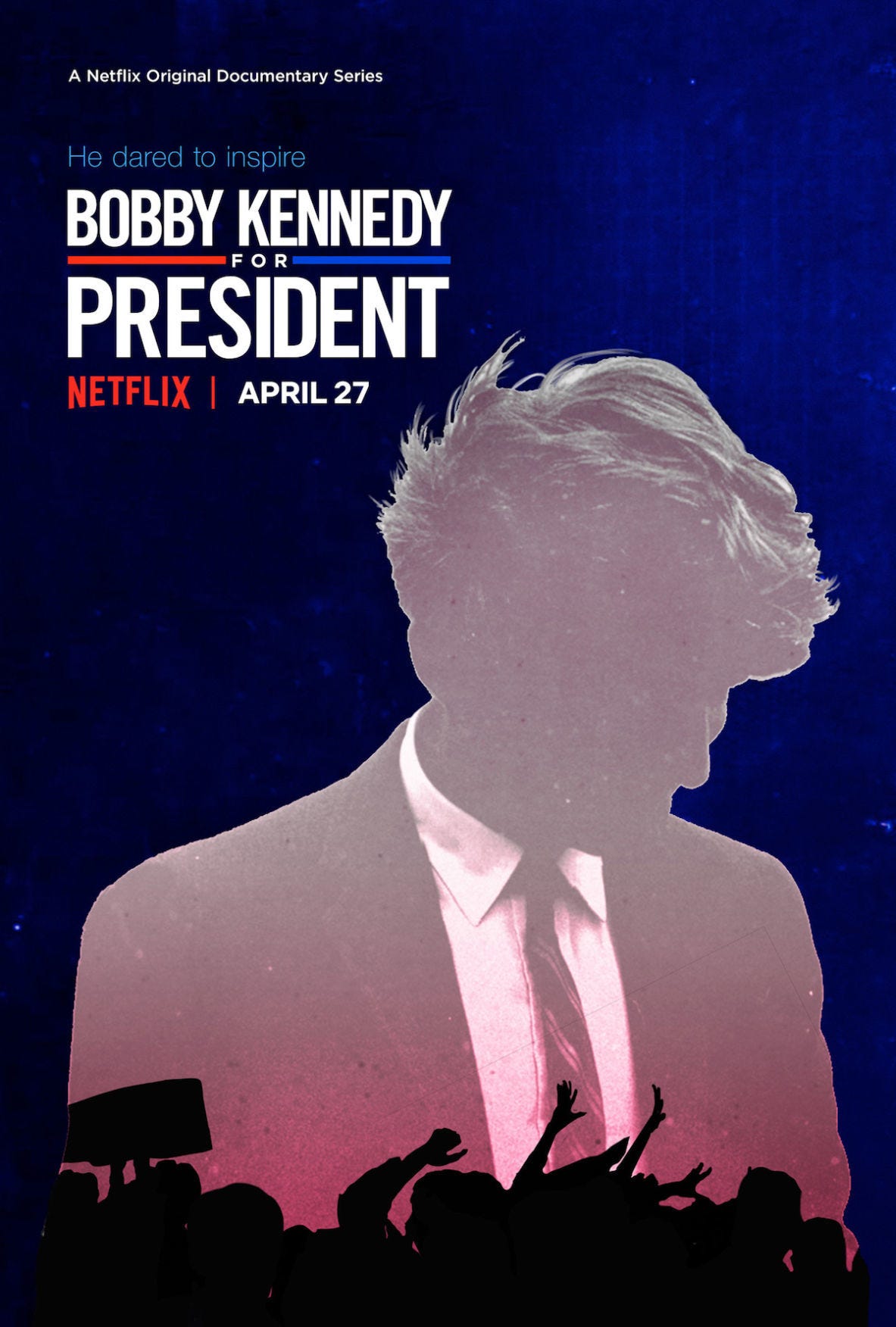
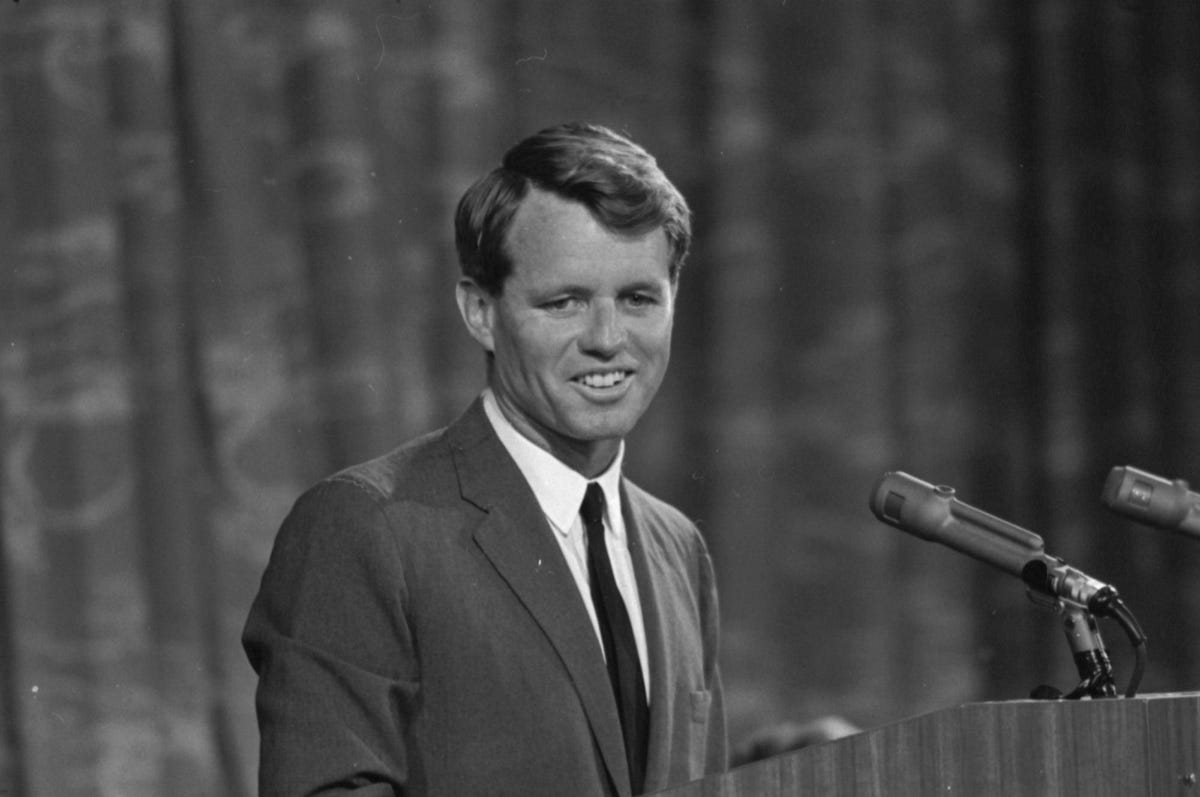
Dawn Porter’s four-part Netflix series, “Bobby Kennedy for President,” examines the life of one of the central political figures of the 1960’s. In an interview, she described the process of collecting the extraordinary and surprisingly intimate archival footage and her interviews with people who worked closely with Bobby Kennedy and are still deeply moved by the experience.

They say that history doesn’t repeat itself but it rhymes. I felt like there was a lot of rhyming in this series, which takes place during the politically tumultuous 1960’s. What parallels do you see going on today?

We’re in a really confusing and chaotic era right now where people are choosing sides. The country is never a hundred percent united but it certainly feels as if we are more divided than we have been in recent years. It’s unsettling and I think that it is very similar to the middle through late sixties the series covers. I think the big difference is there was more confidence in the leadership and people felt acutely behind one candidate or the other and so there was confusion and chaos but I don’t know that there was the same amount of fear but more anger I think than in the 1960’s. There was more activism then and I think we’re seeing a more resurgence of that activism, now so I think that’s actually a good thing.

People say today, “oh goodness, it’s never been worse,” but we had the Vietnam War, a huge racial divide, poverty like in the Deep South, assassinations happening routinely, you don’t want to do a misery comparison but you could certainly say that things were as bad or as serious. That’s when we really do value leadership and Kennedy stepped into that role.

If you were making a film about a historical figure from even a decade before you would not have anywhere near the wealth of archival footage that you had here. It was really breathtaking because there were so many scenes where he seemed unaware he was being filmed, not just giving speeches but talking to his staff, being with his family.

I used to work for ABC News and I remember a colleague there telling me that there was all this film footage that had been shot during the time period that I was interested in. So one of the things that I thought would be really effective is to allow the viewers as much as possible to experience the footage themselves, to experience the time. And so there were two things to do. You can see at the beginning there was more black and white, there was more sometimes grainy/sometimes smooth footage. This was a period that coincided with the shift in news coverage. Upstart news entities such as ABC News began shooting in film and shooting in color and sending really gifted cinematographers out to do political coverage. So you get this feeling not only of the candidates but of the era: the clothes, the cars, the light. I think that helps point you in time in a way that still pictures can’t even quite accomplish.

That is why working with Netflix was so great because we convinced them to give us investigation room. We ended up digitizing over 140 hours of news footage and one of the things I’m really, really happy about is that footage is now available to others who want to explore the period for whatever storytelling they’re doing. It was quite a project of discovery in that way but we went through about 2,000 reels of film and our archivist ended up using 100 different sources so it was quite a massive undertaking but once we got our rhythm it was really fun. All the news organizations might cover the same event but they would shoot it differently and so we could have different angles from different news organizations. But 100 percent of that material had to be licensed, so we were constantly trying to figure out what we could afford to actually use.

There was another exciting thing that was happening. It was also the era of growth and excitement about that type of verite filmmaking. So there were filmmakers like D.A. Pennebaker, Robert Drew, like Charles Guggenheim who had sent a bunch of independent cinematographers out to cover Bobby Kennedy. We used all of those sources and got outtakes from them and I even visited Pennebaker and Chris Hegedus in their office and got material from them personally. So there is also quite a bit of film history contained in the series.

I think the most powerful moment in the series is the John Lewis interview.

I wanted to only have interviews with people who worked very closely with Bobby Kennedy, who were either staffers or people like Marian Wright Edelman. We had known that John Lewis was involved with Kennedy and he agreed right away. One of the things that I think was very helpful for these interviews was we would show people footage that was material they hadn’t necessarily seen of themselves as young people and I think that that helped them go back in time and remember. John Lewis is a spectacular interview. He’s very giving, he’s a very open, very, very, very generous and Kennedy was really important to him and he wanted to communicate that. He’s also not a person who is afraid of being emotional and didn’t try and stop it and that was really quite a gift to a project like this.

What do you think is Bobby Kennedy’s most enduring legacy?

I am really moved by his curiosity, his ability to change and grow, his inclusiveness (particularly to minority groups) and this kind of resilience and relentlessness which can be a blessing and a curse but in the end I think he made it a blessing and really refused to give up on things that are too important to give up on.

Related Tags:


Directors Documentary Interview Politics
Book Club

Book Club

Posted on May 17, 2018 at 5:11 pm

B-
Lowest Recommended Age: Mature High Schooler
MPAA Rating: Rated PG-13 for sex-related material throughout and for language
Profanity: Some strong and explicit language
Alcohol/ Drugs: Drinking
Violence/ Scariness: Comic peril
Diversity Issues: None
Date Released to Theaters: May 18, 2018
Date Released to DVD: August 27, 2018
Copyright 2018 Paramount

Hey, people behind “Sex and the City,” you might want to call your lawyers. Maybe those of you behind “The Golden Girls,” too. “Book Club,” starring three Oscar winners and an Emmy winner from the last century, is pretty much an AARP version of SATC, with four women who endlessly confide everything in each other, mostly about sex and some about romance. How does a movie with these magnificent, strong, smart stars fail the Bechdel test?

In this mix, Jane Fonda plays Samantha, I mean Vivian, the luxury hotel owner who has a lot of sex but only with men she doesn’t care about. “I can’t sleep with people I like,” she says referring to the literal act of slumber. “I gave that up in the 90’s.” Mary Steenburgen plays Charlotte, I mean Carol, happily married to a man she loves (Craig T. Nelson), but not happy about their humdrum sex life. Candice Bergen is Miranda, I mean Sharon, a judge who is long-divorced and resolutely single, living only with a cat called Ginsburg. And Diane Keaton plays a character named Diane who is somewhere between Carrie and “Golden Girls'” Rose, a sweet-natured recent widow with two devoted and over-solicitous daughters (Alicia Silverstone and Katie Aselton), who want her to leave her home and move in with them in Arizona.

The women have had a book club together for decades, mostly an excuse for them to get together. When Vivian hands out copies of the naughty bondage and discipline Fifty Shades of Grey novel by E.L. James, it causes all four of them to rethink their own romantic and sexual options. Vivian reconnects with the guy she almost married four decades earlier (Don Johnson, whose daughter starred in the movie version of Fifty Shades). Diane meets a very handsome man on a plane (Andy Garcia) and has to decide if she is open to a new relationship. Sharon decides to try swiping right with a little online dating and ends up having dinner with a tax lawyer (Richard Dreyfuss, every bit as charming as he was in “The Goodbye Girl“). And Carol tries to spice it up with her recently retired husband, who seems to have no interest in sex.

This provides many opportunities for the foursome to get together to discuss each other’s situations in detail. And if you think that they might omit the makeover scene with everyone weighing in on what one of them should wear on a big date and a scene of triumph over the ex’s new young love, rest assured they did not.

It is good to see these brilliant stars give it their best, which is what it takes to overcome the drippy screenplay, co-written by director Bill Holderman (with Erin Simms), and pedestrian direction. It’s like taking a Hallmark Romance Channel movie script and instead of casting the farm team (1990’s television series stars), it sends in the All-Pro heavy hitters. Or a “Love Boat” episode from the days when one segment always featured some 80-something former movie star. This group is able to carry it pretty far, especially Fonda, clearly relishing her role, and Garcia, who is able to give some grounding to a thinly written Prince Charming character. But the silly premise, Bumble product placement, clunky double entendre, unimaginative soundtrack, and Viagra humor make us long for the more reliable middle-age female empowerment fluff of Nancy Meyers.

Parents should know that this film has extensive and explicit sexual references and situations, including the visible results of a double does of Viagra, played for comedy, as well as some strong language and alcohol.

Family discussion: Why were Diane’s daughters so worried about her? Why was it hard for her to tell them no? Why was Vivian reluctant to become close to Arthur? Did the books have an impact on their choices?

If you like this, try: “The Jane Austen Book Club” and some of the earlier films of these stars like “Barefoot in the Park,” “Starting Over,” “Melvin and Howard,” and “Annie Hall”

Related Tags:


Comedy Date movie DVD/Blu-Ray movie review Movies -- format Romance
Deadpool 2

Deadpool 2

Posted on May 15, 2018 at 9:04 pm

B +
Lowest Recommended Age: Mature High Schooler
MPAA Rating: Rated R for strong violence and language throughout, sexual references and brief drug material
Profanity: Very strong and crude language
Alcohol/ Drugs: Drinking, drugs
Violence/ Scariness: Extended and very graphic peril and violence, many characters injured and killed, disturbing images
Diversity Issues: None
Date Released to Theaters: May 18, 2018
Date Released to DVD: August 20, 2018
Copyright 20th Century Fox 2018

Wait. Don’t read any further. If you liked the first Deadpool, then go see Deadpool 2 before you read or hear any spoilers and come back here afterward to hear what I thought and share your own reactions. Oh, no, one thing before you go. No popcorn, no Twizzlers, no giant sodas for this one. Between laughing so hard you gasp for air and just gasping at some of the crazy stunts, if you try to eat or drink something as you watch, you just might choke or spill it.

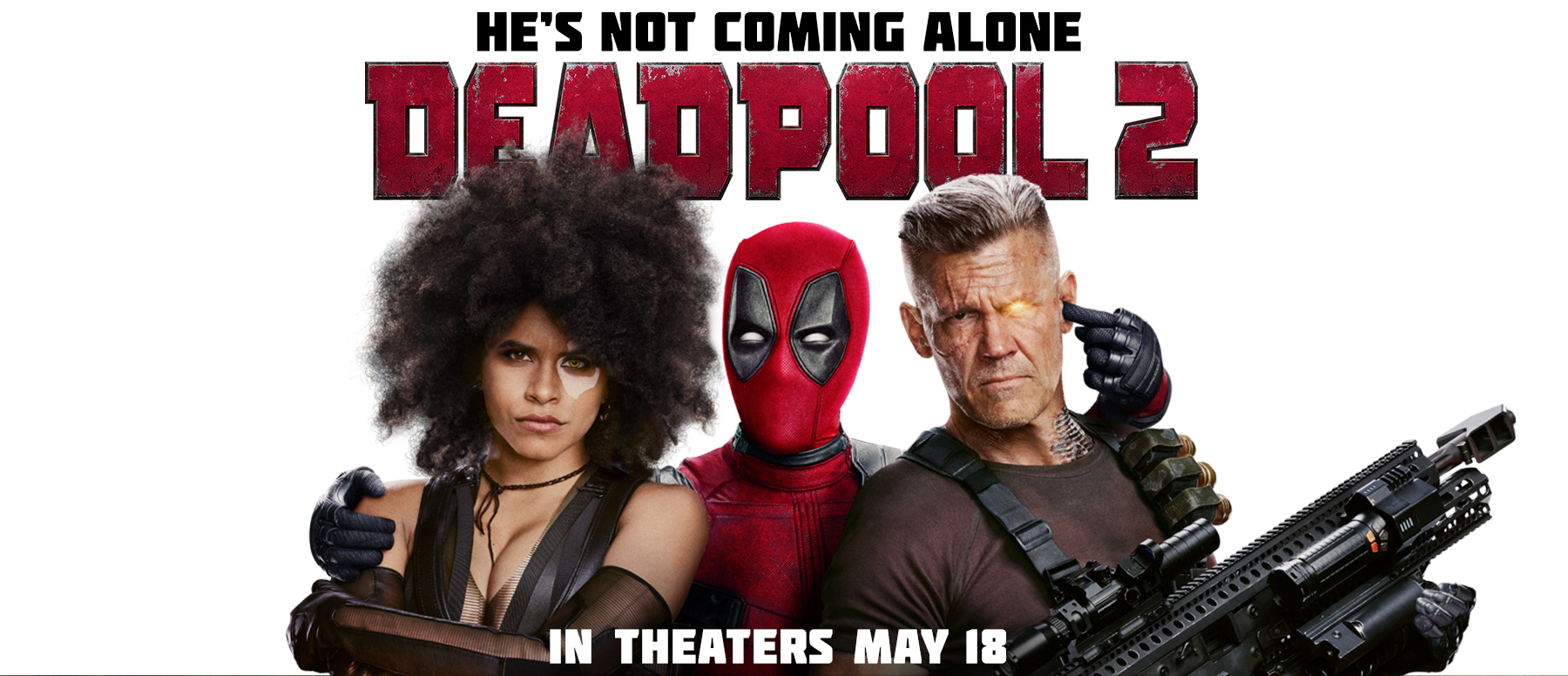
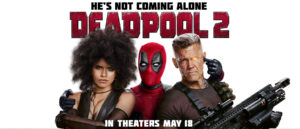
Remember the first “Deadpool?” That crazy sloooow-motion opening action scene to the tune of “Angel in the Morning” with Ryan Reynolds’ deadpan Deadpool voiceover introducing us to the fourth-wall-breaking, meta-meta, winking-at-us-and-itself while-delivering on the action and a tender romance as well Marvel movie about the special forces guy turned gun for hire turned cancer patient turned science experiment turned super(anti)hero? Well, he’s back, (temporarily) blown to bits, out for revenge, and out for something a bit unexpected as well. Yes, believe Wade/Deadpool when he tells you that this is a story about family. Also butterfly-effect-free time travel, a prison break, ironic use of a classic pop song, some snark on DC (and Wolverine, of course), one of the funniest scenes ever filmed about a bad guy trying to get information from the good guy’s buddy, a bad guy played by the same actor who played Thanos but this time less CGI, a new ballad from Celine Dion, a blink and you’ll miss it cameo by one of the biggest stars in Hollywood, the guy from “Catastrophe,” the guy from “IT,” and some very persuasive evidence that the best superpower could just be….luck. And that last one would be Domino, perhaps the only superhero character whose name is not as cool as the name of the actor — Zazie Beetz, who needs her own movie, now.

Just in case you’re still with me and have not seen it yet, I’m doing my best to keep this as spoiler-free as possible, though I would love nothing more than telling you some of my favorite funny moments. Bad stuff happens and Wade/Deadpool seeks revenge. Then a sort of cyborg from the future with seemingly infinite very powerful weapons named Cable (Josh Brolin) shows up, Terminator-style, in search of a kid who has been abused in a “conversion” facility for mutants with special powers (Julian Dennison of “Hunt for the Wilderpeople”). Deadpool puts together a team he dubs the gender-neutral X-Force. (Speaking of dubbing, there’s a whole thing in the movie about dubstep, too.

The quips and pop culture references come at you “Airplane!”-style, faster than the bullets, meta on meta, times meta, meta about meta, breaking the fourth wall and probably the fifth, sixth, and seventh as well. “No more speaking lines for you,” DP tells one character. Instead of the director’s name in the opening credits, it just says “Killed John Wick’s dog.” (That’s David Leitch, and he did.) And yes, there is some sweetness, too, every bit as important in making this work as the wisecracking dialog and bone-cracking stunts. It does not take itself seriously, but it does take delivering a smart, funny, entertaining, and satisfying movie very seriously. With so many superhero franchises out there, it is great to see them developing sub-genres, and “Deadpool” has found the sweet spot in one of the most purely entertaining.

Parents should know that this film includes very strong, explicit, and crude language, sexual references and situations, graphic comic nudity, drinking, drugs, and extended action/superhero violence with many characters injured and killed and some disturbing images.

Family discussion: How do Wade and Cable respond differently to tragedy? What would you say to Russell? What’s the best joke in the movie?

If you like this, try: “Deadpool” and “Guardians of the Galaxy”

Related Tags:


Action/Adventure Comedy Comic book/Comic Strip/Graphic Novel DVD/Blu-Ray movie review Movies -- format Scene After the Credits Superhero
THE MOVIE MOM® is a registered trademark of Nell Minow. Use of the mark without express consent from Nell Minow constitutes trademark infringement and unfair competition in violation of federal and state laws. All material © Nell Minow 1995-2026, all rights reserved, and no use or republication is permitted without explicit permission. This site hosts Nell Minow’s Movie Mom® archive, with material that originally appeared on Yahoo! Movies, Beliefnet, and other sources. Much of her new material can be found at Rogerebert.com, Huffington Post, and WheretoWatch. Her books include The Movie Mom’s Guide to Family Movies and 101 Must-See Movie Moments, and she can be heard each week on radio stations across the country.

Website Designed by Max LaZebnik