Coming April 20, 2018 in theaters and on Netflix: “Kodachrome”
An estranged father and son make a pilgrimage to the last place that can develop rolls of Kodachrome film on this movie starring Ed Harris, Elizabeth Olson, and Jason Sudeikis, inspired by a true story.
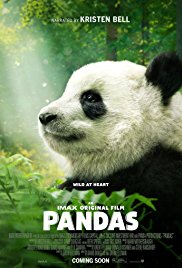
Interview: Drew Fellman and Jake Owens on the new IMAX Film “Pandas”
Posted on April 1, 2018 at 10:15 pm
Copyright Warner Brothers 2018
Pandas are, as someone notes in the adorable new IMAX documentary simply called “Pandas,” “the King Kong of cuteness.” Kristen Bell narrates the story of an ambitious and daunting Chinese project, to take panda babies bred in captivity and release them into the wild, to repopulate the endangered species. The Chinese panda specialists consult with an American from New Hampshire who has a similar program for bears. And we get to watch as a panda named Qian Qian leaves the only home she has ever known. I spoke to director Drew Fellman and American panda expert Jacob Owens, who worked with Qian Qian and appears in the film.
Why are humans so drawn to pandas?
Fellman: I know, it’s a mystery, isn’t it? There is so much about that that really is so unknown, part of it I think is that pandas are still so new to us. Pandas were unknown to the West until about the 1860’s and the first panda showed up in the U.S. in 1920. Once people were introduced to pandas there has been a panda mania of some sort. From the very beginning they just captured the public imagination and I think part of that was because they seemingly came out of nowhere and they’re so big and so adorable and they look so unlike any other animal. The physical answer as to why they’re so adorable is because they have the strongest jaws you can imagine so they can bite through solid bamboo and that gives them these huge jaw muscles which give them a big round head like a giant baby.
Owens: Yes, babies are cute because they have big eyes and they have round heads, they’ve got disproportionate ears; and so you look at the pandas and it’s got big black spots that look like big eyes and big ears and a big round head, also they roll around more than any other animal I’ve ever seen. They love rolling. So not only do they do look really cute, they’re also really silly goofy animals.
In the film you say that the three qualities you were looking for in finding the right panda for the release program were courage, curiosity, and climbing ability. Why were those were the key skills and how do you look for them?
Owens: There is a lot of research that goes into this that we can draw from. It starts off with genetics and health; we want healthy individuals who have the right genetics for the places that we’re looking to release them. The next thing is looking at the behavior. We introduce novel stimuli to see how they respond. If an individual panda sees something new and instantly runs towards it that’s not necessarily the quality we need because we want them to be curious but also careful but you also don’t them to be so wary of everything that they won’t explore. They’ll need to explore their habitat, being able to find food on their own; things like this, so having in moderation being exploratory but also being cautious, being really vigilant; vigilance is a big thing always looking out for new dangers, those are the key features. And they have to climb well because they have to spend a lot of time in trees. They flee predators up trees and so being able to walk around and climb and do that well at a young age is a good indicator.
Did it feel like leaving a child at school to say goodbye that way?
Owens: Yeah, worse. As scientists you try not to get attached to the animals that you’re studying but this is very different than just strict science; this is reintroduction and release of individual animals and so we are doing all this research but then you’re also dealing with an individual and their own personality that’s unique and so you can’t help but personify and you can’t help but get very attached. You really care about them as an individual and also what they represent for the species. As a conservation biologist, I’m focused on making sure that there are individuals of species in the future. But at the same time just like anybody else, just like if you have a human child you want them to go off on their own and be able to be successful. It’s just that how you prepare them is a bit different. I don’t ever refer to it as training because I can’t train a panda to be a panda because I’m not one. So I call it conditioning or preparing, letting their natural instincts come out progressively through increasingly wild conditions and eventually to the point when they are ready to go out. We open the gate and she can make that decision when she wants to go out and when she wants to come back and, when she’s ready, just to be out fully.
What was the most important thing that the project learned from Ben Kilham, the man who has been raising bear cubs and releasing them successfully in New Hampshire?
Owens: Ben has been doing black bear rehabilitation for more than 20 years and so he’s just got a huge amount of knowledge about bears in general and pandas are bears. They are very different bears but they’re still bears. He also knows so much about rehabilitating and releasing animals. I’ve worked on reintroduction programs before with different species. People think that you should avoid all human interactions. Ben takes the opposite approach. He says there’s no real way to do that because these black bears don’t have a mom so you have to hand raise these cubs and you have to give them a safe environment to progress into the wild. Our pandas are born in captive care. Their mothers are also captive-born individuals so they don’t have the wild skills to teach their cubs. So for Ben the biggest thing is that human interaction has a real advantage, because once they trust you that provides us the access to keep on learning more about their biology, to keep on learning more about their conservation and also monitor them. I can change Qian Qian’s GPS collar just as Ben can with Squirty as you see in the film, and that’s a huge advantage because we can monitor her, we can follow her, we can see where she’s at, see how she’s doing. As technology increases we can do a lot more with that technology but if you don’t have access to them and they don’t trust you, then you’ll have to take other measures. You have to capture them in some kind of trap or use sedation and so because they know and trust us it’s a lot easier for us to do those things. Using those human interactions for those advantages is the biggest thing that I have learned from Ben in terms of our project.
Fellman: Also from the panda’s point of view is the positive interaction with the humans as opposed to being trapped or tranquilized which can be dangerous and can frighten them.
Owens: There is also the misconception that I had coming into this that if a panda or black bear gets used to one individual or a handful of individuals then they’re used to people and then they’re going to be a nuisance animal then there’s going to be a real problem and they’re not going to do well when they go out. But pandas and black bears are really smart and they can identify individual people very easily by the sound of their voice, by the smell and also by vision somewhat when you get close. It was a big learning thing for me to learn that we were wrong in thinking that this risk of them trusting a few human individuals is going to lead to touching every human. My dogs don’t do that in the States and most people’s dogs don’t do that in the States. Most animals just don’t do that.
What’s the most important thing that you want families to learn about pandas when they watch this movie?
Owens: I want people, especially families with young kids, that people around the world can work together really successfully and use their own combined strengths to work on an endeavor that’s really challenging. We’re really dedicated and I think that’s the big point — all of us globally working together to achieve a difficult goal.
Fellman: And another important message is that pandas are much more than just adorable animals; they are very smart, occasionally fierce, a bear with a mind of their own and they’re all individuals. It’s going to take a lot to create a better future for them and it’s something that’s really worth fighting for.
Interview: Andre Borschberg of “Planet Power” and Solar Impulse
Posted on March 29, 2018 at 2:54 pm
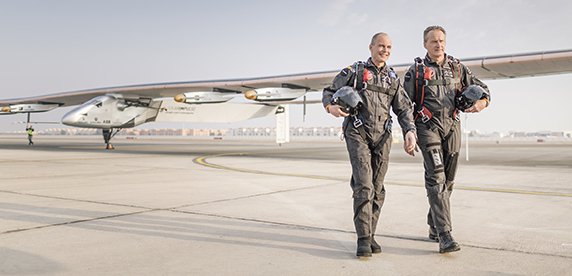
“Planet Power,” is a stunning documentary about the round-the-world flight of the Solar Impulse, the first-ever plane completely powered by sunlight to circle the globe. It is now in IMAX theaters across the country. It was developed and piloted by two Frenchmen, Andre Borschberg and Bertrand Piccard.
What did you learn about the world by flying over it that way that you didn’t know before?
Lots of things! But first of all it’s an incredible experience when you look about the airplane and you see the sun and you see the sun rays and then you start thinking that these rays and this radiation is sufficient to make the airplane fly, to climb and fly through the night. It’s absolutely incredible. Normally you always have an eye on the fuel gauge and then you know you only have a few minutes to go and then you have to land. So to think that you have an indefinite unlimited endurance, it’s a totally different world. Of course the entire project was incredible in the sense that we were told by the aviation industry that to build such an airplane was not possible. We were convinced on our side that there was a solution so we decided to do it ourselves. These fifteen years were a sequence of hurdles, of success, of difficulties and all this done with a fantastic team; so it’s a life experience.
I imagine that it was very quiet there because you didn’t have the humming of the engines. Is that right?
It is. If you have a chance to fly in an electric airplane, you will see how quiet it is because you don’t hear much, there’s no vibration. It’s like being in a glider which suddenly can climb like a normal plane. And in this plane I was alone. We will have a two-seater flying this summer in Switzerland and my goal is really to take lots of people in this airplane just to see the difference. The experience is something else.
One of the things that really captured my attention in the movie was that while a passenger plane can tip to a degree of 30 degrees this plane because of the size of its wings was much more limited. Did that make it difficult to maneuver?
What was tricky was the sensitivity of the airplane towards turbulence and this is why we also always try to take off very early and land late at night so we’re away from the turbulences created by the sun during the day. So that is certainly one characteristic of the airplane. On the other side, as I said, we have this freedom to be away from the clock and having the possibility if necessary to be one more day in the air when I flew across the Pacific from Japan to Hawaii, we thought it would take 5 days than have taken 6; I would say even so much the better because of the incredible experience but to have this feeling of no limit on the energy, of course, it’s a major plus.
The movie explains that you come from a family with a history of innovation. What did they do to influence you to become an innovator yourself?
When I was a really young kid I was taken by the books I read about the aviation pioneers, about what they did, about their lives, about the way they went about trying, exploring, building something that nobody did and then flying without having been coached by a flight instructor on how to do that. For me this created a strong dream and appeal in fact to be part of this world as well; so when I met in fact Bertrand a few years later, it was like getting into this world I’ve been dreaming about when I was a young boy.
Tell me a little bit about more about the partnership with Mr. Piccard, what is it that each of you contribute to that partnership?
Bertrand and I basically had different educations; we have different backgrounds and skills and at the end we were extremely complementary as a partnership through these differences. It’s one plus one equals three; one for each and one when we’re together. In that sense we are truly different but we understood that this difference was a source of creativity so very early we gave up basically the tendency to argue and to try to defend own ideas and we were more interested when we were not having basically the same understanding of a situation. I think we were always interested to understand what the other was thinking, knowing that at the end the solutions would be neither his solution nor mine. So regularly once every two weeks, once every month we would sit down and expose our feelings to the other one to try to find a common ground. We had a clear understanding that it’s only by sticking together that we could have a chance to succeed.
What of the innovations in the plane do you think will be most useful to consumers?
I think very simply electric propulsion. It is not just that solar energy is renewable. It is also much more efficient than a combustion engine. If you take your car, two liters or two gallons out of three that you put in the tank are lost for heat so it’s a totally inefficient technology. With electric propulsion we’ve changed the world of aviation for a lot of reasons but it will make aviation quieter, cleaner, safer and more affordable and you can use it not only for propulsion but also to stabilize the airplane. There are few moving parts, it’s only software, it’s only electronics, which are (things we know how to produce very cheaply and very safe today, so you can start imagining that you will have new ways to transport people, for example from one side of Los Angeles to the other side. There are many projects aiming in fact to provide this added value that will all use electric propulsion. I didn’t want basically to do a commercial project after flying around the world but I couldn’t resist to continue and develop this technology because I think it will be a game changer.
Rated PG-13 for sequences of sci-fi action violence, bloody images, some suggestive material, partial nudity and language
Profanity:
Brief strong language, one f-word
Alcohol/ Drugs:
None
Violence/ Scariness:
Extended sci-fi/fantasy peril and violence, real and virtual weapons, chases, and explosions, arson, characters injured and killed
Diversity Issues:
None
Date Released to Theaters:
March 30, 2018
Date Released to DVD:
July 23, 2018
Copyright Warner Brothers 2018
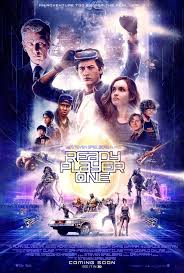
You know that one perfect high note in the A-Ha song, “Take on Me?” The goosebumpy bliss of it? “Ready Player One,” with endless callbacks to the era of A-Ha, is that note as a movie, set in the future, in love with the past, and uncannily right of this exact moment. There could be no better director than Steven Spielberg to take on this movie about a virtual game filled with the cultural touchstones of the 1980’s, a decade he helped define for the generation who will now be taking their children to this film and re-entering their own childhoods. We are all Marty McFly, now, going back to the future in a Delorean.
Spielberg is as good as anyone has ever been at the craft of cinematic storytelling, and there has never been a story more suited to that craft than this one, based on the book by first-time author Ernest Cline, who co-scripted and co-produced, and who admits that his world view was in large part formed by the Spielberg movies he watched as a kid in the 1980’s. There is a lot of nostalgia in the film, but also themes that could have come from today’s news: the role of technology as a distraction and as an invasion of privacy and underminer of democracy and the idea of teenagers saving the world.
It is Columbus, Ohio, 2045, when “people have stopped trying to fix problems and are just trying to outlive them.” The world is a bleak and broken place and most people spend most of their time escaping reality via a massive, enthralling online world called The Oasis, invented by James Halliday (Mark Rylance) a shy, obsessive genius who is a combination of Steve Jobs, Bill Gates, Mark Zuckerberg, Walt Disney, and Willy Wonka. “They come for all the things they can do,” we hear, “but stay for all the things they can be.” Players can design their own avatar personas any way they want — with antlers or wings, beautiful or ugly, super-powerful, purple, any age, gender, or species.
Five years before this story begins, Halliday died, leaving his half-trillion dollar empire and sole control of The Oasis to whomever was the first to discover the “Easter egg”* hidden in the game, which required agility, puzzle-solving, and a comprehensive knowledge of Halliday’s life and the popular culture he immersed himself in as a child in the 1980’s.
In five years, no one has even found the first of the three keys that lead to the egg. Many people have given up. Those still seeking it are called “gunters” (egg hunters). Wade Watts (“Mud’s” Tye Sheridan) is a teenage orphan living with his aunt and her latest in a series of abusive boyfriends in what is essentially a vertical trailer park called The Stacks. The film’s opening scene is brilliantly designed, as the camera pans down a dingy, jerrybuilt column of shabby capsules, showing each occupant caught up in a different virtual reality scenario, from boxing to pole dancing, with just one woman growing real-life flowers, the only person who even notices that Wade is there.
Wade signs into The Oasis, using haptic** gloves and a virtual reality eyepiece, for yet another try at crossing a virtual version of a Manhattan bridge guarded by King Kong. His avatar is Parzival***, who drives a Delorean, and he has an online friend, an enormous, mechanically-gifted man named Aech (I won’t reveal the voice performer to avoid spoilers). And he is intrigued by a female avatar named Art3mis (again, no spoilers) who rides the red motorcycle from the Akira video game. While Parzival and Art3mis both insist they will not “clan up” (team up with other players, they end up forming an alliance that includes two other avatars, Sho and Daito.
The Nolan Sorrento (Ben Mendelsohn) is head of the rival online company, Innovative Online Industries, and he wants to be the one to find the egg so he can make a lot of money selling ads (he has determined the exact number of ads that can bombard users “before inducing seizures,” he crisply informs his staff) and charging for access. IOI has hundreds of researchers and gamers trying to find the egg. And it operates “Loyalty Centers,” essentially debtors prisons, where those who owe the company money have to work it off under brutal and impossibly Sissiphusian conditions.
Wade has to locate three keys and solve clues involving not just logic and intense research but empathy, clues that turn out to be wisely selected by Halliday, Willie Wonka-style, to find the right person to take over the Oasis. Spielberg himself has to locate three keys as a filmmaker and does so with as much grace, heart, and integrity as Wade, his own avatar through the story. The copper key is the game level, the action scenes and the next-level special effects, including the chase across the Manhattan bridge and a stunning set piece inside the Stanley Kubrick movie, The Shining, repurposed here with bravura wit and skill. The jade key is the nostalgia, with dozens, perhaps hundreds of 80’s references, from the iconic and enduring to the obscure and forgotten. It is not, as is too often the case, shortcuts to play into the audience’s emotions, but deployed, again, with consummate wit and skill as commentary, as surprise, and as a reminder of our connections to the pop culture that first excited and engaged us. And the crystal key, well, it has been said often that the theme of all Spielberg movies is finding your way home. Wade is a 21st century Dorothy in Oz or Alice in Wonderland — or David in “WarGames,” exploring a land of infinite magic and wonder — and danger — but learning that there’s no place like home.
*The use of the term “Easter egg” to describe secret features originates from the 1979 video game Adventure for the Atari 2600 game console, programmed by employee Warren Robinett.
**They make it possible for the wearer to “feel” or “touch” virtual characters and objects.
***Named for one of King Arthur’s knights, who devoted his life to the search for the Holy Grail.
Parents should know that this film includes extended real world and virtual peril and violence including chases, explosions, weapons, murder, brief crude humor, some sexual references, brief strong language
Family discussion: What would your avatar be in the Oasis and why? Why would people stop trying to fix problems? What would Sorrento do with the Oasis and how would users respond?
If you like this, try: The book by Ernest Cline and movies that this one refers to, including “The Shining,” “The Iron Giant,” and “Back to the Future”
Rated PG-13 for thematic elements and some violent images
Profanity:
Some strong language
Alcohol/ Drugs:
None
Violence/ Scariness:
Dog and human peril and violence, murder, sad death of parents, child injured badly, medical procedures, starvation and disease, skeletons, some disturbing images
Diversity Issues:
Issue of white American as the only one who takes on the villain
Date Released to Theaters:
March 23, 2018
Date Released to DVD:
July 16, 2018
Copyright 20th Century Fox 2018
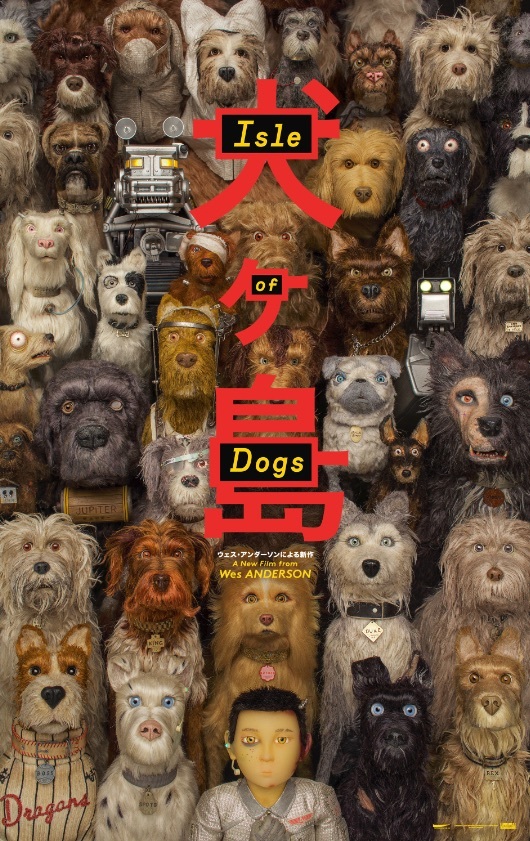
Say the title out loud. “Isle of Dogs” = “I love dogs,” get it? Even a three-word title of a Wes Anderson movie is a bit of a puzzle box. Anderson is the Joseph Cornell of filmmakers, with every item on screen and even those tucked away and not seen by the audience, every note on the soundtrack, meticulously assembled. It makes sense that this film is set in a fictional version of Japan because his movies are cinematic Bento boxes. Anderson’s most ardent fans love the understated drama and endless unpacking of detail and think there is a deeper meaning in the weirdness. I am less persuaded that there is always a deeper meaning, but I enjoy the singular peculiarity of his storytelling.
Like my favorite Anderson movie, “Fantastic Mr. Fox,” “Isle of Dogs” is a story of talking animals told via stop-motion animation. This is a vastly more ambitious undertaking, based on an original story by Anderson with frequent collaborators Roman Coppola, Jason Schwartzman, and Kunichi Nomura, who appeared in Anderson’s “Grand Budapest Hotel” and also served as a casting director for this film and provided the voice for the movie’s bad guy.
Anderson’s intricate vision makes for exceptional world-building, and in this film he imagines a Japan 20 years from now, when political and environmental decay has progressed significantly but is seen as normal by the population. Mayor Kobayashi (Nomura) is the mayor of the (fictional) coastal metropolis called Megasaki City. He persuades the population that dogs are a pestilential force, bringing disease (“snout fever” and “dog flu”) to the city, and decrees that all dogs, even the beloved guard dog of his adopted son Atari (Koyu Rankin), must be deported to a nearby “island” made up of trash. The starving, diseased, homesick dogs have a bleak existence on the island. And then Atari arrives, in an airplane, in search of his beloved Spots. And a teenage American exchange student (Greta Gerwig) starts to investigate, with one of those old-school evidence walls covered with clues linked together by red yarn. Anderson’s worst and most tone-deaf choice here is to make the one white, American human character the only one with any integrity and ability to resolve the crimes against the dogs and community.
As in all Anderson films, the human characters deliver their lines in deadpan even while experiencing cataclysmic loss, urgent action, or ardent emotion. What some audiences experience as whimsical, charming, and witty, others see as cloying, twee, or claustrophobic. But he is a marvel at world-building and here, as in “Fantastic Mr. Fox,” where the entire film is essentially a set of dollhouses over which he has complete control, he is at his best. The settings in this film are an astonishing achievement of imagination and skill, from the tears welling up in the eyes of a dog to the intricacy of the machinery. If he ever devotes as much attention to the humanity of his characters as he does to the brilliance of his props, he will no longer be admired primarily for his singular aesthetic vision but for his characters and stories.
Parents should know that this film includes diseased and starving animals, children and adults in peril, murder, death of parents, child injured badly, dog fights with animals injured and killed, skeletons, some disturbing images including surgery, brief strong language, and references to dogs mating.
Family discussion: Why were the dogs banned? Why was it important for them to vote on big decisions?
If you like this, try: “Fantastic Mr. Fox” and “Kubo and the Two Strings”