AFI Docs 2018 — You Can’t Make This Stuff Up

Posted on June 14, 2018 at 7:55 am

From space to skates. From doctors in a remote New Mexico town to toddlers competing in a beauty contest in Brazil to Brooklyn teenagers trying to get into college and queer and trans athletes trying to get a chance to compete and politicians trying to fight the forces undermining democracy. There is no superhero blockbuster, no story of vampires in love, no comedy about college friends catching up 20 years later that can come close to the heartwarming, terrifying, passionately humane impact of a documentary. And every year, in Washington DC, the American Film Institute Docs festival brings together the best from the US and abroad, from established, award-winning filmmakers and first-timers making the most of micro-budgets.
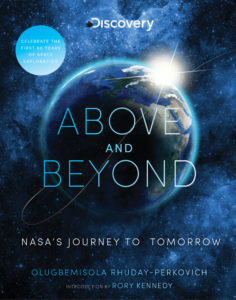
Copyright 2018 Discovery Channel

Some are stories of the past. The best-known documentary of WWII was “Memphis Belle,” directed by Hollywood legend William Wyler. Using footage Wyler shot from the National Archives, director Erik Nelson has made a new film called “The Cold Blue,” featuring gripping narration from some of the last surviving B-17 pilots. Some are stories of the future. Rory Kennedy’s “Above and Beyond: NASA’s Journey to Tomorrow” shows us that the most important part of our voyages into space is not what we learn about other planets but what we learn about our own, as new missions give us critical data about the state of our environment. Some are intimate family stories, like “Witkin and Witkin,” about septuagenarian twin artists, and “The Distant Barking of Dogs,” about a boy and his grandmother who live just miles from the war in Ukraine. Others tell the stories of remarkable people like Father Theodore Hesburgh, Gilda Radner, Alexander McQueen, and Australian musician Geoffrey Gurrumul Yunupingu. Some are about unsung heroes, those working to protect children, rehabilitate prisoners, and open up opportunities for oppressed people.

Some documentary stories are on a global scale, or even beyond, into outer space. Some help us understand the very medium of film itself. “Hal” is the story of director Hal Ashby (“Shampoo,” “Coming Home,” “Being There”).

Some take us places we would otherwise never get to see, like “Into the Okavango,” a stunning journey down an African river.

This year’s Charles Guggenheim Symposium honoree is Steve James (“Hoop Dreams,” “Abacus: Small Enough to Jail,” “The Interrupters,” “Life, Itself”), an extraordinary filmmaker who truly understands that the essence of documentary filmmaking is empathy. Documentaries can be tragic, provocative, infuriating, inspiring, heartwarming, informative, and hilarious, in any combination or all of the above. Just like life.

AFI Docs: June 13–17, 2018, Washington D.C.
Related Tags:


Documentary Festivals
Oceans 8

Oceans 8

Posted on June 7, 2018 at 5:50 pm

B +
Lowest Recommended Age: Middle School
MPAA Rating: Rated PG-13 for language, drug use, and some suggestive content
Profanity: Brief strong language
Alcohol/ Drugs: Marijuana, alcohol
Violence/ Scariness: Some peril
Diversity Issues: Diverse characters
Date Released to Theaters: June 8, 2018
Date Released to DVD: September 10, 2018
Copyright 2018 Warner Brothers

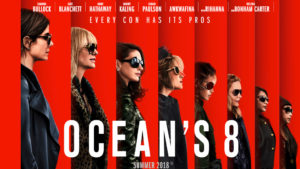
Heist films are irresistible, especially when they are as twisty and stylish as “Oceans 8.” First, there is the practicality of the puzzle part. I always love the way they set it up to show us how impossible it is, so we can fully appreciate the cleverness of the characters in coming up with plans to surmount the various traps and security features. And then things always go wrong in the moment, so we have the fun of seeing problem-solving in real time. But just as important is the luxury of the fantasy element. We get to identify with people who, like wizards and superheroes, operate outside of the usual rules. All we need is some very slight reason not to worry about the people who are being stolen from (they are usually either unworthy or so institutional it seems impersonal), and we’re on board.

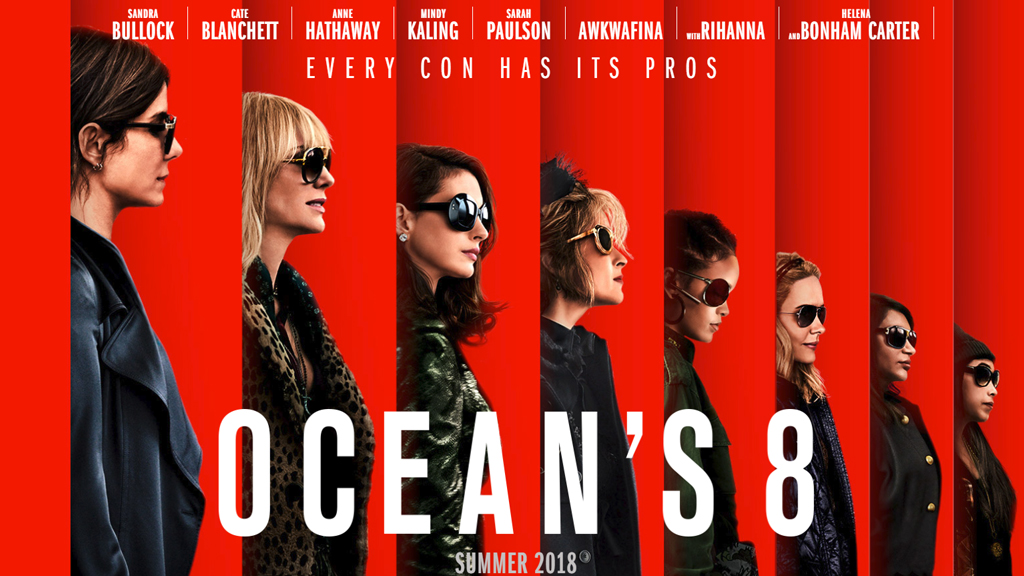
“Oceans 8” has another reason to intrigue us as well. We are already very familiar, perhaps too familiar with the “Oceans 11” series, which rather wore out its welcome by the last in the trilogy and perhaps the original, starring Frank Sinatra and the Rat Pack. Freshening up the concept with an all-female group of grifters and thieves with a cast that features three Oscar-winners and a sensationally beautiful style icon gives it an embedded freshness and underdog quality. “A him gets noticed; a her gets ignored,” Debbie Ocean says. “For once, we want to be ignored.”

Debbie (Sandra Bullock) is just out of prison after five years, eight months, and twelve days. She explains to the parole board that she has learned her lesson and all she wants is “the simple life. Hold down a job, make some friends, go for a walk after work in the fresh air, pay my bills.” They buy it. And soon she is out, shoplifting herself a new wardrobe and swindling herself a hotel room. She visits the grave of her brother, Danny (the character played by George Clooney in the male “Oceans” movies), though the movie does leave open the possibility that his death might just be another con. And she gets in touch with two of her partners in grift from the past, Lou (Cate Blanchett), who has been dealing in petty cons like watering vodka, and art dealer Claude Becker (Richard Armitage), against whom Debbie seems to have quite a grudge.

Debbie has spent her time in prison devising a heist of delightful complexity and ingenuity. Of course in reality it was devised by director Gary Ross, who wrote the script with Olivia Milch, and one of their best ideas was to set the robbery at the most glamorous event in America, the annual Met Gala (that’s GAH-la, not GAY-la). Their plan: to get the event’s celebrity chair, an air-headed actress named Daphne Kluger (Anne Hathaway) to wear a $150,000,000 diamond necklace so they can steal it.  And this gives us a peek into the most exclusive party of the year, with a delicious chance to get up close to huge celebrities in fabulously over-the-top gowns (though gala empress Anna Wintour is played by an anonymous extra in an impeccably coiffed wig).

This will involve a combination of talents from the psychological (persuading Kluger to choose an out-of-fashion designer and persuading Cartier to loan the necklace) to the technological (everyone needs a hacker these days) to the embedding of various moles to good old-fashioned pickpocketing. As we used to say in the 70’s, sisterhood is powerful.  I won’t spoil any of the twists or surprises; I’ll just say that I enjoyed them all very much and this crowd and they are welcome to steal a necklace from me any time.

Parents should know that this film has criminal behavior, some mild peril, brief strong language, alcohol, and marijuana.

Family discussion: If you had a crackerjack team of thieves, what would you want to steal? What would be the biggest obstacle? What was the movie’s biggest surprise?

If you like this try: the documentary about the Met Gala, The First Monday in May and other sophisticated heist movies like the original and remake versions of “Oceans 11,” “The Italian Job,” and “The Thomas Crown Affair” as well as “How to Steal a Million” and “Topkapi”

Related Tags:


Comedy Crime Drama DVD/Blu-Ray Movies -- format
Won’t You Be My Neighbor?

Won’t You Be My Neighbor?

Posted on June 7, 2018 at 5:23 pm

B +
Lowest Recommended Age: Middle School
MPAA Rating: Not rated, some thematic elements and language
Profanity: None
Alcohol/ Drugs: None
Violence/ Scariness: Discussion of difficult topics including assassinations, terrorism, prejudice, disability, loss
Diversity Issues: A theme of the movie
Date Released to Theaters: June 8, 2018
Copyright 2018 Focus Features

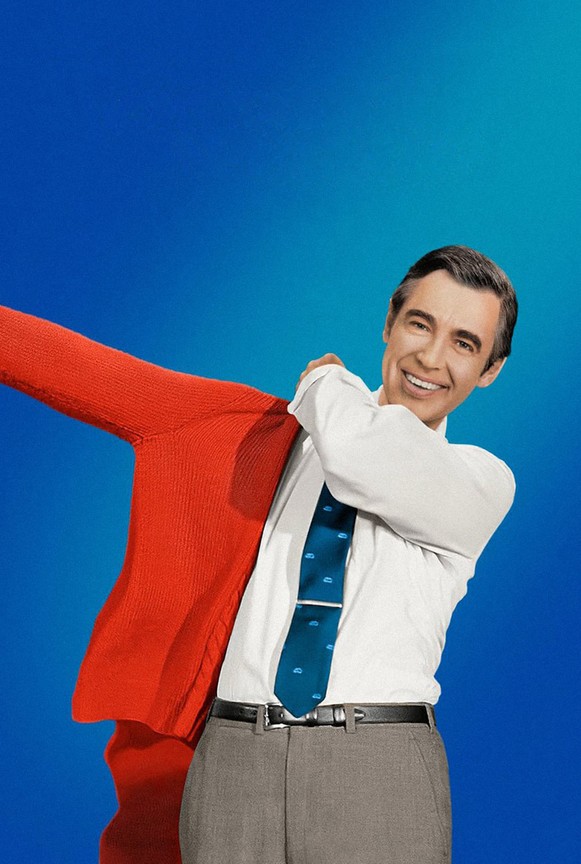
“Won’t You Be My Neighbor?” is about Mr. Rogers, a kind, gentle star of PBS children’s programming who liked us us just the way we were and was the neighbor we would all love to have next door.

His story is told in a documentary that matches its subject. It is candid but respectful, utterly heartwarming, and a particularly timely reminder that we don’t have to be swept away in bombast and sensory overload. It is also a welcome reminder that children need us to help them understand themselves and the world around them, even when some aspects are painful and difficult. Indeed, Fred Rogers exemplified the idea that adults were here to protect children not by keeping information about tragedy and hardship away from them but by helping them learn how to respond. His advice to “look for the helpers” is always repeated when some terrible new story is in the news. And of course he was one of the greatest helpers of all. “One of my main jobs,” he said, “is through the mass media to help children through the difficult modulators of life.” These included world events and also family issues like divorce and emotions like anger. One of the film’s most remarkable archival scenes is Fred Rogers testifying before a skeptical Senator about the importance of funding PBS. Instead of reeling off statistics, Rogers recited the lyrics to a song about how to deal with angry feelings. When he was done, the senator, obviously not just moved but pretty much tamed, says quietly, “You just got $20 million.”

Fred Rogers was an aspiring Presbyterian minister when he realized that television had enormous influence on children and that most of children’s programming was loud, rude, and violent. He put his plans on hold to start a series for the new Public Broadcasting Service that would be quiet, low-key, and low-tech. As a producer of the show noted the theory of the series was, “You take all of the elements that make good television and don’t do any of them.” He says, “I never felt I had to wear a funny hat.” And he welcomes elements that are anathema to television, including silence. Mr. Rogers set a timer to show children how long a minute was and just sat there while it moved around the circle. There a lot of “slow space, but no wasted space.” He was patient. He listened.

The show’s first national broadcast was in 1968, a time when there were many difficult modulators to navigate. “What does assassination mean?” a frightened Daniel Tiger puppet asks? He gets an answer that is honest but presented in a way that helps him not just understand it but understand how to process it.

In each episode, Mr. Rogers would come into the house, change his shoes, put on his sweater (one is now in the collection of the Smithsonian Museum of American History), and have a little chat or sing a song to the audience. He would talk to the mailman or another friend from the neighborhood, and maybe interview a guest or explain something, from how biscuits get made in a bakery to how a young Yo Yo Ma plays the cello. Rogers himself never appeared before the camera in the other part of the show, set in a magical land, because he wanted a clear demarcation between the “real” and fantasy parts of the show. But he voiced the puppets, as many as ten characters, and we see more than once that those puppets allowed him to express parts of himself he could not any other way.

Director Morgan Neville (“20 Feet from Stardom”) had nearly 1000 hours of archival footage to choose from and, while he certainly could have made several movies based on Fred Rogers’ life, the clips and contemporary interviews are exceptionally well chosen and well matched. We learn that Rogers asked Francois Clemons, a black man, to play the policeman on the show in part to promote diversity. A scene from the show where the men soak their feet together to cool off on a hot day is juxtaposed with contemporary news footage of black swimmers being thrown out of a public pool. Clemons says he was reluctant to play a policeman because the experience of his own neighborhood with police was not good. But he took the job. And then we learn that Clemons is gay, and hear how Rogers’ response to that news changed over time.

Two of the movie’s most powerful archival scenes are the interview Rogers said was his most memorable, with Jeff Erlanger a cheerful 10-year-old quadriplegic, and his time with Koko, who apparently indicated that he was her favorite visitor. Rogers’ palpable delight and boundless empathy have them end up in an embrace that is utterly endearing.

We hear from his family, friends, and colleagues, and from Ma (whose son is one of the film’s producers). But most of all, we hear from Rogers himself, who tells us, “I don’t think anyone can grow unless he is accepted exactly as he is.” Other than Fox News, who we briefly hear blaming Rogers for the entitlement of the millennial generation, we all feel lucky that Mr. Rogers was exactly who he was, and this lovely film reminds us that we cal all be more like him.

Parents should know that this movie includes discussion of difficult issues and some archival footage of tragic news stories and a brief humorous shot of a bare bottom.

Family discussion: What parts of Mr. Rogers did we only see through the puppets? What are your favorite television shows for children?

If you like this, try: “20 Feet from Stardom” and “Street Gang” (about “Sesame Street”)

Related Tags:


Biography Documentary movie review Movies -- format Movies -- Reviews
Hearts Beat Loud

Hearts Beat Loud

Posted on June 7, 2018 at 5:12 pm

B +
Lowest Recommended Age: High School
MPAA Rating: Rated PG-13 for some drug references and brief language
Profanity: Brief strong language
Alcohol/ Drugs: Alcohol, references to drug use, scenes in a bar
Violence/ Scariness: Family and economic struggles, absent parent
Diversity Issues: Divers characters
Date Released to Theaters: June 8, 2018
Date Released to DVD: September 10, 2018
Copyright 2018 Gunpowder & Sky

Isn’t it nice that we get to go live in Brett Haley World every now and then? The gifted young writer-director of “I’ll See You in My Dreams” and “Hero” always gives us characters who might be flawed, who might not be where they expected or wanted or deserved to be, but who are marvelously human and endearing. His latest is “Hearts Beat Loud,” the story of a single dad with a failing business (vinyl records) and a bright, beautiful daughter about to leave for college. It is nothing less than high praise to say these are nice people. We love spending time with them. One reason is that Haley writes roles that great actors want to play, and he creates a space for them to do their best.

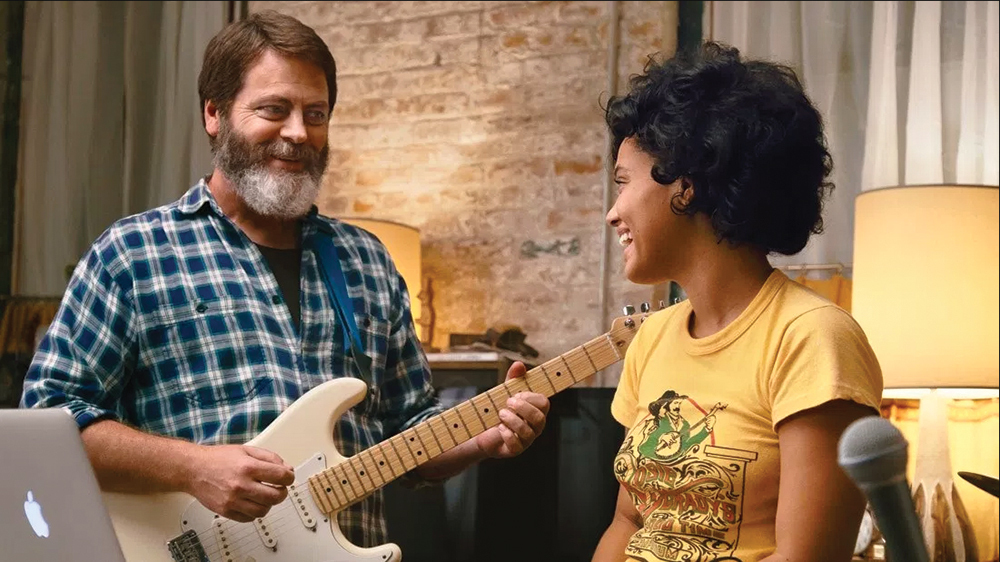
An early scene is not the usual father-daughter dispute. The daughter is Sam (Kiersey Clemons), a high school senior planning to be a doctor, and she wants to study to get ready for pre-med courses about the human heart. Her father, Frank Fisher (Nick Offerman), wants to entice her away from her studies for “a jam sesh.” She is not interested. He wants them to be a band and asks her to name it. “We are not a band,” she says. “We Are Not a Band” it becomes, a Schrodinger’s Cat of a name that is both true and not true. Frank impulsively uploads Sam’s song to Spotify. Some attention to the song makes Frank think that they — maybe she — could have the chance he always dreamed of.

Is Sam a kid who had to be the grown-up in the relationship because her father never got over his dream of music? Well, maybe a little bit, but In Haley’s films, nothing is ever simple or formulaic. Sam respects and loves her dad, and even shares his love for music. She understands why he wants her to play with him. They won’t have many opportunities to do things together when she leaves. It is the prospect of her leaving that makes strengthening that bond even more important, though they both understand that having lived away from home will change everything between them, even when she comes back. There is another reason Frank wants to spend more time with Sam in the place that means the most to him, though he may not recognize it consciously at first. He gets to a point, though, where he asks: “Is there a girl? Or a boy?”

It is a girl. Sam is in love with Rose (Sasha Lane), an endearingly sweet first love. The mutual support and respect between the two girls is beautifully portrayed.

Sam has a mother who needs more support (“I’ll See You in My Dreams” star Blythe Danner) and he has a landlady (Toni Collette) who is almost a member of the family. When he tells her he can no longer pay even the discounted rent she generously allows him, she does everything she can to find a way to keep him there because she cares about him and she knows he cares about the store. She knows he cares about her, too, but she is in a relationship. And Sam has a buddy, a pot-smoking bartender played by Ted Danson (nice to see him behind a bar again).

Every performance in the film is a quiet gem. Offerman, so good at comic bombast in “Parks and Rec”is even better in a role that is not heightened but natural and understated. Frank is holding in a lot of his feelings, partly because he does not want Sam to see him worry about the store, his mother, or getting on after she leaves. But Offerman lets us see all of that and more, and he never for a moment lets us think that Frank is or thinks of himself as a loser. Clemons is a real find, radiant and completely believable as the braniac future doctor, the smokin’ singer, and the girl on the brink of first-time teenage love. Danson and Collette settle into their roles with infinite grace. The music in the film is fine. The music of the film sings straight to the heart.

Parents should know that this movie has references to pot smoking, some drinking, non-explicit teen sex, references to loss, and brief strong language.

Family discussion: What would you name your band? Did Frank make the right decision? What will happen next?

If you like this, try: “Danny Collins” and “Janie Jones”

Related Tags:


Drama DVD/Blu-Ray Family Issues GLBTQ and Diversity movie review Movies -- format Race and Diversity Romance
THE MOVIE MOM® is a registered trademark of Nell Minow. Use of the mark without express consent from Nell Minow constitutes trademark infringement and unfair competition in violation of federal and state laws. All material © Nell Minow 1995-2026, all rights reserved, and no use or republication is permitted without explicit permission. This site hosts Nell Minow’s Movie Mom® archive, with material that originally appeared on Yahoo! Movies, Beliefnet, and other sources. Much of her new material can be found at Rogerebert.com, Huffington Post, and WheretoWatch. Her books include The Movie Mom’s Guide to Family Movies and 101 Must-See Movie Moments, and she can be heard each week on radio stations across the country.

Website Designed by Max LaZebnik