My gallery of Easter movies includes “Ben Hur,” several different movie versions of the life of Jesus, a couple of choices just for kids, and a classic musical named for a classic song, Irving Berlin’s “Easter Parade.” There’s something for every family celebrating this weekend.
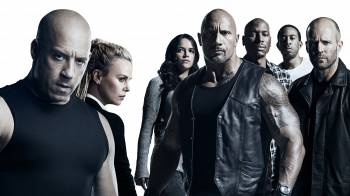
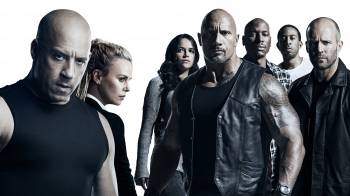
Copyright Universal 2017Before we get into it, let’s take a moment to remember how we got here. The first “Fast and Furious” movie was comparatively modest in scope, the story of a cop (Paul Walker as Brian) going undercover to investigate illegal street racers, led by Dom (Vin Diesel). The cop falls for the sister of the racer and for the living-life-a-quarter-mile-at-a-time existential rush. Think “Point Break” with cars instead of surfboards. Somehow, now on the eighth movie since the 2001 original with two more in the planning stages, it has turned into an X-Games version of “Mission Impossible.” It’s 3/4 chases, crashes, shoot-outs and explosions, 1/8 bro-mance (“I don’t have friends; I have family”), and 1/8 quippy humor with a dash of fan service for anyone who has been paying enough attention to remember who all of the characters are. That leaves no room for plot or logic, but you can’t have everything, and this one goes with star power instead.
So over the course of eight films we’ve gone from living life a quarter mile at a time racing souped-up home brew stock cars to globe hopping save-the-planet adventures with the help of grateful no-name international law enforcement (literally, Kurt Russell as Mr. Nobody, now with an intern played by Scott Eastwood, known as Little Nobody), increasingly improbable settings and vehicles (a nuclear sub in this one, pretty much all that’s left for Chapter 9 is a “Moonraker”-style spaceship), and increasingly improbable co-stars. Helen Mirren is in this movie. Let me say this again. Helen Mirren is in this movie. And she’s not the only Oscar-winning actress in the eighth “Fast and Furious” film. It also stars Charlize Theron as the ice queen villain.
Our merry little gang of rascals has gotten so cozy that in order to have any dramatic tension at all we have to unscramble that egg a little, and what better way to do that than to have Dom go to work for the bad guy?
We begin with an opening scene in which we are reminded that Dom (a) adores his wife, Letty (Michelle Rodriguez), now recovered from her amnesia and honeymooning with Dom in Havana, and (b) is a man who exemplifies integrity, grace, courage, and determination, and who could probably win the Indy 500 in a golf cart. And so, perhaps we are expected to be surprised when shortly after that, when the team, with regulars Hobbs the cop (Dwayne Johnson), Roman the comic relief (Tyrese Gibson), and Tej the computer guy (Chris “”Ludacris” Bridges), is called in by Mr. Nobody to rescue some big scary bomb, Dom and Letty are on board and then all of a sudden Dom makes off with the big bad bomb and apparently is in cahoots with Ms. Big, Theron as uber-hacker Cipher.
There’s nothing quite as crazy as the car leaping between buildings in the last film, and nothing near as touching as the finale, with its tender tribute to the late Paul Walker (his character is lovingly addressed). There’s a wild bumper-cars-on-crack scene as Cipher takes control of all the automobiles, even the ones that are parked, in the middle of New York City. And some very fancy vehicles get trashed. And then there’s the sub. And a lot of thousand-yard stares and macho wisecracks and people who have a history as enemies having to work together and grudgingly develop some respect. In other words, it’s just what you expect from the eighth “Fast and Furious” movie.
Parents should know that this film has constant action-style violence, crashes, explosions, guns, fights, extended mayhem of all kinds, some sexual references and crude humor, and some strong language.
Family discussion: Which was the best stunt? What makes someone who is not related “family?”
If you like this try: the rest of the “Fast and Furious” films and “The Italian Job”
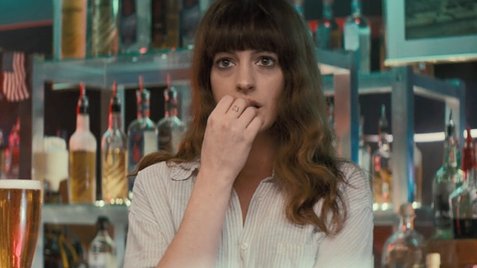
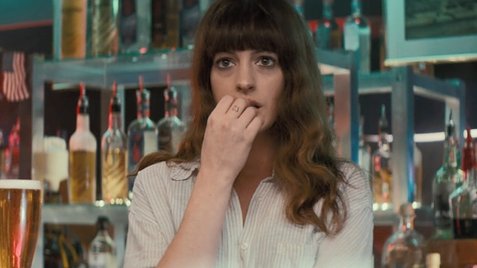
Copyright 2017 NeonI’m less interested in whether a movie scares me than whether it surprises me, and “Colossal” is a little bit scary but deliciously surprising. You think you’re going to see a movie with the gorgeous Anne Hathaway and Dan Stevens in a lovely New York City apartment as characters who break up in the beginning of the story, and you think you know where it is going. You don’t.
Writer/director Nacho Vigalondo wants you to come to the movie with expectations. You think that when you see doe-eyed Anne Hathaway with her cute rom-com bangs and English-accented boyfriend and drinking problem serious enough for memory loss but not serious enough to give her unsightly bloat that you know not just where this is going but how many minutes it will take to get there. You see Gloria (Hathaway), having lost everything, move back into her empty childhood home in a small town and immediately run into Otto (Jason Sudeikis), a regular American guy who with whom she clearly has history and chemistry and who seems to exemplify wholesome hometown values. He offers her a job at the bar he inherited from his dad and you think you know where it’s going. You think that the scenes of an enormous dinosaur-ish sort of monster attacking Seoul mean some lead character will fight it and someone will have to be rescued. Not really. Writer/director Nacho Vigalondo (“Timecrimes”) is here to mess with your expectations the way the monster messes with South Korea, and the job you happily accept is to sit back and enjoy it.
What that means, though, is that there isn’t much more I can tell you about what actually happens in this movie, except to say that the connections between these characters and the monster evolve in very unexpected ways and there are surprises around every corner.
You want to understand how all what happens/happened happened? This is not your movie. You want to consider it a metaphor that explores American insularity and arrogance? Be my guest, as long as you don’t think about it too hard, because it will not withstand an extended deep analysis. You want to see monsters? Well, this isn’t “Pacific Rim,” but there are some pretty cool monsters and they do a lot of damage. But I cannot promise you anything except something you haven’t seen before, and that’s good enough for me.
Parents should know that this film includes very strong and crude language, monster violence with characters injured and killed, drinking and drunkenness, and sexual references and a non-explicit situation.
Family discussion: What are the best and worst things about controlling a monster? What connected these characters to the monsters? What monster would you like to control?
Two New Movies About the Triumph of High School Underdogs — The Outcasts and Speech and Debate
Posted on April 13, 2017 at 2:52 pm
Two very entertaining new movies available in some theaters and on demand both tell stories of kids who are considered dorky outsiders in high school but find a way to triumph, learning some lessons and making some friends along the way. The great thing about being a smart dork in high school is that if you work hard and have a bit of luck, it will give you great material to tell the story some day. No one wants to see a movie from the perspective of the kids who are happy and popular in high school, at least not unless they started out as miserable loners.
“Speech & Debate” is a heartfelt love letter from theater kids to theater kids. Three outcasts, a would-be actress, a would-be investigative journalist, and a new kid who is gay band together when the school board caves in to a local man who objects to the school play, “Once Upon a Mattress,” because there is a mention of an unwed pregnancy in it. The popular play makes an uneasy transition to the screen, but the performances by Liam James (“The Way Way Back”), Sarah Steele (“The Good Wife”), and Austin P. MacKenzie (“When We Rise”) have a believable rapport and it is a treat to see Broadway luminaries like Roger Bart, Lin-Manuel Miranda, and Skylar Astin in supporting roles.
“The Outcasts” stars “The Middle’s” Eden Sher as Mindy, a nerdy girl whose best friend Jodi (Victoria Justice) is the victim of a mean prank orchestrated by mean girl Whitney (Claudia Lee). Jodi and Whitney unite all of the school’s various factions, even getting the sci/fi and fantasy groups to stop arguing with each other and join forces. But the girls learn that once you have power it is very tempting to abuse it. Performed with a lot of brio and filmed with humor and sensitivity to all involved, it is fun to watch and worth discussing afterward.
Interview: Writer/Director James Gray of “The Lost City of Z”
Posted on April 12, 2017 at 3:55 pm
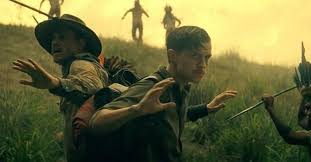
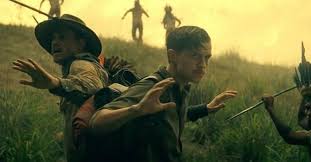
James Gray wrote and directed the adventure movie “The Lost City of Z,” based on Percy Fawcett, the real-life explorer who inspired fictional characters from Indiana Jones to the swashbuckling heroes of books by Arthur Conan Doyle and H. Rider Haggard. The movie stars Charlie Hunnam, Robert Pattinson, and Sienna Miller. Gray and his crew had to re-create the arduous journey through the South American rainforest; while they had better technology than Fawcett’s group, they also had to bring along all of the equipment to make the film.
In an interview, Gray talked about the directors who inspired him — and why he had to make some different choices than the ones in their classic films.
It’s 100 years after the events in the film. Tell me how you approach dealing with issues of gender and race that acknowledges the realities of its era without distracting us unnecessarily?
Wow, that’s a heavy one. How did I deal with it, well, with great difficulty and with kid gloves. It’s one of the advantages we have and it’s not about judging the characters, that’s not really what I’m saying but a more global view, a more…how do I say this? A more progressive view, a more open view hopefully of the ideas of gender, class and ethnicity that has to be part of the film. And I felt that if I could make a movie in the style of let’s say David Lean, who I revere, but bring, dare I say this, a more advanced or different approach to the politics of it — for example,”Lawrence of Arabia he has Alec Guinness playing an Arab which is absurd today.
So, I felt that that was the way that I could do something different from what Mr. Lean did. And in the case of something like an “Apocalypse Now,” as great as I think it is, and I think it is the greatest, there certainly aren’t any women in it of any importance. A Playboy playmate is pretty much the only woman in the whole movie. So, I felt that it was important that I give everybody a sort of fair shake at the narrative and that everybody’s existence would be entirely independent. So, Sienna Miller’s character has her own hopes and dreams and that the film acknowledges those desires. And the indigenous people of South America would be independent and not demand a white male European view of the world to exist. People talk about what they call the Magical Negro in movies where this African-American character has all these magical qualities throughout which is in its own way deeply racist. My ambition was to do something the opposite of that, which was that the indigenous people of Amazonia would function in a way that was entirely free from any need for the white man.
And really the approach was to try and bring a certain dignity and humanity to every single person in the movie. And so, I’ve tried to think of it in those terms.
For me one of the most intriguing characters in the film was Murray, the veteran of the Shackleton expedition to the Antarctic but a terrible problem for Fawcett.
In the book he goes on I think it’s eight trips, so I had to condense that to three. When I approached it I thought, “Okay if it’s three trips, each trip has to have a different meaning.” The first trip is about the exposure to his obsession and how the obsession settles in and what it becomes and what it starts to mean for him. The second trip with Mr. Murray would have to be about how he saw the trip in the beginning as cementing his position not only in society but in history and really it was an act of ego to bring Mr. Murray along. He was going for glory and he thought Murray would bring an incredible luster. Murray’s ethical bankruptcy is in a way Fawcett’s fault because he chose Murray to go with him. That was the price he paid for wanting that because Murray is the lie of one class’s superiority over the other. Murray is the person who’s “Oh look how much wealth I have.” He’s a man of means and prestige and yet he’s a fraud.
So, Murray was a lesson for Fawcett really that the measure of a man has nothing to do with class or rank. That was what I thought the whole trip meant. He had to learn that and the third trip was his atonement for his neglect. It became a much more spiritual experience for him because he was able to enjoy it with his son. On the third trip he could achieve a measure of transcendence because he had already been through the second trip with this person who showed him that the search for glory and class validation was a bankrupt position.
Were you able to read some of Percy’s own journals?
I sure did. In addition to the Grann book I read Exploration Fawcett which is a compilation of his journal entries along with some editorializing by his son Brian that was put out many years later. I’m sure there is some embellishment from Brian, who was anxious to validate his father’s journeys but I’m sure it still had a bunch of Percy’s actual words still in them. I tried to adhere to Fawcett’s own words in as many places as possible. That Royal Geographical Society speech that he gives, which is about a seven and a half-minute long scene in the center of the movie is almost entirely his actual words. I read his letters too, back and forth to his wife and Charlie Hunnam and Sienna Miller did too. That was actually the best window into who those people are that we could have found. And I think it was necessary work.
Did you feel in a way as you were filming in South America that you were re-experiencing some of what he experienced? Did you learn what he went through just from being there?
Probably not because I’m nothing like Fawcett. I’m a wimp and I was only there for four months and he was in it for years. He didn’t have GPS and he didn’t have a bed at night to sleep in. I had clothes with special coating so I didn’t get bitten by anything. It must’ve been unbelievably difficult and I can’t understand how he did it. I mean we were there only four months and one crew member got malaria and two people got dengue. Somehow he marched to the jungle multiple times in the eight trips he went on that’s really about 20 years’ worth of living.
What would have happened if he found the City of Z?
Perhaps if he had found it, it would have been kind of anticlimactic for him. We have a real-life example of this in Hiram Bingham, who discovered Machu Picchu but his life had to have another act. He became a Senator. And I feel like if Fawcett had found some city in the jungle he would’ve looked at it for about twenty minutes and thought, “This is totally amazing. What the hell do I do now?” So much of what it was about for him was about the need to escape.
What is it that you think drives people to become explorers, to go past what is on a map?
There are noble qualities to exploration, there really are. There is an unending curiosity, there’s a remarkable drive, there is a stunning courage but there are also darker, less noble, aspects to it. One is the need to escape confronting what it means to be a person living in this world. I think that Fawcett’s whole need for exploration was in part a need to get out, a need to get away from what was very obviously a situation that was punishing to him. The father was a terrible alcoholic and was a gambler. He destroyed not one but two family fortunes. It shamed the family. So Fawcett was trying to escape from Victorian England and the cruelty of that world that seemed so punishing. And I think part the need for exploration is just to get out.